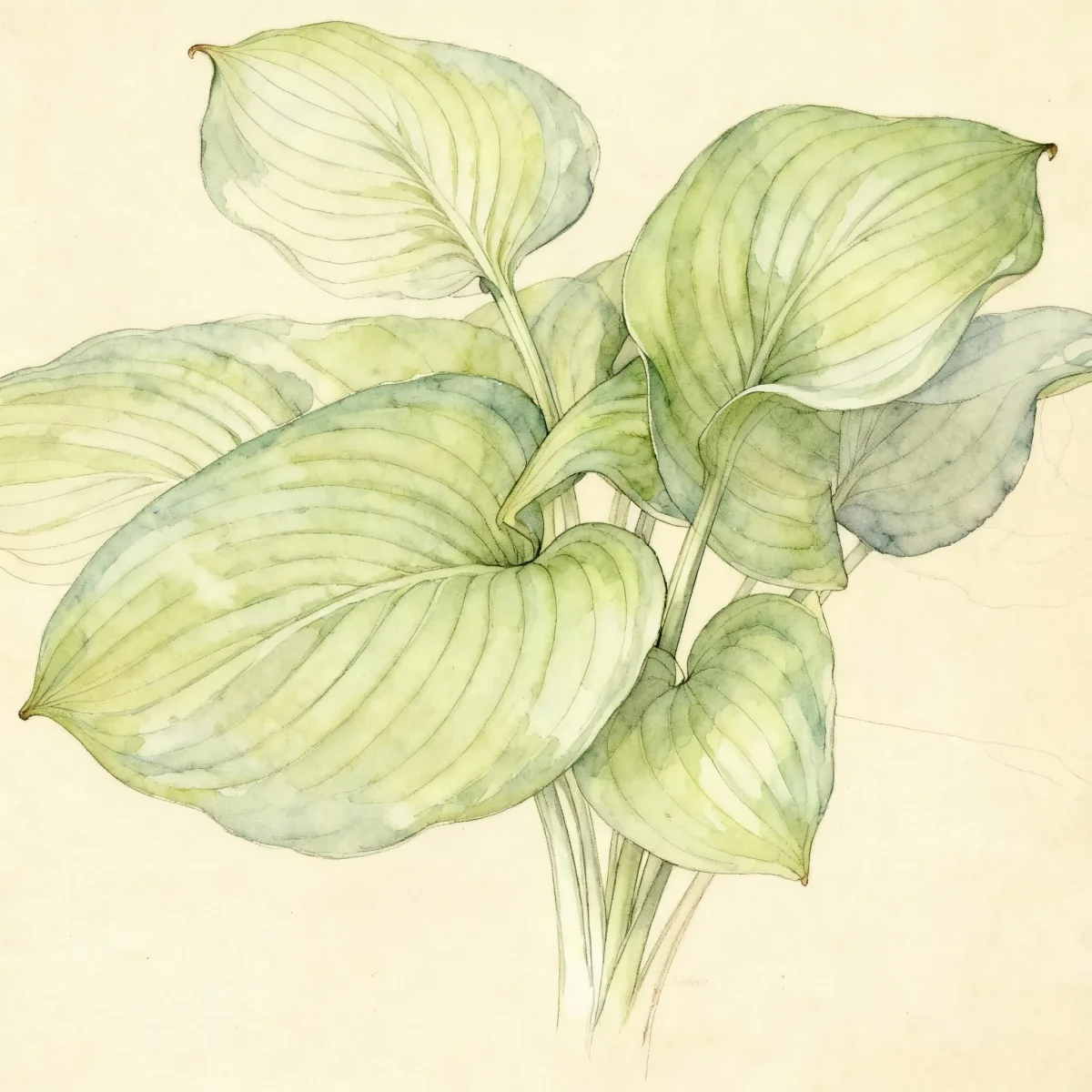
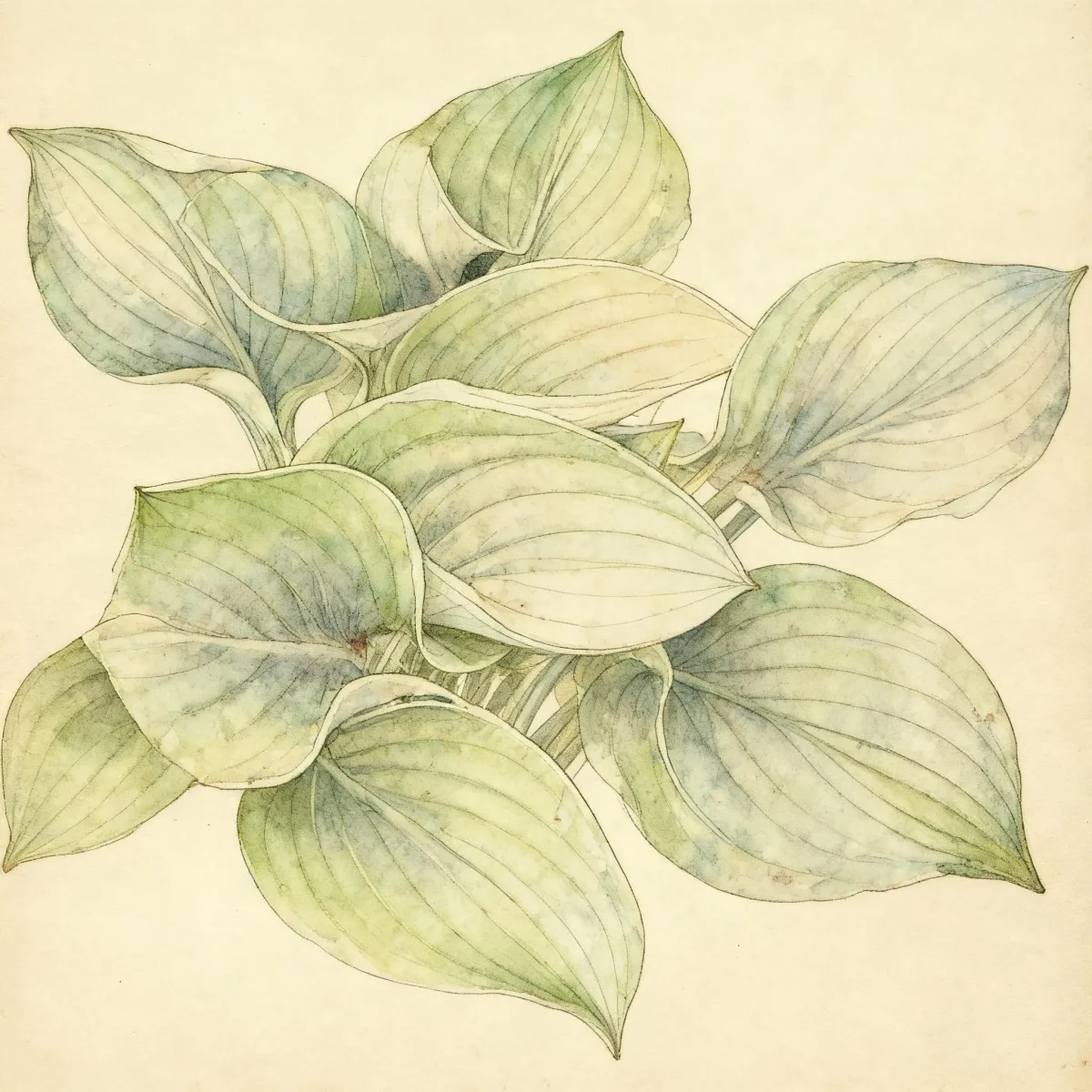
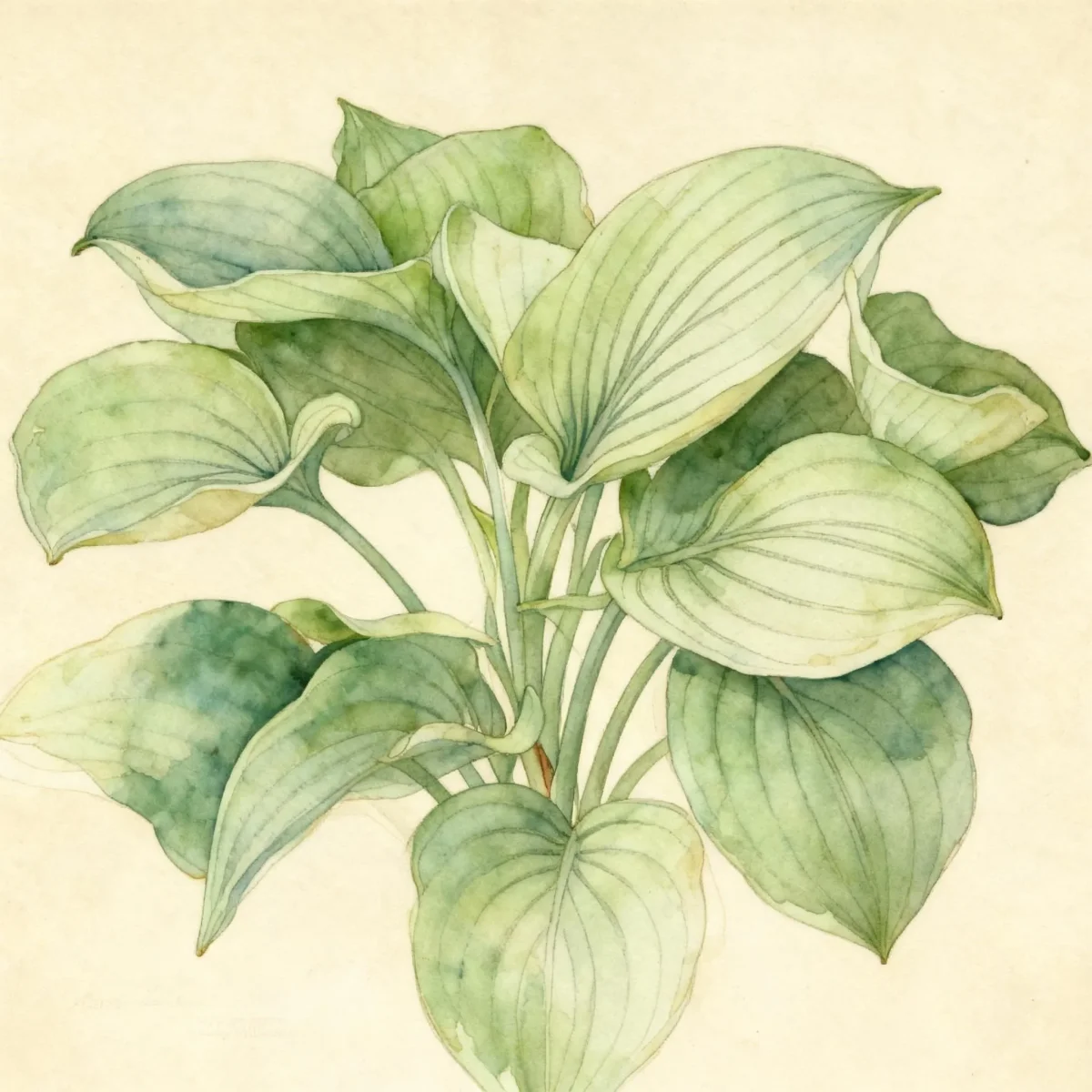
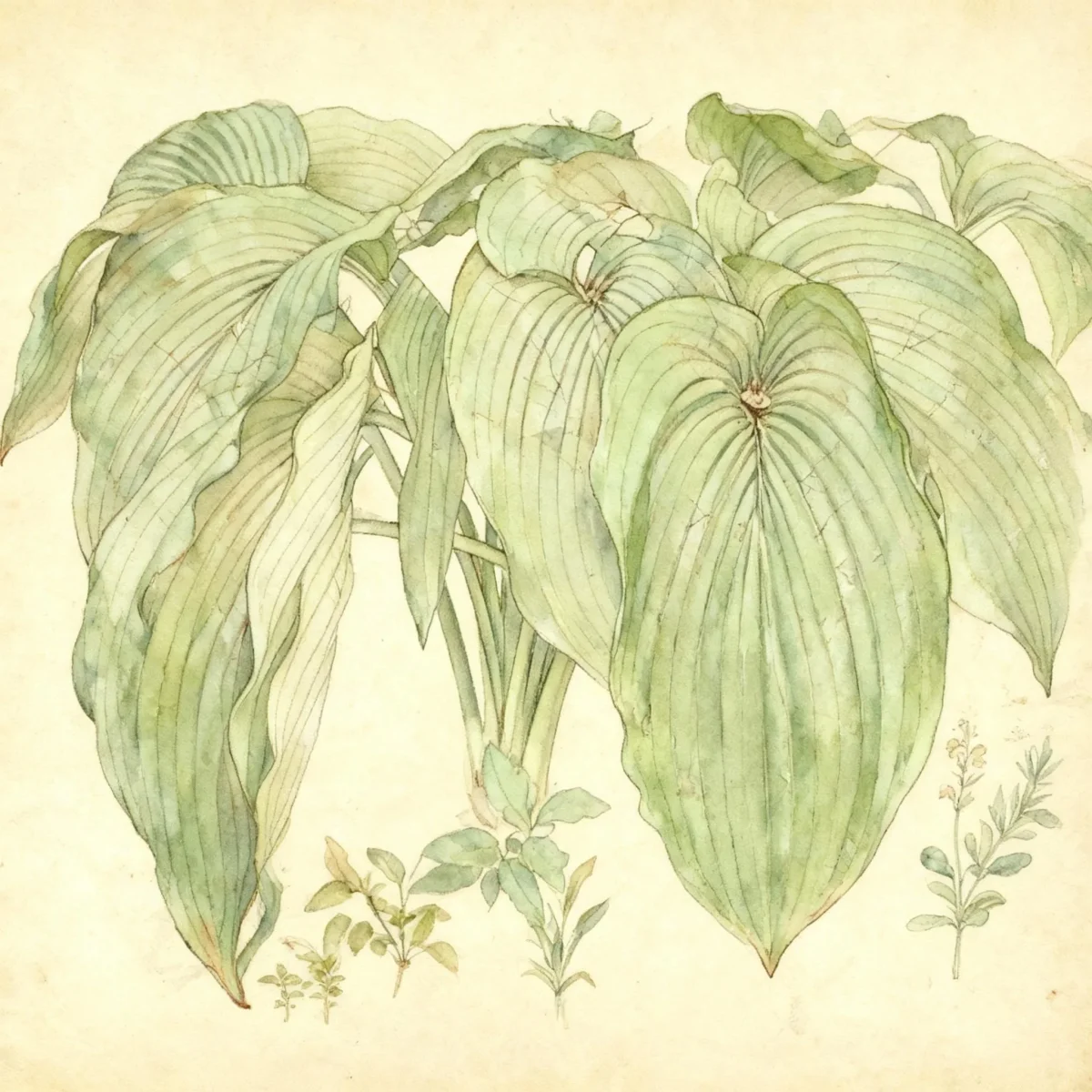
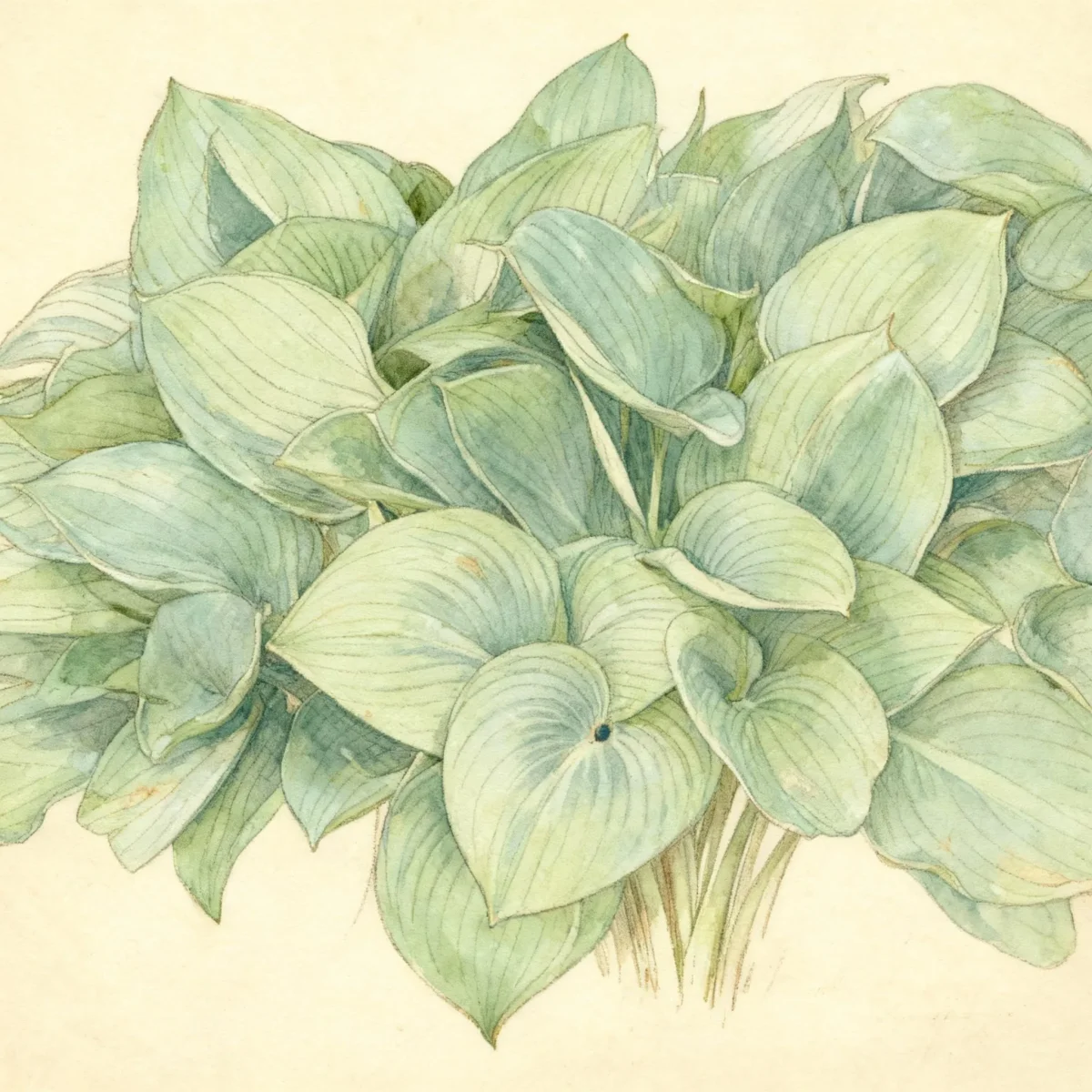
Hosta (Hosta 'Revolution')
Hosta 'Revolution' offers striking cream-speckled leaves with dark margins, thriving in part shade. A low-maintenance perennial for shaded borders.
Scroll down to discover growing tips, care requirements, companion plants, and more
Complete Plant Information
Overview
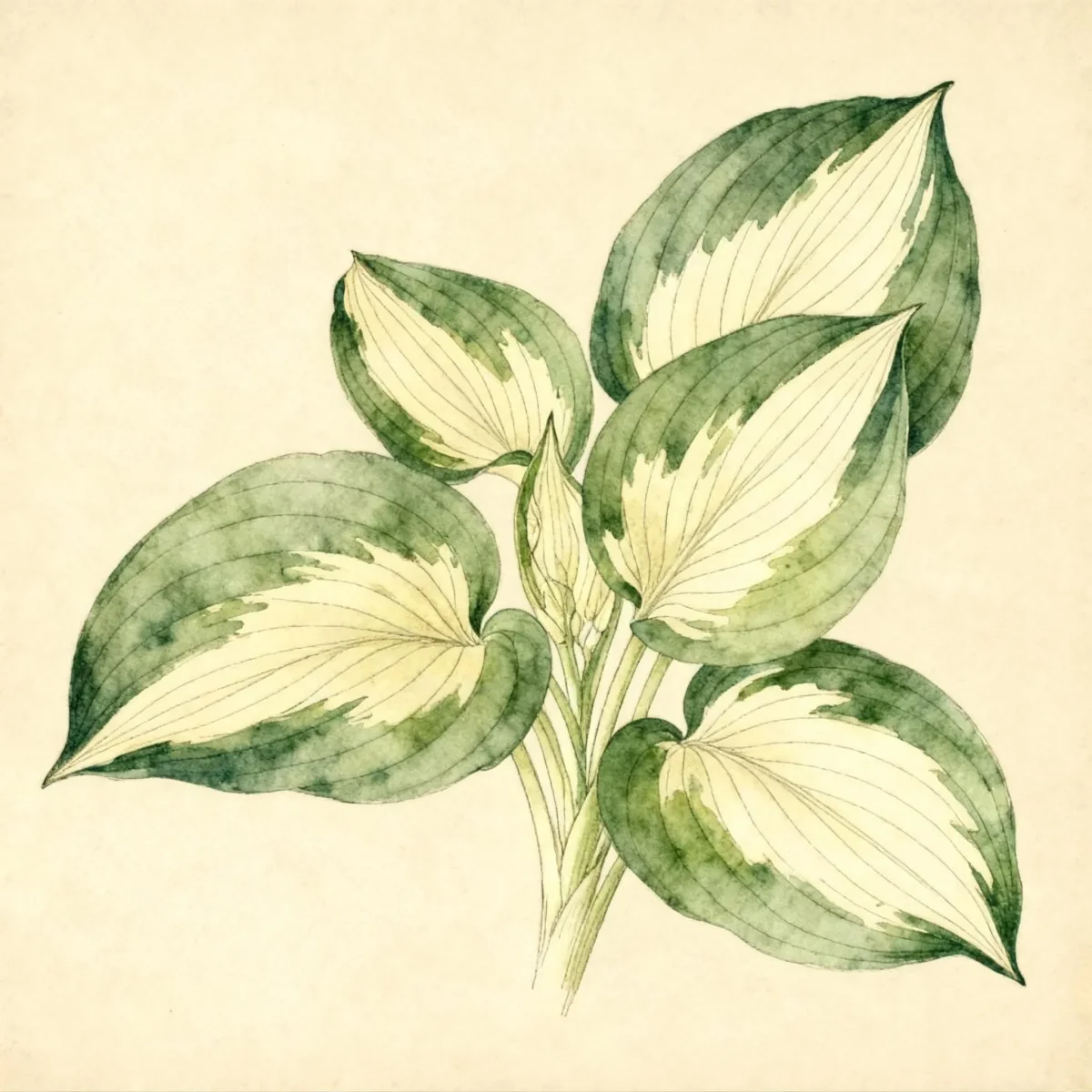
Hosta ‘Revolution’ is a highly desirable herbaceous perennial, primarily cultivated for its exceptionally ornamental foliage that brightens deep shade locations. This medium-sized Hosta variety displays oval leaves featuring a unique creamy center heavily speckled with green, all edged by irregular, dark green margins, offering a dramatic visual contrast. As a low-maintenance addition to the garden, Hosta ‘Revolution’ provides dependable structure and texture throughout the growing season, peaking with soft lavender blooms in mid-summer.
Originating from species native to open woodlands in East Asia, the Hosta genus has become a staple in North American shade gardens due to its robust nature and architectural leaf form. Hosta ‘Revolution’ exemplifies the best traits of this genus, forming a neat, rounded mound well-suited for defining transitions between lawn areas and woodland edges. Growing Hosta ‘Revolution’ ensures you gain significant aesthetic impact in areas where other flowering plants struggle.
A key benefit of maintaining healthy Hosta specimens is their minimal upkeep; once established, they require little more than consistent moisture to maintain peak leaf quality. This specific Hosta cultivar stands out for its vibrant variegation, making it an excellent focal point plant even before its summer lavender flowers appear atop tall scapes.
Fast Facts
- Plant Family: Asparagaceae
- Plant Type: Herbaceous perennial
- Hardiness Zones: USDA Zones 3-8
- Size at Maturity:
- Height: 1-2 ft
- Spread: 1-2 ft
- Bloom Time: July to August
- Bloom Description: Lavender
- Sun Exposure: Part shade to full shade
- Water Needs: Medium
- Maintenance Level: Low
How to Grow
The success of Hosta ‘Revolution’ begins with proper planting location and soil preparation. These plants thrive best when placed in locations receiving part shade, ideally benefiting from some gentle morning sun or dappled light conditions throughout the day. Ensure the soil is organically rich and well-drained, as Hosta prefers an evenly moist environment. Consider planting in spring or autumn for the easiest establishment.
Consistent moisture is essential for achieving the full size and vibrant coloring of Hosta ‘Revolution’. While established plants exhibit some tolerance for dry shade, especially those with thicker leaves, you must never allow the soil to dry out completely. When watering, aim directly at the soil beneath the leaves to keep the foliage free from moisture spots, which can lead to disease. As a generally low-maintenance perennial, minimal fertilization is usually required if the organic matter content in the soil is adequate.
To manage plant size or create new specimens, divide Hosta plants as needed either in spring or autumn. Division is simplest in early spring just before the leaves begin to unfurl from the crown. Always protect your Hosta ‘Revolution’ from strong winds, which can damage the large leaves, and plant them where they can be somewhat protected or observed easily for pest issues.
Landscape Uses
Hostas are foundational plants for any successful shade garden design. Hosta ‘Revolution’, with its striking leaf pattern, excels when massed together, creating bold sweeps of texture and light in deep shade where few other perennials can perform as well. They serve wonderfully as an element in shady borders, providing texture against dark backgrounds like evergreens or dark mulch.
When integrating Hosta ‘Revolution’ into a woodland garden setting, consider companion planting with plants that offer height contrast or different foliage textures. Ferns, Astilbes, and Tiarella make excellent partners, as they share similar cultural requirements for moist, well-drained soil and tolerance for filtered light. The elegant mounding habit of the Hosta acts as a perfect visual anchor or background plant.
In formal designs, use Hosta ‘Revolution’ to edge pathways or define the boundaries of shaded seating areas. Their reliable growth habit ensures predictable structure year after year, preventing the shaded landscape from appearing sparse in summer.
Standout Features
Flower Qualities
- Showy
- Good Cut
Noteworthy Characteristics
Hosta is a diverse genus primarily appreciated for its ornamental, basal foliage that rises in mounds from a central crown. Hosta ‘Revolution’, a sport derived from ‘Loyalist’, measures up to 18 inches tall and 24 inches wide, featuring oval, cream-colored leaves speckled with green and defined by dark green margins. This specific cultivar produces lovely tubular, lavender flowers during the mid-summer months on scapes that rise above the striking foliage mound.
Tolerances
- Heavy Shade
- Black Walnut
Potential Problems
Slugs and snails pose the most significant threat to Hosta foliage, known for chewing unsightly, jagged holes that rapidly deteriorate leaf appearance. Monitor plants closely, especially during wet weather, and employ proactive management strategies such as baiting pellets, beer traps, or incorporating crushed eggshells around the base to deter these pests. Foliar nematodes cause interveinal browning, and while leaf spots and crown rot are less common, they often indicate poor drainage or overly wet conditions. Be vigilant for viral diseases like Hosta Virus X (HVX); infected plants must be removed immediately to prevent spread. Furthermore, be aware that deer and rabbits frequently consume Hosta leaves.
Frequently Asked Questions
What hardiness zones is Hosta suitable for?
Hosta ‘Revolution’ is reliably hardy across USDA Zones 3 through 8, providing broad adaptability for many gardeners.
How large does Hosta ‘Revolution’ grow?
This Hosta variety typically reaches a mature height between 1 and 2 feet, spreading to a similar width of 1 to 2 feet, forming a neat mound.
What sun exposure does Hosta ‘Revolution’ need?
This plant performs best in part shade to full shade environments, preferring protection from intense afternoon sun exposure.
When does Hosta ‘Revolution’ bloom?
The lavender flowers of Hosta ‘Revolution’ appear reliably from mid-summer, generally spanning from July into August.
Conclusion
Hosta ‘Revolution’ is an indispensable perennial for adding high-contrast, reliable color and texture to shaded landscapes, proving that deep shade does not mean sacrificing visual interest. The unique leaf variegation ensures this Hosta remains a star feature throughout the season. Before planting, confirm your site offers the moist, partially shaded conditions this Hosta cultivar demands for success.
Companion Planting in Shade Gardens
When designing a shade garden around Hosta ‘Revolution’, select companions that complement its bold foliage texture without competing for vertical space. Shade lovers like Japanese Forest Grass (Hakonechloa macra) offer graceful, arching texture that contrasts nicely with the upright mound of the Hosta. Brunnera macrophylla (Siberian Bugloss) provides delicate blue flowers in spring and heart-shaped leaves that offer textural variation against the Hosta’s cream and green.
Ensure that any grouping is balanced; place finer-textured plants near the robust Hosta ‘Revolution’ to enhance the perceived depth of the border. Because Hostas are primarily prized for their foliage, pair them with plants that bloom at different times or possess contrasting leaf shapes, such as the large, deeply lobed leaves of Rodgersia or the delicate fronds of native ferns.
Seasonal Care Calendar
Spring preparation for Hosta involves clearing any old leaf debris once temperatures consistently rise and new growth begins to emerge. This practice helps prevent slug habitats and allows you to easily assess plant health before the season peaks. Start checking for emerging pests like slugs early, applying deterrents before they cause noticeable damage to the tender emerging shoots.
During the main growing season (late spring through summer), focus your energy on maintaining consistent soil moisture, particularly during dry spells, by applying water directly to the root zone. In the autumn, as temperatures cool, Hosta plants will begin to senesce; resist the urge to tidy up too early, as the leaves provide winter insulation for the crown. Allow foliage to die back naturally before cutting back the dormant stems.