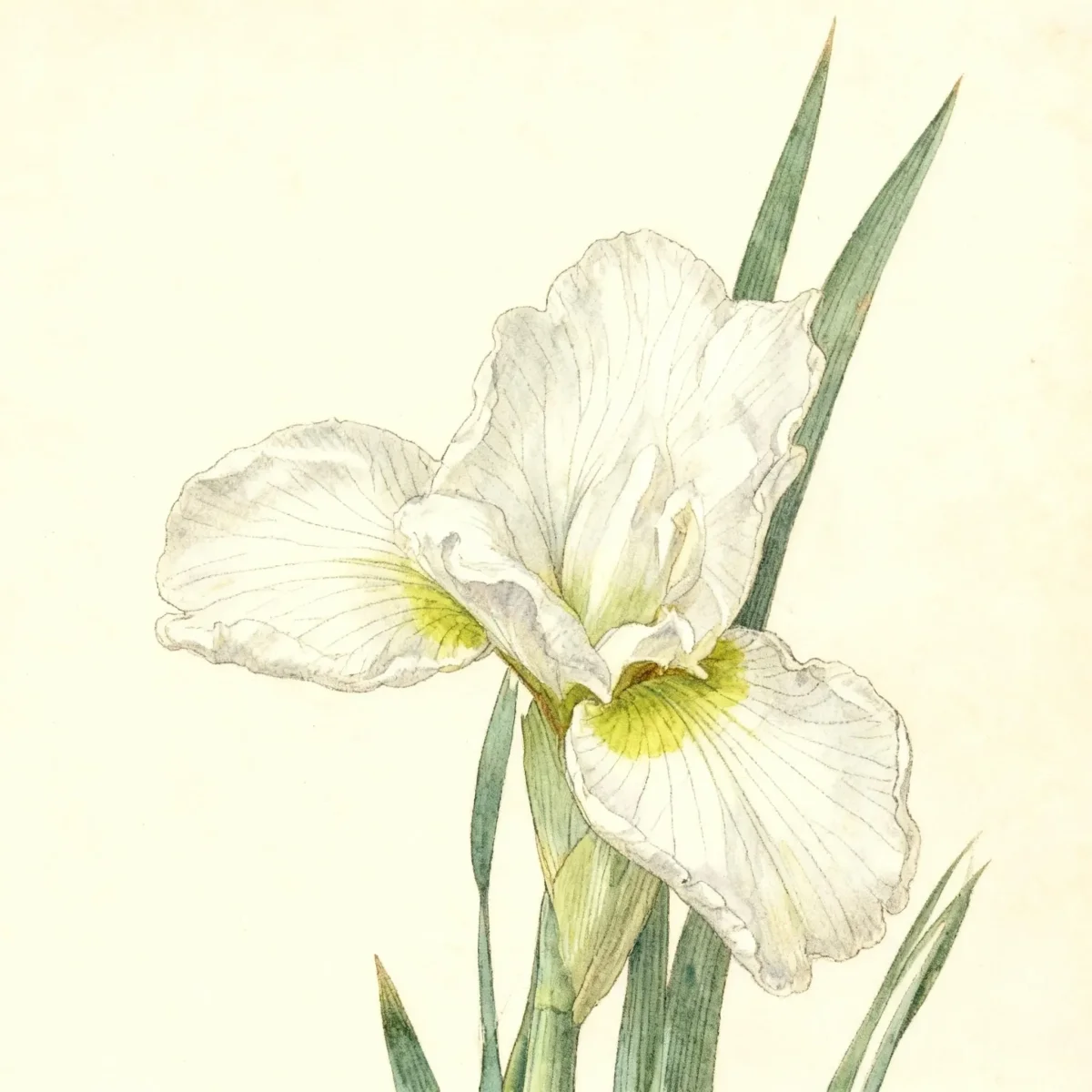
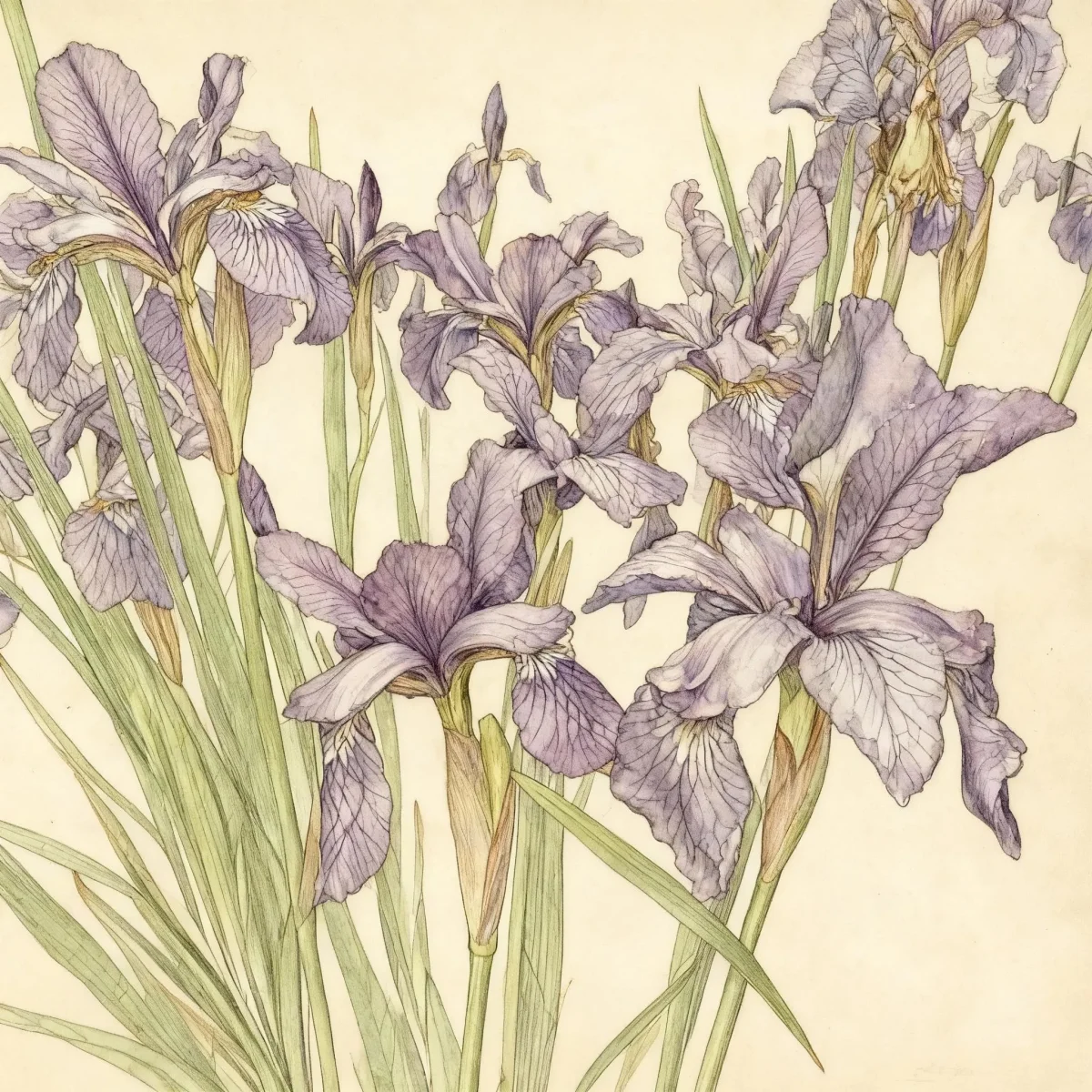
Siberian iris (Iris 'Sally Kerlin')
Iris 'Sally Kerlin' is a striking Siberian iris cultivar boasting blue, showy flowers from May to June. Low maintenance and adaptable.
Scroll down to discover growing tips, care requirements, companion plants, and more
Complete Plant Information
Overview
The Siberian iris, represented here by the beautiful cultivar Iris ‘Sally Kerlin’, brings elegant, near-beardless flowers to the late spring garden. This herbaceous perennial forms neat clumps of narrow, blue-green, grass-like foliage, providing structural interest even after the primary blooming period ends. Gardeners highly value Iris ‘Sally Kerlin’ for its reliable performance and tolerance for wetter locations.
This hybrid iris group, derived primarily from Asian species, thrives in conditions ranging from full sun to partial shade, making it versatile for many plantings. While it prefers consistent moisture, the Siberian iris is surprisingly adaptable once established, handling a variety of soil types effectively. Iris ‘Sally Kerlin’ offers a sophisticated blue bloom alongside low maintenance needs, cementing its place in perennial borders and moist landscape areas.
Fast Facts
- Plant Family: Iridaceae
- Plant Type: Herbaceous perennial
- Hardiness Zones: USDA Zones 3-8
- Size at Maturity:
- Height: 2-2.5 ft
- Spread: 2-2.5 ft
- Bloom Time: May to June
- Bloom Description: Blue
- Sun Exposure: Full sun to part shade
- Water Needs: Medium to wet
- Maintenance Level: Low
How to Grow
Iris ‘Sally Kerlin’ thrives when planted in moist, fertile, humus-rich soils that are neutral to slightly acidic; however, the Siberian iris is known for its adaptability across various soil conditions. Rhizomes should be set just 1–2 inches below the soil surface and spaced 1–2 feet apart to allow for mature clump development. Planting time depends on your climate: early spring or late summer for cold regions, and fall for mild winter areas.
Maintain consistent soil moisture, especially from early spring growth through several weeks after the flowers of Iris ‘Sally Kerlin’ fade, to encourage strong performance. While this variety tolerates drought better than some irises, prolonged dryness can stress the plant. If blooms are sparse or the clump looks crowded, plan to divide the Siberian iris, typically done in early spring or late summer when plants are dormant or semi-dormant.
Avoid placing this variety in deep shade, as lack of adequate light often results in fewer flowers and floppy foliage that detracts from the plant’s stature. Promptly remove spent flowering stems unless you wish to leave the seed pods for late-season structure. The dense clumps of the Siberian iris help suppress weeds, contributing to its overall low-maintenance appeal.
Landscape Uses
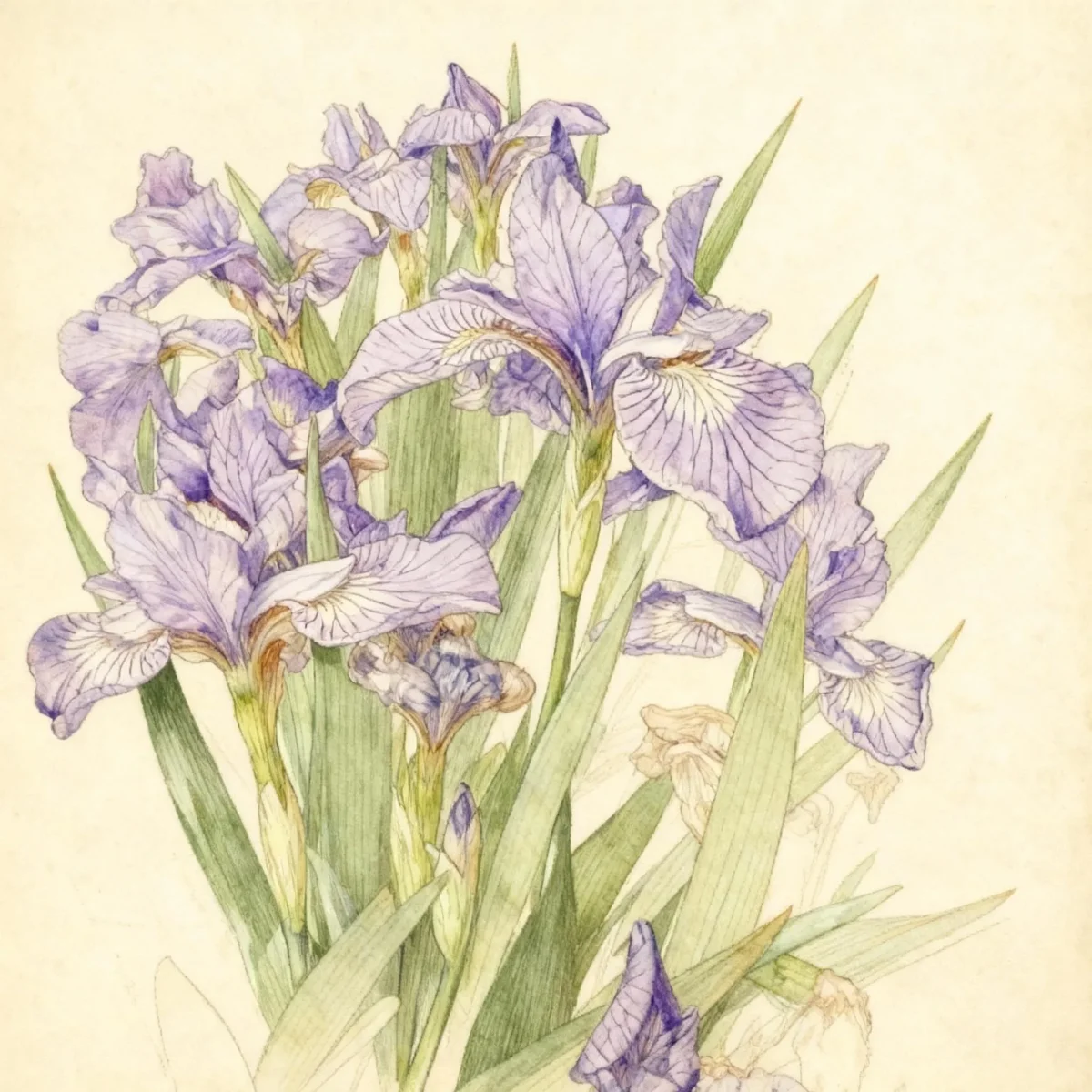
The reliability and texture the Siberian iris provides make it an invaluable component in mixed perennial plantings. Iris ‘Sally Kerlin’ blends exceptionally well within borders, where its height (up to 2.5 ft) provides mid-level structure complementing shorter foreground plants and taller background specimens. Furthermore, its tolerance for moisture secures its role as an edge plant.
This cultivar is particularly effective near water features, working beautifully along stream margins, pond edges, or in dedicated rain gardens, fulfilling its suggested use perfectly. Its ability to handle clay soil and wet soil conditions means it can stabilize slopes or hillside plantings where other perennials might struggle. Even after the beautiful blue flowers fade, the lasting, grass-like foliage ensures visual appeal well into autumn.
Standout Features
Flower Qualities
- Showy
- Good Cut
Noteworthy Characteristics
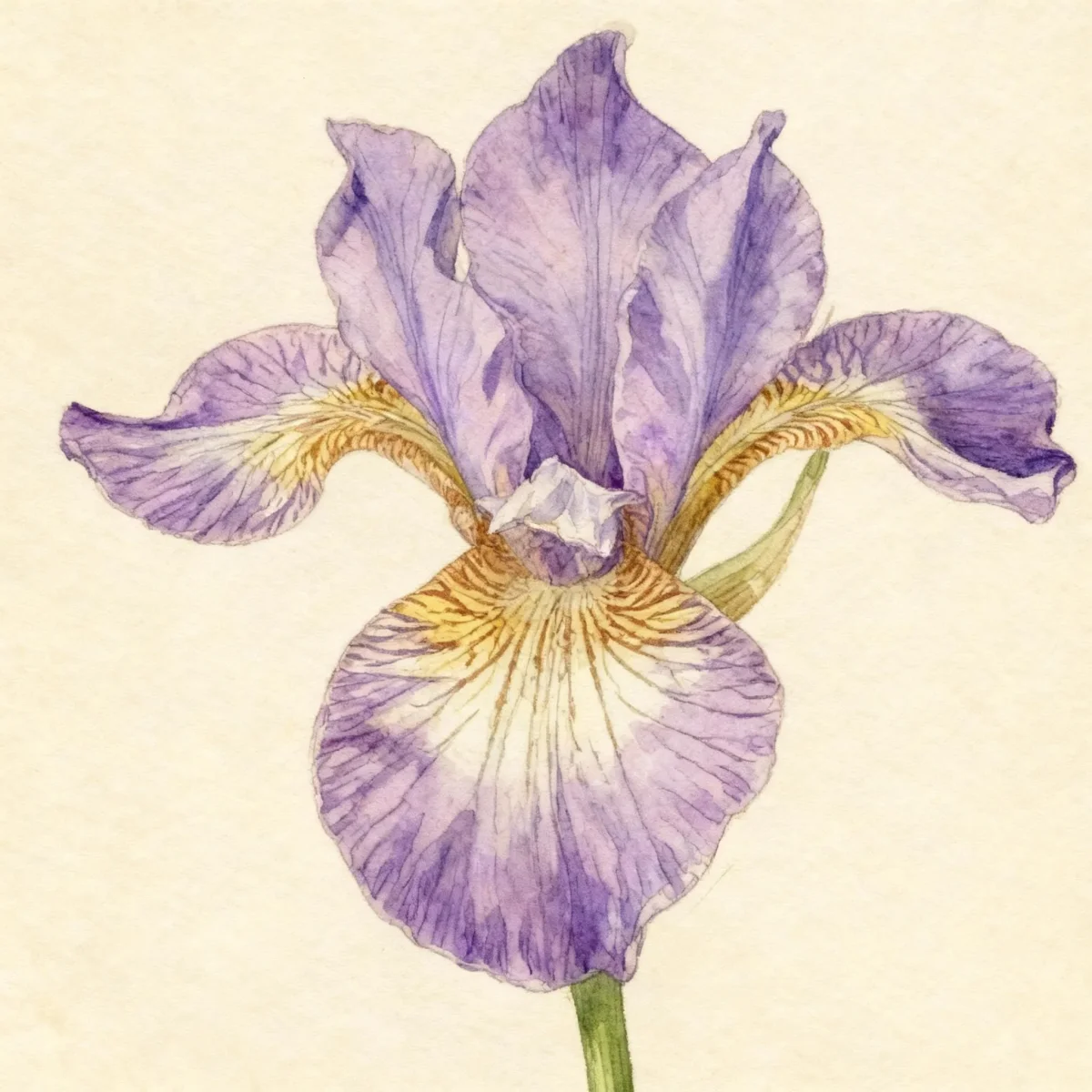
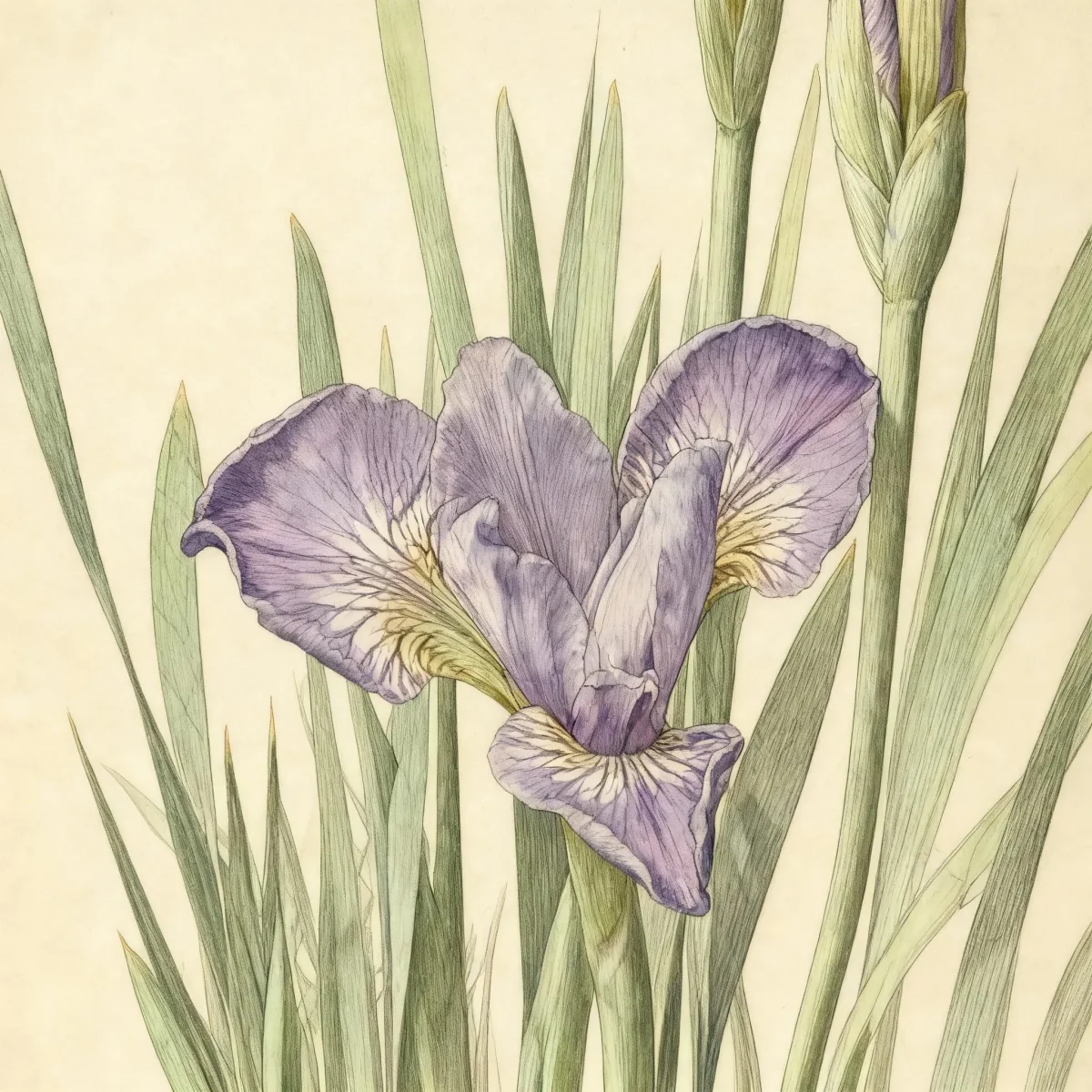
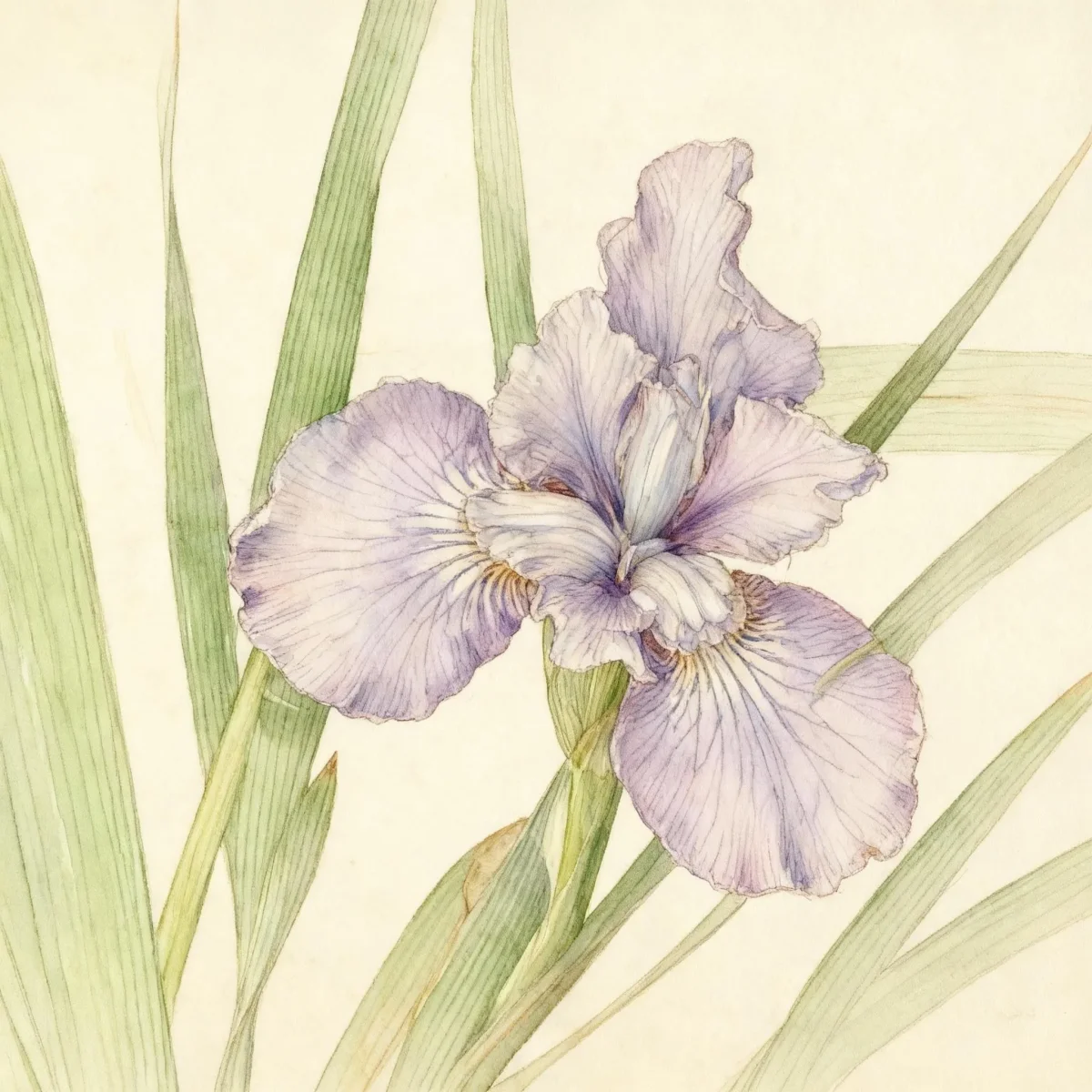
Plants in the Siberian iris group are chiefly of hybrid origin, primarily being derived from two blue-flowered Asian species, namely, I. Sibirica and I. Sanguinea. These irises produce arching, narrow, grass-like, blue-green leaves forming a classic vase-shaped clump. Iris ‘Sally Kerlin’ specifically showcases ruffled, blue flowers rising above that foliage in late spring, featuring upright standards and flaring falls, distinct from the thick rhizomes found on bearded varieties.
Tolerances
- Rabbit
- Deer
- Drought
- Erosion
- Clay Soil
- Wet Soil
Potential Problems
Siberian irises are celebrated for being remarkably pest-free, possessing very little susceptibility to the main issues that plague bearded iris, such as bacterial soft rot or iris borer. Gardeners should focus preventative efforts on ensuring proper siting regarding light and moisture. If foliage flops, it usually indicates the Iris ‘Sally Kerlin’ is receiving too much shade and needs to be moved to a sunnier location during the next division cycle.
Frequently Asked Questions
What hardiness zones is Siberian iris suitable for?
The Siberian iris, including the Iris ‘Sally Kerlin’ cultivar, is reliably hardy in USDA Zones 3 through 8.
How large does Iris ‘Sally Kerlin’ grow?
This variety typically reaches a height between 2 and 2.5 feet, with a comparable spread of 2 to 2.5 feet, forming pleasingly dense clumps.
When does Iris ‘Sally Kerlin’ bloom?
You can expect the showy blue flowers of Iris ‘Sally Kerlin’ to appear during the peak late spring and early summer window, specifically from May through June.
What sun exposure does Siberian iris need?
For best flowering performance, site your Siberian iris where it receives full sun to part shade. Too much shade will result in fewer blooms.
Conclusion
The Iris ‘Sally Kerlin’ Siberian iris offers a superb combination of aesthetic beauty, low maintenance, and exceptional adaptability, even thriving in challenging moist sites. Its ruffled blue flowers are a highlight of the late spring garden tapestry. Before planting, ensure your site falls within USDA Zones 3-8 and that you can provide the medium moisture this moisture-loving perennial appreciates.
Companion Planting
When placing Iris ‘Sally Kerlin’ in perennial borders, select companions that share similar cultural needs regarding moisture and sun exposure. Look for other water-loving plants that bloom before or after the June peak to maintain continuous interest. Astilbes, Japanese primroses (Primula japonica), and bog mint (Mentha pulegium) all appreciate moisture and can complement the upright form of the Siberian iris foliage.
Propagation Tips
The primary method for increasing your stock of Iris ‘Sally Kerlin’ is through division, which is also crucial for maintaining vigor and bloom quality. This division is best performed when overcrowding is observed, typically every few years, either in early spring before new growth begins or in late summer after flowering concludes. Carefully lift the clumps, separate viable sections of the rhizome (ensuring each division has roots and at least one viable eye), and replant immediately at the correct depth of 1–2 inches.