Semi-dwarf cherry (Prunus STARK GOLDEN SWEET)
Grow the Semi-dwarf cherry, Prunus STARK GOLDEN SWEET, for fragrant spring blooms and edible yellow fruit in USDA Zones 5-7.
Scroll down to discover growing tips, care requirements, companion plants, and more
Complete Plant Information
Overview
The Prunus STARK GOLDEN SWEET is a highly valued fruit tree, known primarily for introducing unique yellow sweet cherries to the home garden. As a semi-dwarf cherry, it offers the wonderful harvest potential of sweet cherries without the difficulties associated with managing a very large tree. This introduction from Stark Bro’s provides both visual appeal with its early spring display and exceptional utility as a food source.
This variety requires dedication, earning a high maintenance rating, but rewards attentive gardeners with edible fruit ripening in June. It thrives best when situated in a location that receives full sun exposure, though it can tolerate light shade. Successful cultivation of the Prunus STARK GOLDEN SWEET requires attention to soil drainage and consistent moisture levels.
Gardeners should note that while the Prunus STARK GOLDEN SWEET produces beautiful, fragrant flowers, it is not self-fertile and must be planted near a compatible pollinator variety. The resulting yellow fruit often receives less attention from hungry birds compared to their red counterparts, offering a practical benefit for harvest success of this delicious Semi-dwarf cherry.
Fast Facts
- Plant Family: Rosaceae
- Plant Type: Fruit
- Hardiness Zones: USDA Zones 5-7
- Size at Maturity:
- Height: 15-25 ft
- Spread: 15-20 ft
- Bloom Time: April
- Bloom Description: White
- Sun Exposure: Full sun
- Water Needs: Medium
- Maintenance Level: High
How to Grow
Planting Prunus STARK GOLDEN SWEET should occur during the dormant season—either early spring before bud break or in the fall after leaves drop—to minimize transplant shock. These semi-dwarf cherry specimens require average, medium moisture, well-drained soils. Ensure the site offers full sun for optimal fruit production and blooms, although the variety is slightly more tolerant of light shade than many other cherries. Providing a sheltered location can further protect the tree from harsh winds.
Watering is crucial for this Semi-dwarf cherry. While established trees need medium water, they especially appreciate consistent moisture, particularly during dry spells and while the fruit is developing. Fertilization should be tailored to soil tests, but generally, young trees benefit from balanced feeding until they reach maturity. Avoid over-fertilizing, which can promote excessive vegetative growth at the expense of fruit.
Management of this variety centers heavily on disease and pest control, justifying the high maintenance rating. Pruning should focus on maintaining an open, well-ventilated canopy, which assists in disease prevention and allows for easier harvesting of the golden fruit. Always adhere to sanitation practices, removing fallen debris promptly to reduce overwintering sites for common cherry pests and diseases.
Landscape Uses
The Prunus STARK GOLDEN SWEET is primarily grown for its edible sweet cherries, making it an excellent feature tree in edible landscapes or kitchen gardens. Due to its manageable size as a semi-dwarf, it fits well in larger yards or orchards where space limits prevent growing full-size sweet cherries. Its beautiful spring blossoms also make it a strong candidate as a specimen tree near patios or entryways, providing an initial burst of color and fragrance early in the season.
When placing your Semi-dwarf cherry, strategically pair it with its necessary pollinator buddy; these should be planted relatively close (within 50 feet) to ensure successful cross-pollination, resulting in a plentiful harvest of yellow fruit. Complement the tree with low-growing perennial herbs or groundcovers underneath that do not compete heavily for water or nutrients, respecting the tree’s need for consistent moisture.
Standout Features
Flower Qualities
- Showy
- Fragrant
Fruit Qualities
- Showy
- Edible
Noteworthy Characteristics
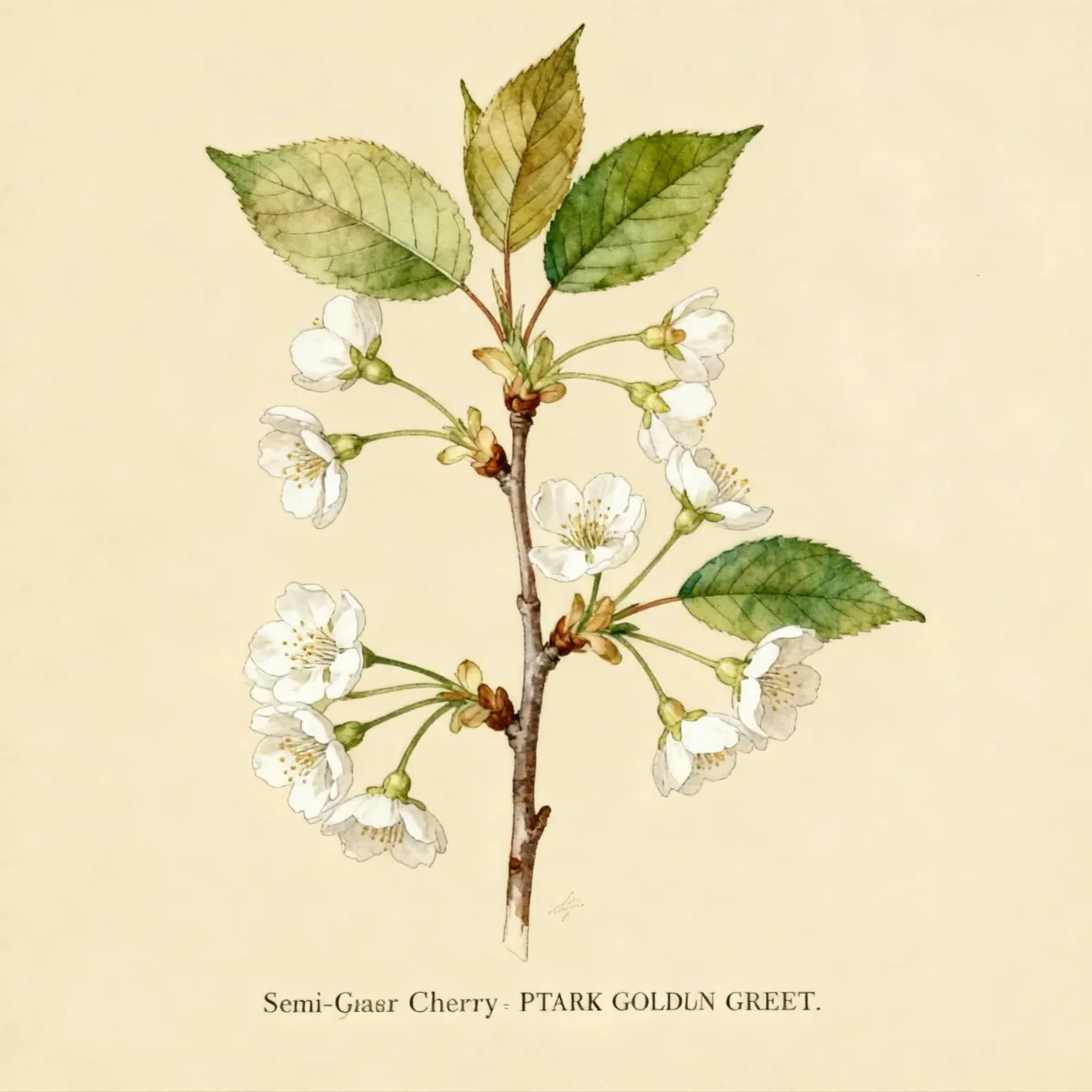
This sweet cherry is an exclusive introduction of Stark Bro’s located in Louisiana, Missouri. Fragrant white flowers appear singly or in clusters in early spring, giving way to unique yellow sweet cherries that ripen in June. Birds are reportedly less attracted to the yellow fruit of this cultivar than they are to cherries with red fruit, a significant advantage for gardeners hoping to secure their harvest.
Tolerances
Potential Problems
Cherry trees are susceptible to a large number of insect and disease pests, requiring diligent observation for the Prunus STARK GOLDEN SWEET. Key diseases include bacterial canker, brown rot, scab, crown gall, powdery mildew, and cherry leaf spot. Proactive summer pruning to improve air circulation and the application of timely fungicide treatments before bloom are essential management steps against many fungal issues.
Insect pests commonly target the developing fruit and foliage. Watch closely for plum curculio and cherry fruit fly, whose larvae compromise the crop quality. Aphids, caterpillars, and scale can also attack the tree’s health. Employing dormant oil sprays and targeted insecticide applications timed according to pest life cycles will help manage infestations on your Semi-dwarf cherry tree.
Frequently Asked Questions
What hardiness zones is Semi-dwarf cherry suitable for?
The Prunus STARK GOLDEN SWEET is suited for cultivation in USDA Hardiness Zones 5 through 7.
How large does Semi-dwarf cherry grow?
This semi-dwarf variety typically matures to a height between 15 to 25 feet, with a spread ranging from 15 to 20 feet wide.
When does Semi-dwarf cherry bloom?
The Prunus STARK GOLDEN SWEET produces fragrant white flowers during April.
What sun exposure does Semi-dwarf cherry need?
This fruit tree requires and performs best in full sun exposure for abundant fruit set.
Conclusion
The Prunus STARK GOLDEN SWEET offers gardeners the joy of harvesting sweet, yellow cherries in early summer while maintaining a manageable size by growing as a semi-dwarf. Remember that proper pollination partners are critical for success, and this high-maintenance variety demands attentive seasonal care to manage pests and diseases effectively. Before planting, verify that your local growing conditions align with USDA Zones 5-7 and ensure you have planned for its required pollinator.
Companion Planting
When planning your orchard or garden around the Prunus STARK GOLDEN SWEET, select companions that prefer similar soil physics—medium moisture and excellent drainage—but that do not share common pest vulnerabilities. Low-growing herbs like chives or nasturtiums can occupy the ground plane without interfering with the root zone. Avoid planting other stone fruits like peaches or plums too closely, as they often share susceptibility to brown rot, which could lead to widespread infection across your entire planting.
Pollinator Planning
Since the Prunus STARK GOLDEN SWEET is not self-fertile, careful planning is essential to ensure a successful harvest. Selecting a compatible sweet cherry pollinator variety is the most crucial step for maximizing the yield of your tree. Ensure the pollinator blooms at the same time, typically in April, and place it within effective cross-pollination distance, usually less than 50 feet away. This reciprocal blooming relationship guarantees abundant fruit set for both trees.