Giant hyssop (Agastache 'Black Adder')
Discover Agastache 'Black Adder', a striking Giant hyssop boasting smoky red-violet flowers from summer until frost.
Scroll down to discover growing tips, care requirements, companion plants, and more
Complete Plant Information
Overview
Agastache ‘Black Adder’, a standout cultivar of Giant hyssop, provides exceptional late-season color and fragrance in the garden. As a hybrid, it offers improved flower characteristics over species plants, presenting dense spikes of tiny, tubular flowers held high on sturdy stems well into autumn. This plant is highly valued for its aromatic foliage and its remarkable ability to attract hummingbirds, bees, and butterflies throughout the long blooming period.
This upright, clump-forming perennial thrives when given full sun and excellent drainage. The foliage carries a pleasing anise or licorice scent, adding another sensory layer to its appeal. Growing to about 2 to 3 feet tall, Agastache ‘Black Adder’ is an excellent choice for adding vertical interest and reliable color where the mid-summer garden starts to fade.
Gardeners planting Giant hyssop benefit from its relatively low maintenance once established, especially its tolerance for heat and drier soils. However, ensuring superb soil drainage is critical for the long-term survival of this robust hybrid.
Fast Facts
- Plant Family: Lamiaceae
- Plant Type: Herbaceous perennial
- Hardiness Zones: USDA Zones 6-9
- Size at Maturity:
- Height: 2-3 ft
- Spread: 1.5-2 ft
- Bloom Time: June to September
- Bloom Description: Smoky red violet
- Sun Exposure: Full sun
- Water Needs: Medium
- Maintenance Level: Medium
How to Grow
For best results with Agastache ‘Black Adder’, plant in spring after the last frost, ensuring the location receives full sun. Soil preparation is paramount; the plant requires average, medium moisture, but its most non-negotiable need is very well-drained soil. Poor drainage, especially heavy hard clay that retains moisture, is the primary reason these beautiful hybrids fail to survive the winter.
Water needs are medium. While Giant hyssop tolerates drying out once established, consistent moisture during the first season helps build a strong root system. Avoid overhead watering late in the day, as saturated foliage can encourage fungal issues. Fertilizing is generally unnecessary if the soil isn’t extremely poor; over-fertilizing can lead to floppy growth that diminishes the appearance of the upright spikes.
Deadheading spent flowers will significantly promote additional, continuous bloom from June right through September. If you choose not to deadhead, leave the spent stems over winter; this provides structure and insulation, offering plants in colder zones the protection they need for overwintering success. If survival is a concern in borderline zones, site Agastache ‘Black Adder’ in a protected spot, such as near a south-facing wall.
Landscape Uses
The bold, aromatic nature and extended floral display of Agastache ‘Black Adder’ make it indispensable in sun-drenched borders. Its height (2-3 feet) positions it perfectly in the middle grounding of perennial beds, acting as a backdrop or transitional planting among shorter offerings. This wonderful Giant hyssop shines in cottage gardens, where its informal structure blends well, and is a magnet for sensory gardens located near patios or alongside walkways where the fragrant foliage can be appreciated when brushed against.
Consider pairing this variety with plants that share similar sun and drainage needs. Silvery foliage like Lavender or Artemisia complements the blue-green leaves, while companions such as Coneflowers (Echinacea) or Black-Eyed Susans (Rudbeckia) harmonize with its mid to late-summer flowering window. Because the smoky red-violet blooms are so unique, use them to bridge color gaps between hot summer reds and cooler fall mauves.
As a good cut flower option, harvesting regularly will keep the plant producing more of those showy spikes for indoor enjoyment. The resulting arrangement will also carry the lovely, subtle anise fragrance throughout the home.
Standout Features
Flower Qualities
- Showy
- Fragrant
Noteworthy Characteristics
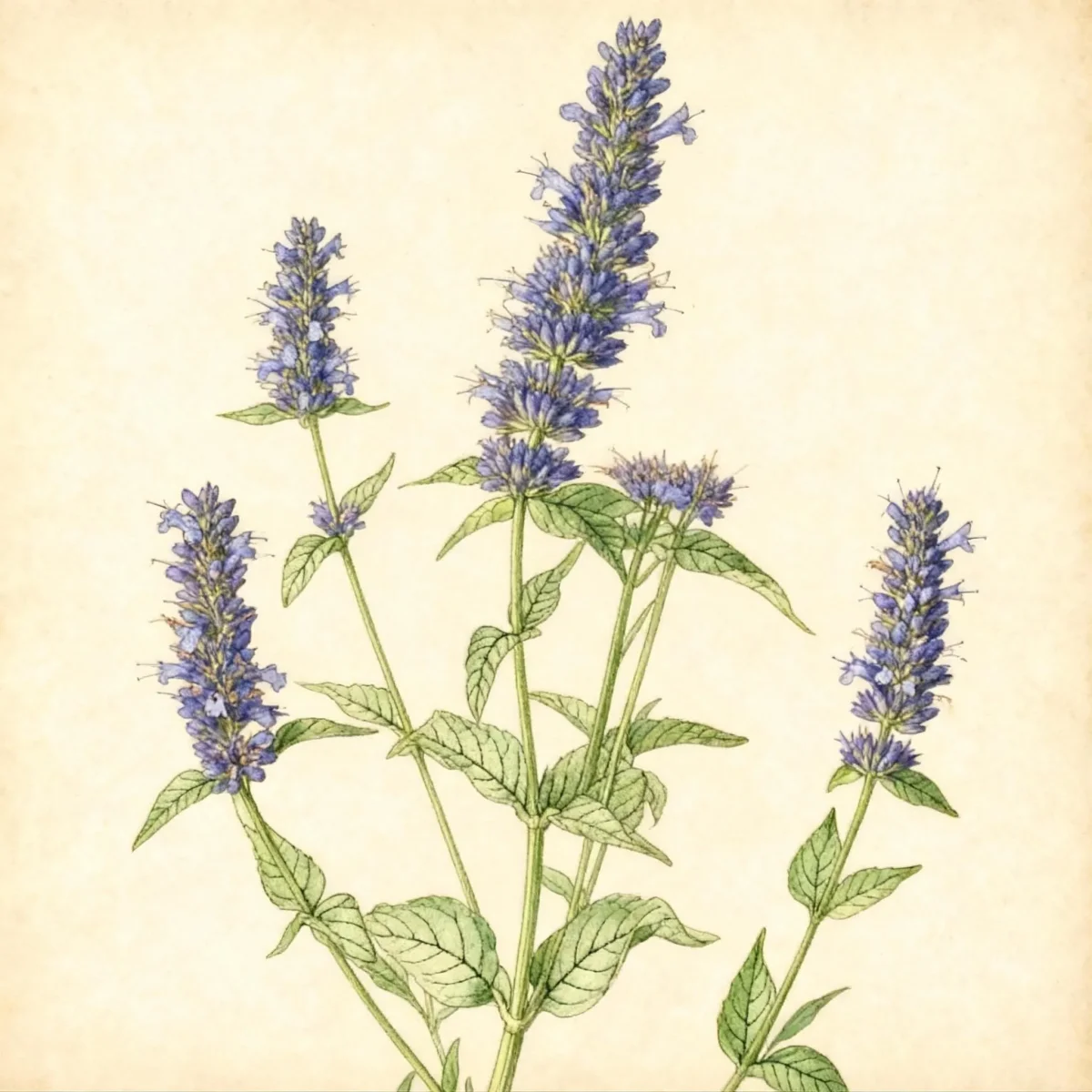
Agastache, commonly called giant hyssop, is a genus containing about 30 species of upright herbaceous perennials, most of which are native to North America. The hybrid Agastache ‘Black Adder’ is noted for its long summer-to-frost floral display of tubular, 2-lipped, smoky red-violet flowers packed into showy, bottle-brush terminal spikes up to 8 inches long. Flowers emerge beautifully from nearly black buds, and the plant features aromatic, lance-shaped leaves that are attractive to vital pollinators like bees and hummingbirds.
Tolerances
- Deer
Potential Problems
While generally robust, Agastache ‘Black Adder’ can suffer from crown or root rot if planted in heavy, poorly drained soils where water pools. Prevention centers entirely on site selection and soil amendment prior to planting. If you have clay soil, amend heavily with grit or coarse sand to ensure rapid drainage throughout the root zone.
Insect and disease pressure is typically low for this Giant hyssop hybrid. Gardeners should remain vigilant for common fungal issues, namely rust, powdery mildew, and minor leaf spots, particularly in humid conditions or when air circulation is poor. Improving air flow by spacing plants correctly and avoiding overhead watering are excellent preventative cultural practices.
Frequently Asked Questions
What hardiness zones is Giant hyssop suitable for?
Agastache ‘Black Adder’ is hardy across USDA Zones 6 through 9, making it a reliable perennial for many gardeners seeking summer interest.
How large does Agastache ‘Black Adder’ grow?
This variety typically reaches a mature height between 2 and 3 feet tall with a spread ranging from 1.5 to 2 feet wide.
What sun exposure does Agastache ‘Black Adder’ need?
For the longest period of smoky red-violet blooms, Agastache ‘Black Adder’ requires full sun exposure throughout the growing season.
When does Giant hyssop bloom?
This specific hybrid is prized for its extended bloom window, starting in June and continuing robustly through September, showcasing showy, fragrant flowers.
Conclusion
Agastache ‘Black Adder’ transforms sunny borders with its aromatic foliage and impressive, long-lasting display of smoky red-violet flower spikes. This quality Giant hyssop is a powerhouse for pollinators and offers great texture to perennial landscapes. Before planting, always confirm your garden location falls within USDA Zones 6-9 and ensure your soil drains exceptionally well to guarantee season after season of stunning performance.
Wildlife Benefits
The genus Agastache is exceptionally beneficial for supporting local ecosystems, and ‘Black Adder’ is no exception. Its tubular, nectar-rich flowers attract a constant parade of hummingbirds throughout the summer months, providing essential fuel for their energetic needs. The dense flower spikes are also highly attractive to masses of native bees seeking pollen and nectar resources.
Planting clumps of this Giant hyssop near outdoor living spaces allows you to enjoy the constant visitor traffic while appreciating the plant’s resilience. Unlike many soft-stemmed perennials, the structure left over winter provides valuable shelter for overwintering insects and beneficial organisms, contributing to garden health long after the last bloom fades.
Companion Planting
Because successful culture of Agastache ‘Black Adder’ hinges on rapid drainage and full sun, it pairs beautifully with other Mediterranean or prairie-style perennials that share these stringent requirements. Consider interplanting with drought-tolerant salvias (Salvia species) whose spiky forms echo the structure of the Giant hyssop. Sedums and ornamental grasses, which also demand sharp drainage, provide excellent textural contrast to the finer leaves of the Agastache.
When grouping plants, focus on contrasting leaf colors to make the blue-green foliage of Agastache ‘Black Adder’ pop. Pairing it with silver-leafed companions or plants bearing contrasting large, coarse foliage prevents the area from becoming too visually uniform. This strategy builds a cohesive, low-water-use planting scheme that requires minimal fuss once established.