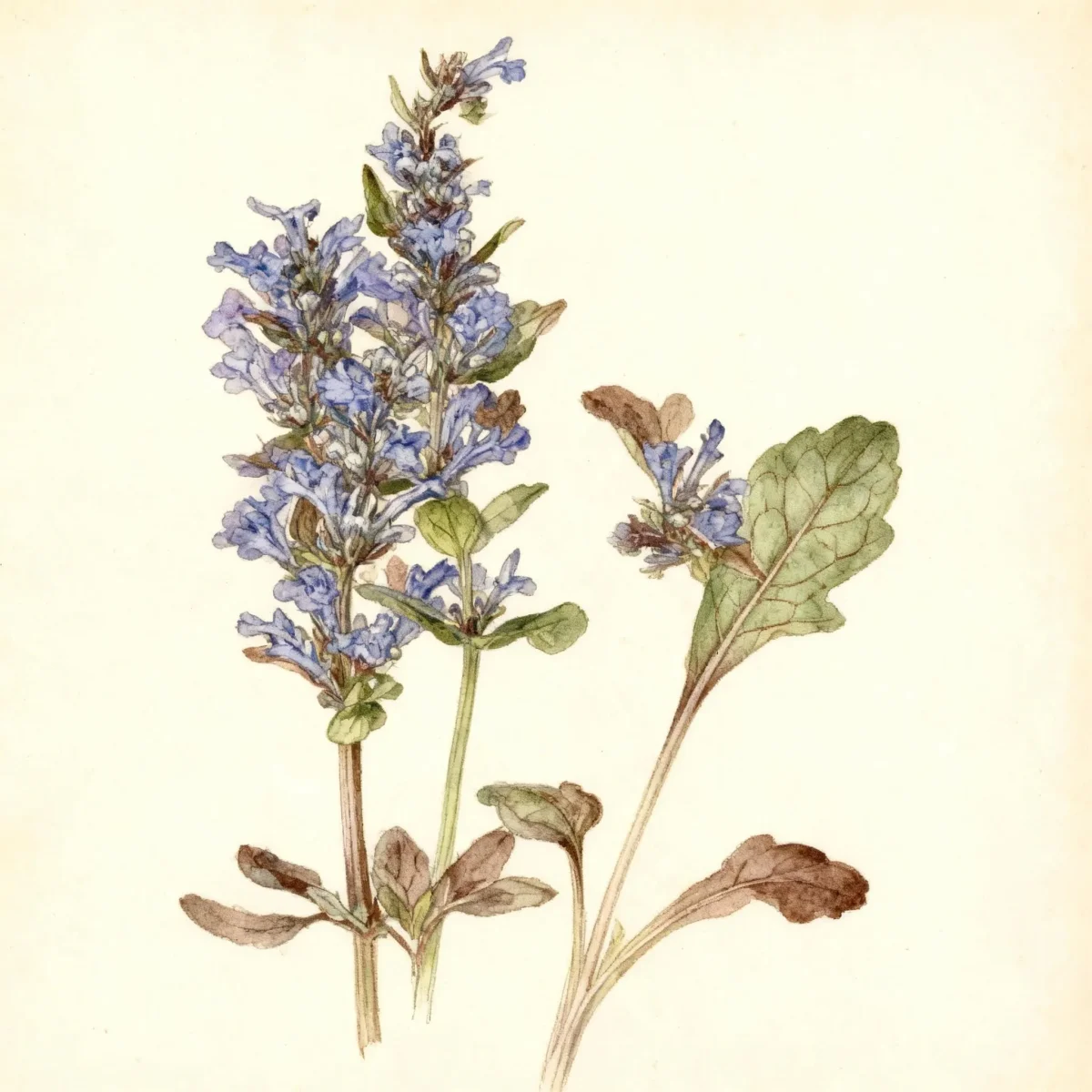
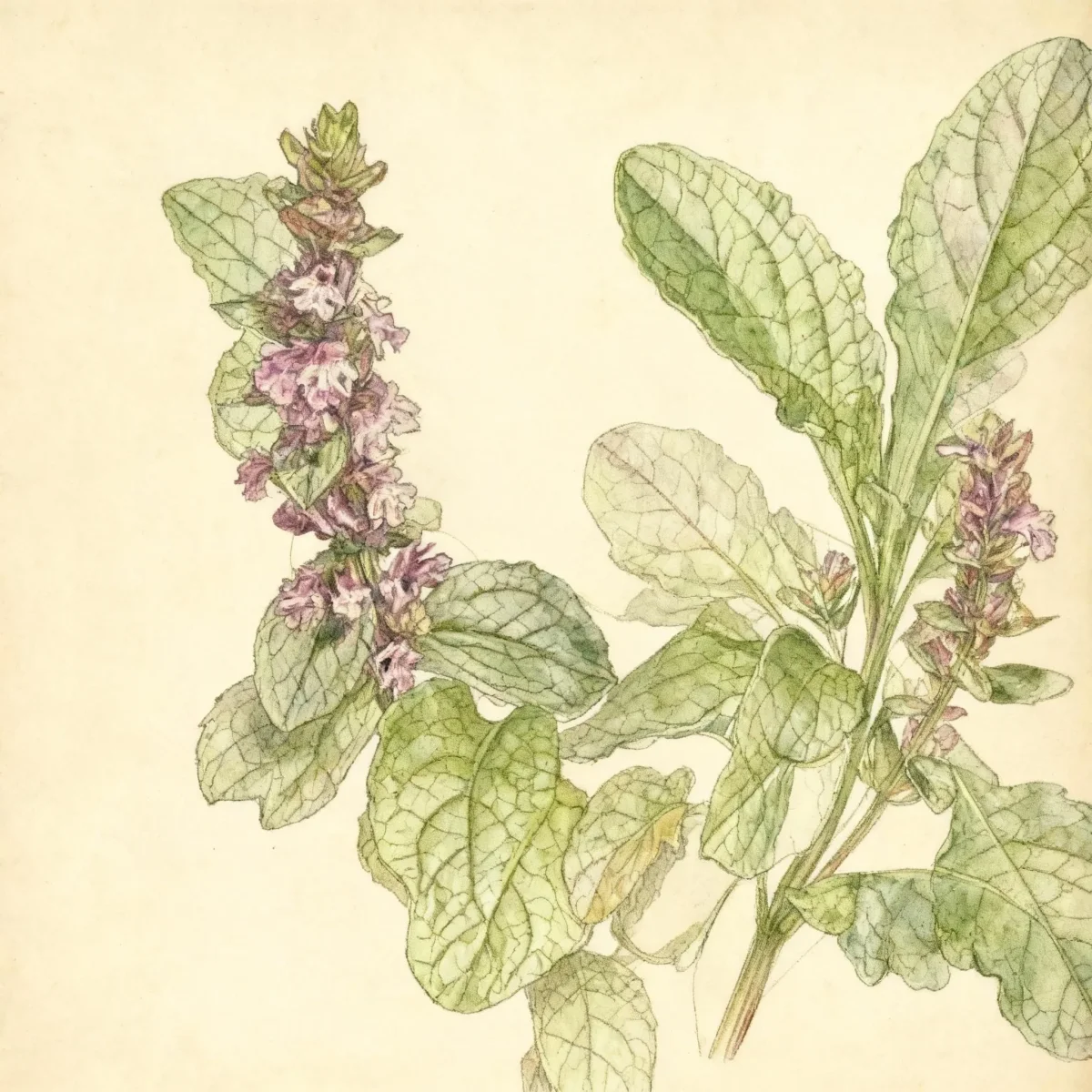
Bugleweed (Ajuga reptans 'Dixie Chip')
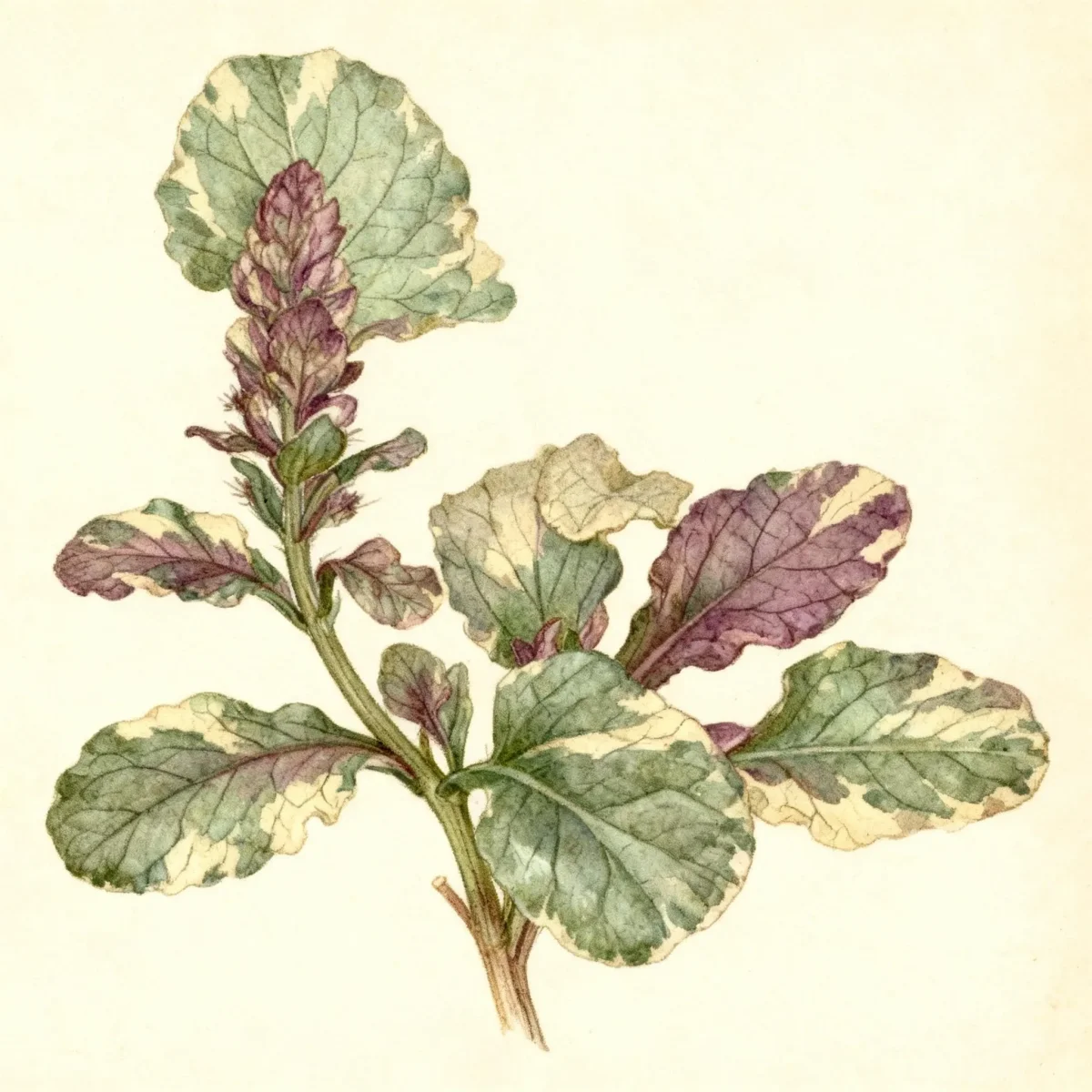
Ajuga reptans 'Dixie Chip' Bugleweed is a stunning, low-growing variegated ground cover offering creamy-green and rosy-purple foliage.
Scroll down to discover growing tips, care requirements, companion plants, and more

Complete Plant Information
Overview
Ajuga reptans ‘Dixie Chip’ is a superior, low-growing perennial prized for its striking, tri-colored foliage, making it a standout Bugleweed cultivar. This selection features a dense mat of tiny leaves displaying shades of green, cream, and rosy-purple, offering visual interest throughout the season. Reaching only 2 to 4 inches tall, Ajuga reptans ‘Dixie Chip’ spreads via runners to form an attractive ground cover that efficiently chokes out competing weeds.
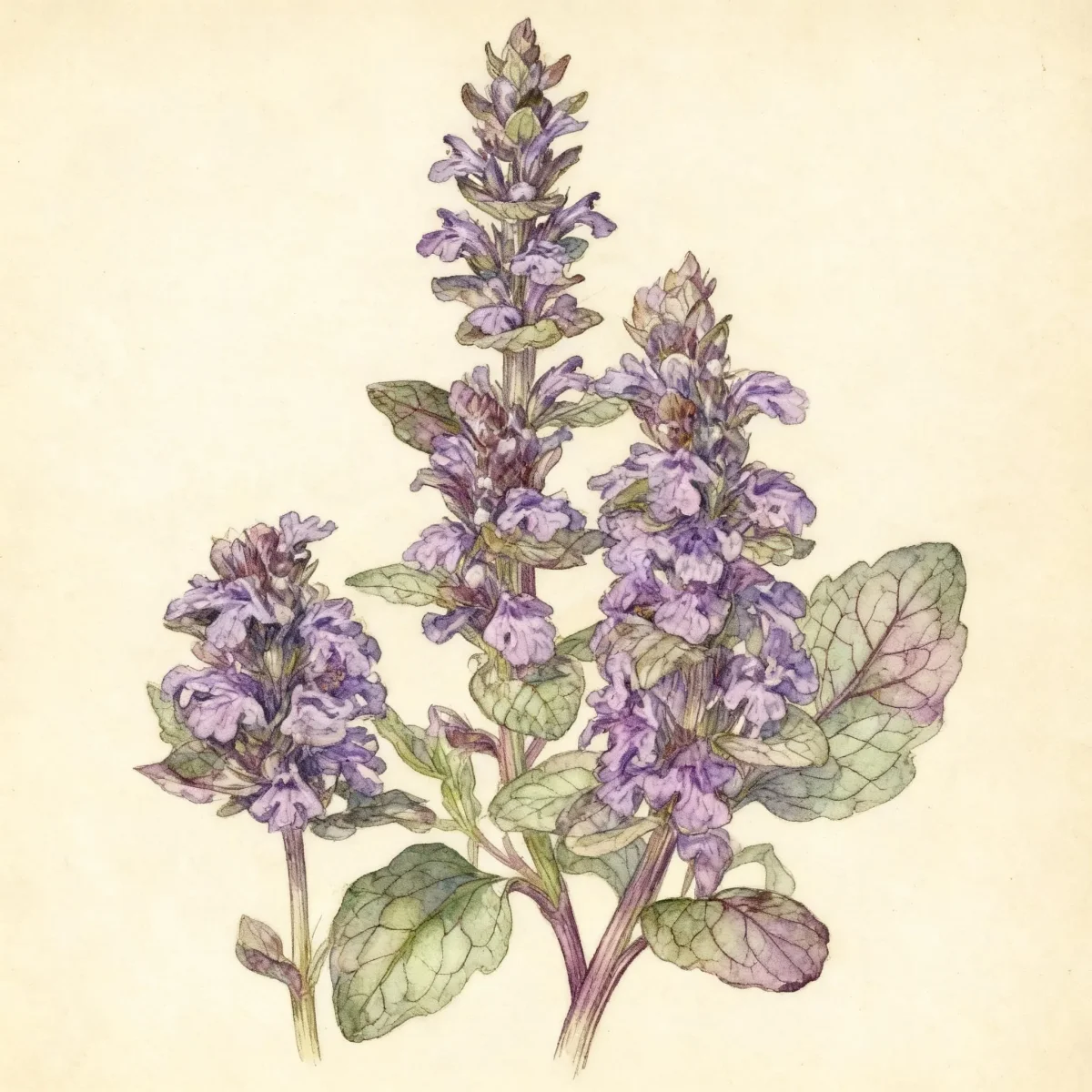
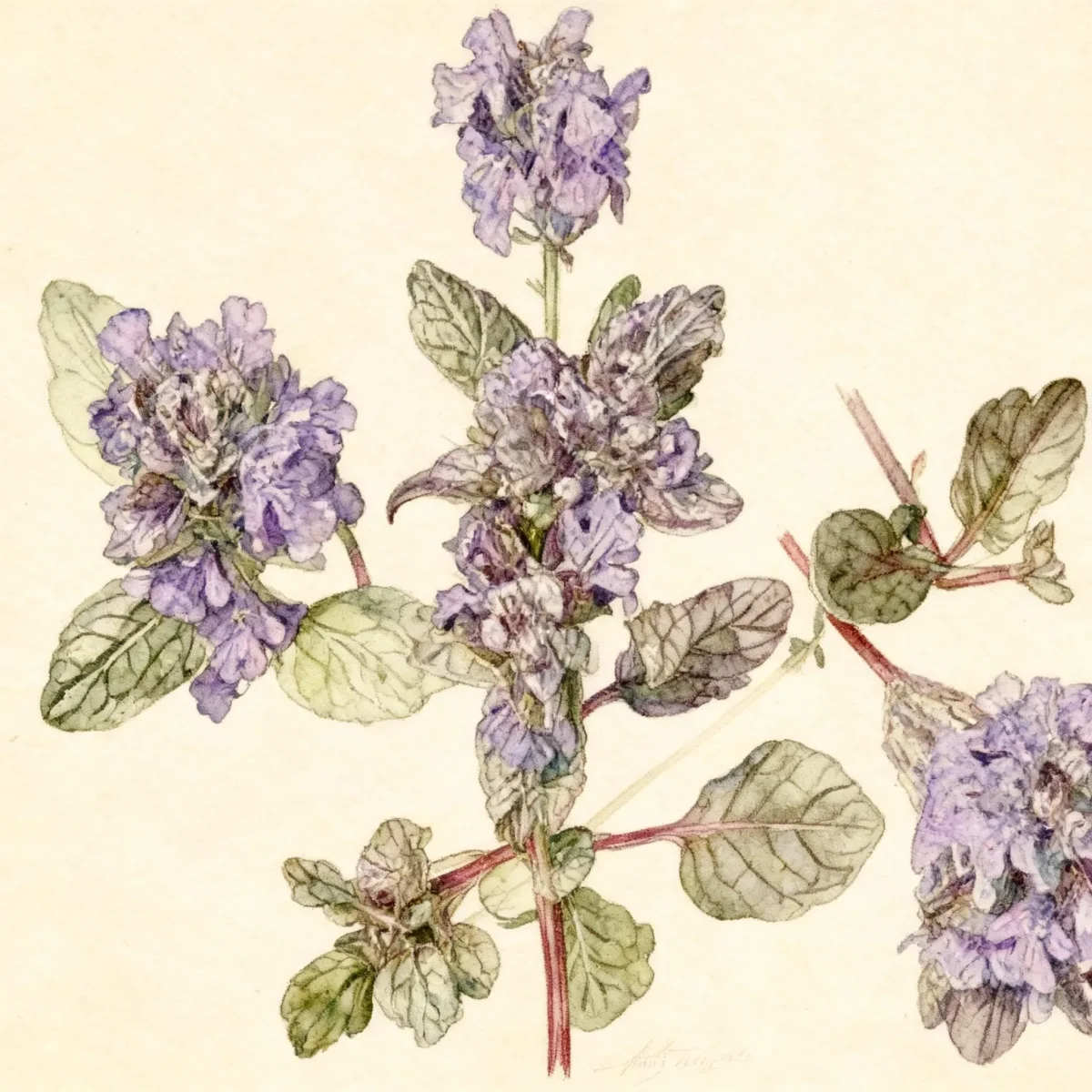
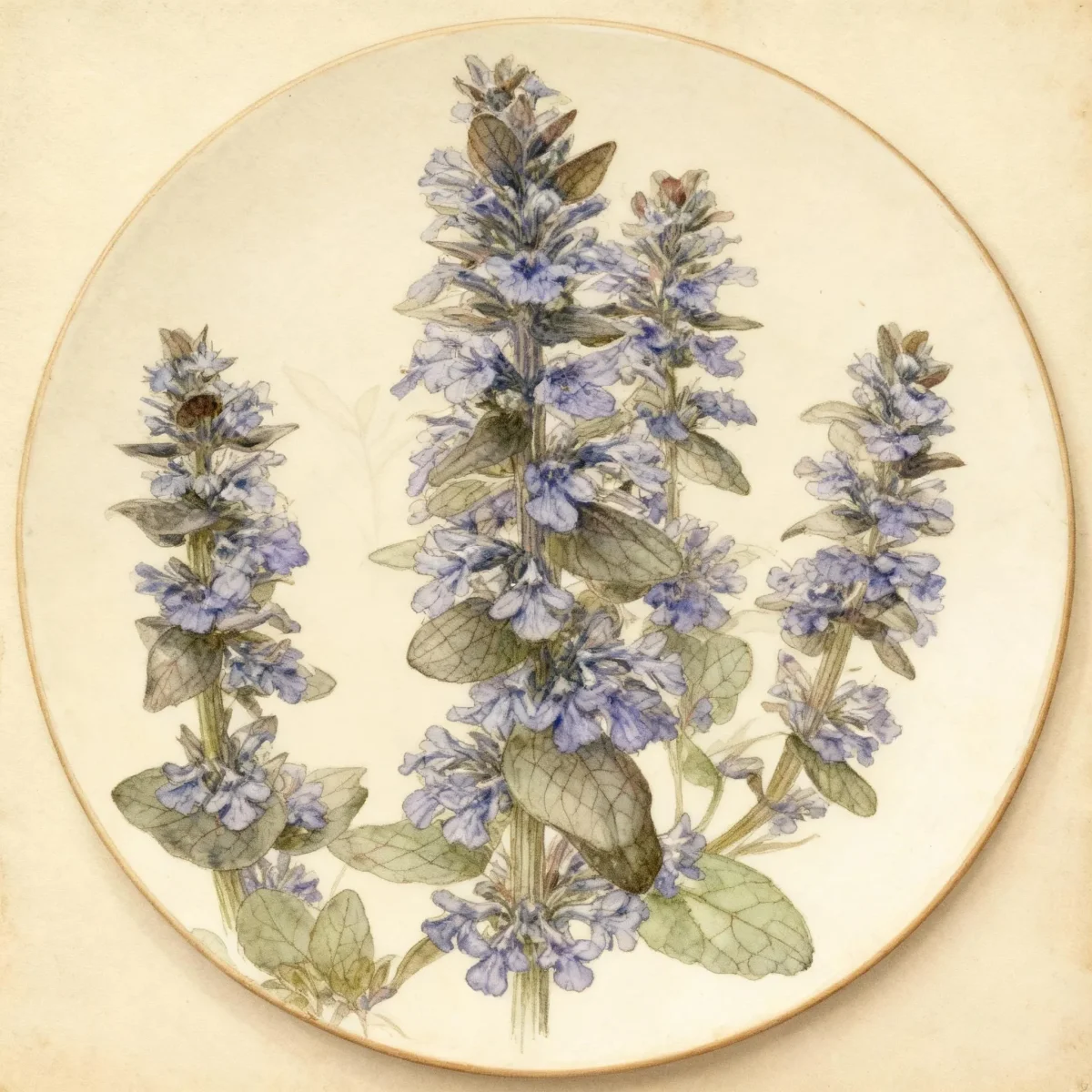
Its rapid, creeping habit makes it an excellent choice for covering difficult banks or planting under large shade trees where turf struggles. While it produces charming violet-blue flower spikes in spring, the primary draw remains the evergreen, variegated foliage, especially in warmer winter climates. Gardeners appreciate the low maintenance required for this dense spreader, solidifying its role as a highly valuable landscape ground cover.
Fast Facts
- Plant Family: Lamiaceae
- Plant Type: Herbaceous perennial
- Hardiness Zones: USDA Zones 4-9
- Size at Maturity:
- Height: 0.25-0.5 ft
- Spread: 0.25-1 ft
- Bloom Time: May to June
- Bloom Description: Violet blue
- Sun Exposure: Full sun to part shade
- Water Needs: Medium
- Maintenance Level: Low
How to Grow
Plant Ajuga reptans ‘Dixie Chip’ in average, medium-moisture, well-drained soils. While this Bugleweed tolerates moderately dry conditions, it thrives best in moist, humusy soils. For the most vibrant foliage color, ensure the planting location receives at least three to four hours of direct daily sun; full shade is tolerated but may mute the variegation. Space plants approximately 6 to 9 inches apart to achieve a dense, prompt matting ground cover.
Water consistently while establishing the plants. Once mature, the medium water needs can usually be met with regular garden moisture, though supplemental water may be needed during extended dry spells. Fertilization is generally unnecessary for healthy Ajuga reptans ‘Dixie Chip’. If the planting becomes overcrowded, division is recommended to refresh the clumps and maintain vigor.
Maintenance remains low for this vigorous spreader. After the spring bloom, you can cut the foliage back neatly to rejuvenate the mat or simply mow large plantings on a high setting to remove spent flower spikes. If any solid green, non-variegated leaves appear on your Ajuga reptans ‘Dixie Chip’, promptly pinch or snip them out to maintain the desired tri-color pattern.
Provide good air circulation, particularly in hot, humid climates, as stagnant, wet conditions can encourage crown rot. Because this Bugleweed spreads readily by stolons, be mindful of where it is planted; avoid placing it adjacent to lawns where stray runners can become unwanted intrusions.
Landscape Uses
The primary function of Ajuga reptans ‘Dixie Chip’ is ground cover, excelling in large, shady areas unsuitable for traditional lawns. Its creeping nature makes it perfect for stabilizing banks and slopes, softening the base of mature trees, or acting as a dense, living mulch around substantial shrubs. The colorful foliage ensures consistent interest beyond the spring bloom.
Consider planting this Bugleweed around spring-flowering bulbs, like snowdrops, allowing the Ajuga’s foliage to grow up and mask the fading bulb leaves later in the season. Design schemes benefit from using the variegated Ajuga reptans ‘Dixie Chip’ to create defined borders or contrasting texture next to finer-leaved ferns or hostas. Always avoid planting near lawn edges unless you are prepared to contain its enthusiastic spread.
Flower Qualities
- Showy
Noteworthy Characteristics
Ajuga reptans, commonly called bugleweed, is a dense, rapidly spreading, mat-forming ground cover which features shiny, dark green leaves. Cultivars of this species feature leaves with more interesting and varied foliage color. ‘Dixie Chip’ is noted for its variegated tri-colored foliage; a sport of A. Reptans ‘Valfredda’ CHOCOLATE CHIP, it forms a mat of tiny leaves emerging with green, cream, and rosy-purple tones.
Tolerances
- Rabbit
- Deer
- Black Walnut
Potential Problems
Crown rot is the primary concern for Ajuga reptans ‘Dixie Chip’, especially when grown in heavy soils or in the high humidity common to the deep South. To prevent this, ensure soils are well-draining and the planting area has adequate air movement. If clumps seem stressed or overcrowded, divide them during the growing season. Gardeners must also carefully manage where this excellent Bugleweed is sited, as its willingness to spread means it can easily creep into perennial beds or creep under lawn edging if not contained.
Frequently Asked Questions
What hardiness zones is Bugleweed suitable for?
Ajuga reptans ‘Dixie Chip’ is reliably hardy across USDA Zones 4 through 9, making it versatile for many climates.
How large does Ajuga reptans ‘Dixie Chip’ grow?
This low-growing cultivar typically reaches only 0.25 to 0.5 feet in height, though it spreads widely, often achieving a spread between 0.25 and 1 foot wide.
When does Bugleweed bloom?
You can expect the violet-blue flower spikes of this Bugleweed to appear reliably from May through June.
What sun exposure does Ajuga reptans ‘Dixie Chip’ need?
This plant adapts to full sun, though it performs beautifully in partial shade; part-sun locations (receiving at least 3-4 hours of direct sun) usually give the best foliage coloration.
Conclusion
Ajuga reptans ‘Dixie Chip’ provides gardeners with a nearly foolproof solution for filling in patchy, difficult areas with exceptionally beautiful, low-maintenance foliage. This specific Bugleweed offers superior variegation that brightens shady corners throughout the year. Before planting, confirm your USDA hardiness zone compatibility and prepare your soil for slightly moist conditions to ensure the most vibrant display from your new ground cover.
Companion Planting
Due to its preference for medium moisture and partial shade, Ajuga reptans ‘Dixie Chip’ pairs wonderfully with other shade-loving, textural plants. Consider using it as an edging plant against taller, broader-leaved Hosta varieties, which contrast nicely with the small, creeping leaves of the Bugleweed. It also complements spring-flowering woodland bulbs like Daffodils or Scilla, as the Ajuga foliage will emerge to gracefully obscure deciduous companion foliage as they fade.
Propagation Tips
Since Ajuga reptans ‘Dixie Chip’ is not known to produce viable seed, propagation relies entirely on vegetative methods. The easiest way to increase your planting density is through division, utilizing the plant’s natural spreading mechanism (stolons). Each spring or early fall, simply sever the runners connecting a mature clump to younger offshoots. These runners often develop small root systems naturally; transplant these rooted sections immediately to their new location for instant establishment, or layer individual segments directly into the soil to encourage faster rooting.