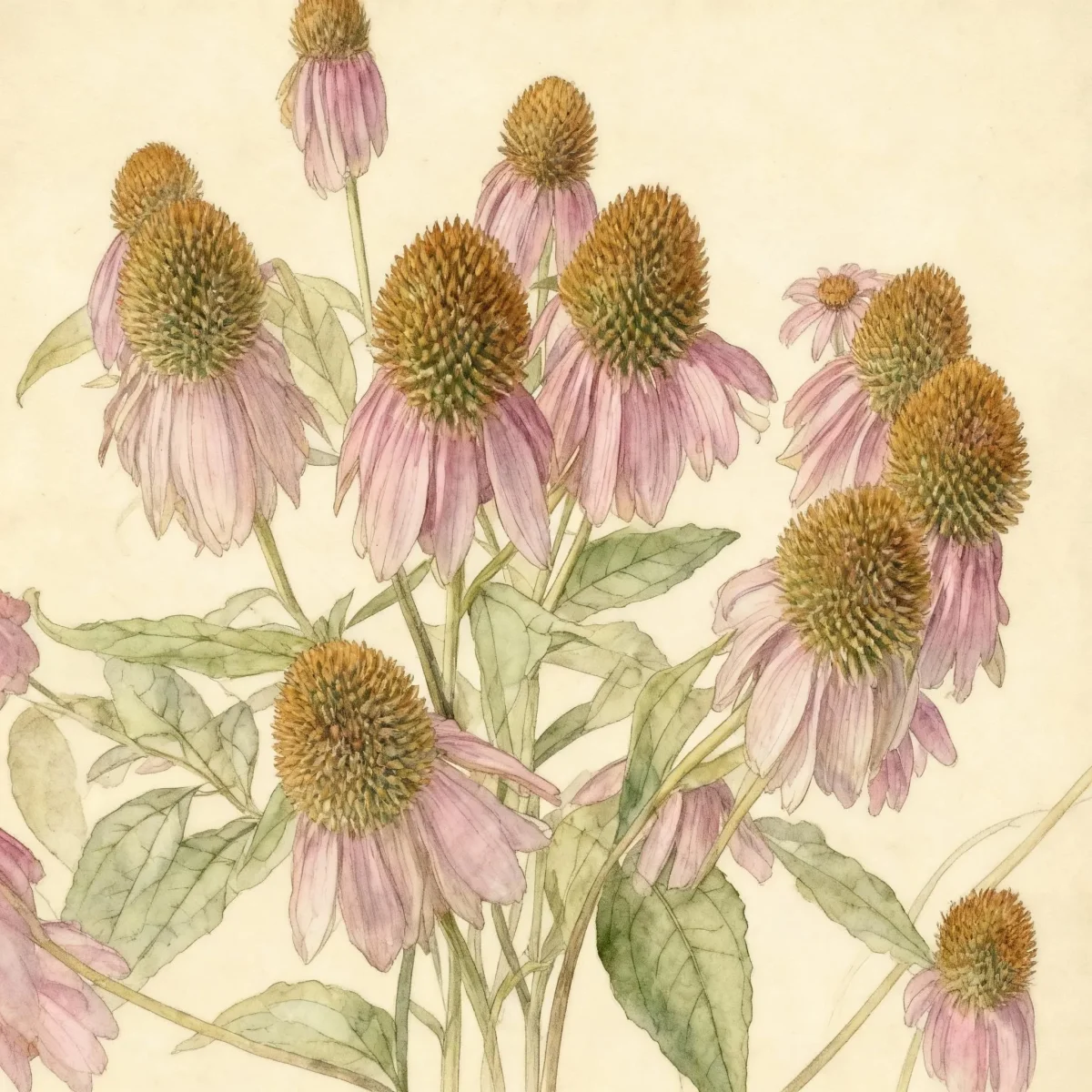
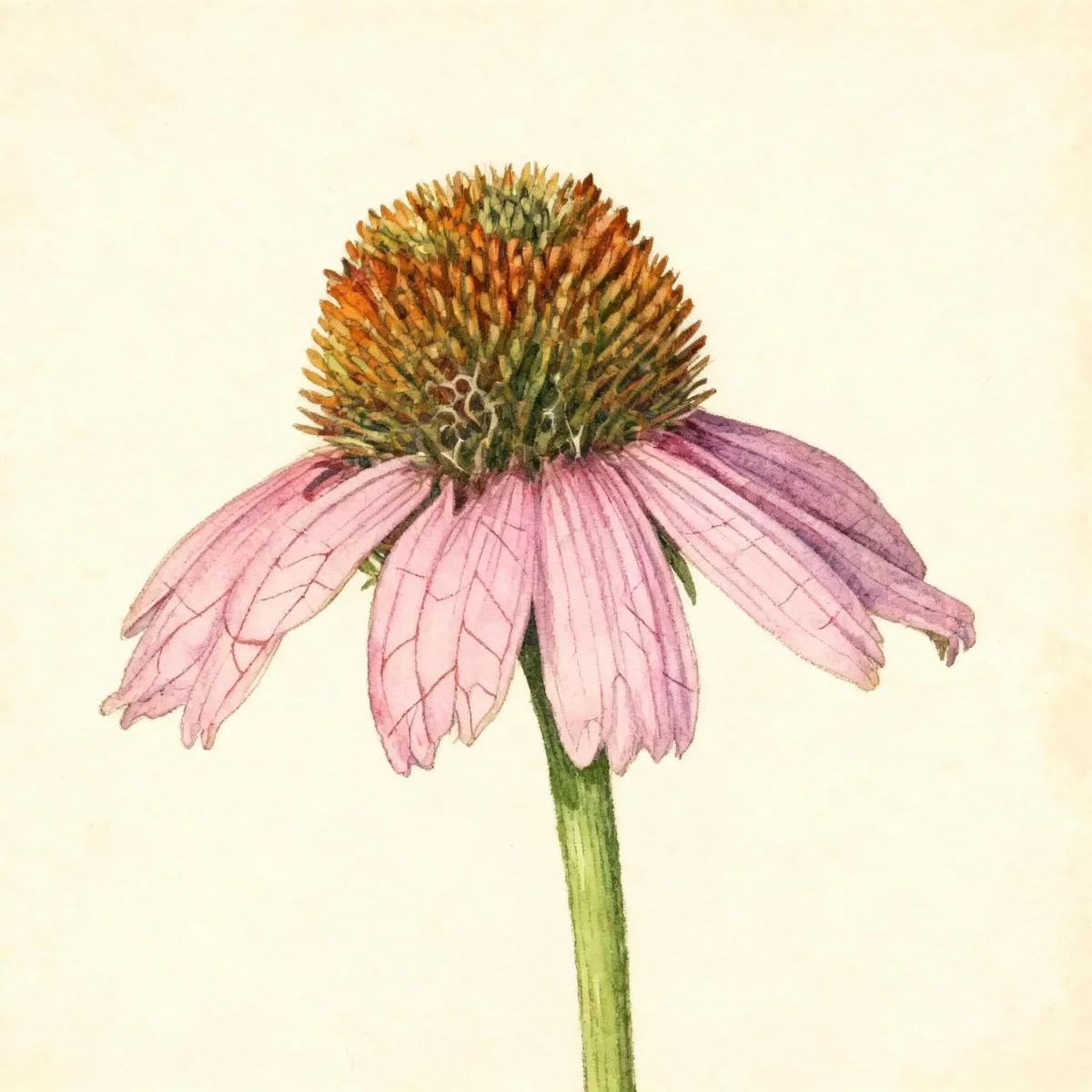
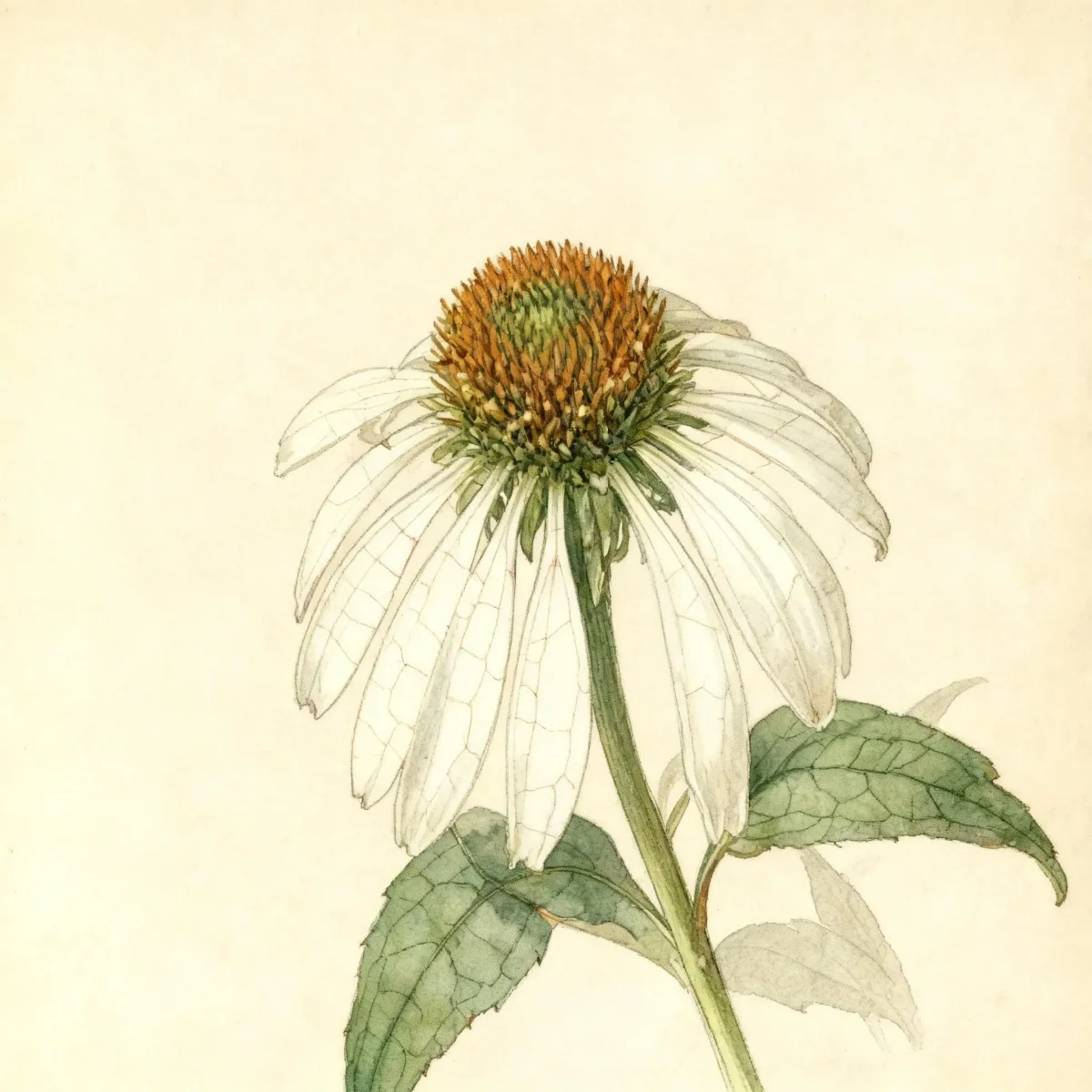
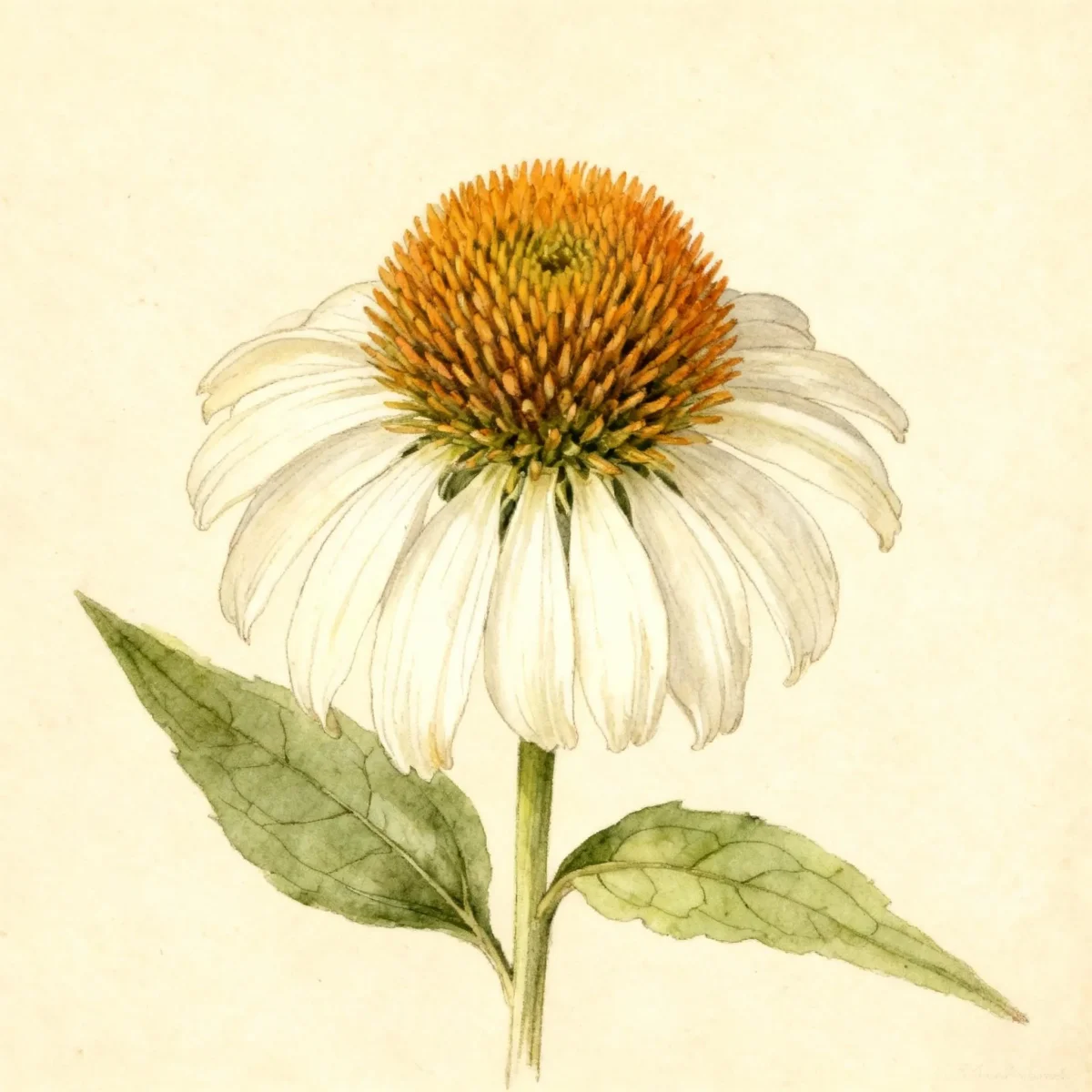
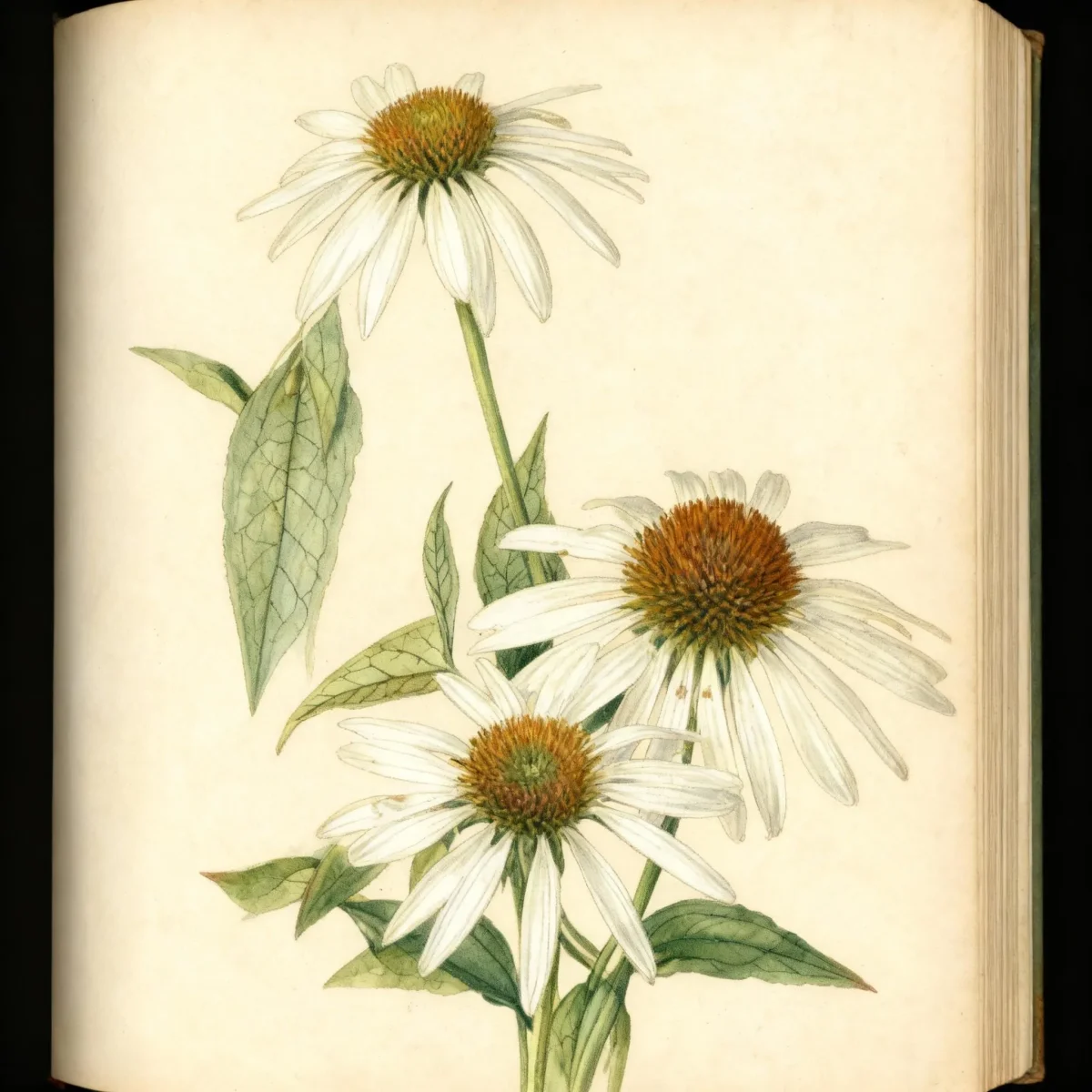
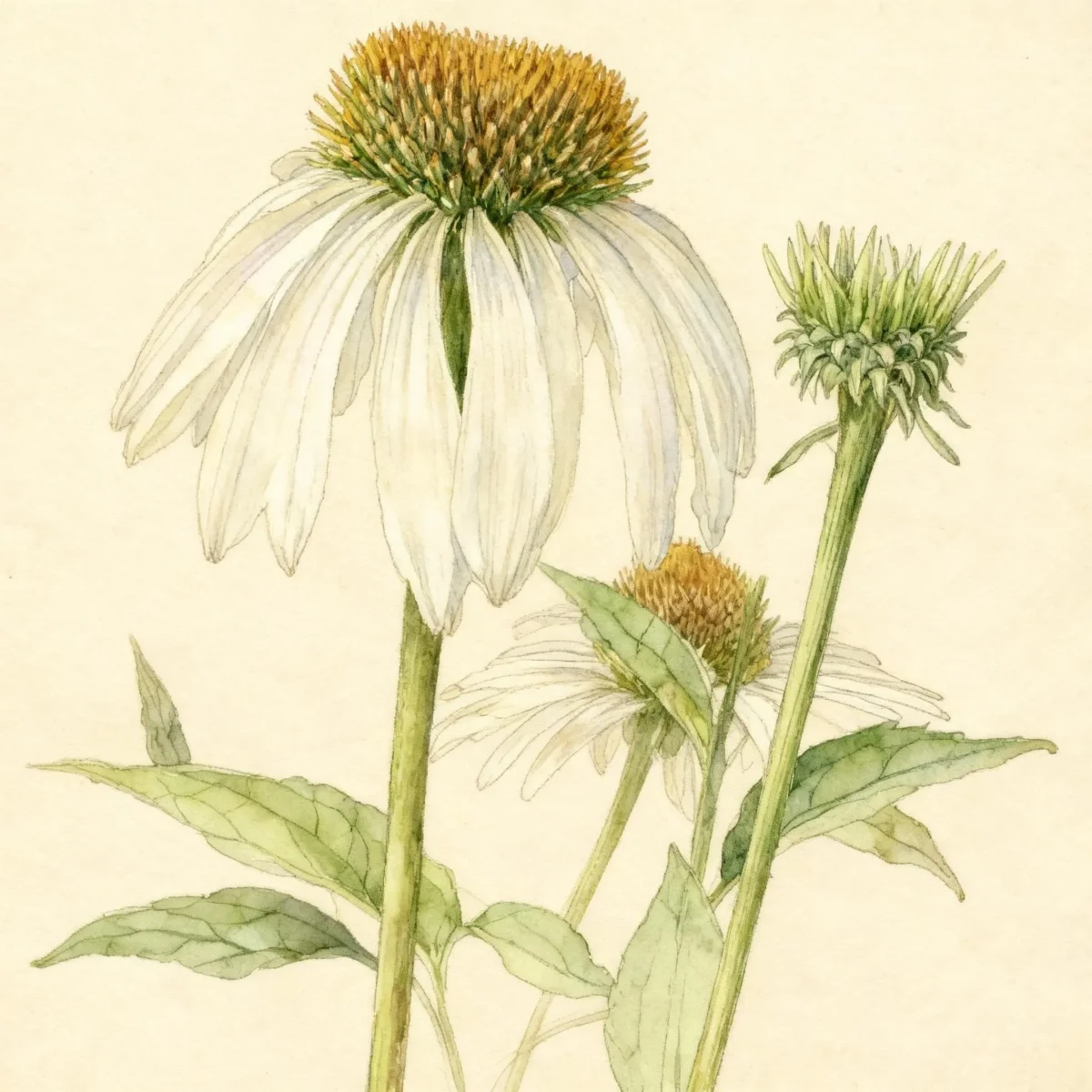
Purple coneflower (Echinacea purpurea 'Meringue')
Echinacea purpurea 'Meringue' creates stunning double white blooms. This low-maintenance Purple coneflower thrives in drought and heat.
Scroll down to discover growing tips, care requirements, companion plants, and more
Complete Plant Information
Overview
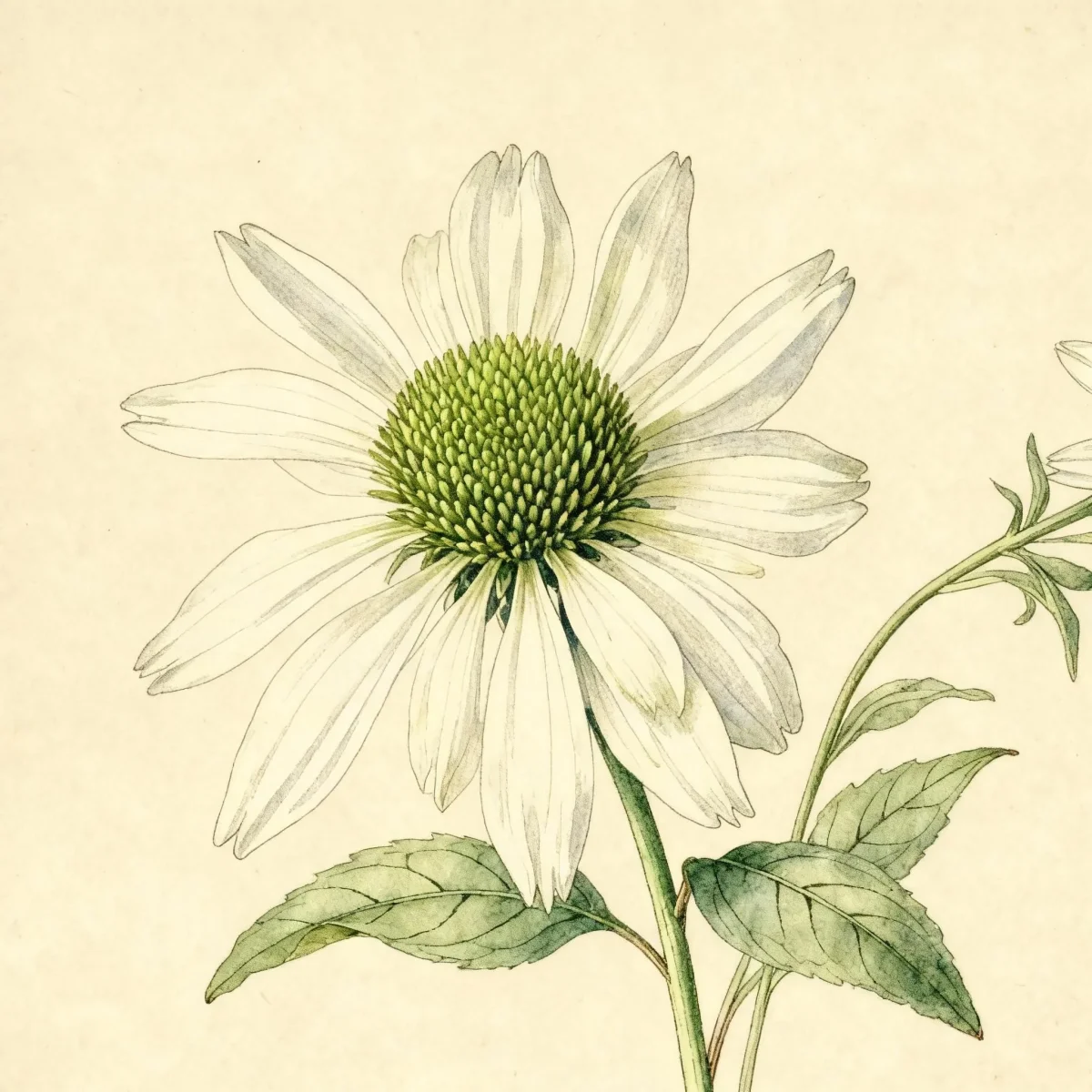
The Echinacea purpurea ‘Meringue’ cultivar is a standout variety of the classic Purple coneflower, prized for its unique double daisy-like flowers. Unlike its single-petaled relatives, ‘Meringue’ boasts crisp white ray flowers surrounding a creamy yellow pom-pom center, creating a rich texture in the garden. This herbaceous perennial offers reliable summer color and requires surprisingly little effort once established.
As an adaptable member of the coneflower family, Echinacea purpurea ‘Meringue’ performs well in challenging conditions, tolerating heat, humidity, and various soil types. Its compact, sturdy stems resist flopping, providing excellent vertical definition in perennial plantings. Gardeners appreciate this Purple coneflower for its long bloom season extending from early summer into late summer.
While gorgeous in the landscape, gardeners should note that the specialized double blooms of Echinacea purpurea ‘Meringue’ do not produce the pollen, nectar, or seeds as readily as single-flowered varieties, slightly altering its appeal to foraging wildlife. Nevertheless, its aesthetic appeal and rugged nature make it an essential component for sunny borders.
Fast Facts
- Plant Family: Asteraceae
- Plant Type: Herbaceous perennial
- Hardiness Zones: USDA Zones 3-8
- Size at Maturity:
- Height: 1-2 ft
- Spread: 1-1.5 ft
- Bloom Time: June to August
- Bloom Description: White (double)
- Sun Exposure: Full sun to part shade
- Water Needs: Dry to medium
- Maintenance Level: Low
How to Grow
Planting Echinacea purpurea ‘Meringue’ is best done in spring or early fall to allow root establishment before temperature extremes. Locate your plants where they receive full sun for the best flowering performance, although they tolerate part shade. They thrive in average, well-drained soil, and critically, prefer dry to medium moisture levels.
Maintenance for this Purple coneflower is remarkably low. These plants are naturally adapted to drought once established, requiring supplemental watering only during prolonged dry spells. Avoid rich soils, as excess fertility can lead to weaker stems. While deadheading spent flowers usually encourages more blooms, this cultivar often reblooms sufficiently without intervention.
To maintain vigor, divide clumps when they appear overcrowded, typically every four years. If you wish to encourage light self-seeding—though less likely with this cultivar—allow a few seed heads to remain standing into winter. The sturdy nature of Echinacea purpurea ‘Meringue’ means staking is rarely necessary, simplifying care throughout the growing season.
Landscape Uses
Echinacea purpurea ‘Meringue’ offers season-long structural interest, making it superb for massing plantings in borders where its bright white blooms contrast beautifully with deeper summer colors. It functions excellently as a vertical element in perennial beds, meadows, or native plant gardens, drawing the eye without overwhelming the space.
Pair this compact coneflower with late-summer bloomers that share its preference for sun and dryness. Excellent companions include Rudbeckia varieties (like black-eyed Susans), various ornamental grasses, and other drought-tolerant species such as Sedum or Salvia. Its clean white color also makes it a fantastic choice for modern, monochrome garden designs or for lightening up woodland edges.
This adaptable perennial looks equally striking in a naturalized setting or integrated into a highly manicured landscape. Whether used in a wildflower meadow or as a recurring punctuation mark along a walkway, the Echinacea purpurea ‘Meringue’ provides dependable, high-impact value.
Standout Features
Flower Qualities
- Showy
- Good Cut
- Good Dried
Noteworthy Characteristics
The base species, Echinacea purpurea, is a native prairie perennial known for its large, daisy-like purple flowers atop coarse stems. The cultivar ‘Meringue’ modifies this structure dramatically, presenting a dwarf profile (15-20” tall) featuring full double white blooms. The genus name, Echinacea, refers to the spiny center cone reminiscent of a hedgehog.
Tolerances
- Deer
- Drought
- Clay Soil
- Dry Soil
- Shallow-Rocky Soil
Potential Problems
Japanese beetle activity can sometimes afflict Purple coneflower foliage, requiring manual removal or insecticidal soap application early in the outbreak. Leaf spot is another occasional cosmetic issue, often managed by ensuring good air circulation around the plants. Susceptibility to aster yellows disease means gardeners should promptly remove any affected plants to prevent its spread by leafhoppers.
Frequently Asked Questions
What hardiness zones is Purple coneflower suitable for?
This variety, Echinacea purpurea ‘Meringue’, is reliably hardy in USDA Zones 3 through 8.
How large does Echinacea purpurea ‘Meringue’ grow?
This specific cultivar is relatively compact, generally reaching a height between 1 and 2 feet, with a spread of 1 to 1.5 feet.
When does Purple coneflower bloom?
The bloom time for Echinacea purpurea ‘Meringue’ is consistently from June through August, showcasing its signature white (double) flowers.
What sun exposure does Echinacea purpurea ‘Meringue’ need?
For optimal performance and sturdy, upright growth, this perennial requires full sun, though it will tolerate light afternoon shade (part shade).
Conclusion
The Echinacea purpurea ‘Meringue’ offers gardeners a fantastic, low-maintenance option for bright summer color with its unique double white blooms. Its remarkable tolerance for drought, heat, and poor soils ensures that this Purple coneflower variety remains a reliable performer season after season. Check your local hardiness zone rating and plant this resilient beauty in a sunny spot this spring for guaranteed enjoyment.
Propagation Tips
While many gardeners enjoy the self-seeding nature of native coneflowers, Echinacea purpurea ‘Meringue’ is often less prolific due to its specialized double blooms lacking viable seeds for easy dispersal. Propagation is usually achieved via division rather than seed. Divide clumps every four years, ideally in the early spring before new growth starts or immediately after flowering in the fall. Ensure each division has a healthy portion of roots attached to maximize the chance of successful re-establishment.
Design Ideas
In contemporary or cottage gardens, utilize the bright white blooms of Echinacea purpurea ‘Meringue’ to create ‘rivers’ of light flowing through darker foliage or contrasting flower colors. Planting them in drifts of odd numbers (3, 5, or 7) creates a more naturalized look than rigidly spaced individual plants. They serve particularly well as mid-border plants, bridging lower groundcovers and taller background specimens like blazing stars or native grasses.