Stokes' aster (Stokesia laevis 'Purple Pixie')
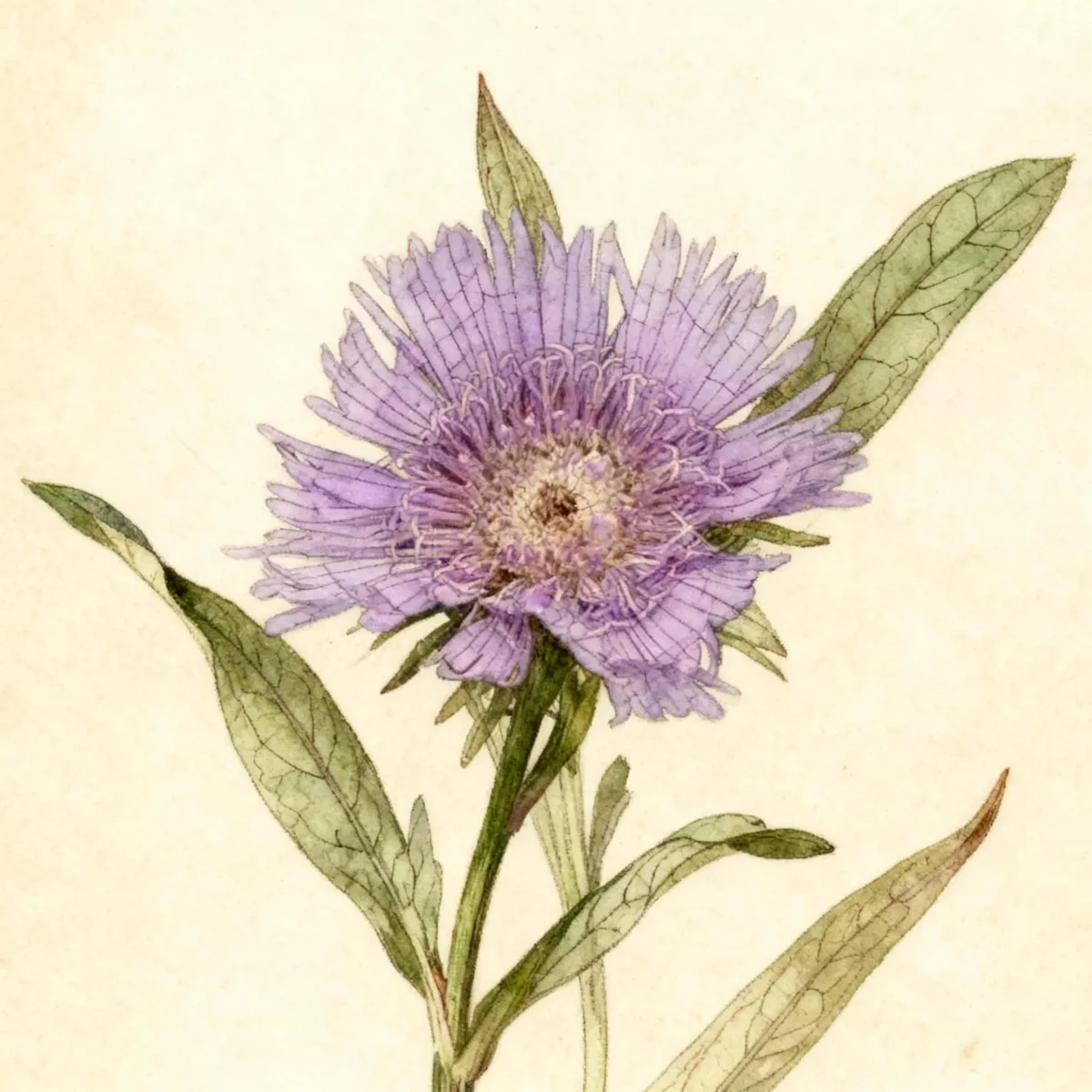
Dwarf Stokes' aster, Stokesia laevis 'Purple Pixie', offers long-lasting violet-blue blooms. A low-maintenance perennial ideal for sunny borders.
Scroll down to discover growing tips, care requirements, companion plants, and more
Complete Plant Information
Overview
Stokesia laevis ‘Purple Pixie’ is a highly valuable dwarf cultivar of Stokes’ aster, prized for its compact stature and extended blooming period. This herbaceous perennial blankets the garden in striking, fluffy, violet-blue flowers resembling cornflowers from early summer well into autumn, making it an excellent choice for gardeners seeking continuous color. Stokesia laevis ‘Purple Pixie’ performs exceptionally well in full sun, tolerating both heat and periods of dryness once established, though excellent drainage remains critical for long-term success. Its low maintenance requirements and resilience against common pests ensure that this Stokes’ aster variety remains a reliable performer in the perennial border.
The compact nature of Stokesia laevis ‘Purple Pixie’, typically reaching under one foot tall, makes it perfect for defining front edges or integrating into smaller garden designs where taller specimens might overwhelm the space. It offers aesthetic appeal beyond its abundant blooms, featuring evergreen foliage in warmer climates, providing winter interest. Gardeners appreciate its vigorous habit and the ability of Stokes’ aster to thrive where other composites might struggle, proving especially valuable in sunny, well-drained locations.
Fast Facts
- Plant Family: Asteraceae
- Plant Type: Herbaceous perennial
- Hardiness Zones: USDA Zones 5-9
- Size at Maturity:
- Height: 0.75-1 ft
- Spread: 0.75-1 ft
- Bloom Time: June to September
- Bloom Description: Violet blue
- Sun Exposure: Full sun
- Water Needs: Medium
- Maintenance Level: Low
How to Grow
Plant Stokesia laevis ‘Purple Pixie’ in the spring or fall, choosing a location that guarantees full sun exposure for the best flowering performance, although it can tolerate some filtered light. Success hinges on soil quality; this plant requires average, medium moisture, and crucially, well-drained soil. Prefers moist, sandy soils overall, but ensuring drainage prevents the primary cause of winter death: overly wet conditions when temperatures drop.
Watering should be regular, meeting its medium needs, especially until the plant is established. While Stokes’ aster exhibitions surprising drought tolerance once mature, consistent moisture supports the best bloom display. Fertilization is rarely necessary, fitting its low maintenance profile, but focused care should be placed on cultural management.
Deadhead individual spent flowers and consistently remove spent flowering stems throughout the season to promote continuous blooming of Stokes’ aster. In the northern limits of its range (Zone 5), apply winter mulch to protect the crown. After the main blooming period concludes, plants can be cut back to their basal rosette of foliage to tidy the appearance.
Landscape Uses
Stokesia laevis ‘Purple Pixie’ is perfectly scaled for defining border fronts, providing a low, colorful edge that doesn’t obscure plants behind it or spill excessively onto pathways. Its compact size also makes it an outstanding choice for cottage gardens where density and varied textures are desired. Furthermore, since Stokes’ aster naturally prefers moisture, it integrates beautifully into designs adjacent to ponds, streams, or created water gardens, provided the soil maintains excellent drainage. Use small groupings to establish repeating color accents throughout a sunny meadow planting scheme.
Standout Features
Flower Qualities
- Showy
Noteworthy Characteristics
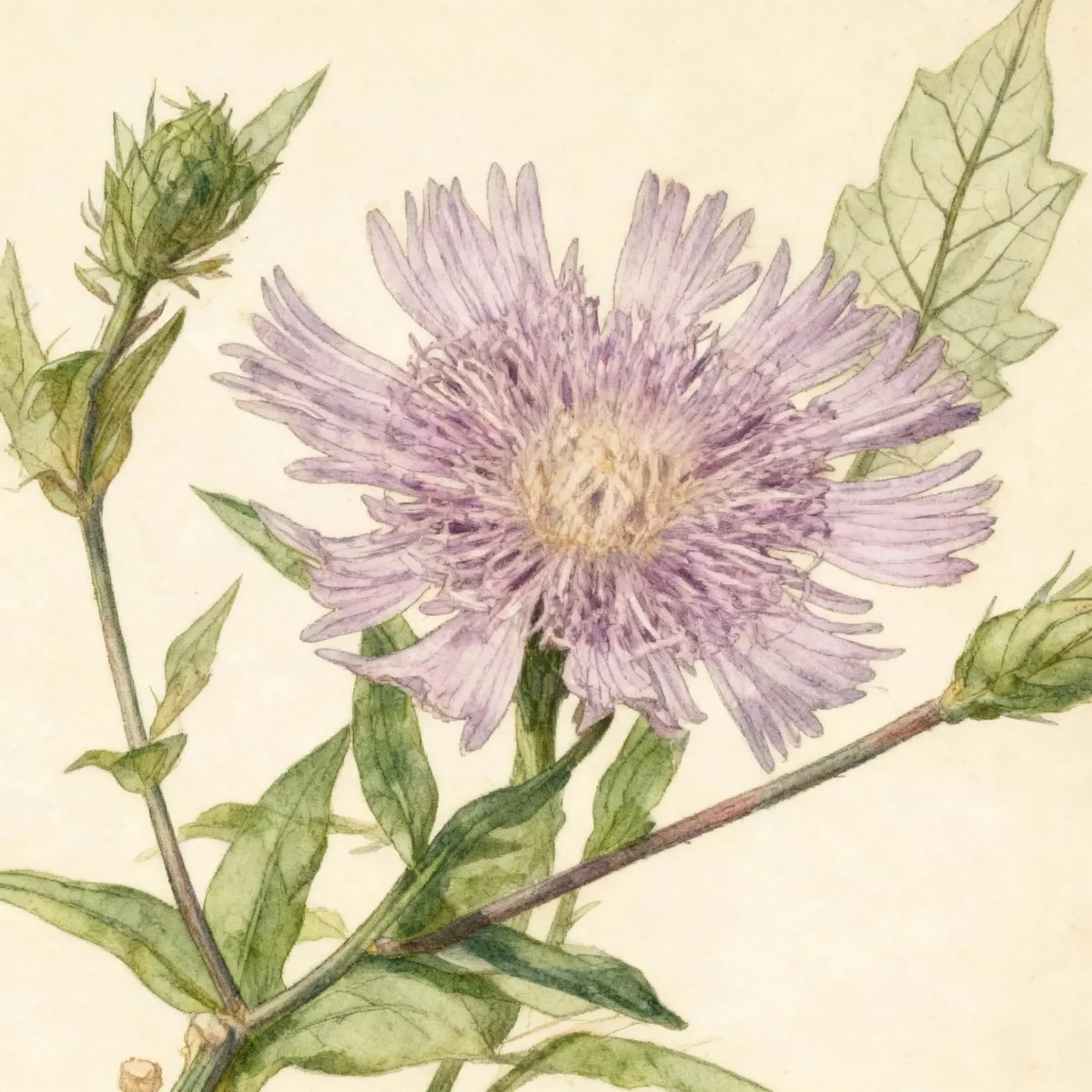
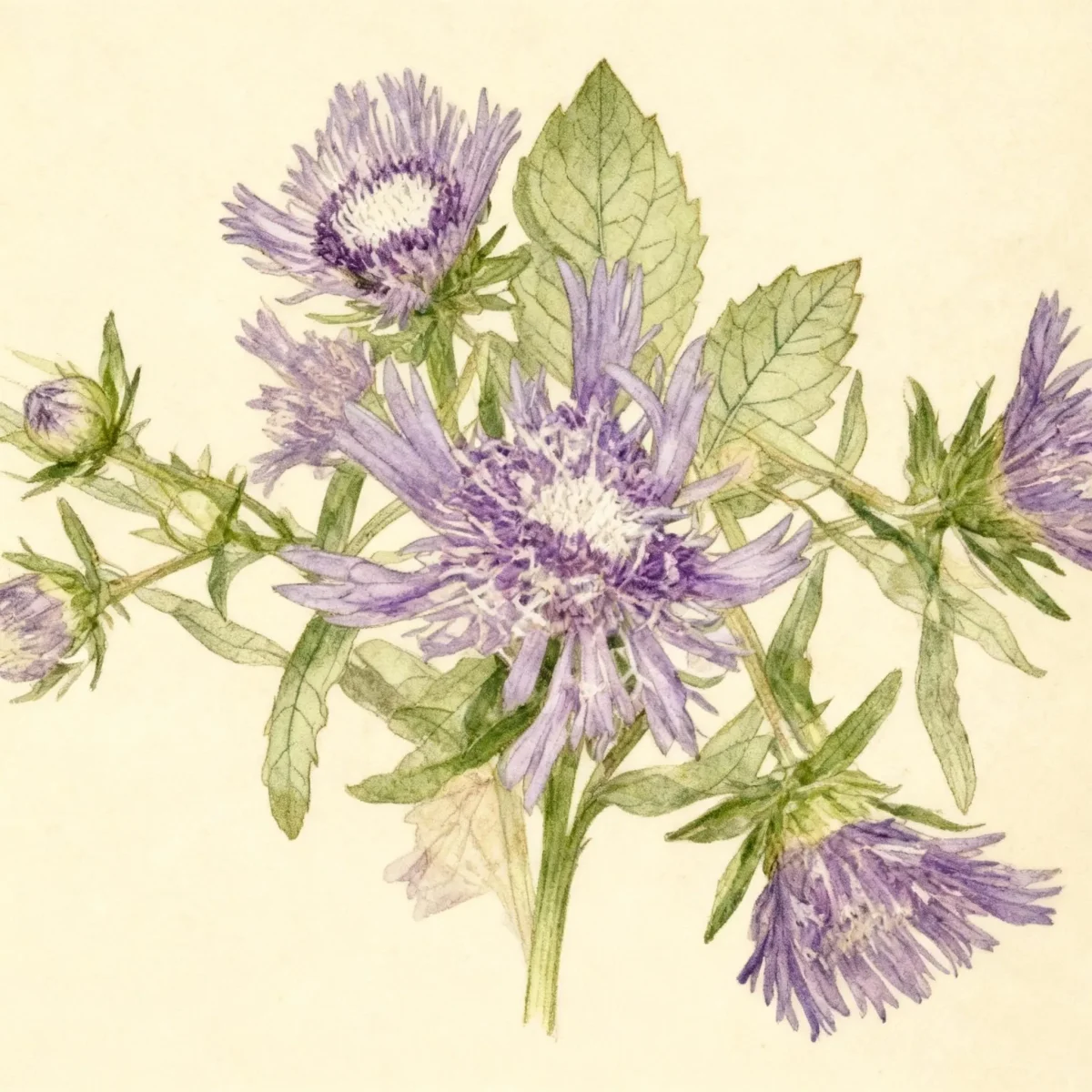
Stokesia laevis, commonly known as Stokes’ aster, is native to wetlands, bottomlands, wet pinewoods, savannas and ditches mostly along the coastal plain from North Carolina to Florida to Louisiana. It is an evergreen perennial that typically grows to 1-2’ tall. It features fluffy, cornflower-like, violet blue flowers (to 2 1/2” across), each with notched rays surrounding a pincushion center of feathery disk florets. ‘Purple Pixie’ is a dwarf cultivar that grows to only 9-11” tall, noted for its compact size and vigorous habit.
Tolerances
- Rabbit
- Drought
Potential Problems
This perennial generally presents few serious insect or disease issues, contributing to its low maintenance rating. Gardeners should be proactive in watching for caterpillars, which may occasionally feed on the foliage. The most frequent structural issue involves the flower stems, which sometimes tend to flop, especially following heavy rain or strong Midwestern thundershowers. Avoid over-fertilization, which can lead to weak stems susceptible to lodging.
Frequently Asked Questions
What hardiness zones is Stokes’ aster suitable for?
Stokesia laevis ‘Purple Pixie’ is suitable for USDA Hardiness Zones 5 through 9.
How large does Stokesia laevis ‘Purple Pixie’ grow?
This dwarf cultivar of Stokes’ aster typically reaches a height between 0.75 and 1 foot tall, achieving a spread of 0.75 to 1 foot wide.
What sun exposure does Stokes’ aster need?
For optimal performance, Stokesia laevis ‘Purple Pixie’ requires full sun, although it can tolerate periods of light, filtered shade.
When does Stokesia laevis ‘Purple Pixie’ bloom?
This flowering perennial displays its violet-blue blooms reliably from June through September, often reblooming if properly deadheaded.
Conclusion
Stokesia laevis ‘Purple Pixie’ delivers significant ornamental value through its vibrant, long-lasting violet-blue flowers despite its compact, petite stature. Its low maintenance demands and tolerance for drought make this cultivar of Stokes’ aster an indispensable choice for sunny perennial borders. Before planting, confirm your site offers the well-drained soil essential for enjoying this plant for many seasons.
Companion Planting
When selecting companions for Stokesia laevis ‘Purple Pixie’, prioritize plants with similar sun and drainage requirements. Consider pairing it with plants that offer contrasting foliage texture, such as fine-bladed ornamental grasses or mounding Lamb’s Ears (Stachys byzantina). Since Stokes’ aster enjoys sandy soil, plants native to Mediterranean or dry prairie environments often thrive alongside it, including certain Sedums or low-growing varieties of Salvia. Massing these drought-tolerant companions creates a unified, low-water, high-impact display throughout the hot summer months.
Design Ideas
The compact 9–11 inch height of Stokesia laevis ‘Purple Pixie’ makes it an exemplary choice for the middle to front border. In cottage gardens, weave it between mid-height perennials like Coreopsis or sturdy Russian Sage (Perovskia atriplicoides), allowing the fluffy globe-like flowers to add soft texture near the front edge. For modern, structured designs, plant Stokes’ aster in repeating drifts along pathways, creating a colorful, low-growing ribbon that provides consistent color where a taller border plant would block the view. Groupings of three or five plants create the most visual impact.