Siberian bugloss (Brunnera macrophylla 'King's Ransom')
Brunnera macrophylla 'King's Ransom' offers stunning variegated foliage and true blue spring flowers, making this Siberian bugloss striking.
Scroll down to discover growing tips, care requirements, companion plants, and more
Complete Plant Information
Overview
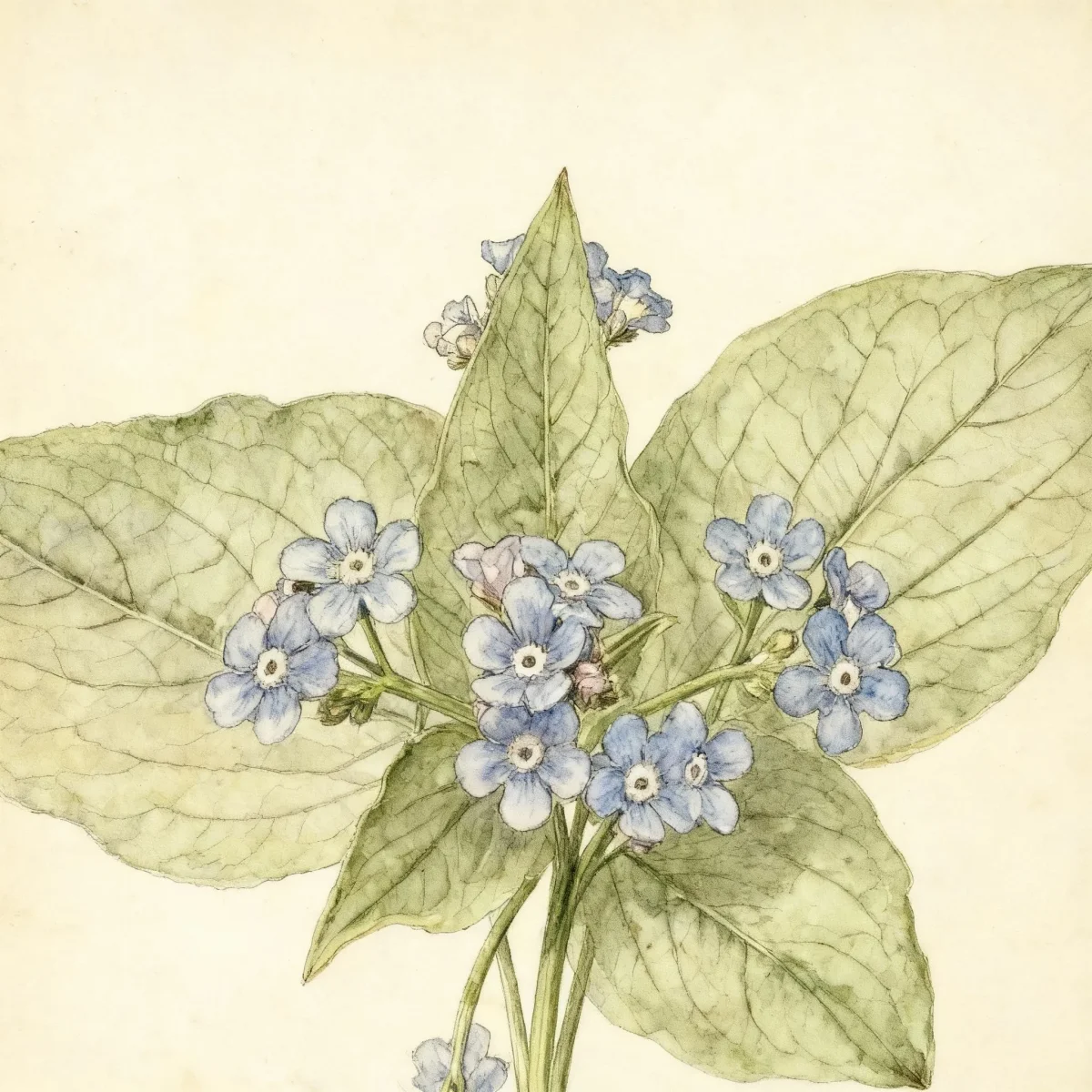
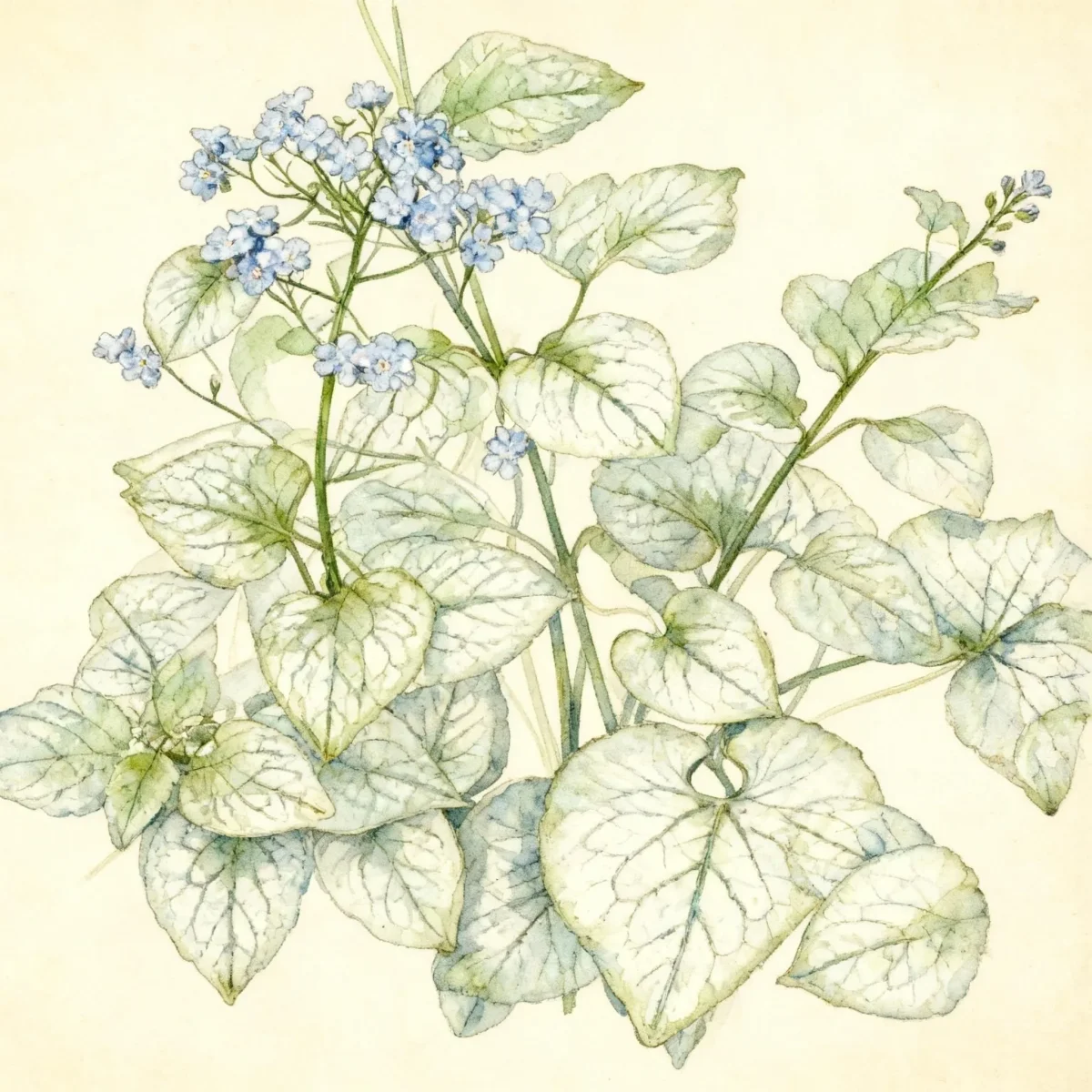
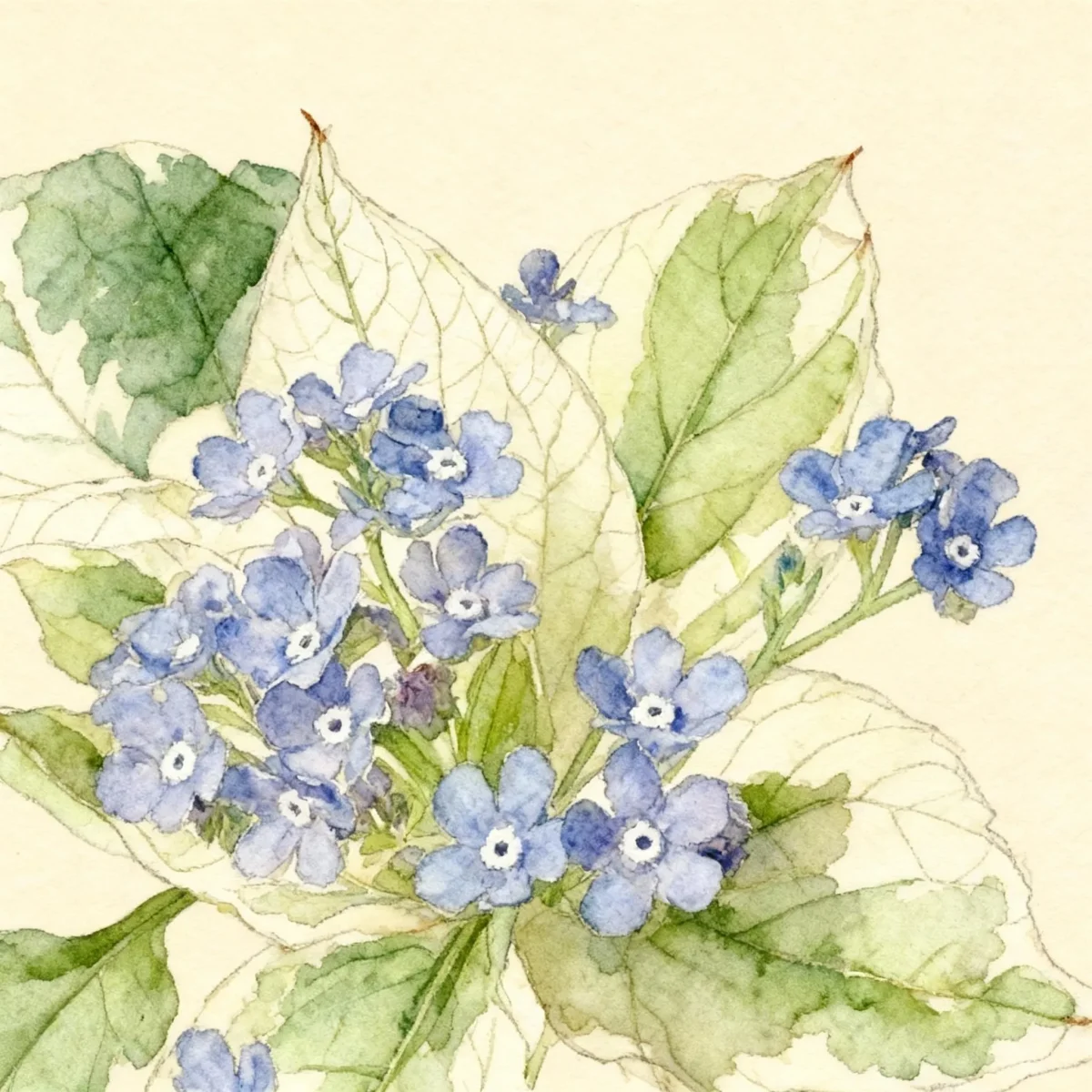
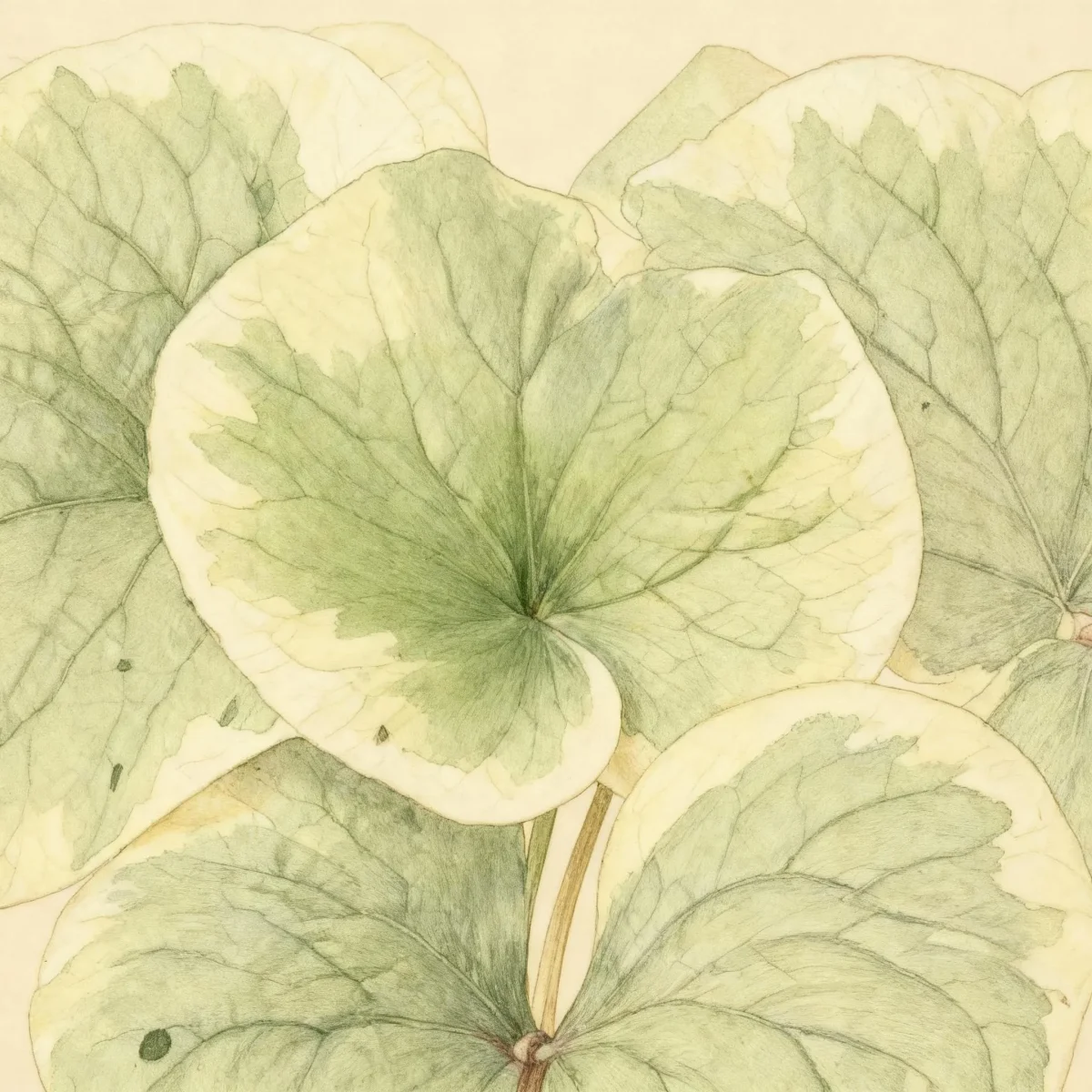
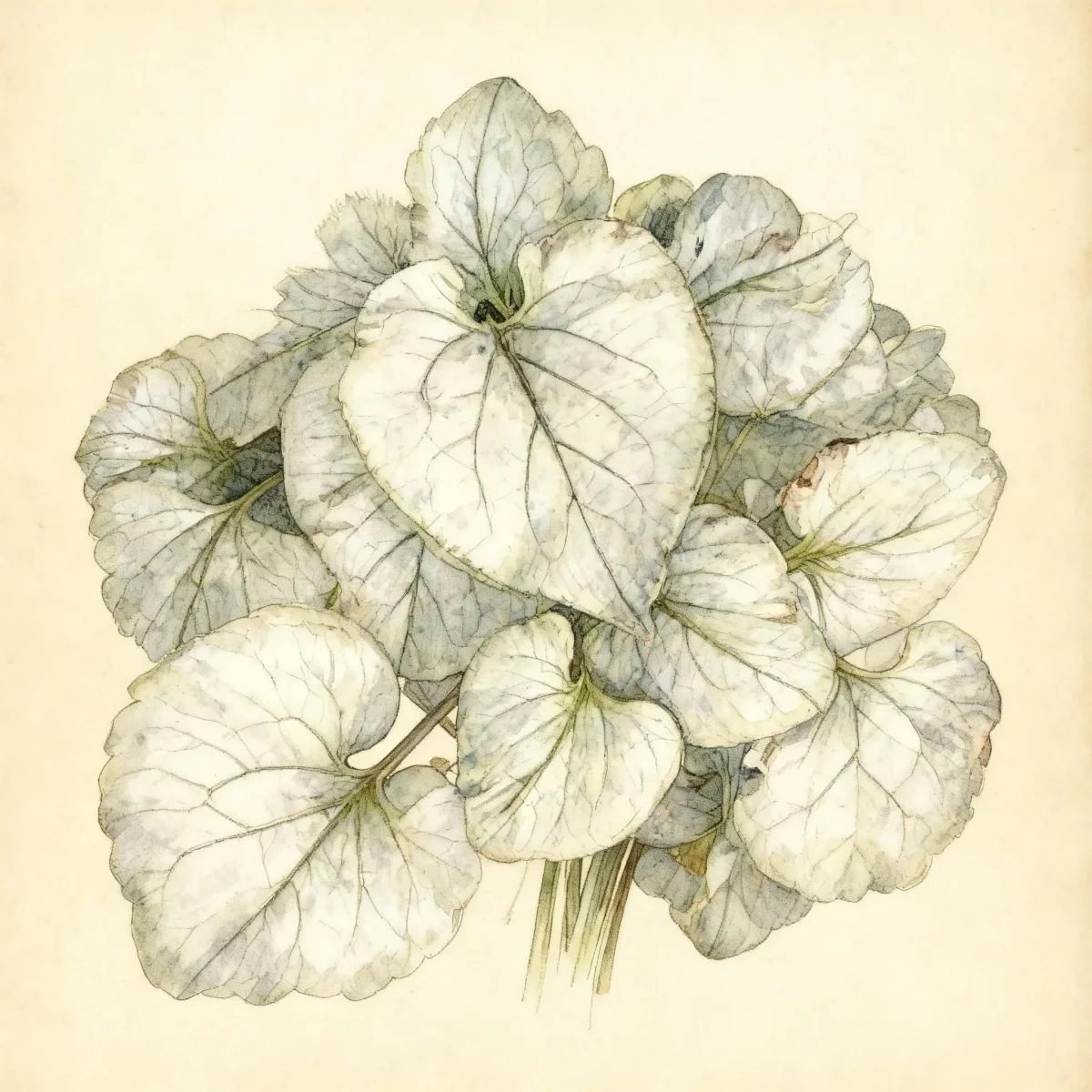
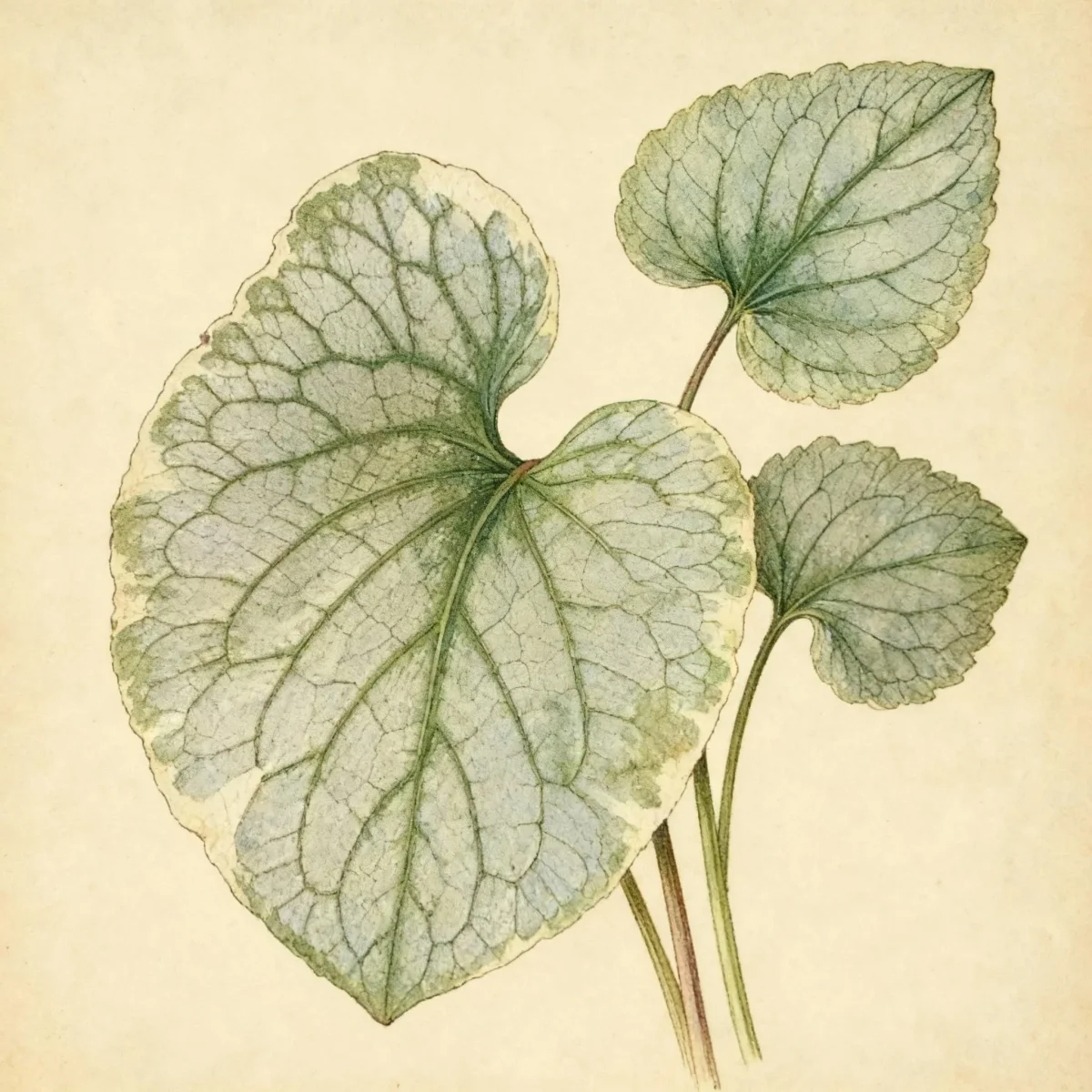
Brunnera macrophylla ‘King’s Ransom’ is highly valued for its dramatic, variegated foliage that lights up shady garden corners. This cultivar of Siberian bugloss features heart-shaped leaves patterned with silvery-green interiors, dark green veins, and broad, creamy-yellow borders that transition to creamy white as summer progresses. It provides consistent visual interest long after its delicate blue flowers fade in the spring.
As a rhizomatous, clump-forming perennial, Siberian bugloss offers reliable texture and color in woodland settings or beneath deciduous trees. Brunnera macrophylla ‘King’s Ransom’ remains relatively compact, forming dense mounds perfect for ground cover applications. Its low maintenance needs make it an excellent choice for gardeners seeking drama without demanding constant attention.
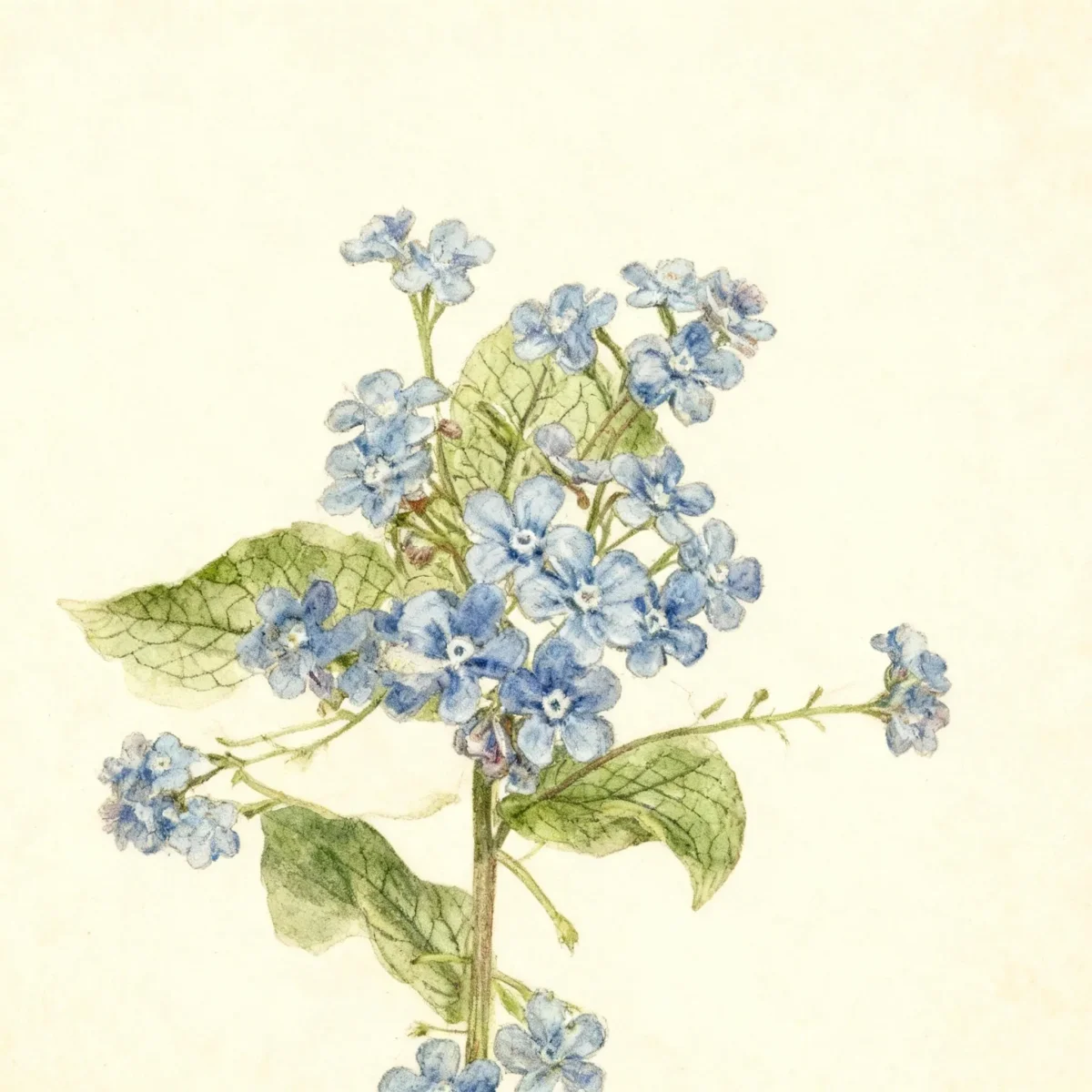
While known for foliage, the true blue, forget-me-not-like flowers that appear in April and May truly set this plant apart. Grow Brunnera macrophylla ‘King’s Ransom’ where you can appreciate its unique leaf coloration contrasting with the spring bloom, ensuring it receives the consistent moisture it prefers.
Fast Facts
- Plant Family: Boraginaceae
- Plant Type: Herbaceous perennial
- Hardiness Zones: USDA Zones 3-8
- Size at Maturity:
- Height: 0.5-1 ft
- Spread: 1-1.5 ft
- Bloom Time: April to May
- Bloom Description: Blue
- Sun Exposure: Part shade
- Water Needs: Medium
- Maintenance Level: Low
How to Grow
Plant Brunnera macrophylla ‘King’s Ransom’ in spring or early fall, aiming for a location offering part shade. The soil should be average, well-drained, and preferably enriched with organic matter. While this Siberian bugloss tolerates some dryness once established, it thrives best in consistently moist, organically rich soils, particularly in shady locations.
Regarding ongoing care, maintain even moisture throughout the growing season. Avoid letting the soil completely dry out, as this, along with intense summer sun, can cause the variegated foliage to scorch. Fertilizing is rarely necessary if the soil is organically rich, though a light spring application of compost can boost vigor.
Maintenance is generally low for Brunnera macrophylla ‘King’s Ransom’. Clumps expand slowly via creeping rhizomes, creating a dense ground cover over time. Deadheading the spent flower stalks is optional, as the foliage provides structural interest throughout summer. Note that plants growing in cooler climates perform best; those in hot and humid summers (USDA Zones 7-9) may struggle.
Plants may self-seed, but be cautioned that seedlings of variegated forms like ‘King’s Ransom’ might not retain their desirable variegation, reverting to green.
Landscape Uses
Brunnera macrophylla ‘King’s Ransom’ excels as a specimen plant where its unique foliage can be highlighted, or massed effectively as a shade-loving ground cover. It is ideal for planting in borders, particularly along the edges of woodland gardens or near streams and ponds where moisture is reliable. This Siberian bugloss also performs well when used to naturalize areas under the canopy of mature trees.
For design contrast, pair the bright, creamy-edged leaves of Brunnera macrophylla ‘King’s Ransom’ with textures that thrive in shade, such as dark green hostas, ferns, or deep purple Heuchera. Its height range (0.5 to 1 ft) makes it a perfect mid-ground element beneath taller shrubs. Furthermore, container plantings are possible, allowing you to showcase this beauty on shaded patios, though greater attention to watering will be required compared to in-ground placements.
Standout Features
Flower Qualities
- Showy
Noteworthy Characteristics
Brunnera macrophylla, commonly called Siberian bugloss, is a rhizomatous, clump-forming, herbaceous perennial native to forested, mountain slopes in northeastern Turkey and the Caucasus. It is primarily grown in shady areas for its attractive heart-shaped, dark green, basal foliage. Small, blue, forget-me-not-like flowers with white centers bloom in airy, branched racemes rising well above the foliage on slender stems to 18” tall in spring. ‘King’s Ransom’ is a sport of Brunnera macrophylla ‘Jack Frost’ that was discovered by Dan Heims of Terra Nova Nurseries. It has silvery-green, lightly frosted, heart-shaped leaves with dark green veins and a wide creamy yellow border that lightens to creamy white in summer, growing slightly smaller than ‘Jack Frost’ at 0.5 to 1 ft tall.
Tolerances
- Rabbit
Potential Problems
Brunnera macrophylla ‘King’s Ransom’ generally enjoys low disease and insect pressure, making it a reliable selection for most gardens. Slugs and snails can occasionally pose a minor threat, especially to young, tender foliage early in the season. Damage presents as ragged holes in the leaves. Management usually involves routine inspection and the application of slug bait or diatomaceous earth around the plant base if populations become problematic. Rabbits find this Siberian bugloss unappetizing and typically leave it alone.
Frequently Asked Questions
What sun exposure does Siberian bugloss need?
This plant requires part shade. Too much direct, hot sun, especially in the afternoon, can scorch the distinctive leaves of Brunnera macrophylla ‘King’s Ransom’.
How large does Brunnera macrophylla ‘King’s Ransom’ usually grow?
It typically reaches a height between 0.5 to 1 foot tall, spreading to between 1 to 1.5 feet wide, forming a pleasing mound perfect for borders.
What is the hardiness range for Brunnera macrophylla ‘King’s Ransom’?
This perennial is robust, thriving in USDA Hardiness Zones 3 through 8, provided it receives adequate moisture and partial shade protection.
When does Brunnera macrophylla ‘King’s Ransom’ bloom?
The plant produces its lovely blue, forget-me-not-like flowers in the spring, generally from April through May, rising just above the attractive basal foliage.
Conclusion
The ornamental value of Brunnera macrophylla ‘King’s Ransom’ lies heavily in its brilliant, evolving variegated foliage, perfectly complemented by sprays of true blue springtime flowers. This low-maintenance Siberian bugloss is a superb asset for brightening shaded garden spaces throughout the season. Before planting, always verify your local hardiness zone compatibility and prepare an organically rich soil bed to ensure the best performance for your Brunnera macrophylla ‘King’s Ransom’.
Companion Planting
Choosing the right companions can elevate the aesthetic impact of Brunnera macrophylla ‘King’s Ransom’ in a shade garden. Since this Siberian bugloss prefers consistently moist, rich soil, pair it with other shade-loving perennials that share similar cultural needs. Think about contrasting textures; combine the broad, heart-shaped leaves with the fine, airy foliage of woodland ferns, such as Japanese Painted Fern or Christmas Fern.
For color variation, consider plants that fill in the gap after the blue blooms fade. Hosta varieties with blue or deep green foliage create an excellent backdrop, highlighting the creamy borders of the ‘King’s Ransom’ leaves. Low-growing ground covers like Vinca minor or spring bulbs like Daffodils can surround the base, providing early color before the Brunnera fully leafs out.
Seasonal Care Calendar
Early spring cleanup should involve removing any old, tattered foliage that may have remained from the previous season, which also signals the plant that it is time to emerge. This is the ideal time to apply a light layer of compost around the base of your Brunnera macrophylla ‘King’s Ransom’ to enrich the soil before active growth begins.
Summer heat is the most critical time for water management. Ensure medium water needs are met, especially during dry spells. Monitor the margins of the leaves; browning tips are a sign that the environment is too hot or dry. In the fall, minimal attention is required, though you can divide overcrowded clumps if desired, using the creeping rhizomes, preferably in early spring or fall.