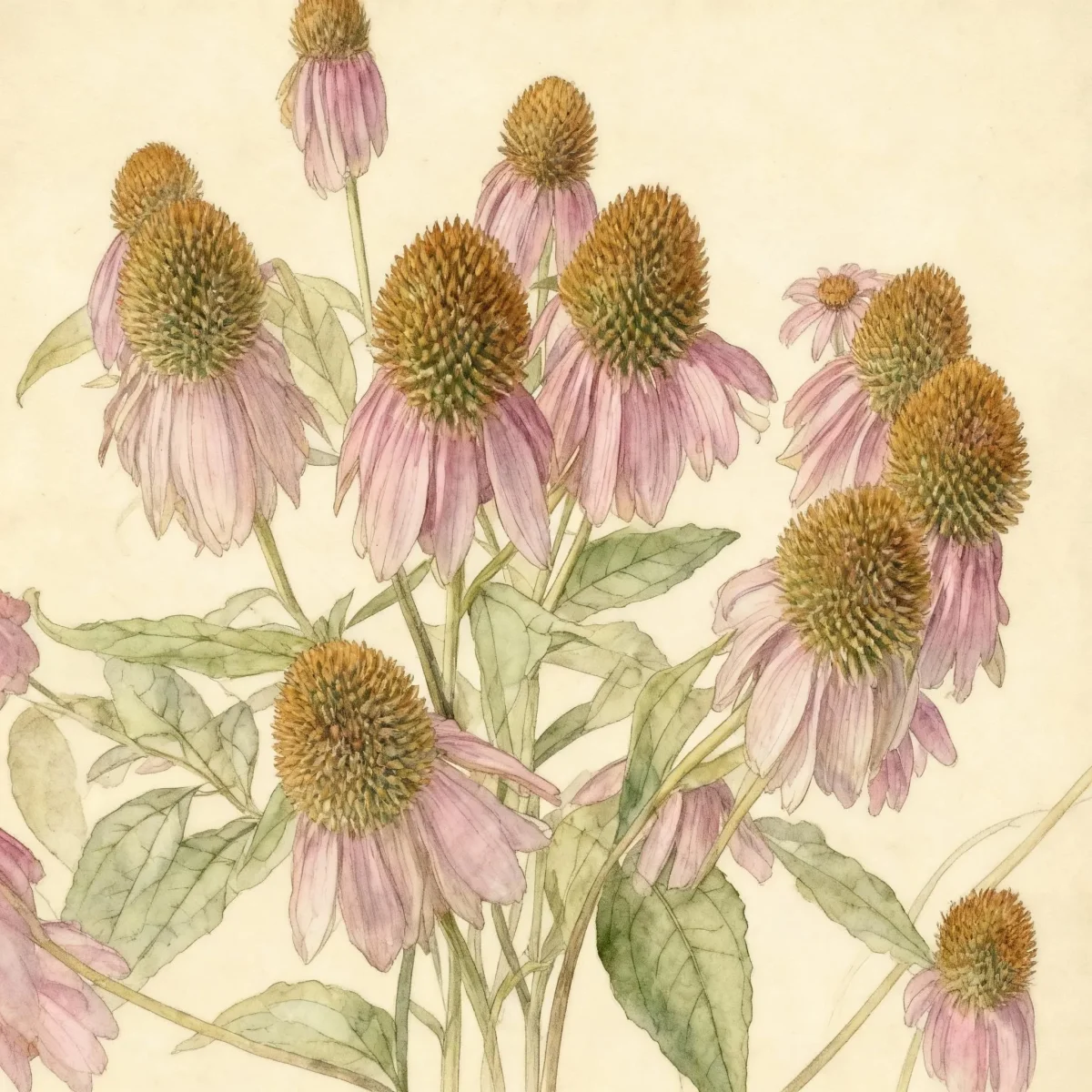
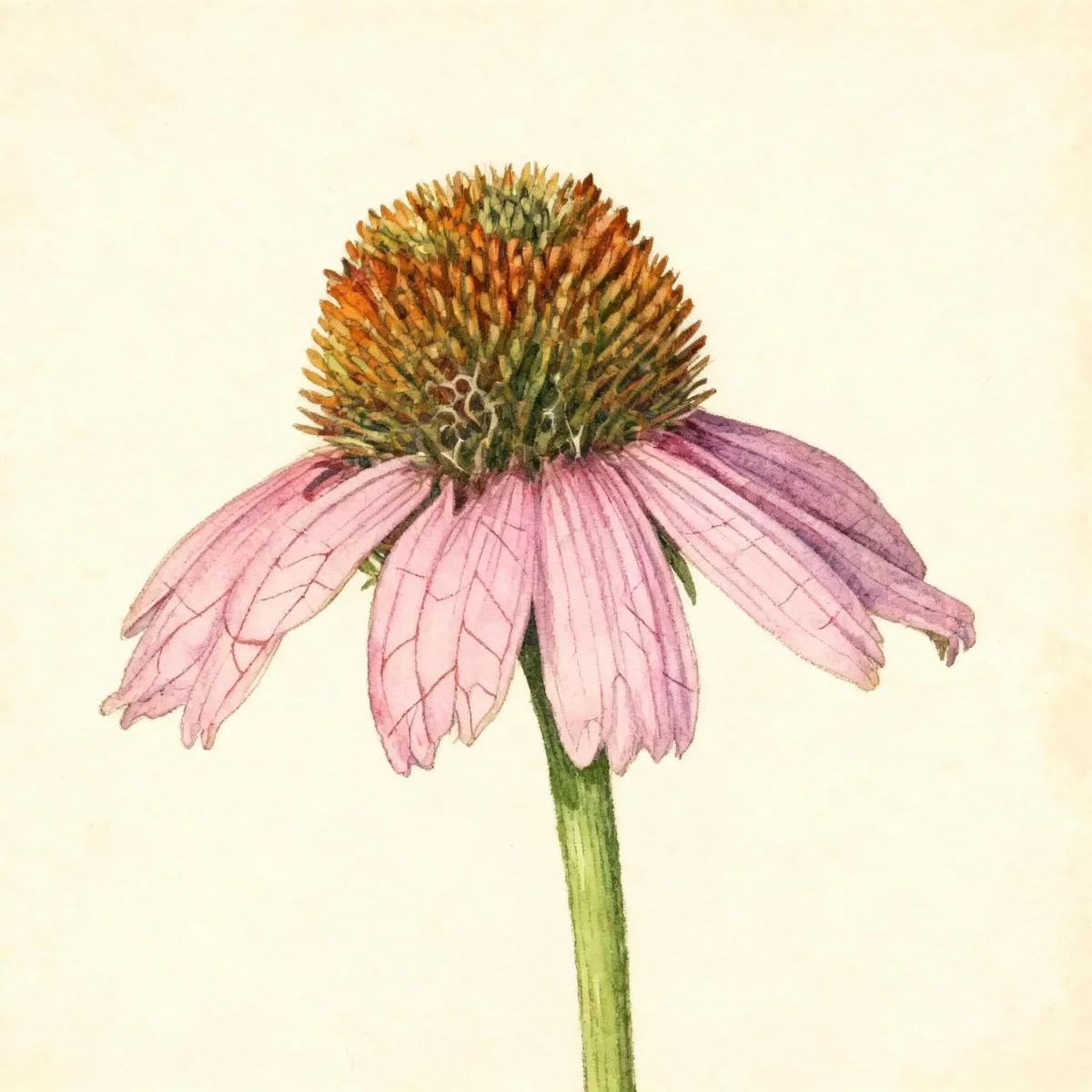
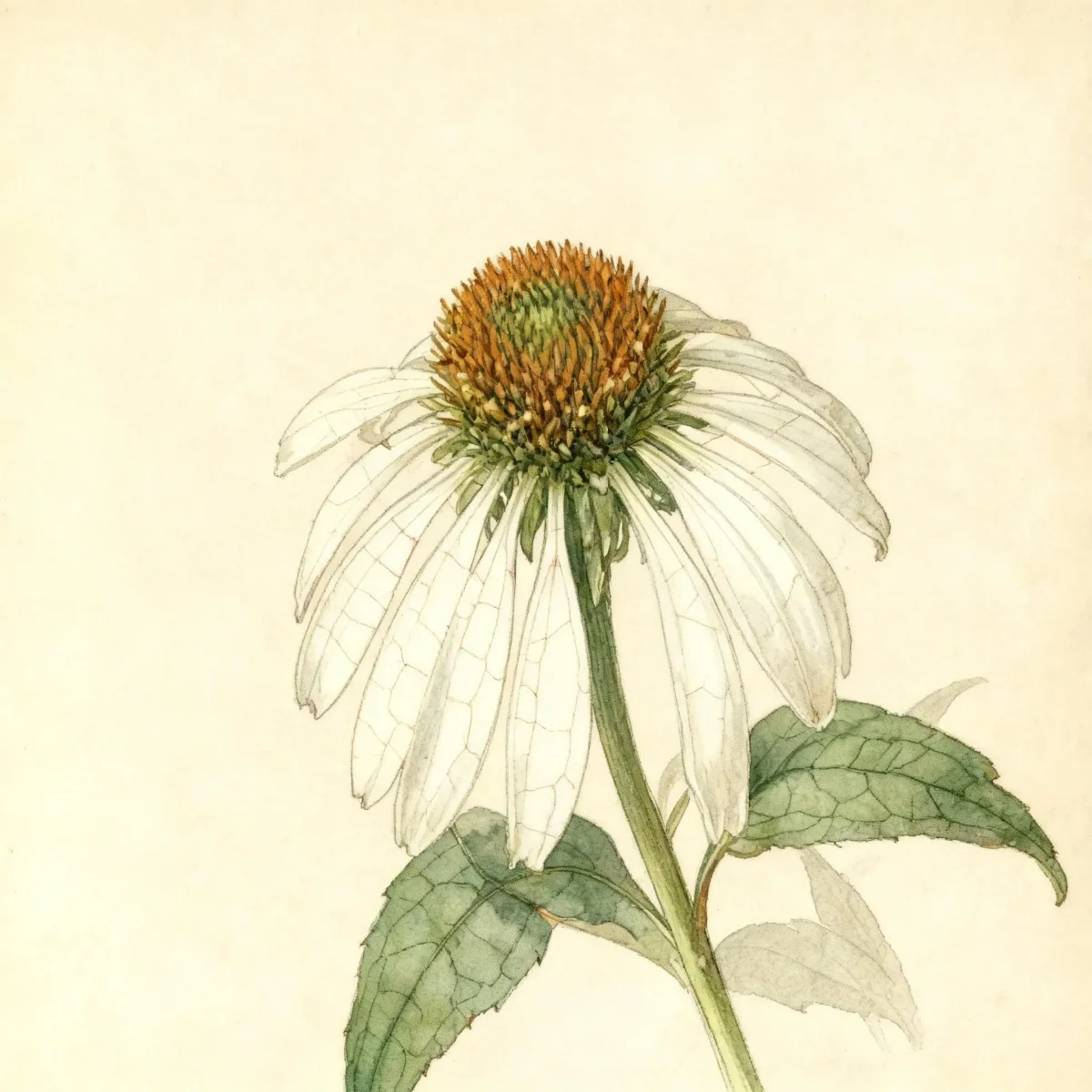
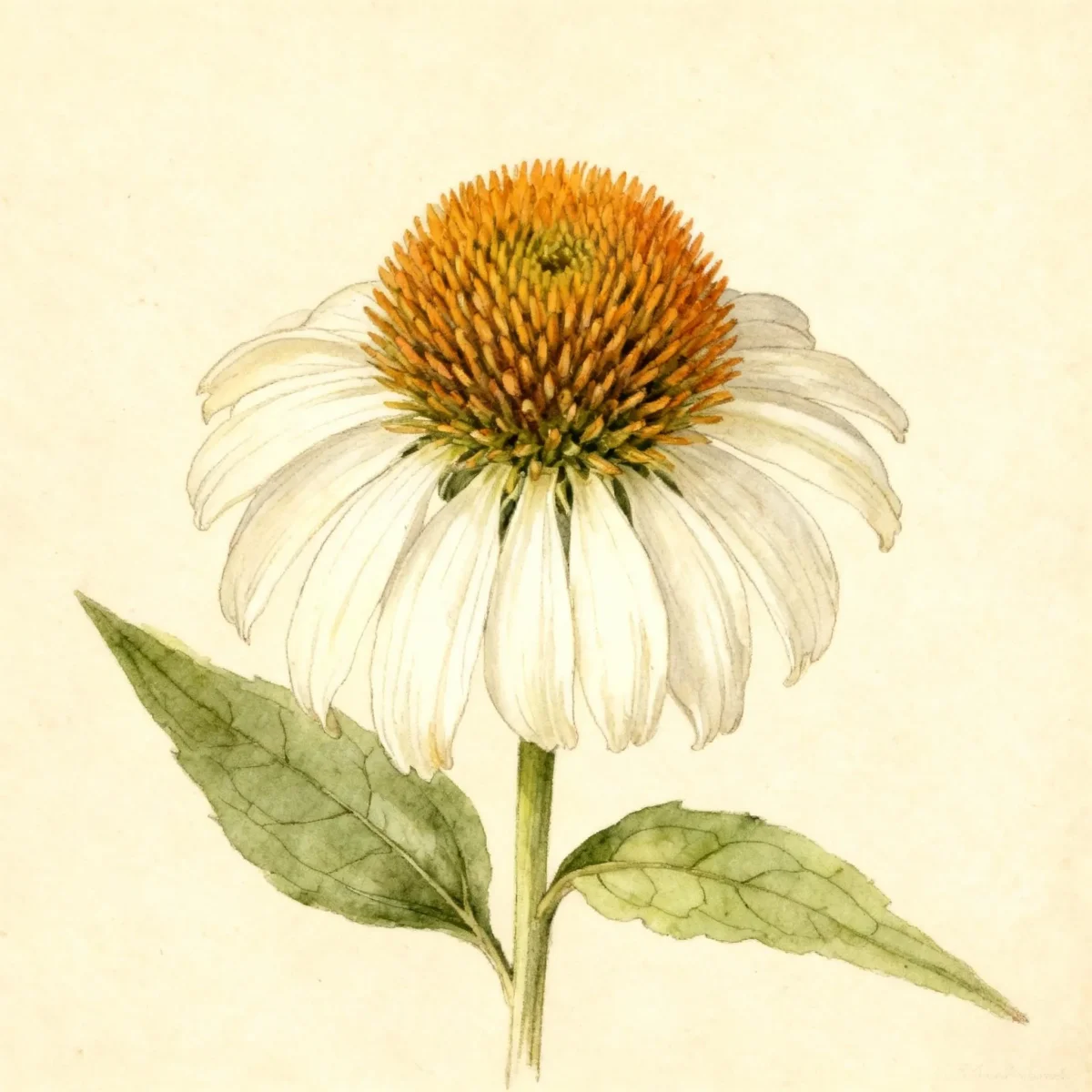
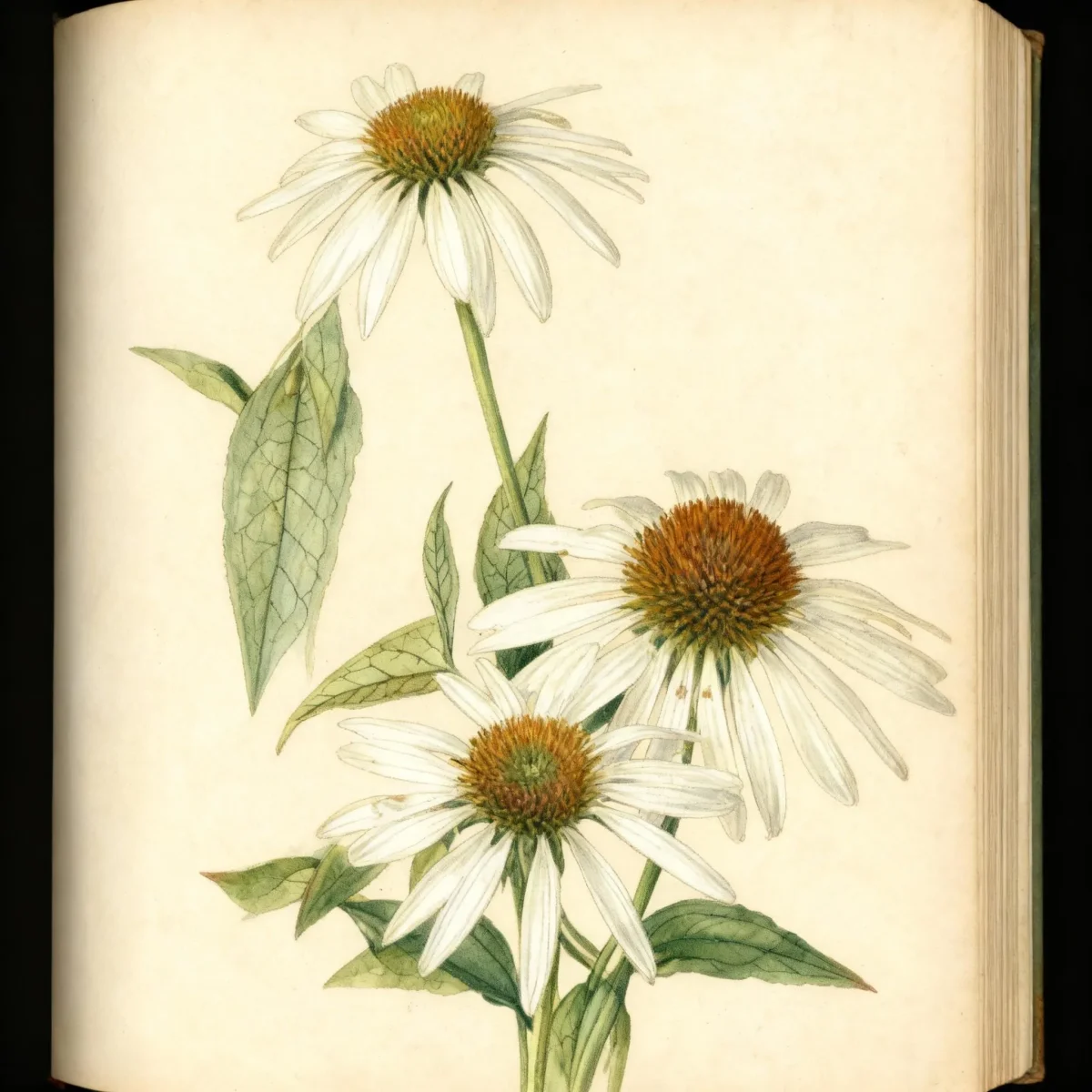
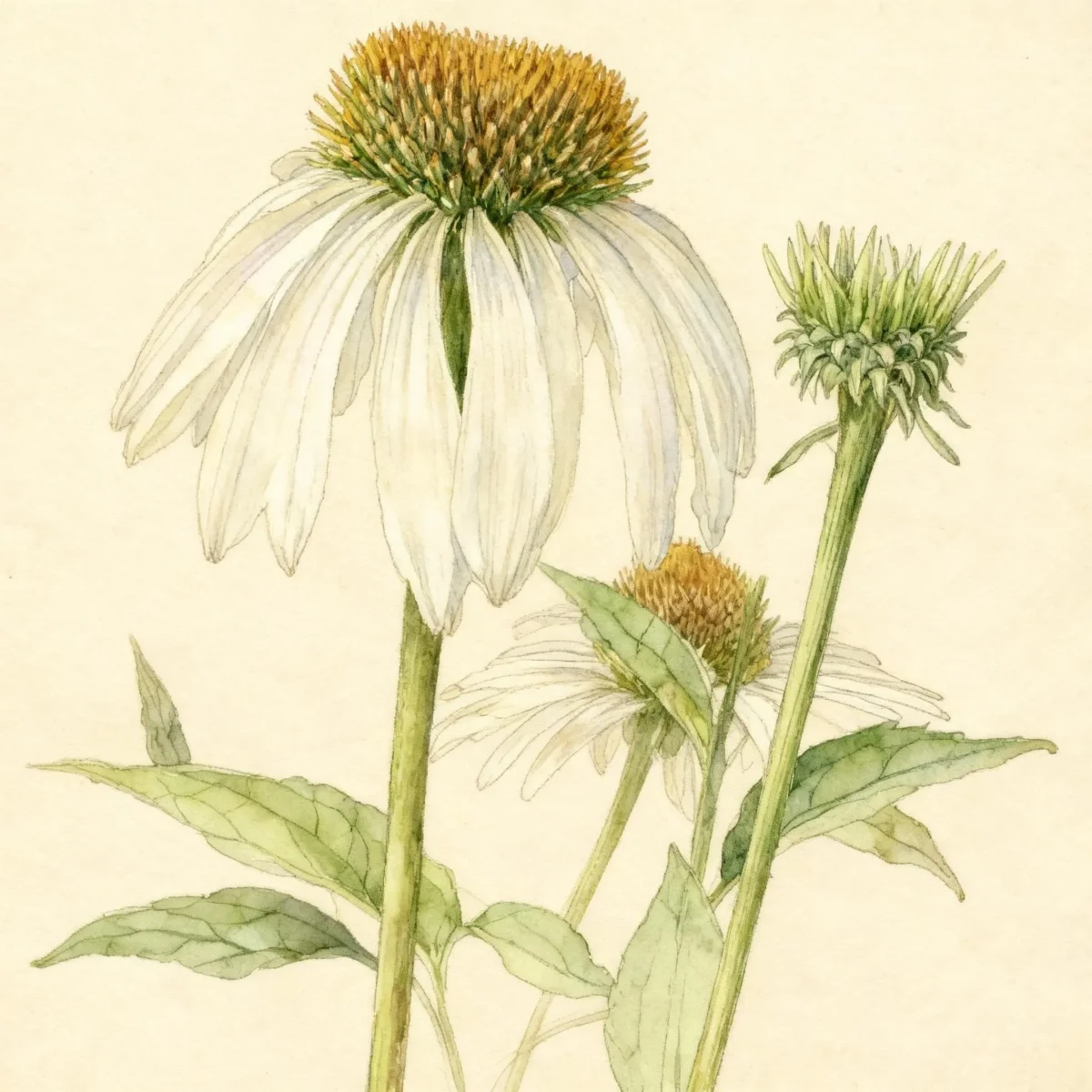
Purple coneflower (Echinacea purpurea 'Norwhinat' WHITE NATALIE)
Echinacea purpurea 'Norwhinat' WHITE NATALIE is a low-maintenance, white-flowering Purple coneflower ideal for sunny borders.
Scroll down to discover growing tips, care requirements, companion plants, and more
Complete Plant Information
Overview
Echinacea purpurea ‘Norwhinat’ WHITE NATALIE creates a stunning visual impact with its pure white flowers, offering a cool counterpoint in sunny perennial beds. This specific cultivar of Purple coneflower is prized for its compact habit and sturdy 1.5 to 2-foot stems, which rarely require staking, making mass plantings neat and uniform. As a low-maintenance herbaceous perennial, it provides reliable summer color from June through August.
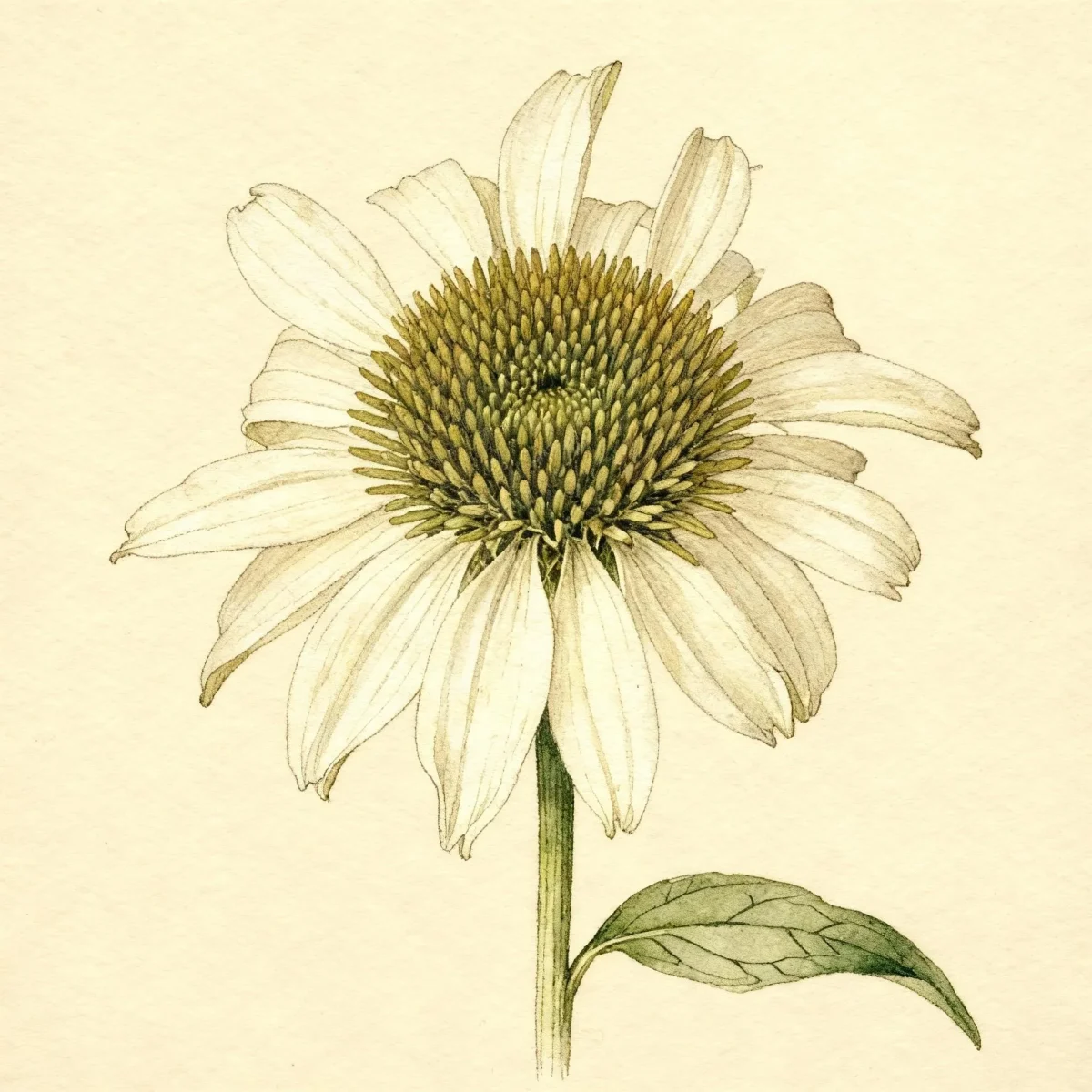
The appeal of this variety, often known by its trade name WHITE NATALIE, extends beyond its aesthetic qualities; it is highly adaptable to various challenging soil conditions, proving tolerant of heat, humidity, and drought once established. Gardeners appreciate the season-long display of its signature daisy-like blooms, featuring downward-sweeping white rays surrounding a prominent orange-brown cone.
Beyond the summer show, the structure of the spent seed heads offers late-season interest, often attracting goldfinches seeking seeds into the winter months. Incorporating Echinacea purpurea ‘Norwhinat’ WHITE NATALIE into your garden ensures excellent texture, reliable performance, and high value for both visual appeal and local wildlife support.
Fast Facts
- Plant Family: Asteraceae
- Plant Type: Herbaceous perennial
- Hardiness Zones: USDA Zones 3-8
- Size at Maturity:
- Height: 1.5-2 ft
- Spread: 1-1.5 ft
- Bloom Time: June to August
- Bloom Description: White rays with orange-brown center cone
- Sun Exposure: Full sun to part shade
- Water Needs: Dry to medium
- Maintenance Level: Low
How to Grow
Plant Echinacea purpurea ‘Norwhinat’ WHITE NATALIE in average, well-drained soil. While it tolerates part shade, this Purple coneflower performs best and develops its most robust flowering habit when situated in full sun. Planting in spring or fall is ideal, ensuring the roots get established before extreme weather hits.
Maintenance for this adaptable perennial is extremely low. It handles drought well and is tolerant of poor soil, heat, and humidity, fitting perfectly into water-wise landscapes. While plants often rebloom without intervention, snipping off spent flowers will neaten the appearance.
For long-term health, be prepared to divide clumps every four years if they become overly crowded. If you leave some of the blackened cones standing through the winter, the plant will freely self-seed, naturally increasing your population of Echinacea purpurea ‘Norwhinat’ WHITE NATALIE over time.
Landscape Uses
Echinacea purpurea ‘Norwhinat’ WHITE NATALIE is exceptionally valuable for creating long-lasting color in sunny garden areas. Its manageable height makes it an excellent transitional plant—perfect for the middle or rear of a mixed border where structure is needed without overshadowing shorter companions. It excels when massed in meadow plantings or naturalized areas, providing a consistent field of white against the green landscape.
This variety pairs beautifully with other mid-summer bloomers that share similar sunny, dry preferences. Try pairing the white flowers of WHITE NATALIE with black-eyed Susans (Rudbeckias) for a classic contrast, or use them alongside salvias and ornamental grasses for textural variety. They are also highly effective in native plant gardens recognizing their central North American heritage.
Its strong stems and lasting color quality ensure this cultivar is an excellent choice for the cutting garden, providing unique light tones whether used fresh or dried for winter arrangements. Whether used formally in borders or naturally in wildflower settings, the presence of Echinacea purpurea ‘Norwhinat’ WHITE NATALIE elevates the design.
Standout Features
Flower Qualities
- Showy
- Good Cut
- Good Dried
Noteworthy Characteristics
Echinacea purpurea, commonly called purple coneflower, is a coarse, rough-hairy, herbaceous perennial that is native to moist prairies, meadows and open woods of the central to southeastern United States. The genus name Echinacea references the Greek word for hedgehog due to the spiny center cone found on the flowers. Specifically, ‘Norwhinat’, marketed as WHITE NATALIE, is a compact cultivar growing to 1.5-2’ tall on sturdy stems, featuring downward-arching white rays around a large orange-brown center cone, blooming from late spring into late summer.
Tolerances
- Deer
- Drought
- Clay Soil
- Dry Soil
- Shallow-Rocky Soil
Potential Problems
While generally robust, watch for occasional attacks by Japanese beetles, especially when the flowers first begin to emerge. Leaf spot can also appear, particularly in humid conditions or if air circulation around the plants is poor. To mitigate potential issues, ensure adequate spacing for good airflow, which is crucial for managing fungal concerns like leaf spot. The plant can also be susceptible to aster yellows disease, which should be treated by removing affected specimens.
Frequently Asked Questions
What hardiness zones is Purple coneflower suitable for?
Echinacea purpurea ‘Norwhinat’ WHITE NATALIE is reliably hardy across USDA Zones 3 through 8.
How large does Echinacea purpurea ‘Norwhinat’ WHITE NATALIE grow?
This specific cultivar typically reaches a mature height between 1.5 and 2 feet tall, with a spread of 1 to 1.5 feet wide.
When does Purple coneflower bloom?
This perennial provides significant bloom color from June through August, featuring striking white rays surrounding a dark orange-brown center cone.
What sun exposure does WHITE NATALIE need?
For the best performance and greatest flower production, Echinacea purpurea ‘Norwhinat’ WHITE NATALIE should receive full sun, though it can tolerate light afternoon shade.
Conclusion
The Echinacea purpurea ‘Norwhinat’ WHITE NATALIE stands out as a dependable, visually striking, and highly adaptable native perennial. Its low maintenance needs, combined with its drought and soil tolerance, make it a cornerstone for sustainable, sun-filled garden designs. Check your local USDA zone compatibility today and plan to incorporate this beautiful white Purple coneflower into your landscape next season for season-long brilliance.
Propagation Tips
Division is the most common and successful method for propagating desirable clumps of established Echinacea purpurea ‘Norwhinat’ WHITE NATALIE. This process is best performed in the early spring just as new growth begins or in the early fall. Gently excavate the entire clump and use a sharp spade or knife to divide the root ball into sections, ensuring that each new division has a healthy portion of crowns and roots attached. Replant immediately into prepared soil at the same depth as the parent plant and water well to encourage establishment.
While the cultivar is generally stable, saving seeds from the spent cones will generally produce more standard Purple coneflower types unless carefully isolated, as the cultivar resulted from a chance mutation. If you decide to let the seed heads mature, remember that the blackened cones persist well into winter, offering food for birds, but prompt removal will encourage plants to focus energy into root establishment rather than self-seeding.
Companion Planting
Due to the robust sun and dry medium water needs of Echinacea purpurea ‘Norwhinat’ WHITE NATALIE, pairing it with other drought-tolerant prairie natives maximizes overall garden health and resilience. Excellent companions include Russian Sage (Perovskia atriplicifolia), which offers blue vertical accents that contrast beautifully with the white coneflower heads. Similarly, ornamental grasses like Little Bluestem (Schizachyrium scoparium) provide fine texture and movement around the stiffer stems of the coneflower.
When designing borders, ensure companions have similar cultural needs to avoid over- or under-watering specific sections of the bed. Daylilies and true black-eyed Susans (Rudbeckia hirta or fulgida) are classic partners that thrive under the same full-sun exposure and low-water regimes once established, creating a vibrant and durable summer tapestry featuring the WHITE NATALIE cultivar.