Calico aster (Symphyotrichum lateriflorum 'Lady in Black')
Symphyotrichum lateriflorum 'Lady in Black', the Calico aster, offers late-season white flowers and unique dark purple foliage.
Scroll down to discover growing tips, care requirements, companion plants, and more
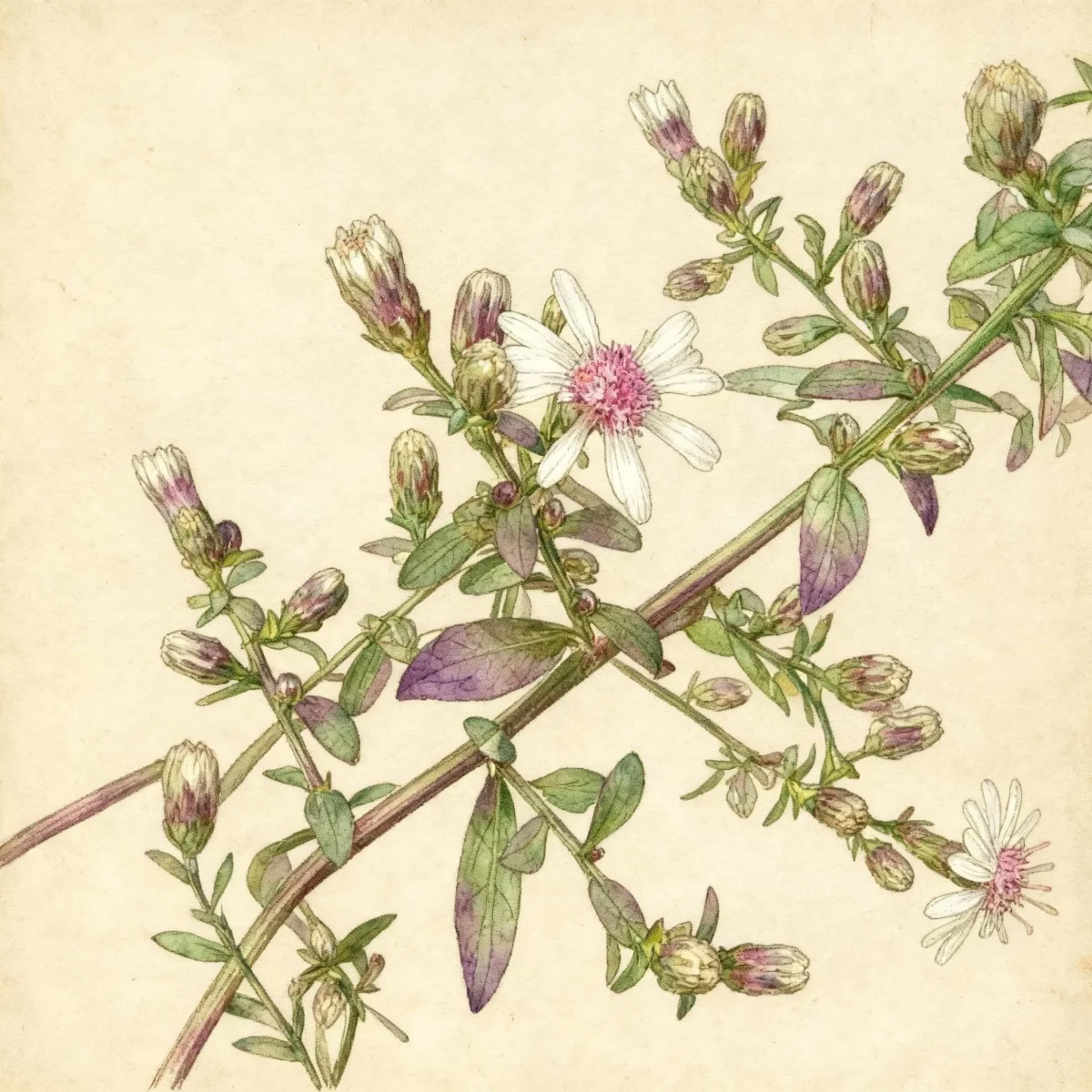
Complete Plant Information
Overview
The Symphyotrichum lateriflorum ‘Lady in Black’, widely known as the Calico aster, is highly valued in the autumn garden for providing structure and late-season color. Its primary distinction is the striking dark purple foliage that remains attractive throughout the growing season, setting it apart from green-leaved varieties. This herbaceous perennial brings essential nectar sources to the garden when many other plants have finished flowering.
Native to diverse habitats across Eastern and Central North America, the Calico aster is adaptable, thriving where it receives sufficient moisture. It matures into a bushy perennial, typically reaching three feet tall, and features masses of tiny white flowers with rosy centers blooming reliably from September into October. Gardeners rely on Symphyotrichum lateriflorum ‘Lady in Black’ to anchor borders and provide crucial late-season interest.
Fast Facts
- Plant Family: Asteraceae
- Plant Type: Herbaceous perennial
- Hardiness Zones: USDA Zones 4-8
- Size at Maturity:
- Height: 2-3 ft
- Spread: 2-3 ft
- Bloom Time: September to October
- Bloom Description: White rays with rosy centers
- Sun Exposure: Full sun
- Water Needs: Medium
- Maintenance Level: Low
How to Grow
Planting should occur in spring or early fall, establishing Symphyotrichum lateriflorum ‘Lady in Black’ in locations that allow it to achieve its best display. This Calico aster demands moist, well-drained soils. While it tolerates full sun, particularly in cooler summer climates, ensure it receives some afternoon shade if summer temperatures consistently climb above 90°F.
Watering should be consistent; maintain medium moisture levels, especially during the establishment period. Fertilizing is rarely necessary if the native soil quality is adequate. A key cultural tip involves pinching back the stems in the late spring or early summer if shorter, more compact plants are desired, which helps prevent flopping later in the season.
This perennial handles periodic flooding well, making it suitable for lower areas of the garden or moist meadows. Minimal cleanup is required at the end of the season, recognizing that low maintenance is a significant benefit of growing the Calico aster.
Landscape Uses
The upright, bushy habit of Symphyotrichum lateriflorum ‘Lady in Black’ makes it excellent for defining garden edges. Use it effectively in mass plantings or groups to showcase the dark foliage against lighter surrounding plants. It functions beautifully as a perennial hedging plant along walkways or paths where its late bloom provides a final burst of activity before winter.
Consider pairing this aster with late-season grasses or plants that value similar moisture regimes, such as certain sedges or Joe-Pye Weed, creating a layered, textural effect. Its height allows shorter fall bloomers to reside in front, adding depth to woodland or naturalized borders where this aster naturally occurs.
Standout Features
Flower Qualities
- Showy
Noteworthy Characteristics
Symphyotrichum lateriflorum, commonly known as calico aster, side-flowering aster, starved aster or white woodland aster, is an herbaceous, somewhat bushy perennial that typically grows to 2-3’ tall with a slightly smaller spread. Aster lateriflorus is a former name and synonym for this plant which has now been reclassified from genus Aster to genus Symphyotrichum but with retention of its various aster common names. ‘Lady in Black’ features unique dark purple foliage that remains attractive throughout the growing season except in areas where temperatures consistently exceed 90°F, culminating in tiny white flowers with rosy centers appearing in dense, branching sprays in late summer to early autumn on rigid, purplish stems.
Tolerances
- Periodic flooding
Potential Problems
This species generally avoids serious insect or disease issues, contributing to its low maintenance requirement. The main cultural challenge is plant structure; taller plants, especially if grown in overly rich soil or too much shade, may become leggy or flop over later in the season. To manage this, simply pinch stems back by about one-third in late spring to encourage a denser, sturdier habit that better supports the weight of the late-season flower sprays.
Frequently Asked Questions
What hardiness zones is Calico aster suitable for?
Symphyotrichum lateriflorum ‘Lady in Black’ is hardy and reliably grows in USDA Zones 4 through 8.
How large does Calico aster grow?
This perennial typically reaches a height of 2 to 3 feet with a spread of 2 to 3 feet at maturity.
What sun exposure does Symphyotrichum lateriflorum ‘Lady in Black’ need?
For optimal performance and dark foliage color, this plant prefers full sun, although it can tolerate some part shade in hot summer regions.
When does Calico aster bloom?
The bloom time for the Calico aster is late in the season, generally from September extending through October, featuring white rays with rosy centers.
Conclusion
The Symphyotrichum lateriflorum ‘Lady in Black’ offers fantastic structural interest with its dark foliage long before its late bloom begins. This resilient Calico aster adds vital late-season color and appeals to late-season pollinators. Before planting, confirm your location falls within USDA Zones 4-8 and ensure the soil profile provides the necessary consistent moisture this beauty requires.
Companion Planting
Selecting appropriate neighbors enhances the visual impact of Symphyotrichum lateriflorum ‘Lady in Black’. Since it thrives in moist conditions, pair it with other late-season perennials that appreciate similar water needs, such as Astilbe, Joe Pye Weed (Eutrochium), or moisture-loving ornamental grasses like switchgrass (Panicum virgatum). The dark purple leaves of ‘Lady in Black’ contrast beautifully with strong yellows and blues, making it an ideal partner for goldenrod cultivars or deep blue Ageratums that benefit from its height.
Wildlife Benefits
A crucial benefit of including Calico aster in your garden design is supporting declining native pollinator populations. As one of the last flowers to bloom, the white-rayed flowers attract late-season bees, butterflies, and moths that are preparing for migration or hibernation. Allowing some dried seed heads to remain standing over winter also provides structure and food for foraging birds. This plant strongly supports local ecosystems through its late availability of nectar and pollen.