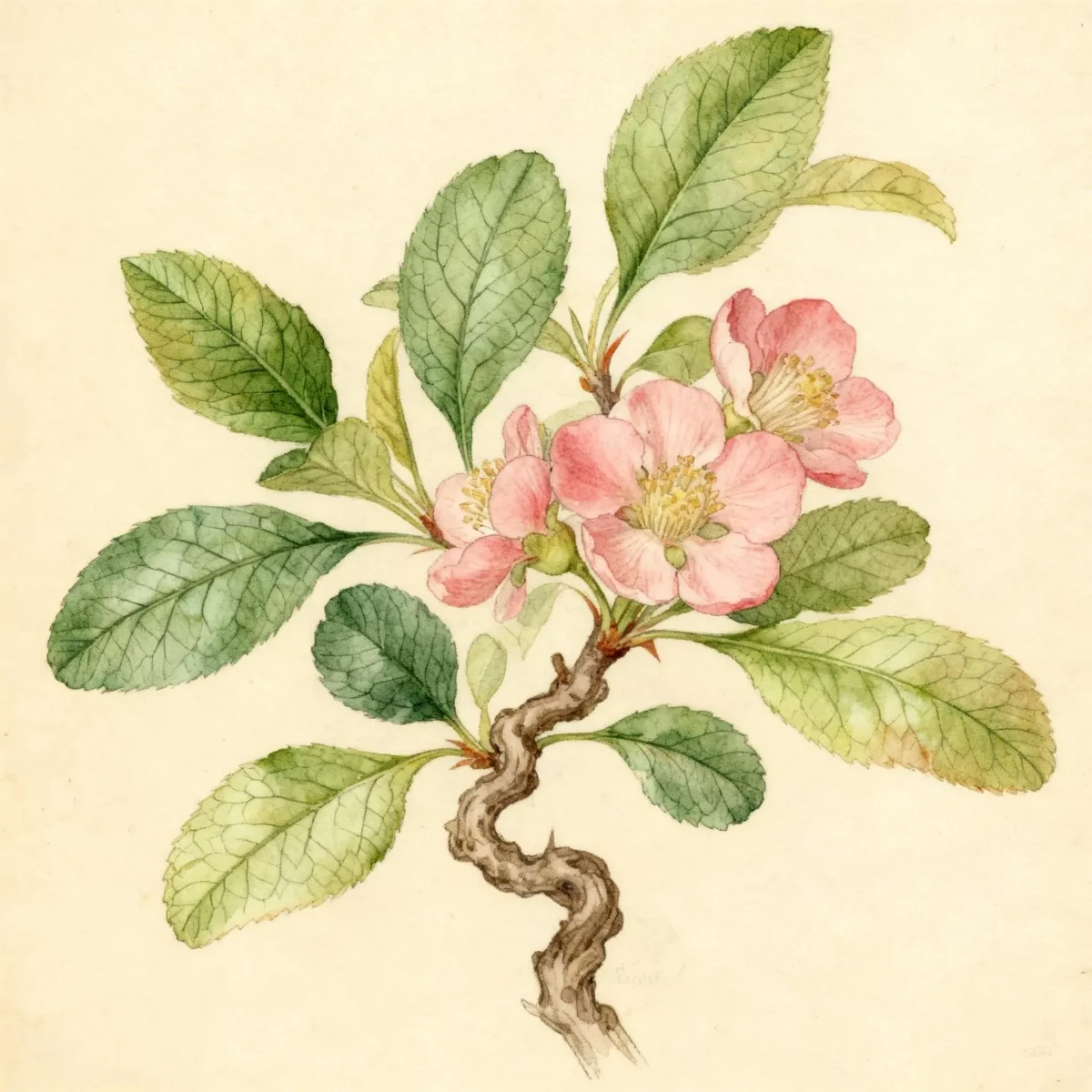
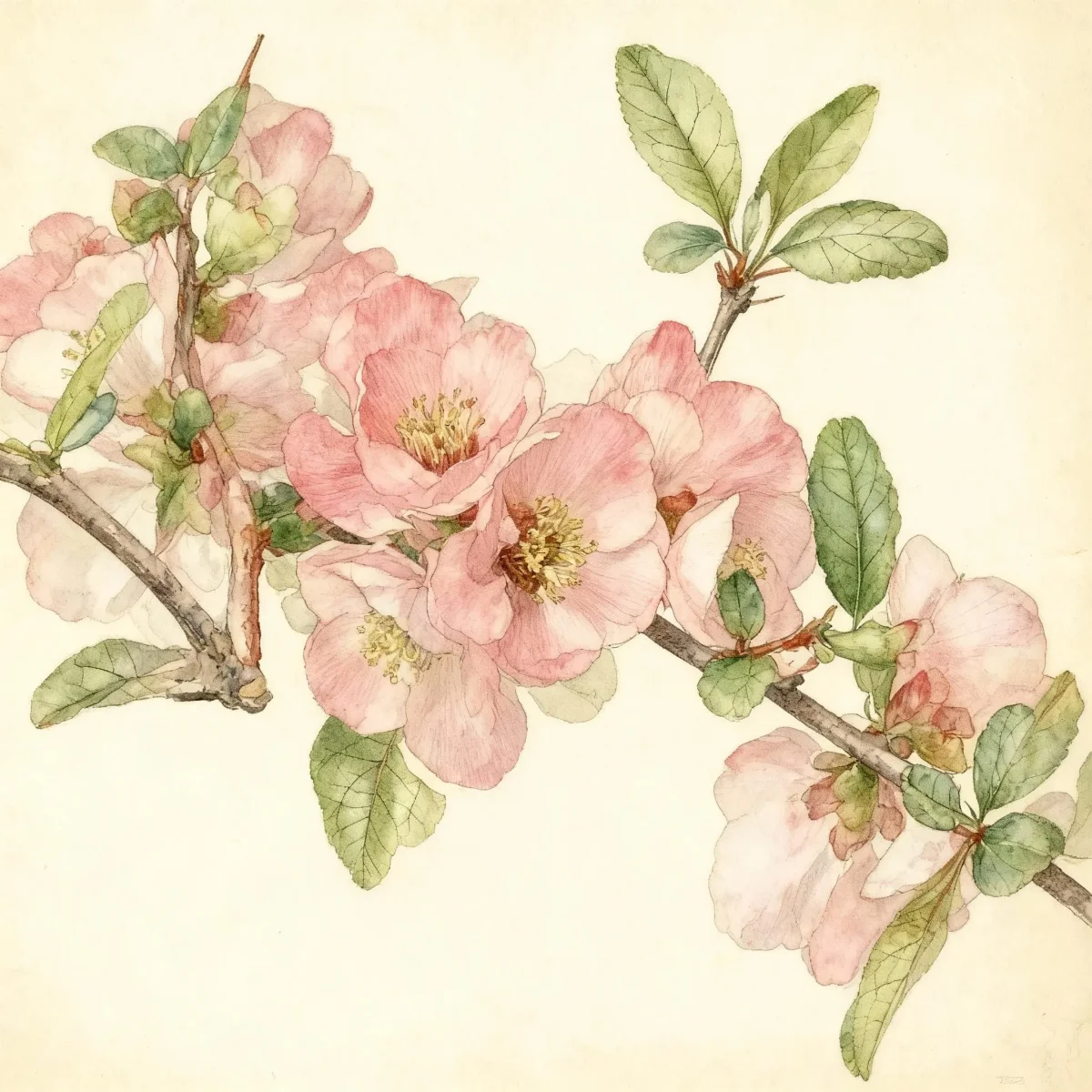
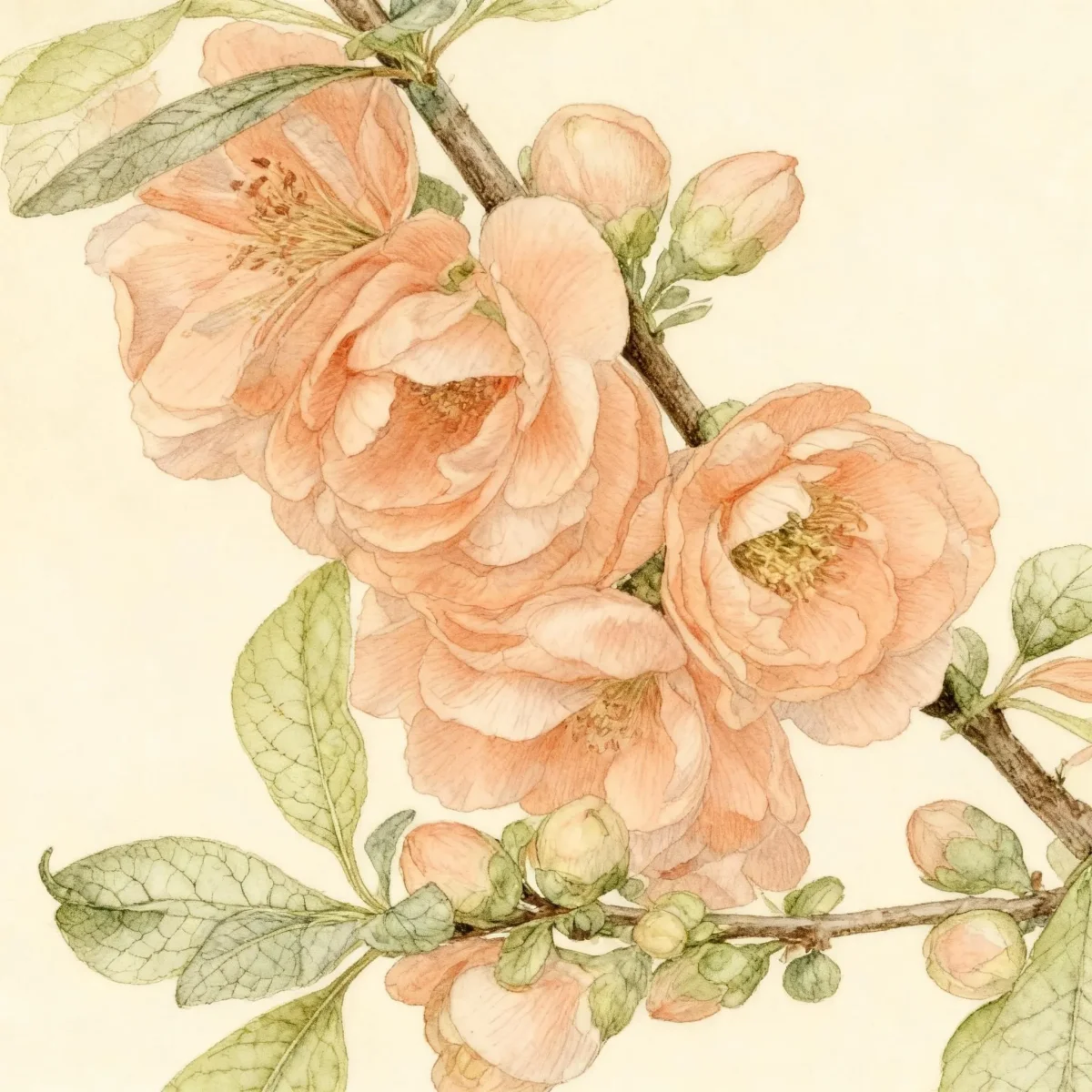
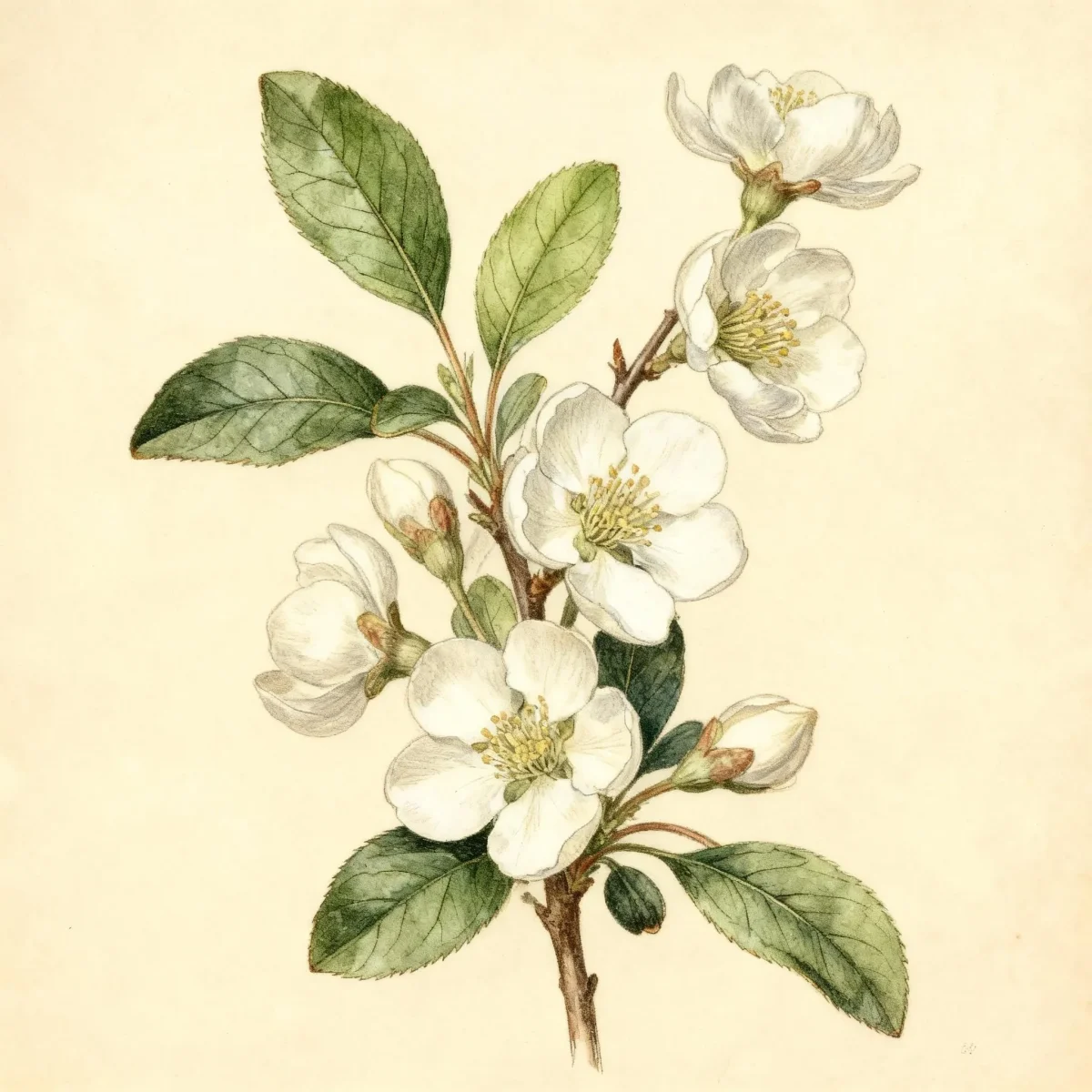
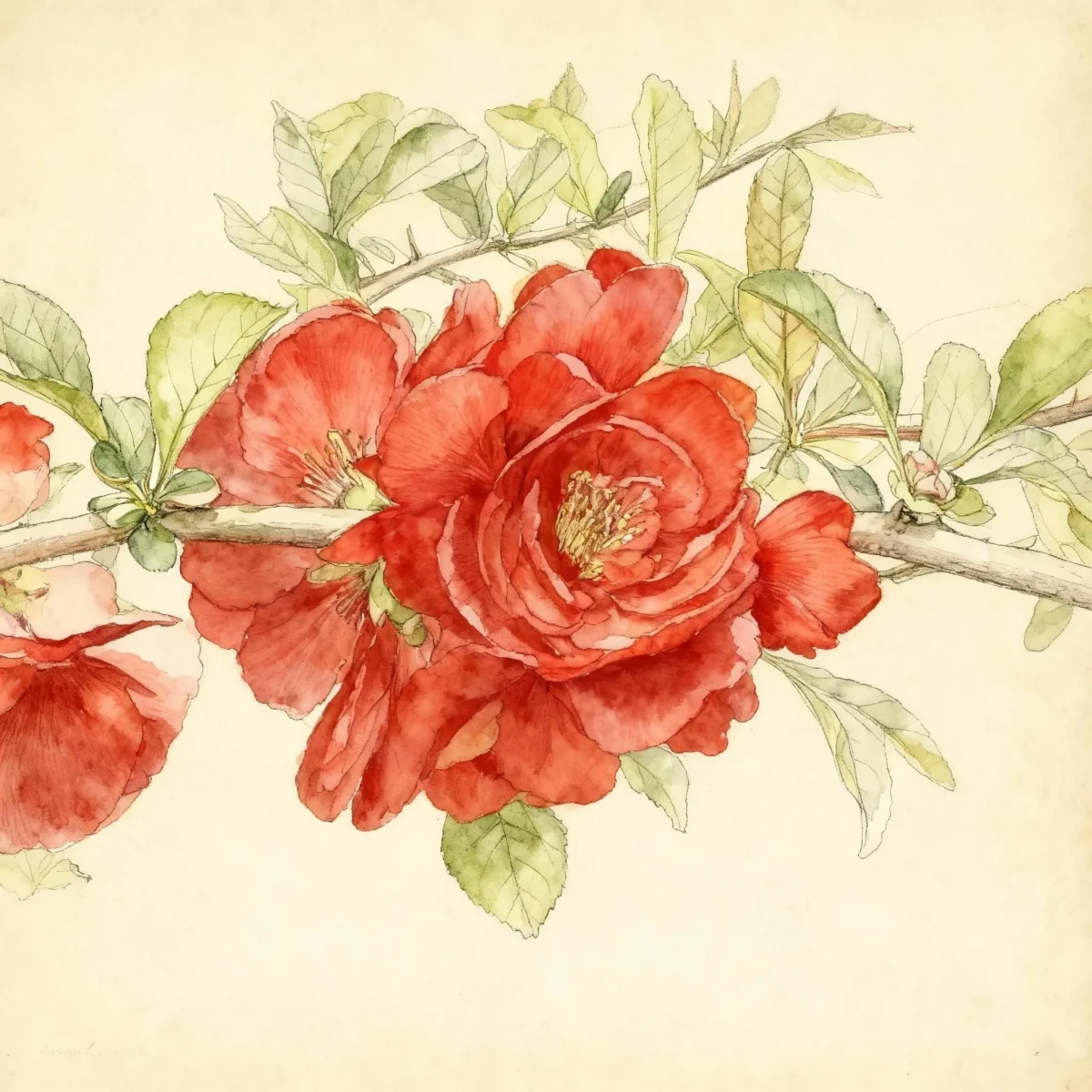
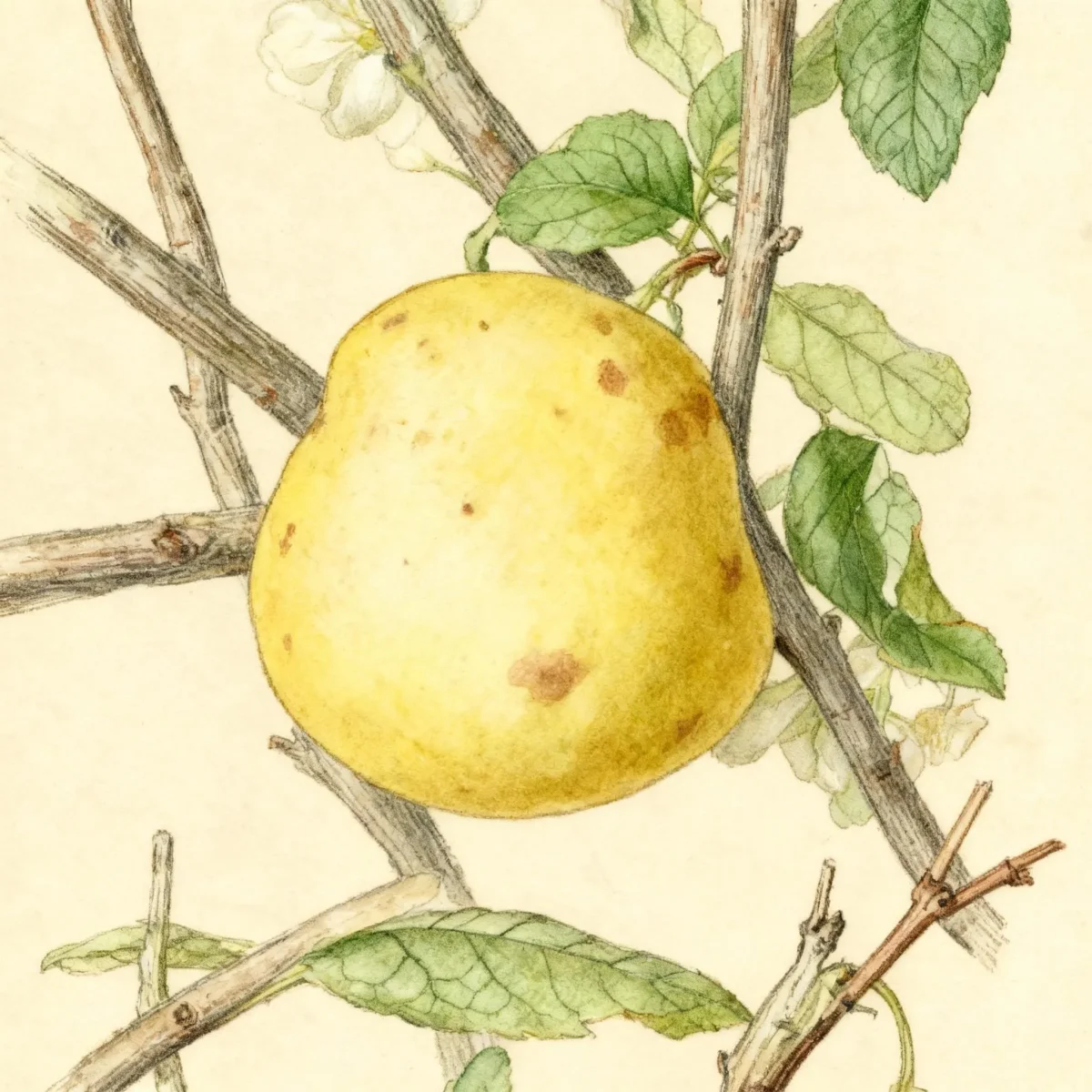
Flowering quince (Chaenomeles 'Pink Storm')
Chaenomeles 'Pink Storm' is a low-maintenance Flowering quince prized for its dense, thornless habit and profusion of early blooming double pink flowers.
Scroll down to discover growing tips, care requirements, companion plants, and more
Complete Plant Information
Overview
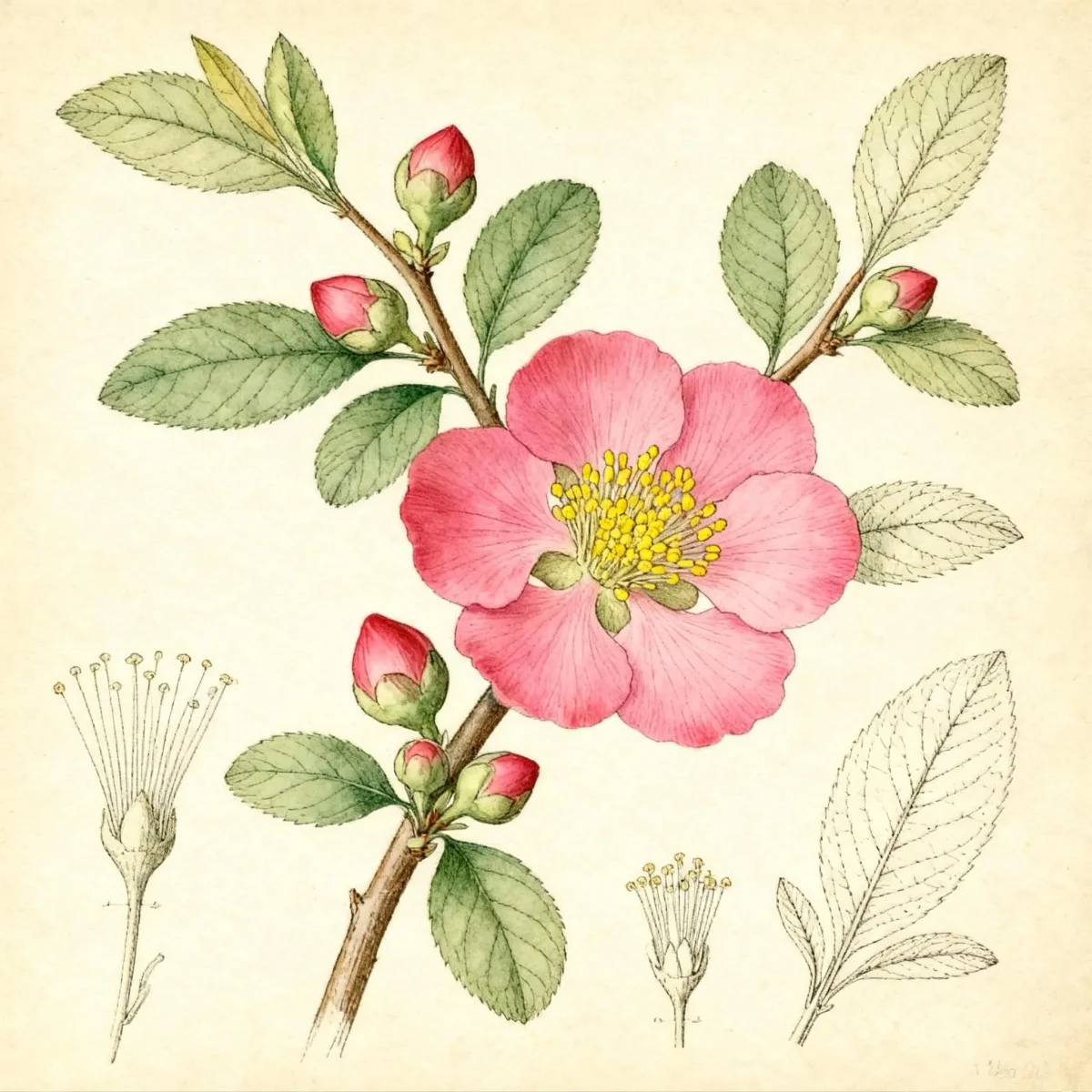
The Chaenomeles ‘Pink Storm’, known commonly as Flowering quince, offers exceptional value by providing one of the earliest bursts of color in the spring garden. This cultivar is specifically noted for its dense, broad-rounded habit and the absence of thorns, making it safer and easier to manage than some of its relatives. Gardeners appreciate its reliable, low-maintenance performance across a wide range of conditions.
The defining feature of this Flowering quince is its mass of vibrant, double pink flowers that appear profusely in April, often before the foliage has fully emerged. Developed as part of the Double Take series, Chaenomeles ‘Pink Storm’ delivers a visual impact similar to smaller camellias right at the cusp of spring transition. Furthermore, this variety is notably sterile, meaning it focuses all its energy on blooms rather than fruit production.
As a tough, deciduous shrub, it integrates easily into landscape designs. Its small stature (3-4 feet tall and wide) makes it suitable for screening, borders, or as a specimen plant where a compact shape is required. The glossy, dark green foliage provides a clean backdrop once the early spring show concludes.
Fast Facts
- Plant Family: Rosaceae
- Plant Type: Deciduous shrub
- Hardiness Zones: USDA Zones 5-9
- Size at Maturity:
- Height: 3-4 ft
- Spread: 3-4 ft
- Bloom Time: April
- Bloom Description: Pink (double)
- Sun Exposure: Full sun to part shade
- Water Needs: Medium
- Maintenance Level: Low
How to Grow
For best results, plant Chaenomeles ‘Pink Storm’ in spring or fall, ensuring it is positioned where it receives full sun to maximize flower production. While this shrub is highly adaptable, it prefers average, medium moisture, well-drained loams. It tolerates a wide range of soil compositions, including clay, but excellent drainage is crucial for long-term health.
Watering should be consistent, especially while the plant establishes its root system. Once established, the Flowering quince demonstrates good drought tolerance. Avoid over-fertilizing, as excessive richness can sometimes reduce bloom quality. Since this shrub blooms on old wood—growth produced the previous season—pruning must be done thoughtfully.
Prune new growth immediately after flowering concludes in the spring. This selective shaping stimulates the growth of flowering spurs that will ensure abundant blooms the following year. Heavy pruning should generally be avoided, as it removes next year’s flower potential. Promptly address any root suckers to maintain a clean, mounded shape.
Landscape Uses
The reliable structure and spectacular early flowering of Chaenomeles ‘Pink Storm’ make it highly versatile in landscape planning. It excels when used to create low, informal hedges or screening where its dense habit provides year-round structure. Grouping several shrubs together creates a more unified, impactful swath of pink in early spring borders or cottage gardens.
Because it reaches only 3 to 4 feet, this Flowering quince is perfectly scaled for use as a specimen plant near entryways or as a mid-layer element in tiered shrub borders. The branches are surprisingly sturdy and can be cut and forced indoors during late winter to bring the color inside. In naturalized areas, its adaptability to erosion-prone sites is an added benefit.
Consider pairing this early bloomer with later-flowering shrubs or perennials that can take over the display once the quince finishes. Its requirement for good drainage and sun exposure should guide companion plant selection away from boggy or deep shade situations.
Standout Features
Flower Qualities
- Showy
Noteworthy Characteristics
The genus Chaenomeles originates from the mountains of China and Japan, valued for centuries for its very early, showy blossoms. The specific name ‘Pink Storm’ refers to its tendency to produce an outstanding early spring spectacle of double pink flowers that mimic the look of camellias. This is a dense, broad-rounded, thornless, deciduous shrub, and notably, these plants do not produce unattractive fruit.
Tolerances
- Drought
- Erosion
- Clay Soil
Potential Problems
A primary concern for gardeners growing Flowering quince, including ‘Pink Storm’, is susceptibility to fungal leaf spot, which is exacerbated during springs with heavy moisture. Good air circulation is key to mitigating this; ensure plants are spaced appropriately. Fireblight and scab disease may also present issues depending on the local climate and cultivar susceptibility.
In terms of pests, Aphids can damage tender new growth early in the season, and scale or mites can occasionally appear. Keep an eye out for chlorosis, which manifests as yellowing foliage; this is often an indicator that the soil pH is too high (alkaline). Protecting the flower buds from extreme early spring frosts remains critical for maximizing the bloom display.
Frequently Asked Questions
What hardiness zones is Flowering quince suitable for?
Chaenomeles ‘Pink Storm’ is reliably hardy across USDA Zones 5 through 9.
How large does Chaenomeles ‘Pink Storm’ grow?
This shrub typically matures into a compact, broad-rounded form, reaching heights and spreads between 3 and 4 feet.
When does Flowering quince bloom?
The striking double pink flowers of Chaenomeles ‘Pink Storm’ appear early in the season, usually during April.
What sun exposure does Chaenomeles ‘Pink Storm’ need?
It performs best in full sun, though it can tolerate part shade; note that full sun encourages the heaviest bloom output.
Conclusion
The Chaenomeles ‘Pink Storm’ remains an outstanding choice for adding robust, early spring performance to the garden without demanding excessive upkeep. Its combination of low maintenance, adaptability to tough soils, and beautiful double pink flowers secures its place as a garden staple. Before planting, verify that your site offers the required full sun to part shade conditions and drains well, ensuring many seasons of spectacular blooms from your Flowering quince.
Companion Planting
When selecting partners for your Chaenomeles ‘Pink Storm’, focus on plants that complement its early bloom time or fill in the visual space once the quince leaves emerge. Consider pairing it with early-blooming bulbs like daffodils or tulips, as their flowers emerge before or concurrently with the quince blooms. For summer interest, late-blooming perennials such as Hostas with contrasting blue-green foliage or Siberian Irises work well, provided the soil remains reasonably well-drained. Given its tolerance for clay and drought, avoid placing it directly next to plants that require consistently moist or boggy soil, as this stresses the Flowering quince.
Seasonal Care Calendar
Spring is the most critical time for the care of your Chaenomeles ‘Pink Storm’. As soon as the flowers begin to fade in early April or May, perform any shaping or cleanup pruning needed immediately after flowering. This timing ensures development of the wood that will set buds for the next year. Monitor frequently during wet springs for fungal leaf spot and remove affected debris promptly. Summer care is minimal; provide moderate water, especially during dry spells, but resist the urge to heavily fertilize. In fall, there is no significant winter preparation required beyond ensuring the shrub is properly hydrated before the ground freezes, as this drought-tolerant plant resists winter desiccation well.