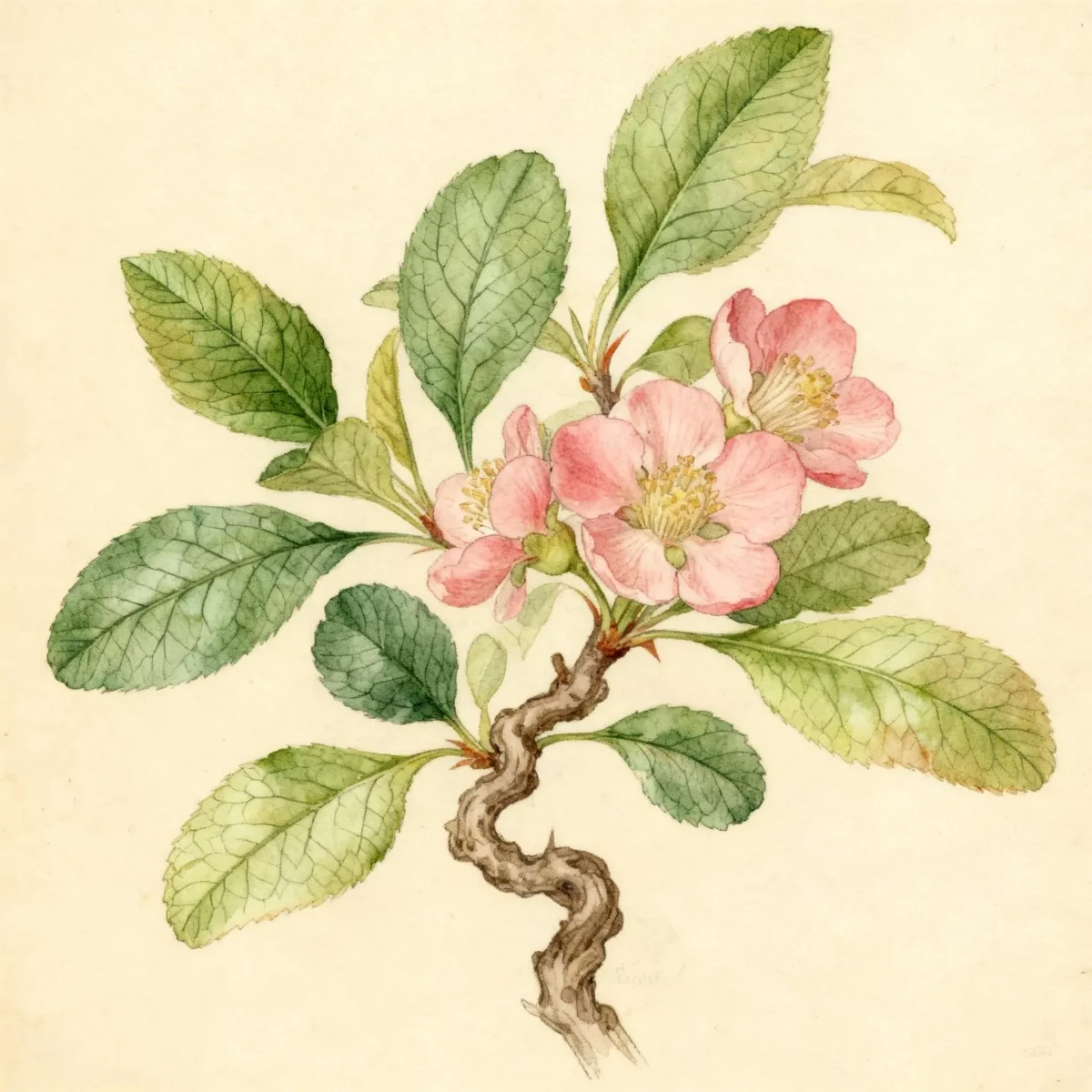
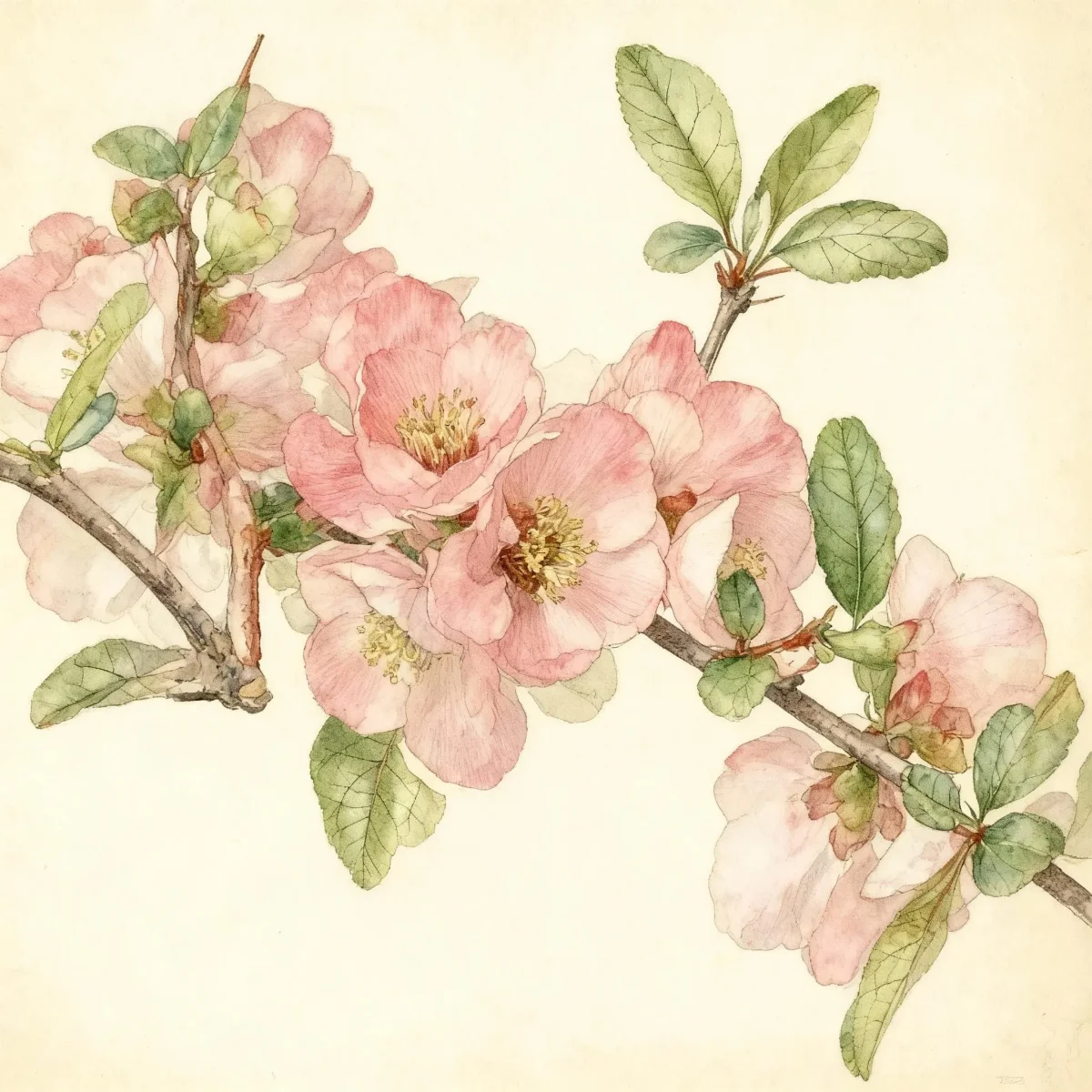
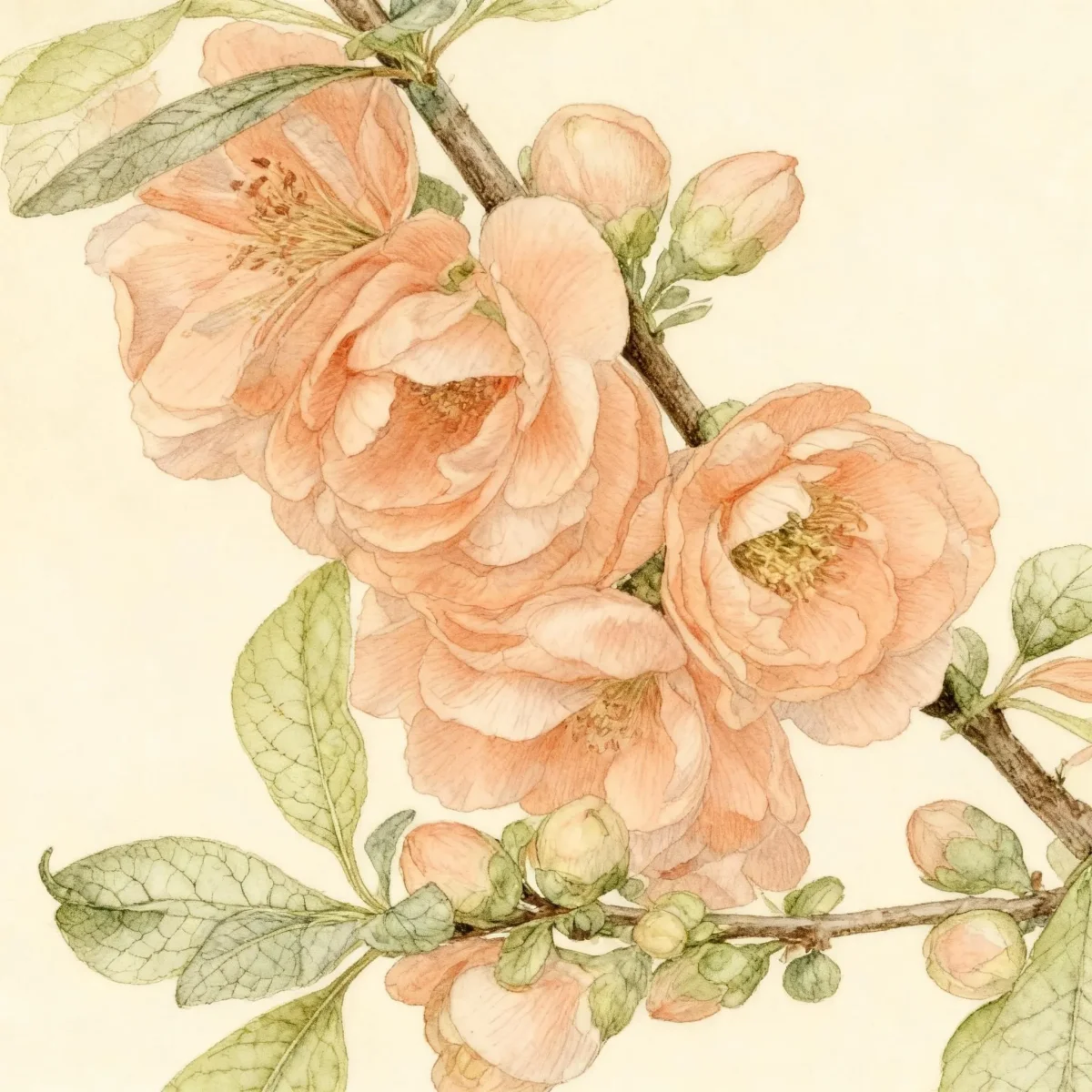
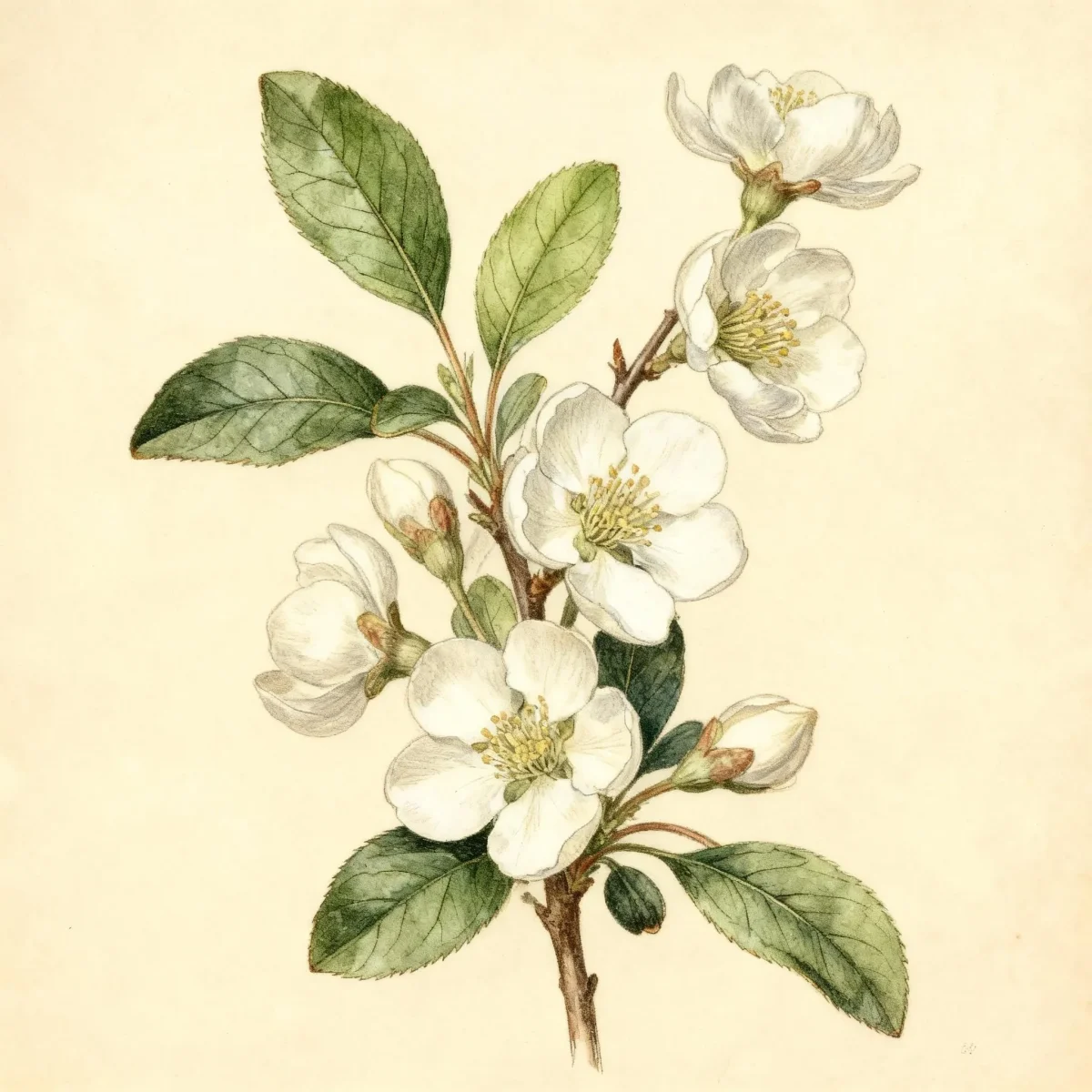
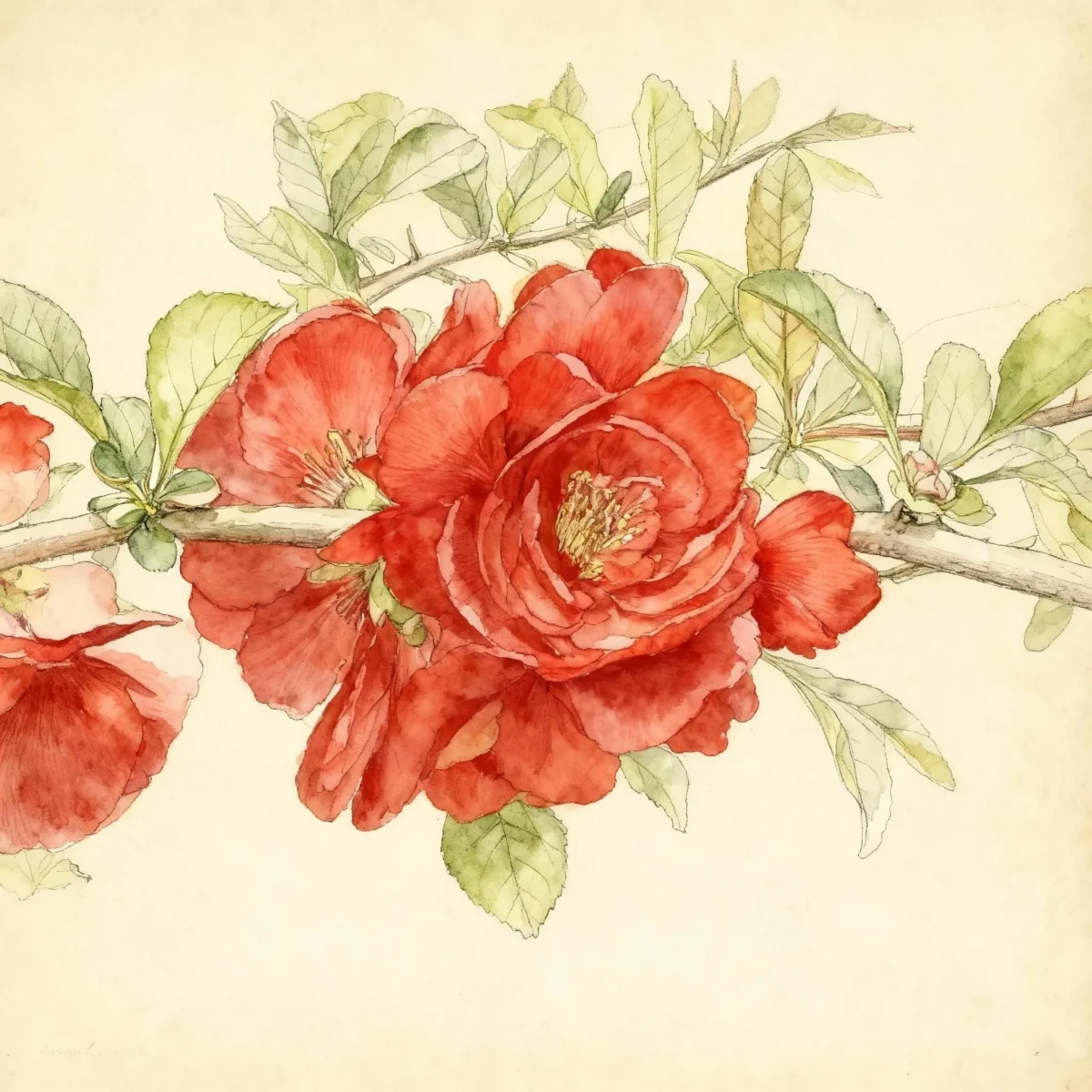
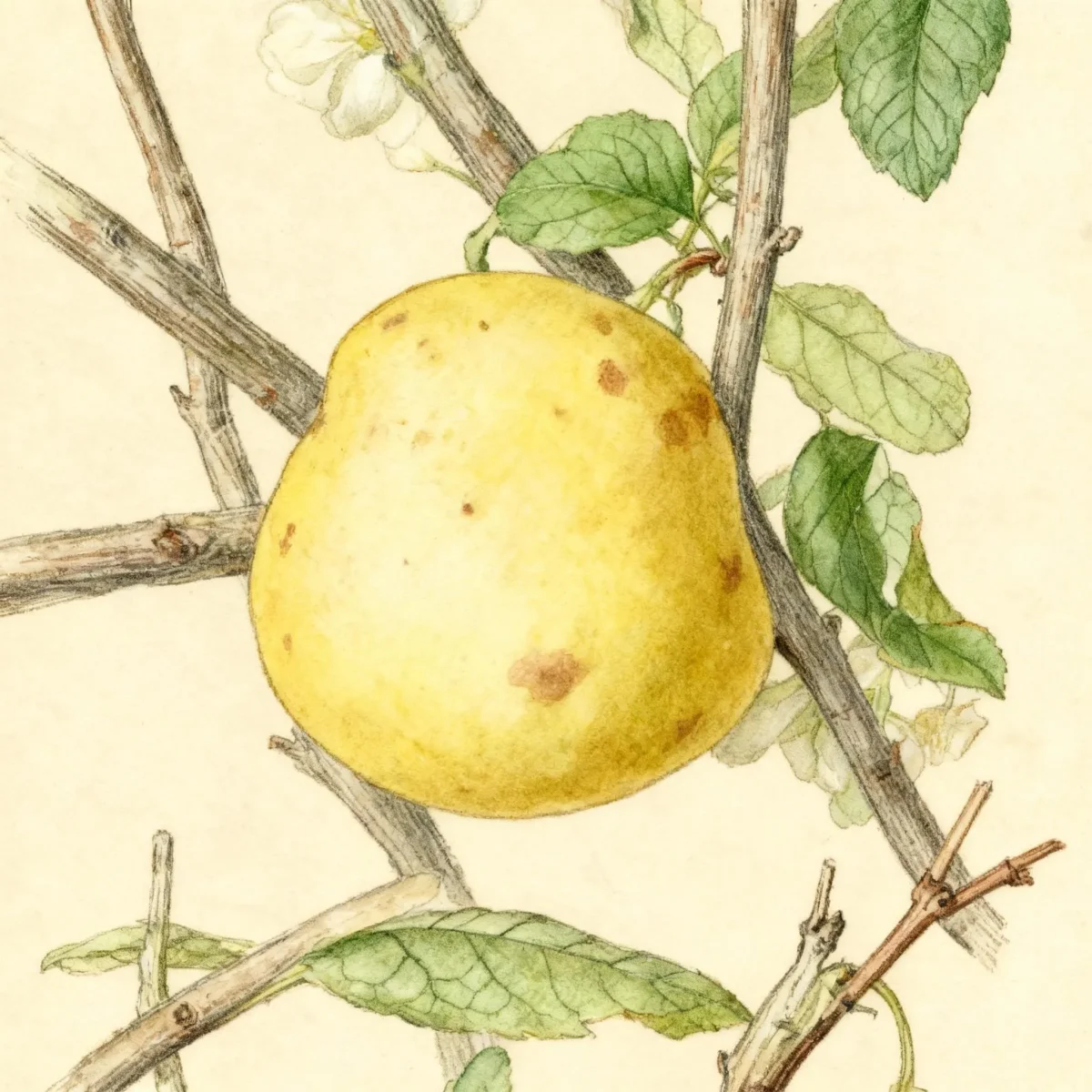
Flowering quince (Chaenomeles 'Scarlet Storm')
Chaenomeles 'Scarlet Storm' is a stunning, low-maintenance Flowering quince prized for profuse double scarlet blooms in early spring.
Scroll down to discover growing tips, care requirements, companion plants, and more
Complete Plant Information
Overview
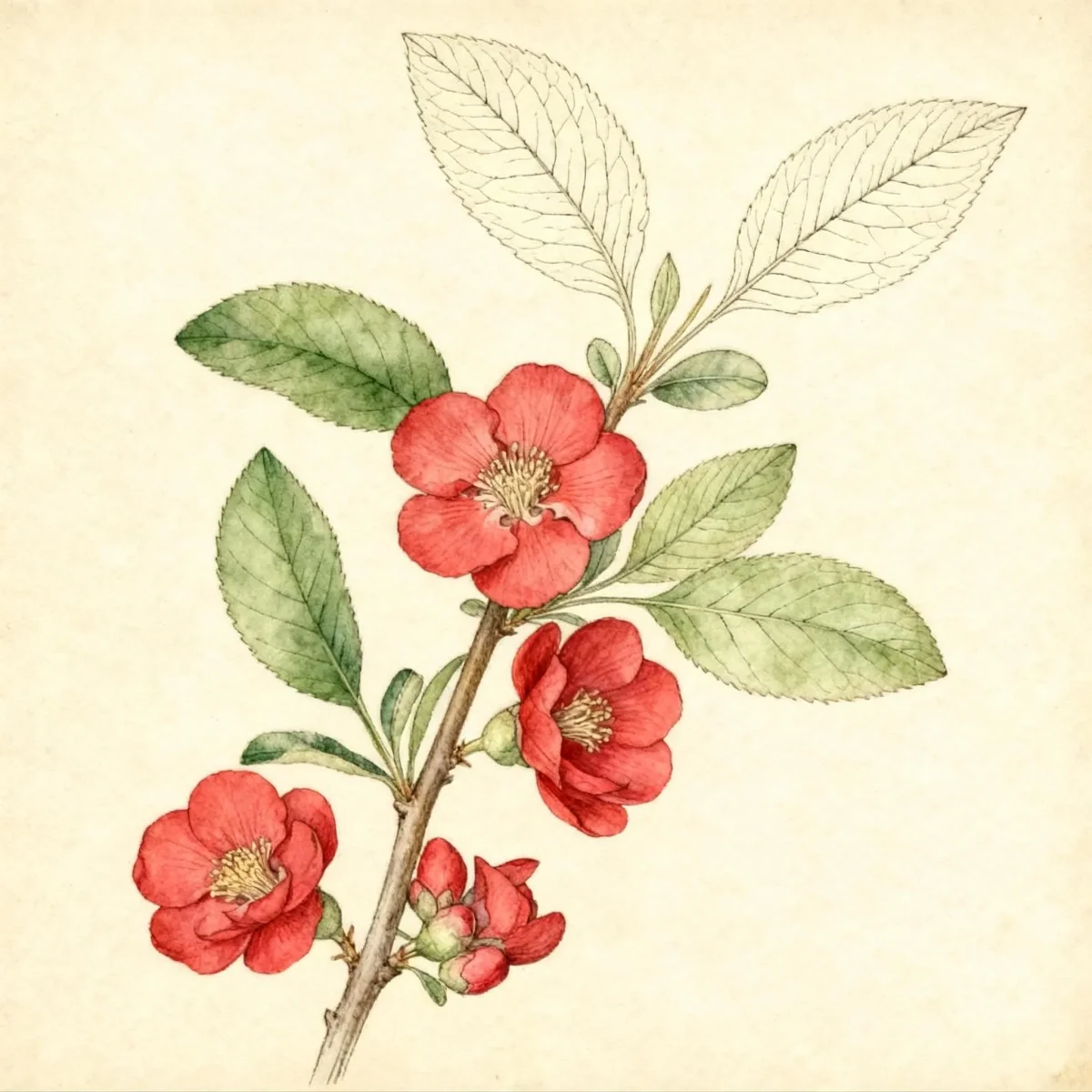
The Flowering quince, specifically the cultivar Chaenomeles ‘Scarlet Storm’, is highly valued for providing one of the earliest and most dramatic color displays in the spring landscape. This dense, broad-rounded shrub produces a profusion of double scarlet red flowers, often resembling small camellias, before its glossy, dark green leaves fully emerge. As a low-maintenance, thornless deciduous shrub, Chaenomeles ‘Scarlet Storm’ offers significant aesthetic impact with minimal yearly fuss.
Growing compactly between 3 to 4 feet high and wide, this variety is perfectly sized for screening, borders, or as a striking specimen planting. It adapts well to various soil types once established, making it a versatile addition to cottage gardens or mixed shrub borders needing reliable, early spring interest.
Fast Facts
- Plant Family: Rosaceae
- Plant Type: Deciduous shrub
- Hardiness Zones: USDA Zones 5-9
- Size at Maturity:
- Height: 3-4 ft
- Spread: 3-4 ft
- Bloom Time: April
- Bloom Description: Scarlet red (double)
- Sun Exposure: Full sun to part shade
- Water Needs: Medium
- Maintenance Level: Low
How to Grow
Plant Flowering quince in the fall or early spring, giving it time to establish before extreme weather settles in. Ensure the planting location receives full sun to maximize the rich scarlet bloom, although it tolerates partial shade. This shrub is remarkably adaptable, thriving in average, medium-moisture, well-drained soils, and even tolerating clay soil and drought once mature.
Water new plantings regularly to establish a steady root system, maintaining medium moisture levels. Established Chaenomeles ‘Scarlet Storm’ plants are quite drought-tolerant. Fertilization is rarely necessary; focus energy instead on correct pruning timing.
Pruning should be strategic: avoid heavy cuts. Since plants bloom on old wood, prune gently to shape the shrub as needed in the spring immediately after the flowers fade. This timing encourages the development of flowering spurs for the following year. Promptly remove any root suckers to maintain the desired compact, rounded form.
Landscape Uses
The dense habit and brilliant spring color of Chaenomeles ‘Scarlet Storm’ make it an excellent structural element in the garden. Use it effectively when developing an early spring accent, anchoring the front of a shrub border, or integrating it into a traditional cottage garden design. These flowering quince shrubs also serve beautifully as a low, informal landscape hedge where sharp lines are not required.
For winter interest, clipping branches and forcing them indoors allows you to enjoy the intense color indoors before the spring thaw. Consider companion planting Flowering quince with early-blooming bulbs like daffodils or tulips, whose foliage will mature as the shrub begins to leaf out.
Standout Features
Flower Qualities
- Showy
Noteworthy Characteristics
Chaenomeles is a genus originating from the mountains of China and Japan, highly prized for intensely early, showy flowers. The cultivar ‘Scarlet Storm’ is noted for producing a dense, broad-rounded, thornless habit adorned with bold, double scarlet flowers up to 2 inches wide that appear before the leaves unfold. This specific Flowering quince was part of the acclaimed Double Take series developed at NCSU, offering reliable performance and striking color.
Tolerances
- Drought
- Erosion
- Clay Soil
Potential Problems
Chaenomeles ‘Scarlet Storm’ is generally robust, but gardeners should monitor for fungal issues, particularly leaf spot, which thrives during wet springs and can cause significant leaf drop. Fireblight and scab are potential concerns depending on your regional climate; ensure good air circulation to mitigate disease pressure. Watch new growth for aphids, which can cause cosmetic damage. One key cultural issue is chlorosis, where foliage yellows in soils with a high pH. Finally, protect the flower buds from damage caused by unexpectedly hard, late spring frosts.
Frequently Asked Questions
What hardiness zones is Flowering quince suitable for?
Chaenomeles ‘Scarlet Storm’ is suitable for USDA Hardiness Zones 5 through 9.
How large does Chaenomeles ‘Scarlet Storm’ grow?
This cultivar typically reaches a mature height and spread of 3 to 4 feet.
When does Flowering quince bloom?
The Flowering quince blooms reliably in April, presenting its double scarlet red flowers before the leaves fully expand.
What sun exposure does Chaenomeles ‘Scarlet Storm’ need?
For the best performance and most abundant blooms, this shrub requires full sun, though it can tolerate part shade conditions.
Conclusion
The Flowering quince ‘Scarlet Storm’ provides undeniable, vibrant color when the garden needs it most. Its low maintenance requirements and tolerance for varied soils make adding this spectacular, double-flowered shrub a practical choice for nearly any landscape plan. Check your local hardiness zone compatibility and plan to plant this compact shrub in a sunny spot this coming fall for incredible results next spring.
Companion Planting
When designing a border around your Chaenomeles ‘Scarlet Storm’, select companions that either bloom after or complement its early display without competing for resources. Evergreen foundational plants, such as dwarf rhododendrons or Japanese holly, offer year-round structure that contrasts nicely with the shrub’s winter dormancy. For spring color juxtaposition, pairing the scarlet flowers with cool blues or whites—such as early blooming Siberian Iris or Grape Hyacinths (Muscari)—enhances the visual impact of the Flowering quince.
Design Ideas
Since ‘Scarlet Storm’ is thornless and maintains a neat, rounded habit, it excels in formal or semi-formal settings where uniformity is desired. Use it as a repeating element along a walkway or nestled against a light-colored wall to make the deep red flowers truly pop. Because it handles light pruning and establishes well as a hedge, consider establishing a low, flowing border of Flowering quince to define garden rooms without sacrificing seasonal interest through dense evergreen screening.