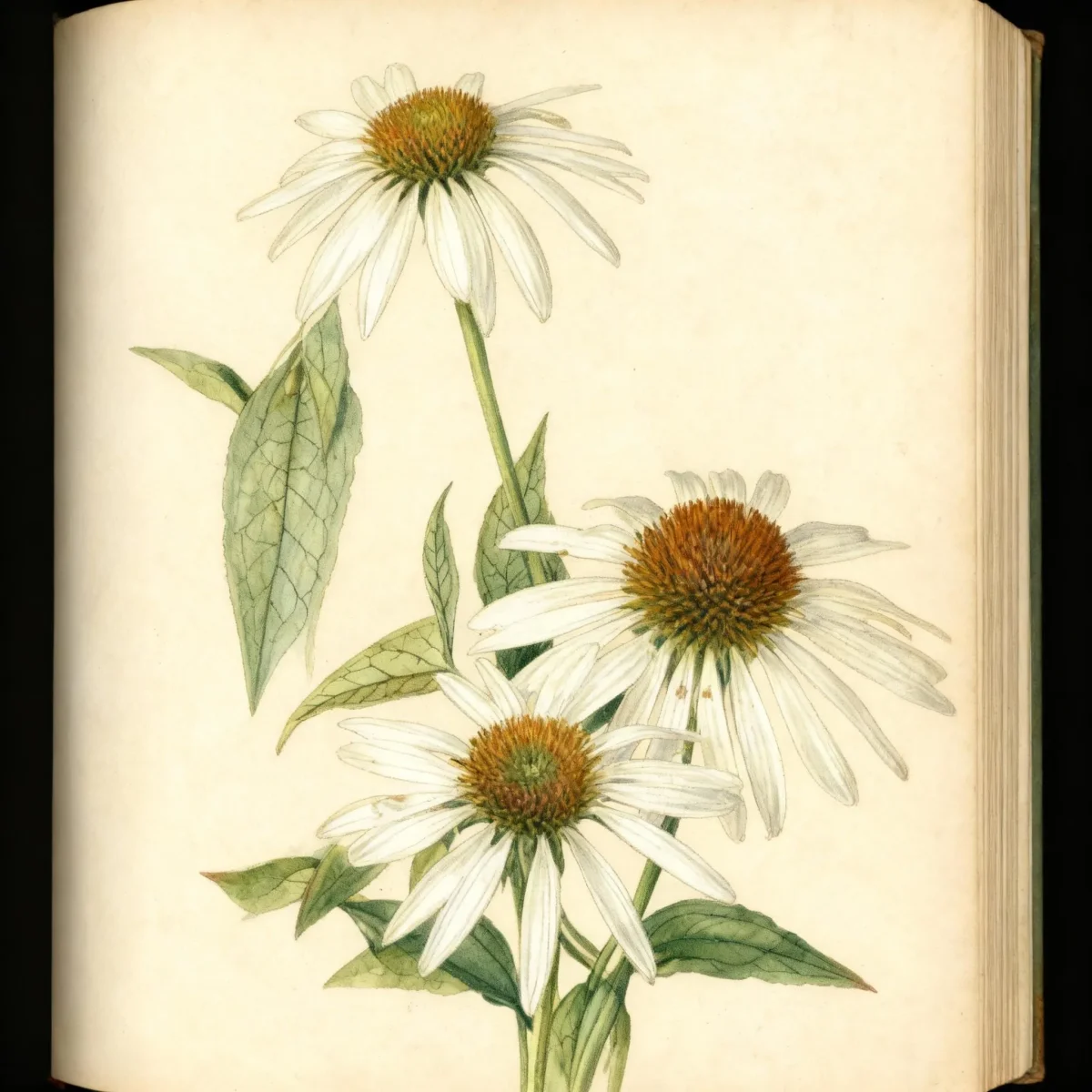
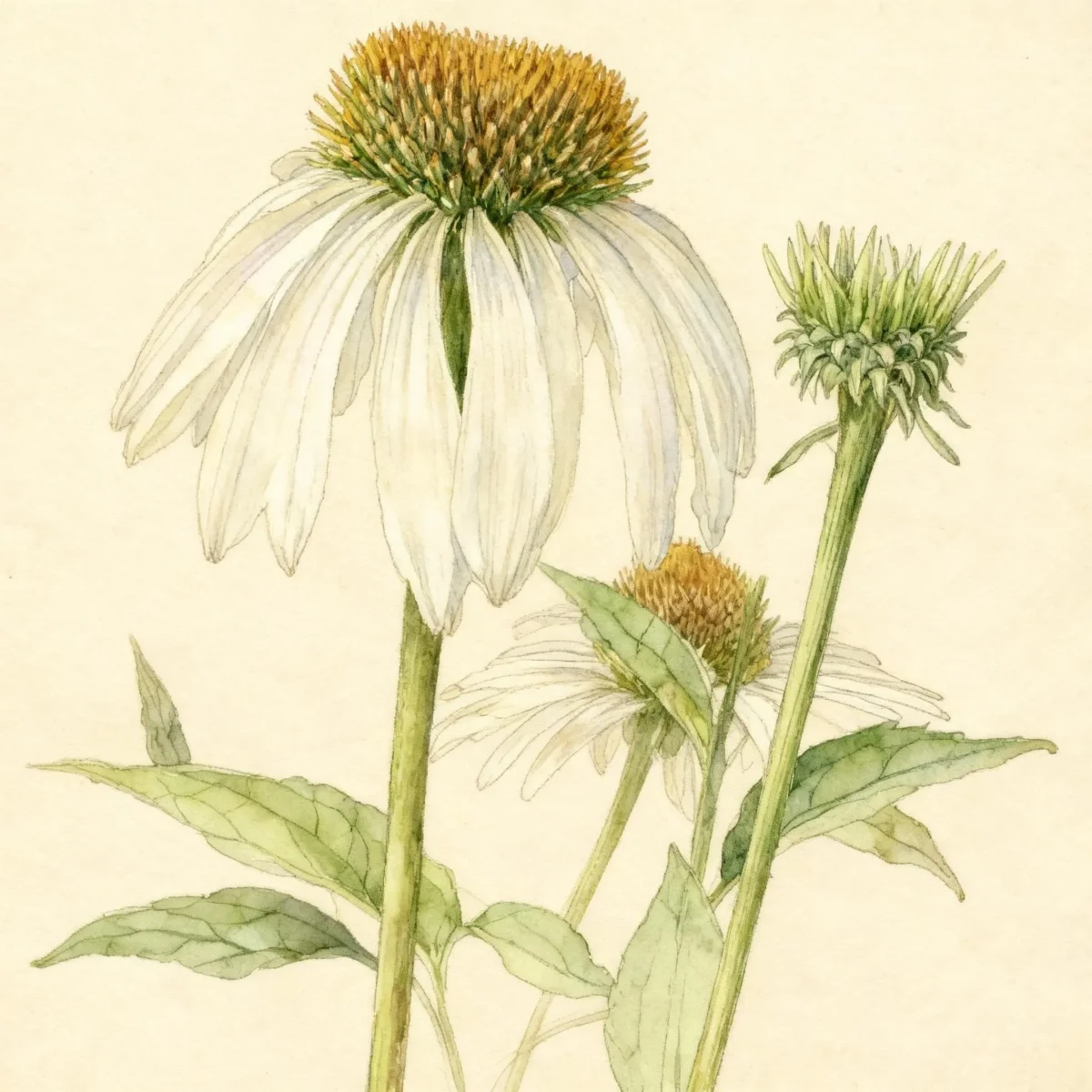
Purple coneflower (Echinacea purpurea 'Merlot')
The striking Echinacea purpurea 'Merlot' offers deep rose-pink blooms and thrives in drought conditions. A low-maintenance Purple coneflower for sunny borders.
Scroll down to discover growing tips, care requirements, companion plants, and more
Complete Plant Information
Overview
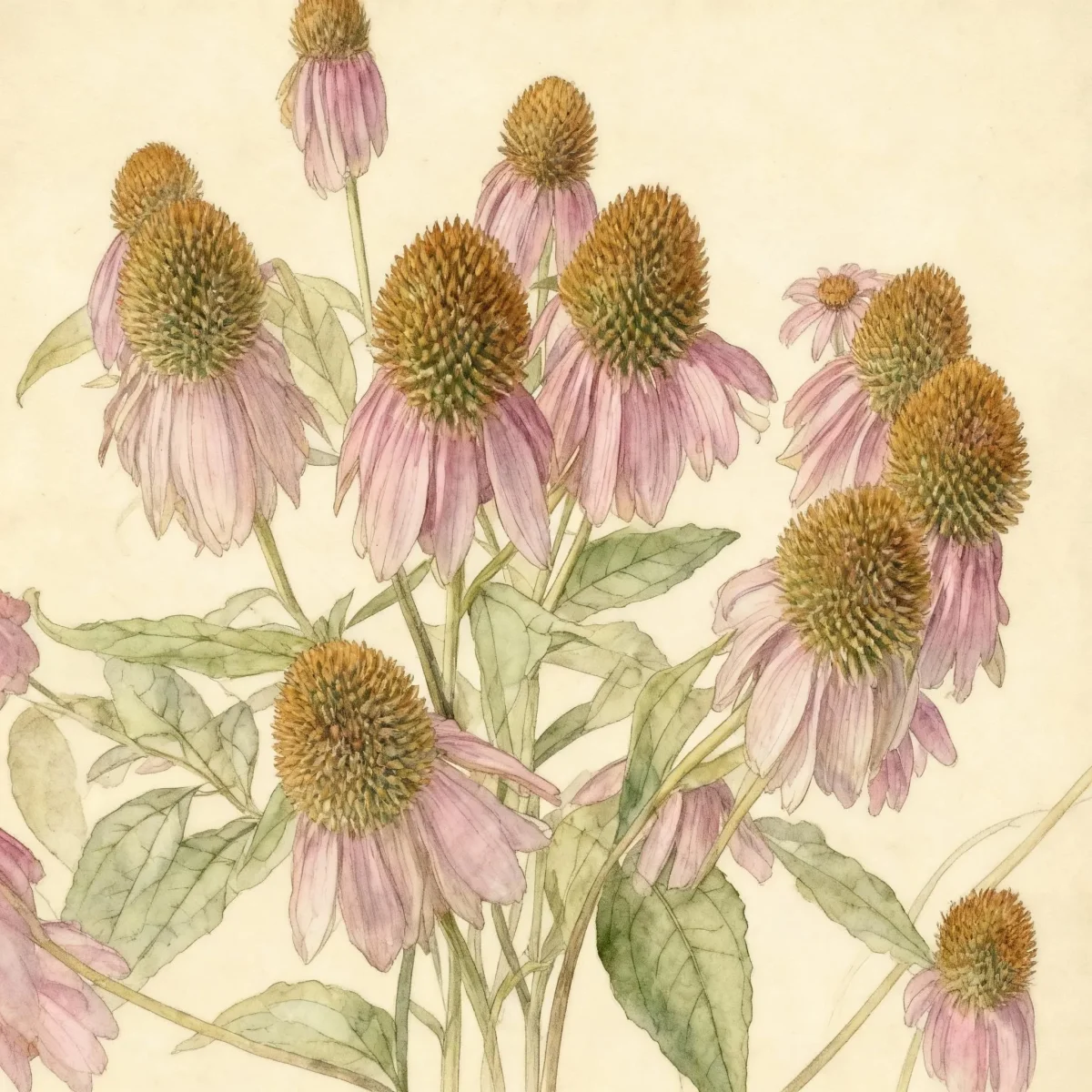
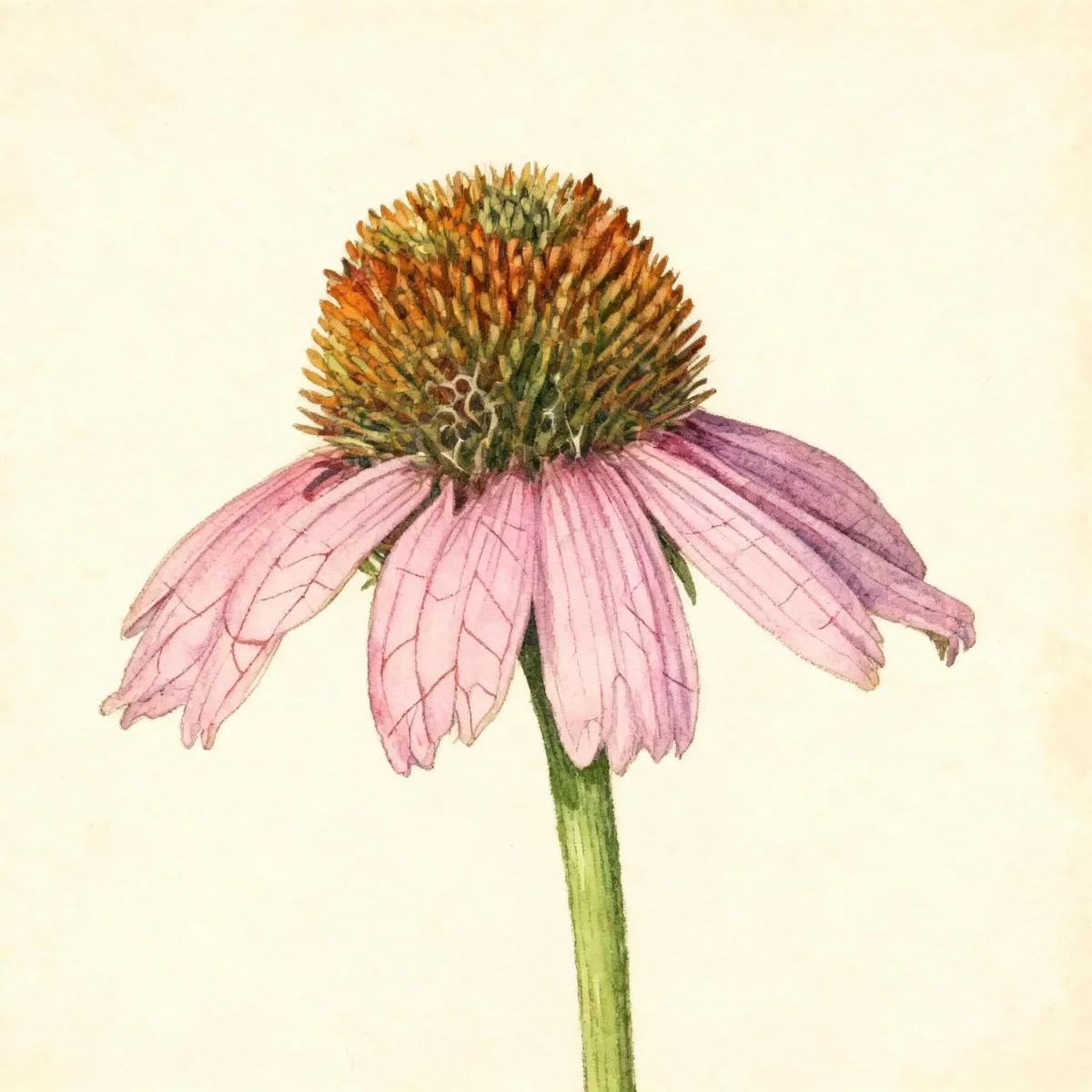
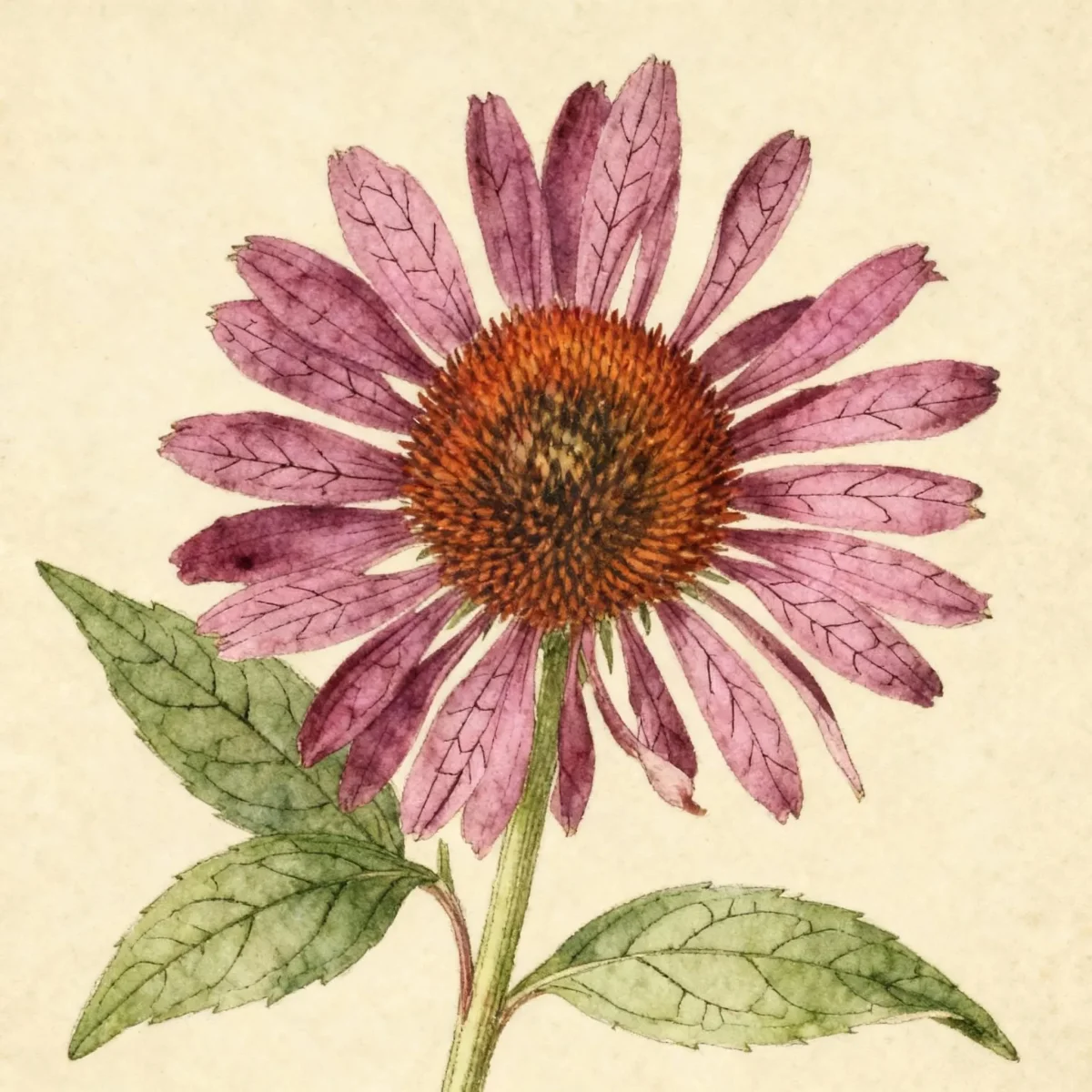
Echinacea purpurea ‘Merlot’ is a sought-after cultivar of the popular Purple coneflower, prized for its architectural structure and rich coloration. This variety is notable for producing large, daisy-like flowers featuring vibrant rose pink ray petals set against contrasting orange-bronze central cones, supported by distinctive dark wine-red stems. As a tough, adaptable herbaceous perennial, it integrates easily into various garden designs, providing extended summer color while requiring minimal intervention once established.
The beauty of the Purple coneflower extends beyond its summer display; its stiff, erect stems remain standing well into winter, often attracting seed-eating songbirds, particularly goldfinches, to the blackened cones. This long season of interest and robust constitution contributes significantly to the garden ecosystem, making Echinacea purpurea ‘Merlot’ a staple for both native plant enthusiasts and traditional border plantings.
Gardeners appreciate the generally low maintenance required by this plant, which tolerates heat, humidity, and less-than-ideal growing conditions. When situated in full sun, the Echinacea purpurea ‘Merlot’ forms a neat clump, providing reliable vertical interest throughout the warmest months of the year before returning reliably the following spring.
Fast Facts
- Plant Family: Asteraceae
- Plant Type: Herbaceous perennial
- Hardiness Zones: USDA Zones 3-8
- Size at Maturity:
- Height: 2-3 ft
- Spread: 1.5-2.5 ft
- Bloom Time: May to August
- Bloom Description: Rose pink rays with orange-bronze center disk
- Sun Exposure: Full sun to part shade
- Water Needs: Dry to medium
- Maintenance Level: Low
How to Grow
The best place for your Purple coneflower is in a location receiving full sun, though it will tolerate part shade, especially in the hottest climates. Plant in early spring or fall in average, well-drained soil. While this plant adapts well to medium moisture, it thrives when the soil dries slightly between waterings, reflecting its drought-tolerant nature.
Once established, supplemental watering is rarely needed unless prolonged dry periods stress the plant. Fertilizing is generally discouraged as rich soil can lead to floppy stems; Echinacea purpurea ‘Merlot’ prefers leaner conditions. If clumps become severely overcrowded, typically every four years, divide them in early spring or fall to maintain vigor and spacing.
While the plants often rebloom without intervention, prompt deadheading of spent flowers improves the overall aesthetic appeal throughout the summer season. If you wish to encourage winter interest and feed late-season birds, you can leave the seed cones intact until late winter cleanup.
Landscape Uses
The architectural form and long bloom season of Echinacea purpurea ‘Merlot’ make it exceptionally versatile for landscape design. It excels when massed in vibrant drifts within mixed perennial borders, providing strong vertical accents behind shorter foreground plantings. Consider pairing this distinctive Purple coneflower with plants that share similar dry soil tolerance, such as Rudbeckia (black-eyed Susans), ornamental grasses, or Sedum.
For a naturalized look, plant large groups within a meadow setting or a dedicated native plant garden where its adaptation to drier prairies can shine. It also performs beautifully in the partial shade areas of a woodland garden, provided it still receives adequate direct light to maintain stem strength and dense flowering. Planting en masse softens the structure of the garden while maximizing visual impact from the rose-pink blooms.
Standout Features
Flower Qualities
- Showy
Noteworthy Characteristics
Echinacea purpurea, commonly called purple coneflower, is a coarse, rough-hairy, herbaceous perennial native to moist prairies and open woods of the central to southeastern United States. Showy daisy-like purple coneflowers bloom throughout summer atop stiff stems clad with coarse, dark green leaves; the centers are referenced by its genus name, coming from the Greek word for hedgehog due to its spiny cone. Specifically, ‘Merlot’ exhibits flowers with rich rose pink rays and orange-bronze central cones blooming from June through early September, often sporadically later; it grows on distinctive dark wine red stems.
Tolerances
- Deer
- Drought
- Clay Soil
- Dry Soil
- Shallow-Rocky Soil
Potential Problems
Japanese beetle and leaf spot are occasional problems gardeners observe with Echinacea. Susceptibility to aster yellows disease is a more serious concern, requiring vigilance against the leafhoppers that spread the virus, as there is no chemical cure once the plant is infected.
Frequently Asked Questions
What hardiness zones is Purple coneflower suitable for?
Echinacea purpurea ‘Merlot’ is hardy across USDA Zones 3 through 8, making it a reliable perennial across a wide swath of North America.
How large does Echinacea purpurea ‘Merlot’ grow?
This variety typically reaches a height between 2 and 3 feet, with a spread ranging from 1.5 to 2.5 feet wide, forming a manageable upright clump.
What sun exposure does Purple coneflower need?
For the best performance and strongest stems, Echinacea purpurea ‘Merlot’ requires full sun, though it can tolerate partial shade.
When does Echinacea purpurea ‘Merlot’ bloom?
This vibrant perennial flowers reliably from May to August, presenting rose pink rays with an appealing orange-bronze center disk.
Conclusion
The Echinacea purpurea ‘Merlot’ offers an excellent blend of vibrant color and superior toughness, solidifying its place as a garden favorite. Its low-maintenance requirements and high tolerance for poor soils make it accessible to nearly every gardener looking to incorporate a high-impact, native-derived perennial. Before planting, ensure your intended location provides the full sun exposure needed for this magnificent Purple coneflower to flourish.
Companion Planting
Selecting the right companions enhances the garden design while benefiting the health of your Echinacea purpurea ‘Merlot’. Since this plant prefers to dry out between waterings, pair it with other sun-loving perennials that also handle dry conditions well, such as Russian Sage (Perovskia atriplicifolia) or different cultivars of Coreopsis. These companions share light and water needs, creating a cohesive maintenance schedule for the entire bed.
Avoid planting the Purple coneflower too closely near moisture-loving plants, as consistently wet feet in the root zone can contribute to crown rot or increase susceptibility to fungal issues like leaf spot that occasionally affect Echinacea.
Wildlife Benefits
The structural cones of the Purple coneflower are highly valued by late-season wildlife, extending the garden’s ecological contribution past the main blooming period. Once the petals drop, the cone heads become a critical food source for seed-eating birds, most notably American Goldfinches, throughout the fall and winter months.
Furthermore, the open, accessible structure of the flowers makes them highly attractive to a wide range of beneficial insects, including native bees and butterflies searching for nectar during the summer peak. Planting Echinacea purpurea ‘Merlot’ actively supports local pollinator populations while providing structure to the winter landscape.