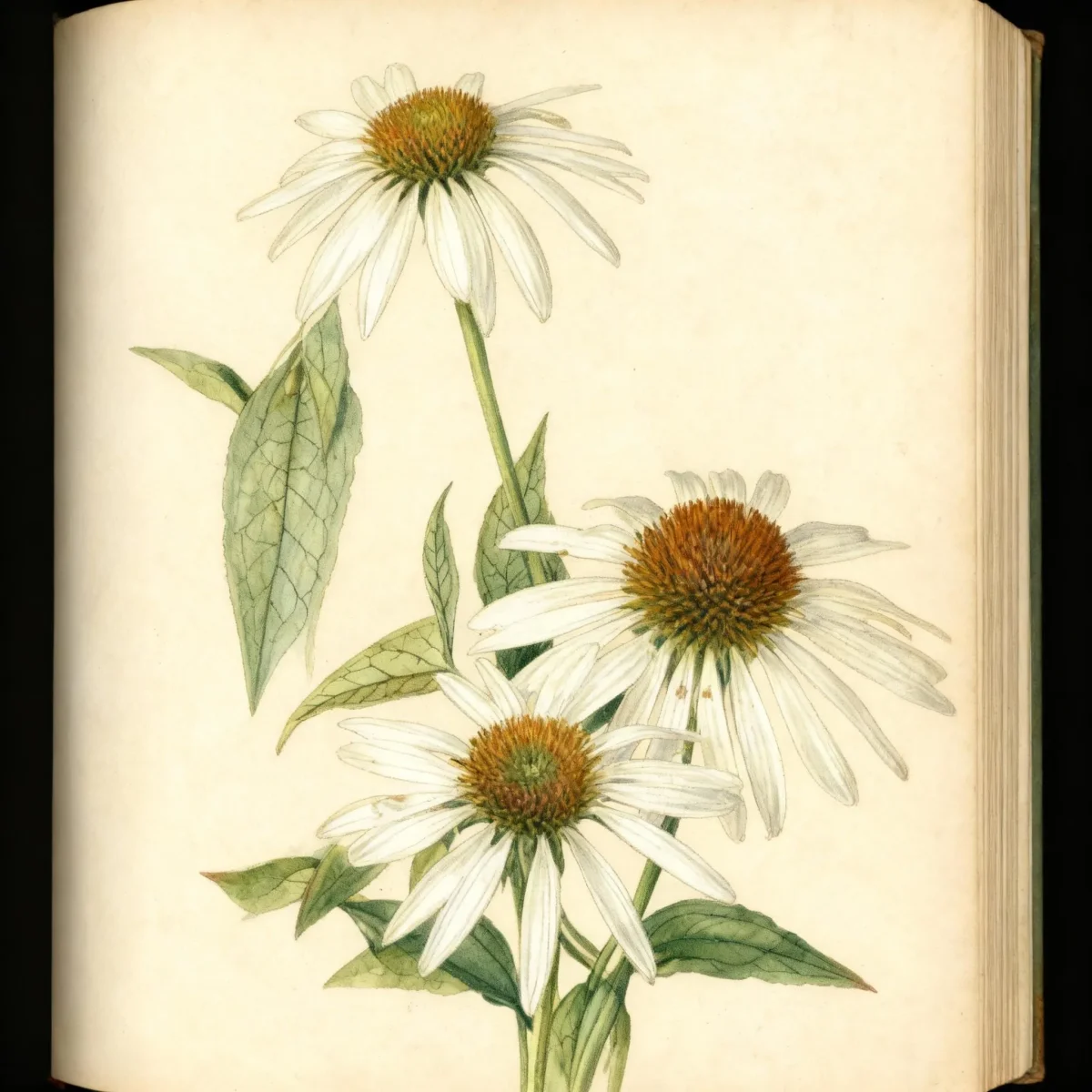
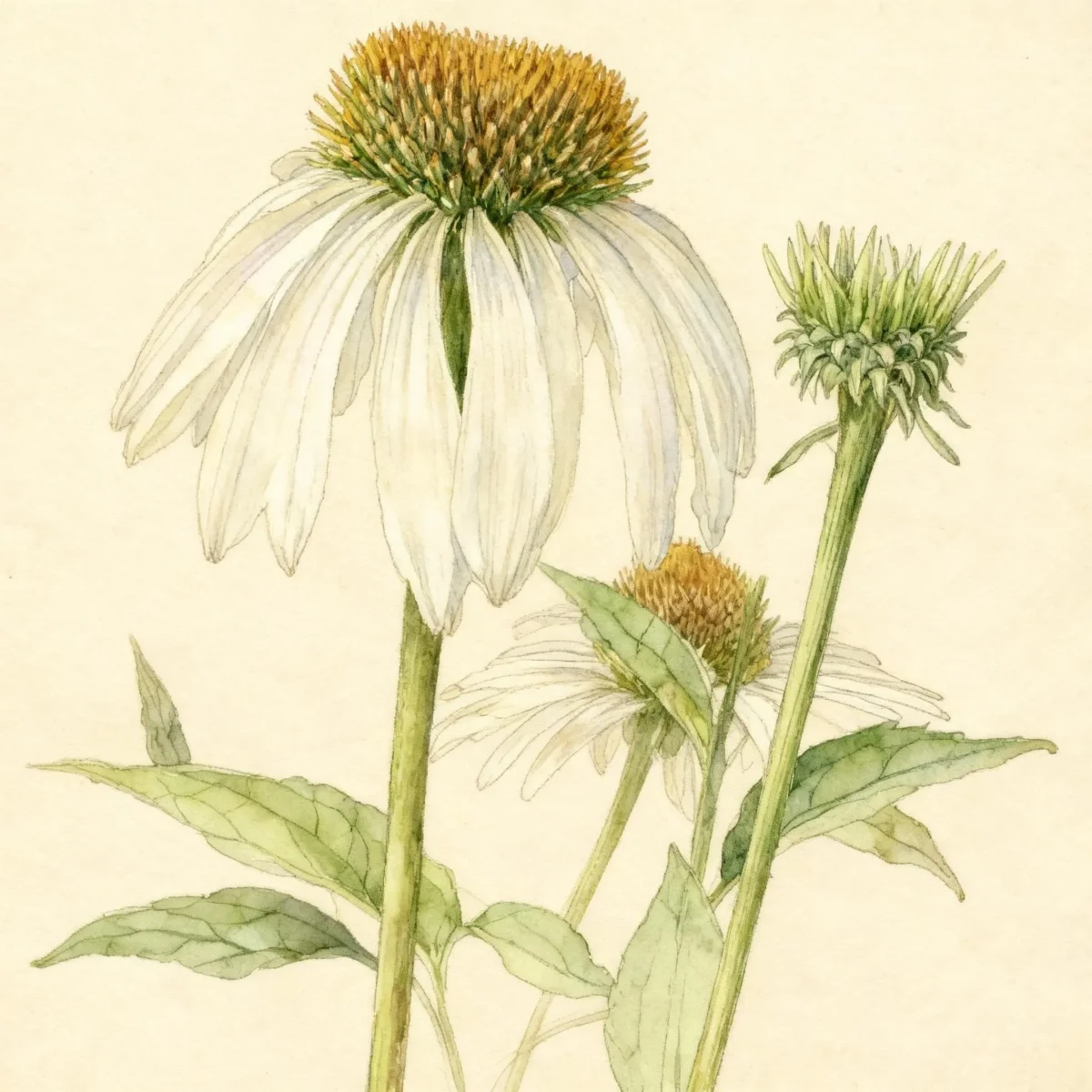
Purple coneflower (Echinacea purpurea 'Lucky Star')
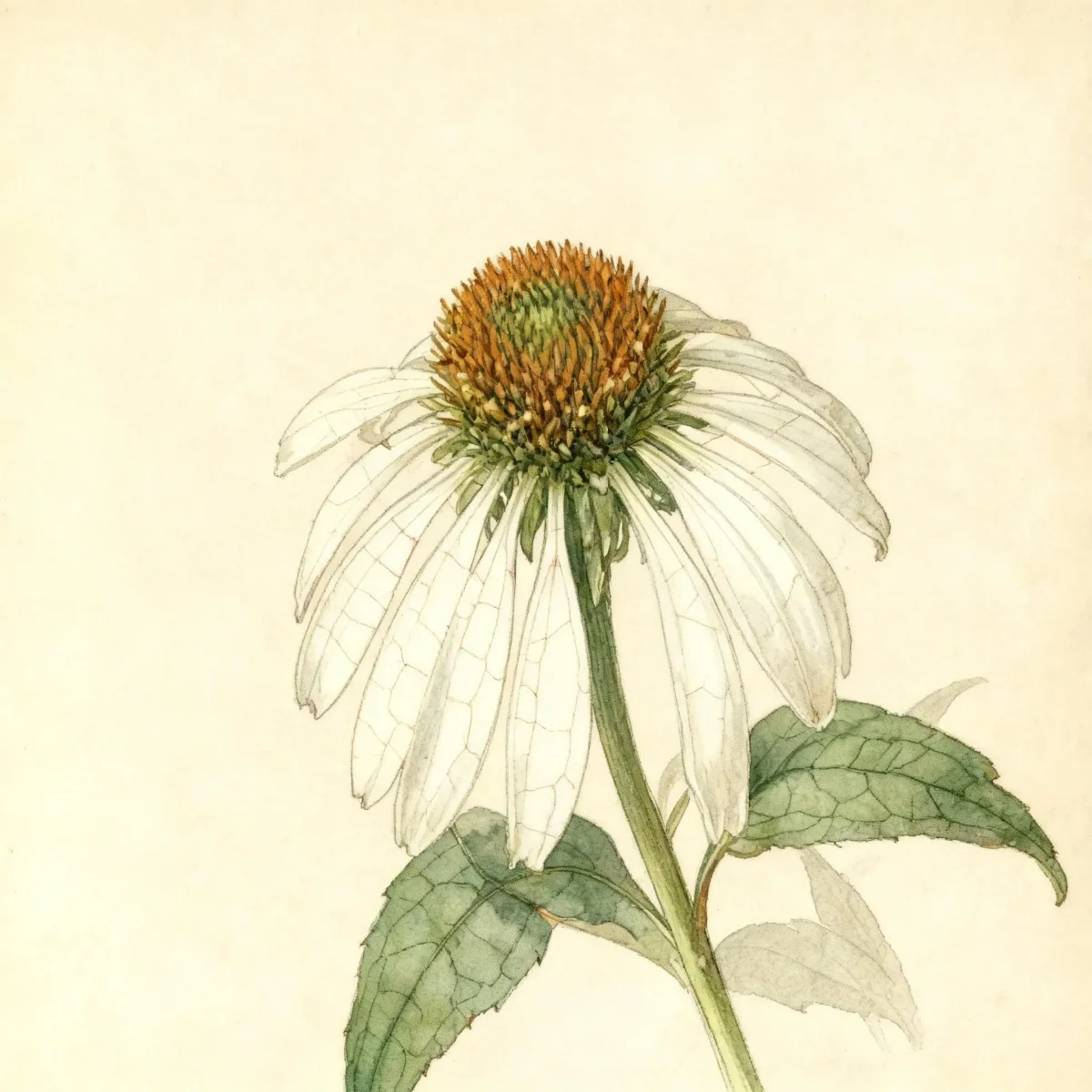
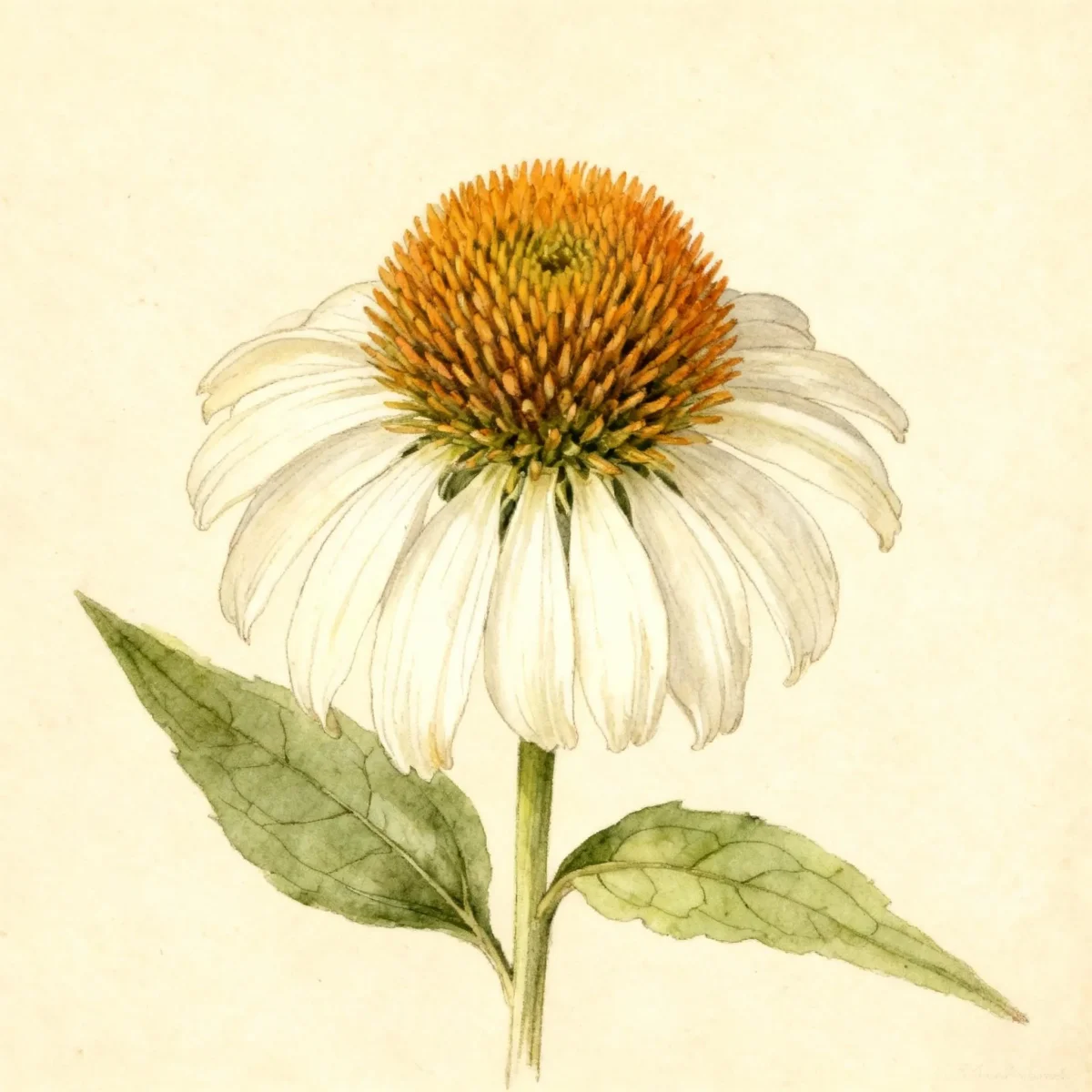
Echinacea purpurea 'Lucky Star' is a low-maintenance, clump-forming Purple coneflower offering white rays and orange cones from June to August.
Scroll down to discover growing tips, care requirements, companion plants, and more
Complete Plant Information
Overview
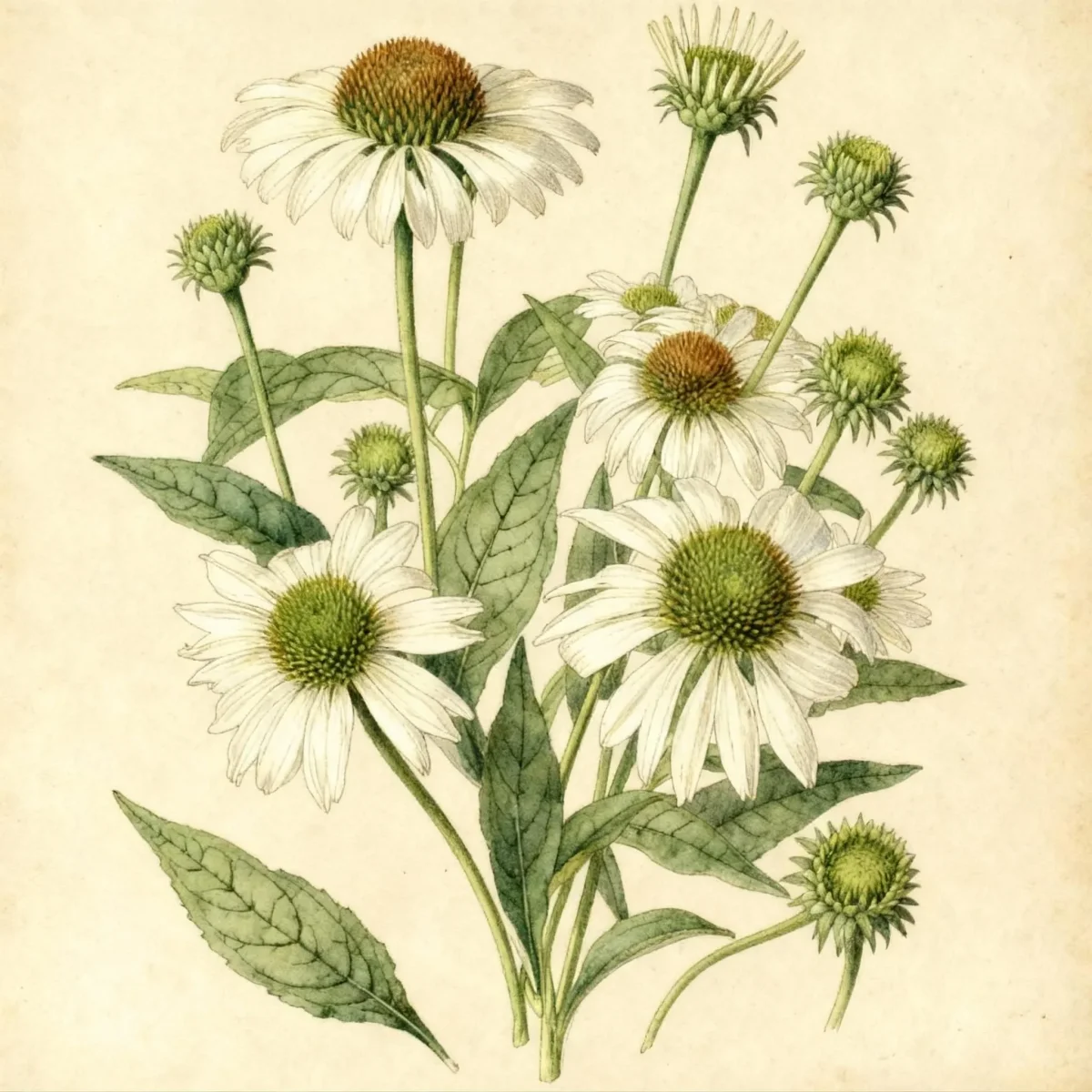
Echinacea purpurea ‘Lucky Star’ provides reliable summer interest with its distinctive, widely-branched, clump-forming habit. This cultivar of the beloved Purple coneflower stands out due to its sturdy stems (requiring no staking) and its attractive white ray flowers surrounding a prominent orange-yellow center cone. Gardeners value this plant for its long blooming period and exceptional hardiness.
As an adaptable herbaceous perennial, Echinacea purpurea ‘Lucky Star’ thrives even in less than ideal conditions, offering dependable color from early summer into late summer. Its presence is highly beneficial, drawing in pollinators and providing structure long after the main bloom through its persistent, blackened seed cones. For a robust, easy-to-manage display, ‘Lucky Star’ is an excellent choice.
Fast Facts
- Plant Family: Asteraceae
- Plant Type: Herbaceous perennial
- Hardiness Zones: USDA Zones 3-8
- Size at Maturity:
- Height: 2-3 ft
- Spread: 1.5-2 ft
- Bloom Time: June to August
- Bloom Description: White rays with orange-yellow center cone
- Sun Exposure: Full sun to part shade
- Water Needs: Dry to medium
- Maintenance Level: Low
How to Grow
Plant Echinacea purpurea ‘Lucky Star’ in the spring or fall, ensuring it receives full sun for the best performance, though it tolerates light afternoon shade. This adaptable plant establishes well in average, dry to medium moisture, well-drained soils. While it handles various conditions, excellent drainage is key to long-term success.
Once established, this Purple coneflower demonstrates remarkable tolerance for heat and drought, meaning supplemental watering is usually unnecessary unless a prolonged dry spell occurs. No heavy fertilization is required; overly rich soil can sometimes lead to floppier growth. For abundant reblooming, prompt removal of spent flowers (deadheading) is beneficial, though the plant will continue to flower if left alone.
To maintain vigor, plan to divide overcrowded clumps approximately every four years. This general cultural requirement helps prevent the plant from becoming matted or less floriferous over time. Allowing the dead flower stems to remain through winter offers structure and food for birds like goldfinches.
Landscape Uses
Echinacea purpurea ‘Lucky Star’ excels when used in mass plantings or bold drifts, utilizing its upright, sturdy habit to anchor the middle or back of a border. Its refined size, reaching 2 to 3 feet tall, makes it perfect for defining the front edges of sunny perennial borders where it catches the eye throughout summer. Consider placing it near structures or pathways where its form can be appreciated up close.
This versatile perennial also shines in more naturalistic settings, such as the edges of open woodland gardens or nestled among rocks in a rock garden environment. Pair Echinacea purpurea ‘Lucky Star’ with late-season bloomers like Sedum or ornamental grasses to ensure continuous visual interest once the white rays fade. Its excellent tolerance for poor soil also makes it a reliable choice for low-maintenance mixed beds.
Standout Features
Flower Qualities
- Showy
Noteworthy Characteristics
‘Lucky Star’ is renowned for its upright, widely-branched, clump-forming structure, producing white flowers typical of the genus on stems reaching 24 to 36 inches high. Each flower displays white rays positioned perpendicular to the stem, perfectly framing the signature orange-yellow center cone, which gives Echinacea its genus name based on the Greek translation for hedgehog. These flowers are fantastic as fresh cuttings or dried material, and the stiff, dead stems provide important winter interest.
Tolerances
- Deer
- Drought
- Clay Soil
- Dry Soil
- Shallow-Rocky Soil
Potential Problems
Occasional issues may arise, primarily concerning pests like the Japanese beetle, which can chew on foliage and flowers. Fungal issues, such as leaf spot, can appear, especially if air circulation is poor in crowded plantings. Gardeners should also be aware that cone flowers are susceptible to aster yellows disease, which is transmitted by leafhoppers and causes distorted, often yellowish growth.
Management focuses on good airflow and prompt grooming. If leaf spot is observed, remove affected foliage promptly and ensure the planting density is appropriate for the site. Inspect plants regularly for chewing insects to prevent severe damage to the blooms of your Echinacea purpurea ‘Lucky Star’.
Frequently Asked Questions
What hardiness zones is Purple coneflower suitable for?
Echinacea purpurea ‘Lucky Star’ is reliably hardy across USDA Zones 3 through 8, offering broad adaptability across many climates.
How large does Echinacea purpurea ‘Lucky Star’ grow?
This perennial typically matures to a height between 2 and 3 feet, with a spread of 1.5 to 2 feet wide.
What sun exposure does Purple coneflower need?
For optimal flowering and plant structure, this coneflower prefers full sun, though it will perform adequately in areas receiving partial shade.
When does Echinacea purpurea ‘Lucky Star’ bloom?
The primary bloom period for this cultivar is consistently from June through August, featuring attractive white rays with an orange-yellow center cone.
Conclusion
Echinacea purpurea ‘Lucky Star’ remains a cornerstone of the perennial border due to its excellent drought tolerance, low overall maintenance requirements, and reliable summer performance. Selecting this white-flowering Purple coneflower ensures strong architectural interest coupled with pollinator appeal. Check your local hardiness zone compatibility and plan for a full sun location for the best results this growing season.
Wildlife Benefits
The durable cones of Echinacea purpurea ‘Lucky Star’ left standing in winter are an invaluable late-season food source for native goldfinches and other seed-eating birds. Beyond the winter appeal, the prominent central cones are highly attractive to various pollinators throughout the summer bloom period, making this plant a crucial component in any ecological or pollinator-friendly garden design.
Propagation Tips
Echinacea purpurea ‘Lucky Star’ is noted in its description as a seed strain, meaning propagation by seed is entirely feasible for gardeners interested in multiplying their stock. However, if plants are grown from seed, the resulting flowers may exhibit variability from the parent plant, as is common with seed strains. For guaranteed fidelity to the white-flowered parent, division of established clumps every four years is the recommended propagation method, performed in early spring or fall.