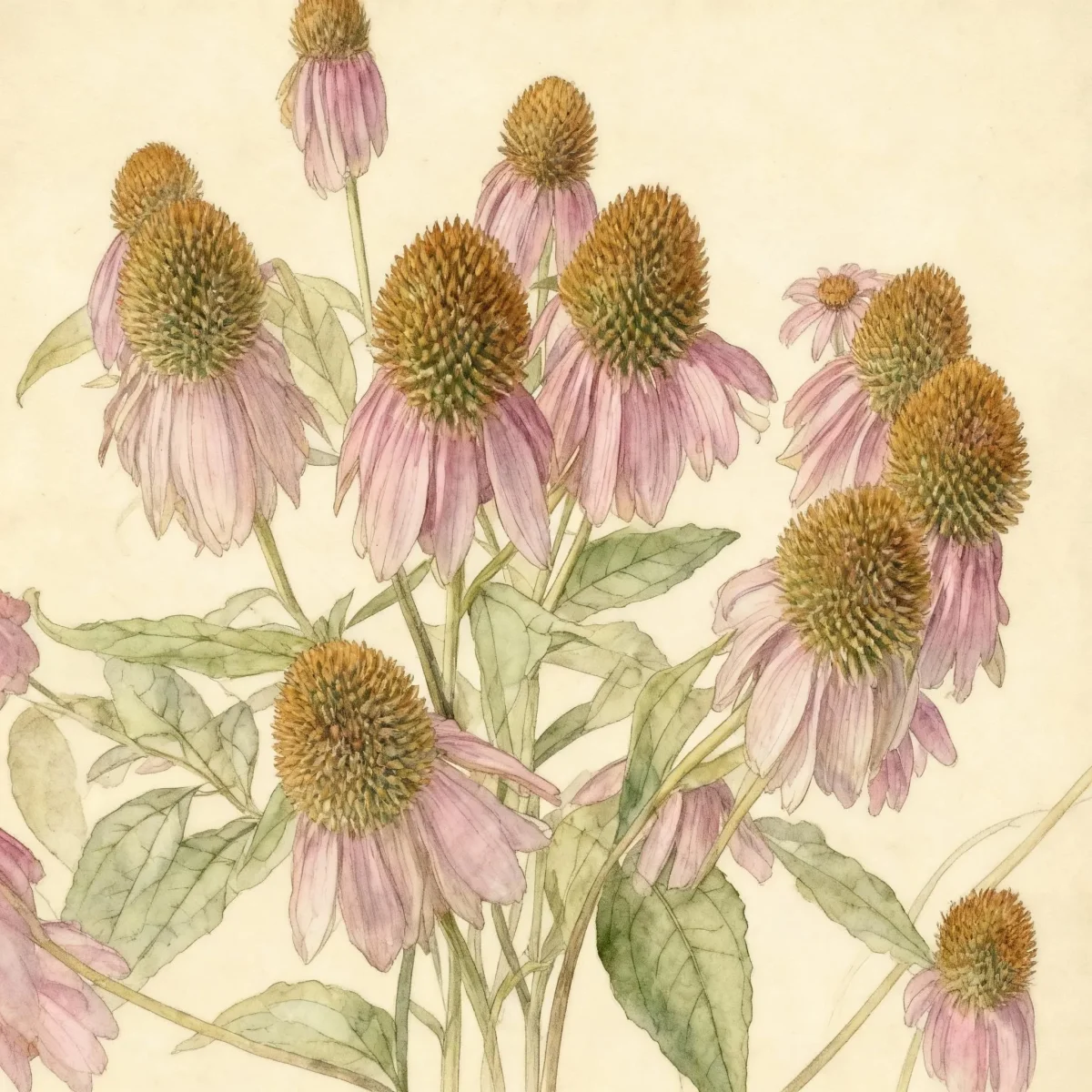
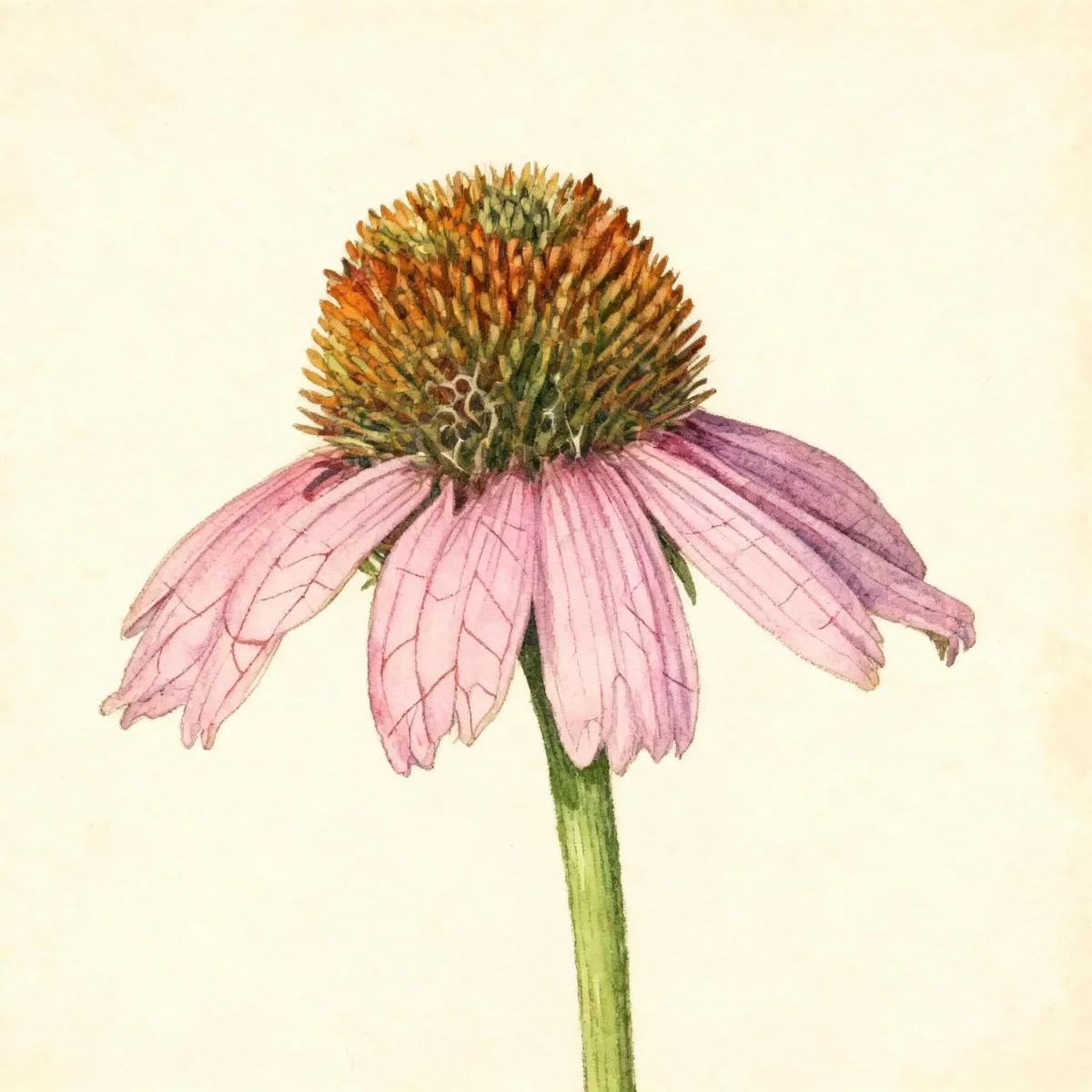
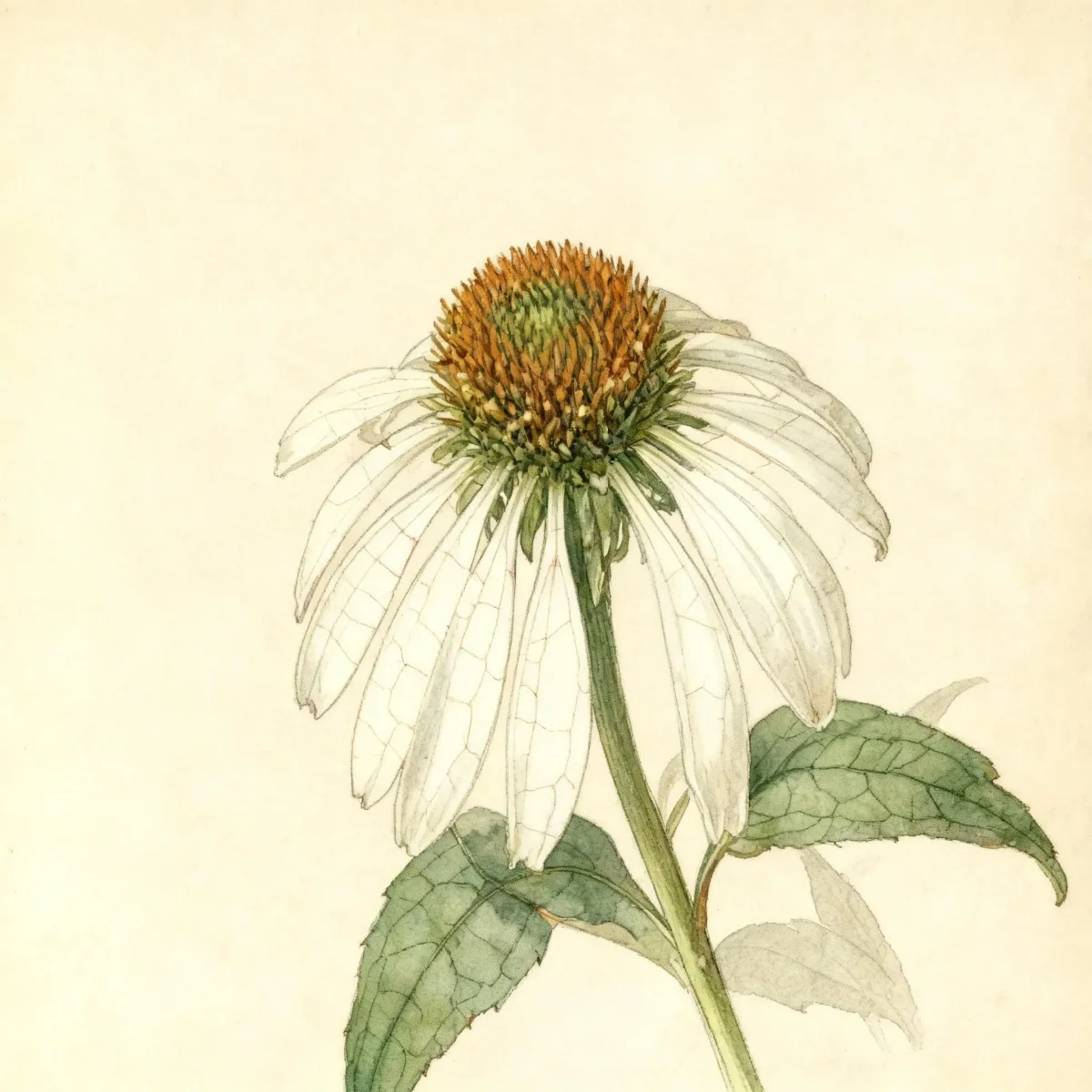
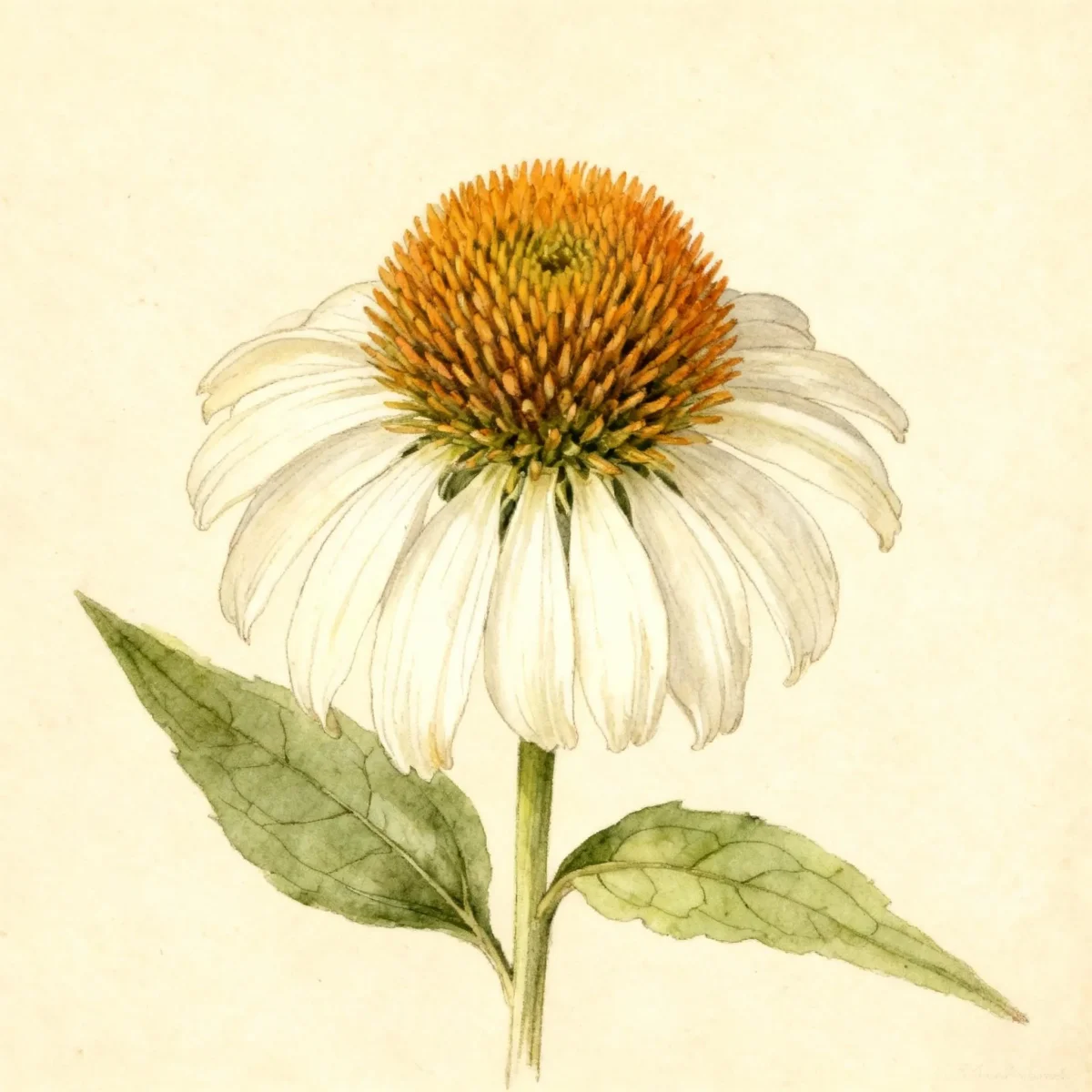
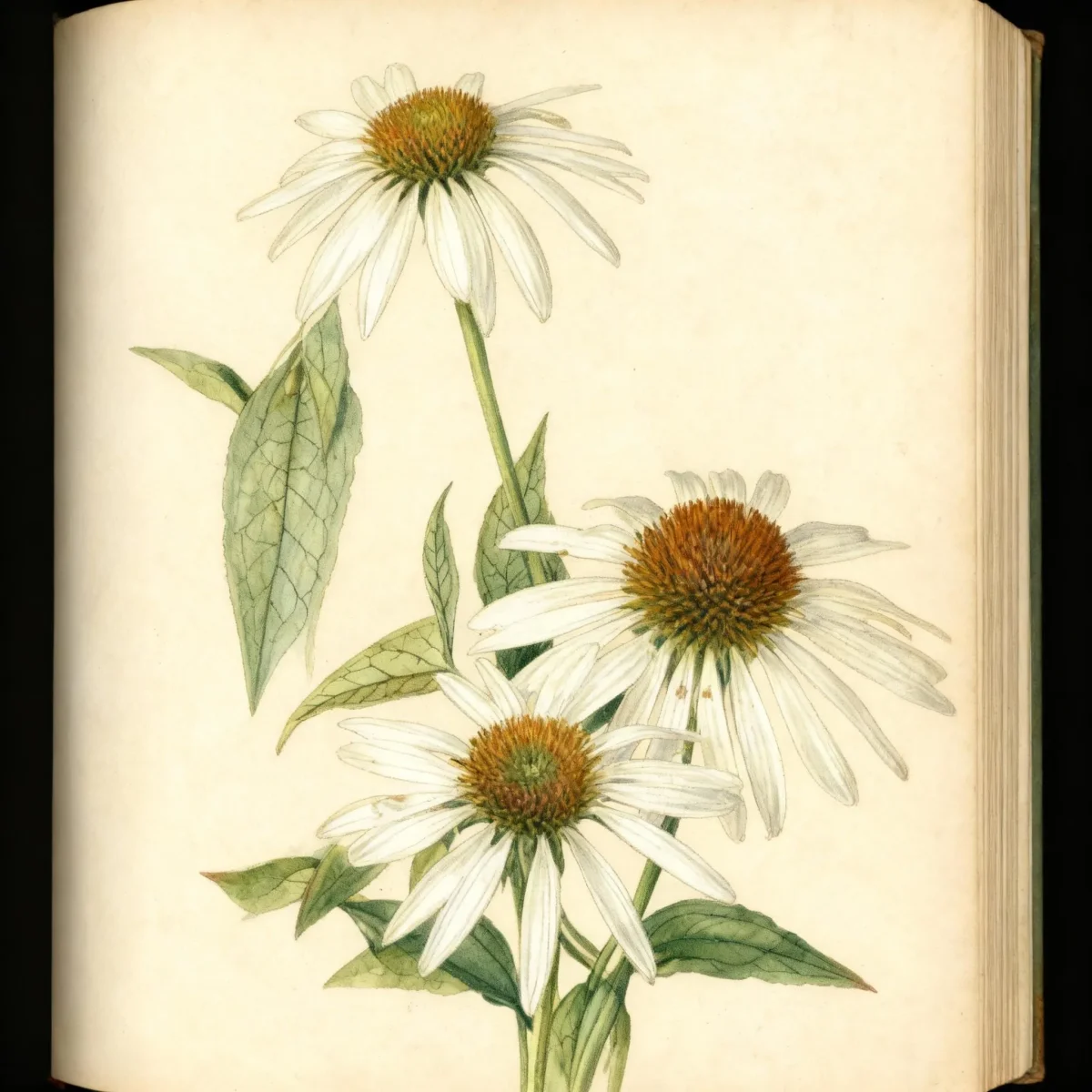
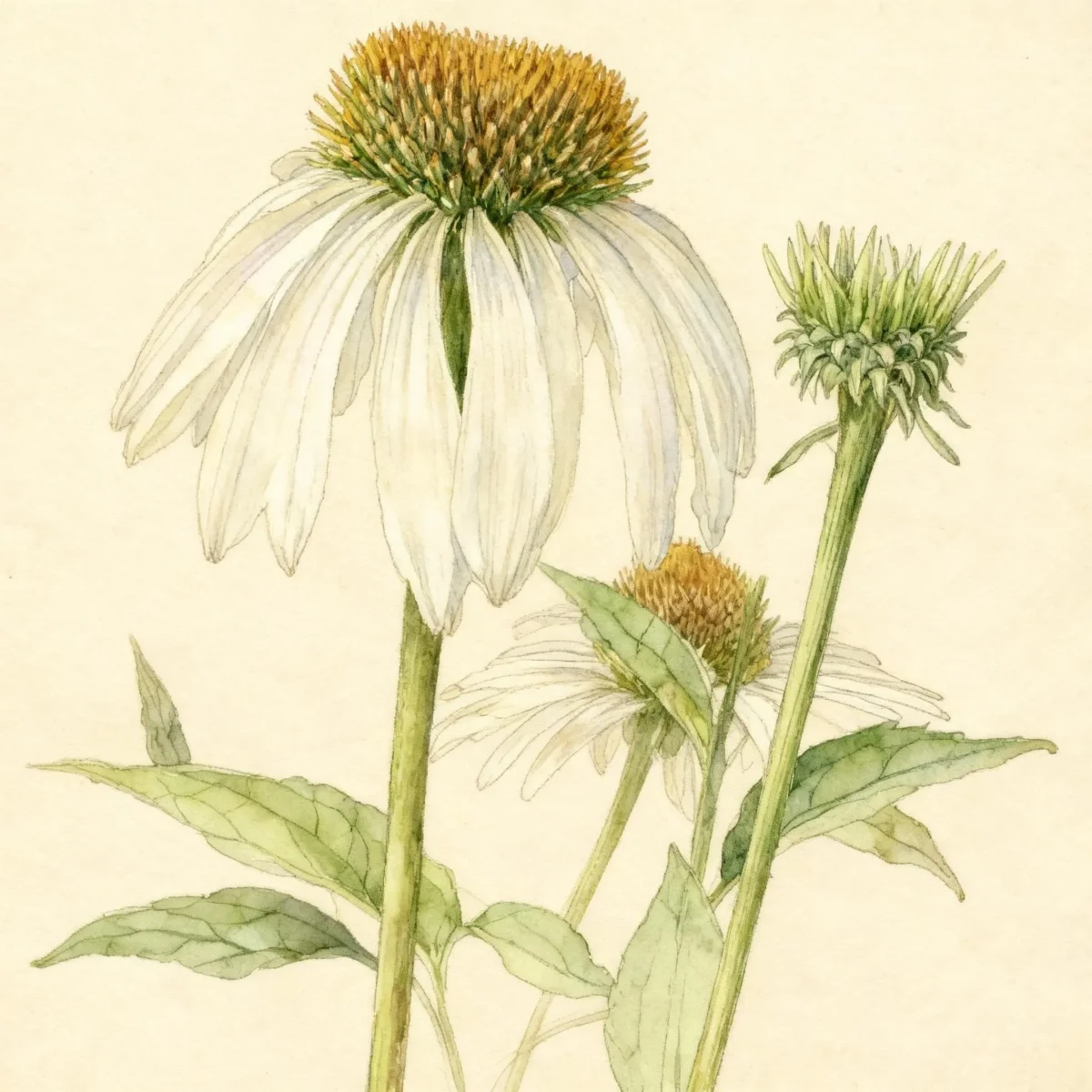
Purple coneflower (Echinacea purpurea 'Virgin')
Echinacea purpurea 'Virgin' offers spectacular white flowers atop sturdy stems. A low-maintenance Purple coneflower resilient to drought and deer.
Scroll down to discover growing tips, care requirements, companion plants, and more
Complete Plant Information
Overview
Echinacea purpurea ‘Virgin’, a striking cultivar of the beloved Purple coneflower, brings refreshing white coloration to the summer garden. This variety forms a compact, upright clump, offering a more refined presence than its taller relatives while retaining the classic, sturdy structure essential for perennial borders. Its robust nature ensures it remains a low-maintenance highlight throughout the peak growing season.
The appeal of this specific Echinacea purpurea ‘Virgin’ lies in its floriferous display, producing flowers with bright white ray petals surrounding a prominent, domed green cone. These blooms appear reliably from early summer into late August, providing essential color when many spring ephemerals have faded. Furthermore, the plant is highly valued for its excellent adaptability to varied soil conditions and its resilience against common garden pests.
As a dependable herbaceous perennial, the Purple coneflower supports native ecosystems by providing nectar when in bloom and seeds for winter birds when cones are left standing. The cultivar ‘Virgin’ is specifically bred for its strong, non-lolling stems, making it an exceptional choice for mass plantings, meadow gardens, or as a reliable specimen in mixed perennial beds.
Fast Facts
- Plant Family: Asteraceae
- Plant Type: Herbaceous perennial
- Hardiness Zones: USDA Zones 3-8
- Size at Maturity:
- Height: 1.5-2 ft
- Spread: 1-1.5 ft
- Bloom Time: June to August
- Bloom Description: White with green center cone
- Sun Exposure: Full sun to part shade
- Water Needs: Dry to medium
- Maintenance Level: Low
How to Grow
The best time to establish Echinacea purpurea ‘Virgin’ is in spring or early fall, allowing the roots to settle before experiencing extreme weather. This Purple coneflower thrives best when planted in average soil that is well-drained, though its high tolerance means it handles clay, dry, and shallow-rocky conditions effectively. While it performs sufficiently in partial shade, aim for full sun exposure to ensure the most prolific blooming and compact growth habit for your ‘Virgin’ specimens.
Watering should be kept consistent—dry to medium—especially during the initial establishment period. Once mature, this variety demonstrates excellent drought tolerance, requiring little supplemental water except during prolonged hot, dry spells. Fertilization is generally unnecessary; rich soils often lead to floppier stems. Divide clumps of Echinacea purpurea ‘Virgin’ every four years if flowering becomes sparse due to overcrowding.
Regarding maintenance, the plant usually reblooms without intervention, but deadheading spent flowers promptly will significantly improve its overall tidy appearance throughout the summer. If you wish to encourage self-seeding for naturalized areas or provide winter interest and food for goldfinches, leave some of the blackened seed cones standing into the colder months.
Landscape Uses
Echinacea purpurea ‘Virgin’ is exceptionally versatile, offering long-lasting structure and brilliant white contrast in nearly any sunlit garden spot. Its manageable 1.5 to 2-foot height makes it ideal for the middle or front of the perennial border, where its sturdy stems can support the blooms without staking. Consider massing these white coneflowers to create a striking, airy effect against darker foliage or backdrop plantings.
This plant excels when integrated into naturalistic designs. It fits perfectly into native plant gardens, wildflower meadows, and areas designed to mimic natural prairies. For structured settings, it contrasts beautifully when planted alongside traditional partners like Black-eyed Susans, adding a crisp, clean dimension to the late-summer display.
Because the Purple coneflower is so adaptable, it also serves well in high-traffic areas within woodland garden edges or even in areas where the soil structure is historically poor, such as sloped sites or dry, clay-heavy beds. The consistent white presentation of Echinacea purpurea ‘Virgin’ allows it to bridge color gaps between earlier summer perennials and the fall bloomers.
Standout Features
Flower Qualities
- Showy
- Fragrant
Noteworthy Characteristics
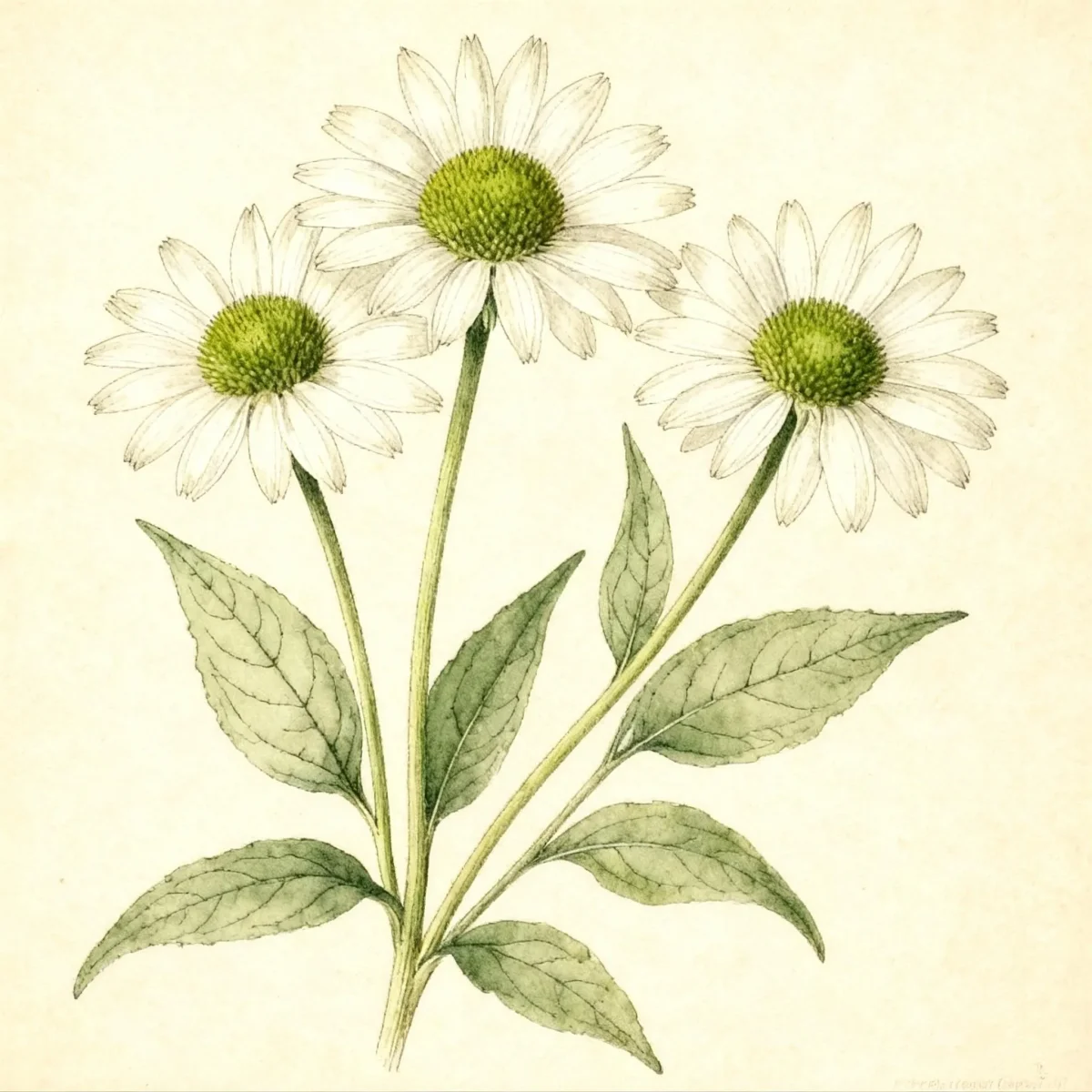
Echinacea purpurea, commonly called purple coneflower, is generally a coarse, rough-hairy perennial native to central and southeastern US prairies. The cultivar ‘Virgin’ is a compact white-flowered coneflower, typically staying between 18-24 inches tall on sturdy, well-branched stems that do not require staking. Its flowers, up to 4 1/2 inches wide, feature a double row of bright, white rays surrounding a distinctively domed, green center cone, often blooming prolifically from late spring until frost.
Tolerances
- Deer
- Drought
- Clay Soil
- Dry Soil
- Shallow-Rocky Soil
Potential Problems
Occasional aesthetic challenges include damage from Japanese beetles, which may chew on the petals, and the risk of fungal diseases like leaf spot, particularly in humid conditions or when air circulation is poor. This plant is also susceptible to aster yellows disease, a serious condition spread by leafhoppers that causes stunted, distorted growth. Ensure good air flow by spacing plants adequately, and promptly remove any visibly diseased foliage to limit pathogen spread.
Frequently Asked Questions
What hardiness zones is Purple coneflower suitable for?
Echinacea purpurea ‘Virgin’ is reliably hardy across USDA Zones 3 through 8, making it a robust choice for many climates.
When does Purple coneflower bloom?
This specific white coneflower variety offers a floriferous bloom period generally spanning from June through August.
How large does Echinacea purpurea ‘Virgin’ grow?
This cultivar is relatively compact, typically maturing to a height between 1.5 and 2 feet tall, with a spread of 1 to 1.5 feet wide.
What sun exposure does Echinacea purpurea ‘Virgin’ need?
For best results regarding bloom density and stem strength, ensure this plant receives full sun, though it will tolerate part shade conditions.
Conclusion
The Echinacea purpurea ‘Virgin’ is an exceptional choice for gardeners seeking a dependable, long-blooming perennial that maintains a neat stature throughout the season. Its bright white flowers offer fantastic contrast, delivering both beauty and resilience against deer and drought. Before planting, confirm that your garden location offers the full sun and well-drained soil this elegant Purple coneflower prefers.
Companion Planting
When planning your borders, consider companion plants that share the preference for well-drained soil and full sun, mirroring the cultural needs of Echinacea purpurea ‘Virgin’. Plants with contrasting textures and colors enhance its display; for example, massing it with taller, purple-flowering Salvia provides complementary color theory. Silvery-leaved plants like Lamb’s Ears (Stachys byzantina) offer excellent textural contrast near the strappy foliage of the coneflower.
For a prairie-style planting, pair this white coneflower with summer-blooming grasses such as Prairie Dropseed (Sporobolus heterolepis) or Little Bluestem (Schizachyrium scoparium). These grasses offer fine texture and movement that soften the bold, single flower heads of the Echinacea purpurea ‘Virgin’, creating a harmonious, low-input landscape.
Wildlife Benefits
The central cone of the Purple coneflower is a significant ecological feature, especially in the late season. While the flowers attract numerous beneficial pollinators like bees and butterflies throughout the summer, leaving the seed heads intact provides a crucial winter food source. Goldfinches, in particular, are frequent visitors to the blackened cones, gleaning the seeds long after the white ray petals have dropped.
This species supports biodiversity beyond seed eaters; the large, open flower heads are easily accessible landing pads for various pollinators needing nectar. By integrating Echinacea purpurea ‘Virgin’ into native plantings, you contribute directly to supporting local insect populations essential for garden health.