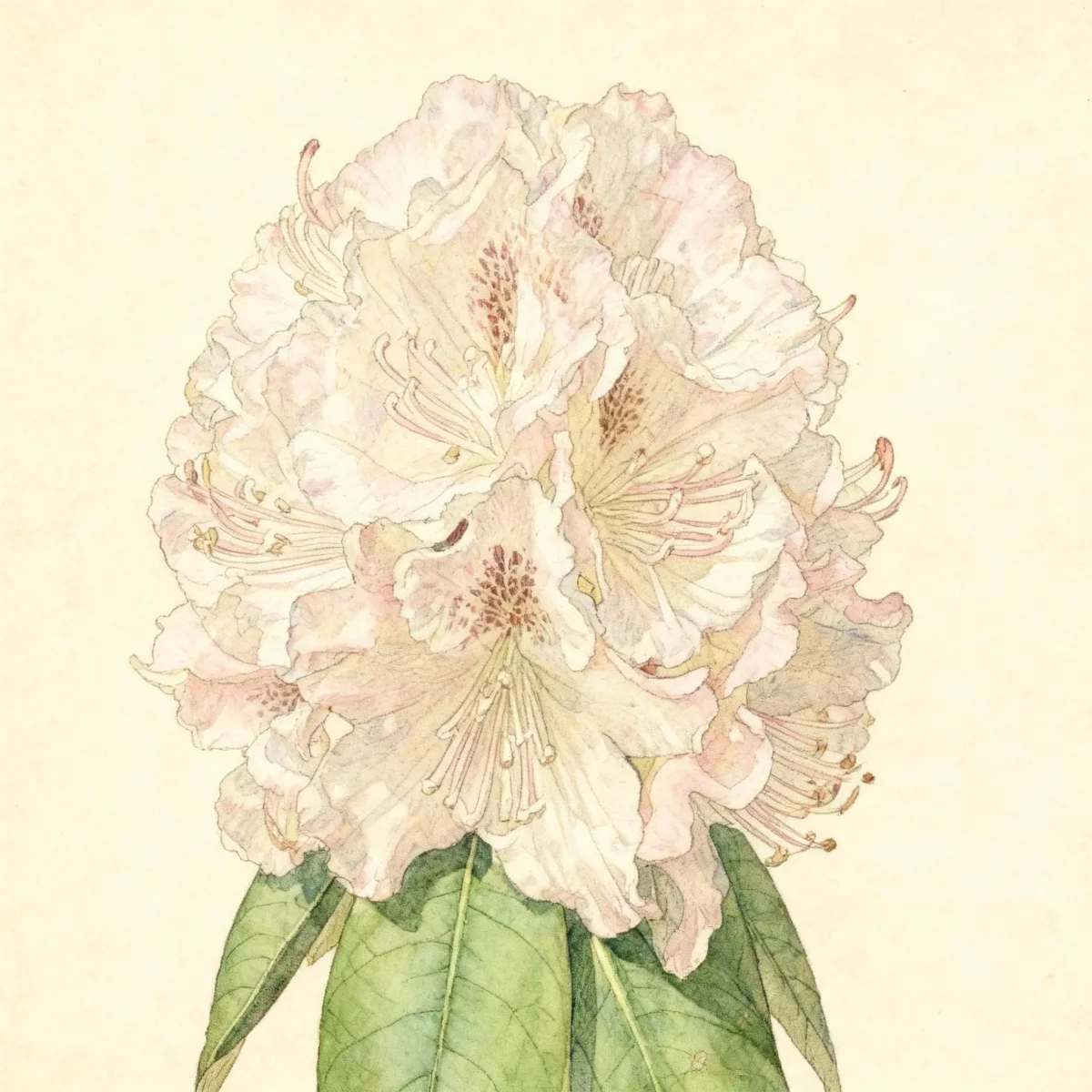
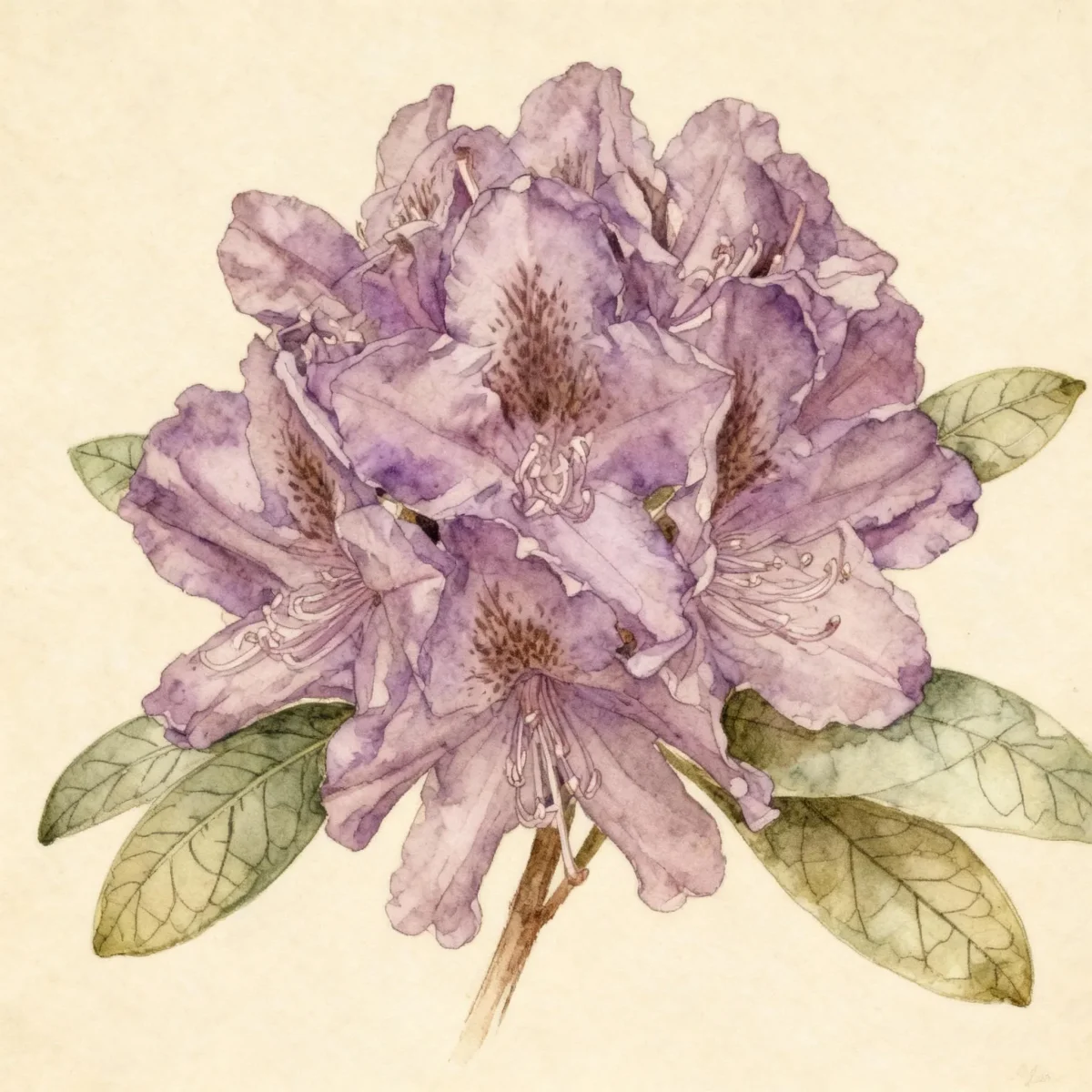
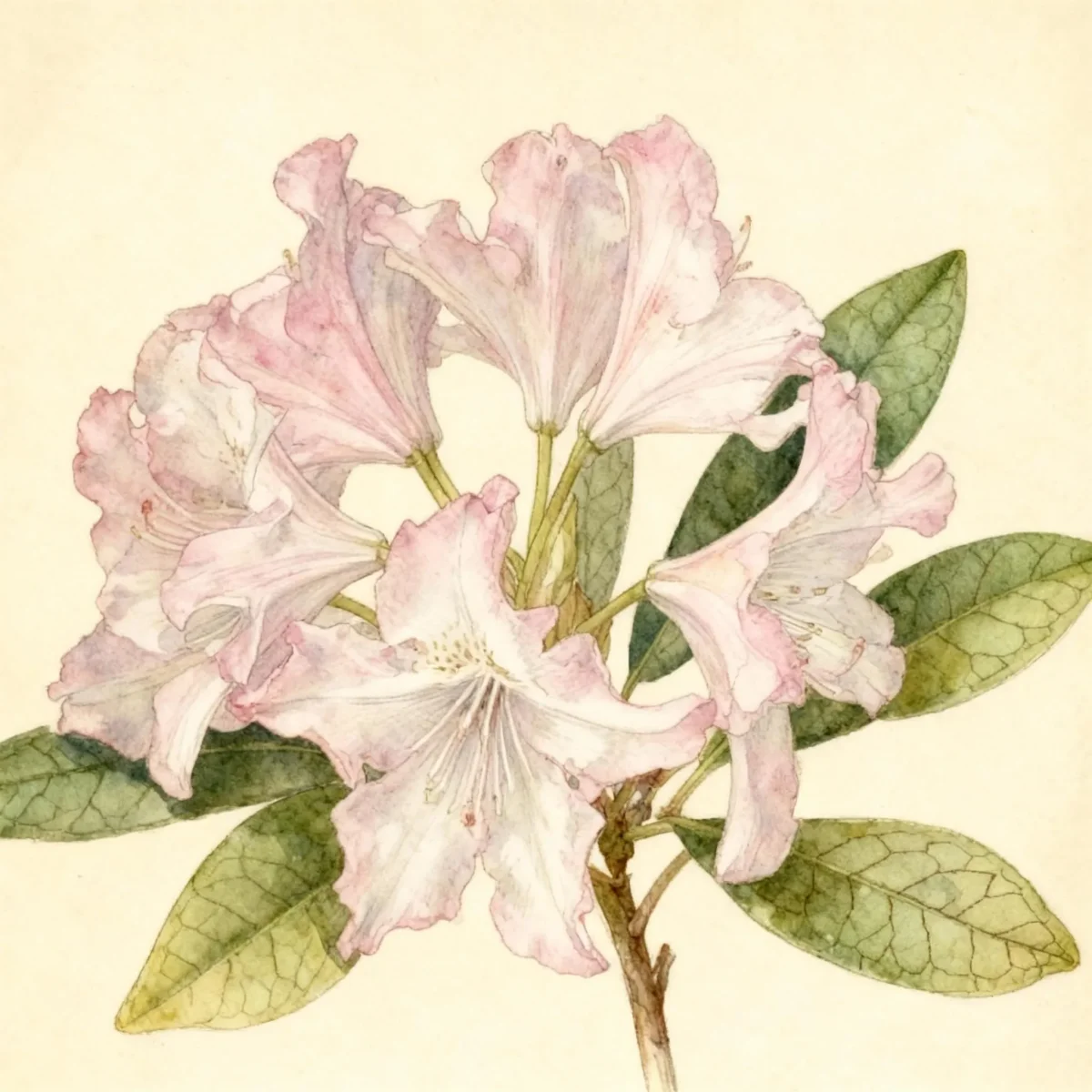
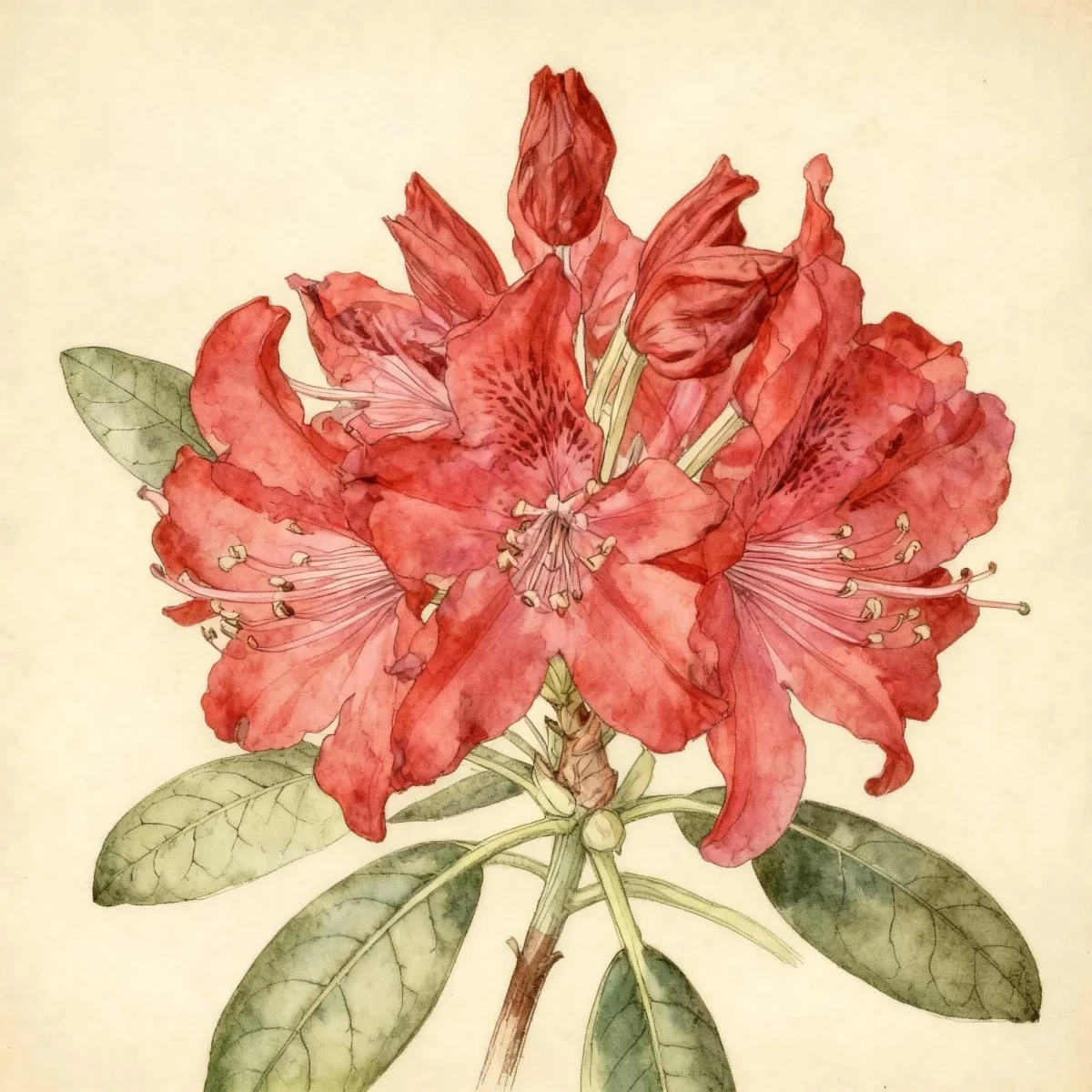
Big-leaved rhododendron (Rhododendron 'Dark Sister')
Rhododendron 'Dark Sister' is a striking broadleaf evergreen, the Big-leaved rhododendron, offering purple spring blooms and medium maintenance.
Scroll down to discover growing tips, care requirements, companion plants, and more
Complete Plant Information
Overview
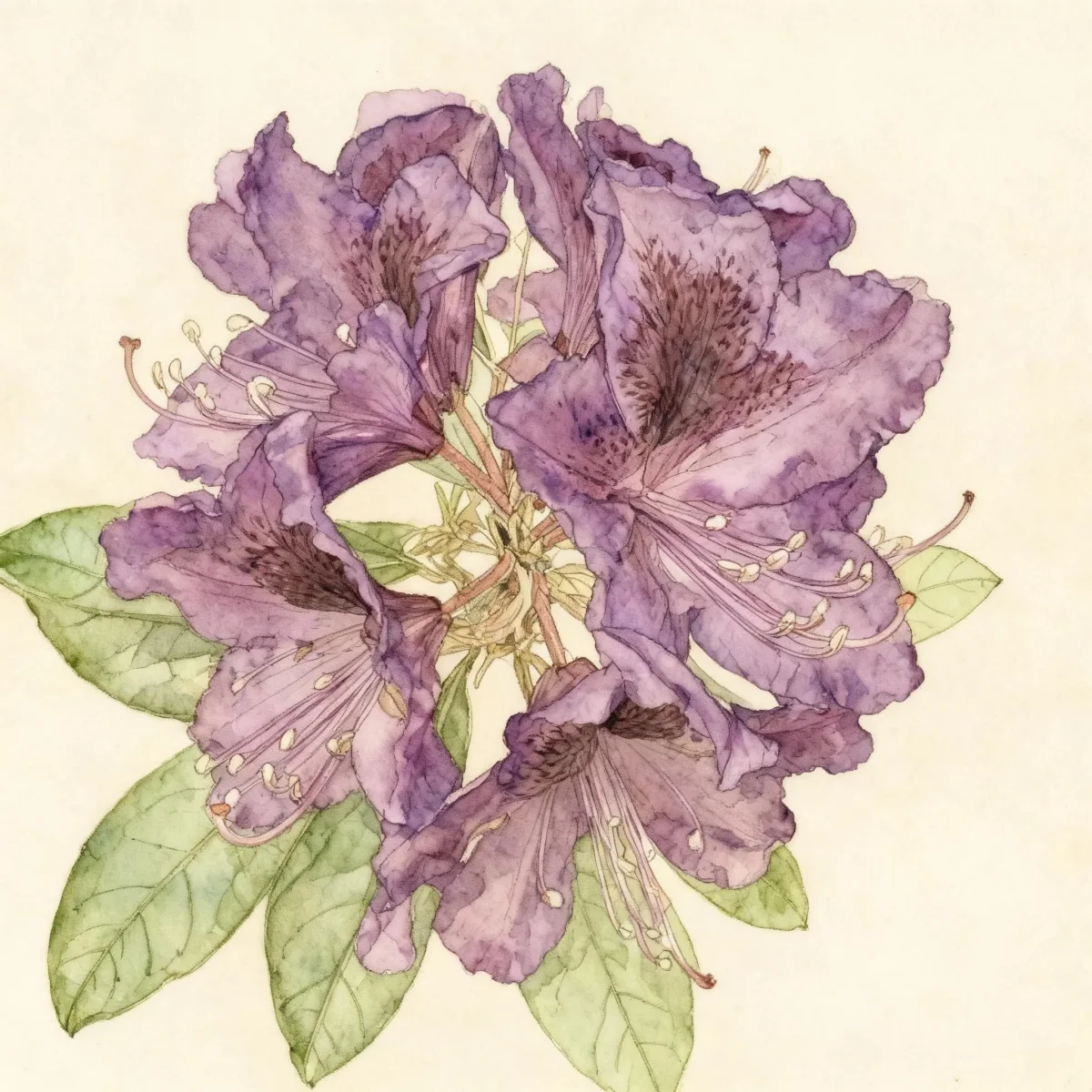
Rhododendron ‘Dark Sister’, a cultivar of the Big-leaved rhododendron, is highly valued in temperate gardens for its dense, evergreen foliage and vivid spring floral display. This cultivar boasts broadly funnel-shaped flowers of vivid purple, distinguished by a dark red, densely speckled blotch, which provides excellent visual impact during the month of May. As a sturdy selection, Rhododendron ‘Dark Sister’ typically reaches manageable heights of 3 to 5 feet, making it versatile for various landscape placements.
This Big-leaved rhododendron thrives best when cultural needs are strictly met, particularly concerning soil acidity and drainage. Proper siting, away from harsh afternoon sun and overly exposed winds, is crucial for maintaining leaf health. Gardeners appreciate Rhododendron ‘Dark Sister’ for its year-round structure and the burst of color it offers before many other shrubs leaf out fully.
Successfully growing Rhododendron ‘Dark Sister’ contributes lasting texture and color to the intermediate or background layers of a mixed border. Its predictable size and evergreen nature solidify its status as a cornerstone shrub for gardeners looking for consistent performance and manageable upkeep, provided the necessary acidic soil conditions are maintained.
Fast Facts
- Plant Family: Ericaceae
- Plant Type: Broadleaf evergreen
- Hardiness Zones: USDA Zones 5-8
- Size at Maturity:
- Height: 3-5 ft
- Spread: 3-5 ft
- Bloom Time: May
- Bloom Description: Purple with a red blotch
- Sun Exposure: Full sun to part shade
- Water Needs: Medium
- Maintenance Level: Medium
How to Grow
Planting Rhododendron ‘Dark Sister’ requires attention to soil preparation, prioritizing acidity and organic content. Aim for a soil pH between 5.0 and 5.5; amend heavy clay soils with sulfur or iron sulfate as needed to lower pH. Choose a location offering dappled shade or high open shade, though morning sun with afternoon shade is acceptable. Crucially, ensure excellent drainage, as these shallow-rooted shrubs suffer quickly from “wet feet” and root rot.
Medium water needs mean the soil must remain consistently moist but never waterlogged. Due to its shallow, fibrous root system, it is essential to apply a heavy layer of mulch, such as wood chips or pine needles, to retain soil moisture and stabilize root temperatures. Never cultivate around the plants; this can severely damage the roots. If drainage is poor, consider utilizing raised beds for planting the Big-leaved rhododendron.
Pruning on the Rhododendron ‘Dark Sister’ is minimal outside of shaping. Clip off spent flower clusters immediately after blooming concludes, if possible, as this helps direct energy toward new growth rather than seed production. Remember to protect plants from strong winds, and strictly avoid planting near walnut family trees due to juglone toxicity, which affects almost all rhododendrons.
Landscape Uses
The versatile nature of the Big-leaved rhododendron allows Rhododendron ‘Dark Sister’ to function effectively in several landscape roles. It excels as a specimen plant, drawing the eye with its distinct flower color, or it can be massed for a dramatic spring effect. Its 3 to 5-foot mature spread makes it ideal for use in shrub borders, woodland gardens, or as screening elements in foundation plantings.
When planning companion plantings, select other acid-loving, shade-tolerant plants like Japanese maples, azaleas, or various ferns. Planting rhododendrons near the margins of woodlands or under high, open canopy trees often mimics their native habitat best. The deep, evergreen structure provided by Rhododendron ‘Dark Sister’ ensures winter interest even after the vibrant spring bloom fades.
This cultivar particularly suits formal or semi-formal mixed borders where consistent height and texture are important across all seasons. When utilized as a hedge, ensure adequate spacing (3-5 feet minimum) so that air circulation remains good, which mitigates fungal development.
Flower Qualities
- Showy
Noteworthy Characteristics
Rhododendron is a genus of 500 to 900 species and includes both of what we commonly call rhododendrons and azaleas. Much hybridization has resulted in a great number of hybrid cultivars. The evergreen rhododendrons produce large to small, linear leaves that are stiff and evergreen, usually branching from a central trunk. ‘Dark Sister’ was hybridized by George M. Sanders of Oregon and introduced in 1987; its wavy-edged flowers are vivid purple with a dark red, densely speckled blotch, growing 3 to 5 ft. tall and wide.
Tolerances
- Rabbit
Potential Problems
Rhododendrons and azaleas, including the Big-leaved rhododendron, face challenges from various insect and disease pests. Common insect culprits include aphids, scale, and lacebugs, while diseases manifest as blights, canker, and various forms of rot, most notably root rot if drainage is poor. Chlorosis, where leaves turn yellow, is a sign that soil pH is too high (alkaline), leading to iron deficiency.
Prevention is primarily cultural: maintaining the ideal acidic soil pH (5.0 to 5.5), ensuring excellent drainage, and keeping roots consistently moist but not saturated are the best defenses. Avoid planting near toxic species like walnuts. If chlorosis appears, actively treat the soil with iron sulfate to correct the pH imbalance. A healthy Rhododendron ‘Dark Sister’ planted in the proper environment will naturally resist most serious issues.
Frequently Asked Questions
What hardiness zones is Rhododendron ‘Dark Sister’ suitable for?
Rhododendron ‘Dark Sister’ is suitable for USDA Hardiness Zones 5 through 8.
How large does the Big-leaved rhododendron grow?
This cultivar typically matures to a height between 3 and 5 feet, with a similar spread of 3 to 5 feet wide.
When does Rhododendron ‘Dark Sister’ bloom?
This plant blooms consistently in May, featuring striking purple flowers with a noticeable red blotch.
What sun exposure does Rhododendron ‘Dark Sister’ need?
It performs best in full sun to part shade conditions, preferring dappled light or protection from intense afternoon sun.
Conclusion
The Rhododendron ‘Dark Sister’ offers rewarding visual appeal within the evergreen shrub category, delivering deep purple blooms in spring atop manageable 3-to-5-foot evergreen structure. By diligently addressing its requirements for acidic, well-drained soil and medium moisture, gardeners can ensure this Big-leaved rhododendron remains a highlight of the landscape for years. Before planting, verify that your local garden conditions align with USDA Zones 5-8 and adjust your soil pH accordingly.
Companion Planting
Selecting appropriate companions for Rhododendron ‘Dark Sister’ helps create a balanced, thriving woodland aesthetic that supports soil conditions. Look for plants that share similar needs for acidic soil, protection from harsh sun, and consistent moisture. Excellent companions include deciduous and evergreen azaleas, which offer varied textures and bloom times, extending the season of interest.
Consider pairing this Big-leaved rhododendron with moisture-loving woodland natives such as Hellebores (Helleborus species) for early spring interest before the rhododendron flowers emerge. Ferns provide fine, delicate texture beneath the shrubs, contrasting beautifully with the Rhododendron ‘Dark Sister’s’ leathery, broad leaves while also helping to keep the shallow root zone cool and shaded.
Seasonal Care Calendar
Spring preparation is vital; once active growth begins, water deeply and apply a slow-release, acidifying fertilizer formulated specifically for rhododendrons and azaleas. After the May bloom fades, deadhead spent trusses promptly to encourage next year’s buds. Summer heat requires vigilance regarding moisture; ensure the mulch layer is thick (2-3 inches) and roots never completely dry out, especially during dry spells.
In the autumn, focus shifts to protection. If you experience harsh winter winds, consider erecting temporary burlap screens for protection, especially for younger plants. Do not heavily prune in the fall; any substantial shaping should be done immediately after flowering, or otherwise left until late winter dormancy breaks.