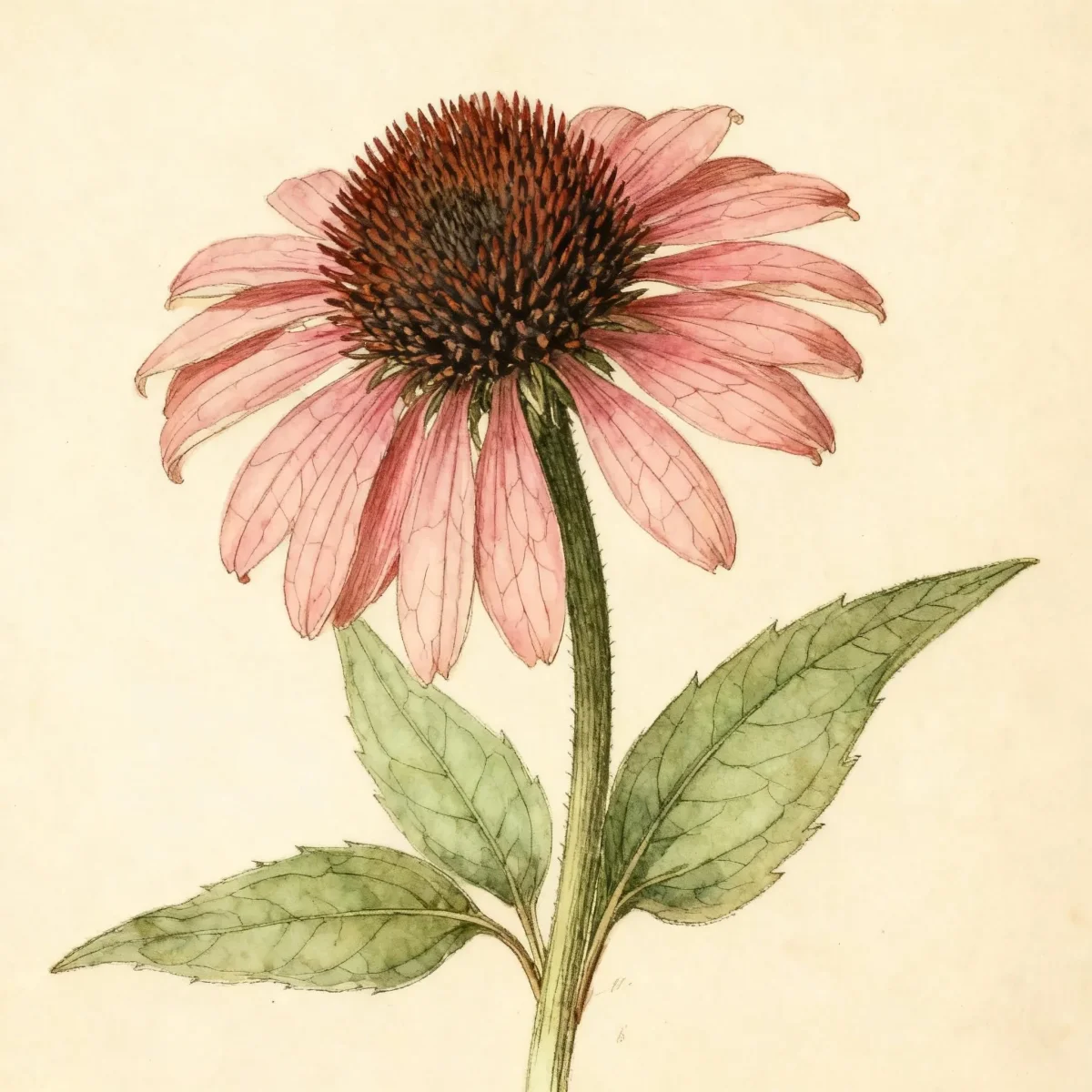
Coneflower (Echinacea 'Quills and Thrills')
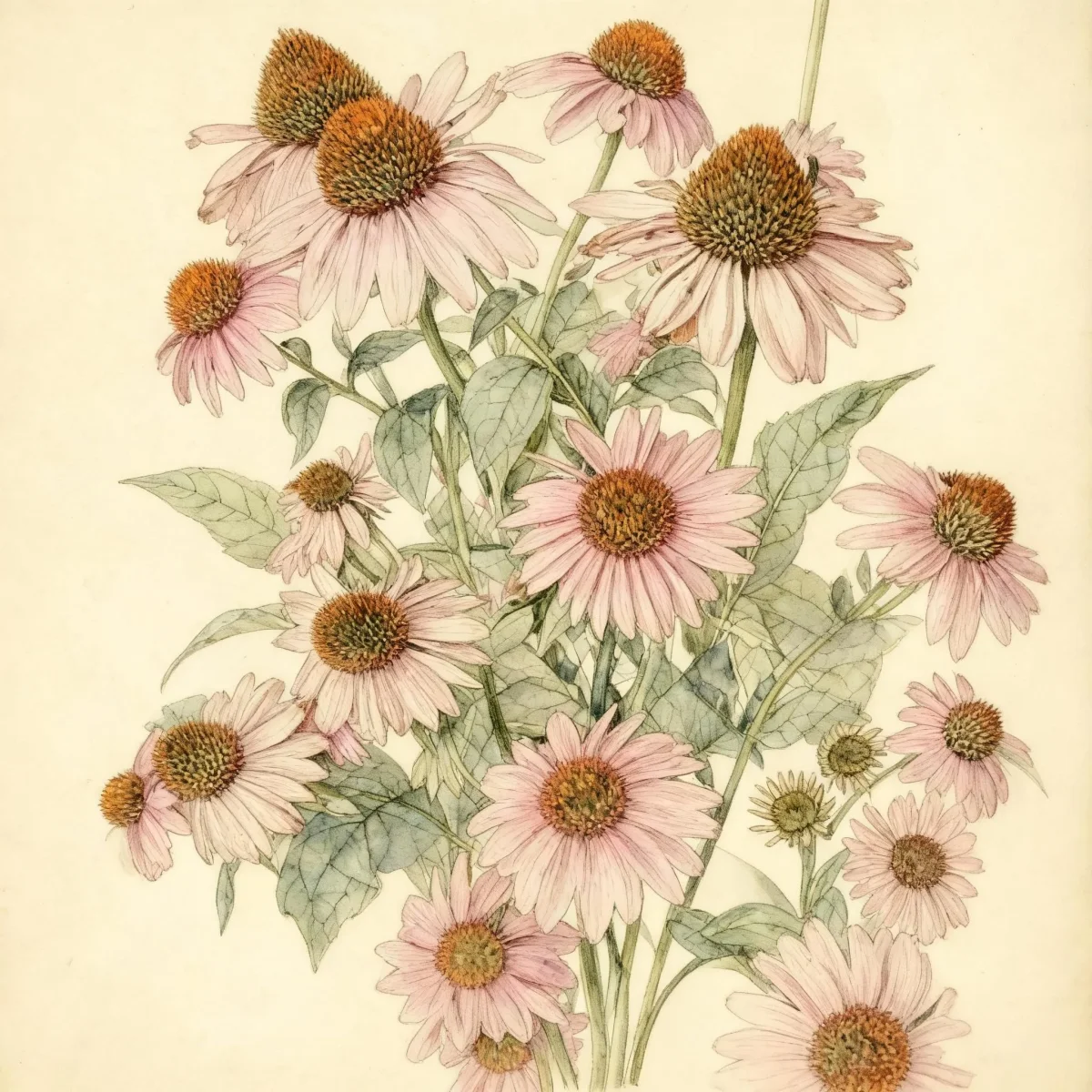
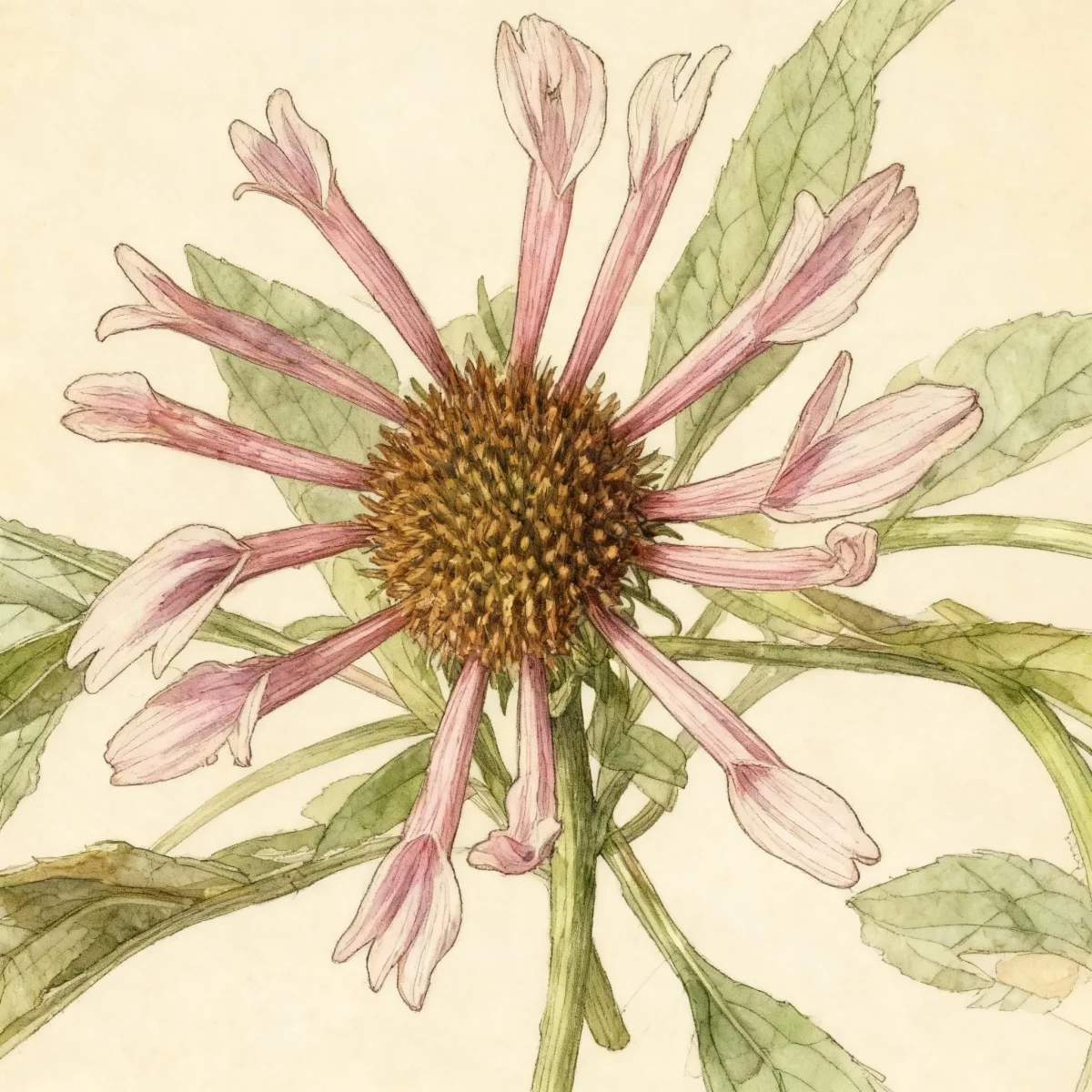
Echinacea 'Quills and Thrills' Coneflower is a striking, low-maintenance herbaceous perennial boasting purple-pink quilled rays.
Scroll down to discover growing tips, care requirements, companion plants, and more
Complete Plant Information
Overview
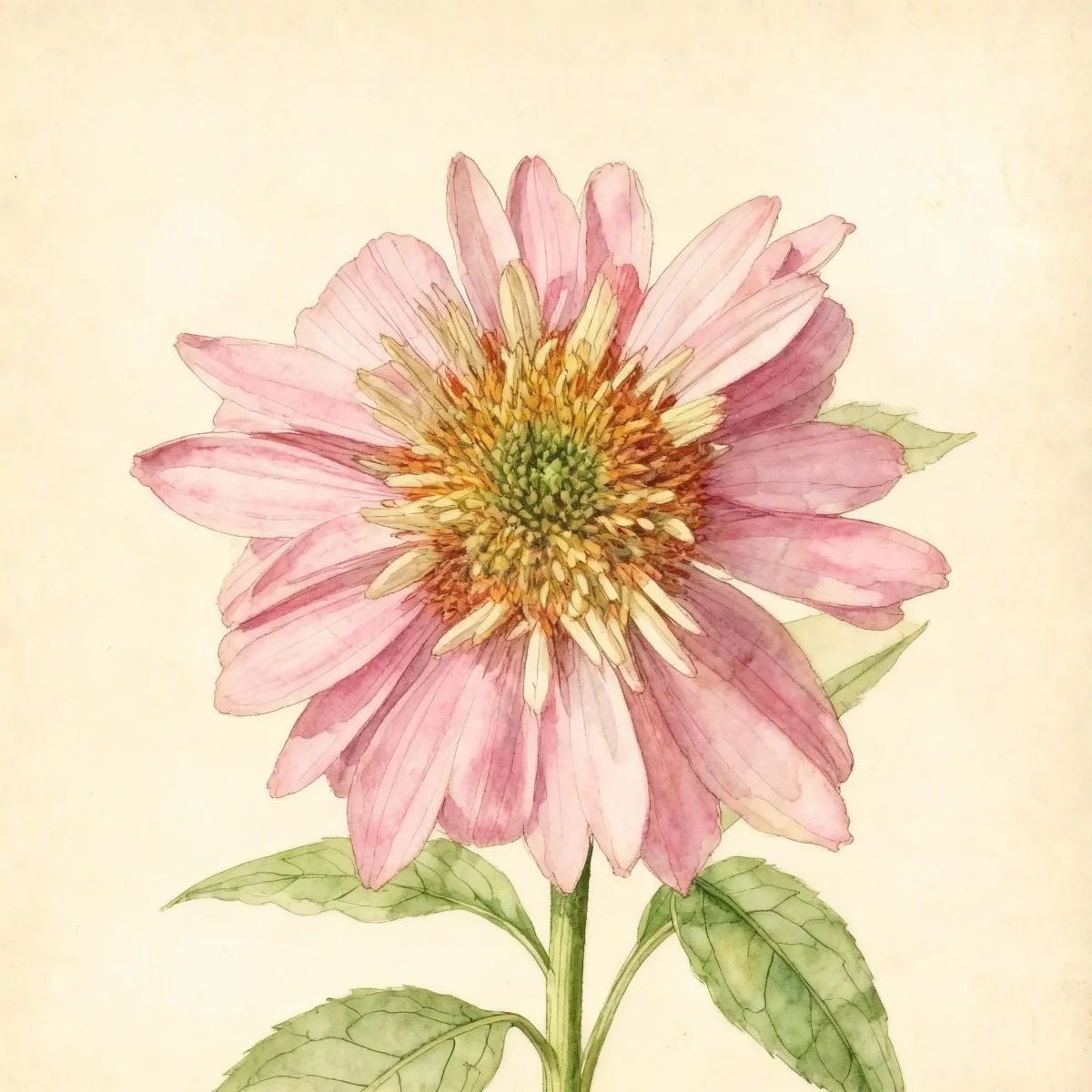
Echinacea ‘Quills and Thrills’ is a highly desirable cultivar of Coneflower, prized for its unique blooms featuring outward-spreading, light purple-pink quilled petals that surround a deep orange-red center cone. Belonging to the Asteraceae family, this robust herbaceous perennial provides reliable summer color, making it an excellent anchor for sunny perennial beds. Gardeners value this plant not only for its strong visual impact but also for its low maintenance needs and resilience across varied soil conditions.
This adaptability means that Coneflower thrives easily in average, well-drained soils, even those categorized as dry or containing heavy clay. Grown typically in full sun to partial shade, Echinacea ‘Quills and Thrills’ offers significant benefits to local ecosystems by attracting essential pollinators like butterflies. Furthermore, the sturdy stems and persistent seed heads offer visual interest long after the main blooming season finishes in late summer.
The genus name Echinacea derives from the Greek word ‘echinos,’ referencing the spiky center cone characteristic of most flowers. For gardeners seeking dependability combined with novel flower form, Echinacea ‘Quills and Thrills’ delivers long-lasting performance with minimal fuss, requiring only occasional division every few years.
Fast Facts
- Plant Family: Asteraceae
- Plant Type: Herbaceous perennial
- Hardiness Zones: USDA Zones 3-8
- Size at Maturity:
- Height: 2-3 ft
- Spread: 1-1.5 ft
- Bloom Time: June to August
- Bloom Description: Purple-pink quilled rays surround orange center cone
- Sun Exposure: Full sun to part shade
- Water Needs: Dry to medium
- Maintenance Level: Low
How to Grow
For optimal performance, plant Echinacea ‘Quills and Thrills’ during the spring or fall in a location receiving full sun; while it tolerates light shade, maximum bloom requires 6 or more hours of direct sunlight daily. Prepare the site by ensuring the soil is well-drained, as good drainage is crucial for the long-term health of this Coneflower variety. It establishes well in average soils, demonstrating notable tolerance toward drought once established.
Watering should be kept consistent while plants are young, but mature specimens require only dry to medium moisture levels, succeeding well even through hot, dry summers due to their inherent drought tolerance. Fertilization is rarely necessary; this adaptable plant prefers lean soil conditions. Deadheading spent flowers is not strictly required, as the plant reblooms adequately without it, but prompt removal encourages more prolific blooming throughout the season and maintains a tidier overall appearance.
Divide the clumps every four years or so when they begin to look overcrowded; this division helps rejuvenate the plant and prevents potential issues associated with aging perennial centers. Winter preparation is minimal; leaving the blackened seed heads standing through winter provides texture and food for appreciative winter birds, such as goldfinches.
Landscape Uses
Echinacea ‘Quills and Thrills’ excels when used as an accent specimen, lending vertical interest due to its sturdy, well-branched stems that usually require no staking. Its adaptable nature allows it to integrate perfectly into the front of borders where its unique texture can be easily appreciated. Mass planting or grouping several of these Coneflowers together creates a significant, undulating river of purple-pink color through the summer months.
This robust perennial is also well-suited for more informal settings, such as rock gardens or in the brighter areas of open woodland gardens where dappled sunlight prevails. Consider pairing these striking blooms with silver-leaved companions or plants that offer contrasting bloom shapes, such as spherical Alliums after they fade, or upright Russian Sage.
The durability of Echinacea ‘Quills and Thrills’ in mixed perennial plantings—resisting deer and tolerating clay—makes it an essential component for low-intervention, naturalistic garden designs.
Standout Features
Flower Qualities
- Showy
Noteworthy Characteristics
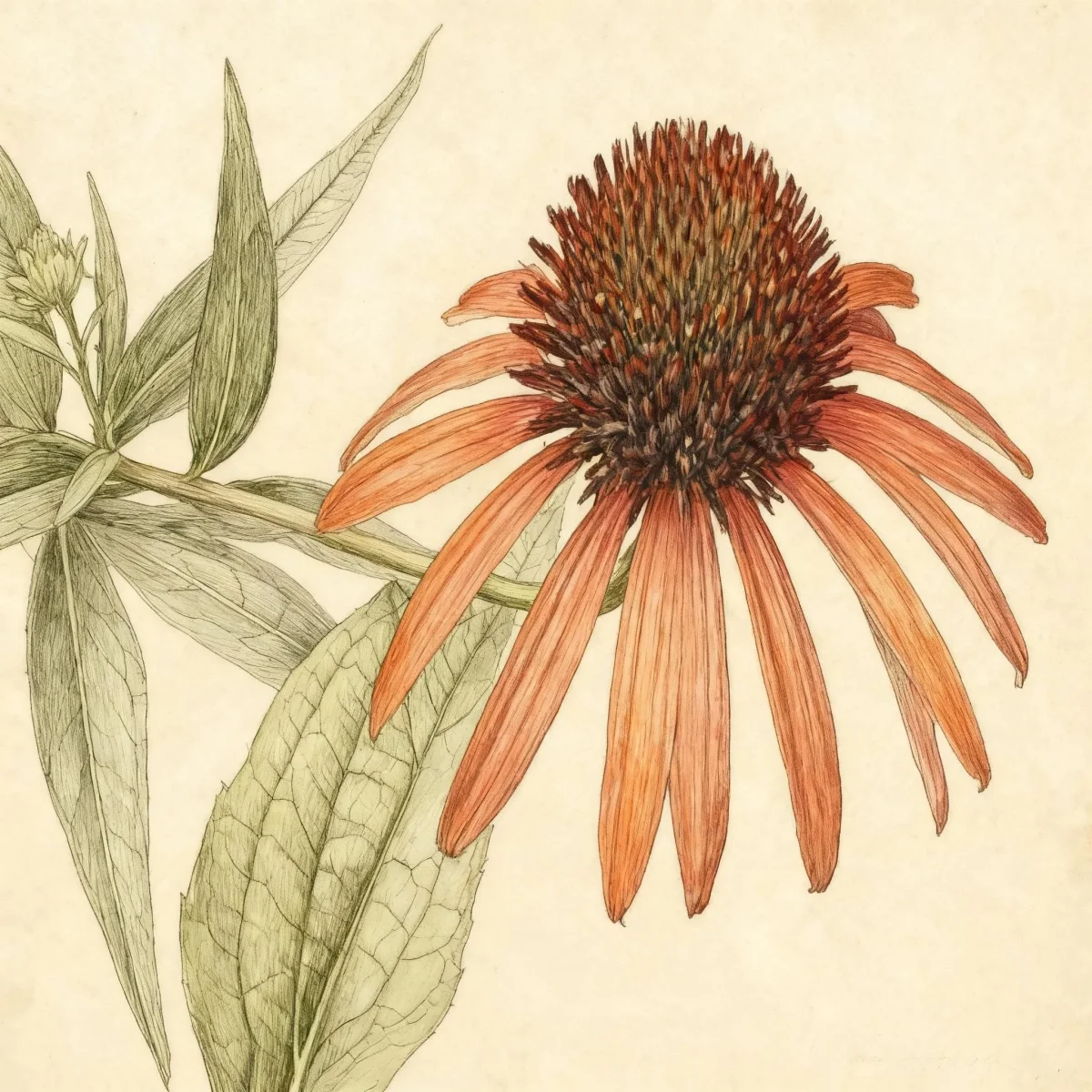
Echinacea is a genus of seven species all endemic to eastern and central North America, with Coneflowers blooming reliably from June through August. The cultivar ‘Quills and Thrills’ stands out with its stately clump, growing up to 36 inches tall, featuring outward-spreading light purple-pink quilled rays that surround a commanding deep orange-red center cone. The genus name references the hedgehog-like spiny center cone, and this specific variety is attractive to many insect pollinators and remains visually interesting well into winter.
Tolerances
- Deer
- Drought
- Clay Soil
- Dry Soil
- Shallow-Rocky Soil
Potential Problems
All coneflowers are susceptible to aster yellows, a disease spread by leafhoppers that can cause general plant distress and unusually green or distorted flowers. Fungal and bacterial leaf spots can sometimes affect the foliage, particularly in periods of high humidity or overhead watering. Gardeners should inspect plants periodically for potential pests like erythroid mites and the common daytime garden feeder, the Japanese beetle, managing infestations promptly to protect the foliage and flowers of your Coneflower.
Frequently Asked Questions
What hardiness zones is Coneflower suitable for?
Echinacea ‘Quills and Thrills’ is reliably hardy across USDA Zones 3 through 8, offering a long growing season for many gardeners.
How large does Echinacea ‘Quills and Thrills’ grow?
This cultivar typically reaches a mature height between 2 and 3 feet tall, with a spread ranging from 1 to 1.5 feet across on strong stems.
When does Coneflower bloom?
The peak bloom time for Echinacea ‘Quills and Thrills’ is generally from June to August, featuring its distinctive purple-pink quilled rays surrounding an orange center cone.
What sun exposure does Echinacea ‘Quills and Thrills’ need?
This Coneflower performs best in an application of full sun to achieve the stoutest growth and most abundant flowering, though it can tolerate part shade.
Conclusion
Echinacea ‘Quills and Thrills’ is a superior, low-maintenance perennial that delivers unique texture and reliable summer color to any garden space. Integrating this drought-tolerant Coneflower ensures excellent support for pollinators and structure for winter landscapes. Check your local USDA hardiness zone compatibility and plan to plant this sturdy perennial during cooler months for the best establishment success.
Wildlife Benefits
The structure of the flower head makes Echinacea ‘Quills and Thrills’ exceptional for supporting local wildlife. The large, spiny cone produced after flowering is a powerful attractant for seed-eating birds, most notably American Goldfinches, especially if the dead flower stems are left standing through the fall and winter months. Leave the faded cones intact until early spring cleanup to maximize this winter feeding opportunity.
Furthermore, the vibrant purple-pink blooms are highly attractive during their active season. Coneflowers serve as nectar sources for a wide variety of butterflies and are excellent additions to pollinator gardens designed to support beneficial insect populations throughout the summer.
Companion Planting
When planning the garden layout around your Echinacea ‘Quills and Thrills’, select companions that share similar cultural requirements for full sun and dry to medium soil tolerance. Plants that bloom sequentially or offer contrasting foliage texture work best. Consider pairing this Coneflower with Russian Sage (Perovskia atriplicifolia) for silvery vertical accents, or use ornamental grasses like Little Bluestem to highlight its upright habit. For early season color that fades as the Coneflower kicks in, integrate sturdy companions like Salvia or Coreopsis early in the season.