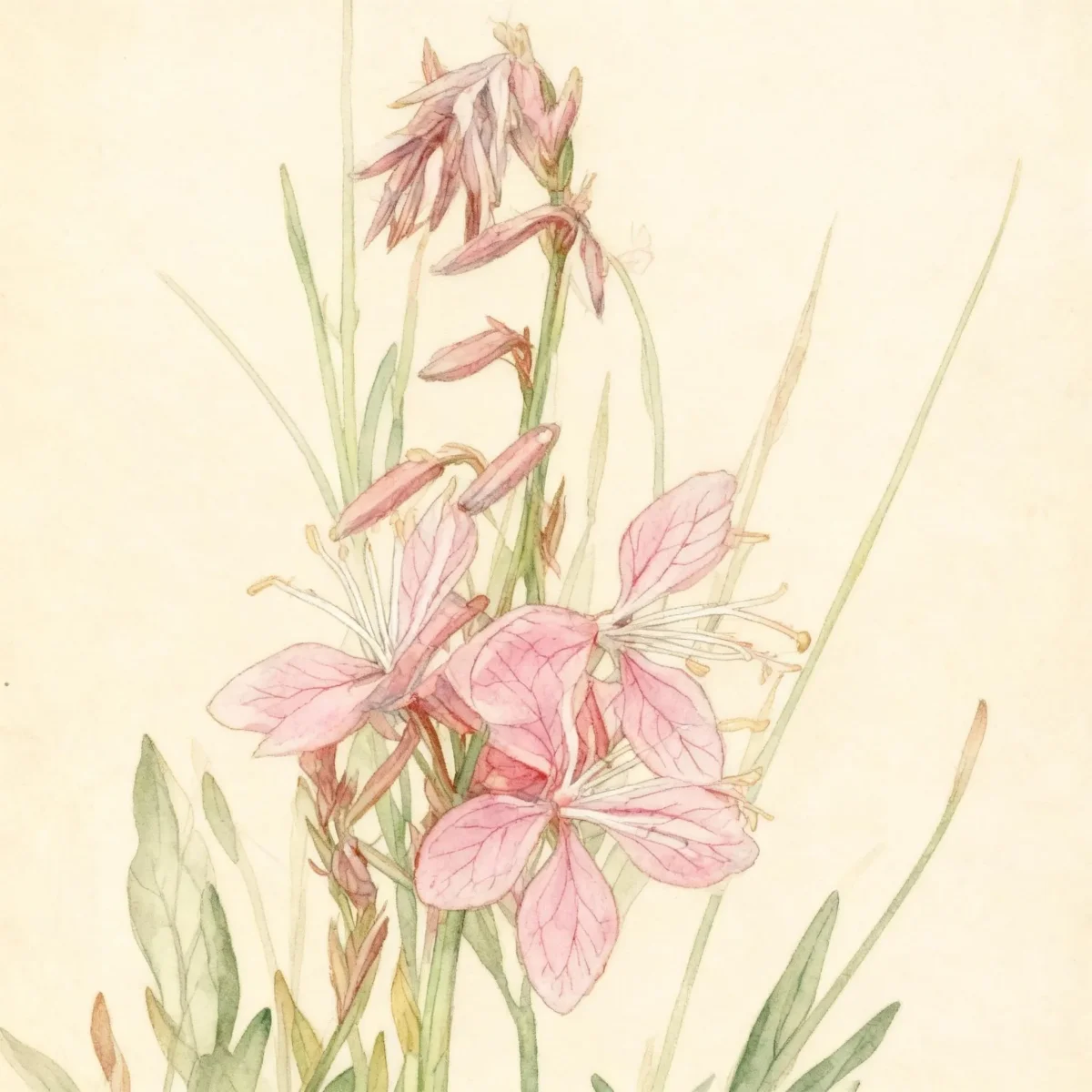
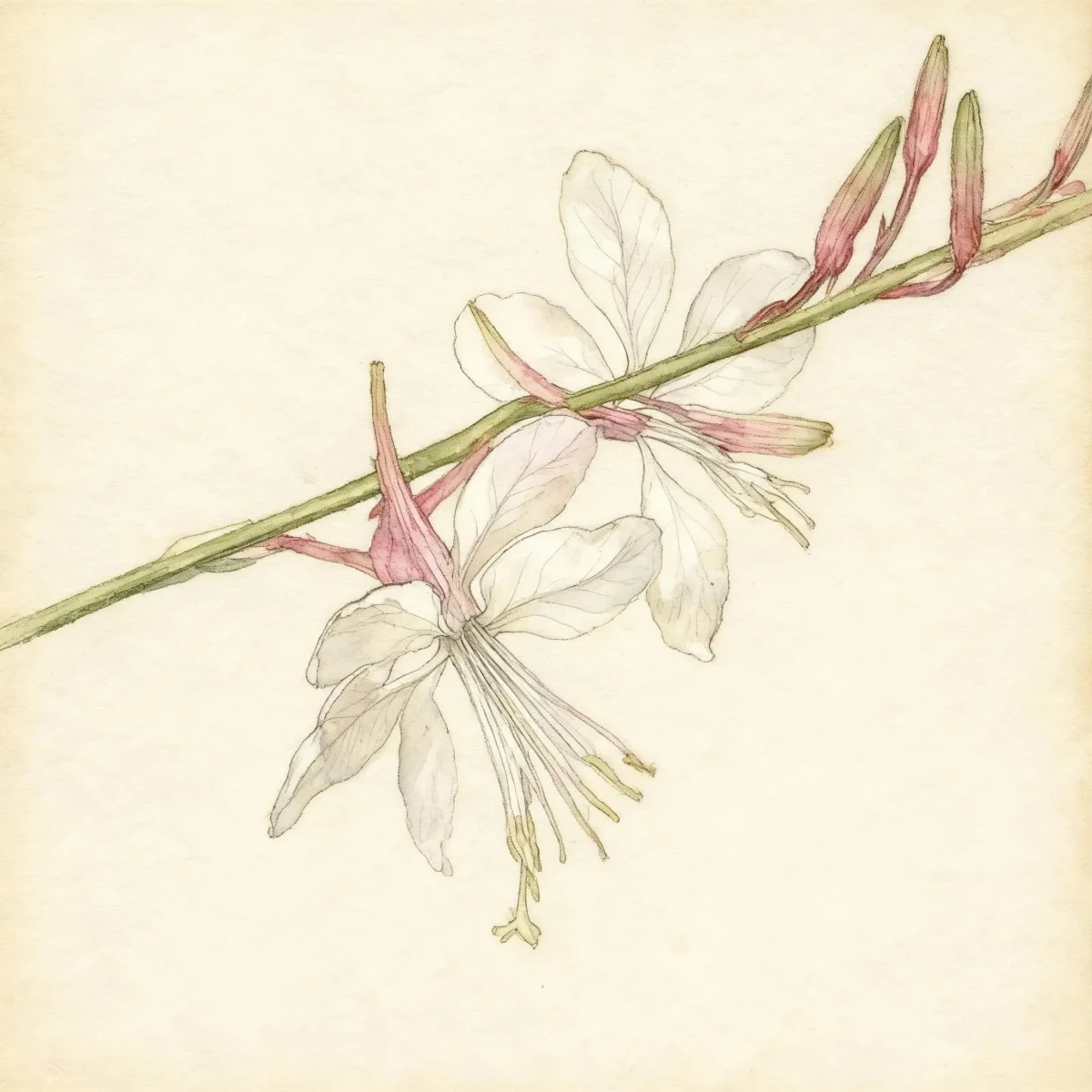
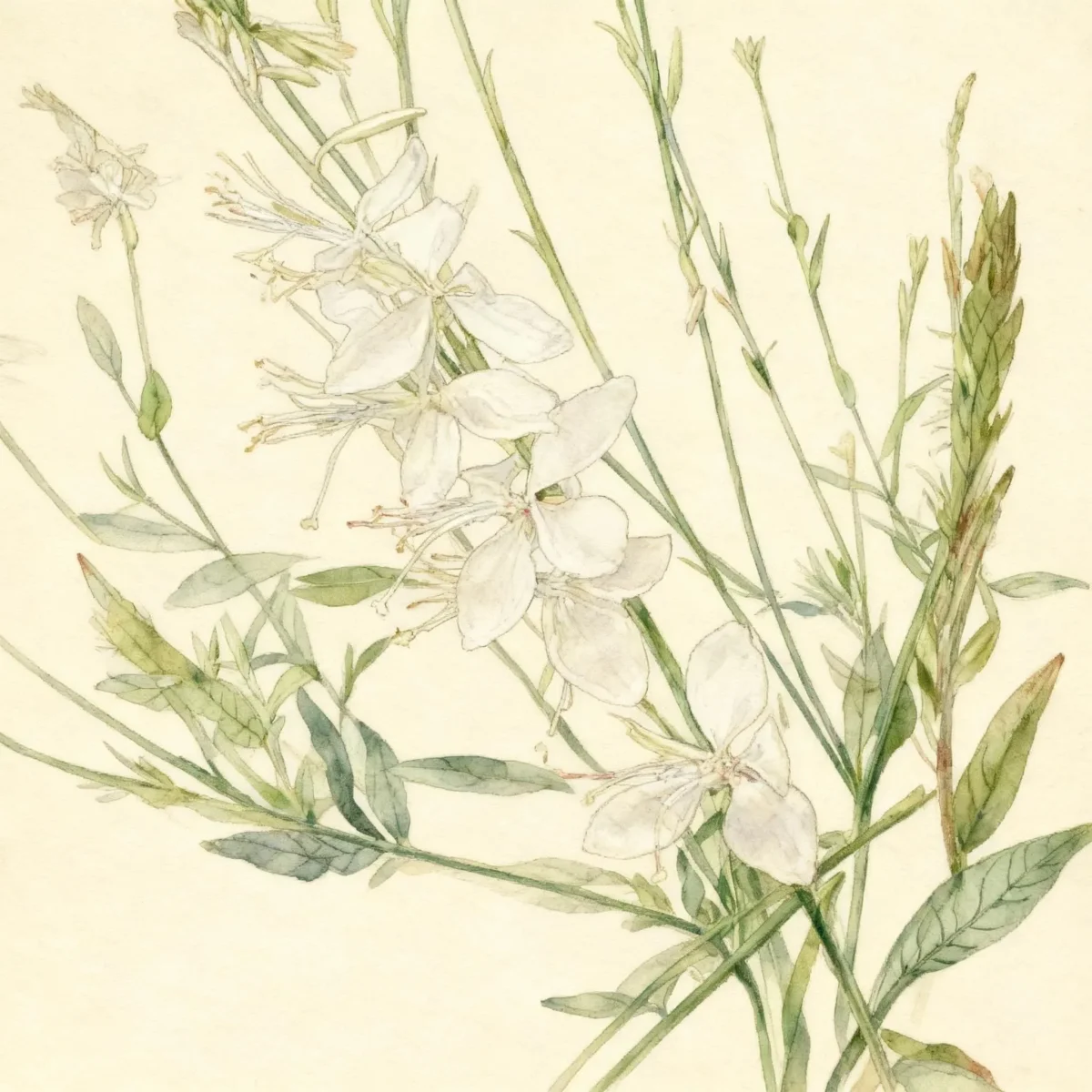
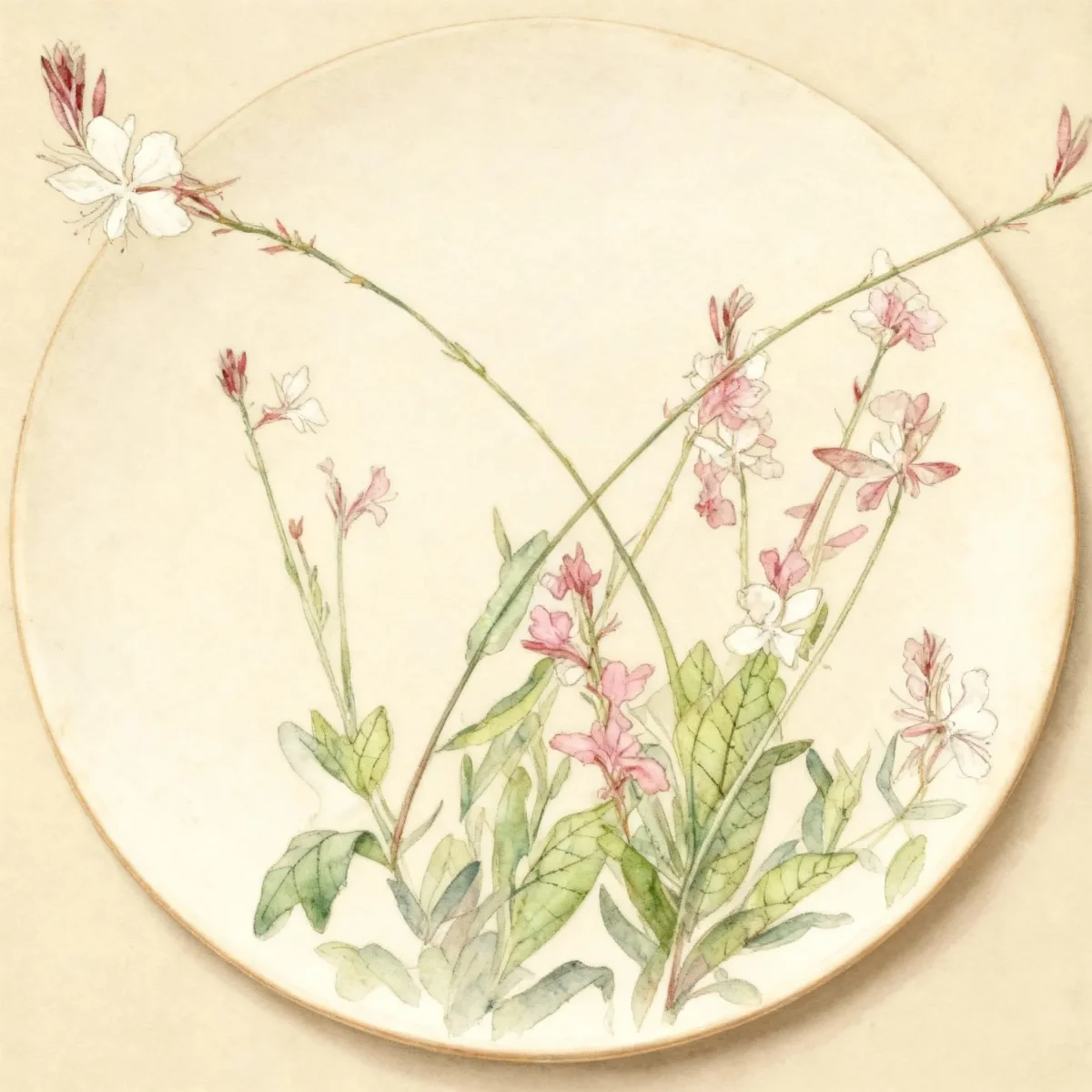
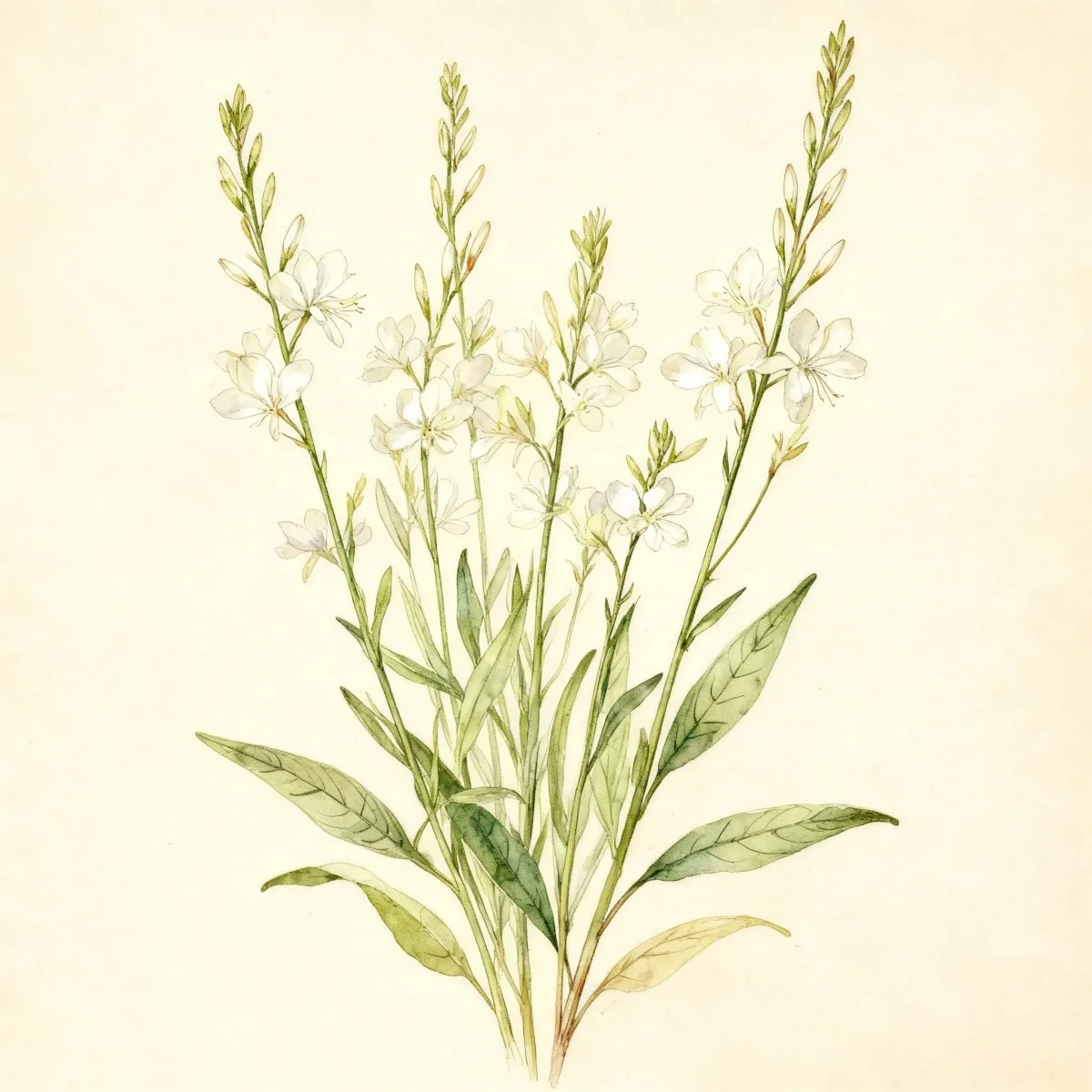
Gaura (Gaura lindheimeri 'Nugaupapil' PAPILLON)
Gaura lindheimeri 'Nugaupapil' PAPILLON offers continuous white blooms in full sun. This compact Gaura is excellent for borders and requires medium maintenance.
Scroll down to discover growing tips, care requirements, companion plants, and more
Complete Plant Information
Overview
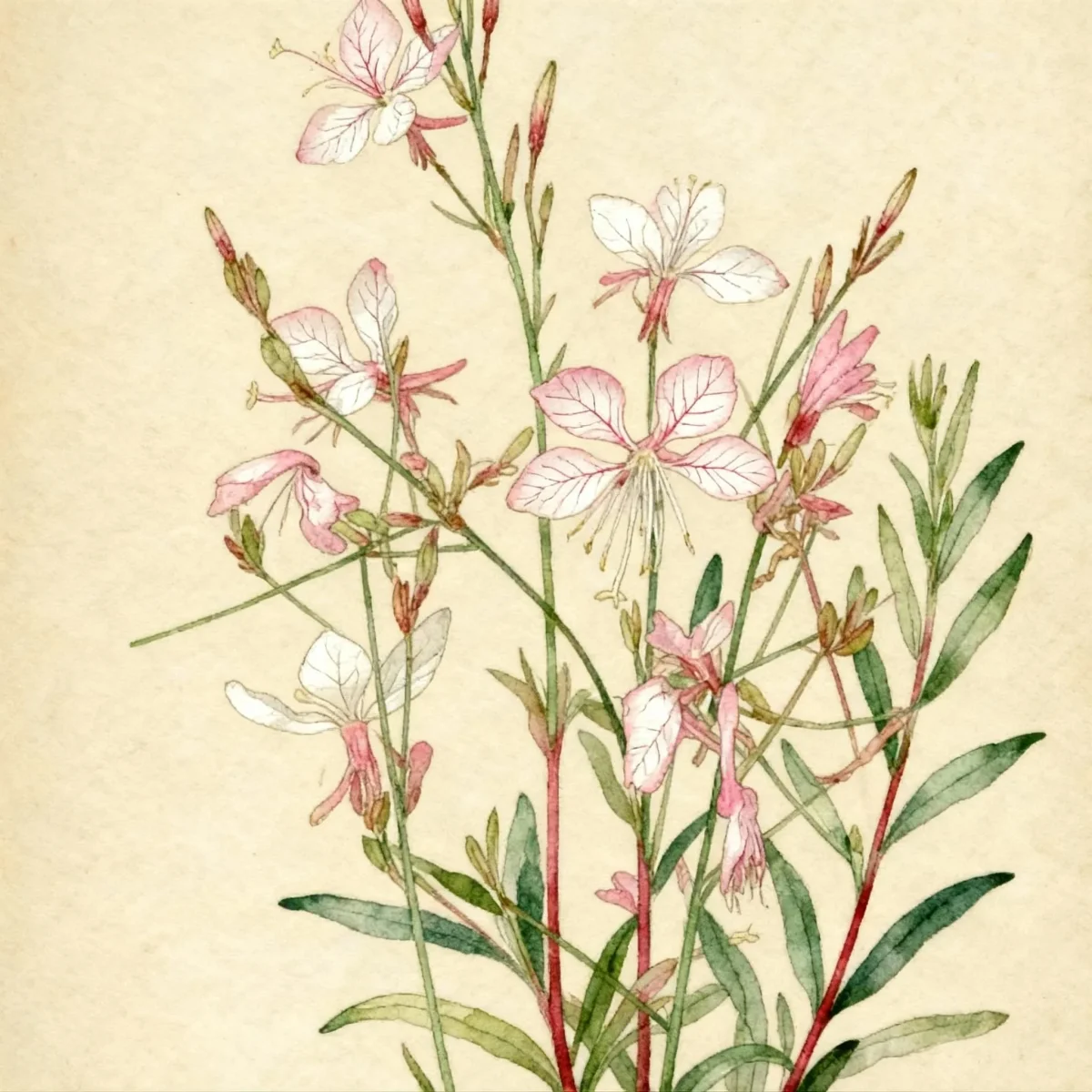
Gaura lindheimeri ‘Nugaupapil’ PAPILLON, known commercially as PAPILLON, is a highly valued cultivar prized for its compact stature and nearly continuous flowering display. This variety of Gaura typically remains smaller and far less prone to flopping than taller species, making it a cleaner choice for structured garden designs. Its delicate white flowers dance atop slender wands, providing light, airy texture from late spring often right through to the first fall frosts.
As a herbaceous perennial native to Texas and Louisiana, this Gaura possesses excellent heat and humidity tolerance once established. It thrives in sunny locations where many other perennials struggle, offering reliable, low-key elegance throughout the hottest months of the year. The genus name Gaura itself reflects the “superb” appearance of its blooms, a quality certainly exhibited by the long-blooming PAPILLON cultivar.
For gardeners seeking continuous color and airy structure in full sun, Gaura lindheimeri ‘Nugaupapil’ PAPILLON is an outstanding selection. While it requires medium maintenance, its drought tolerance and continuous bloom reward the effort, especially when planted correctly in well-draining media.
Fast Facts
- Plant Family: Onagraceae
- Plant Type: Herbaceous perennial
- Hardiness Zones: USDA Zones 5-9
- Size at Maturity:
- Height: 1-1.5 ft
- Spread: 1-1.5 ft
- Bloom Time: May to September
- Bloom Description: White
- Sun Exposure: Full sun
- Water Needs: Medium
- Maintenance Level: Medium
How to Grow
Gaura thrives when planted in an area receiving full sun exposure. The soil composition is critical; these plants require sandy, loamy, well-drained conditions, as good drainage is absolutely essential to prevent root rot. This plant establishes a vital taproot, allowing it to tolerate periods of drought and high humidity once mature. Plant starter plants in the spring after the danger of frost has passed, or sow seeds indoors early in the season.
Cultural care revolves around light pruning and proper watering. Water needs are medium; allow the soil surface to dry slightly between waterings, particularly once the plant is established, leveraging its drought tolerance. To encourage prolonged blooming from your Gaura lindheimeri ‘Nugaupapil’ PAPILLON, make it a habit to remove spent flower spikes.
Since thin flower stems on Gaura can become leggy, especially in rich soils, consider mass planting or surrounding them with adjacent perennials for subtle support. If size control is necessary, plants can be lightly cut back by half in late spring. Unlike its taller relatives, the PAPILLON cultivar is more compact, limiting this need. If you leave the spent stems standing through fall, you might enjoy new plants appearing the following spring, as the plant can self-seed.
Landscape Uses
Gaura is exceptionally effective when utilized in sunny borders where its airy movement can be fully appreciated. Due to its relatively uniform and compact size, Gaura lindheimeri ‘Nugaupapil’ PAPILLON performs beautifully when planted in groups or massed together, creating drifts of white texture against foundational plantings. The continuous blooming habit makes it an excellent choice for medium-height filler in mixed perennial beds bordering walkways or open lawn areas.
Its light structure pairs well with sturdier, bold-textured plants that appreciate similar cultural conditions, such as coneflowers (Echinacea) or Russian Sage (Perovskia). For gardeners looking for season-long performance in restricted spaces, this Gaura cultivar is also highly recommended for container plantings. Grouping several plants in a large pot can provide a lovely, floating effect that lasts all summer long.
Standout Features
Flower Qualities
- Showy
Noteworthy Characteristics
Gaura lindheimeri, commonly called gaura, is a herbaceous clump-forming perennial that is native to Texas and Louisiana. The genus name Gaura comes from the Greek gauros meaning “superb” in reference to the beautiful flowers. The trade name PAPILLON refers to the compact cultivar ‘Nugaupapil’, which grows only to about 16 inches tall and features white flowers (1” diameter) in wand-like panicles blooming almost continuously from late spring well into fall.
Tolerances
- Tolerates heat
- Tolerates humidity
- Tolerates some drought
Potential Problems
Root rot is a significant concern if Gaura lindheimeri ‘Nugaupapil’ PAPILLON is planted in heavy or poorly drained soils, emphasizing the need for sandy or loamy amendments. Fungal issues like rust and powdery mildew can appear, often triggered by poor air circulation or persistent overhead watering. Gardeners should regularly scout for common pests, including aphids, whitefly, and flea beetles, treating infestations promptly to maintain plant health.
Frequently Asked Questions
What hardiness zones is Gaura suitable for?
Gaura lindheimeri ‘Nugaupapil’ PAPILLON is hardy in USDA Zones 5 through 9. Note that overwintering in Zone 6 can sometimes be unreliable, though self-seeding may replenish the population.
How large does Gaura grow?
This compact cultivar is expected to reach a height between 1 and 1.5 feet tall, with a similar spread ranging from 1 to 1.5 feet wide.
What sun exposure does Gaura need?
This plant requires full sun exposure to perform optimally, which encourages the best blooming display.
When does Gaura bloom?
Gaura lindheimeri ‘Nugaupapil’ PAPILLON blooms profusely from May through September, producing continuous white flowers.
Conclusion
The compact form and extended bloom time make Gaura lindheimeri ‘Nugaupapil’ PAPILLON a superb, textural plant for sunny, well-drained locations. Its tolerance for heat and humidity ensures reliability during challenging summer months. Before planting, confirm your site offers excellent drainage, and then enjoy the nearly nonstop beauty this superb Gaura cultivar provides.
Propagation Tips
Propagation for this specific Gaura cultivar can be achieved through several methods. In the spring, gardeners can start seed indoors, or you may purchase young starter plants from local nurseries. For established plants, summer is the ideal time to take cuttings, which offer a reliable way to increase your stock or replace older perennials.
Companion Planting
Given the requirement for full sun and excellent drainage, look for companions that share similar low-water needs once established. Plants that offer contrasting textures, such as ornamental grasses with fine plumes or plants with broad, architectural foliage, pair wonderfully with the airy wands of Gaura. Consider using plants like Sedum, ornamental Artemisia, or Coreopsis that appreciate dry, sunny roots.