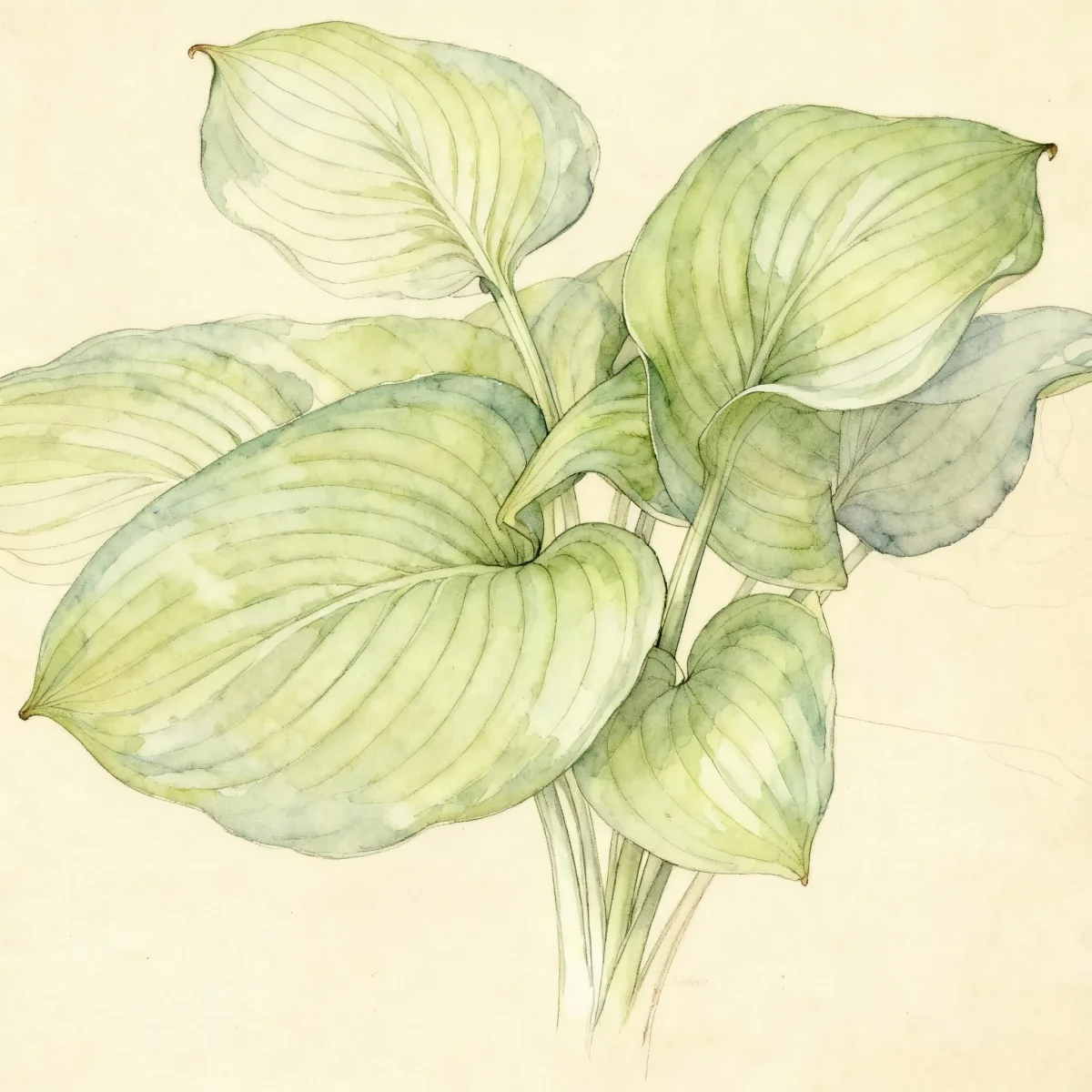
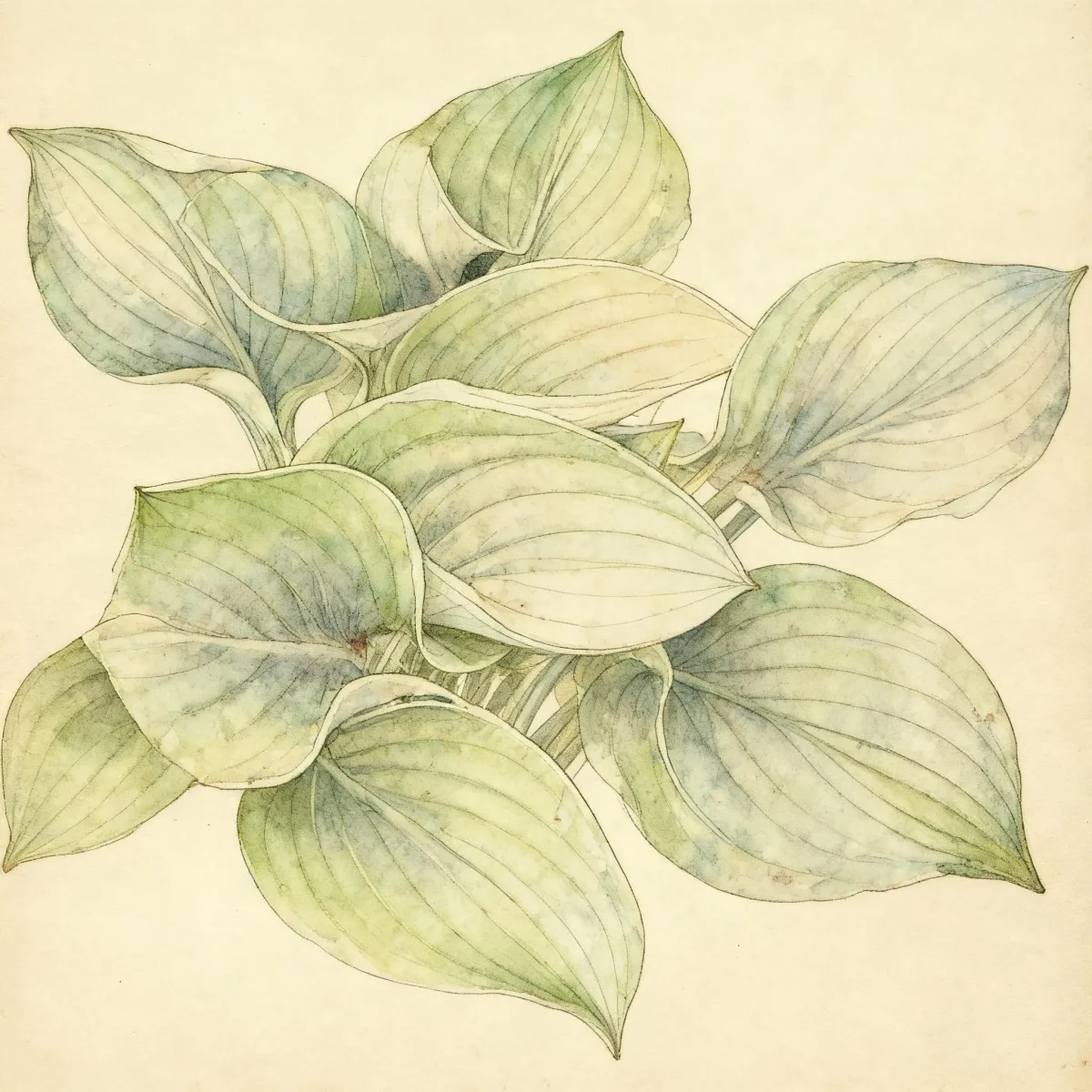
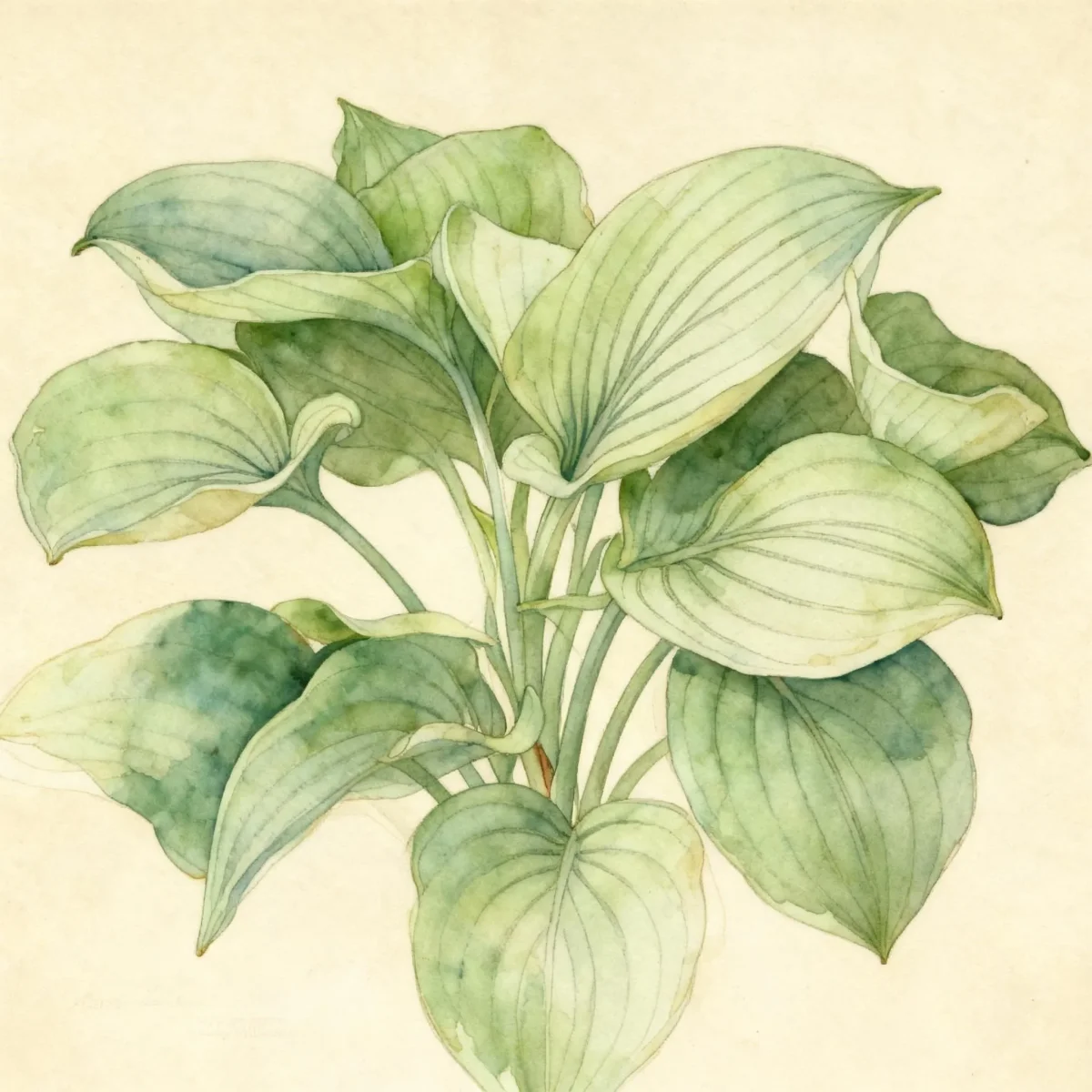
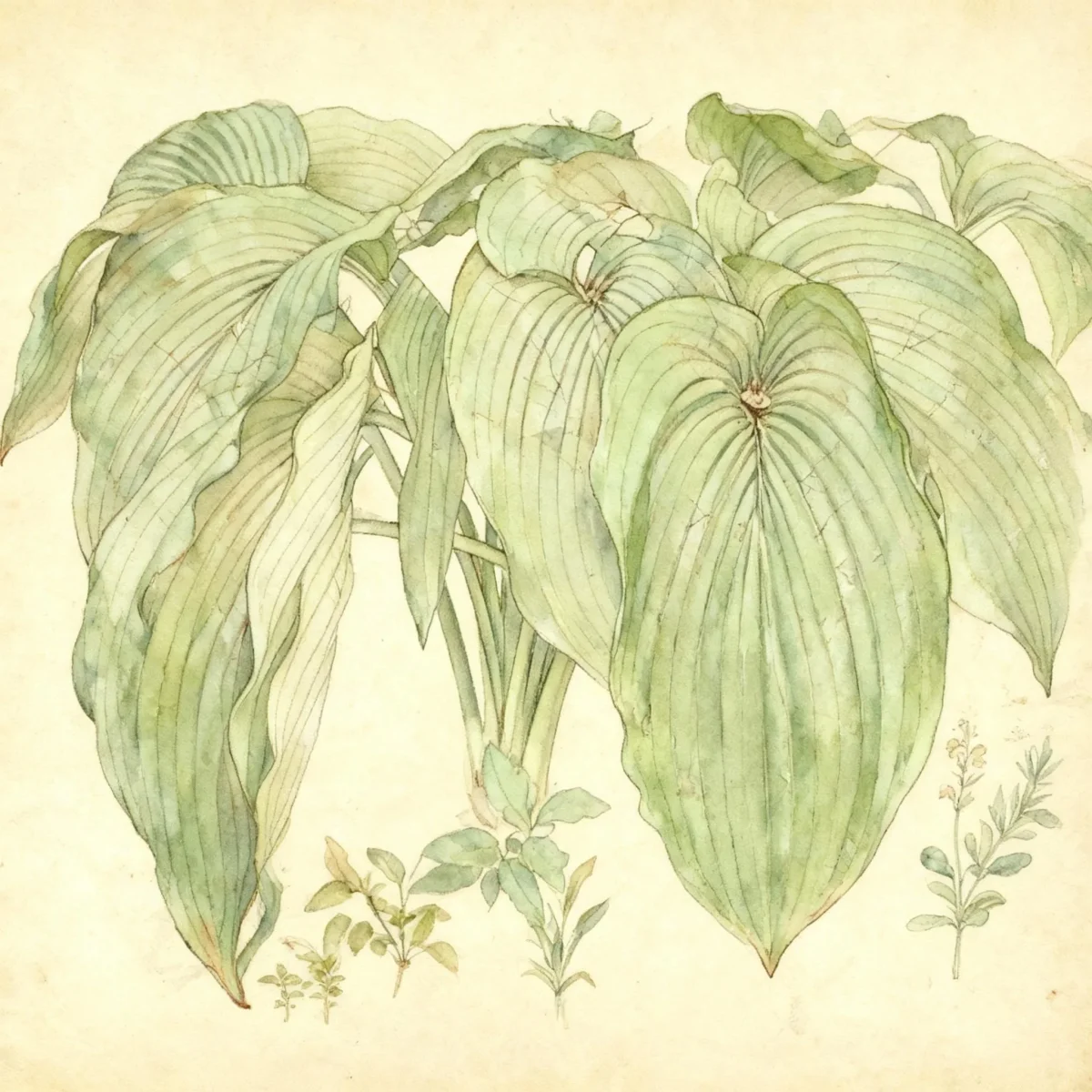
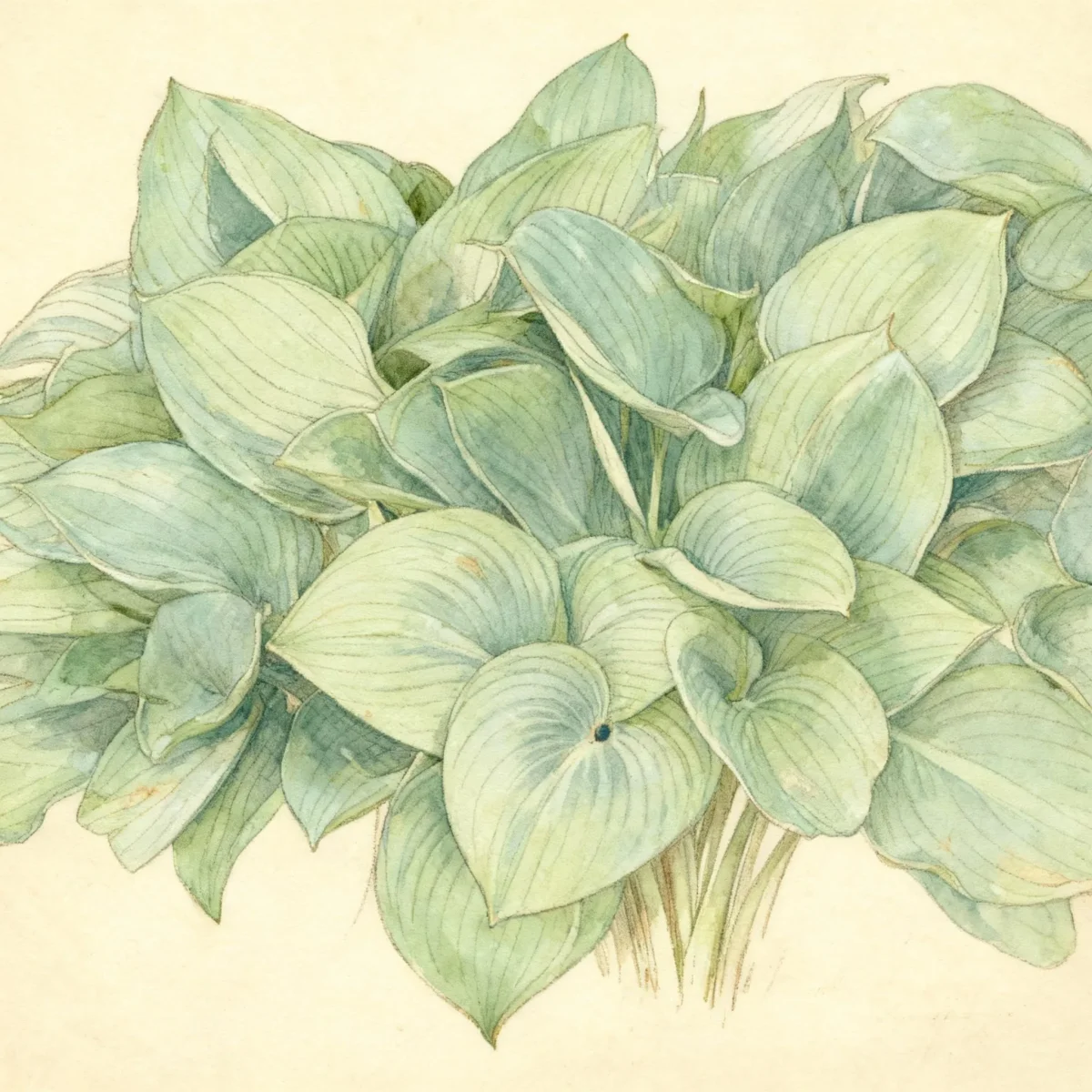
Hosta (Hosta 'Autumn Frost')
Hosta 'Autumn Frost' features frosty blue leaves with yellow margins, perfect for shady gardens. Low maintenance Hosta.
Scroll down to discover growing tips, care requirements, companion plants, and more
Complete Plant Information
Overview
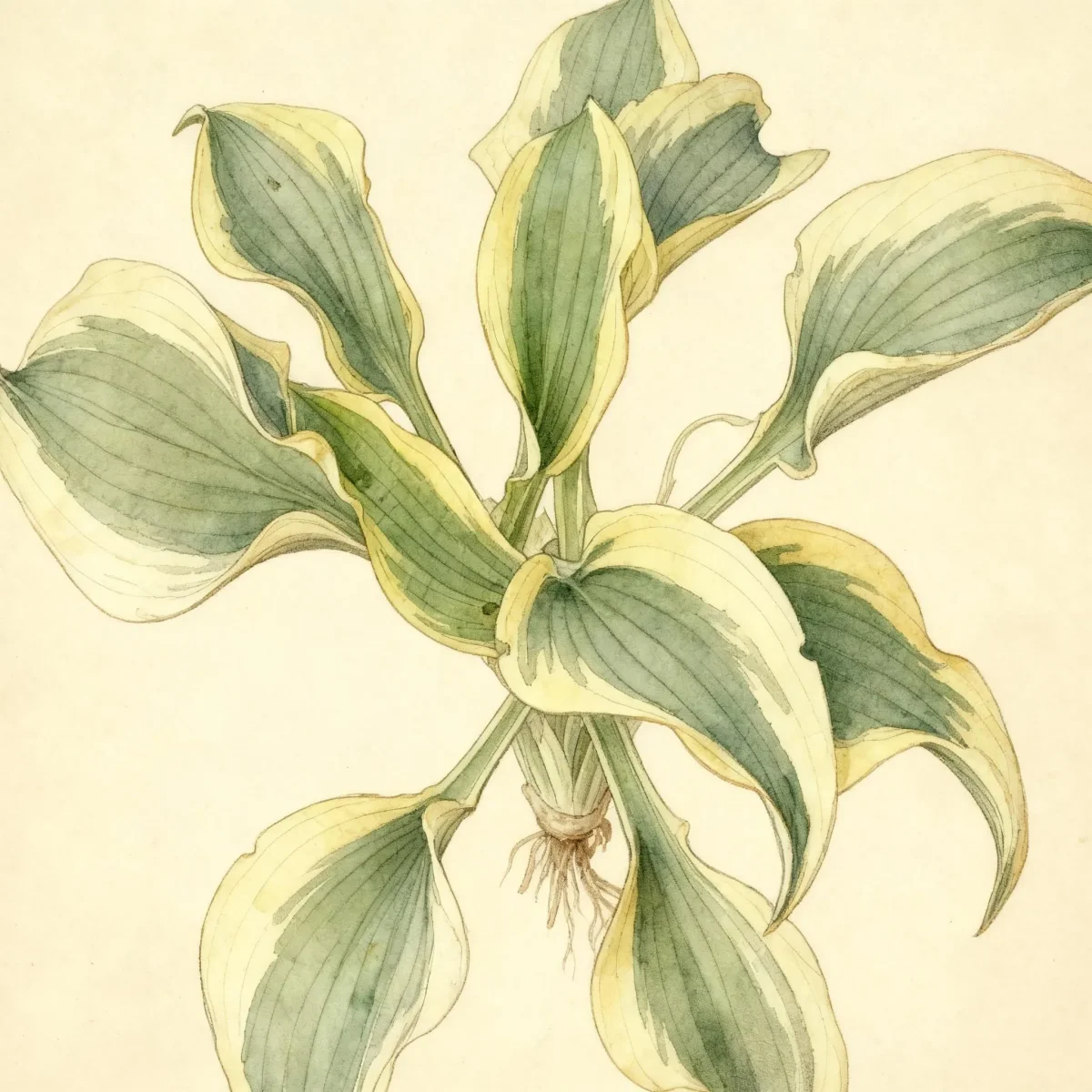
Hosta ‘Autumn Frost’ is a highly desirable herbaceous perennial, prized primarily for its striking ornamental foliage that brightens the deepest shade areas of the garden. This specific cultivar offers oval, pointed leaves exhibiting frosty blue centers beautifully contrasted by wide, bright yellow margins that soften to creamy white as the season advances. As a member of the Hosta genus, this plant forms a dense, rounded mound, making it an excellent structural element in shaded landscapes.
This resilient plant thrives when cultural needs are met, generally requiring consistent moisture and protection from harsh afternoon sun. Hosta ‘Autumn Frost’ provides long-lasting color and texture, thriving where many other flowering plants struggle, thus earning its reputation as a backbone plant for woodland and shade gardens. Its low maintenance nature, combined with its dramatic visual appeal, confirms why Hostas remain one of the most popular shade perennials globally.
Fast Facts
- Plant Family: Asparagaceae
- Plant Type: Herbaceous perennial
- Hardiness Zones: USDA Zones 3-8
- Size at Maturity:
- Height: 1-1.5 ft
- Spread: 1.5-2 ft
- Bloom Time: July to August
- Bloom Description: Pale lavender
- Sun Exposure: Part shade to full shade
- Water Needs: Medium
- Maintenance Level: Low
How to Grow
The Hosta ‘Autumn Frost’ performs best when planted in spring or autumn. Choose a location offering evenly moist, organically rich, and well-drained soil conditions. While versatile, this Hosta achieves its best form and color saturation with consistent moisture, ideally receiving morning sun or dappled light rather than harsh afternoon exposure. Remember, the quality foliage that makes Hosta so valued is best supported by regular watering applied directly beneath the leaves.
Established Hosta plants show some tolerance for dry shade, particularly beneficial if planted near dense tree roots, but never allow the soil to dry out completely, especially during establishment. Hostas are generally considered low-maintenance; however, dividing plants that become overly crowded is recommended, typically done most easily in early spring before the new leaves fully unfurl. Always plant Hosta ‘Autumn Frost’ in areas shielded from strong winds, which can physically tear or damage the attractive leaves.
Landscape Uses
Hostas are the undisputed champions of the shade garden, and Hosta ‘Autumn Frost’ excels in this role due to its highly variegated foliage. Their mounding habit makes them superb for mass planting, creating rivers of color through woodland settings or along deep, shady borders where few other perennials thrive. Use them effectively as a defined edging plant where they contrast well with ferns or groundcovers, or use individual specimens to anchor shade containers throughout the season. Any location requiring dependable, attractive groundcover below large deciduous trees will benefit from this robust Hosta cultivar.
Standout Features
Noteworthy Characteristics
Hosta is a genus offering about 70 species of rhizomatous, clump-forming herbaceous perennials that naturally inhabit Japanese, Korean, and Chinese woodlands. These plants are primarily cultivated for their conspicuously-veined, basal leaves, which form a dense mound of foliage in various colors and textures. Specific to Hosta ‘Autumn Frost,’ it showcases oval leaves with frosty blue centers and wide yellow margins that mature to creamy white, topped by scapes carrying pale lavender flowers in mid-to-late summer.
Tolerances
- Heavy Shade
- Black Walnut
Potential Problems
Slugs and snails represent the most common threat to Hosta foliage, chewing characteristic jagged holes which can rapidly degrade the appearance of Hosta ‘Autumn Frost’. Inspect leaves regularly, especially in damp conditions, and employ preventative measures such as baiting or physical barriers to manage these pests. Be vigilant for foliar nematodes, which cause browning between the leaf veins, and immediately remove and destroy any plants showing signs of viral infection, such as Hosta Virus X (HVX). Additionally, deer and rabbits often find the succulent leaves highly palatable and may consume them voraciously.
Frequently Asked Questions
What hardiness zones is Hosta ‘Autumn Frost’ suitable for?
Hosta ‘Autumn Frost’ is reliably hardy in USDA Zones 3 through 8.
How large does Hosta ‘Autumn Frost’ grow?
This variety typically forms a mound reaching 1 to 1.5 feet tall and spreads between 1.5 to 2 feet wide.
When does Hosta ‘Autumn Frost’ bloom?
The pale lavender flowers of Hosta ‘Autumn Frost’ appear relatively late, blooming from July into August.
What sun exposure does Hosta need?
This Hosta prefers part shade to full shade conditions and should be protected from intense, direct midday or afternoon sun exposure.
Conclusion
Hosta ‘Autumn Frost’ is an indispensable choice for adding permanent structure and brilliant contrast to low-light gardens, thanks to its frosty blue and cream-edged foliage. This low-maintenance Hosta variety provides textural beauty from spring until frost, proving its value year after year. Before planting, ensure your intended location offers the medium water and part-shade conditions this beautiful Hosta requires for optimal performance.
Companion Planting
When designing shade borders, select companions that thrive under similar conditions while offering different textures or bloom times. Shade-loving grasses, such as Japanese Forest Grass (Hakonechloa macra), provide fine movement that contrasts beautifully with the bold substance of Hosta ‘Autumn Frost’ leaves. Similarly, pairing this Hosta with spring-blooming bulbs like Snowdrops or Daffodils allows you to enjoy continuous color throughout the season, as the Hosta foliage emerges to quickly fill in thinning spring displays.
Propagation Tips
While purchasing new divisions is easiest, established clumps of Hosta ‘Autumn Frost’ can be easily propagated via division, a process vital for rejuvenation or expansion. The best time to divide is early spring when the plant is just beginning to break dormancy and the eyes are small knobs emerging from the soil; this minimizes transplant shock. Carefully use a sharp spade or knife to cut through the fibrous root clump, ensuring each resulting section has a healthy crown with attached roots. Replant immediately at the same depth in prepared, moist soil to encourage rapid establishment.