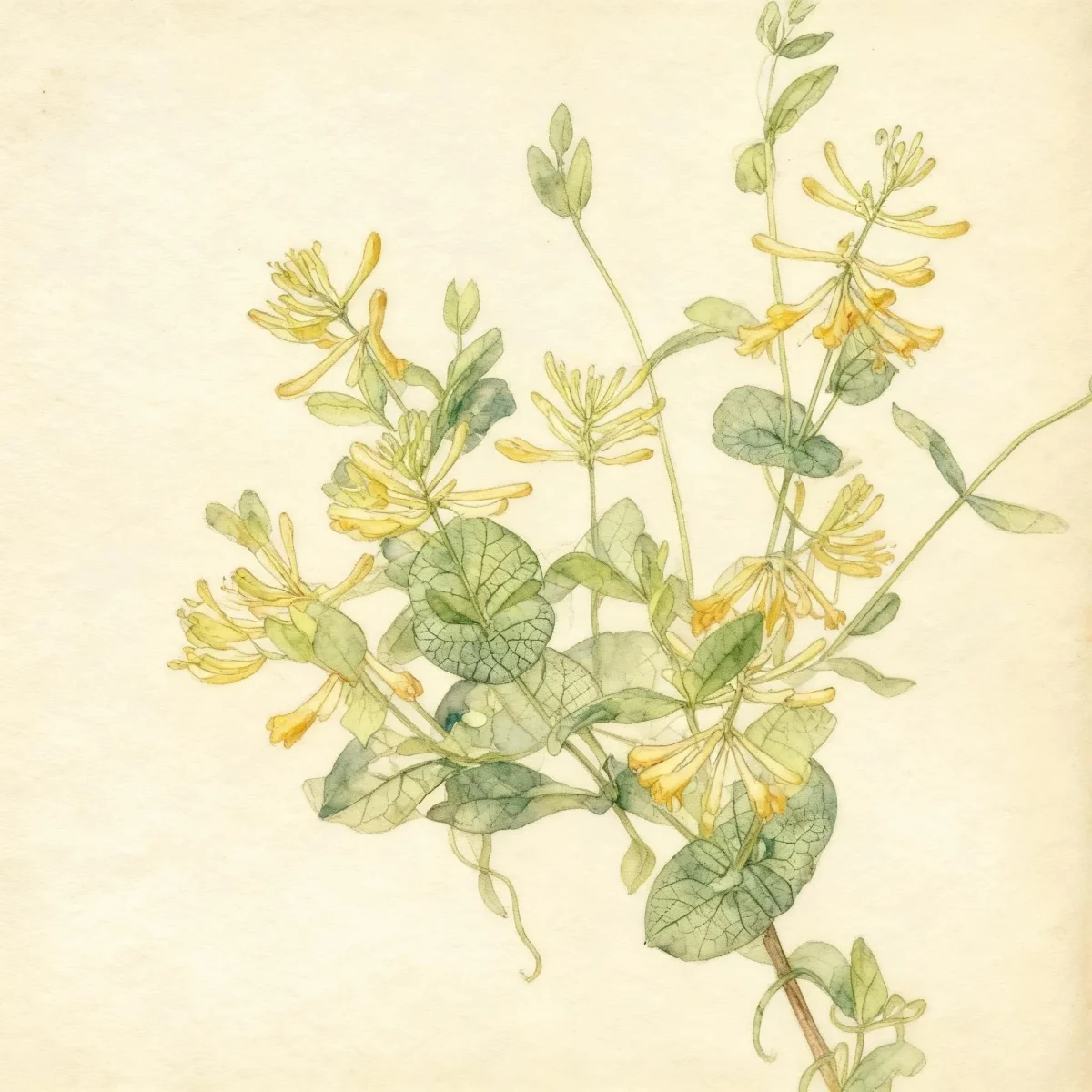
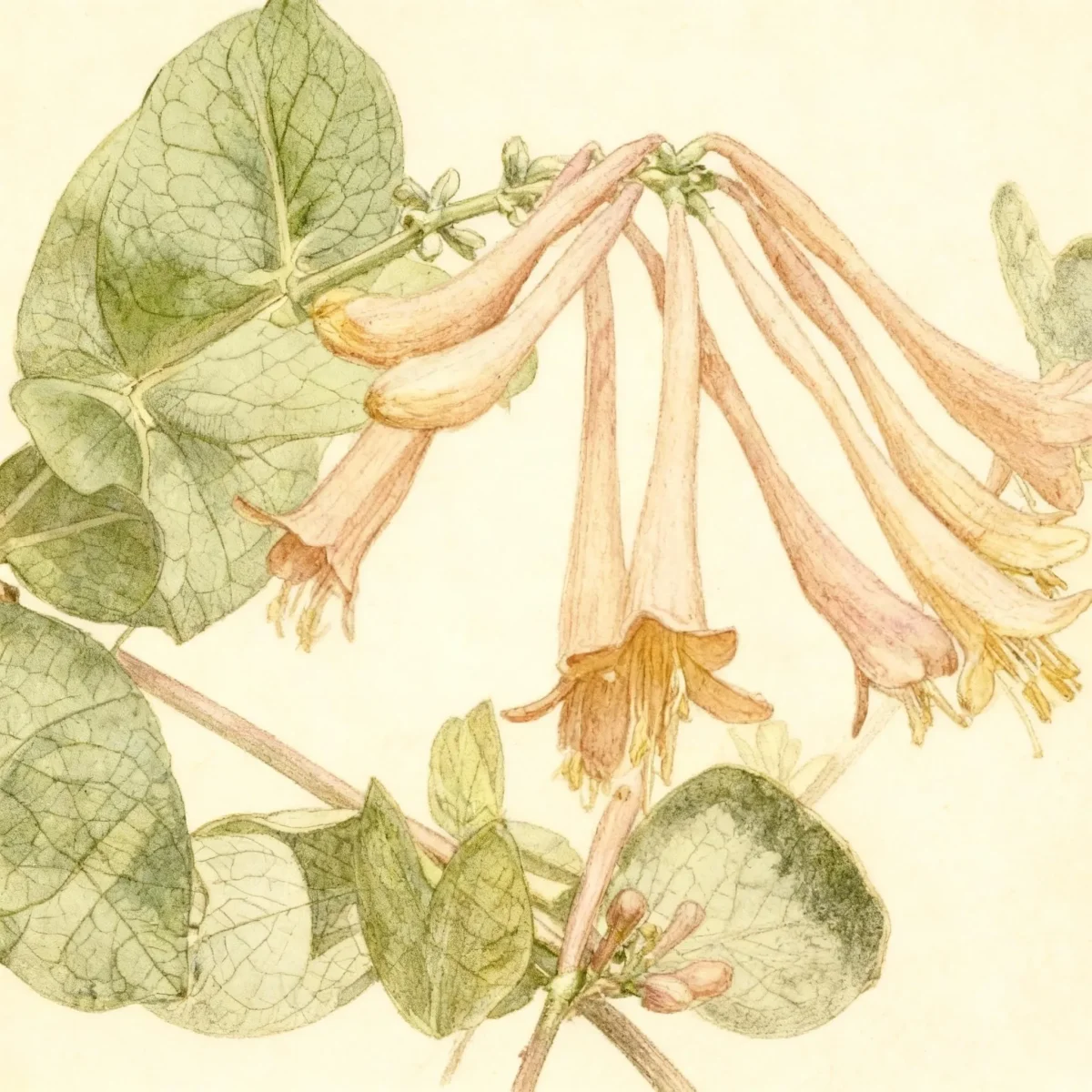
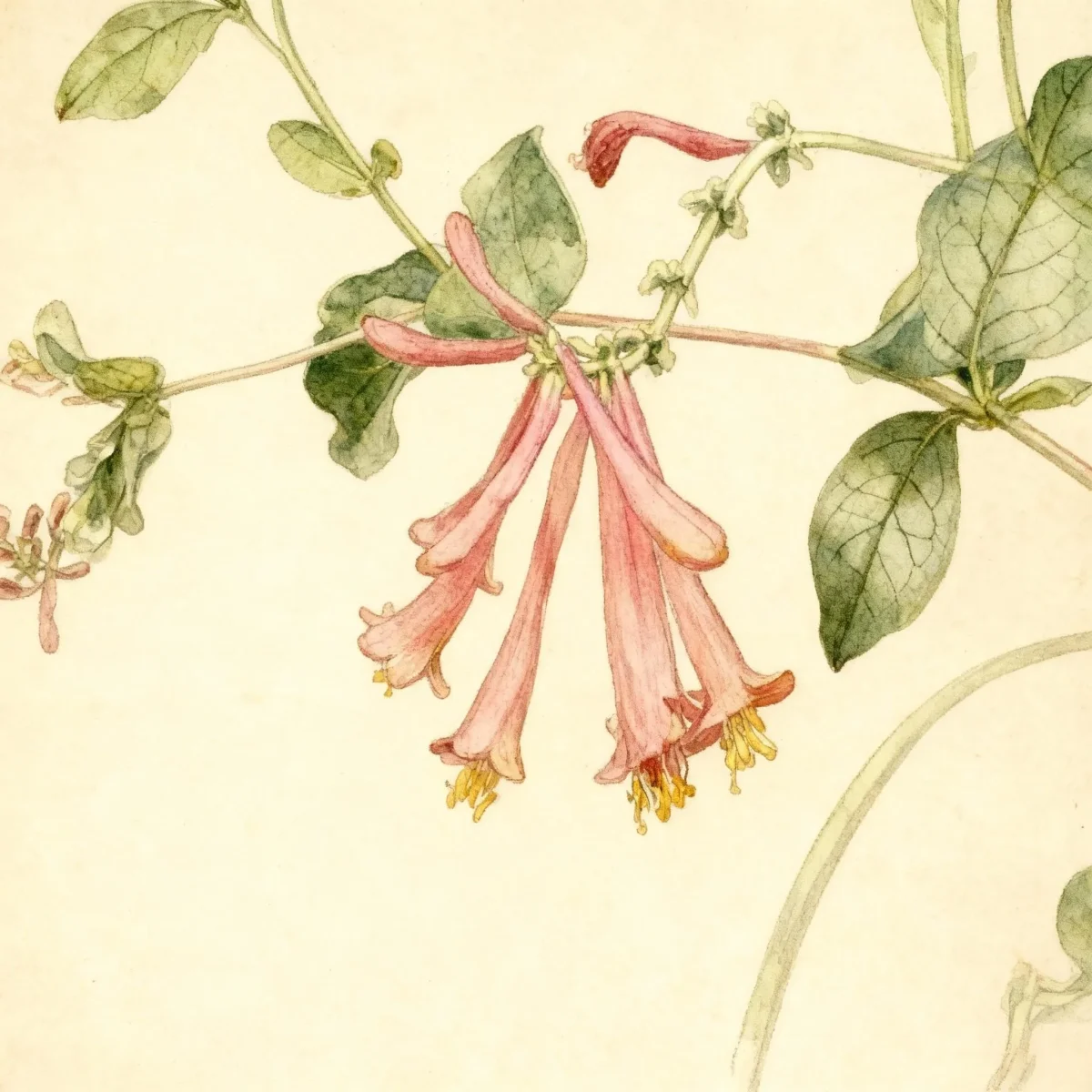
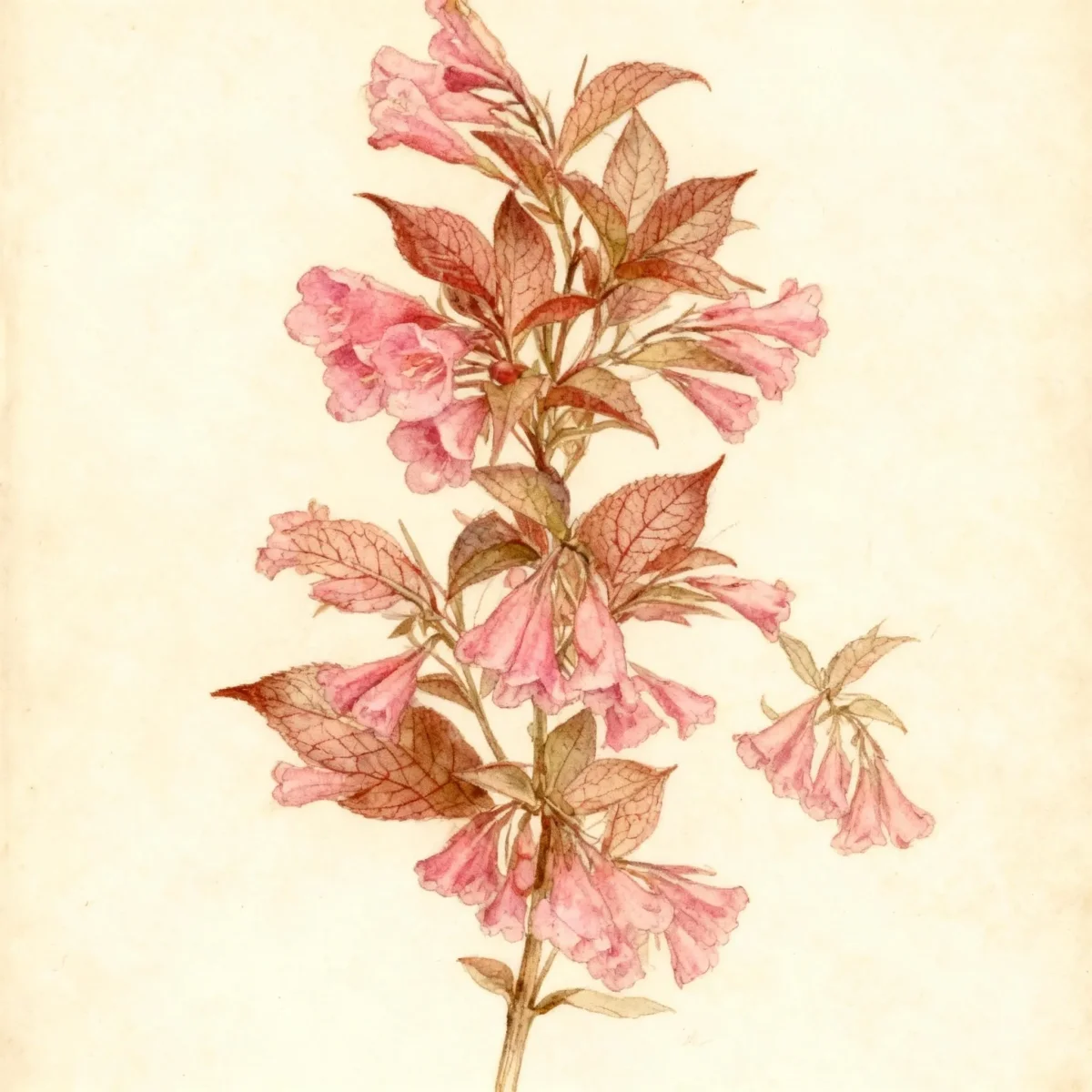
Trumpet honeysuckle (Lonicera sempervirens 'Cedar Lane')
Vigorous Lonicera sempervirens 'Cedar Lane' offers showy, tube-shaped blooms highly attractive to hummingbirds. A low-maintenance vine for trellises.
Scroll down to discover growing tips, care requirements, companion plants, and more
Complete Plant Information
Overview
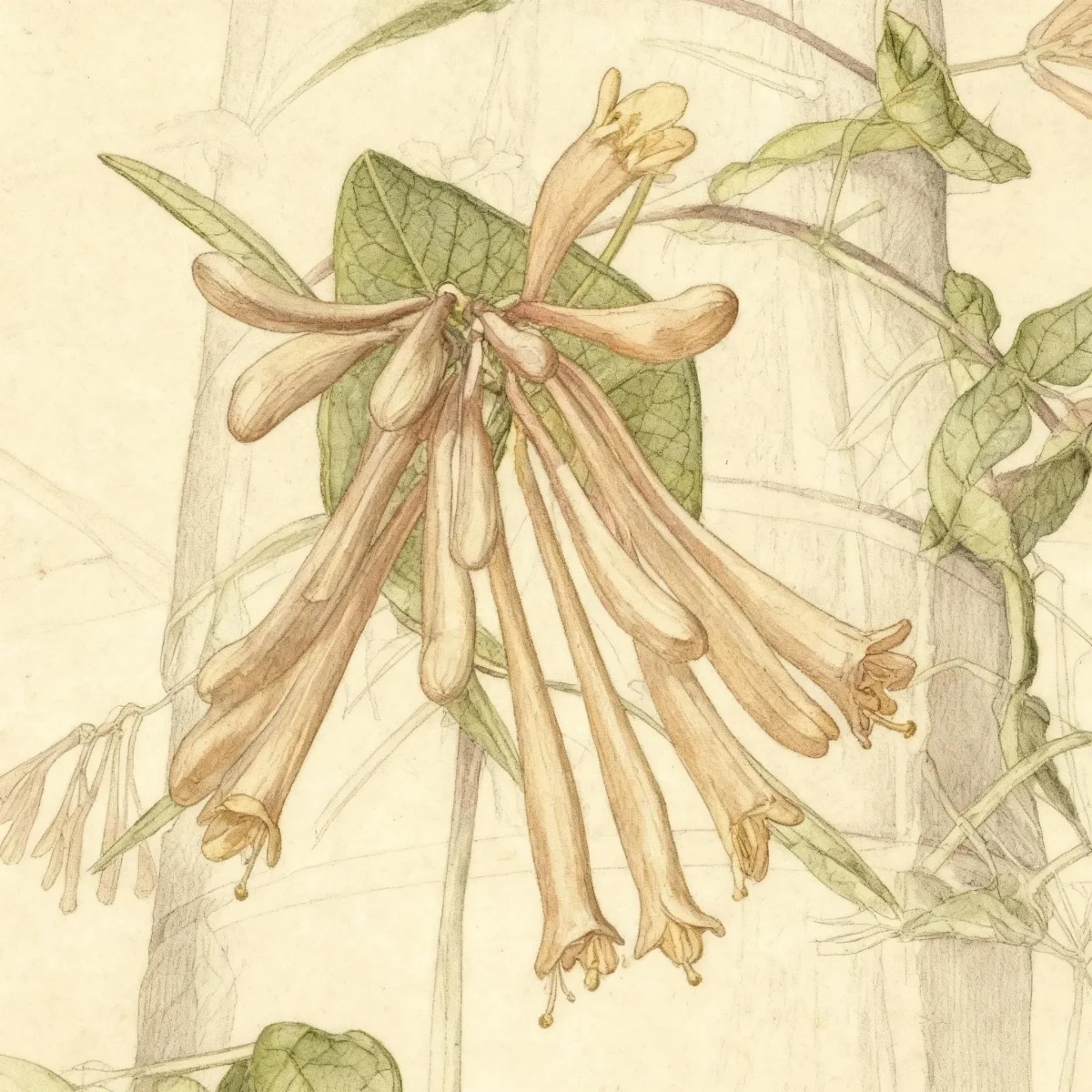
Lonicera sempervirens ‘Cedar Lane’, commonly known as Trumpet honeysuckle, is celebrated for its vigorous climbing habit and brilliant summer color. This deciduous twining vine offers striking, narrow, trumpet-shaped flowers, distinguishing it from many more aggressively invasive honeysuckle species. It provides essential nectar for hummingbirds and adds vertical interest to any garden structure.
This cultivar is valued for its reliable performance and low maintenance needs, thriving across a wide range of the Eastern U.S. The blooms of Lonicera sempervirens ‘Cedar Lane’ are a vibrant vermillion red kissed with a yellow throat, appearing from late spring well into the summer season. Its growth pattern requires support unless you intentionally allow it to function as an excellent sprawling ground cover.
As one of the showiest vining honeysuckles available, planting Lonicera sempervirens ‘Cedar Lane’ ensures fantastic wildlife attraction and excellent structural coverage for arbors and fences. While it prefers consistent moisture, it is adaptable to average soils but demands full sun for the best floral display.
Fast Facts
- Plant Family: Caprifoliaceae
- Plant Type: Vine
- Hardiness Zones: USDA Zones 4-9
- Size at Maturity:
- Height: 10-20 ft
- Spread: 3-6 ft
- Bloom Time: May to June
- Bloom Description: Vermillion red with yellow throat
- Sun Exposure: Full sun
- Water Needs: Medium
- Maintenance Level: Low
How to Grow
Planting should ideally occur in spring or fall in an average, well-drained soil location. While Lonicera sempervirens ‘Cedar Lane’ tolerates some shade, consistently achieving the best flowering results requires placement in full sun. This vine thrives best in humusy, organically rich soils that retain moisture but drain effectively. As a twining vine, ensure you provide sturdy support, such as a trellis, arbor, or fence, for structure upon which it can climb.
Establish a medium watering schedule, ensuring the soil remains consistently moist but never waterlogged, particularly during establishment or dry spells. Fertilization is rarely necessary given its adaptability. The primary pruning task involves trimming immediately after the main bloom period concludes in late spring or early summer to shape the vine and encourage denser growth.
In colder climates (below Zone 8), the vine may appear deciduous, though in warmer winters it retains some foliage, acting semi-evergreen. If leaf spots or powdery mildew occur, often due to high summer humidity, ensure good air circulation around the foliage to mitigate fungal issues.
Landscape Uses
Trumpet honeysuckle is exceptionally versatile in landscape design due to its vigorous, yet manageable, climbing ability. It excels as an excellent vine designed specifically for covering arbors, creating fragrant tunnels, or softening the look of tall fences and privacy screens. The deep red flowers provide striking vertical contrast against green foliage.
Alternatively, when placed on a slope or bank without vertical support, Lonicera sempervirens ‘Cedar Lane’ functions effectively as an unsupported, sprawling ground cover, suppressing weeds while showcasing its flowers at ground level. Because it is highly attractive to hummingbirds, plant selections near patio seating areas will maximize wildlife viewing opportunities.
Consider pairing this vine with plants that appreciate similar site conditions but offer contrasting textures or bloom times, such as late-blooming clematis or evergreen foundation plantings that provide a backdrop for the summer color of the honeysuckle.
Standout Features
Flower Qualities
- Showy
Fruit Qualities
- Showy
Noteworthy Characteristics
Lonicera sempervirens, commonly called trumpet honeysuckle, is a vigorous, deciduous, twining vine which typically grows 10-15’ (less frequently to 20’) and is one of the showiest of the vining honeysuckles. The distinctive ‘Cedar Lane’ cultivar is specifically noted for its long, narrow, tubular, trumpet-shaped, vermillion red flowers with yellow throats. Flowers appear in terminal whorls primarily from May to June, offering repeated interest throughout the summer months.
Tolerances
- Deer
- Clay Soil
- Black Walnut
Potential Problems
This vine generally avoids serious insect pest or disease issues, which is a major advantage over some other honeysuckle varieties. However, in hot and humid summers, gardeners should remain vigilant for powdery mildew or minor leaf spots. Control fungal outbreaks by ensuring adequate air movement around the plant and watering at the base rather than overhead. Periodically inspect stems for common pests like aphids or leaf miners, treating localized infestations with insecticidal soap as needed.
Frequently Asked Questions
What hardiness zones is Trumpet honeysuckle suitable for?
Lonicera sempervirens ‘Cedar Lane’ is reliably hardy in USDA Zones 4 through 9, offering broad usability across much of the eastern United States.
How large does Trumpet honeysuckle grow?
This vigorous vine typically reaches heights between 10 to 20 feet, with a spread that usually ranges from 3 to 6 feet wide across its support structure.
What sun exposure does Lonicera sempervirens ‘Cedar Lane’ need?
For the most prolific bloom display, Lonicera sempervirens ‘Cedar Lane’ requires full sun, though it can tolerate partial shade, which may result in fewer flowers.
When does Lonicera sempervirens ‘Cedar Lane’ bloom?
The primary bloom time for this beautiful vine is May to June, featuring prominent vermillion red flowers highlighted by a yellow throat.
Conclusion
Lonicera sempervirens ‘Cedar Lane’ stands out as a dependable, low-maintenance choice for adding vertical color and attracting vital pollinators like hummingbirds. Its tolerance for clay soil and resistance to serious pests makes the Trumpet honeysuckle a resilient asset in many garden settings. Before planting, verify that your landscape site offers full sun exposure to ensure year after year of brilliant red blooms.
Wildlife Benefits (Hummingbird Magnet)
The unique floral structure of the Trumpet honeysuckle is perfectly adapted for attracting hummingbirds, which rely on the nectar from the tube-shaped flowers. These vibrant red and yellow blossoms act as visual beacons, drawing these fast-moving birds right into your garden space. Planting Lonicera sempervirens ‘Cedar Lane’ near a window or seating area maximizes your opportunity to observe this spectacular wildlife interaction throughout the growing season.
Pruning and Shaping Tips
While Lonicera sempervirens ‘Cedar Lane’ generally requires light maintenance, timely pruning is crucial for managing size and habit. Since it blooms on old wood from the previous season, it is best to avoid heavy pruning in early spring. Perform maintenance cuts immediately after the main May/June flowering period ends to shape the vine without removing next year’s flower buds. If the plant becomes too sprawling or woody, rejuvenating cuts can be made in late winter when it is dormant.