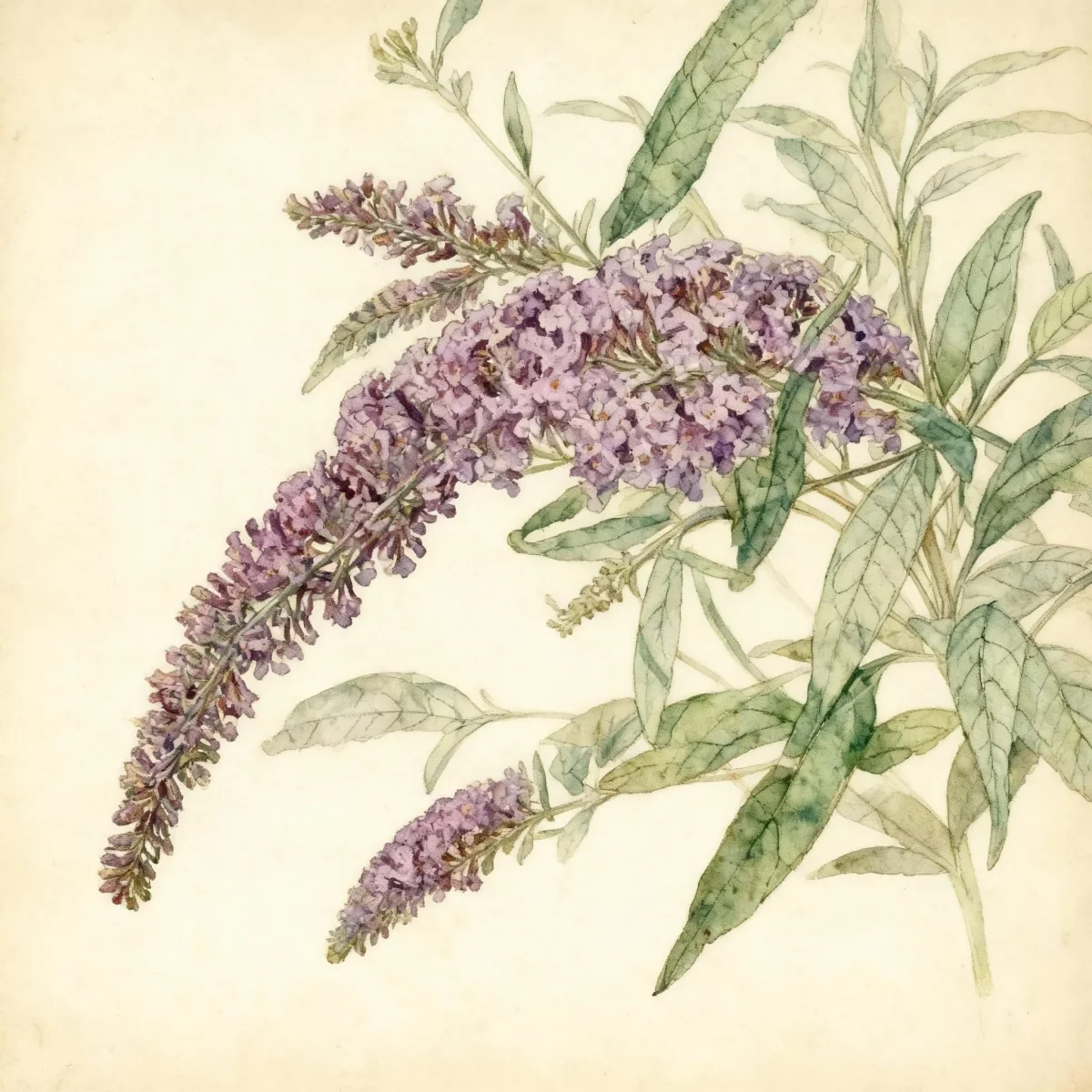
Butterfly bush (Buddleja davidii 'Evil Ways')
Buddleja davidii 'Evil Ways' Butterfly bush offers dark purple blooms and striking yellow foliage. Low maintenance, high impact.
Scroll down to discover growing tips, care requirements, companion plants, and more

Complete Plant Information
Overview
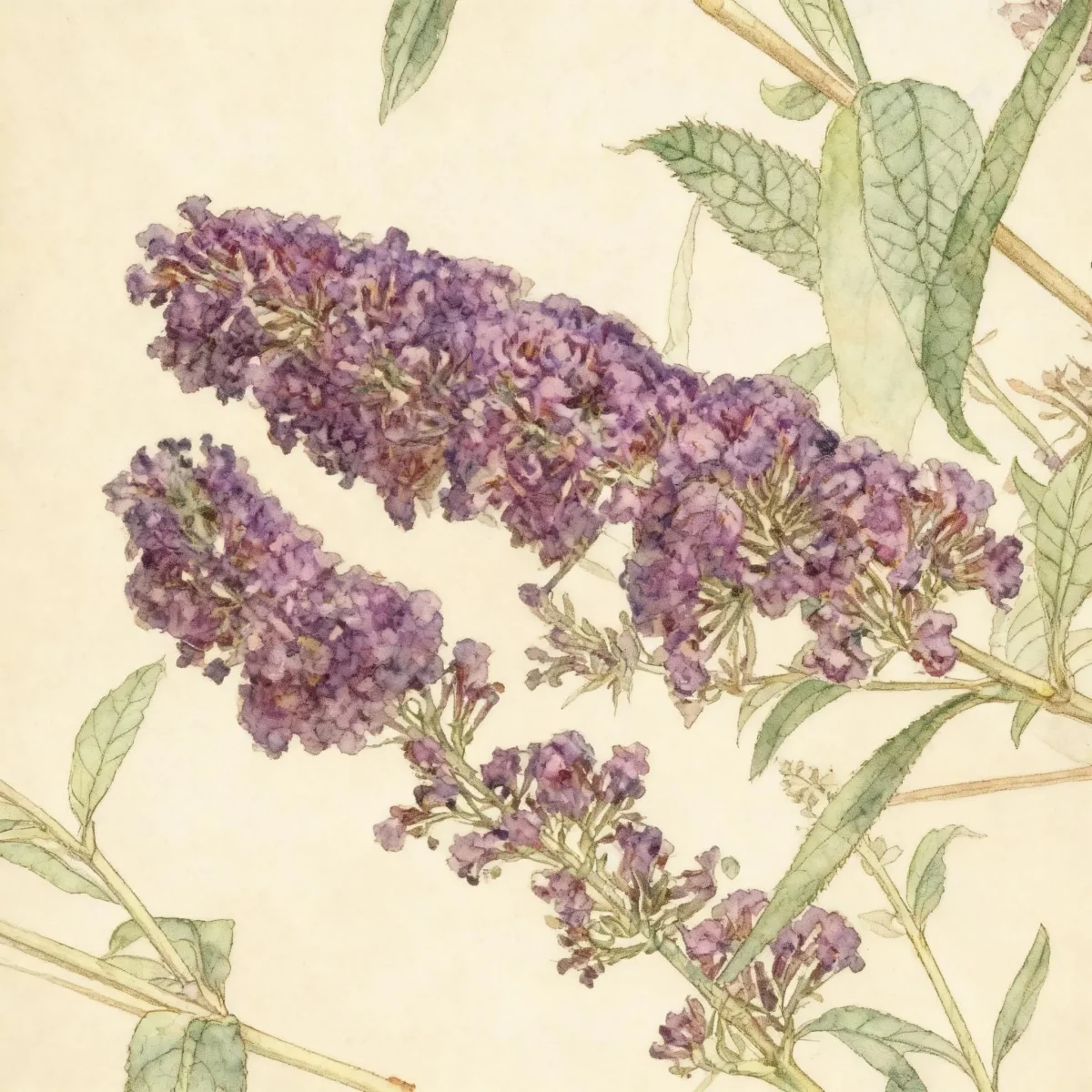
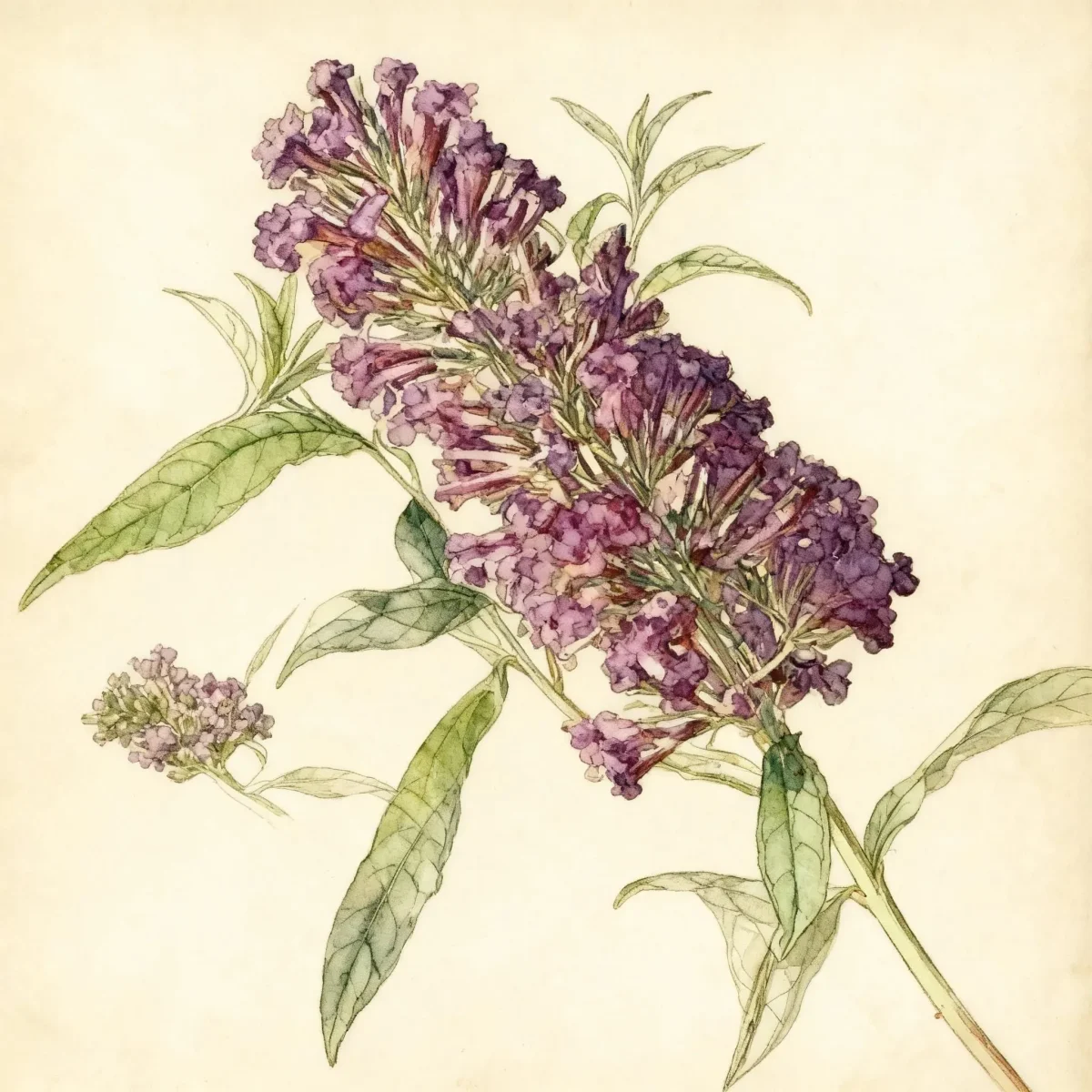
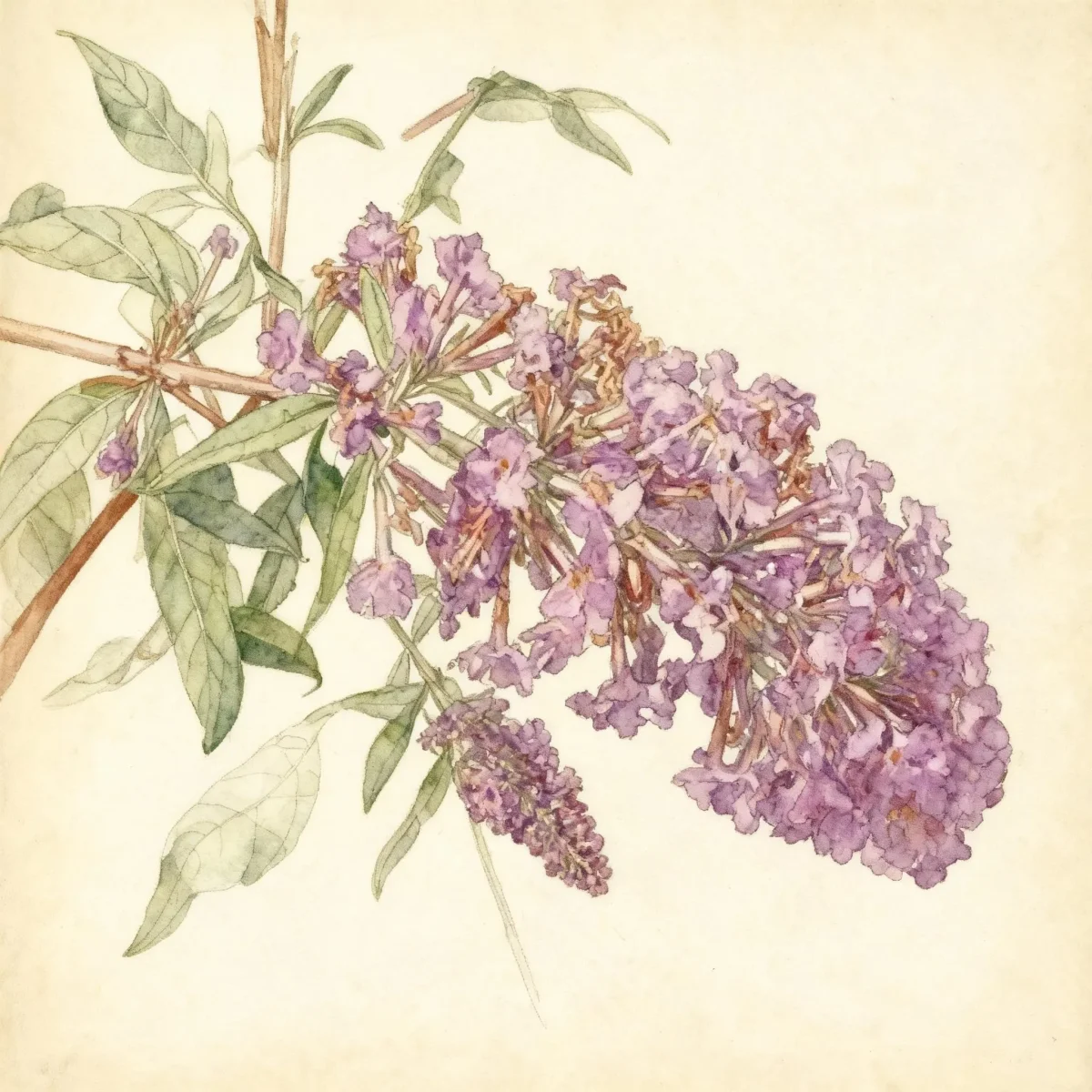
Buddleja davidii ‘Evil Ways’ is a captivating cultivar of the popular Butterfly bush, valued for its vibrant combination of foliage and flower color. This deciduous shrub draws attention with its willowy, elliptic, bright yellow leaves that strongly contrast its dark purple flower clusters. The Buddleja davidii ‘Evil Ways’ provides exceptional late-season interest, blooming profusely from early summer until frost.
As a vigorous grower, this variety of Butterfly bush performs best when situated where it receives consistent, ample sunlight. While adaptable, gardeners should note that diminished flowering can occur if the plant is placed in too much shade. Its low maintenance needs, combined with its significant appeal to pollinators, make the Buddleja davidii ‘Evil Ways’ a worthwhile addition to many garden styles.
This specific cultivar typically reaches 4 to 5 feet tall, offering a manageable size for borders and cottage gardens, while its flowers are notoriously attractive to butterflies and hummingbirds. Proper site selection and occasional pruning ensure this plant remains a showy and productive fixture in the landscape throughout the primary growing season.
Fast Facts
- Plant Family: Scrophulariaceae
- Plant Type: Deciduous shrub
- Hardiness Zones: USDA Zones 5-9
- Size at Maturity:
- Height: 4-5 ft
- Spread: 3-4 ft
- Bloom Time: June to September
- Bloom Description: Dark purple
- Sun Exposure: Full sun
- Water Needs: Medium
- Maintenance Level: Low
How to Grow
Planting Buddleja davidii ‘Evil Ways’ should occur in spring or fall in well-drained areas. This Butterfly bush thrives in average, medium moisture soils, provided they drain effectively. It will adapt remarkably well to clay soil if the site is adequately amended prior to planting to ensure drainage remains optimal. Full sun exposure is crucial; without it, the plant will look sparse and flowering performance will suffer significantly.
Routine care focuses on placement and pruning. Water moderately, allowing the top layer of soil to dry slightly between thorough soakings. Fertilization is usually unnecessary if the soil quality is reasonable. Heavy pruning back close to the ground, typically performed in late winter, keeps the Buddleja davidii ‘Evil Ways’ vigorous, shapely, and ensures the best flower display.
In colder regions (USDA Zones 5 and 6), expect the plant to die back to the ground in winter; treat it as an herbaceous perennial in these zones and prune hard in spring. For continuous bloom, promptly deadhead spent flower spikes throughout the summer. Be proactive about removing faded flowers before they set seed to prevent unwanted self-seeding, as this Butterfly bush can naturalize aggressively where it does not experience hard freezes.
Landscape Uses
The contrasting yellow foliage and deep purple blooms make Buddleja davidii ‘Evil Ways’ an excellent accent plant, providing strong focal points in the landscape. While it is generally not recommended as a singular specimen shrub due to its growth habit, it excels when incorporated into mixed plantings within borders or cottage gardens. It brings vital mid-to-late season color when many other flowering shrubs begin to fade.
Consider using this variety in pollinator gardens, where its fragrant nature and high butterfly attraction will be fully appreciated. It also works well when planted among structural evergreens or against dark-leaved foliage to amplify the yellow hue of its leaves. Because the blooms are long-lasting, it is popular for use as a fresh cut flower, bringing the late summer garden indoors.
Standout Features
Flower Qualities
- Showy
- Fragrant
Noteworthy Characteristics
The species, Buddleja davidii, originates from China and is famous for its vigorous growth and arching stems covered in showy, fragrant flowers highly attractive to butterflies. The specific cultivar ‘Evil Ways’ features distinctive, bright yellow, serrated foliage, growing typically to 4-5 feet tall, contrasting beautifully with its dark purple flower spikes that stretch up to 10 inches long during the summer months.
Tolerances
- Rabbit
- Clay Soil
Potential Problems
This Butterfly bush cultivar rarely succumbs to serious insect or disease pressure, making it a relatively resilient choice. Gardeners should monitor closely for spider mites, especially during hot, dry periods, which may necessitate rinsing foliage with a strong stream of water or applying horticultural oil. In warmer southern regions, nematodes can sometimes pose an issue to the root system, requiring good soil management to mitigate risk.
Frequently Asked Questions
What hardiness zones is Butterfly bush suitable for?
Buddleja davidii ‘Evil Ways’ is reliably hardy in USDA Zones 5 through 9.
How large does Butterfly bush grow?
This specific shrub generally matures to a height between 4 and 5 feet with a spread ranging from 3 to 4 feet.
What sun exposure does Butterfly bush need?
For optimal performance, Buddleja davidii ‘Evil Ways’ requires full sun exposure; performance suffers dramatically in partial shade.
When does Butterfly bush bloom?
This plant offers a long blooming period, typically running from June through September, displaying dark purple flower clusters.
Conclusion
The Buddleja davidii ‘Evil Ways’ stands out due to its unique, bright yellow foliage, providing excellent contrast alongside its reliable, dark purple, fragrant blooms. Its low maintenance requirement and strong attraction to wildlife make this Butterfly bush a staple for late-summer garden interest. Ensure you select a full-sun location and commit to annual hard pruning to maximize the display of this exceptional shrub.
Companion Planting
When selecting companions for Buddleja davidii ‘Evil Ways’, focus on plants that enjoy full sun and appreciate well-drained soil, mirroring the culture needed for the Butterfly bush. Consider pairing it with deep green or deep burgundy foliage plants to accentuate the yellow leaves. Good companions include late-blooming Russian Sage (Perovskia atriplicifolia) or Coneflowers (Echinacea) which share similar drought tolerance once established.
For cottage garden settings, silvery-leaved perennials like Lamb’s Ears (Stachys byzantina) provide textural contrast without competing heavily for nutrients. Since the Buddleja davidii ‘Evil Ways’ can become leggy if not pruned, placing shorter, mounding plants in front of it helps ground the display throughout the season, ensuring continuous visual appeal.
Wildlife Benefits
As its common name implies, the Butterfly bush is a magnet for Lepidoptera. The dark purple flowers are a rich nectar source ensuring regular visits from various butterfly species throughout the summer. Beyond butterflies, the flowers are also quite attractive to beneficial bees and hummingbirds, supporting local biodiversity during peak summer activity.
Planting a substantial grouping of Buddleja davidii ‘Evil Ways’ creates a reliable nectar corridor in the garden. To ensure year-round garden health, always maintain plant diversity, as while the flowers provide nectar, they offer limited larval support compared to native plants. Nevertheless, for sheer visual impact related to pollinators, this shrub delivers high value.