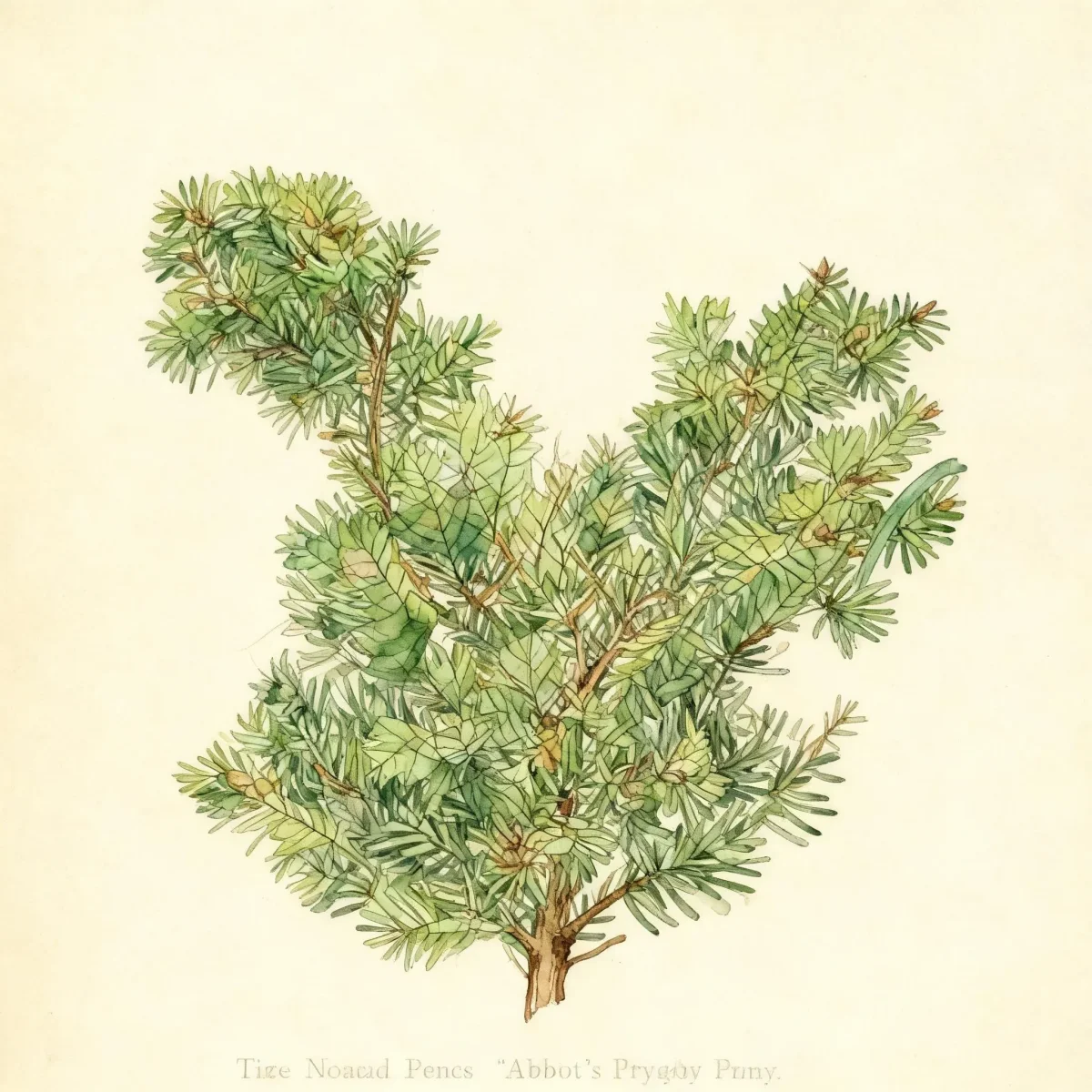
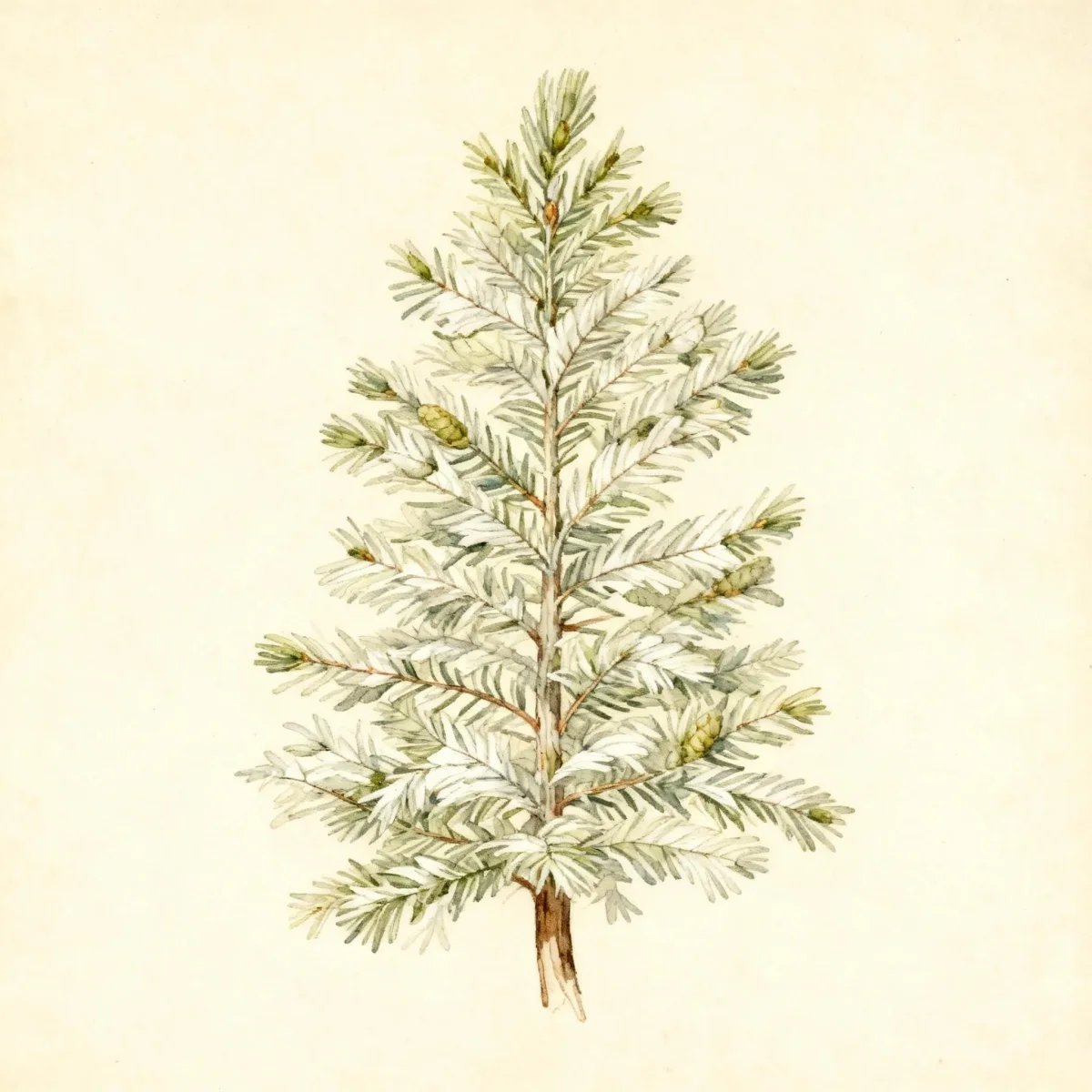
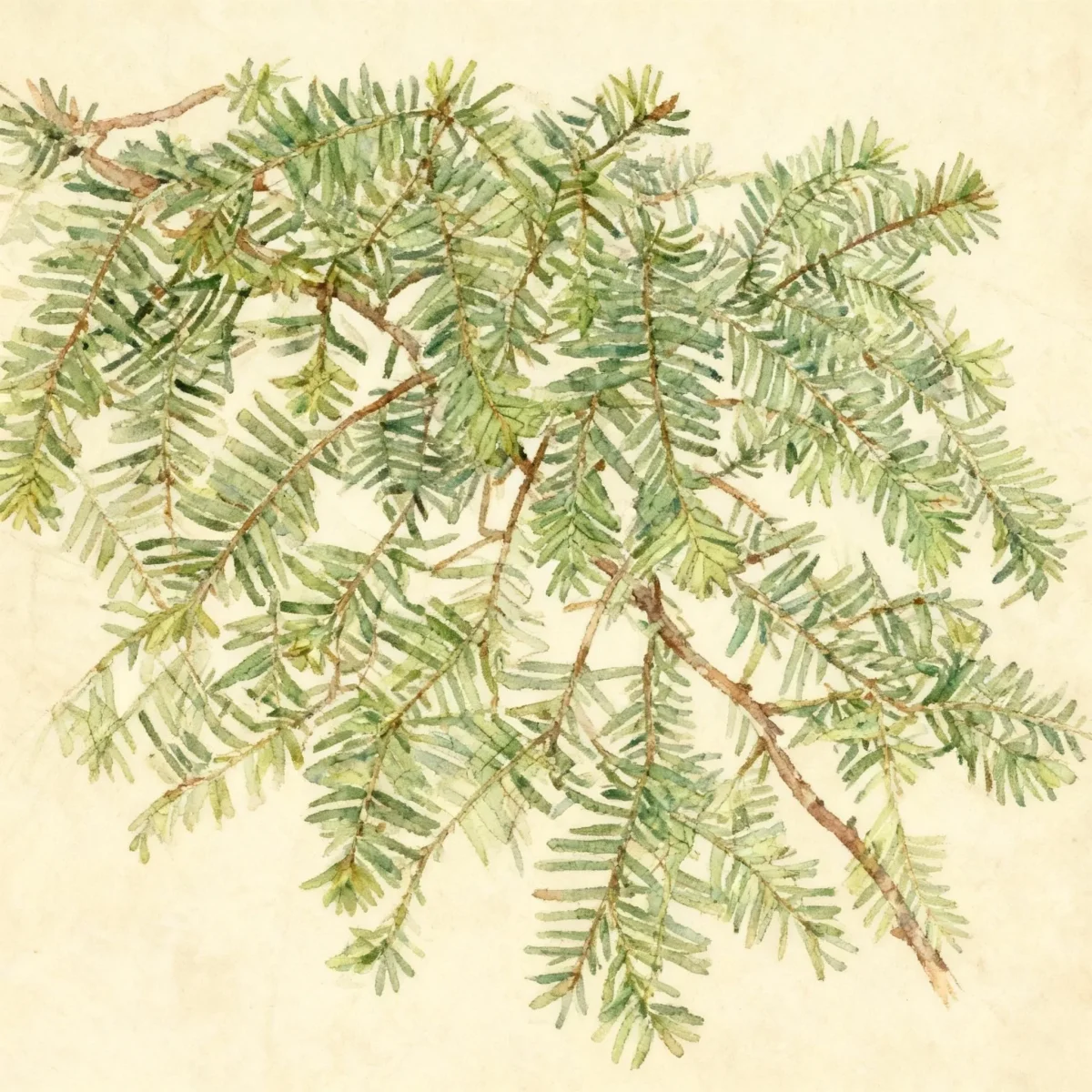
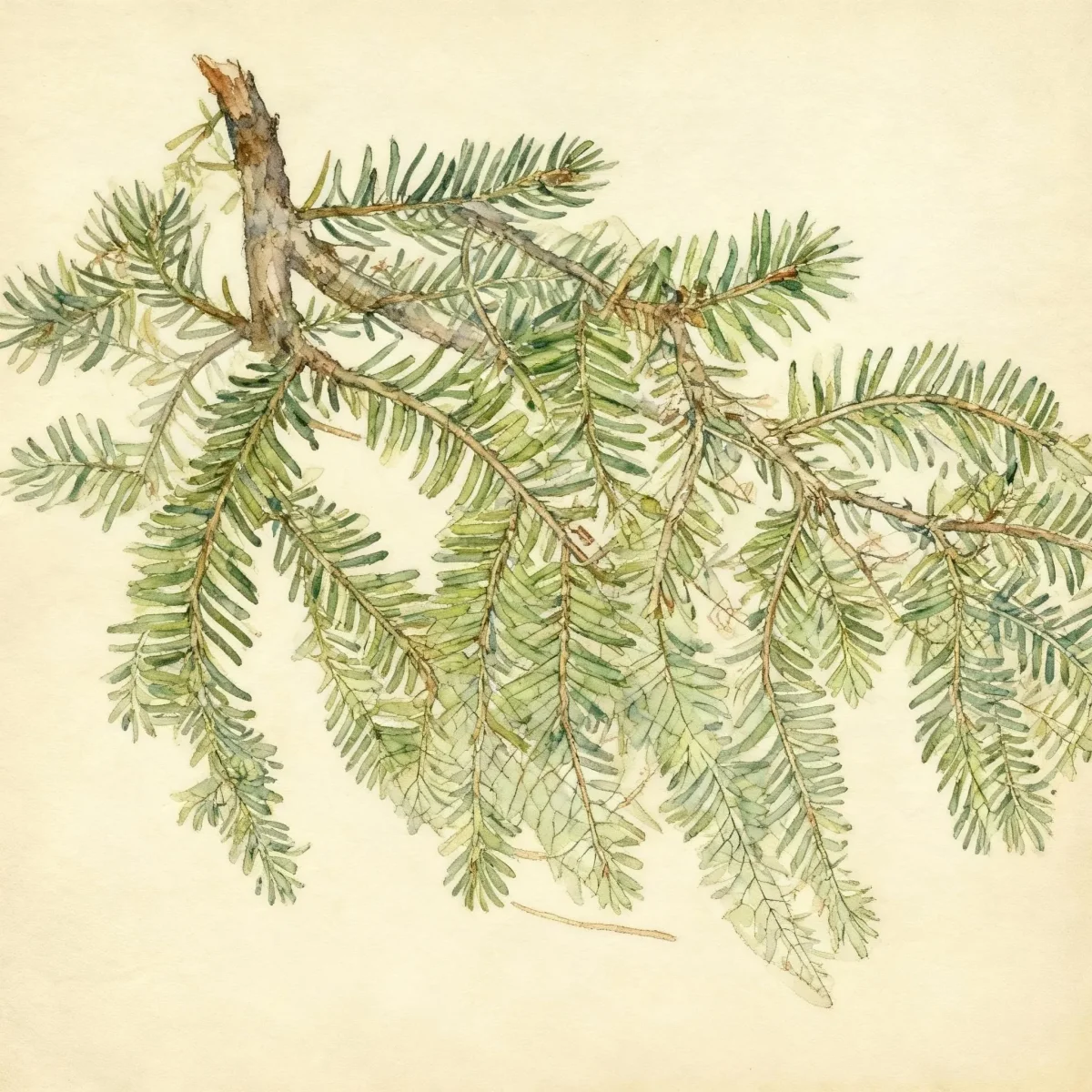
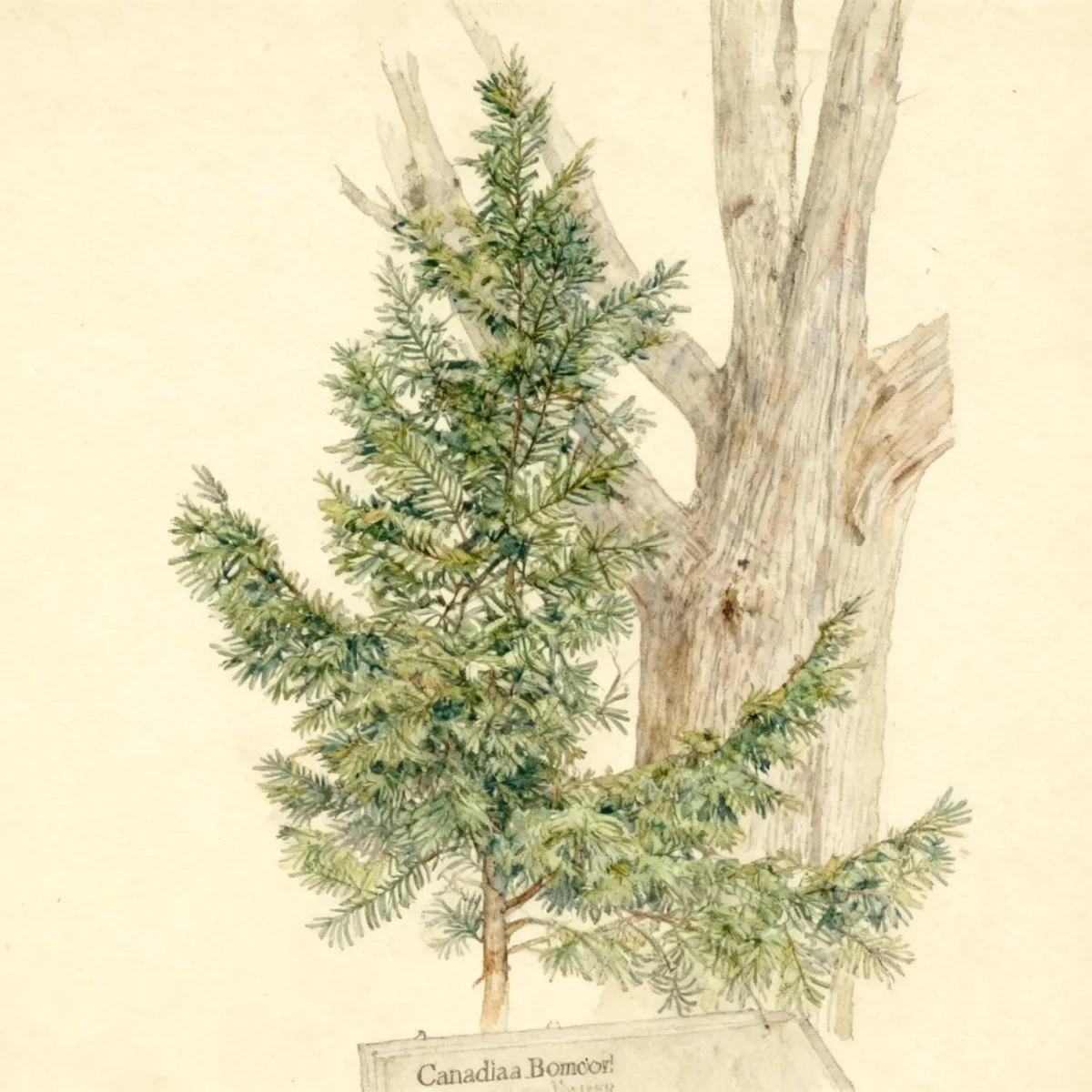
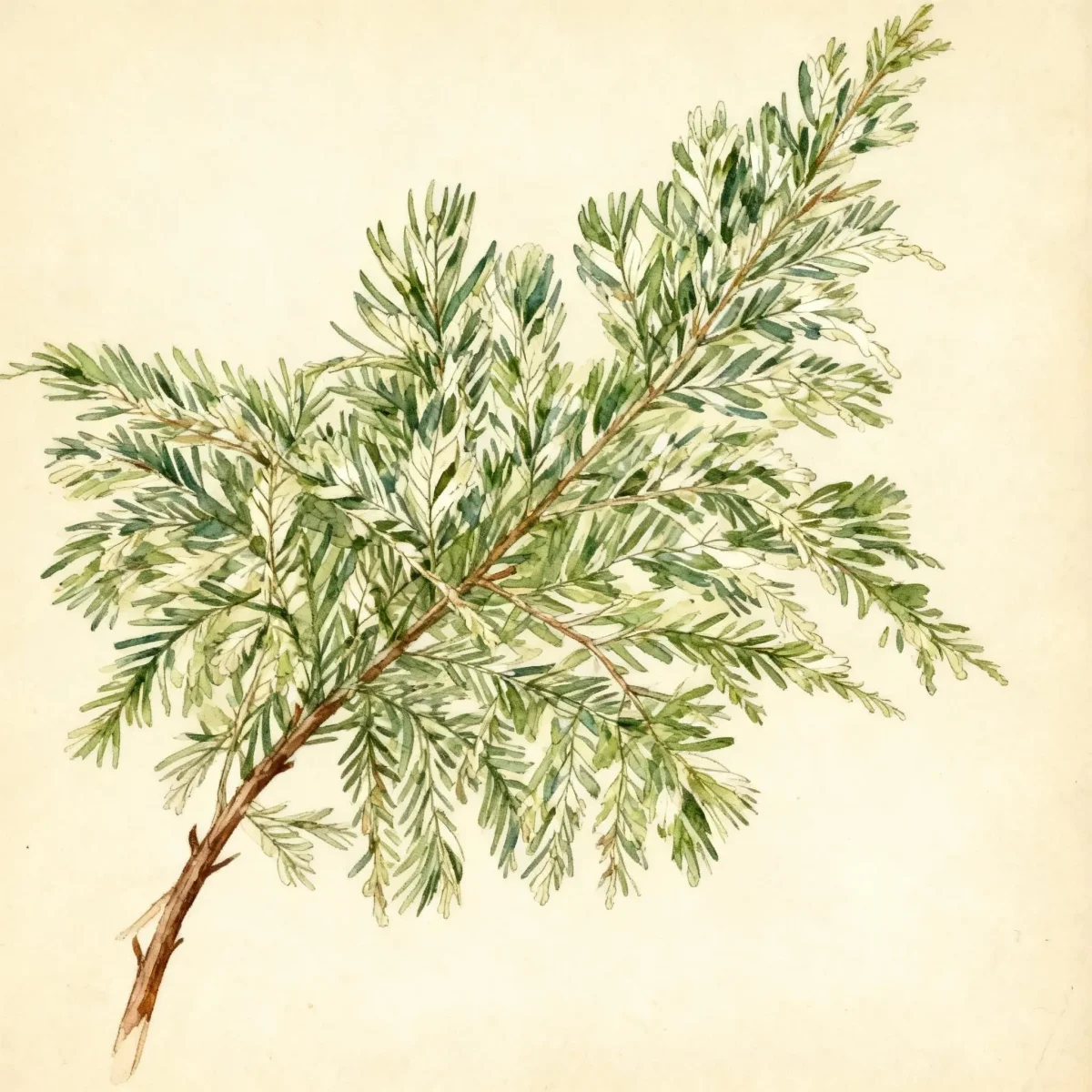
Canadian hemlock (Tsuga canadensis 'Slenderella')
The slender, columnar Tsuga canadensis 'Slenderella' is a compact Canadian hemlock perfect for shady garden spots. Low maintenance evergreen.
Scroll down to discover growing tips, care requirements, companion plants, and more
Complete Plant Information
Overview
Tsuga canadensis ‘Slenderella’, often known as Canadian hemlock, is a highly valued, compact cultivar perfect for smaller or more formal landscape designs. This cultivar maintains the graceful, lacy texture of its parent species but matures into a narrow, pyramidal form suitable for restricted spaces. Gardeners prize it for its dense columnar habit and deep green texture throughout the year.
The Canadian hemlock variety ‘Slenderella’ offers exceptional performance in shady environments where many other conifers struggle. Providing consistent moisture and protection from harsh afternoon sun allows this specimen to thrive. Its low maintenance needs make it a practical and beautiful choice for year-round structure.
For those seeking vertical accent or screening, the slow-growing nature of Tsuga canadensis ‘Slenderella’ means it offers lasting, low-impact beauty. Its fine foliage contrasts nicely with broader-leaved shade plants, adding essential winter interest to the garden tableau.
Fast Facts
- Plant Family: Pinaceae
- Plant Type: Needled evergreen
- Hardiness Zones: USDA Zones 4-7
- Size at Maturity:
- Height: 6-8 ft
- Spread: 3-4 ft
- Bloom Time: Non-flowering
- Bloom Description: Non-flowering
- Sun Exposure: Part shade to full shade
- Water Needs: Medium
- Maintenance Level: Low
How to Grow
Planting the narrow pyramidal Tsuga canadensis ‘Slenderella’ should occur during the cooler parts of the year—spring or fall—to minimize transplant shock. This evergreen thrives in average, medium-moisture, well-drained soils. Ideal placement is where it receives dappled light or consistent part shade, sheltered from intense drying winds and strong summer sun.
Watering is critical, especially during establishment, as this Canadian hemlock is intolerant of drought. Ensure regular irrigation during dry spells, particularly for young plants. While mature specimens are relatively low maintenance, protecting them from extreme heat, above 95 degrees F in the deep South (below Zone 6), is necessary to prevent foliage scorch.
Apply a thick layer of mulch in winter to help insulate the root zone and regulate soil temperatures. Pruning is rarely needed unless shaping is desired, as ‘Slenderella’ naturally maintains a desirable columnar form. Be mindful in very cool northern climates; this variety can tolerate full sun, but monitor closely for stress in hot peak summers.
Landscape Uses
The compact size and upright habit of Tsuga canadensis ‘Slenderella’ make it an outstanding choice for foundational plantings or as an accent specimen in smaller yards. Where a vertical element is needed without overpowering a space, this cultivar shines. It performs exceptionally well when grouped slightly to create a narrow, year-round screen or hedge that requires minimal shearing.
Consider planting this version of Canadian hemlock near entryways or along pathways where its fine texture can be appreciated up close. It pairs beautifully with textural companions like hostas, astilbes, or broadleaf rhododendrons that share similar shade and moisture requirements. Its deep green needles provide a perfect backdrop for flowering shade perennials.
Standout Features
Noteworthy Characteristics
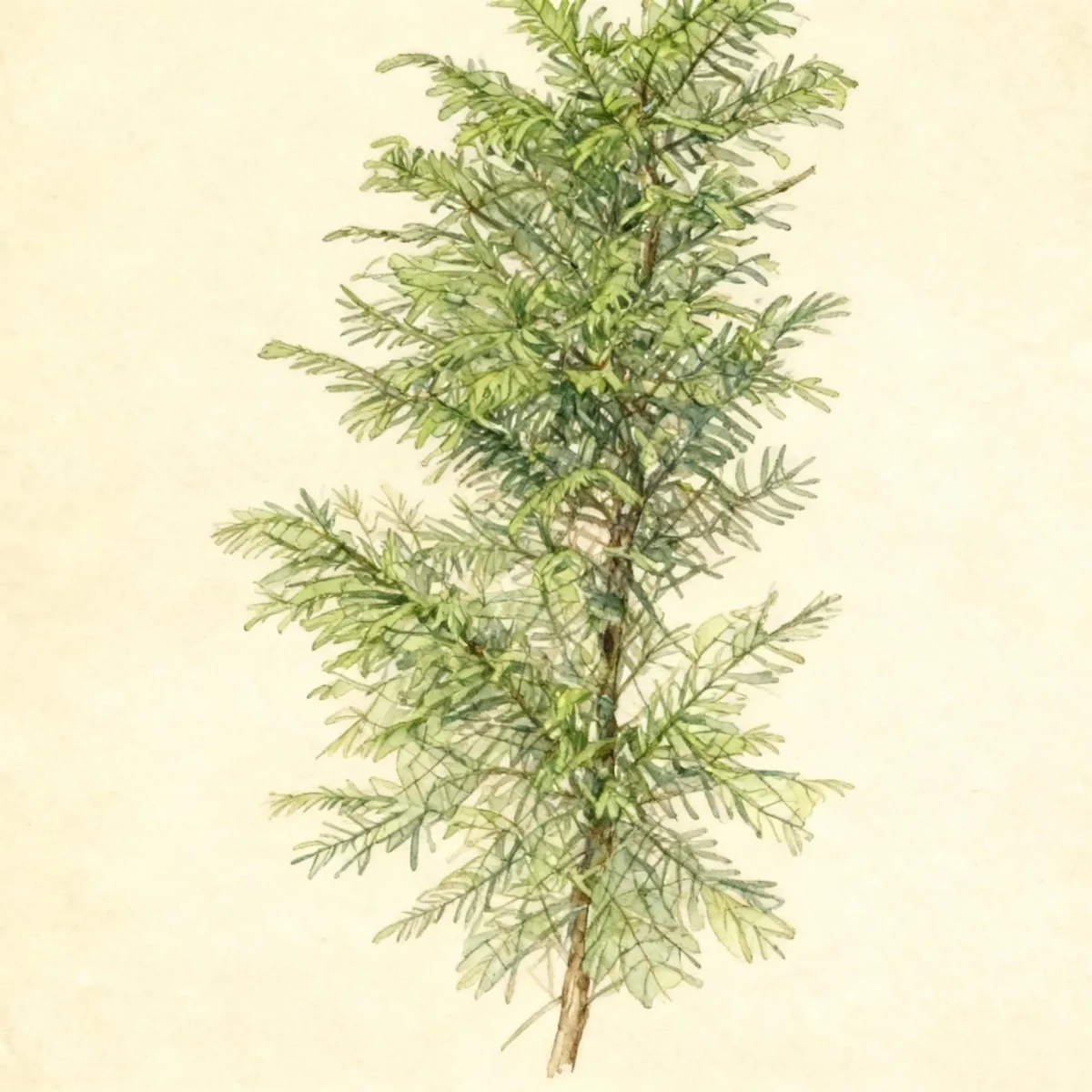
Tsuga canadensis, commonly called Canadian hemlock or eastern hemlock, is a dense, pyramidal conifer of the pine family that is native to moist woods, moist slopes, rocky hillsides/ridges, wooded ravines, and stream valleys from eastern Canada south to Maine and Wisconsin and further south in the Appalachian Mountains to Georgia and Alabama. It grows to 40-75’ tall in the wild. This species is noted for having the smallest needles and cones in the genus. Flat sprays of lacy evergreen foliage give this tree a graceful form. Short dark green needles (to 9/16” long) with two white bands beneath are arranged in two opposite rows. Needles are attached to twigs by slender stalks. Small, pendant, short-stalked, seed-bearing cones (to 3/4” long) are tan-brown. Lower branches often dip toward the ground. Thick and ridged bark on mature trees is red-brown to gray-brown. State tree of Pennsylvania. No part of this tree is poisonous. The poisonous hemlocks (Circuta maculata and Conium maculatum) are herbaceous perennials in the parsley family.Genus name of Tsuga is derived from the Japanese name for trees in this genus.Specific epithet means native in part to Canada.‘Slenderella’ is a narrow pyramidal small tree or large shrub that grows to 6-8’ tall over the first 10 years. It may eventually fully mature to 12’ tall. It has a columnar form with slender upright branches clad with short evergreen dark green needles.
Tolerances
- Deer
- Heavy Shade
- Black Walnut
Potential Problems
A healthy plant in the proper environment has few problems, but watch for common issues affecting the genus Tsuga. Potential disease problems include needle blight, canker, rusts, and various rots. Insect pests to monitor for include bagworms, borers, leaf miners, sawflies, and spider mites.
The primary contemporary threat to all hemlocks, including Canadian hemlock, is the Hemlock Woolly Adelgid (HWA). This tiny, sap-sucking pest can be devastating, especially to established native trees in the East. Early detection is key; inspect needles and twig crotches regularly for small white, cottony masses indicating HWA presence.
If HWA is confirmed, consult local extension services immediately regarding treatment options, which often involve systemic pesticides containing imidacloprid or dinotefuran applied when the tree is actively taking up water. Protecting your Tsuga canadensis ‘Slenderella’ from extreme heat and drought also mitigates general stress, increasing its overall resilience to pests and diseases.
Frequently Asked Questions
What hardiness zones is Canadian hemlock suitable for?
Tsuga canadensis ‘Slenderella’ is reliably hardy in USDA Zones 4 through 7.
How large does Tsuga canadensis ‘Slenderella’ grow?
This cultivar typically reaches a height range of 6 to 8 feet and spreads 3 to 4 feet wide, although it may reach 12 feet eventually.
What sun exposure does Canadian hemlock need?
The ideal site for Tsuga canadensis ‘Slenderella’ is part shade to full shade, especially avoiding intense afternoon heat.
When does Canadian hemlock bloom?
This is a non-flowering needled evergreen, valued for its foliage rather than blooms or fruit.
Conclusion
The striking, narrow profile of Tsuga canadensis ‘Slenderella’ provides excellent vertical texture and year-round green appeal, especially for gardeners dealing with shady conditions. By ensuring consistent moisture and placement away from harsh summer exposure, this low-maintenance Canadian hemlock will become an enduring feature in your landscape. Check your local USDA zone compatibility before planning where to situate this slender columnar conifer.
Companion Planting
Selecting compatible neighbors is crucial for success when planting Tsuga canadensis ‘Slenderella’, mirroring its need for consistent moisture and protection from severe heat. Plants that naturally inhabit woodland edges or stream banks pair well both aesthetically and culturally. Consider pairing the fine texture of the hemlock with shade-loving perennials that offer bolder foliage shapes.
Astilbes, Tiarella (Foamflower), and various Hosta cultivars thrive in similar light conditions and provide essential seasonal color contrast against the established evergreen structure of the Canadian hemlock. For foundation planting, use low-growing evergreen shrubs like drooping Japanese Andromeda (Pieris japonica varieties) that appreciate similar acidic soil conditions.
Design Ideas for Small Spaces
The columnar habit of Tsuga canadensis ‘Slenderella’ makes it an underutilized asset in highly restricted areas. Use this cultivar as a formal, narrow accent flanking a doorway or gate where space does not permit the spread of a standard evergreen. Because it responds well to its small scale, it can also be effectively used in large containers or urns, providing vertical height on patios or decks.
In Japanese-inspired garden designs, the graceful texture of Tsuga canadensis ‘Slenderella’ is excellent for creating subtle layers of depth in shaded rock gardens or woodland settings. Planting it slightly uphill from a moisture-loving groundcover can enhance the illusion of natural elevation while highlighting its slightly dipping branch structure.