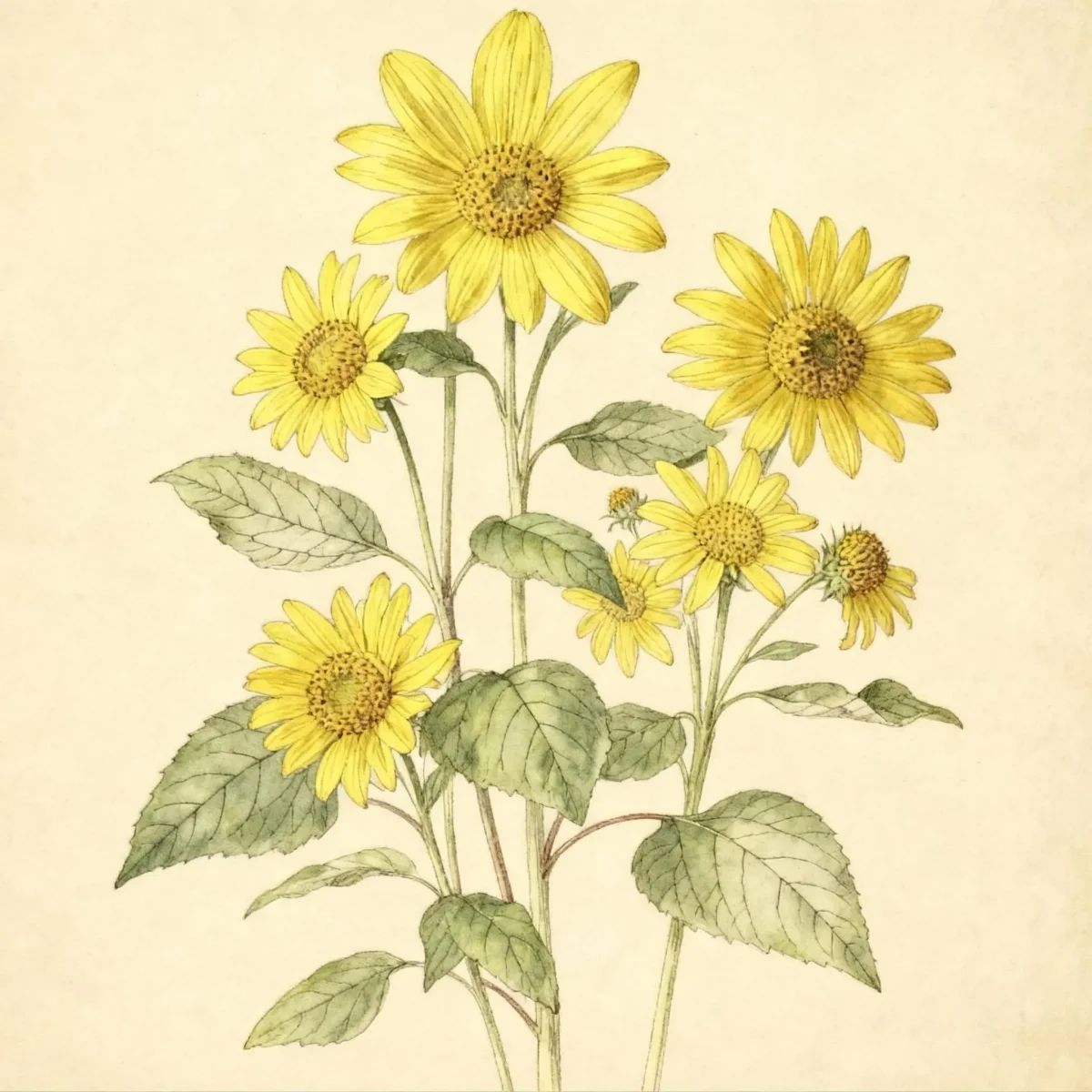
Sunflower (Helianthus 'Capenoch Star')
Discover Helianthus 'Capenoch Star', a robust perennial Sunflower, blooming bright yellow from August to October in sunny spots.
Scroll down to discover growing tips, care requirements, companion plants, and more
Complete Plant Information
Overview
Helianthus ‘Capenoch Star’ stands out as a reliable perennial Sunflower, offering substantial late-season color with its characteristic bright yellow heads reaching up to six feet tall. This cultivar provides reliable texture and height without the annual cleanup associated with many annual sunflowers. Its robust nature makes it a valuable addition for gardeners seeking low-fuss plants that bloom faithfully from mid-summer into autumn.
Originating from a cross involving H. Annuus and H. Decapetalus, Helianthus ‘Capenoch Star’ inherits the vigor of its ancestors, resulting in stiff, upright stalks perfect for structural interest in the garden. The large, rough-textured foliage supports impressive sunflower heads, typically reaching about five inches in diameter, ensuring high visual impact. Plant this sturdy Sunflower where its late bloom can extend the season’s vibrancy.
The genus name honors the sun, which these flowers predictably follow until nightfall. For gardeners, the primary benefits include brilliant late-season color and significant wildlife support, particularly for birds attracted to the mature seed heads. Gardeners should plan for its mature height and ensure it receives the full sun exposure required for best performance.
Fast Facts
- Plant Family: Asteraceae
- Plant Type: Herbaceous perennial
- Hardiness Zones: USDA Zones 4-8
- Size at Maturity:
- Height: 4-6 ft
- Spread: 2-3 ft
- Bloom Time: August to October
- Bloom Description: Bright yellow rays with deeper yellow centers
- Sun Exposure: Full sun
- Water Needs: Medium
- Maintenance Level: Medium
How to Grow
Planting Helianthus ‘Capenoch Star’ should ideally occur from seed after the danger of the last spring frost has passed. This perennial Sunflower thrives when situated in full sun, though it manages with a bit of light afternoon shade. It is highly adaptable, tolerating average soils ranging from moist to medium dryness, and performs well even in challenging urban conditions or poor, rocky soils, provided drainage remains good.
Care for established plants is relatively straightforward, fulfilling the “Medium” maintenance requirement. While they prefer regular, medium watering, established plants demonstrate good drought tolerance once rooted deeply. Generally, this Sunflower does not demand heavy fertilization; focus instead on placement, securing plants where strong winds are blocked to prevent breakage of the tall stalks.
As summer wanes, the foliage of the Sunflower may begin to look tired or depreciate. While removing browned seed heads and stalks post-bloom improves winter landscape aesthetics, gardeners are encouraged to leave seed heads standing for local bird populations that rely on the seeds for winter sustenance. If removal is necessary, consider harvesting heads for winter bird feeding. Expect this reliable Helianthus ‘Capenoch Star’ to self-sow gently where happy.
Landscape Uses
The habit and vibrant color of Helianthus ‘Capenoch Star’ make it exceptionally useful for naturalizing areas, lending a wild, prairie-like feel to larger spaces. Its height means it works best toward the middle to back of mixed borders, providing a strong vertical accent among shorter perennials. For a true cottage garden aesthetic, mass plantings create a cheerful, informal screen.
Because of its height and robust nature, this perennial Sunflower pairs well with sturdier, late-blooming companions that share similar sun and soil needs, perhaps mid-size asters or sturdy ornamental grasses. Furthermore, its attraction for finches and other seed-eating birds makes it a prime candidate for dedicated bird gardens. Don’t overlook its value as a fresh-cut flower addition, bringing authentic summer sunshine indoors.
Standout Features
Flower Qualities
- Showy
Noteworthy Characteristics
Helianthus is a genus of about 60-70 species of annuals and perennials from North America, Central America, Peru and Chile. Commonly called sunflowers, they are grown for their bright, yellow (occasionally red) flowers. Genus name comes from the Greek words helios meaning sun and anthos meaning flower. ‘Capenoch Star’ is a perennial sunflower that results from a cross between H. Annuus and H. Decapetalus and typically grows to 4-6’ tall on stiff upright stalks bearing sunflowers up to 5” in diameter with bright yellow rays and deeper yellow center disks.
Tolerances
- Deer
- Drought
- Clay Soil
- Shallow-Rocky Soil
Potential Problems
Rust, leaf fungal spots, and powdery mildew are somewhat common issues for this Sunflower, especially when air circulation is poor or humidity is high. Proactive cultural care, such as ensuring adequate spacing, helps mitigate these fungal risks. Keep an eye out for chewing insects like caterpillars and beetles on the foliage during the growing season. Gardeners should also be aware of the Sunflower Headclipping Weevil, which targets the maturing flower heads in July, impacting seed production.
Frequently Asked Questions
What hardiness zones is Sunflower (Helianthus ‘Capenoch Star’) suitable for?
Helianthus ‘Capenoch Star’ is generally suitable for USDA Hardiness Zones 4 through 8.
How large does Sunflower (Helianthus ‘Capenoch Star’) grow?
This perennial typically matures between 4 and 6 feet in height with a spread of 2 to 3 feet across.
What sun exposure does Sunflower (Helianthus ‘Capenoch Star’) need?
This plant requires full sun exposure to produce its best blooms and maintain strong, upright growth habits.
When does Sunflower (Helianthus ‘Capenoch Star’) bloom?
You can expect this Sunflower to bloom reliably from August right through October, showcasing bright yellow rays with deeper yellow centers.
Conclusion
Helianthus ‘Capenoch Star’ offers unparalleled late-season structure and color, rewarding gardeners with minimal effort due to its tolerance for various soil types and drought once established. Integrating this resilient perennial Sunflower into your design ensures reliable vertical accents and crucial late-season nectar and seed sources. Check your local zone compatibility and plan to plant your Helianthus ‘Capenoch Star’ after the last spring frost for a spectacular display next autumn.
Wildlife Benefits
As a perennial variety of the common Sunflower, Helianthus ‘Capenoch Star’ is an excellent magnet for local wildlife attraction. The large, maturing seed heads offer a vital, high-energy winter food source for numerous bird species, including finches and cardinals. By leaving the spent stalks standing through the dormant season, you provide both food and valuable winter shelter for beneficial insects and small fauna.
This plant also provides excellent landing platforms and pollen for a variety of late-season bees and butterflies when the bright yellow flowers are in their peak bloom period from August to October. The large flower discs pack plentiful centers, ensuring a rich foraging opportunity. Consider placing this Sunflower near observational spots in the garden to maximize enjoyment of its visitor activity.