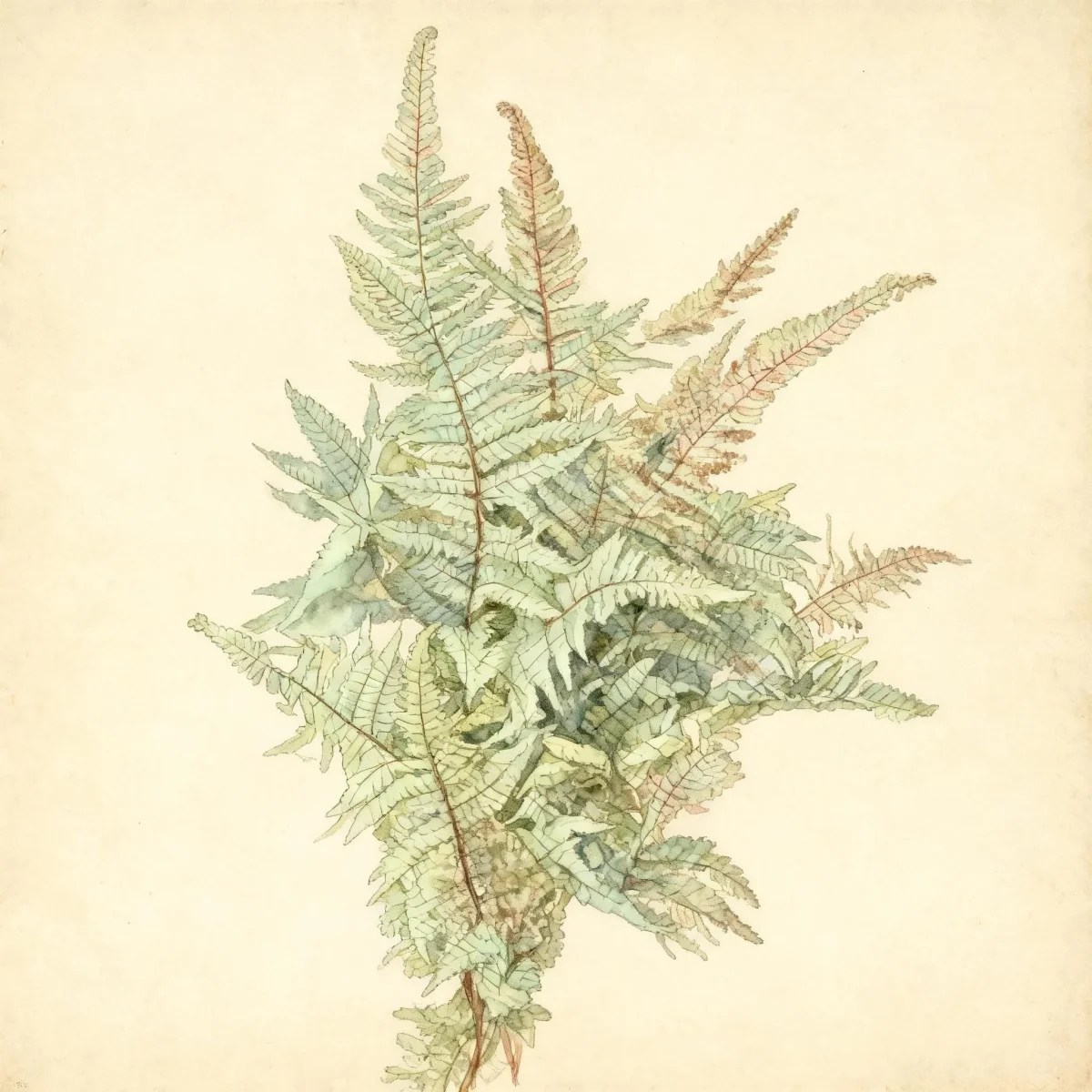
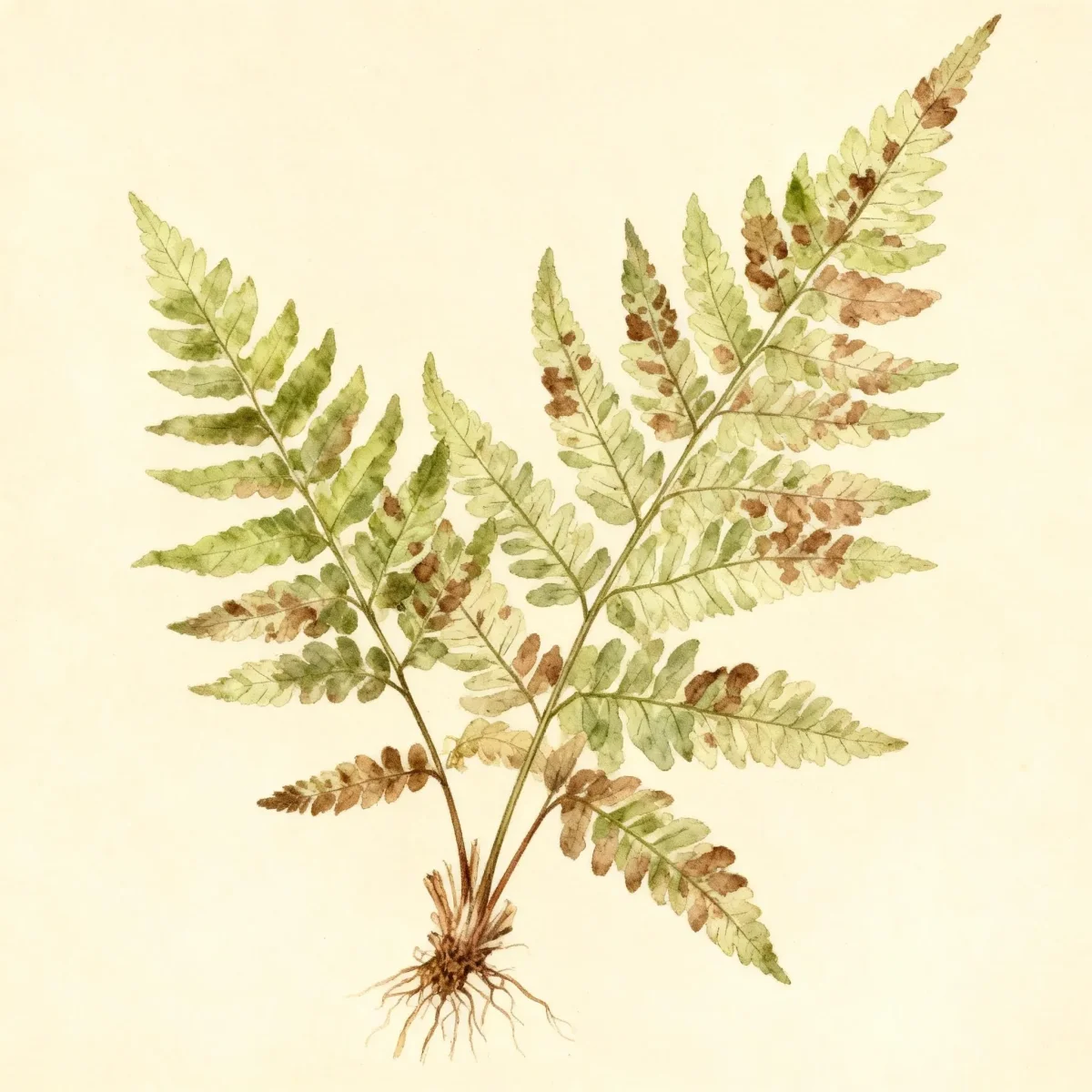
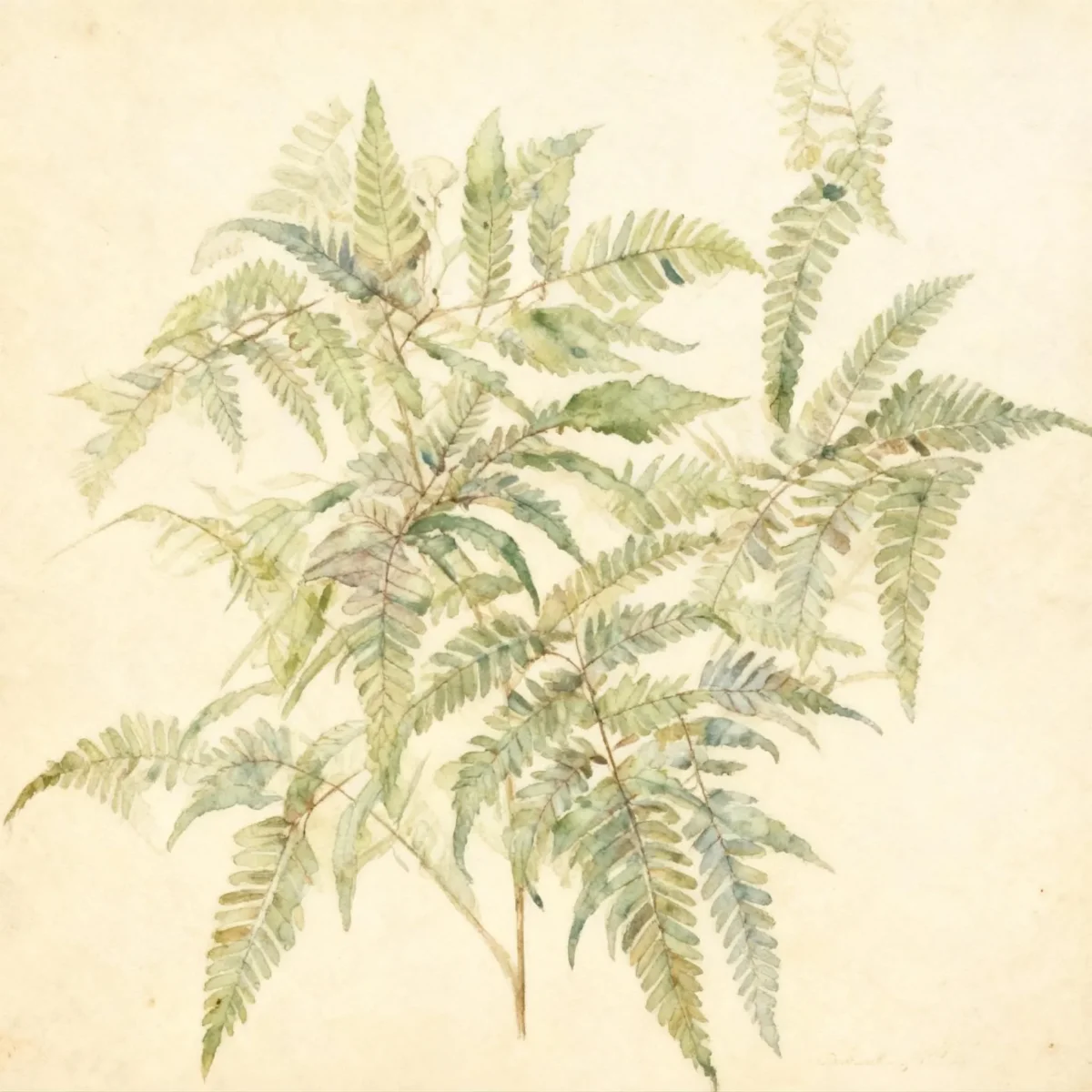
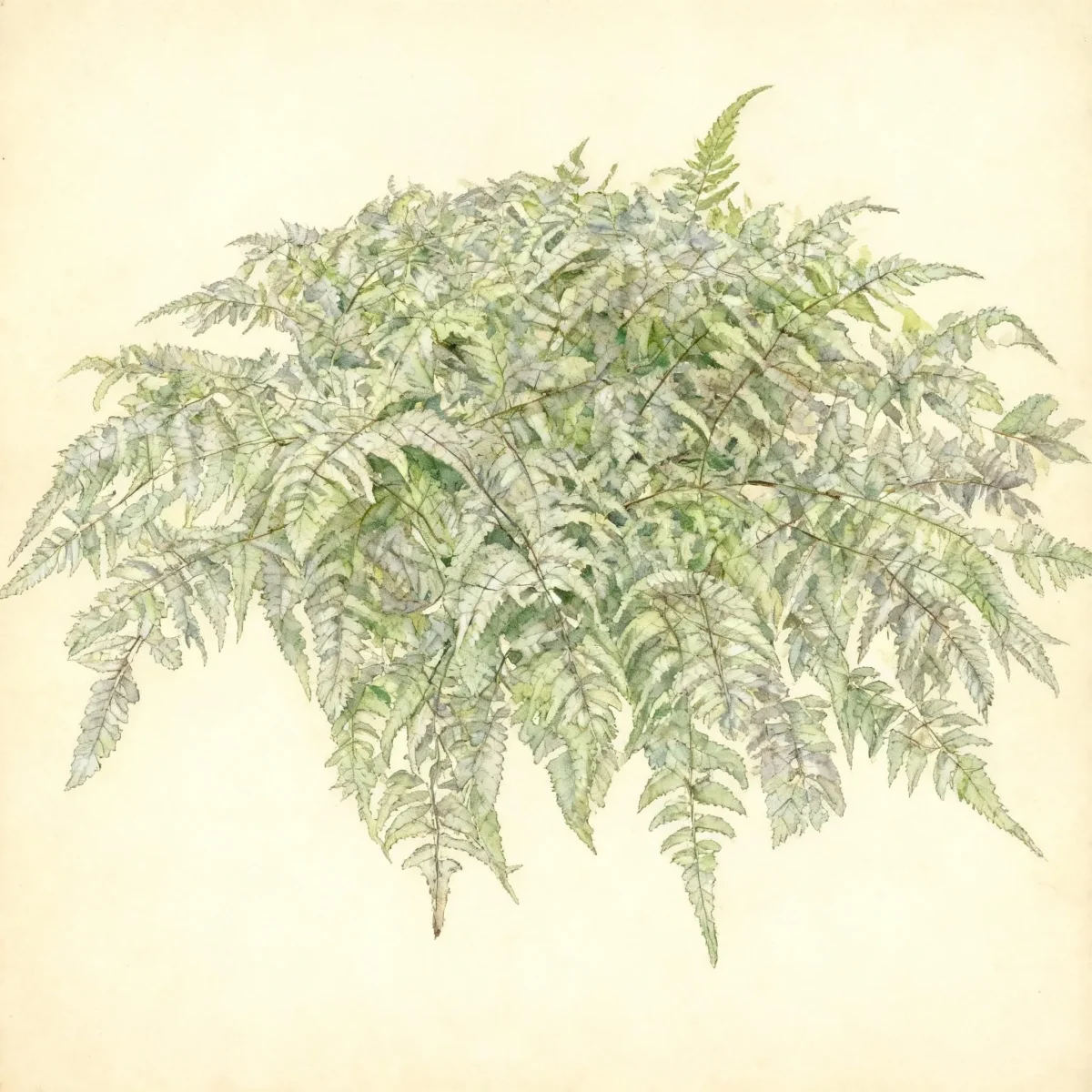
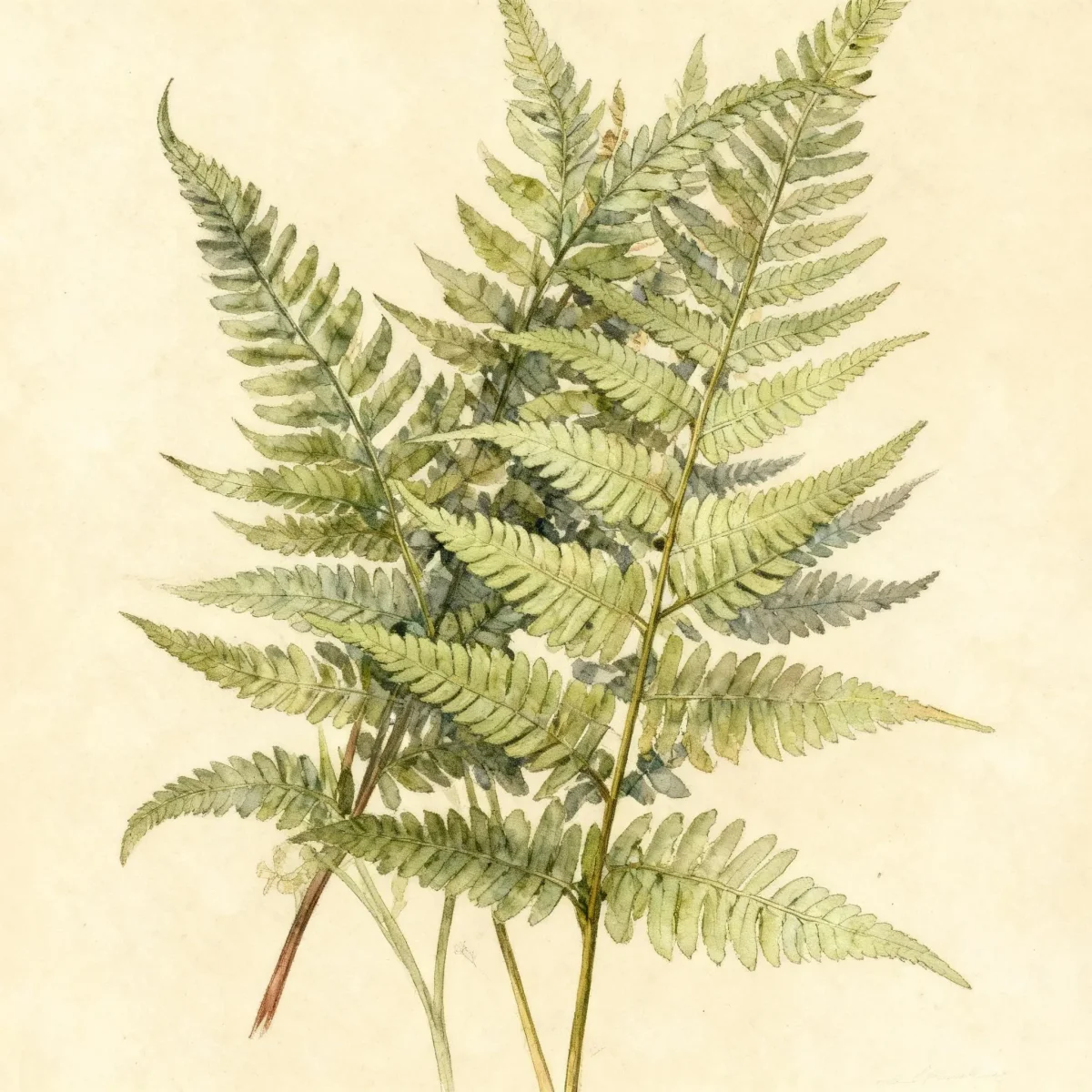
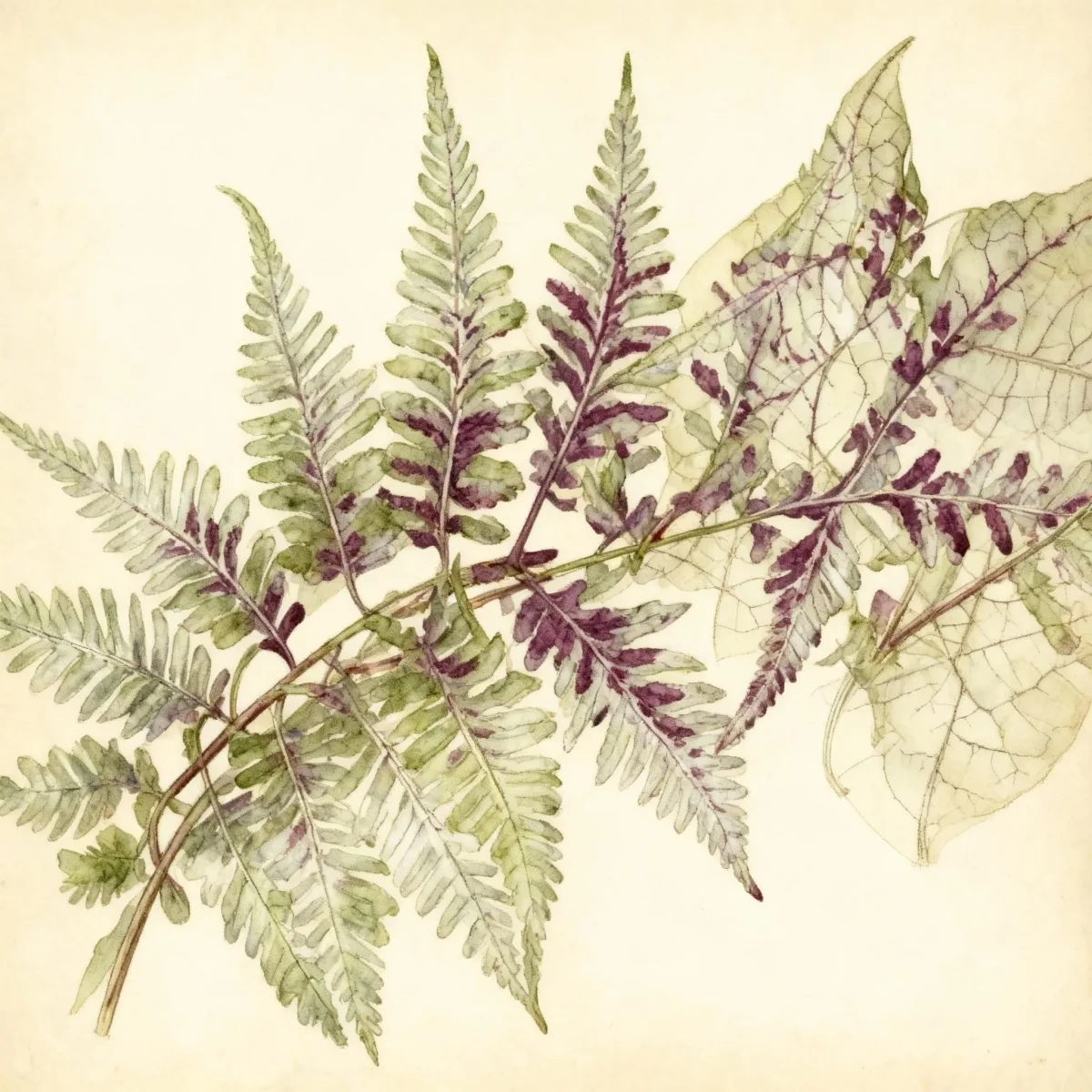
Japanese painted fern (Athyrium niponicum var. pictum 'Red Beauty')
Athyrium niponicum var. pictum 'Red Beauty' is a stunning Japanese painted fern valued for its silvery, gray-green fronds with burgundy accents. Ideal for deep shade areas, this low-maintenance fern thrives in moist, rich soil.
Scroll down to discover growing tips, care requirements, companion plants, and more
Complete Plant Information
Overview
The Athyrium niponicum var. pictum ‘Red Beauty’ offers exceptional texture and color contrast to shaded garden spaces lacking traditional blooms. This variety of Japanese painted fern stands out with its intricate, arching fronds detailed in silvery-gray, green, and striking burgundy red, making it a focal point even in deep shade. As a rhizomatous, deciduous fern, it forms slowly spreading colonies over time, lending a naturalized look to woodland settings.
Gardeners prize the Japanese painted fern for its low maintenance requirements paired with its high visual impact. It thrives where many flowering plants struggle, providing season-long foliage interest from spring through fall. The specific cultivar, Athyrium niponicum var. Pictum ‘Red Beauty’, enhances the standard painted look with pronounced red highlights along the stems and veins.
Achieving the best coloration requires placing this fern where it receives adequate diffused light without harsh exposure. Its arching habit and relatively compact size make it incredibly versatile for softening borders or illuminating dark corners beneath mature trees across USDA Zones 4 through 9.
Fast Facts
- Plant Family: Athyriaceae
- Plant Type: Fern
- Hardiness Zones: USDA Zones 4-9
- Size at Maturity:
- Height: 1-1.5 ft
- Spread: 1-1.5 ft
- Bloom Time: Non-flowering
- Bloom Description: Non-flowering
- Sun Exposure: Part shade to full shade
- Water Needs: Medium
- Maintenance Level: Low
How to Grow
Planting Athyrium niponicum var. pictum ‘Red Beauty’ is best done in spring or fall, ensuring consistent moisture during establishment. Select a location that offers rich, humusy soil amended heavily with organic matter prior to planting. This species requires medium, consistent moisture; the soil must not be allowed to dry out, especially during hot periods.
For optimal vibrancy, site the Japanese painted fern where it receives light shade rather than deep, heavy darkness, although it tolerates heavy shade well. While it is remarkably easy to grow, providing a sheltered location prevents wind damage to the delicate fronds. Fertilization is rarely needed if the soil is rich in organic material already.
Maintenance is generally low for this robust plant. Divide clumps only in early spring if you wish to control spread or propagate new plants, as the Athyrium niponicum var. Pictum ‘Red Beauty’ naturalizes nicely via its short, branching rhizomes. Ensure adequate watering throughout the summer months to maintain the vivid silver and red frond coloration.
Landscape Uses
The architectural form and striking coloration of the Japanese painted fern make it an excellent structural element in shade gardens. Use them densely planted along the fronts of borders, offering a bright, neat edge that separates taller plantings from lawn areas. Their lower, arching profile perfectly suits woodland gardens where they mimic the natural understory environment.
These ferns are superb for softening the harsh transition between hardscaping and planting beds, particularly along shaded streams or pond edges where consistent moisture levels are naturally maintained. Consider pairing them with deep green hostas or dark-leafed groundcovers for maximum contrast, allowing the silver and maroon tones of the Athyrium niponicum var. pictum ‘Red Beauty’ to truly pop. While they spread slowly, they eventually form dense, self-sustaining colonies that reduce the need for additional seasonal planting.
Standout Features
Noteworthy Characteristics
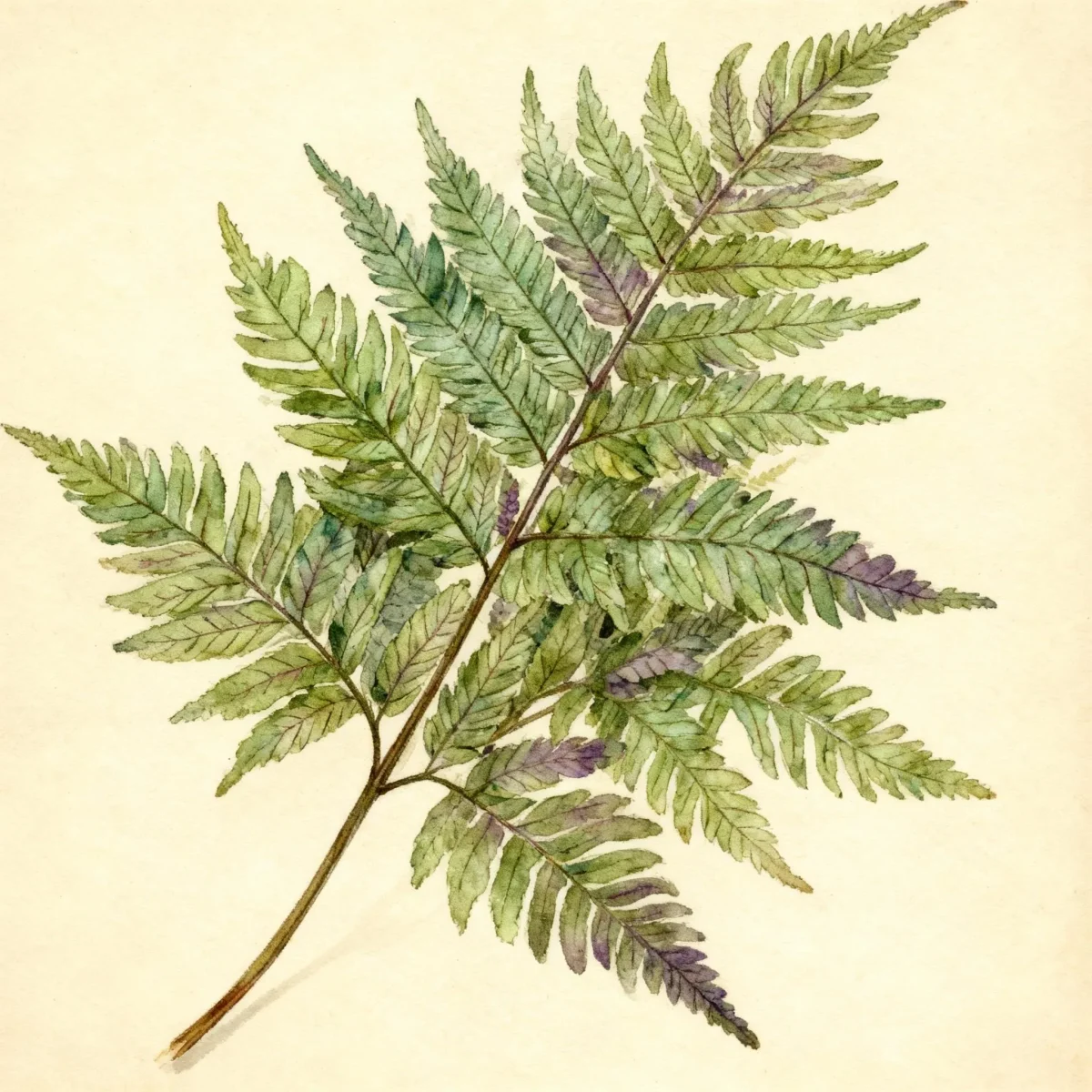
Athyrium niponicum var. Pictum, commonly known as Japanese painted fern, is a rhizomatous, deciduous fern with an arching habit that typically grows to 18” tall. It features a slowly spreading clump of triangular, variegated fronds to 20” long. Fronds are a soft grayish-green with an overlay of silvery hues accented by contrasting dark maroon midribs; the specific cultivar ‘Red Beauty’ features gray-green fronds highlighted with burgundy red stems and veins.
Tolerances
- Rabbit
- Heavy Shade
Potential Problems
Serious insect or disease issues are generally absent for the Athyrium niponicum var. pictum ‘Red Beauty’, contributing significantly to its low maintenance appeal. Furthermore, rabbits tend to avoid snacking on the fronds, offering reliable foliage without common pest interference. The primary challenge involves ensuring consistent soil moisture; failure to water adequately during dry spells is the most common cause of temporary poor appearance.
Frequently Asked Questions
What hardiness zones is Japanese painted fern suitable for?
The Japanese painted fern is reliably hardy across USDA Zones 4 through 9.
How large does Athyrium niponicum var. pictum ‘Red Beauty’ grow?
This cultivar typically reaches a mature height between 1 and 1.5 feet tall, with a similar spread of 1 to 1.5 feet.
What sun exposure does Athyrium niponicum var. pictum ‘Red Beauty’ need?
It prefers part shade to full shade conditions, with the best silver coloration appearing when protected from the harshest afternoon sun.
When does Japanese painted fern bloom?
This plant is a fern and is non-flowering.
Conclusion
The Athyrium niponicum var. pictum ‘Red Beauty’ offers unparalleled textural beauty and sophisticated color for deeply shaded garden vignettes. Its rabbit resistance and low-maintenance needs cement its status as a must-have perennial for complex shade compositions. Before planting, confirm your garden falls within USDA Zones 4-9 and plan to amend your soil to ensure it remains rich and consistently moist.
Companion Planting
When planning for the Japanese painted fern, look towards companions that contrast texturally while sharing high moisture and low light needs. Hostas with large, smooth leaves, particularly those featuring blues or gold, make excellent partners for the delicate, dissected foliage of Athyrium niponicum var. pictum ‘Red Beauty’. Shade-loving perennials like Bleeding Hearts (Dicentra) or various woodland Phlox species provide necessary spring color that transitions well into the summer foliage display provided by the fern.
The key consideration is moisture; select companions that also require medium, consistent watering, as this fern should never dry out. This creates cohesive planting pockets where watering regimens are simplified, benefiting the health of all components, including your Athyrium niponicum var. Pictum ‘Red Beauty’.
Seasonal Care Calendar
For gardeners managing Athyrium niponicum var. pictum ‘Red Beauty’, timing care with the season ensures peak performance. In early spring, this is the ideal time to divide large clumps if necessary and to top-dress the soil with fresh compost to boost organic matter content. As summer heat peaks, diligently monitor moisture levels; supplemental deep watering may be required if rainfall is scarce, as drying out stresses the fronds. In the fall, allow the deciduous foliage to naturally die back; cleanup is minimal, as the plant enters dormancy, preparing its rhizomes for winter protection in zones 4 and above.