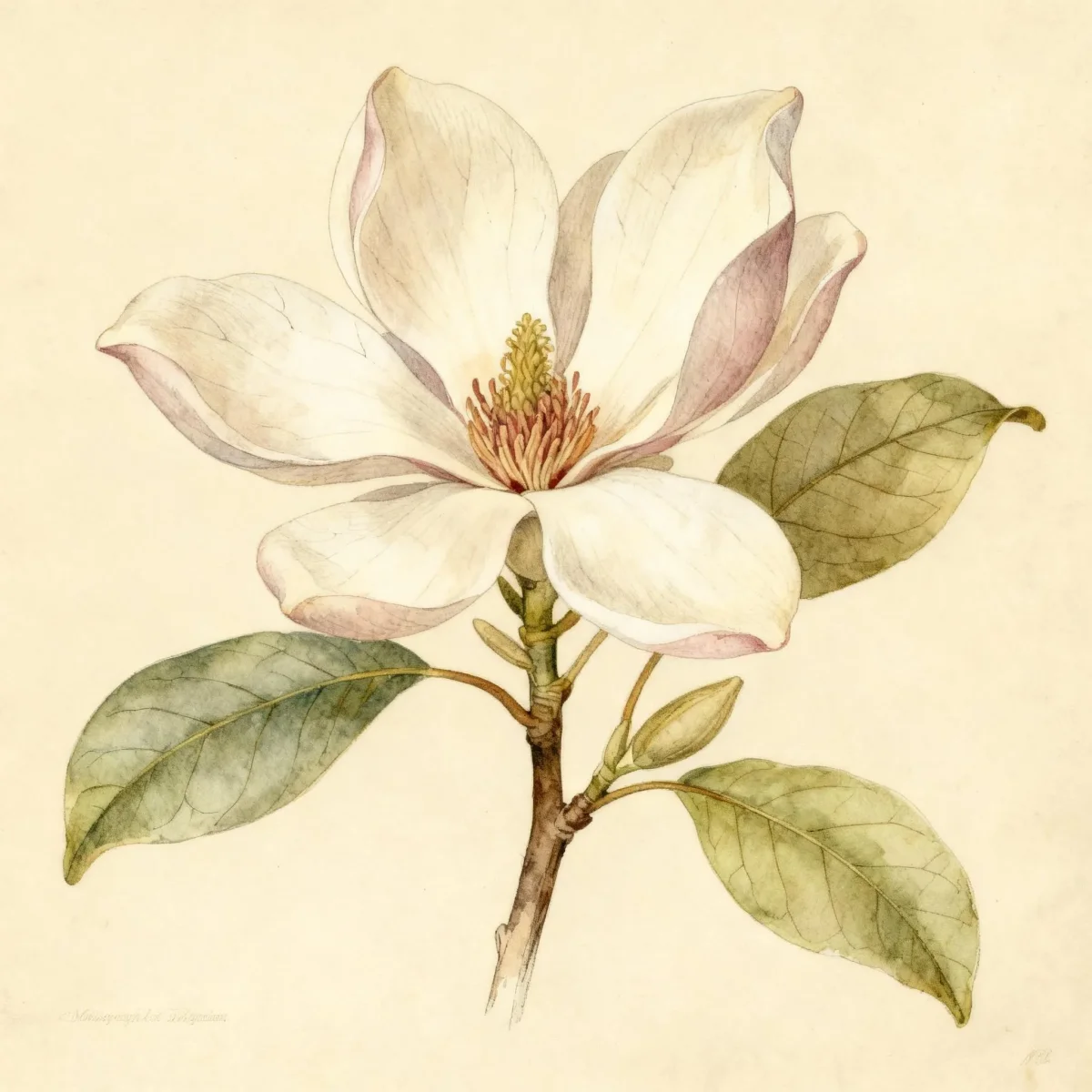
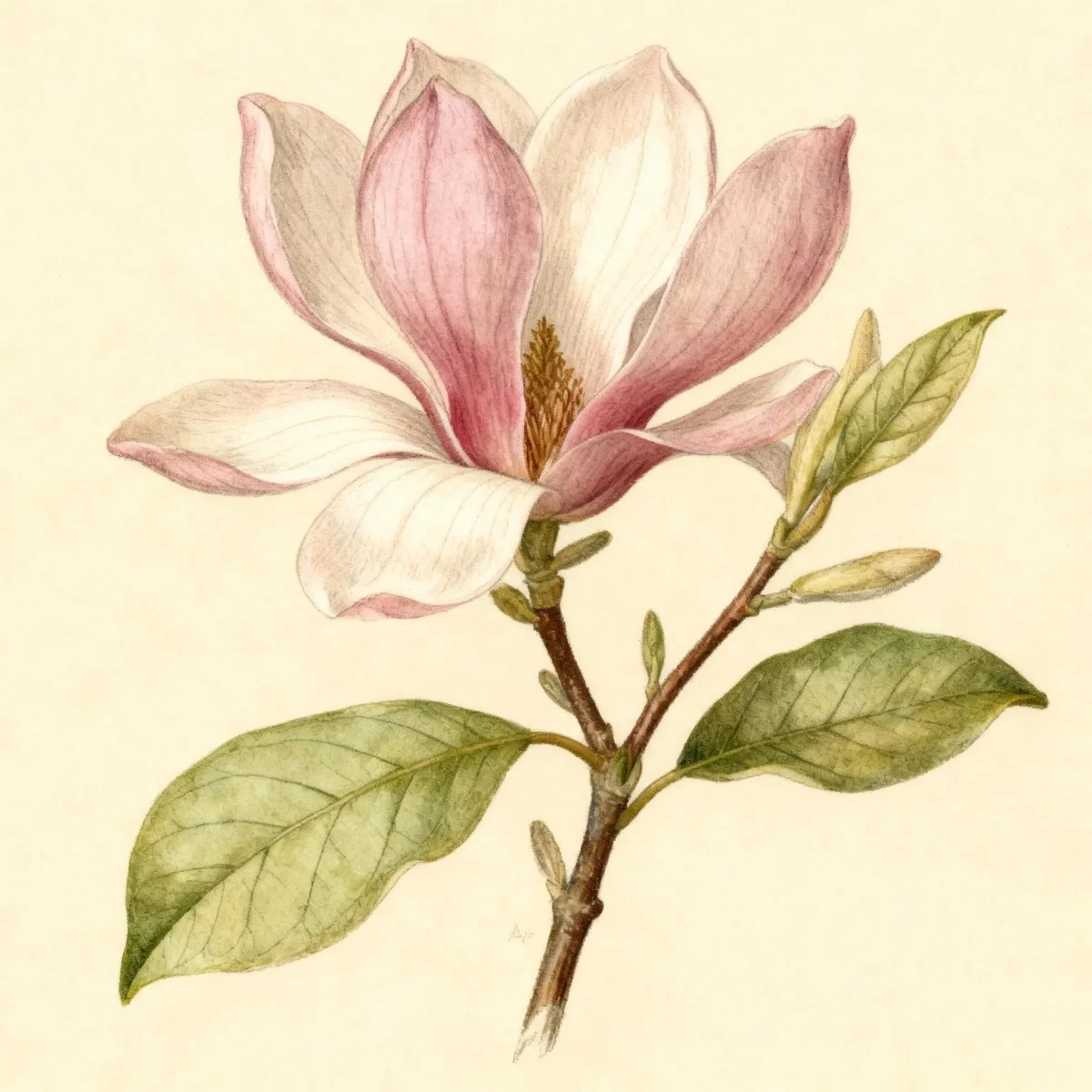
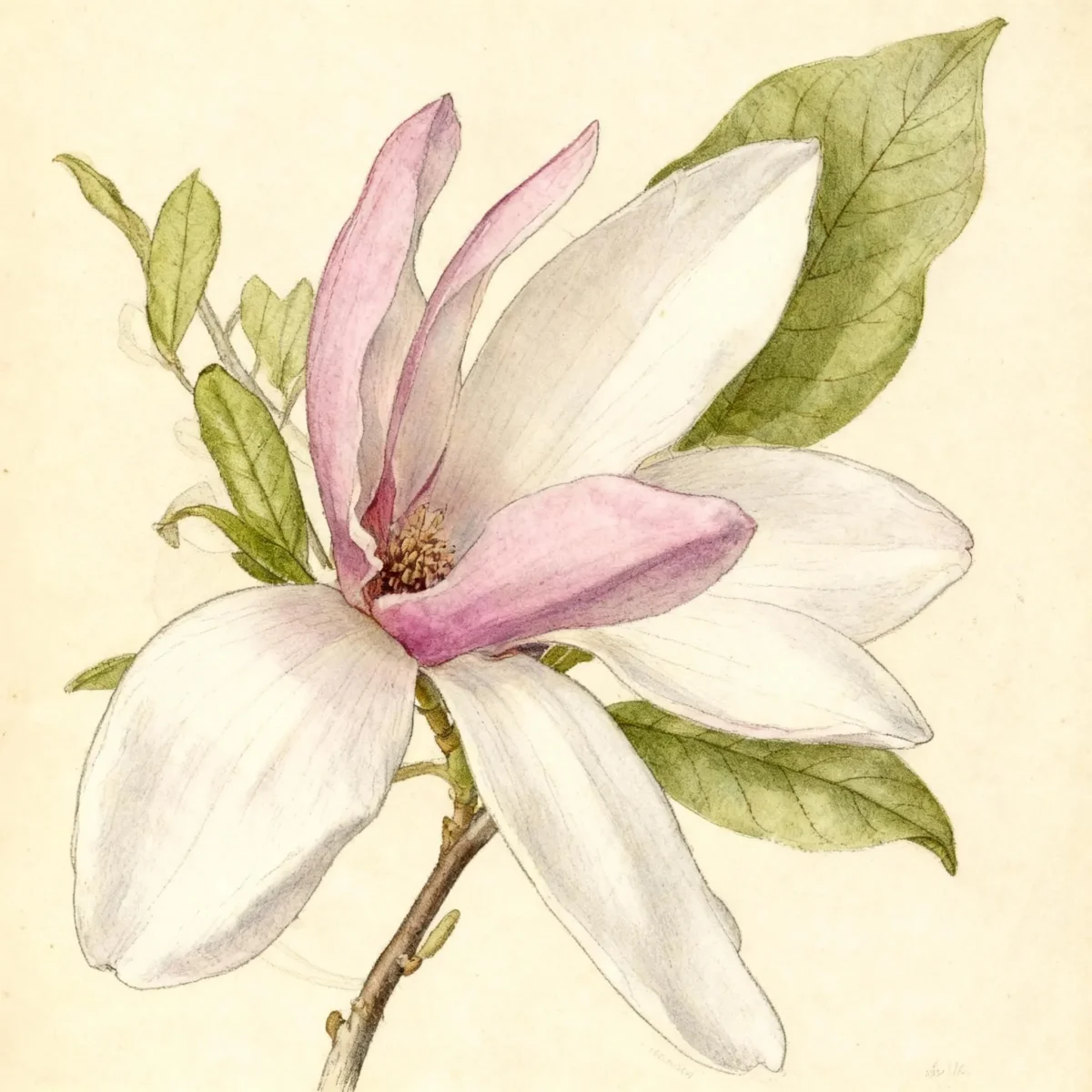
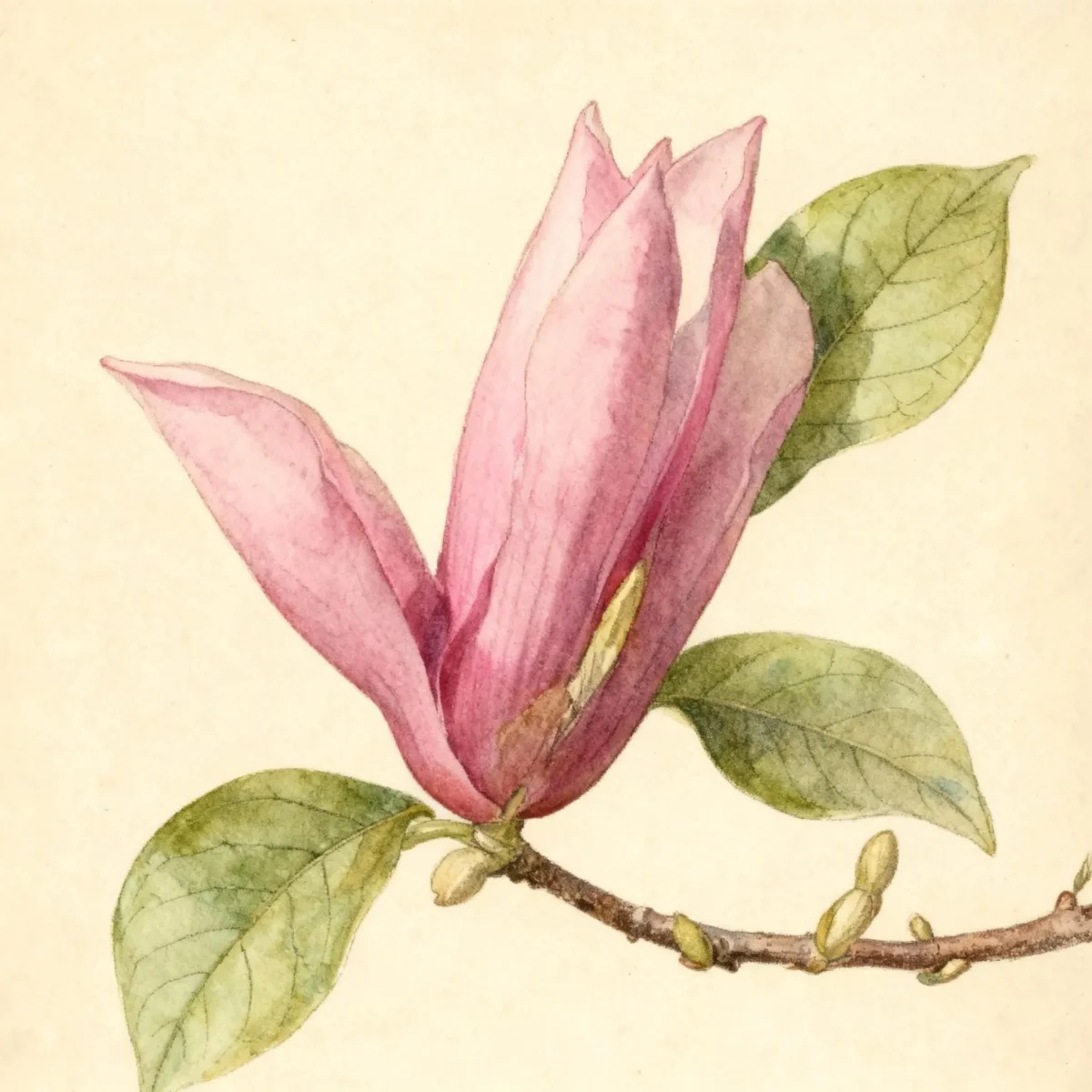
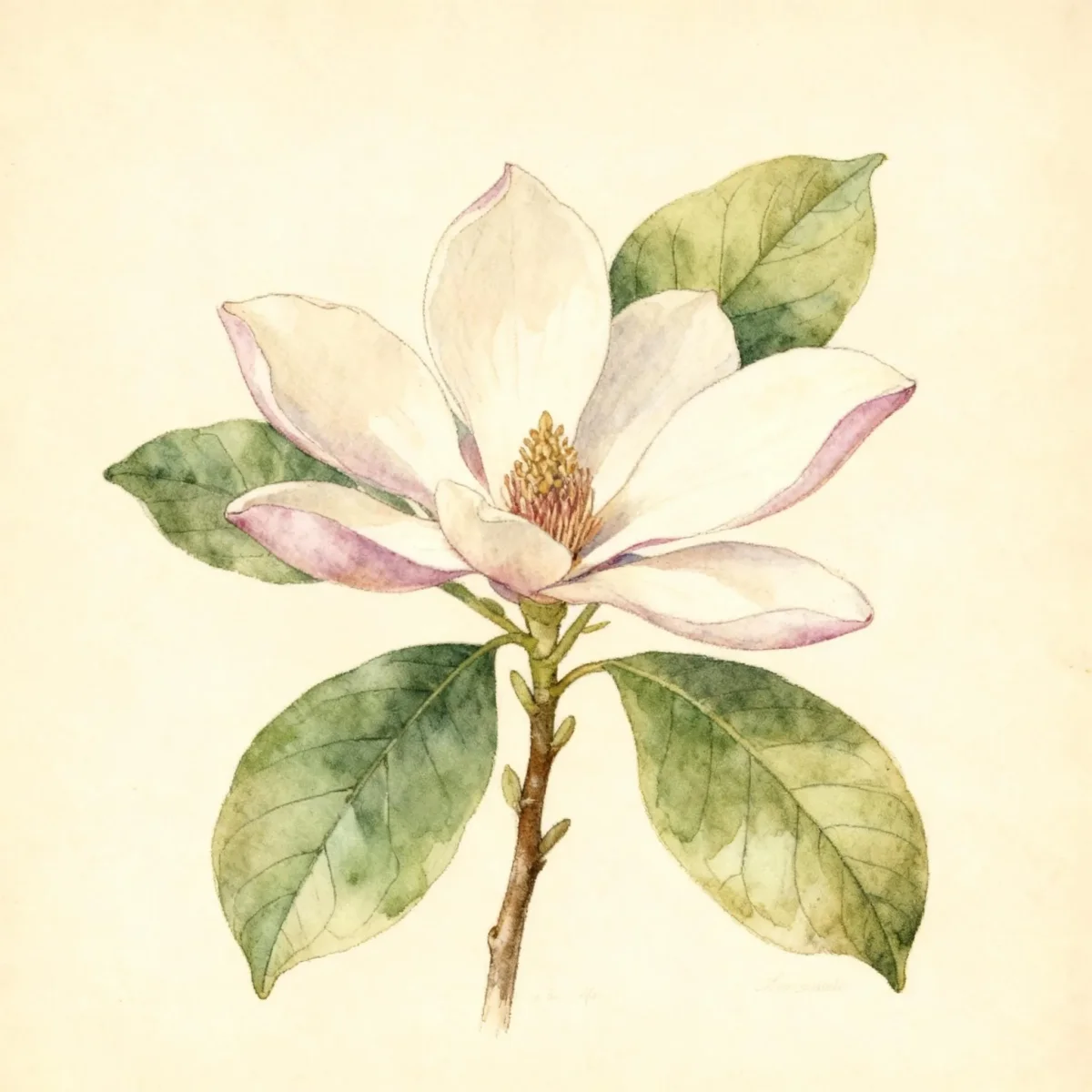
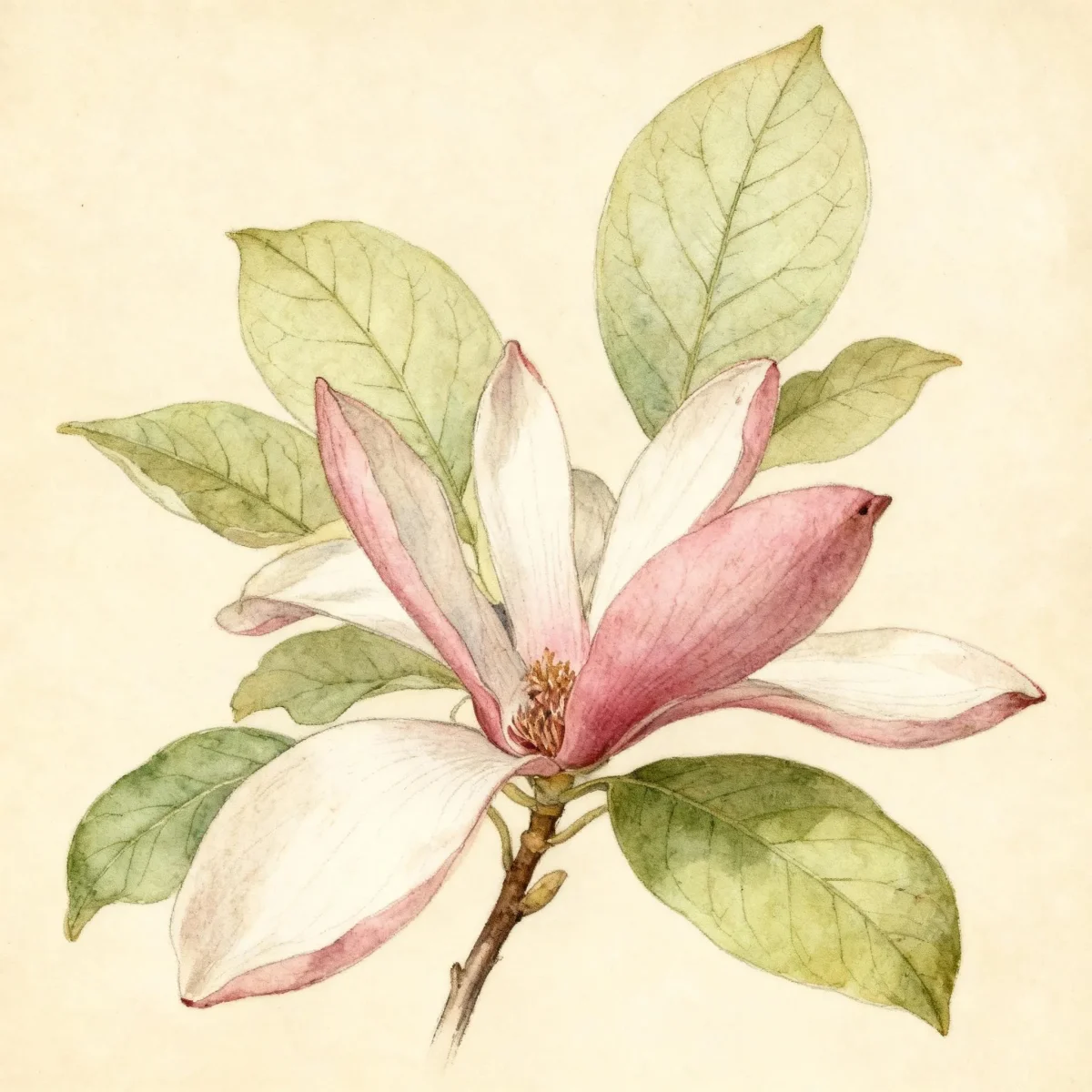
Magnolia (Magnolia 'George Henry Kern')
Magnolia 'George Henry Kern' is a low-maintenance, fragrant, deciduous shrub blooming pink in early spring.
Scroll down to discover growing tips, care requirements, companion plants, and more

Complete Plant Information
Overview
Magnolia ‘George Henry Kern’ is a highly valued hybrid, derived from Magnolia stellata and Magnolia liliiflora, offering gardeners substantial early spring color. This deciduous shrub is prized for being slow-growing and blanketed in fragrant, light pink flowers emerging directly from showy deep rose pink buds before the foliage appears. As a compact member of the Magnolia genus, it brings reliable structure and fragrance to transitional gardens.
This reliable Magnolia cultivar typically maintains a multi-stemmed shrub form, making it versatile for various landscape applications where a tall shade tree might overwhelm the space. Its dark green leaves provide attractive summer texture, often enhancing fall interest with coppery bronze hues. Gardeners appreciate the relatively low maintenance requirements of Magnolia ‘George Henry Kern’ once established.
With its stunning bloom display in early spring (March through April), Magnolia ‘George Henry Kern’ serves as a stunning focal point at the edge of woodlands or near foundational plantings. It is an excellent choice for those wanting the grandeur of a Magnolia without the massive size, providing reliable seasonal performance in the correct climate.
Fast Facts
- Plant Family: Magnoliaceae
- Plant Type: Deciduous shrub
- Hardiness Zones: USDA Zones 5-8
- Size at Maturity:
- Height: 6-15 ft
- Spread: 6-15 ft
- Bloom Time: March to April
- Bloom Description: Pink
- Sun Exposure: Full sun to part shade
- Water Needs: Medium
- Maintenance Level: Low
How to Grow
Planting Magnolia ‘George Henry Kern’ is best done in the cooler months of fall or early spring, allowing the root system time to establish before summer heat. These magnolias thrive in organically rich, neutral to slightly acidic soils that retain medium moisture but are reliably well-drained. Full sun is ideal for maximum blooms, though they tolerate part shade, ideally placed where they receive protection from harsh western exposure that encourages premature bud swelling.
Once sited, remember that the fleshy root system of this Magnolia is easily damaged during transplanting; precise location selection is crucial as these plants prefer to remain undisturbed afterward. Apply a root-zone mulch to help conserve the necessary soil moisture, which is especially important during dry periods. Watering should remain consistent, ensuring the soil stays evenly moist but never waterlogged.
Maintenance for Magnolia ‘George Henry Kern’ is generally minimal. Pruning should be executed immediately following the spring bloom period, focusing only on removing dead or damaged branches. Avoid pruning in late summer or fall, as this can stimulate new growth susceptible to winter cold. Be highly aware of frost risk in early spring, as temperature dips can severely damage the developing blossoms.
Landscape Uses
The compact size and spectacular bloom display make Magnolia ‘George Henry Kern’ an excellent flowering tree or specimen shrub for residential landscapes. Its manageable height means it works beautifully near house foundations or integrated into mixed shrub borders, lending vertical interest without obstructing views. It functions very well as a specimen planting on small lawns where its spring performance can be fully appreciated.
Due to its preference for protection from strong winds, group or mass plantings near the edges of woodland areas create a naturalistic, yet refined, setting for this Magnolia. Consider pairing Magnolia ‘George Henry Kern’ with late-blooming spring bulbs whose foliage will mature as the tree leaves emerge, helping to conceal any fading bulb foliage, or use shade-tolerant groundcovers beneath its canopy. This shrub also adapts well to being formalized into a dense screen or hedge where consistent early color is desired.
Standout Features
Flower Qualities
- Showy
- Fragrant
Noteworthy Characteristics
The genus Magnolia consists of about 100 species (plus numerous additional hybrids and cultivars) of deciduous or evergreen trees and shrubs. ‘George Henry Kern’ is a slow-growing, deciduous, hybrid magnolia that typically grows in a multi-stemmed shrub form, noted for its very fragrant, light pink flowers which blanket the plant with bloom in early spring before the foliage appears. Flowers emerge from showy deep rose pink flower buds, each flower possessing eight light pink petal-like tepals, while the dark green leaves turn coppery bronze in the fall.
Tolerances
Potential Problems
Gardeners should be vigilant regarding potential issues that can affect the health and bloom quality of Magnolia ‘George Henry Kern’. Potential insect problems include weevils, snails, scale, and thrips, which can typically be managed with targeted horticultural oils or insecticidal soaps depending on the pest severity. Fungal issues like leaf spots, anthracnose, canker, dieback, and powdery mildew are also possibilities, often minimized by ensuring excellent air circulation and avoiding overhead watering.
The most significant concern for successful flowering is spring frost damage. Because this Magnolia blooms very early (March-April), a late hard freeze can completely destroy a year’s worth of flower buds, leaving the plant bare when neighbors might be showing color. To mitigate this, select a planting site protected from warm southern exposures that trick buds into opening prematurely, and avoid disturbing the roots near bloom time.
Frequently Asked Questions
What hardiness zones is Magnolia ‘George Henry Kern’ suitable for?
Magnolia ‘George Henry Kern’ is hardy and thrives in USDA Zones 5 through 8.
How large does Magnolia ‘George Henry Kern’ grow?
This deciduous shrub typically matures to a height and spread ranging between 6 and 15 feet, often starting as a multi-stemmed form.
When does Magnolia ‘George Henry Kern’ bloom?
This variety blooms quite early, typically from March into April, displaying showy, fragrant pink flowers before its leaves emerge.
What sun exposure does Magnolia ‘George Henry Kern’ need?
For best flowering results, plant Magnolia ‘George Henry Kern’ in full sun, though it can successfully grow with partial shade exposure.
Conclusion
The Magnolia ‘George Henry Kern’ offers exceptional early-spring drama combined with reliably low maintenance once established in its preferred soil. Its fragrant, showy pink flowers make it a highly desirable accent plant in any temperate garden setting. Before planting this beautiful Magnolia, confirm that your site offers protection from harsh winds and verifies compatibility with USDA Zones 5-8.
Companion Planting Considerations
When siting Magnolia ‘George Henry Kern’, focus on plants that share similar soil pH requirements (neutral to slightly acidic, rich, well-draining). Companion plants should generally tolerate partial shade, especially under the canopy as the tree matures, and should complement the early spring bloom time without overwhelming it. Consider using early spring bulbs like daffodils or late-blooming shrubs like weigela that start their show after the Magnolia is finished.
Selecting groundcovers that require medium moisture is also key to respecting the fleshy roots of your Magnolia. Avoid aggressive surface-rooting perennials near the base, as they will compete directly for the moisture and nutrients the Magnolia needs. A layer of organic mulch applied responsibly around the drip line (keeping it away from the trunk flare) will suppress weeds and buffer soil temperatures for this sensitive root system.
Seasonal Care Calendar
Spring is focused squarely on bloom protection and cleanup. Monitor late-season frost forecasts near bloom time (March-April) to guard the flower buds. Once blooming finishes, this is the optimal time for any structural pruning to maintain the desired shape of your Magnolia. Remove any debris or spent flower parts, ensuring clear air circulation around the branches.
Summer care centers on consistent moisture management. Since this Magnolia requires medium water, particularly during establishment or in hot, dry spells, water deeply and infrequently rather than light daily sprinkling. Avoid high-nitrogen fertilizers during late summer, as this promotes tender growth that will not harden off adequately before winter temperatures arrive.
Autumn preparation involves allowing the plant to naturally transition. The leaves will turn coppery bronze before dropping. Apply a fresh layer of mulch if needed, ensuring it is not piled against the trunk. Winterizing involves nothing more than ensuring the plant has adequate moisture entering dormancy around late fall before the ground freezes hard.