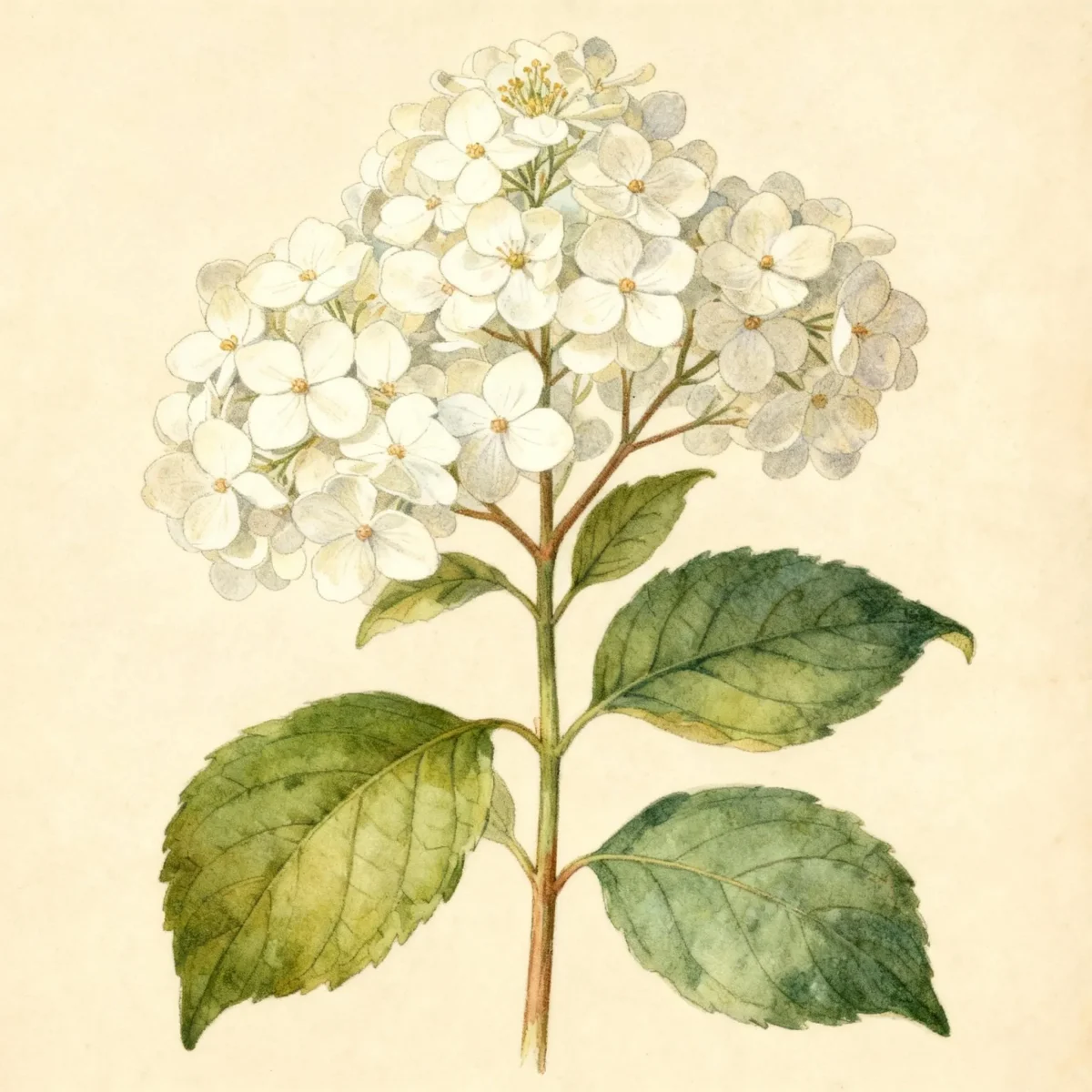
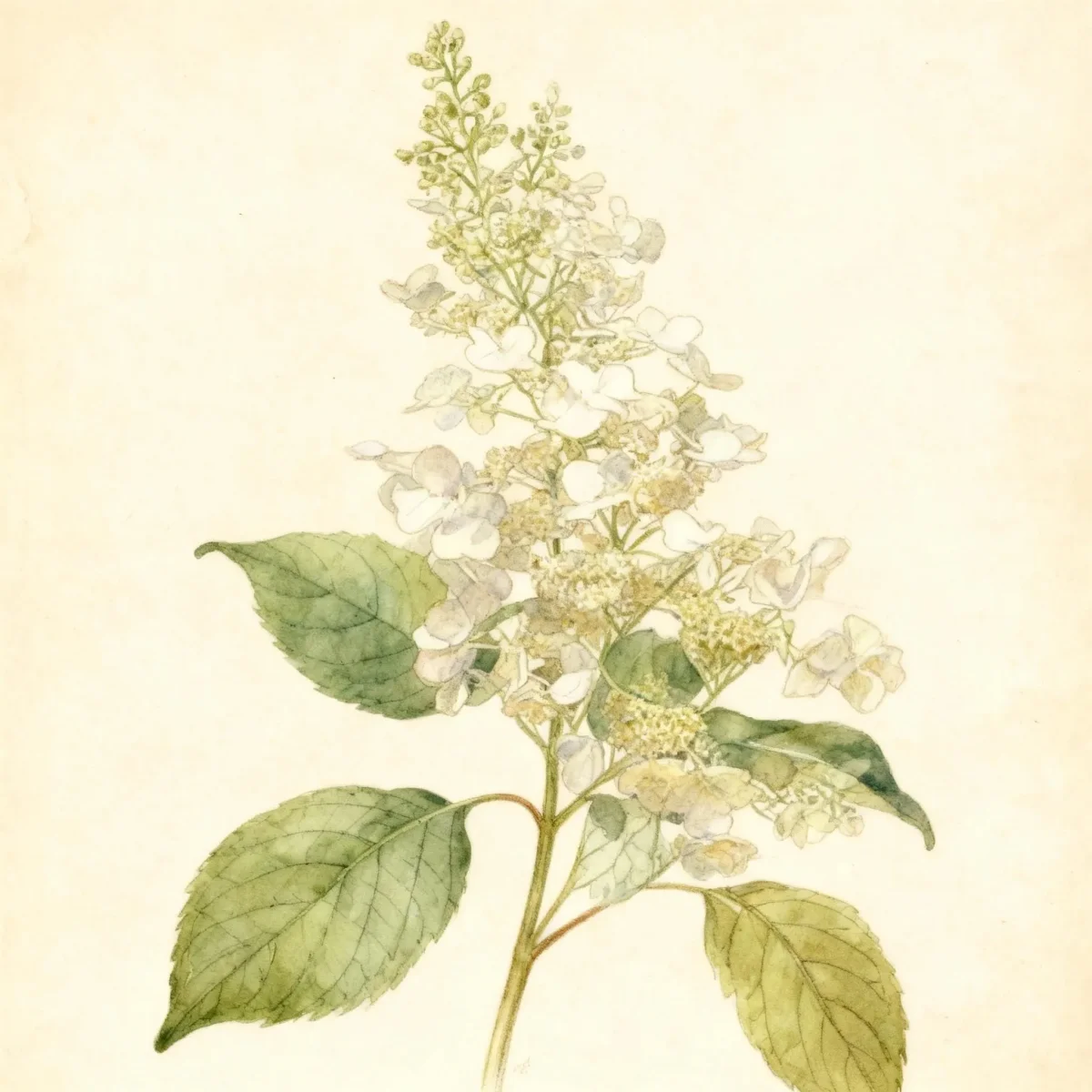
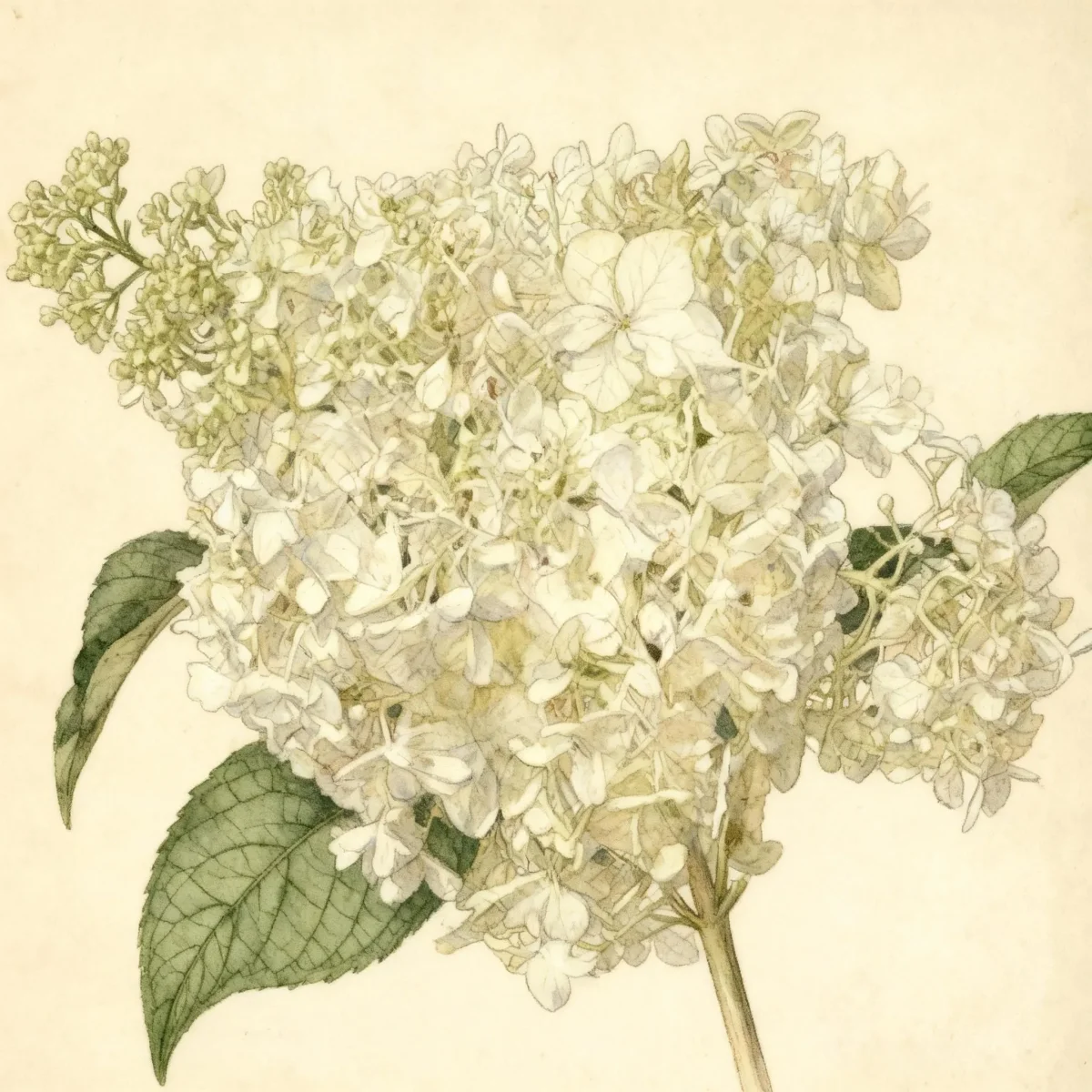
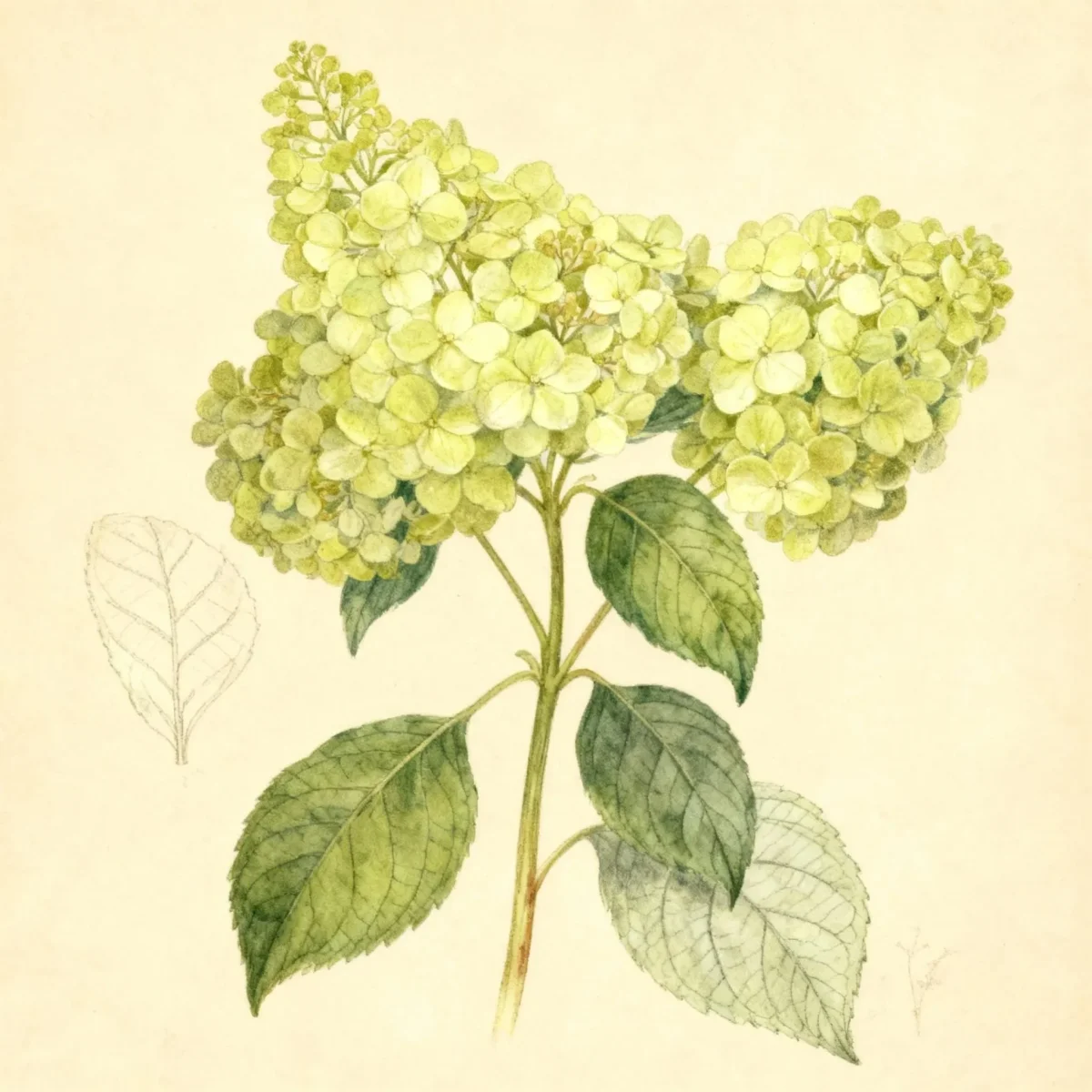
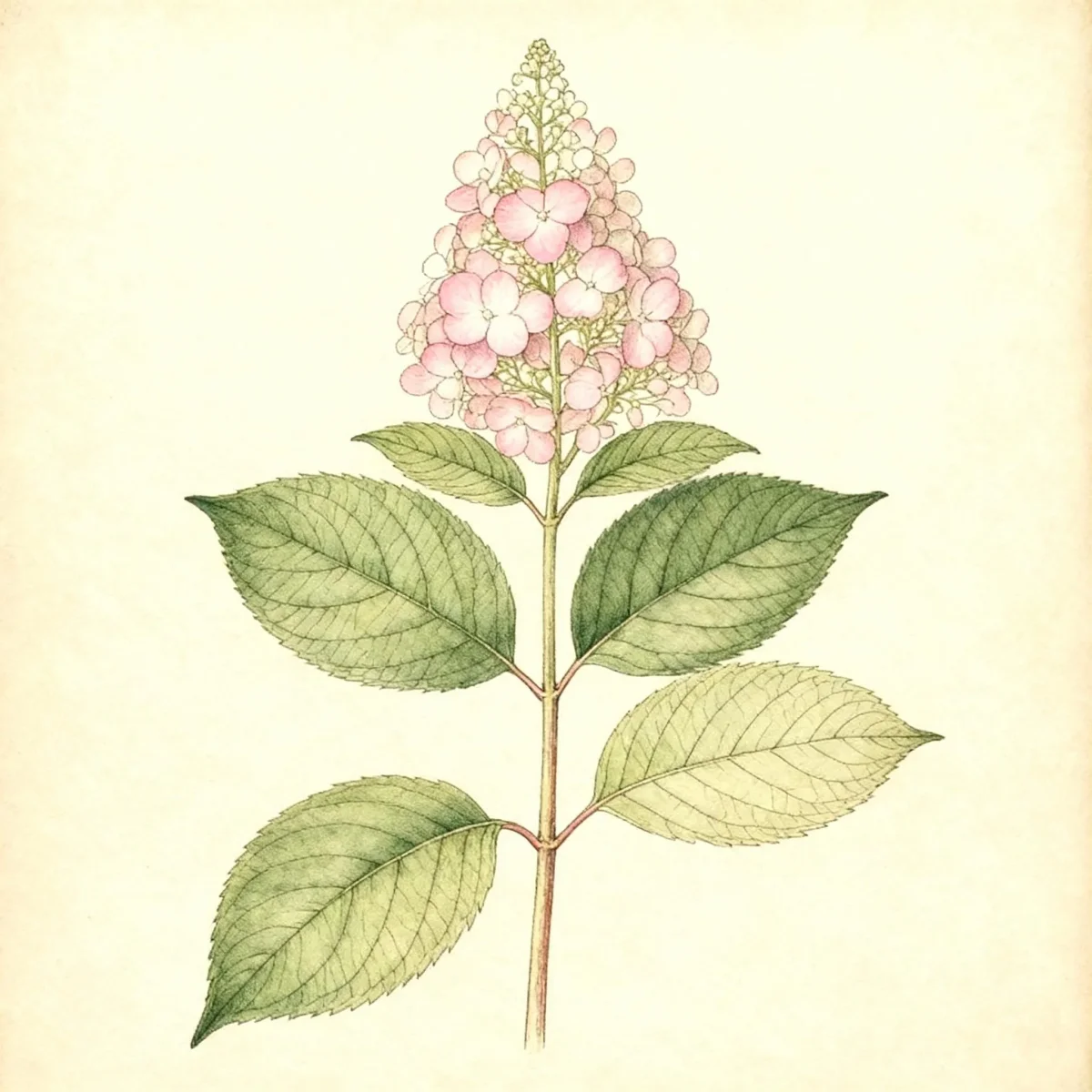
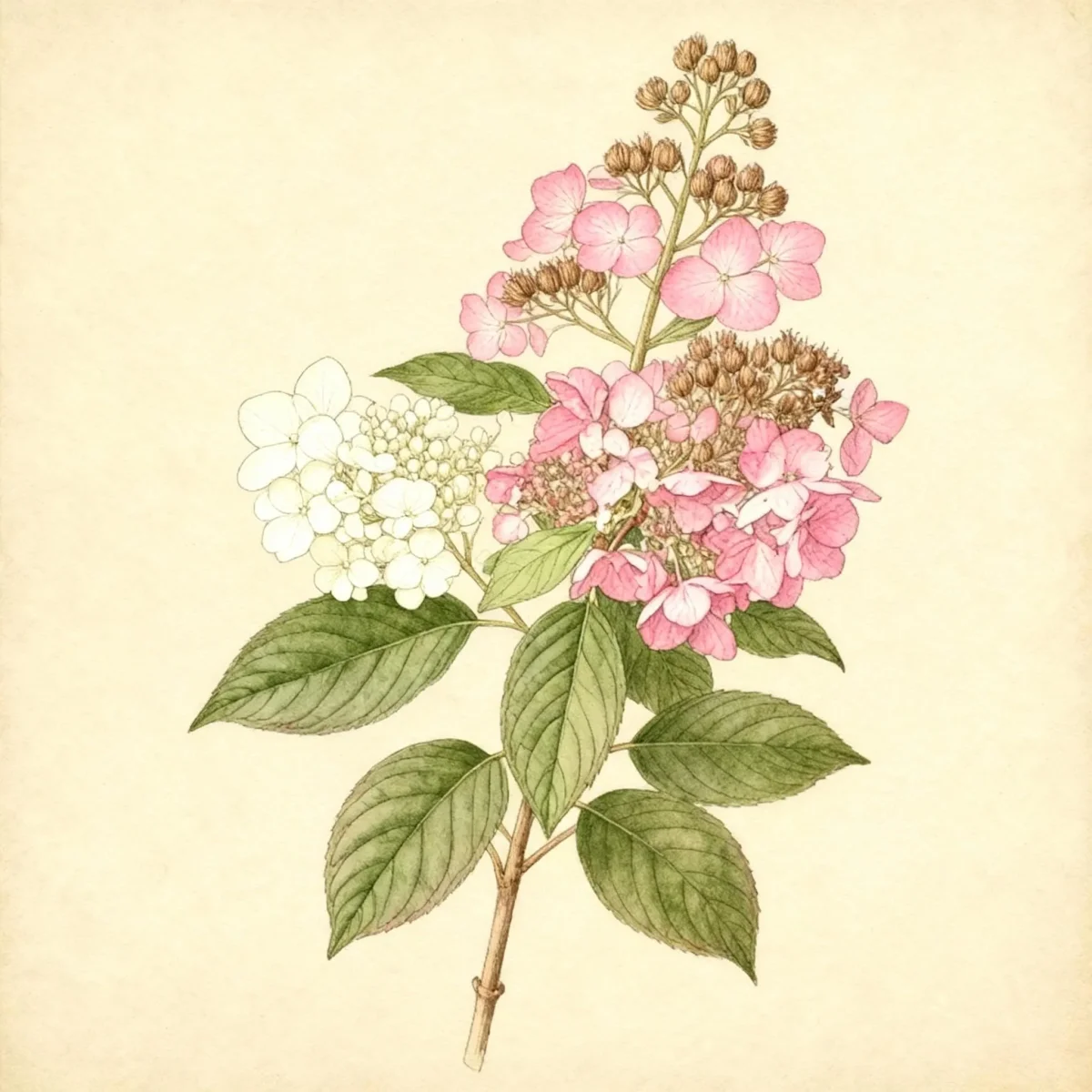
Panicle hydrangea (Hydrangea paniculata 'Bombshell')
Dwarf Panicle hydrangea, Hydrangea paniculata 'Bombshell', offers abundant white-to-pink flowers from July to September in zones 4-8.
Scroll down to discover growing tips, care requirements, companion plants, and more
Complete Plant Information
Overview
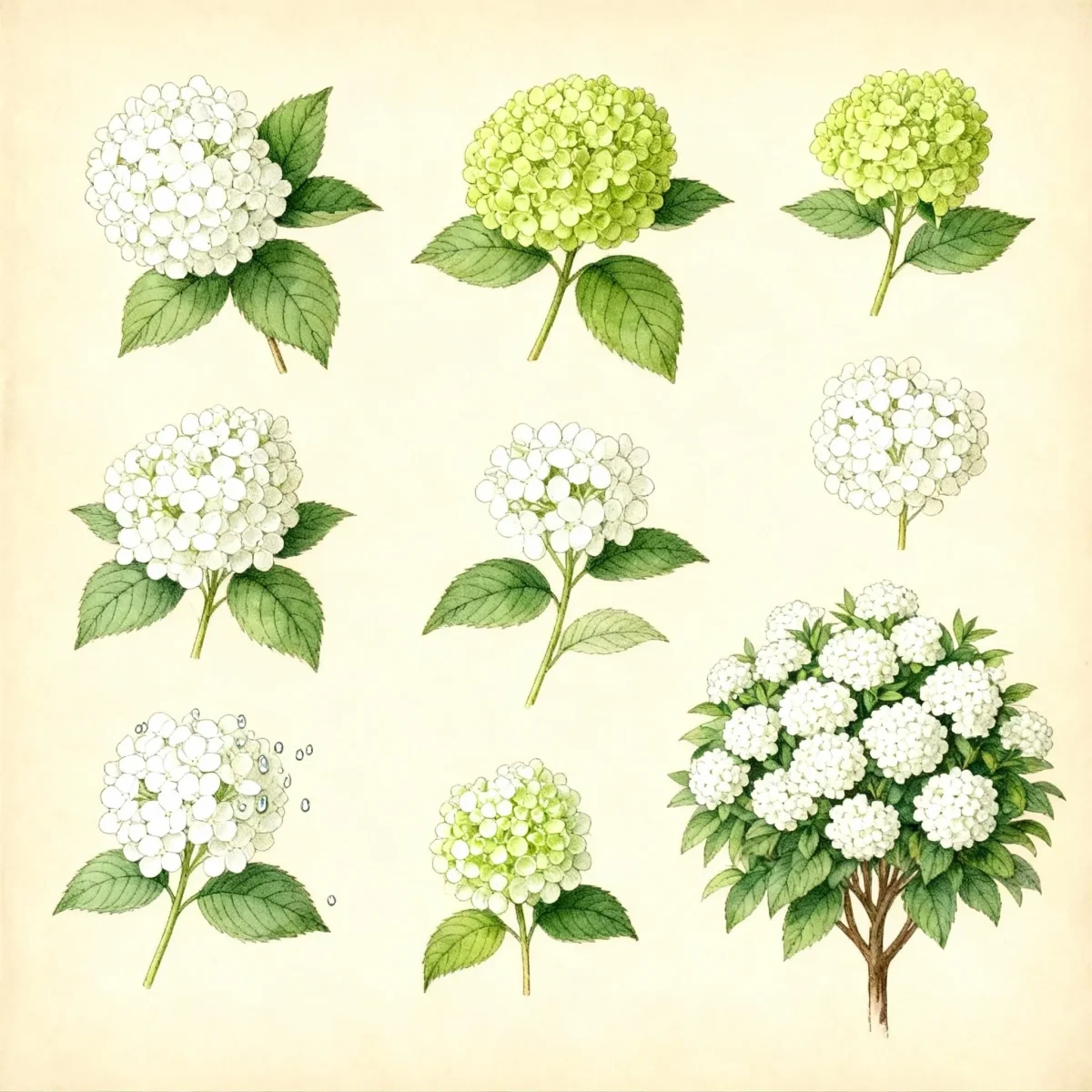
Hydrangea paniculata ‘Bombshell’ is a highly valued dwarf cultivar of the Panicle hydrangea, prized for its compact habit and exceptionally long blooming season, extending from mid-summer well into autumn. Unlike many larger relatives, this selection stays neatly mounded, making it suitable for smaller garden spaces while still delivering prolific, showy blooms that start white and transition to a lovely rosy pink. This vigorous shrub thrives with strong, stiff stems that prevent the heavy flower panicles from drooping, ensuring an upright, tidy appearance throughout the season.
As a deciduous shrub, Hydrangea paniculata ‘Bombshell’ offers reliable performance across USDA Zones 4 through 8. It is known for being one of the most winter-hardy hydrangeas available, thriving even in challenging urban environments. Its adaptability to both full sun exposure and partial shade makes planning its placement straightforward for most landscapes.
Gardeners appreciate the low fuss associated with this Panicle hydrangea, though it does require medium watering and basic maintenance. The free-blooming nature and reliable color transformation ensure that the garden benefits late in the season when many other perennials begin to fade, providing consistent interest until frost.
Fast Facts
- Plant Family: Hydrangeaceae
- Plant Type: Deciduous shrub
- Hardiness Zones: USDA Zones 4-8
- Size at Maturity:
- Height: 2-3 ft
- Spread: 3-4 ft
- Bloom Time: July to September
- Bloom Description: White maturing to rosy pink
- Sun Exposure: Full sun to part shade
- Water Needs: Medium
- Maintenance Level: Medium
How to Grow
Plant Hydrangea paniculata ‘Bombshell’ ideals during the cooler parts of the season, ensuring establishment before summer heat. This cultivar performs best when situated in organically rich, medium-moisture soils that drain well. While it appreciates full sun, which promotes the best flowering, it will tolerate part shade beautifully, especially in hotter climates where afternoon shade provides protection.
Care for your Panicle hydrangea throughout the growing season focuses on consistent moisture management; aim for medium watering, avoiding soggy conditions. Pruning is best managed in late winter to early spring, as blooms appear on current season’s growth. For managing the size of Hydrangea paniculata ‘Bombshell’, light pruning is usually sufficient to maintain its 2-3 foot mound.
If you desire larger flower panicles, selectively thin the shrub by removing older wood, focusing on retaining only 5 to 10 primary shoots. This specialized cultivar naturally resists the branch arching seen in larger varieties, due to its strong stems, though heavy bloom weight may still cause some gentle bowing. As one of the most winter-hardy hydrangeas, it generally requires no special winter preparation beyond ensuring adequate moisture before the ground freezes.
Landscape Uses
The compact scale of Hydrangea paniculata ‘Bombshell’ makes it incredibly versatile in modern landscape design. Its moderate size allows excellent placement as a formal or informal hedge, providing season-long structure without overwhelming smaller spaces. Furthermore, it functions wonderfully as a specimen plant near entrances or along walkways where its continuous bloom can be closely appreciated.
Consider massing these shrubs together for a stunning, continuous drift of white and pink color late in the season. They also integrate seamlessly into mixed shrub borders or woodland garden settings, offering textural contrast to finer-leaved evergreens. Since the flowers persist, planting them near structures or paths ensures that the late-season interest of the Panicle hydrangea remains visible even into winter months.
Standout Features
Flower Qualities
- Showy
- Good Cut
- Good Dried
Noteworthy Characteristics
Hydrangea paniculata, commonly called panicle hydrangea, is a vigorous, upright, rapid-growing, somewhat coarsely textured, deciduous shrub that is native to China and Japan. ‘Bombshell’ is specifically noted for its dwarf/compact shape, dense nearly round flower panicles, and free blooming habit, blossoming earlier and longer than many other panicle hydrangeas. The sterile flowers emerge a clean white before slowly maturing to a beautiful rosy pink, held upright by strong, stiff stems throughout July and September.
Tolerances
Potential Problems
This plant exhibits some susceptibility to common hydrangea issues, including bud blight, bacterial wilt, leaf spot, rust, and mildew. To mitigate these fungal or bacterial issues, always ensure excellent air circulation around the foliage and adhere to proper watering techniques to keep leaves dry. Occasionally, aphids and mites may become present; routine inspection, especially of new growth, allows for prompt management using horticultural oils or insecticidal soap if necessary.
Frequently Asked Questions
What hardiness zones is Panicle hydrangea suitable for?
Hydrangea paniculata ‘Bombshell’ is reliably hardy in USDA Zones 4 through 8.
How large does Hydrangea paniculata ‘Bombshell’ grow?
This dwarf cultivar typically matures to a height between 2 and 3 feet tall, with a spread ranging from 3 to 4 feet wide.
What sun exposure does Panicle hydrangea need?
For the best performance, Hydrangea paniculata ‘Bombshell’ prefers full sun to part shade conditions.
When does Panicle hydrangea bloom?
This variety blooms reliably from July well into September, with flowers starting white and aging to a rosy pink hue.
Conclusion
Hydrangea paniculata ‘Bombshell’ delivers exceptional value due to its dependable late-season color, compact size, and superior cold hardiness. For gardeners seeking structural plants that offer reliable bloom without extensive pruning needs, this Panicle hydrangea is an excellent choice. Check your local USDA zone compatibility before planning your mid-summer planting layout for these beautiful shrubs.
Companion Planting
When designing borders around Hydrangea paniculata ‘Bombshell’, select companions that share similar preferences for sun exposure and medium moisture, such as Astilbes or Hardy Geraniums, which tolerate partial shade well. For areas receiving more sun, consider pairing the upright structure of this Panicle hydrangea with shorter, mounding perennials like Sedum or Coreopsis, creating layers of contrasting texture and bloom time. This layering technique enhances visual interest while ensuring all plants benefit from similar soil conditions.
Design Ideas
The tidy, rounded profile of Hydrangea paniculata ‘Bombshell’ makes it an exceptional choice for low foundation plantings where space is limited but year-round structure is desired. Because it blooms on new wood, its flowers appear after most spring bloomers fade, making it a perfect bridge plant in a tiered design. Use multiple ‘Bombshell’ specimens in a row to create a formal, low border that remains attractive even when not in full flower, or use a few strategically placed specimens to anchor the corners of a woodland path.