Hens and chicks (Sempervivum 'Black')
Discover Sempervivum 'Black', the iconic Hens and chicks succulent, featuring dark winter foliage and extreme drought tolerance.
Scroll down to discover growing tips, care requirements, companion plants, and more
Complete Plant Information
Overview
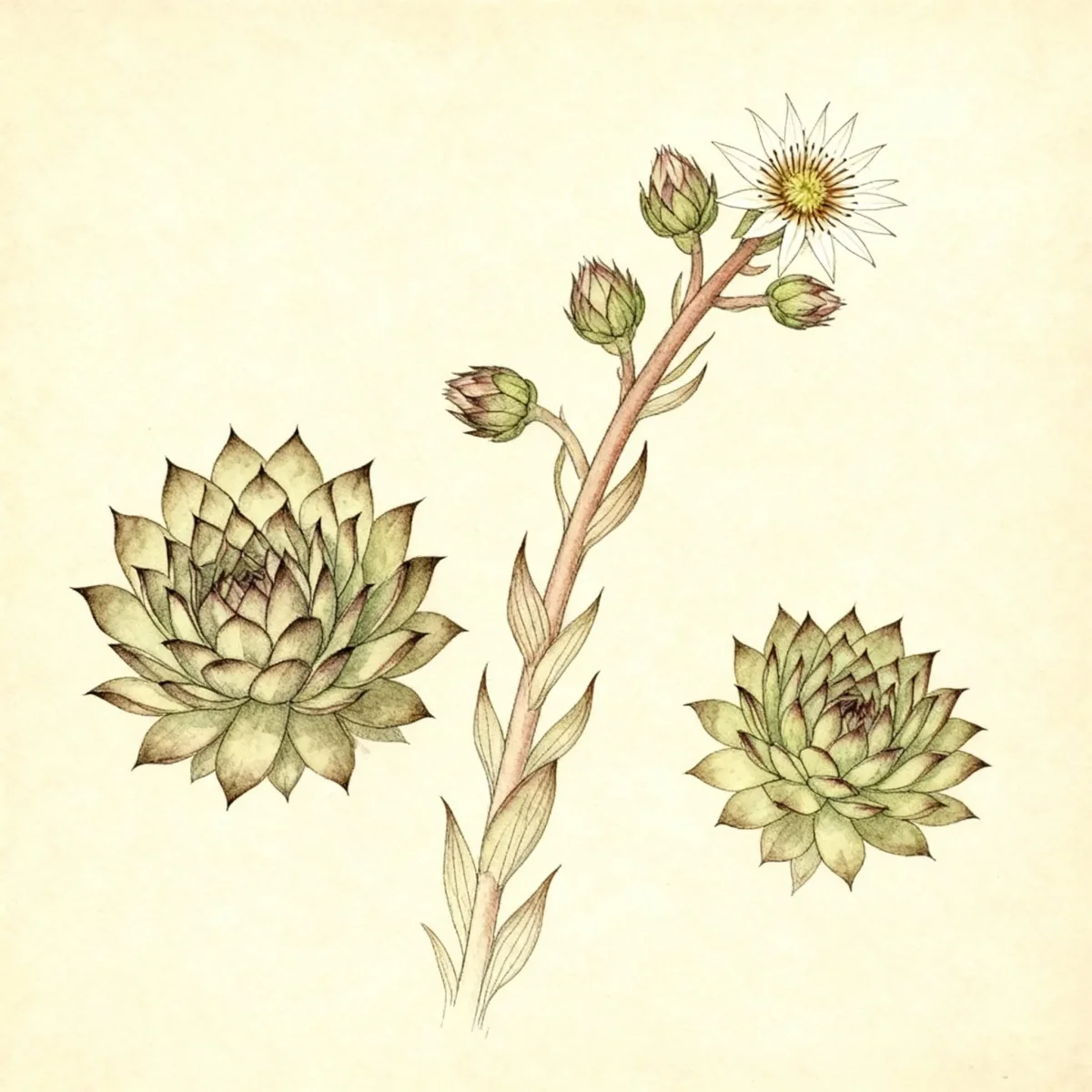
Sempervivum ‘Black’, commonly known as Hens and chicks, is a stunning, mat-forming succulent prized for its dramatic, dark coloration, especially during colder months. This specific cultivar offers vibrant green rosettes tipped with maroon in spring and summer, which deepen to a near-black or deep purple hue throughout winter, providing year-round structure. As a tough, low-maintenance perennial, it excels in harsh conditions where many other plants struggle.
This robust Hen and chicks variety spreads reliably via offsets, quickly forming dense colonies perfect for ground cover or filling crevices in rockeries. The genus name, derived from Latin words meaning “always living,” speaks to its renowned hardiness and evergreen nature. Growing Sempervivum ‘Black’ provides beautiful texture and color contrast in succulent collections or dry garden installations.
The plant follows a classic lifecycle: the mature rosette (hen) flowers producing small, star-shaped white blooms followed by the death of that specific rosette. However, the surrounding chicks ensure the colony remains full and thriving, fulfilling its promise of “always living.”
Fast Facts
- Plant Family: Crassulaceae
- Plant Type: Herbaceous perennial
- Hardiness Zones: USDA Zones 4-9
- Size at Maturity:
- Height: 0.25-0.5 ft
- Spread: 0.75-1 ft
- Bloom Time: June to August
- Bloom Description: Whtie
- Sun Exposure: Full sun
- Water Needs: Dry to medium
- Maintenance Level: Low
How to Grow
Planting Sempervivum ‘Black’ is best done in spring or early fall when temperatures are moderate. Success hinges almost entirely on excellent soil drainage; this plant loathes sitting in moisture. Incorporate gravel, grit, or coarse sand into average garden soil to mimic its preferred rocky, alpine habitat. Full sun exposure is necessary to achieve the deepest, richest coloration in the foliage.
Care for this Hen and chicks variety is extremely minimal once established. Water deeply but infrequently, allowing the soil to dry out completely between waterings; avoid overhead watering near the crown if possible. Fertilizing is rarely needed, as poor soils are tolerated well, and excess feeding can lead to floppy growth. Deadheading is a practical step when the mother rosette blooms; carefully remove the spent flower stalk to keep the colony tidy and allow the chicks more space to develop.
A key cultural note for this evergreen succulent is drainage. If planted in clay or heavy soil, rot can become an issue, thus sharply draining soil is mandatory for performance. While Sempervivum ‘Black’ tolerates some drought, consistent dryness during summer heat is preferred over consistently damp conditions, upholding its reputation as a low-water solution.
Landscape Uses
Due to their compact stature and extreme drought tolerance, Sempervivum ‘Black’ excels in uses requiring reliable, year-round texture. They are fundamental components in rock gardens and alpine displays, cascading perfectly over stones or tucked into narrow rock crevices. These Hens and chicks make phenomenal edging material along stone walls or foundations where soil is often thin and well-drained.
Furthermore, their adaptability makes them excellent choices for xeriscaping projects, providing vibrant, evergreen color without demanding supplementary irrigation. They thrive in containers, often used in mixed succulent arrangements or as a single specimen where they will slowly multiply to fill the pot. The spreading nature of Sempervivum ‘Black’ also makes it suitable for small area ground covers where foot traffic is minimal.
Standout Features
Noteworthy Characteristics
Sempervivum is a genus of roughly 40 species of rosette-forming succulents found growing on sunny and rocky slopes in mountainous regions of southern Europe and northern Africa. Rosettes vary in size from 0.25” up to 10” in diameter and display colors ranging from chartreuse greens to purples, reds, and bronze tones that often deepen in winter. The common name hens and chicks comes from the ability of the mother rosette (hen) to spread by offsets (chicks), and in the case of ‘Black’, the foliage turns rich, dark purple to black in winter.
Tolerances
- Deer
- Drought
- Dry Soil
- Shallow-Rocky Soil
Potential Problems
Sempervivum ‘Black’ resists most common pests and diseases, maintaining its low maintenance reputation. The most significant threat comes from cultural mistakes, specifically providing inadequate drainage. Rusts, leaf/stem rot, and root rot are common occurrences when the soil remains saturated or wet for extended periods, especially during humid weather. To prevent this, ensure your planting medium is gritty and amend heavy soils heavily. Deer generally avoid snacking on these rosettes, further securing their place in outdoor displays.
Frequently Asked Questions
What hardiness zones is Hens and chicks suitable for?
Sempervivum ‘Black’ is reliably cold-hardy in USDA Zones 4 through 9.
How large does Sempervivum ‘Black’ grow?
This cultivar typically reaches a height of 0.25 to 0.5 feet and spreads between 0.75 and 1 foot as it forms colonies of chicks.
What sun exposure does Sempervivum ‘Black’ need?
This succulent requires full sun for optimal growth and best dark coloration, although it can tolerate a small amount of light afternoon shade in extremely hot climates.
When does Hens and chicks bloom?
The flowering period for Sempervivum ‘Black’ usually occurs from June through August, producing dainty white blooms atop a stalk before the mother rosette naturally dies back.
Conclusion
Sempervivum ‘Black’ is an invaluable ground cover and accent plant, celebrated for its rugged drought tolerance and dramatic, dark winter foliage that distinguishes it from standard Hens and chicks. Its minimal cultural demands make it perfect for rockeries, xeriscaping, and novice gardeners alike. Before planting, confirm your garden site offers sharp drainage and adequate sunlight to ensure your Sempervivum ‘Black’ thrives throughout the seasons.
Companion Planting
When selecting companions for Sempervivum ‘Black’, focus on other drought-tolerant, sun-loving, and gritty-soil natives. Pair them with creeping Thymes, Sedums, or low-growing ornamental grasses that share similar water and sun requirements. Avoid moisture-loving perennials near your Hens and chicks, as sharing root space with thirsty plants often necessitates overwatering the sempervivum, leading to rot issues. Hardy Alliums or certain low-growing Lavender varieties also make beautiful textural companions.
Propagation Tips
Propagating Sempervivum ‘Black’ is one of the simplest joys in gardening, relying primarily on its natural offset production. The “chicks” are miniature rosettes formed on surface stolons, which can be gently pulled or cut away from the mother rosette once they have formed their own small root base. Planting these offsets immediately into gritty, fast-draining soil will establish new plants quickly. While viable seeds exist, division of offsets is the preferred and fastest method to multiply your supply of this attractive cultivar.