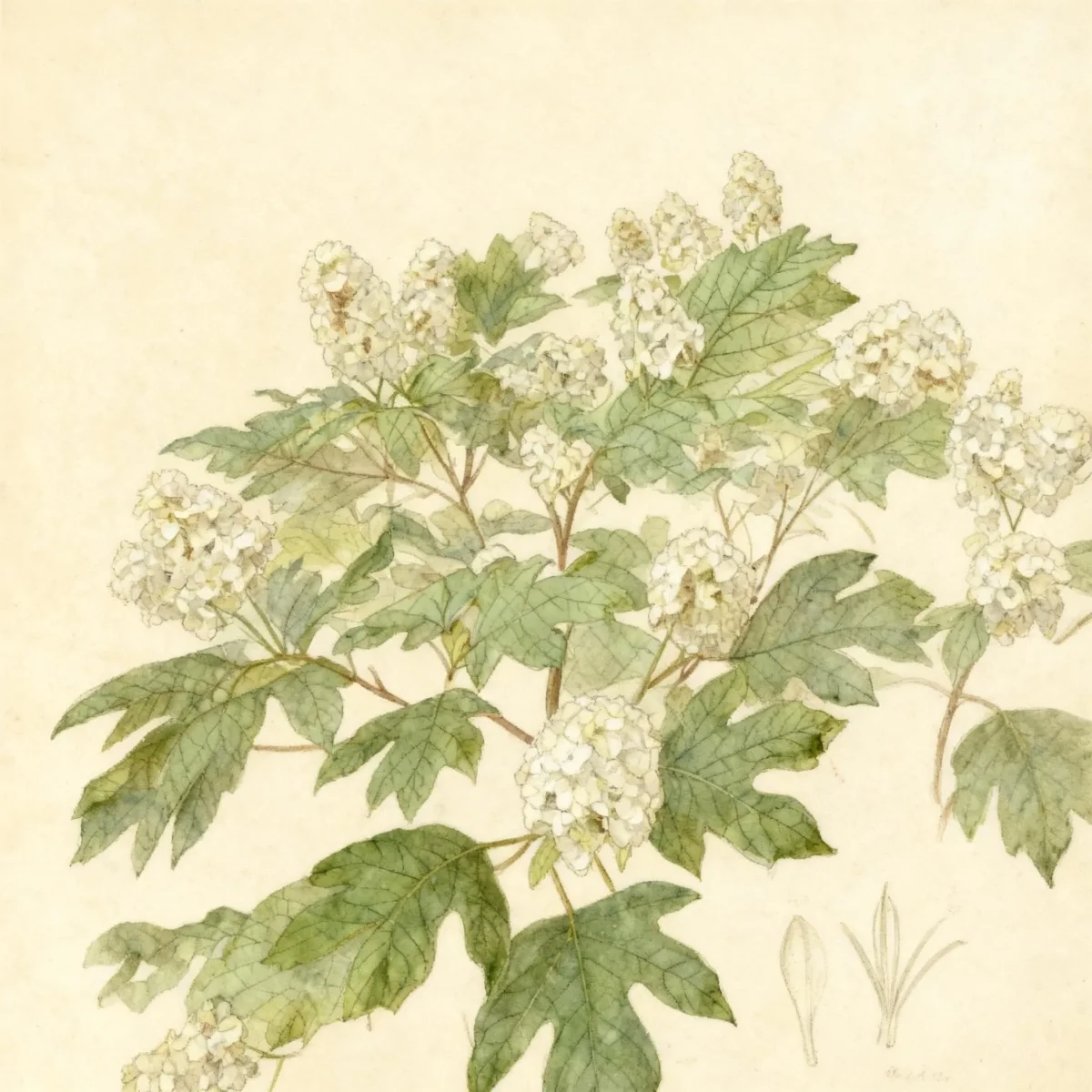
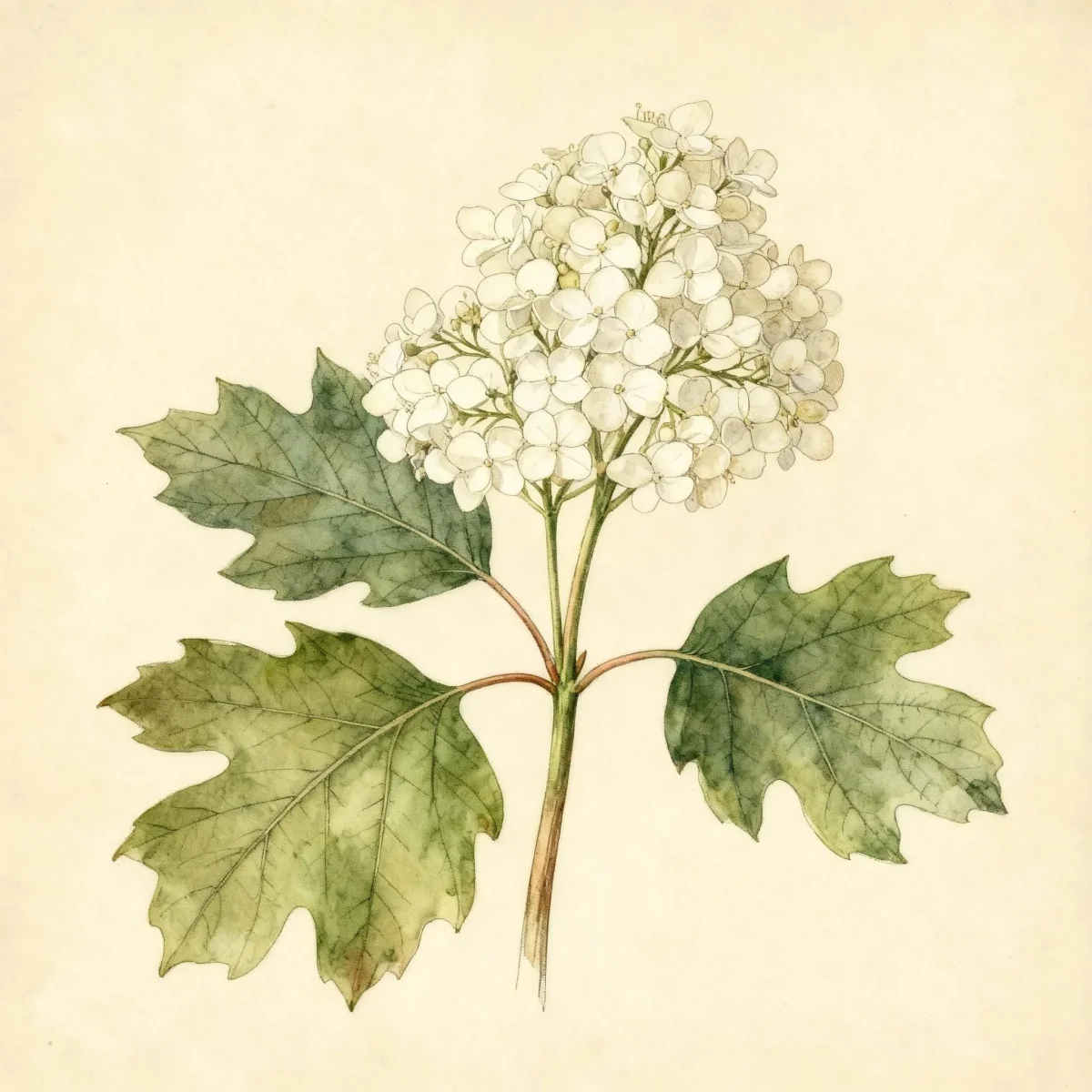
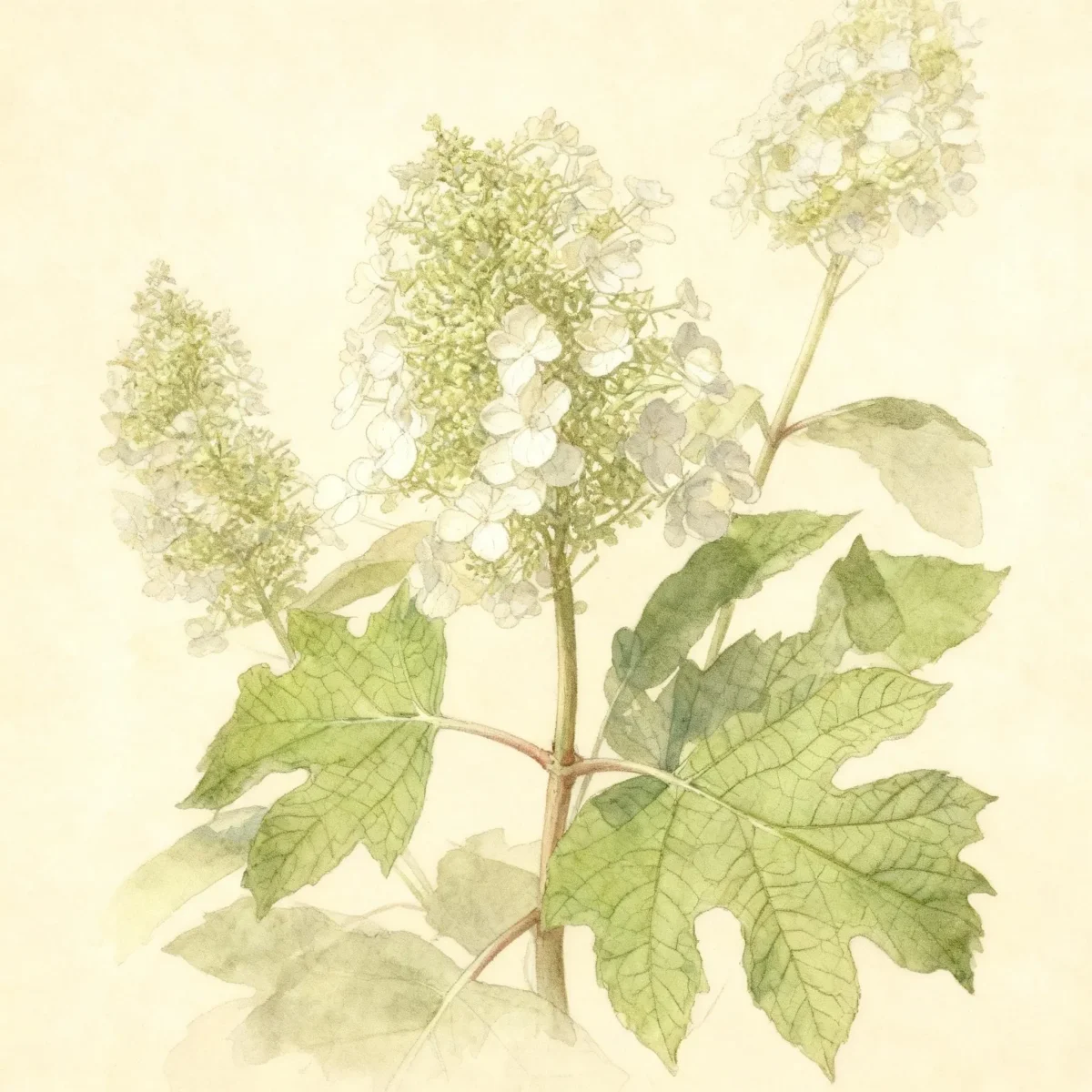
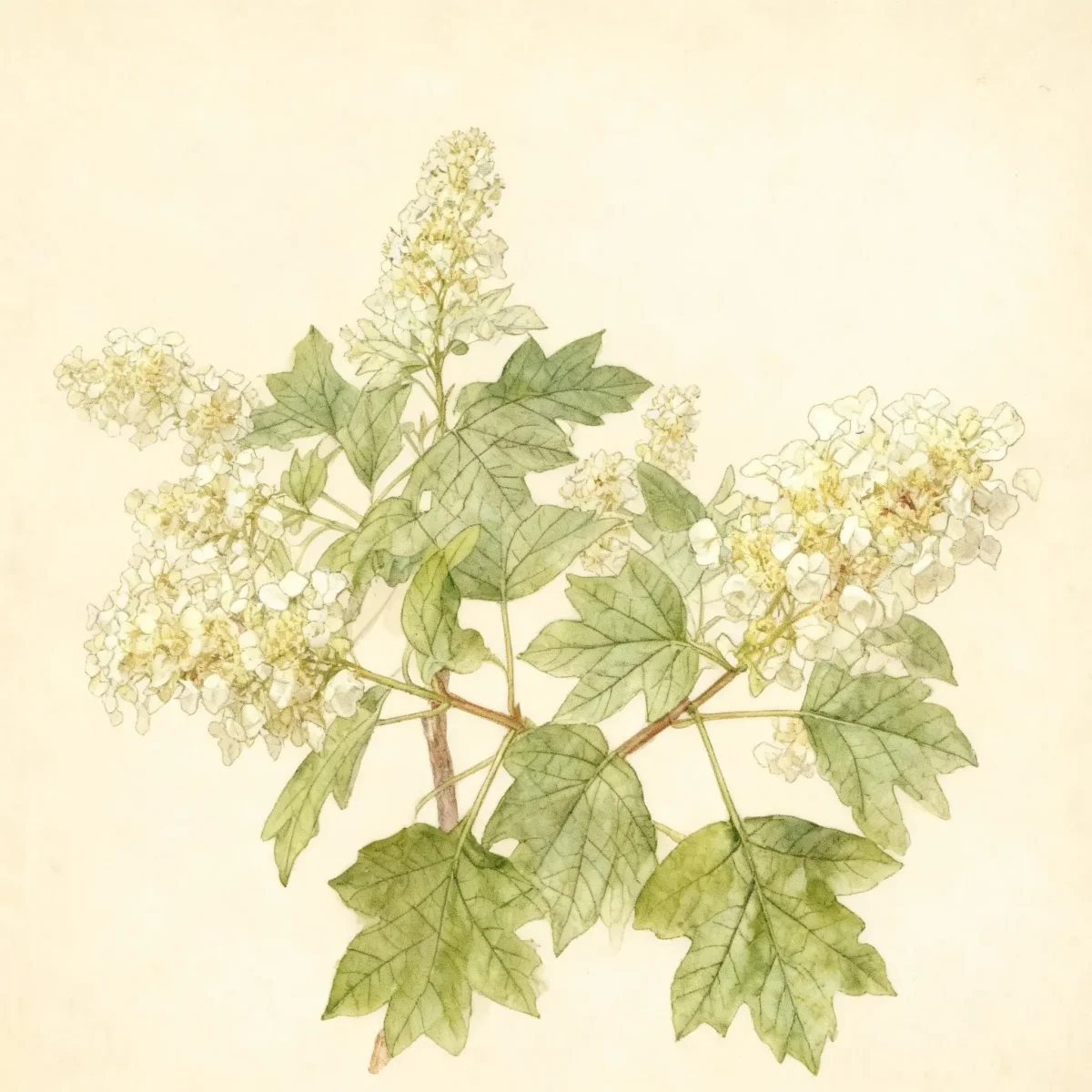
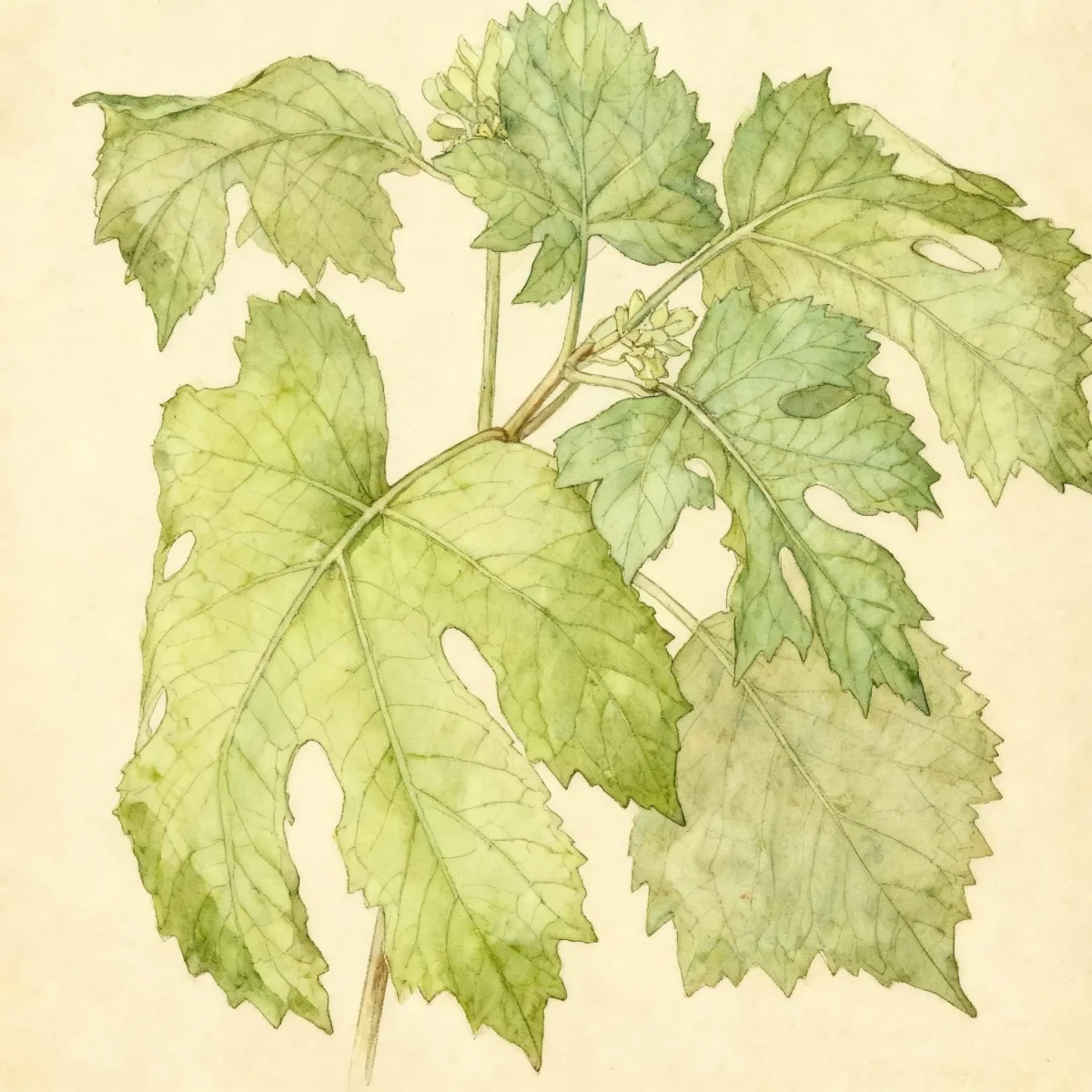
Oakleaf hydrangea (Hydrangea quercifolia 'Vaughn's Lillie')
Hydrangea quercifolia 'Vaughn's Lillie' is a compact Oakleaf hydrangea prized for white summer blooms, burgundy fall color, and exfoliating winter bark.
Scroll down to discover growing tips, care requirements, companion plants, and more
Complete Plant Information
Overview
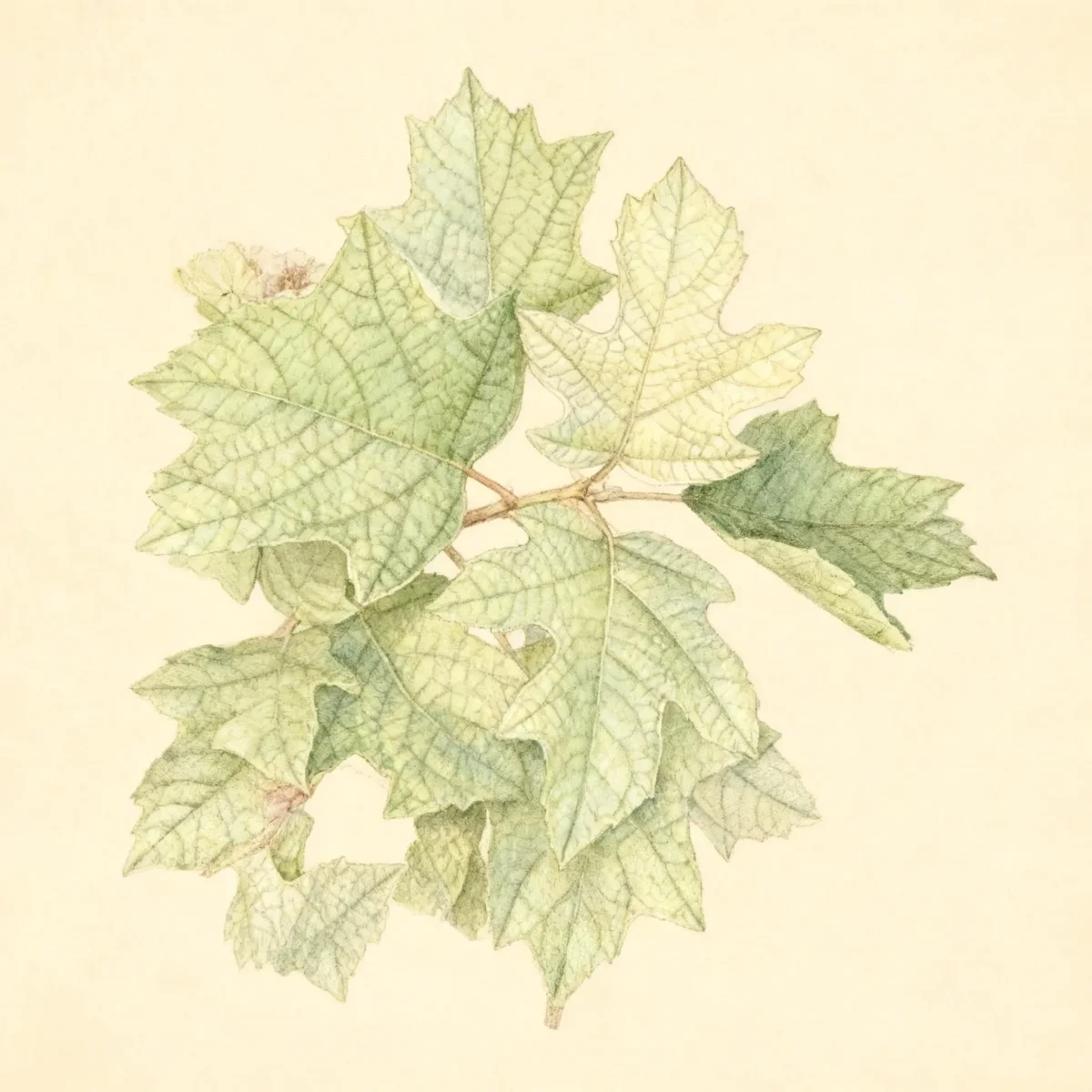
The Hydrangea quercifolia ‘Vaughn’s Lillie’ is a highly desirable cultivar of the native Oakleaf hydrangea, offering significant texture and seasonal interest in a compact package. Gardeners value this shrub for its upright, broad-rounded habit that remains manageable, showcasing large, deeply-lobed leaves resembling oak foliage. This particular selection of Oakleaf hydrangea is celebrated not only for its striking white summer flowers but also for its rich burgundy fall coloration and attractive exfoliating bark that provides winter interest.
This deciduous shrub thrives when provided with organically rich, well-drained soil and a balanced location from full sun to partial shade. It is categorized as a low-maintenance plant, making it an excellent choice for foundational plantings or mixed borders where consistent performance throughout the year is desired. The reliable structure and four-season appeal ensure that Hydrangea quercifolia ‘Vaughn’s Lillie’ remains a standout performer.
Fast Facts
- Plant Family: Hydrangeaceae
- Plant Type: Deciduous shrub
- Hardiness Zones: USDA Zones 5-9
- Size at Maturity:
- Height: 3-4 ft
- Spread: 3-5 ft
- Bloom Time: June to July
- Bloom Description: White
- Sun Exposure: Full sun to part shade
- Water Needs: Medium
- Maintenance Level: Low
How to Grow
Planting should occur when soil is workable, ideally in the spring or fall to allow the roots to establish before temperature extremes hit. Ensure the site offers organically rich, medium moisture, well-drained soil. While established Hydrangea quercifolia ‘Vaughn’s Lillie’ are relatively tough, they truly benefit from placement where they receive afternoon relief if sited in hotter climates, though they tolerate full sun.
Water requires are medium; the plant thrives when soil stays consistently moist. Applying a summer mulch is highly recommended to help retain this crucial soil moisture, especially during dry spells. Since bloom occurs on old wood, pruning should be minimal and executed immediately following the flowering period in summer. Any winter-damaged wood should only be addressed in early spring after the extent of dieback is apparent.
If growing in USDA Zone 5, special attention is necessary. These plants require a sheltered location and winter protection, such as heavy mulching or burlap wrapping, especially while young. Remember that temperatures dropping below -10°F can severely impair or completely destroy the flower buds for the following season.
Landscape Uses
The compact nature of Hydrangea quercifolia ‘Vaughn’s Lillie’ makes it exceptionally versatile in smaller garden settings or near home foundations where larger shrubs would overwhelm the space. It functions beautifully as an accent plant or specimen near patios, contrasting nicely with its deeply-lobed foliage. Grouping several plants creates an effective, dense, informal hedge that offers season-long visual interest.
For larger landscapes, massing specimens provide excellent texture within open woodland settings or mixed shrub borders. The exfoliating bark ensures appeal even when dormant, offering a lovely brown texture against snow. This compact Oakleaf hydrangea also adapts well to cultivation in large containers, allowing gardeners with limited space to enjoy its seasonal progression.
Standout Features
Flower Qualities
- Showy
- Good Cut
- Good Dried
Noteworthy Characteristics
Hydrangea quercifolia, commonly called oakleaf hydrangea, is an upright, broad-rounded, suckering, multi-stemmed, deciduous shrub that typically grows 4-6’ tall. Specific epithet is in reference to the leaves that look like those of Quercus (oak). ‘Vaughn’s Lillie’ is a compact form maturing to only 3-4’ tall and 3-5’ wide, known for large white sepals atop short internodes and attractive burgundy red fall foliage. Flowers slowly acquire pink tones with age, and mature stems exfoliate to reveal a rich brown inner bark desirable in winter.
Tolerances
Potential Problems
This variety generally exhibits low susceptibility to serious pests and diseases, making ongoing management straightforward. However, be aware of its potential vulnerability to leaf blight and occasional outbreaks of powdery mildew. On rarer occasions, aphid or spider mite populations may build up, usually during hot, dry conditions. Promptly correct watering inconsistencies to mitigate fungal issues, and treat minor infestations with insecticidal soap.
Frequently Asked Questions
What hardiness zones is Oakleaf hydrangea suitable for?
The Hydrangea quercifolia ‘Vaughn’s Lillie’ is typically hardy in USDA Zones 5 through 9.
How large does Hydrangea quercifolia ‘Vaughn’s Lillie’ grow?
This compact cultivar generally reaches a height between 3 and 4 feet and spreads between 3 and 5 feet wide at maturity.
What sun exposure does Oakleaf hydrangea need?
This shrub performs best in locations receiving full sun to part shade. Ensure adequate moisture if positioned in the sunnier areas.
When does Hydrangea quercifolia ‘Vaughn’s Lillie’ bloom?
This Oakleaf hydrangea produces its showy white blooms primarily from June through July.
Conclusion
The Hydrangea quercifolia ‘Vaughn’s Lillie’ is an exceptional choice for gardeners seeking multi-seasonal interest without extreme maintenance demands. Its manageable size, combined with historical foliage texture and exfoliating bark, cements the value of this compact Oakleaf hydrangea. Before planting, confirm your location falls within USDA Zones 5–9 and prepare organically rich soil to ensure a successful, low-fuss addition to your landscape.
Companion Planting
When designing a border around your Hydrangea quercifolia ‘Vaughn’s Lillie’, focus on partners that share similar cultural needs for medium moisture and partial shade. Spring ephemerals like Bleeding Heart (Dicentra) or spring-flowering bulbs provide early color beneath the deciduous canopy before the Oakleaf hydrangea fully leafs out. Mid-summer companions such as Hostas (especially those with blue or chartreuse foliage) or Astilbes thrive in similar conditions while providing contrasting textures against the coarse, lobed leaves of the hydrangea.
Consider using evergreen shrubs along the back of the planting to ensure winter architecture, as the exfoliating bark of the hydrangea works best against a solid backdrop. For late-season color, look toward late-blooming perennials like Toad Lily (Tricyrtis) which appreciate the dappled light this shrub casts once established. This thoughtful pairing ensures continuous garden appeal throughout the growing season.
Design Ideas for Compact Hedges
Although small, the consistent form and predictable spread of Hydrangea quercifolia ‘Vaughn’s Lillie’ make it excellent for defining low boundaries. Use a series of these shrubs spaced evenly to create a formal yet soft edge along a walkway or property line where a shorter, 3 to 4-foot barrier is desired. Unlike many traditional hedging plants, this variety offers year-round visual appeal, minimizing the perception of bare winter gaps.
For foundation plantings against a residence, place the Hydrangea quercifolia ‘Vaughn’s Lillie’ slightly off-center or repeated in sections, ensuring the window wells or viewing areas remain clear. Its compact stature prevents obscuring architectural details. In perennial borders, use it as a mid-border anchor, taking advantage of the seasonal color shifts—green in summer, burgundy in fall, and textured brown in winter—to provide structure when most perennials have died back.