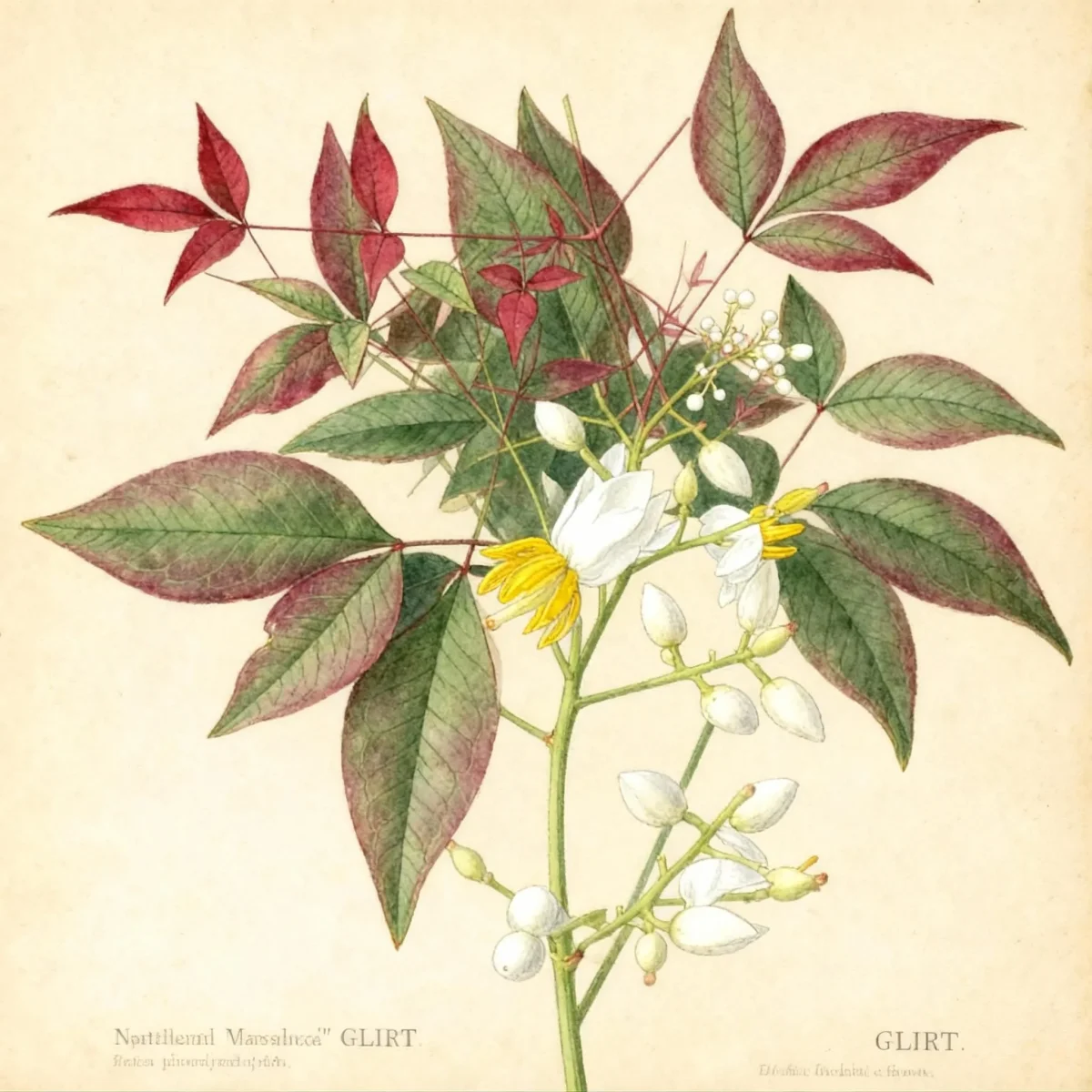
Heavenly bamboo (Nandina domestica 'Tuscan Flame')
Nandina domestica 'Tuscan Flame' offers year-round interest with striking foliage and persistent red berries. This Heavenly bamboo is adaptable.
Scroll down to discover growing tips, care requirements, companion plants, and more
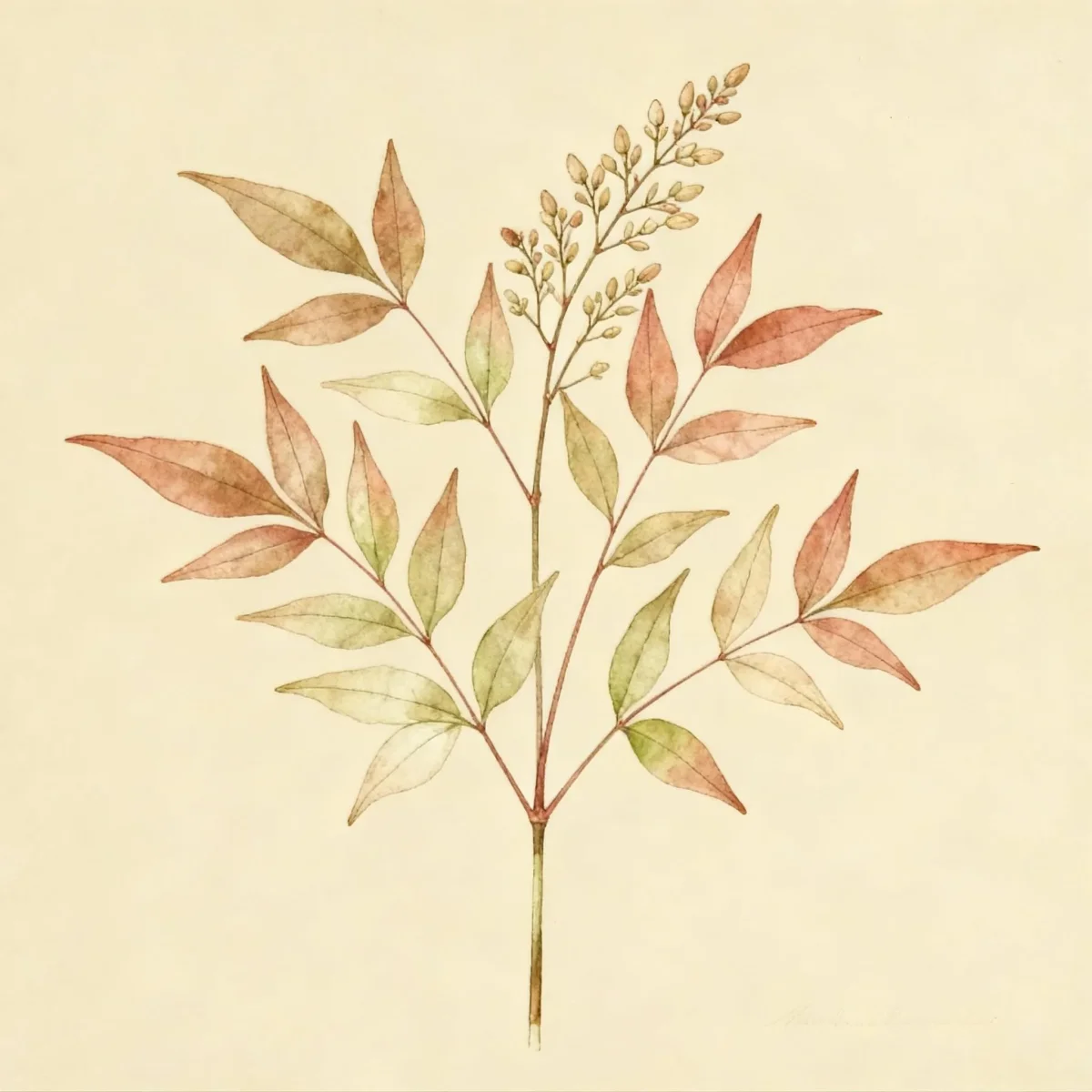
Complete Plant Information
Overview
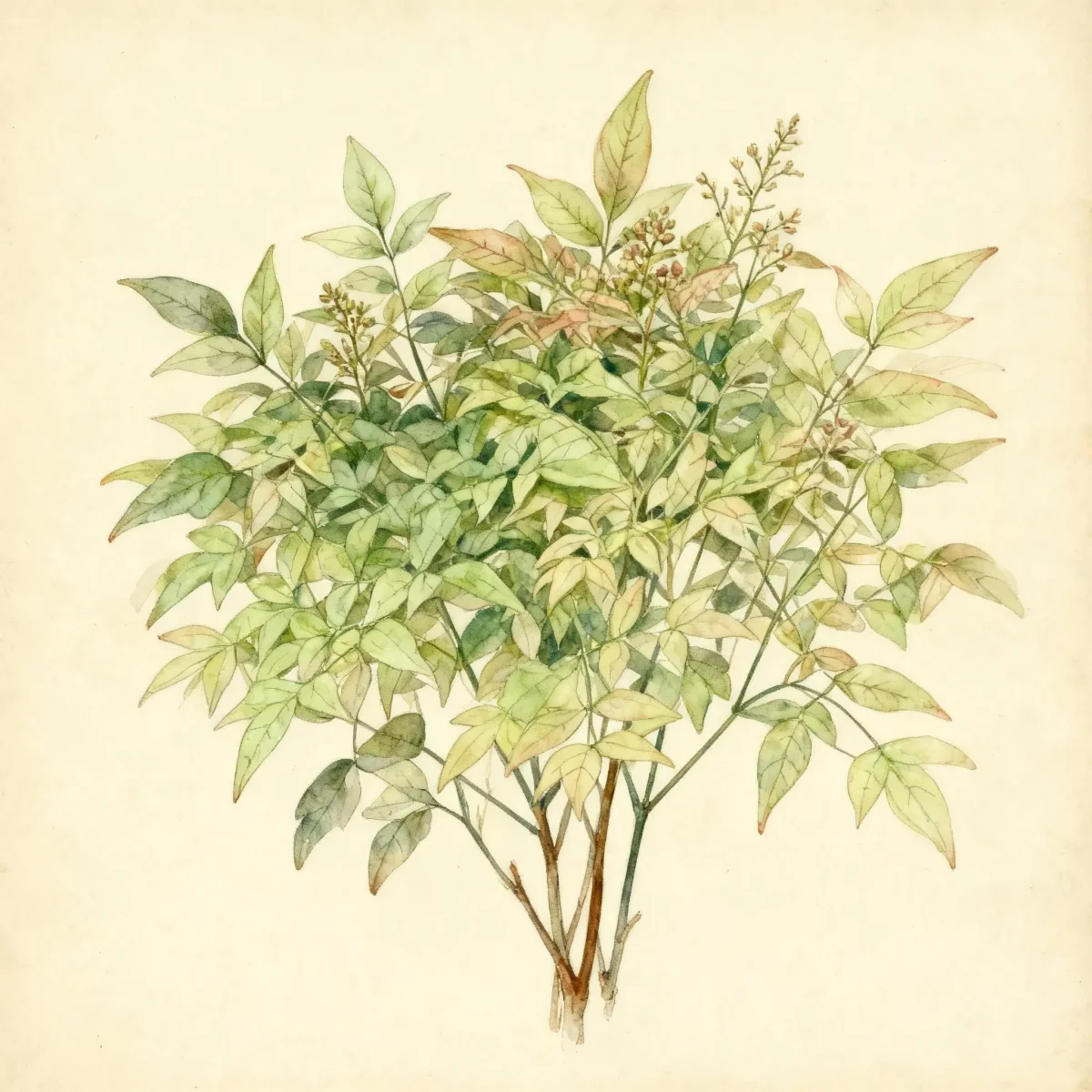
Nandina domestica ‘Tuscan Flame’, commonly known as Heavenly bamboo, is highly valued for its structural upright habit and exceptional seasonal color display. This broadleaf evergreen provides texture through its compound foliage, which often exhibits attractive changes throughout the year, depending on winter temperatures. It is an adaptable shrub, earning its place in many landscape designs where structure and persistent interest are required.
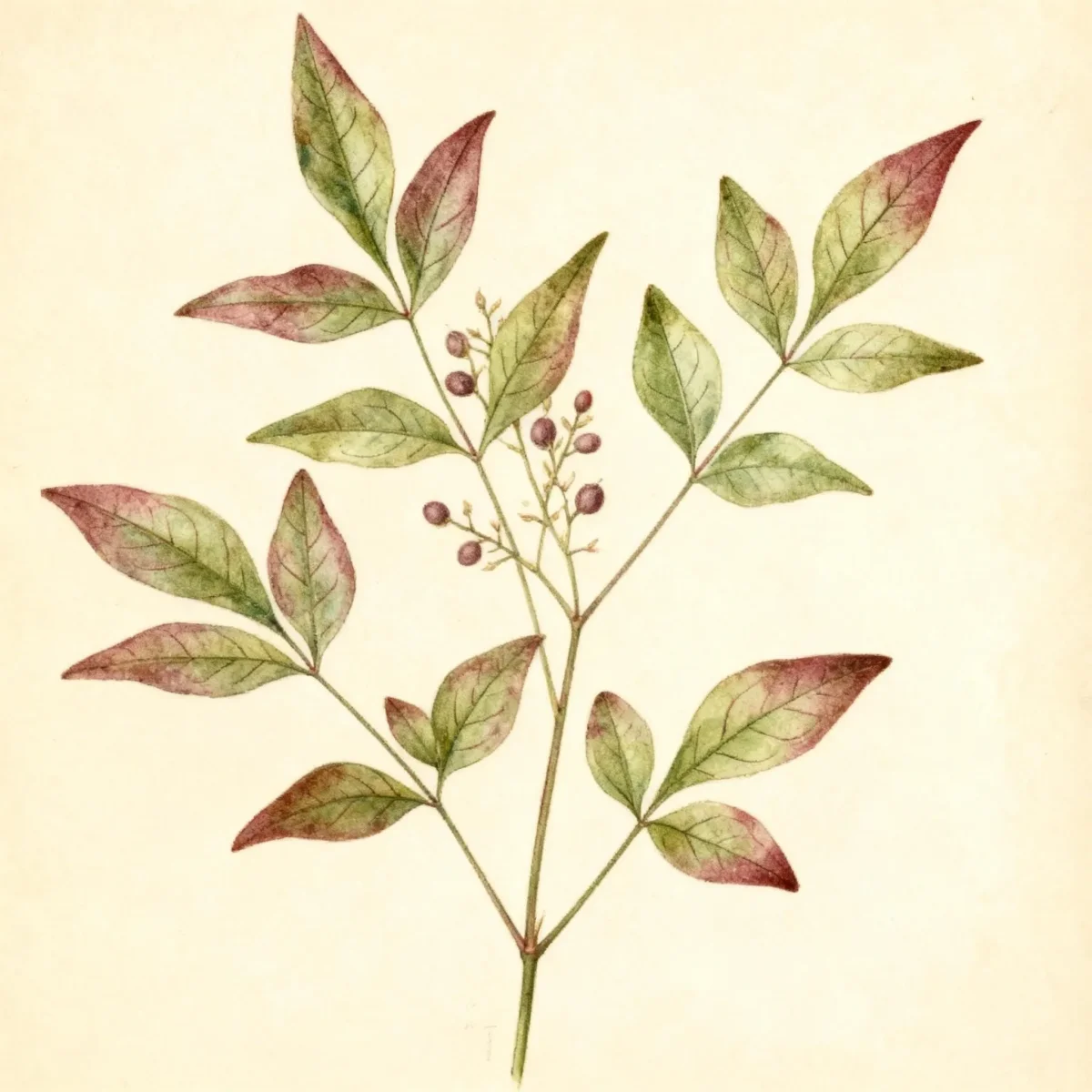
This cultivar of Heavenly bamboo typically reaches 3 to 4 feet tall and spreads lightly, fitting well into borders and foundation plantings. Although its small white flowers appear in June, the most significant ornamental feature is the persistent, showy red berries that last long into the winter months, offering critical visual interest after many other plants have faded.
While native to Asia, Nandina domestica has naturalized successfully in various environments across the US. Gardeners appreciate the lower maintenance needs of Nandina domestica ‘Tuscan Flame’, though specific placement can maximize its performance regarding foliage color and fruit production.
Fast Facts
- Plant Family: Berberidaceae
- Plant Type: Broadleaf evergreen
- Hardiness Zones: USDA Zones 6-9
- Size at Maturity:
- Height: 3-4 ft
- Spread: 2-3 ft
- Bloom Time: June
- Bloom Description: White
- Sun Exposure: Full sun to part shade
- Water Needs: Medium
- Maintenance Level: Medium
How to Grow
Plant Nandina domestica ‘Tuscan Flame’ during the cooler, damper times of the year, such as fall or early spring, whenever possible. It performs optimally in average, medium-moisture, well-drained soils. While it tolerates a wide range of soil types, it thrives best in rich, moist, humusy conditions. Ensure adequate drainage, as soggy feet can lead to root issues over time.
Watering should be consistent, especially while the plant is establishing its root system. Established Heavenly bamboo exhibits some drought tolerance, which makes maintenance easier in drier summers. For the best fruit set on Nandina domestica ‘Tuscan Flame’, plant specimens in groups, as single shrubs may fruit poorly.
In warmer regions (Zones 8-10), this shrub remains reliably evergreen. However, gardeners in the northern extremes of its range, particularly near Zone 6 borders, should protect it. When temperatures drop below 10°F, the foliage may drop, and stems can die back to the ground, requiring pruning back to the ground in spring. Siting Nandina domestica ‘Tuscan Flame’ in protected microclimates away from harsh winter winds is highly advisable in these transitional zones.
Landscape Uses
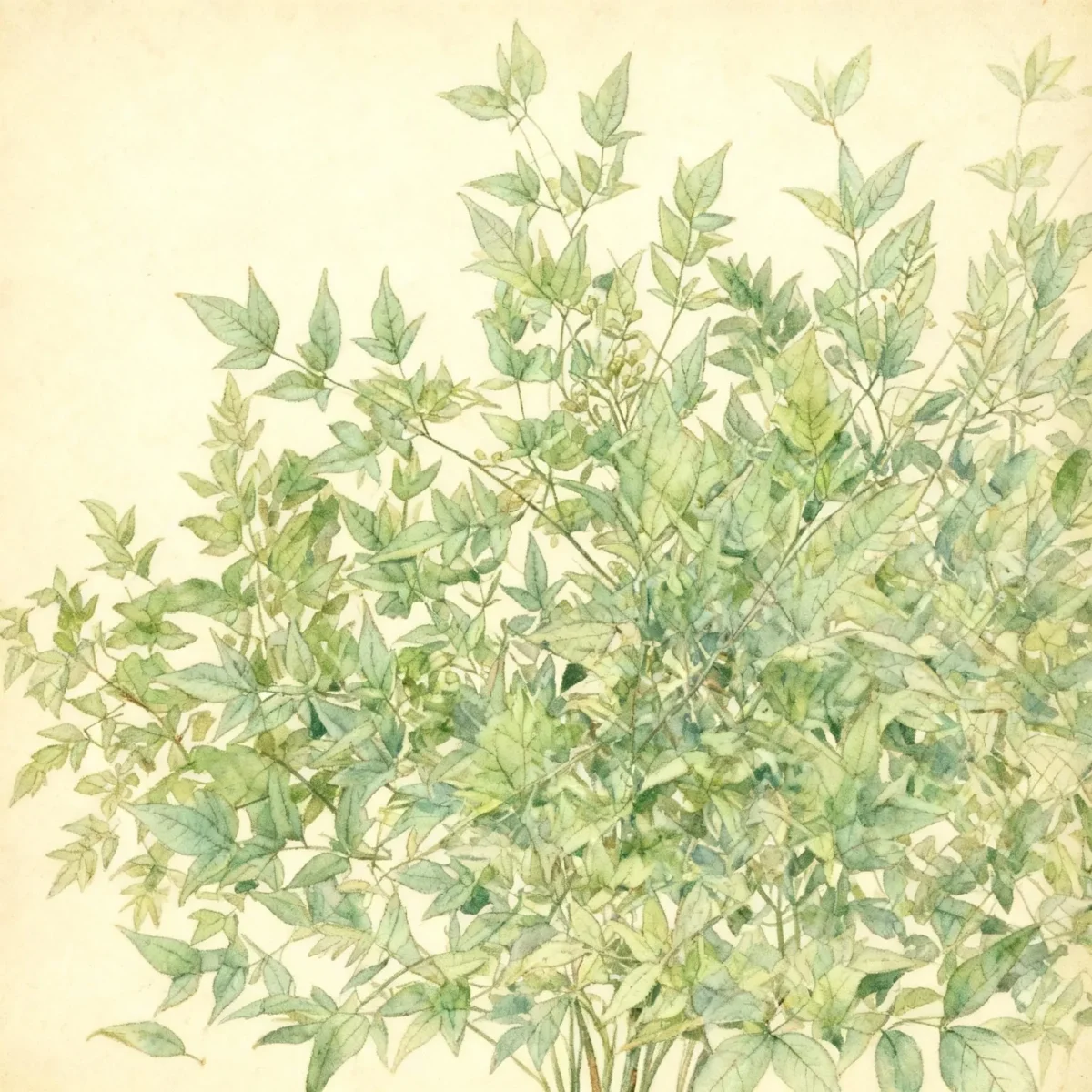
The compact structure and year-round appeal of Nandina domestica ‘Tuscan Flame’ make it exceptionally versatile in landscape design. Grouping or mass planting helps emphasize its ornamental foliage and dense screen effect, making it ideal for informal shrub borders or woodland settings. It functions effectively as a low foundation planting where a neat, contained evergreen is desired.
In warmer climates where it remains evergreen, it serves beautifully as a low, informal hedge, offering structure without the formality of sheared evergreens. For a naturalized look, allow it to intermingle with ferns or shade-loving perennials in open woodland gardens. The contrast between its fine leaves and bolder neighboring shrubs adds vital textural interest.
Standout Features
Flower Qualities
- Showy
Fruit Qualities
- Showy
Noteworthy Characteristics
Nandina domestica, commonly called heavenly bamboo, is celebrated primarily for its interesting foliage structure and its often spectacular fruit display, which features round, red berries persisting from fall until spring. This is a rhizomatous, upright evergreen shrub, though it can behave as semi-evergreen in colder zones where stems die back below 10°F. Although botanically unrelated, its cane-like stems and compound leaves strongly resemble true bamboo.
Tolerances
- Drought
- Heavy Shade
Potential Problems
Nandina domestica ‘Tuscan Flame’ is generally robust, experiencing no serious, widespread insect or disease issues which simplifies overall maintenance. The main cultural concern involves soil pH; foliage may develop chlorosis (yellowing) if planted in overly alkaline soils, suggesting iron chelate application may be necessary for correction. Gardeners must also be aware that Heavenly bamboo can be invasive, naturalizing easily, especially in the humid southeastern US. Always check local environmental regulations and recommendations before planting.
Frequently Asked Questions
What hardiness zones is Heavenly bamboo suitable for?
Nandina domestica ‘Tuscan Flame’ is hardy in USDA Zones 6 through 9, offering reliable evergreen performance in the warmer end of that spectrum.
How large does Nandina domestica ‘Tuscan Flame’ grow?
This cultivar typically matures to a height between 3 and 4 feet, with a spread ranging from 2 to 3 feet wide.
When does Heavenly bamboo bloom?
The plant produces small flowers in June, which are white, followed later in the season by its signature red berries.
What sun exposure does Nandina domestica ‘Tuscan Flame’ need?
It performs best in a site receiving full sun to light part shade, though it possesses some tolerance for heavy shade, which might result in slightly less vigorous growth or reduced fruiting.
Conclusion
Nandina domestica ‘Tuscan Flame’ delivers exceptional value with its architectural form and reliable seasonal color contrast, especially the persistent red fruit display that defines winter interest. This versatile Heavenly bamboo thrives in diverse light conditions, provided drainage is adequate. Before integrating this selection into your yard, confirm your USDA hardiness zone alignment and consider grouping plants for optimal berry production.
Companion Planting
When designing beds around Nandina domestica ‘Tuscan Flame’, select plants that contrast well texturally or spatially. Because this shrub tolerates shade, pair it with large-leaved, deep green groundcovers like Hostas or ferns, which thrive in dappled light conditions found under trees or open canopy. The fine, delicate foliage of the Heavenly bamboo contrasts beautifully with the bold, architectural forms of plants like Japanese Forest Grass (Hakonechloa).
For sunny areas, pair this cultivar with other plants known for long-season color, such as certain low-growing Sedums or spreading Geraniums. Since Nandina domestica prefers medium moisture, ensure companions share this requirement; avoid extremely dry-loving desert plants or those demanding constant inundation.
Seasonal Care Calendar
Spring signals the beginning of active growth and is the ideal time for any necessary pruning following winter dieback in colder areas. Remove any dead or damaged canes to encourage fresh, vibrant growth of Nandina domestica ‘Tuscan Flame’. Summer care should focus primarily on maintaining consistent moisture, especially during dry spells, to support medium water needs.
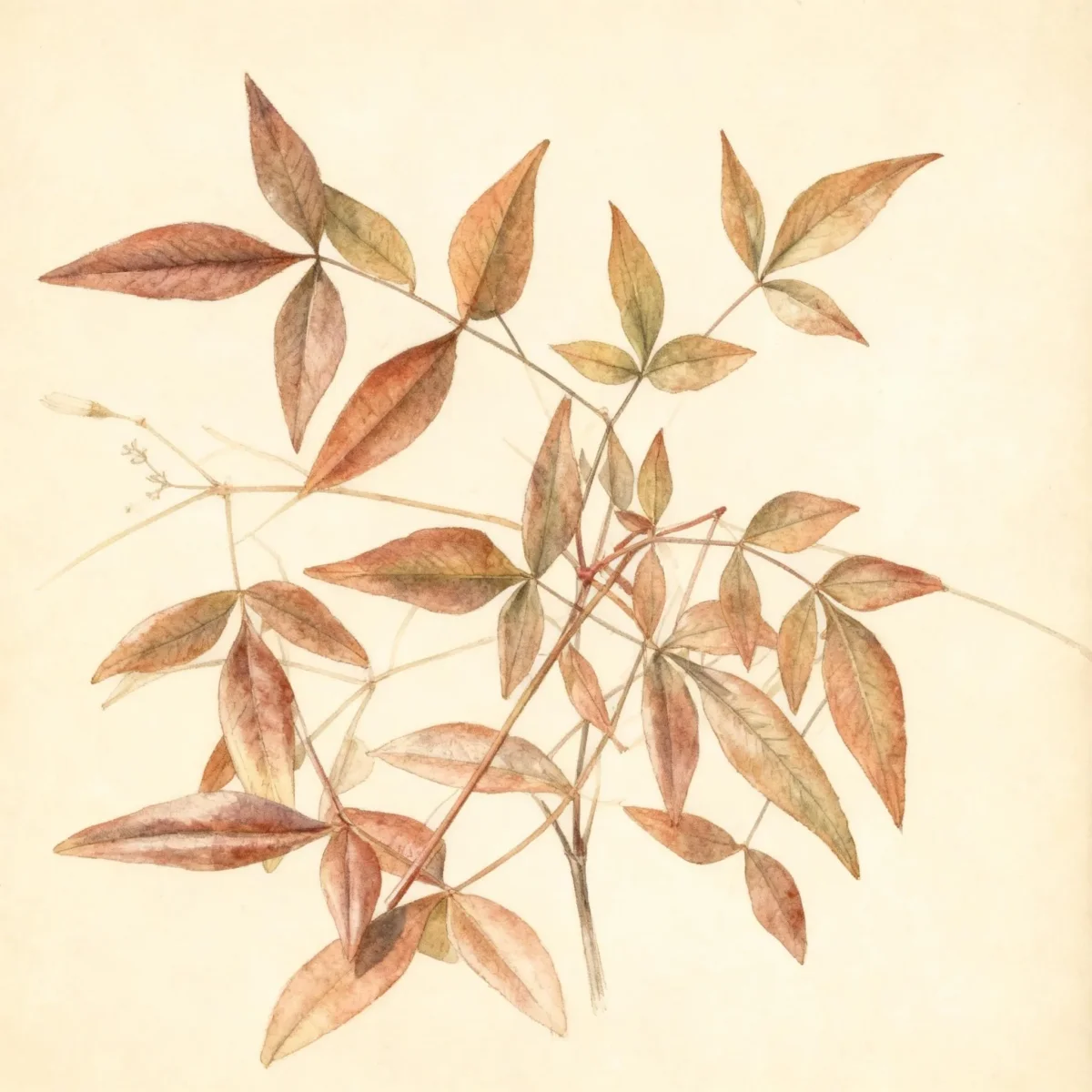
In the fall, the foliage of Heavenly bamboo often takes on rich hues before the bright red berries fully ripen and persist. Minimal intervention is usually needed unless you are in Zone 6, where applying a thick layer of insulating mulch around the base late in the season will help protect dormant crowns and roots from extreme low temperatures penetrating the soil.