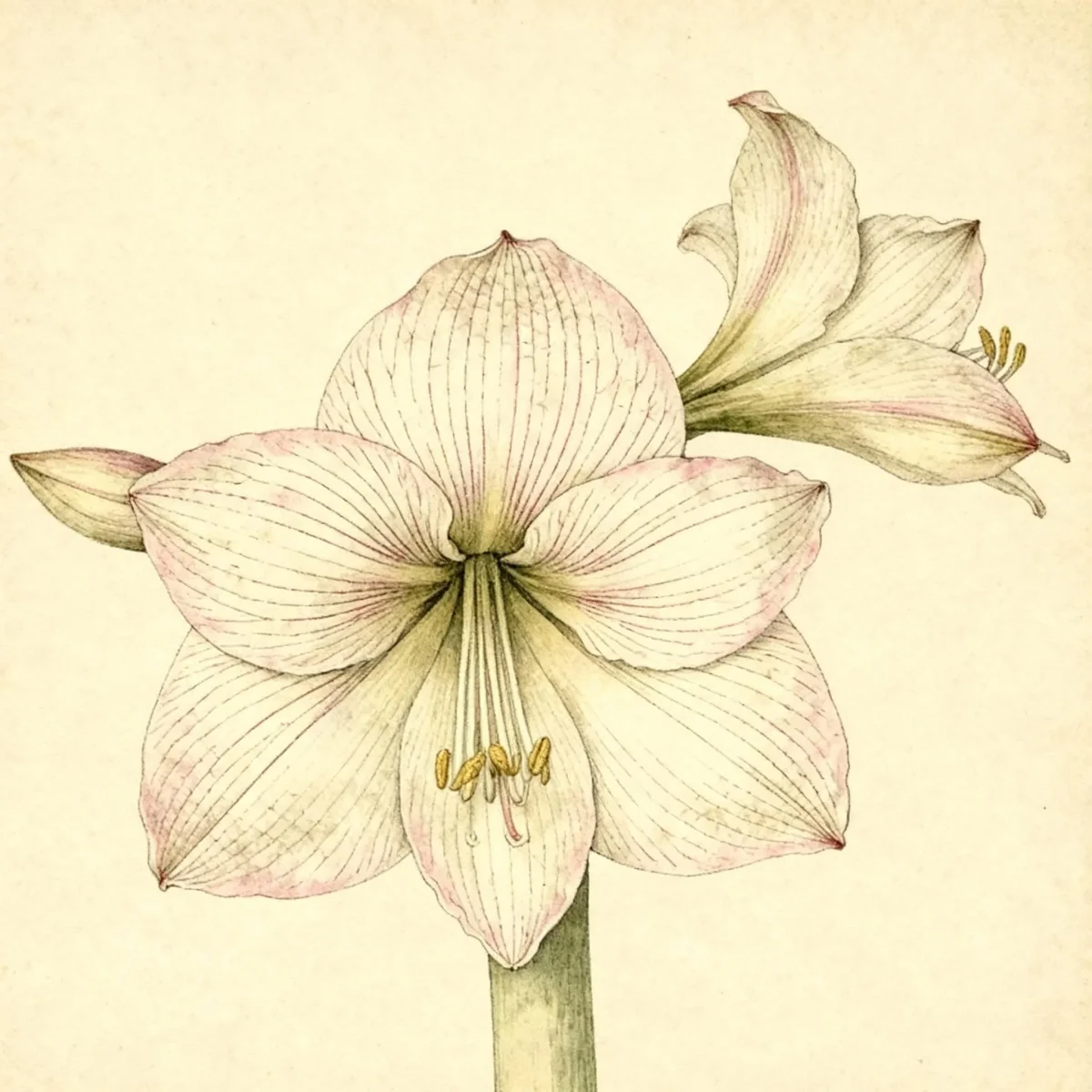
Rain lily (Zephyranthes treatiae)
Zephyranthes treatiae, the Rain lily, offers stunning white to pink blooms from winter to spring. Ideal for moist sites in USDA Zones 7-10.
Scroll down to discover growing tips, care requirements, companion plants, and more
Complete Plant Information
Overview
The Rain lily, scientifically known as Zephyranthes treatiae, is a charming, bulbous perennial valued for its relatively early bloom time, signaling the transition from winter to spring. This species provides delicate, funnel-shaped flowers, typically white or tinged with pink, emerging from low-growing, grass-like foliage. It is an excellent choice for gardeners looking to brighten damp, open areas with minimal intensive care.
Native to the moist pine barrens and swamp margins of Florida and Georgia, Zephyranthes treatiae thrives only where it receives consistent moisture. Unlike many ornamental bulbs, its cultural requirements lean towards wet conditions, making it a specialist for rain gardens and poorly drained spots where other plants might struggle.
Gardeners should appreciate the slow naturalizing habit of this Rain lily, allowing it to form appealing, subtle colonies over time. Ensuring competitors do not shade it allows the Zephyranthes treatiae to reliably display its blooms during its primary season of January through April.
Fast Facts
- Plant Family: Amaryllidaceae
- Plant Type: Bulb
- Native Range: United States
- Hardiness Zones: USDA Zones 7-10
- Size at Maturity:
- Height: 0.5-1 ft
- Spread: 1-2 ft
- Bloom Time: January to April
- Bloom Description: White to pink
- Sun Exposure: Full sun to part shade
- Water Needs: Medium to wet
- Maintenance Level: Medium
How to Grow
Planting Zephyranthes treatiae bulbs is best done when dormant, usually in fall or early spring, ensuring they are placed in soil that is evenly moist to wet. This Rain lily relies on peaty or sandy, well-draining soil composition, even though it requires significant water; standing, stagnant water should be avoided. It must be sited in full sun, as heavy shade from surrounding vegetation will prevent successful flowering and establishment.
Routine care for this Rain lily involves maintaining consistent moisture, especially during the growing and blooming periods. While it can handle medium water levels, it truly excels with more moisture, reflecting its native habitat near seeps and swamp margins. Fertilization is usually unnecessary in rich, peaty soils, but if growth seems weak, a balanced, slow-release bulb fertilizer applied just before spring growth begins can be beneficial.
As a perennial native to subtropical regions, Zephyranthes treatiae generally requires little fuss. In the colder edge of its range (Zone 7b), applying a winter mulch will help insulate the bulbs, protecting them from extreme lows nearing 5°F. Avoid mowing areas where the plants are actively blooming, as this will destroy the foliage needed to recharge the bulb for next year’s display of the Rain lily.
Landscape Uses
The primary appeal of Zephyranthes treatiae lies in its suitability for functional, moist landscapes. It is specifically recommended for naturalizing within rain gardens, swales, and meadows where consistent moisture is guaranteed. Its relatively low stature makes it perfect for border fronts, where its narrow, grass-like leaves provide fine texture alongside later-blooming perennials.
Due to its association with wet, open areas, consider pairing this Rain lily with other moisture-loving natives such as certain Iris species or low-growing sedges that tolerate similar conditions. It also looks beautiful when allowed to naturalize casually throughout a lightly managed lawn, provided mowing schedules are adjusted during the winter and spring blooming period. For a controlled display, Zephyranthes treatiae performs well in containers, perfect for patios adjacent to water features.
Standout Features
Noteworthy Characteristics
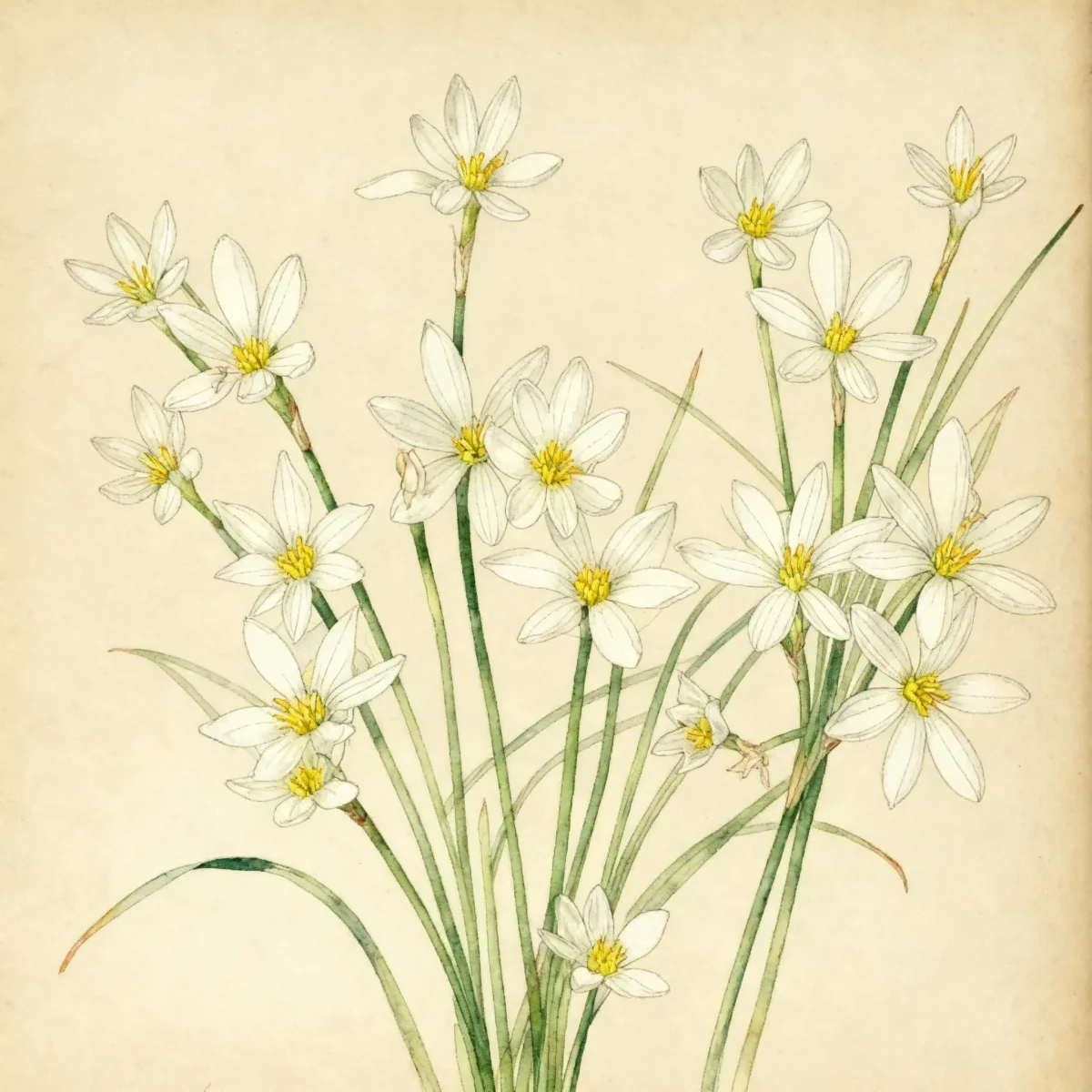
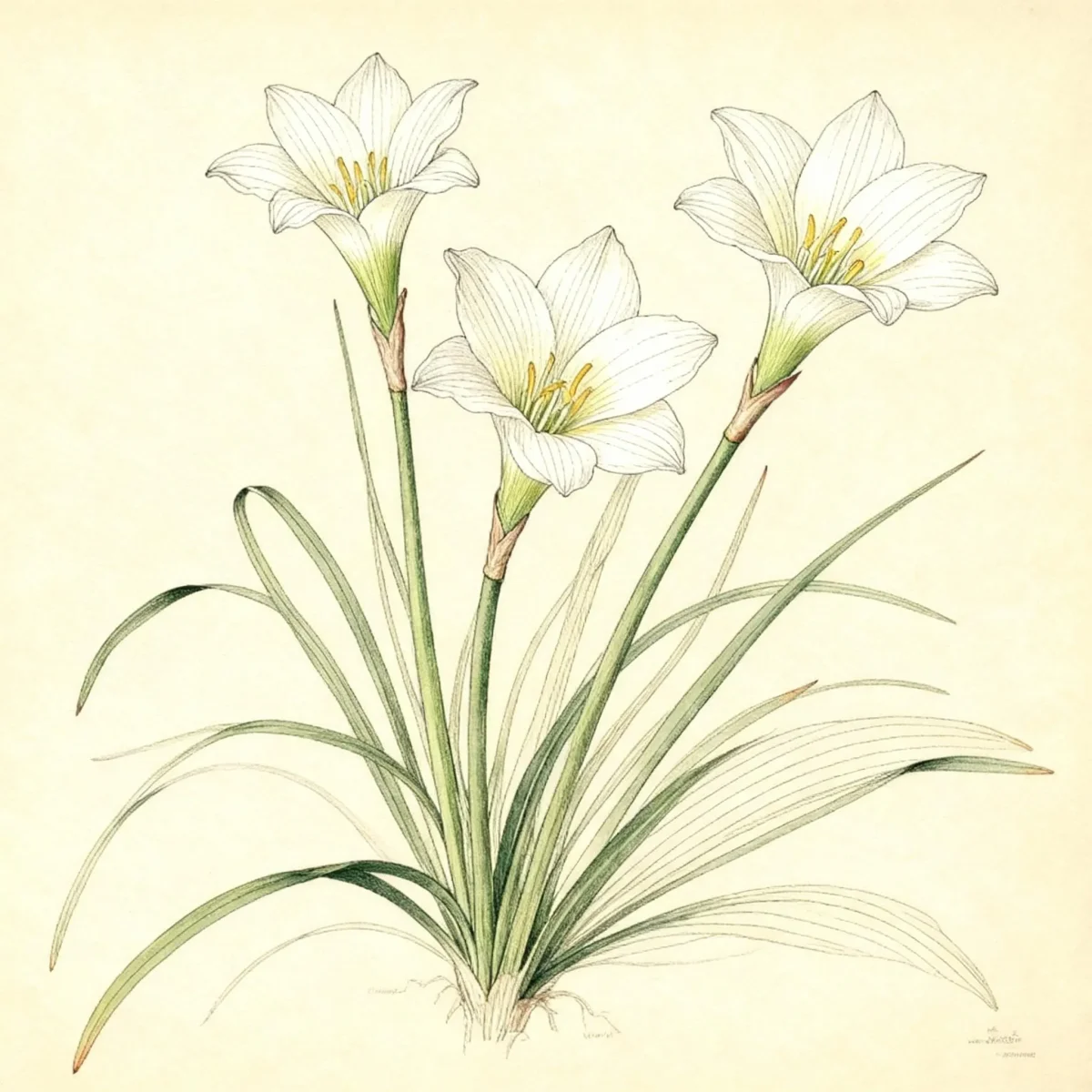
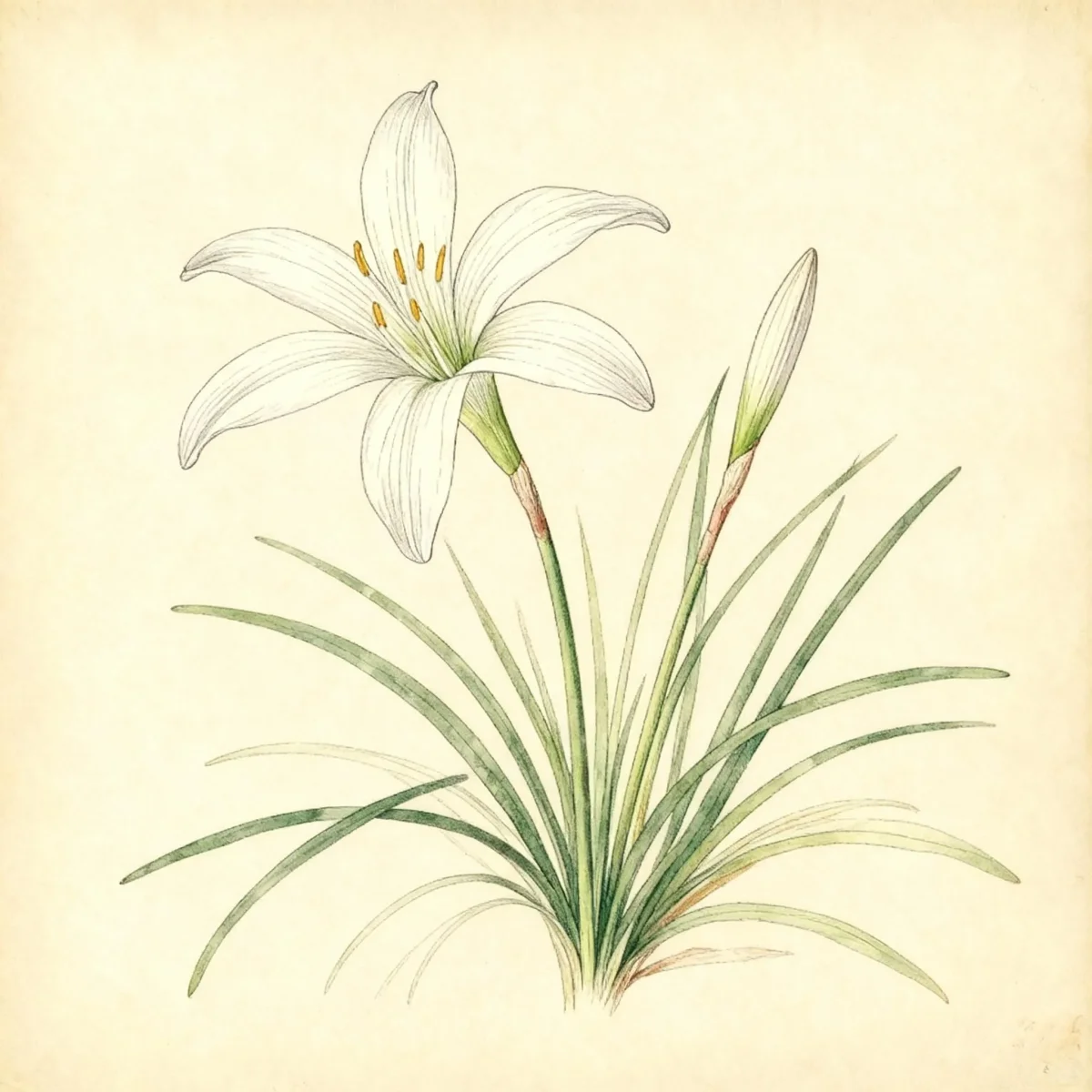
Zephyranthes treatiae, commonly known as Treat’s zephyr lily or pineland zephyr lily, is a bulbous, herbaceous perennial native primarily to the moist, open pine barrens of Florida and southern Georgia. The plant features linear, grass-like foliage topped by striking, 2–3 inch funnel-shaped flowers held on scapes between 4-12 inches tall. The species name honors Mary Treat, an influential 19th-century American naturalist specializing in botany and entomology.
Tolerances
- Wet Soil
Potential Problems
This Rain lily is notably tough regarding pests and diseases, with no known major issues reported in cultivation. The most significant concern for Zephyranthes treatiae is ecological; the plant is rare in several parts of its native environment. Gardeners must prioritize ethical sourcing, purchasing specimens only from reputable nurseries that guarantee their stock was not collected directly from the wild. Avoiding collection ensures the preservation of wild populations.
Frequently Asked Questions
What hardiness zones is Rain lily suitable for?
Zephyranthes treatiae is hardy across USDA Zones 7 through 10, though plants in Zone 7b benefit from winter mulching for protection against colder dips.
How large does Rain lily grow?
This bulb typically matures to a height of 0.5 to 1 foot tall, with a spread ranging between 1 and 2 feet as the colonies slowly multiply.
When does Rain lily bloom?
The Zephyranthes treatiae bloom season is relatively early, occurring from January to April, with the flowers noted for being white to tinged pink.
What sun exposure does Rain lily need?
This Rain lily performs best in full sun but tolerates light partial shade, provided it is not heavily shaded by competing vegetation.
Conclusion
The Zephyranthes treatiae offers gardeners a unique opportunity to introduce reliable, early-season blooms into consistently moist garden areas. As a specialized Rain lily, its tolerance for wet soil sets it apart from many common spring-flowering bulbs. Check your local USDA hardiness zone compatibility and plan to plant bulbs in fall or early spring to enjoy the unique emergence of the white to pink flowers of Zephyranthes treatiae.
Companion Planting
When situating Zephyranthes treatiae in a rain garden setting, choose companions that share its requirement for medium to wet soil and appreciate full sun exposure. Look toward moisture-loving Pennsylvania Sedges (Carex pensylvanica) for textural contrast, especially if you plan to let the Rain lily naturalize in grass. Alternatively, Iris species native to wet prairies, such as Iris versicolor, can provide taller vertical interest once the smaller Zephyranthes treatiae finishes its primary bloom cycle.
Design Ideas for Moist Sites
Utilizing this Rain lily in habitat-focused designs maximizes its performance. Consider mass plantings along the edges of constructed bio-retention swales or low points in the landscape that briefly retain water after heavy rain events. Grouping bulbs together creates a more impactful display of the white to pink flowers, especially when allowed to naturalize freely, creating drifts rather than isolated specimens. Containers are also effective, placed where they receive consistent bottom watering or are situated near a downspout outflow area.