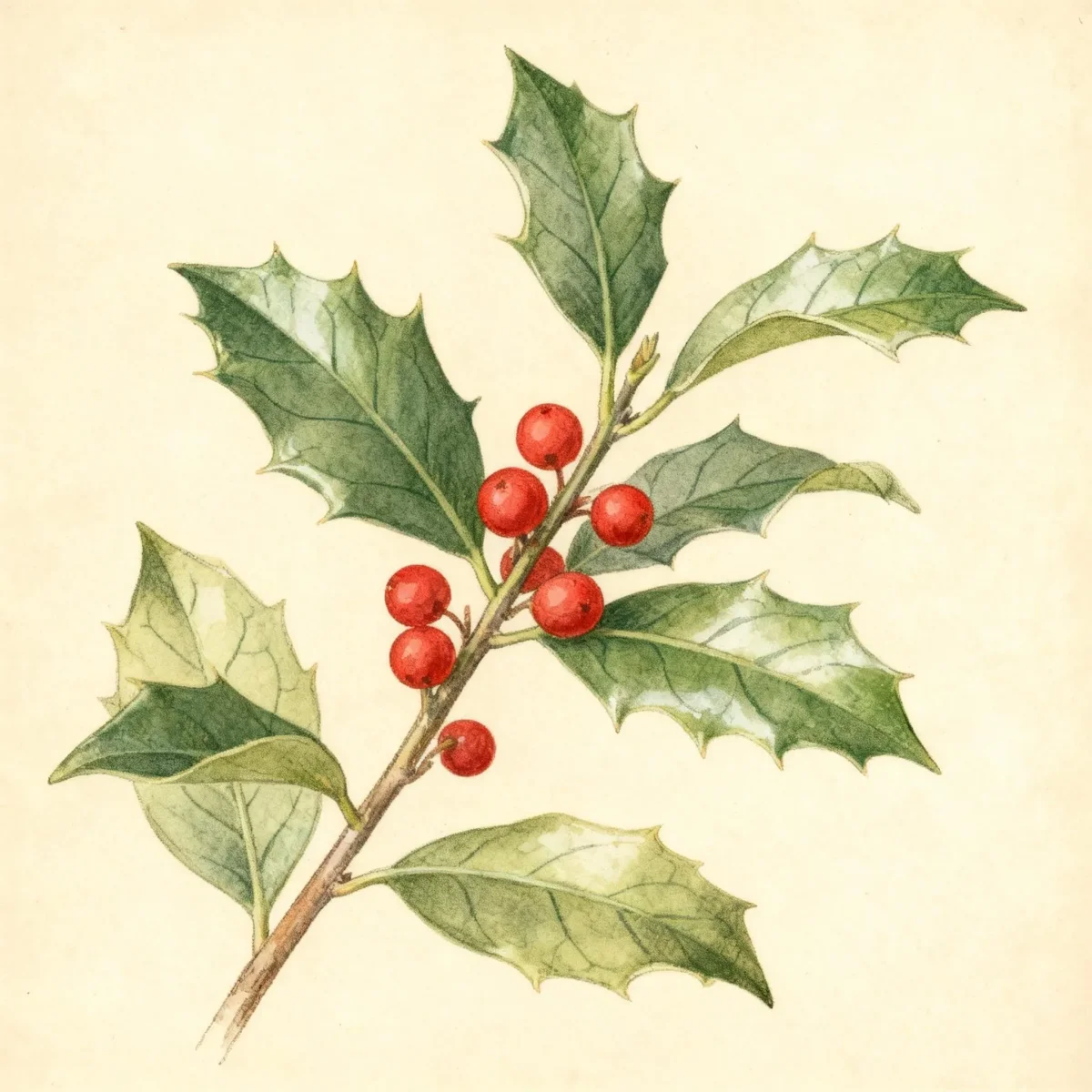
Black sea holly (Ilex colchica)
Discover Ilex colchica, the Black sea holly. An 8-10 ft broadleaf evergreen requiring medium water and suitable for USDA Zones 6-9.
Scroll down to discover growing tips, care requirements, companion plants, and more
Complete Plant Information
Overview
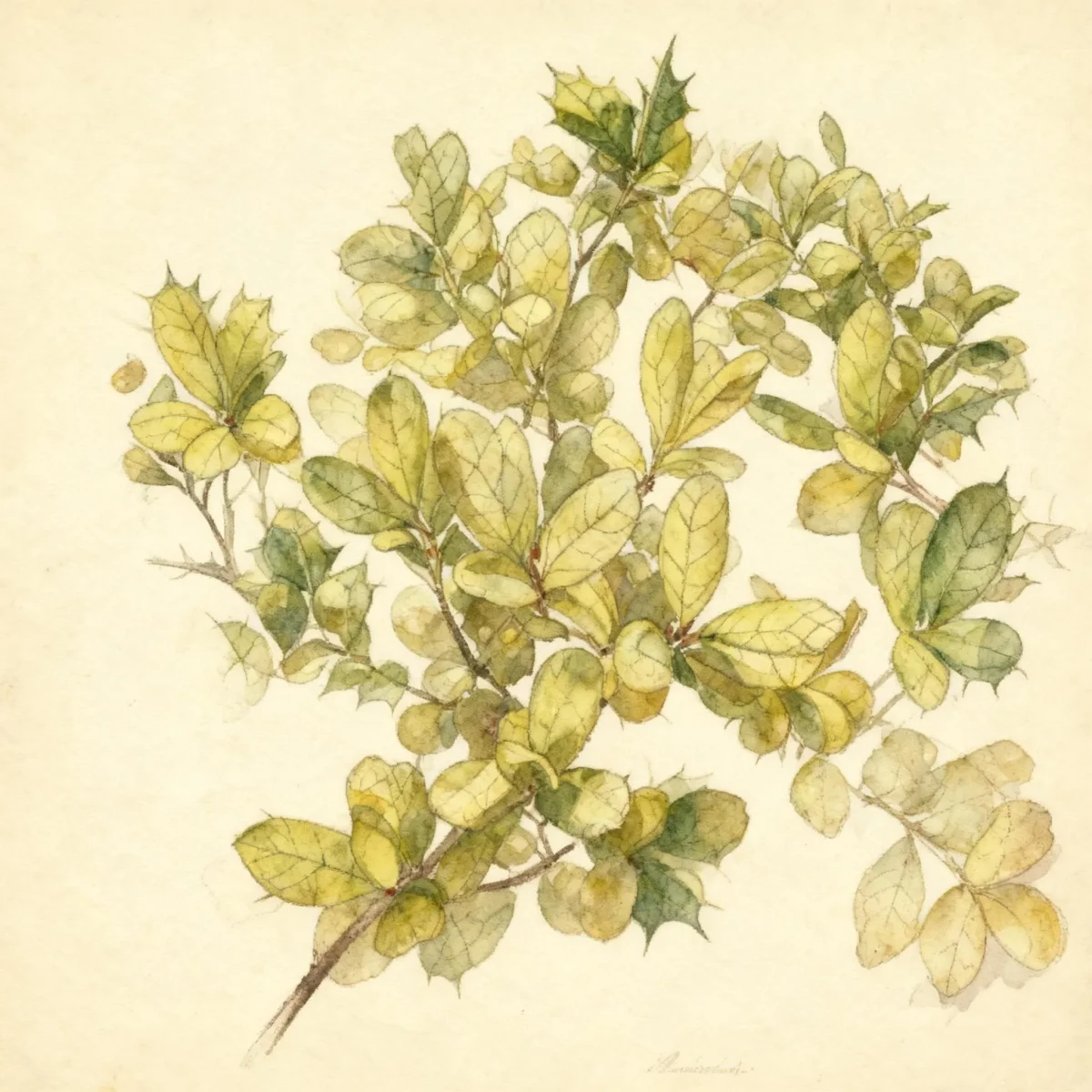
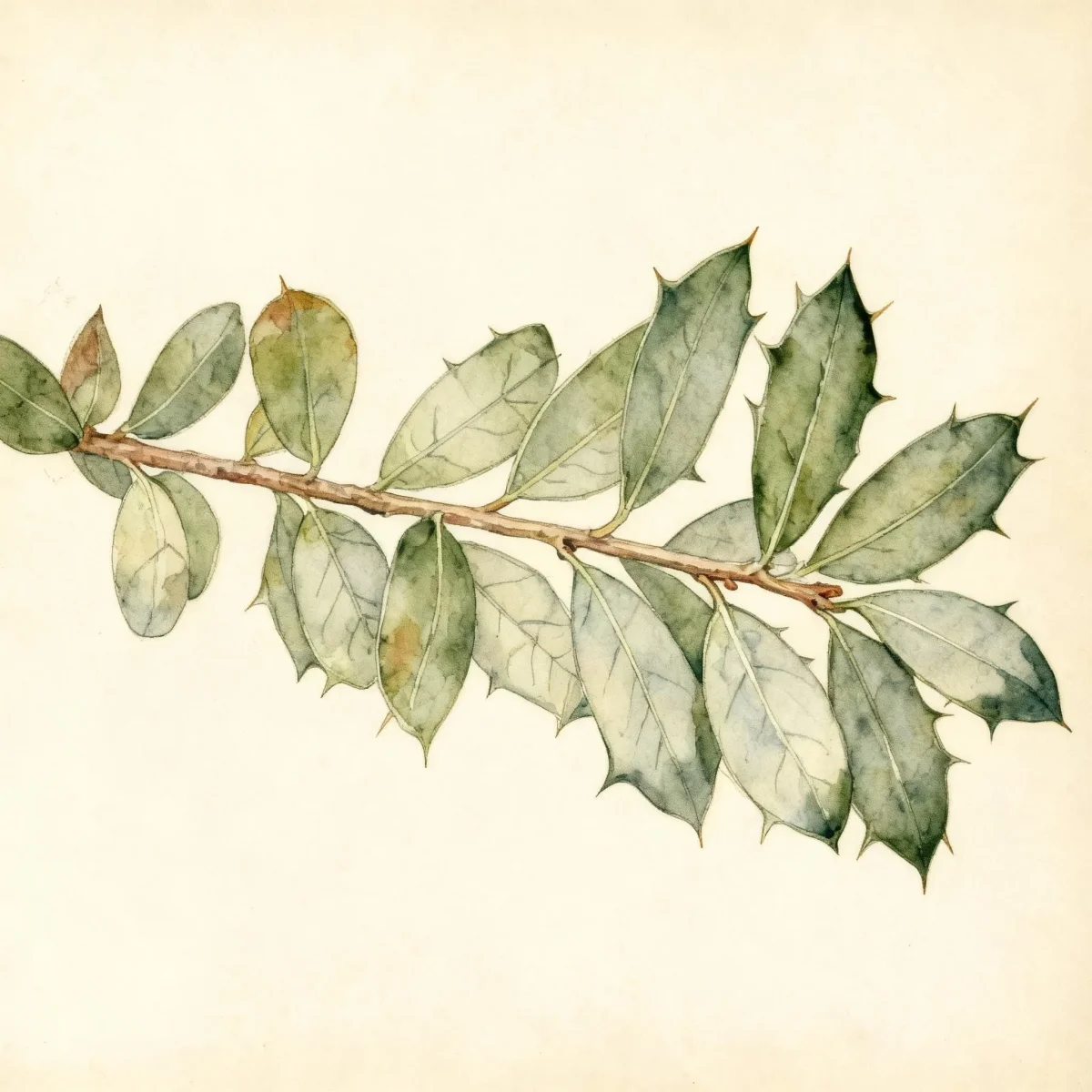
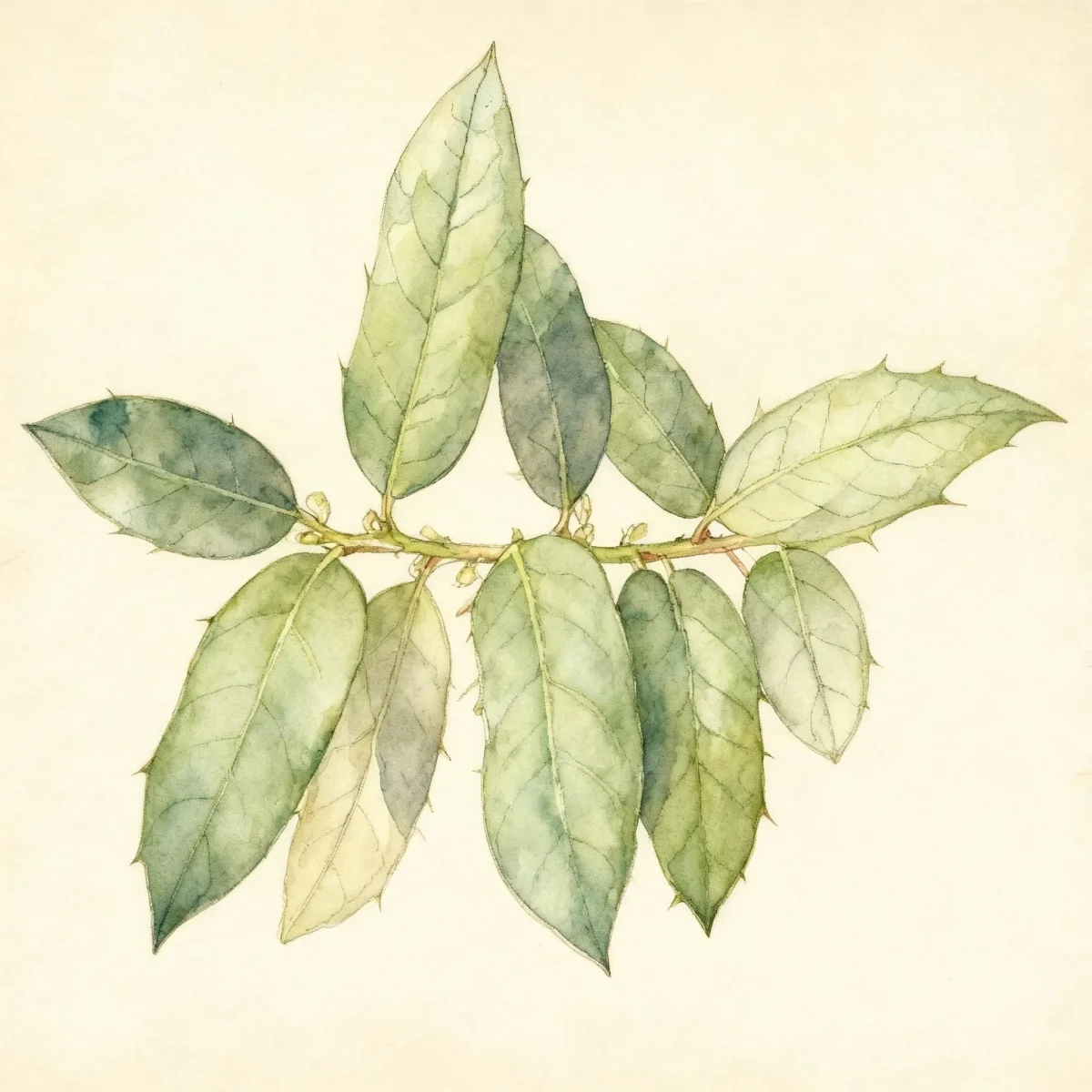
Ilex colchica, widely known as the Black sea holly, is a distinctive broadleaf evergreen shrub valued for its reliable year-round structure and attractive winter berries. Native to parts of Turkey and the Caucasus region, this holly offers narrow, glossy green foliage that provides excellent texture contrast in established landscapes. Mature specimens of Ilex colchica typically reach 8 to 10 feet tall, making them substantial additions to the garden design.
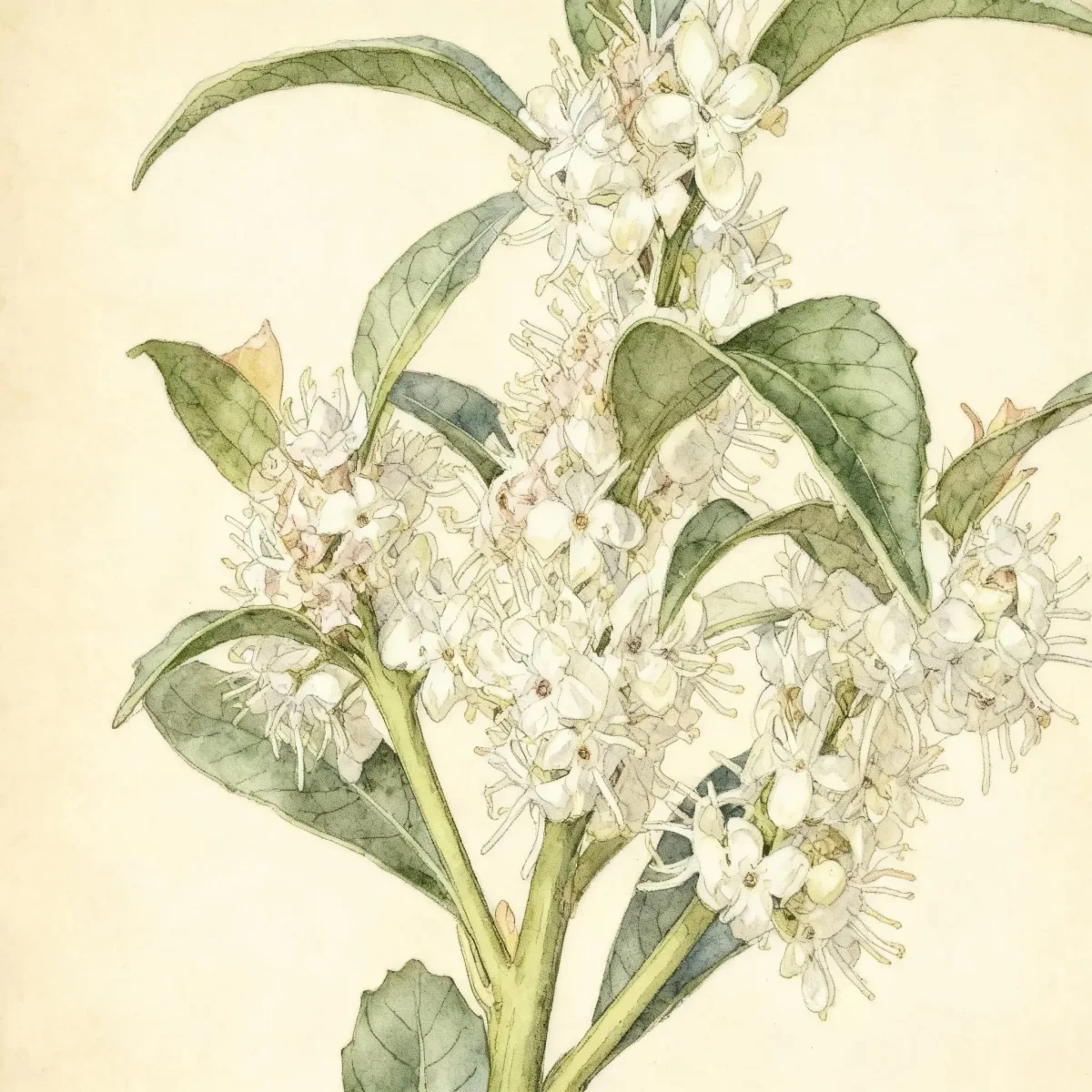
This plant offers more than just foliage; it provides aesthetic interest across multiple seasons. In spring, small white flowers precede the formation of conspicuous red-orange berries on female plants, offering bright color against the dark leaves through fall and winter. The Black sea holly thrives in a range of light conditions, though it performs best with protection from harsh winter elements.
Maintaining the Black sea holly requires medium attention, primarily ensuring its soil stays consistently moist and slightly acidic. It is a versatile plant suitable for creating tall screens or formal hedges, providing functional privacy while adding native texture. Gardeners interested in hardy, relatively pest-free evergreens will find Ilex colchica a rewarding choice, provided pH levels remain properly managed.
Fast Facts
- Plant Family: Aquifoliaceae
- Plant Type: Broadleaf evergreen
- Native Range: Turkey
- Hardiness Zones: USDA Zones 6-9
- Size at Maturity:
- Height: 8-10 ft
- Spread: 6-8 ft
- Bloom Time: April to May
- Bloom Description: White
- Sun Exposure: Full sun to part shade
- Water Needs: Medium
- Maintenance Level: Medium
How to Grow
Plant Ilex colchica during the cooler seasons—fall or early spring—to allow the root system time to establish before summer heat arrives. Success hinges on providing organically rich, slightly acidic, medium-moisture, and well-drained soil. Given this holly’s preference for even moisture, avoid locations where roots might dry out completely or, conversely, sit in soggy conditions. It is crucial to site Ilex colchica where it is protected from harsh winter winds, which can desiccate the evergreen foliage.
Watering needs for the Black sea holly are medium; aim to keep the soil consistently moist, especially during the first few years after planting. Incorporating plenty of organic matter into the planting bed will help retain necessary moisture and support the slightly acidic pH requirements. While fertility needs are modest, a light application of slow-release fertilizer formulated for acid-loving plants in early spring can encourage robust growth.
Pruning should be minimal, focusing mainly on shaping for hedge use or removing any winter-damaged wood in early spring. Since the plant is dioecious, remember that a male pollinator is necessary if you desire the signature bright red berries on female specimens. Be vigilant for signs of chlorosis if your soil pH is high (alkaline), as this is the most common cultivation issue for Ilex colchica.
Landscape Uses
The versatility of the Black sea holly makes it an excellent choice for various landscape roles, from formal containment to specimen interest. Its upright, dense habit is highly suitable for establishing a tall hedge or a privacy screen where year-round screening is desired. For more structured settings, massing or grouping Ilex colchica within shrub borders or near foundations provides excellent broadleaf evergreen structure that softens hard architectural lines.
When used as a specimen plant, the rich, glossy foliage of Ilex colchica stands out, particularly when contrasted against lighter-colored hardscaping or evergreen conifers. In mixed borders, pair the Black sea holly with plants that share similar medium water and sun exposure needs but offer different textures, such as deciduous shrubs with exfoliating bark or various ornamental grasses. This plant integrates well into traditional foundation plantings, offering a more refined alternative to common hollies.
Standout Features
Flower Qualities
- Insignificant
Fruit Qualities
- Showy
Noteworthy Characteristics
Ilex colchica, commonly called Black Sea holly, is native to forested areas in the Balkan Peninsula, Caucasus and Turkey, and it was formerly classified as a subspecies of Ilex aquifolium. It typically matures to 10’ tall and to 8’ wide, featuring narrow-elliptic, spinose-serrated, glossy green leaves and bright red berries which mature in fall. The genus name references the evergreen foliage similarity between holly and holm oak, while the specific epithet references Colchis, an ancient region near the Black Sea.
Tolerances
Potential Problems
The beauty of the Black sea holly is compounded by its generally low susceptibility to severe pest or disease issues; gardeners rarely contend with serious infestations. However, watch for occasional superficial issues such as leaf spots or powdery mildew, typically indicating high humidity or poor air circulation. The most significant cultural problem to monitor is chlorosis, which manifests as yellowing leaves due to the plant’s intolerance for high pH (alkaline) soils; maintaining acidity prevents this stress.
Leaf spots and mildew can usually be managed by ensuring adequate spacing between shrubs to improve airflow and by avoiding overhead watering late in the day. If chlorosis appears, the corrective action involves amending the soil with acidifying materials like elemental sulfur or using chelated iron applications to correct nutrient uptake in alkaline conditions. Proper siting away from drying winter winds also minimizes stress, leading to a healthier overall specimen of Ilex colchica.
Frequently Asked Questions
What hardiness zones is Black sea holly suitable for?
The Ilex colchica is hardy and thrives in USDA Zones 6 through 9, offering flexibility across temperate regions.
How large does Black sea holly grow?
At maturity, you can expect Ilex colchica to reach a height between 8 and 10 feet, with a spread generally spanning 6 to 8 feet wide.
What sun exposure does Black sea holly need?
This evergreen performs best when exposed to full sun to partial shade conditions, though protection from harsh winter sun and wind is advised.
When does Black sea holly bloom?
The small, white flowers of the Black sea holly appear seasonally from April into May, setting the stage for the colorful berries later in the year.
Conclusion
The Black sea holly (Ilex colchica) offers gardeners a resilient, visually appealing broadleaf evergreen with the added benefit of winter berry interest. Its medium maintenance requirements, combined with its ability to form dense screens, make this holly a practical and beautiful investment for structure in the landscape. Before planting, confirm your site provides rich, well-drained soil and is situated where the Ilex colchica is shielded from fierce winter winds.
Companion Planting
When selecting companions for Ilex colchica, prioritize plants that share its preference for slightly acidic soil and medium moisture levels. Groundcovers that thrive in dappled shade, such as Pachysandra or Vinca minor, work well beneath the canopy, helping to mulch the soil and maintain even moisture around the holly roots. Taller, fine-textured evergreen conifers, like certain varieties of dwarf Alberta Spruce or slow-growing Hemlock, provide an excellent backdrop that enhances the glossy texture of the Black sea holly foliage.
Consider pairing the spring white flowers of the holly with late-blooming deciduous shrubs that offer contrasting flower colors, such as deep purples or bright pinks, to extend seasonal interest. For contrasting foliage textures, look towards plants with broad, chartreuse leaves—these will pop against the narrow, dark green leaves of the Ilex colchica during the summer months. Successful companion planting ensures all plants benefit from similar cultural care, simplifying the overall garden maintenance schedule.
Design Ideas for Screening
The primary practical application for Ilex colchica in landscape design is its use in creating substantial, year-round screens or hedges. For a formal hedge, plant individuals relatively close together (following recommended spacing for the spread) and prune them annually into a defined shape, maximizing privacy coverage between 8 and 10 feet high. To soften the transition between a lawn and a border area, use the Black sea holly in mass plantings, allowing them to grow into a more natural, mounded shape set toward the back of the border.
When employing Ilex colchica for screening, vary the planting depth slightly to avoid a flat, unnatural appearance; planting some individuals slightly forward or backward can add perceived depth. If you are relying on female plants for berries, ensure that the necessary male pollinator is incorporated within sightline, which, in a dense screen, might mean planting the male shrub strategically at one end of the hedge line. The fall berry display offers an excellent focal point that complements surrounding plants that offer strong fall color, such as certain Japanese Maples or deciduous Viburnums.