Narrow-leaf coneflower (Echinacea angustifolia)
Echinacea angustifolia, the Narrow-leaf coneflower, thrives in tough, dry spots, offering low-maintenance beauty and pale purple blooms.
Scroll down to discover growing tips, care requirements, companion plants, and more
Complete Plant Information
Overview
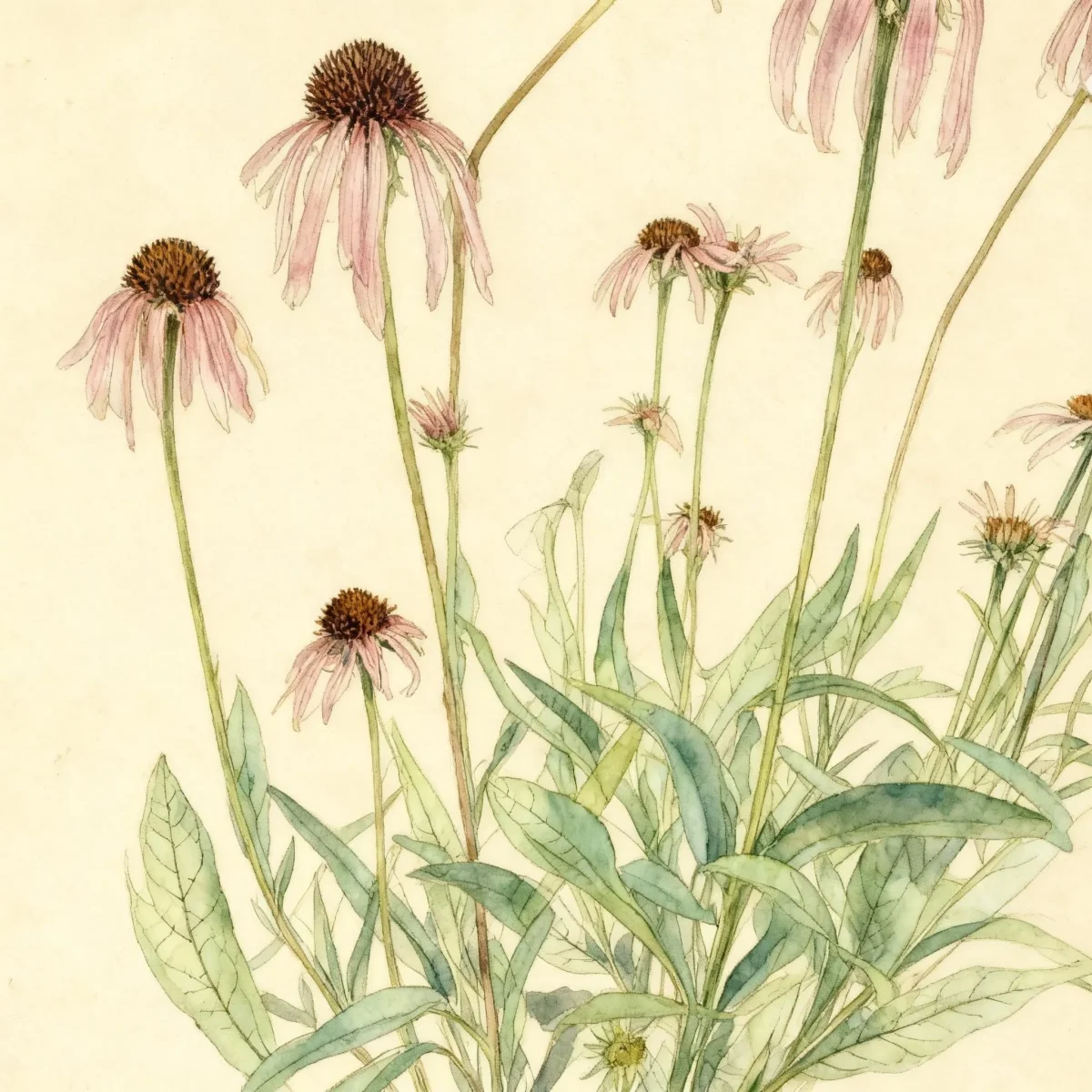
The Narrow-leaf coneflower, scientifically known as Echinacea angustifolia, is a remarkably tough and beautiful native perennial highly valued for its adaptation to challenging conditions. This compact plant features rigid, upright stems topped with distinctive flowers that showcase light pink to pale purple rays radiating from prominent orange-brown center cones. As a cornerstone of the prairie landscape, Echinacea angustifolia provides essential late-season interest and attracts goldfinches eager for the mature seeds.
This species is exceptionally hardy, flourishing in Central North American prairies, making it ideal for gardeners seeking resilient, low-input gardening solutions. Its cultural requirements lean heavily toward dryness and sun, ensuring minimal fuss once established. The name Angustifolia itself translates to “narrow-leaved,” distinguishing it visually from related purple coneflowers.
For wildlife and naturalized settings, the Narrow-leaf coneflower is unparalleled. Beyond the birds it feeds, its presence supports local ecosystems while delivering reliable, drought-tolerant color from early to mid-summer. Incorporating Echinacea angustifolia into your garden design ensures a piece of native resilience that thrives even when ignored.
Fast Facts
- Plant Family: Asteraceae
- Plant Type: Herbaceous perennial
- Native Range: Central North America
- Hardiness Zones: USDA Zones 3-8
- Size at Maturity:
- Height: 1-2 ft
- Spread: 0.75-1.5 ft
- Bloom Time: June to July
- Bloom Description: Light pink to pale purple
- Sun Exposure: Full sun
- Water Needs: Dry to medium
- Maintenance Level: Low
How to Grow
Plant the Narrow-leaf coneflower in an area receiving full sun exposure to achieve the best flower production and stem strength. This species adapts easily to average soils, provided they are well-drained. Echinacea angustifolia excels in dry to medium conditions, reflecting its prairie origins, and it handles heat, humidity, and even poor soils with ease. Early spring or fall is generally the best time for initial planting.
Ongoing care for Echinacea angustifolia is minimal, fitting perfectly into low-maintenance gardening schemes. Water sparingly once the plant is fully established, relying on natural rainfall unless extended dry periods occur. Fertilization is rarely necessary; over-fertilizing can lead to weaker stems. Plants usually bloom again without deadheading, but prompt removal of spent flowers improves the overall look of the clump.
If clumps become overly crowded after several years, they benefit from division to maintain vigor. If your goal is wildlife feeding, intentionally leave some seed heads standing through the winter, as goldfinches adore the late-season bounty. Be aware that the Narrow-leaf coneflower may self-seed gently if these seed heads are retained.
Landscape Uses
The inherent toughness and moderate size of the Narrow-leaf coneflower make it an excellent candidate for structured borders where drier conditions prevail. It pairs beautifully in mass plantings, creating drifts of soft color that contrast well with bolder textures. Because Echinacea angustifolia prefers to avoid excessive moisture, site it adjacent to other xeric-loving enthusiasts like ornamental grasses or Sedum.
For authentic ecological design, utilize this species extensively in native plant gardens, naturalized areas, and open wildflower meadows. Its upright structure lends necessary vertical interest among lower-growing companions. Consider using it toward the front or middle of a mixed border where sun exposure is maximized and competition from moisture-loving plants is avoided.
Standout Features
Flower Qualities
- Showy
Noteworthy Characteristics
Narrow-leaf purple coneflower is a compact perennial that is primarily native to upland dry prairie areas in the Great Plains. It is a small coneflower that grows 1-2’ tall on rigid, upright, hairy stems clad with narrow, lanceeolate to ovate green leaves. Flowers feature light pink to pale purple rays that spread outward and usually droop over orange-brown center cones. The genus name Echinacea references the spiny center cone, resembling a hedgehog, making this plant both beautiful and unique.
Tolerances
- Deer
- Drought
- Clay Soil
- Dry Soil
- Shallow-Rocky Soil
Potential Problems
Serious insect or disease problems are uncommon for Echinacea angustifolia, highlighting its robust constitution. Occasional issues might include minor damage from Japanese beetles or low-level leaf spot, particularly in environments with unexpected high humidity or poor air circulation. Monitor plants during peak summer activity for Japanese beetles and hand-pick them, or treat with appropriate controls if infestations become severe. Proper selection of a full-sun, well-drained site is the best preventative measure against most fungal issues like leaf spot.
Frequently Asked Questions
What hardiness zones is Narrow-leaf coneflower suitable for?
The Narrow-leaf coneflower is suitable for USDA Zones 3 through 8, offering stability across a broad range of climates.
How large does Echinacea angustifolia grow?
This plant typically reaches a height between 1 to 2 feet, with a spread ranging from 0.75 to 1.5 feet at maturity.
When does Narrow-leaf coneflower bloom?
The primary bloom time is June to July, producing flowers described as light pink to pale purple.
What sun exposure does Echinacea angustifolia need?
This species requires full sun to develop robust growth and the best flowering display.
Conclusion
The Echinacea angustifolia brings resilient, native beauty to the garden, excelling in tough, dry locations where other plants might fail. Its low maintenance needs combined with its visual appeal—especially the distinctive cone and pale purple ray flowers—cement its value as a superior perennial choice. To successfully integrate the Narrow-leaf coneflower into your landscape, confirm your growing area falls within USDA Zones 3-8 and ensure it receives consistent, unimpeded full sun.
Companion Planting
Because the Narrow-leaf coneflower thrives in dry, well-drained soil under full sun, choosing appropriate companions is crucial to prevent root rot or competition for moisture. Excellent partners include other drought-tolerant natives that share similar cultural needs. Grouping Echinacea angustifolia with plants like Hairy Goldenrod (Solidago rigida) or Butterfly Weed (Asclepias tuberosa) creates a cohesive, resilient prairie tapestry.
Avoid placing it directly alongside heavy feeders or moisture-loving bog plants, as this will compromise the dry soil conditions essential for its long-term health. The height and bloom time of the Narrow-leaf coneflower also work well with shorter, silver-leaved groundcovers that can handle heat and dry shade cast by its upright stems later in the season.
Wildlife Benefits
The prickly center cone of the Echinacea angustifolia is a significant asset for backyard wildlife observation. In late summer and fall, once the flowers mature, the seeds held within these cones become a primary food source for various seed-eating birds, most notably the American Goldfinch. Ensuring a few seed heads remain standing well into winter will provide crucial sustenance during the leanest months.
Beyond feeding birds, coneflowers, including the Narrow-leaf variety, attract a variety of beneficial pollinators throughout their bloom period in June and July. The open flower structure allows easy access to pollen and nectar for bees, butterflies, and other beneficial insects. Planting Echinacea angustifolia in clusters maximizes its visual impact and increases its utility as a foraging station for local fauna.