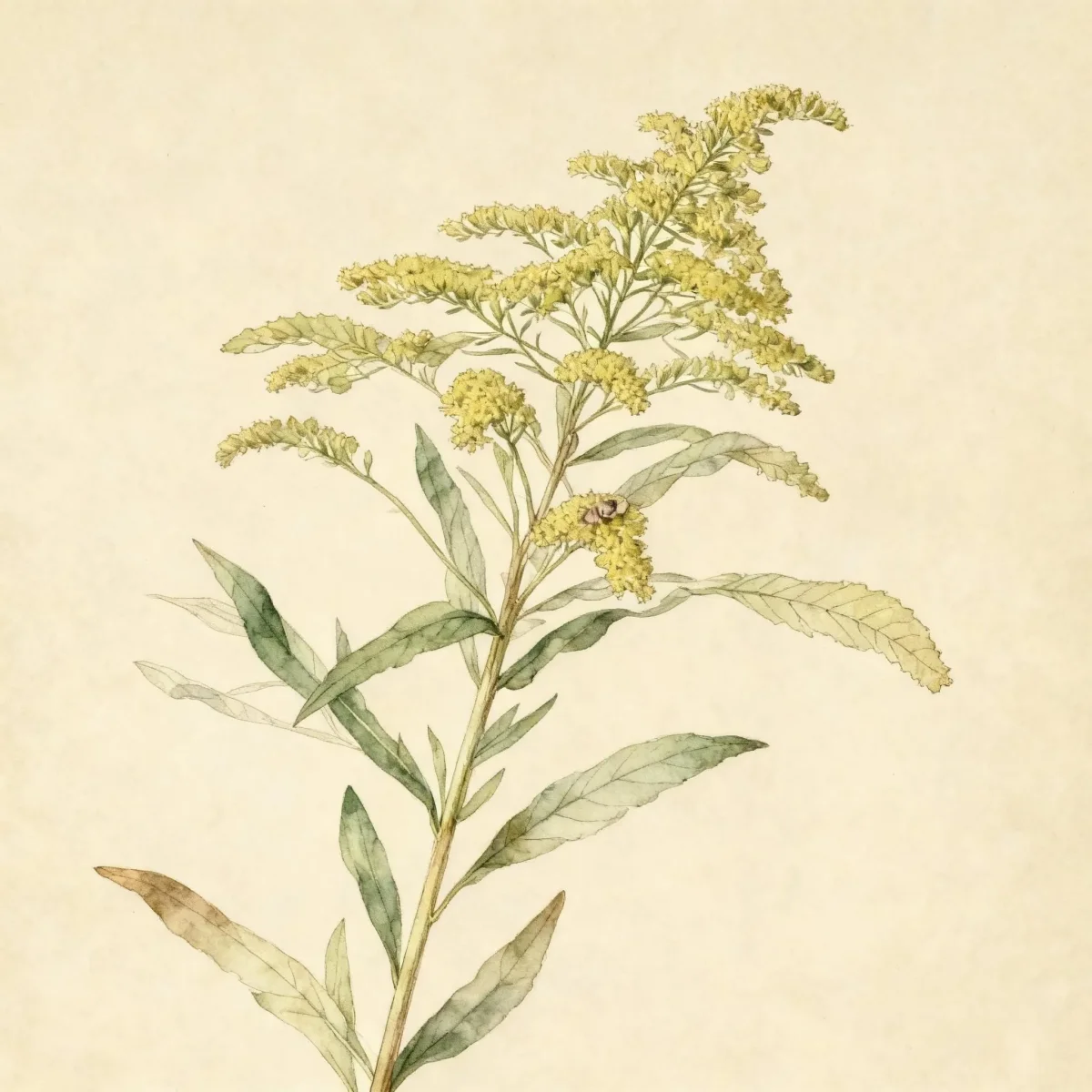
Early goldenrod (Solidago juncea)
Solidago juncea, or Early goldenrod, offers striking yellow blooms starting early in mid-summer. This low-maintenance perennial thrives in dry, full sun locations.
Scroll down to discover growing tips, care requirements, companion plants, and more
Complete Plant Information
Overview
Solidago juncea, known commonly as early goldenrod, is a valuable native perennial celebrated for initiating the brilliant display of golden colors earlier than many of its relatives. Distinguished by stiff, narrow-leaved stems topped with dense, plume-like panicles of tiny, bright yellow flowers, this species brings essential mid-summer interest to the garden landscape. Gardeners appreciate Solidago juncea for its resilience and low demands, making it an accessible planting for diverse soil conditions.
This herbaceous perennial thrives where many other flowering plants struggle, particularly in dry, exposed locations requiring minimal intervention. Beyond aesthetics, early goldenrod plays a crucial ecological role, providing significant nectar and pollen resources for native bees and butterflies during the mid-summer scarcity period. It is important to note that goldenrods are unfairly blamed for hay fever; the showy pollen of Solidago juncea is heavy and insect-distributed, not wind-borne like the true allergenic culprits.
The structure of Solidago juncea is upright, typically reaching heights between two and four feet, offering excellent vertical contrast in a mixed border. Successfully integrating this plant ensures reliable late-season structure and vibrant color, rewarding the gardener with robust performance without demanding high levels of water or rich soil amendments.
Fast Facts
- Plant Family: Asteraceae
- Plant Type: Herbaceous perennial
- Native Range: Eastern North America
- Hardiness Zones: USDA Zones 3-8
- Size at Maturity:
- Height: 2-4 ft
- Spread: 2-3 ft
- Bloom Time: July to August
- Bloom Description: Yellow
- Sun Exposure: Full sun
- Water Needs: Dry to medium
- Maintenance Level: Low
How to Grow
The best time to establish Solidago juncea is during the spring or fall when temperatures are milder. This handsome perennial thrives when planted in full sun locations where it receives at least six hours of direct solar energy daily. It demonstrates a remarkable tolerance for poor conditions, flourishing in average soils provided they are well-drained. While it prefers dry to medium moisture levels, avoid overly rich, moisture-retentive locations which can encourage floppiness.
Care for early goldenrod is remarkably simple, aligning with its “Low” maintenance rating. Once established, supplemental watering is rarely necessary, making Solidago juncea an excellent choice for xeriscaping or dry slopes. Fertilizing is generally counterproductive, as high fertility often reduces flower production and plant rigidity.
To maintain vigor and control spread, division is recommended every two to three years, ideally done in early spring before new growth begins. A crucial maintenance step involves removing the spent flower clusters after bloom; this process, known as deadheading, can sometimes encourage a modest secondary flush of bloom and certainly tidies the appearance going into winter. This resilient perennial requires little specific winter preparation, as it naturally dies back to the ground level.
Landscape Uses
Solidago juncea excels when placed in sites where its upright structure and early color timing can be best appreciated. Its resilience makes it perfect for naturalized meadows, prairie plantings, or the periphery of a wild garden where competition is moderate but conditions are often dry. The vertical yellow spikes provide excellent color and contrast against the deep greens of late summer foliage plants.
When designing perennial borders, plant early goldenrod toward the middle or back, allowing shorter, mid-season bloomers to cascade in front. Companion planting suggestions should focus on species that also tolerate dryness and full sun, such as certain coneflowers (Echinacea) or sturdy perennial salvias. Use this species strategically to bridge the gap between early summer bloomers and the later, more traditional goldenrod season.
This plant integrates wonderfully into sustainable landscape designs intended to reduce water use. Its native status further ensures it supports local ecology, making it a functional and beautiful choice for ecologically-minded gardeners incorporating native species into their design schemes.
Standout Features
Flower Qualities
- Showy
- Good Cut
Noteworthy Characteristics
Solidago juncea, commonly called early goldenrod, is a Missouri native perennial which typically occurs in dry, rocky soils on roadsides, open woods, slopes and prairies in the Ozark region of the State. Features tiny, bright yellow flowers borne in dense, plume-like panicles on the ends of stiff, narrow-leaved stems typically growing 2-4’ tall. As the common name suggests, this species has one of the earliest bloom periods (mid-summer) of the many goldenrods.
Tolerances
- Deer
- Drought
- Clay Soil
Potential Problems
Solidago juncea is generally considered robust and free from serious pest or disease complications. The primary foliage issue reported is the occasional occurrence of leaf rust, a fungal disease that causes reddish-brown spots on the leaves, usually later in the season. Proper air circulation, achieved by ensuring adequate spacing during planting, should be the main preventative measure against rust.
If the clump becomes overly dense over several years, division may become necessary to maintain strong flowering performance and upright growth habits. This division should be performed gently in the spring, as letting the plants become too crowded can lead to weaker stems that might flop in heavy weather. Overall, the problematic nature of early goldenrod is minimal when grown in its preferred conditions.
Frequently Asked Questions
What hardiness zones is Early goldenrod suitable for?
This resilient plant successfully grows in USDA Zones 3 through 8.
How large does Solidago juncea grow?
Early goldenrod typically reaches a mature height of 2 to 4 feet tall, with a spread ranging from 2 to 3 feet wide.
When does Early goldenrod bloom?
This species provides reliable yellow blooms starting in mid-summer, specifically from July into August.
What sun exposure does Early goldenrod need?
Solidago juncea absolutely requires full sun exposure to produce the best flower performance and maintain sturdy stems.
Conclusion
Solidago juncea is an outstanding choice for gardeners seeking reliable, low-maintenance color that supports local pollinators starting in July. Its natural tolerance for dry soil and poor conditions makes the early goldenrod a powerhouse native perennial for challenging spots. Before planting, always confirm that your location meets the full sun requirement and is within USDA Zones 3-8 for optimal long-term success.
Companion Planting
Choosing appropriate companions is key to highlighting the upright stature of Solidago juncea and ensuring all plants share similar cultural needs. Select other sun-loving, drought-tolerant natives that bloom slightly earlier or later to create continuous season interest. Good partners include coreopsis varieties, which provide early summer contrast, or later-blooming Asters that will pick up the yellow hue and extend the wildflower palette.
When pairing plants, consider texture as much as color. The fine texture of the early goldenrod plumes contrasts beautifully with the broader leaves of plants like Baptisia or Prairie Dropseed grass in the meadow setting. This thoughtful pairing maximizes visual appeal throughout the entire late summer and early fall season.
Wildlife Benefits
The primary ecological value of Solidago juncea lies in its role as a vital nectar and pollen source during mid-summer. Many native bees and butterflies require reliable food sources during this often dry or transitional period of the growing season. By planting patches of early goldenrod, you are actively creating habitat support in your immediate area.
Although often confused with allergenic wind-pollinated plants confusingly named relatives, the pollen from Solidago juncea is sticky and designed to adhere to insect bodies. This means it is passively carried between flowers by bees and butterflies, not released into the air to cause sneezing fits. Planting this species is a direct way to support beneficial insect populations without increasing allergy concerns.