Feverfew (Tanacetum parthenium)
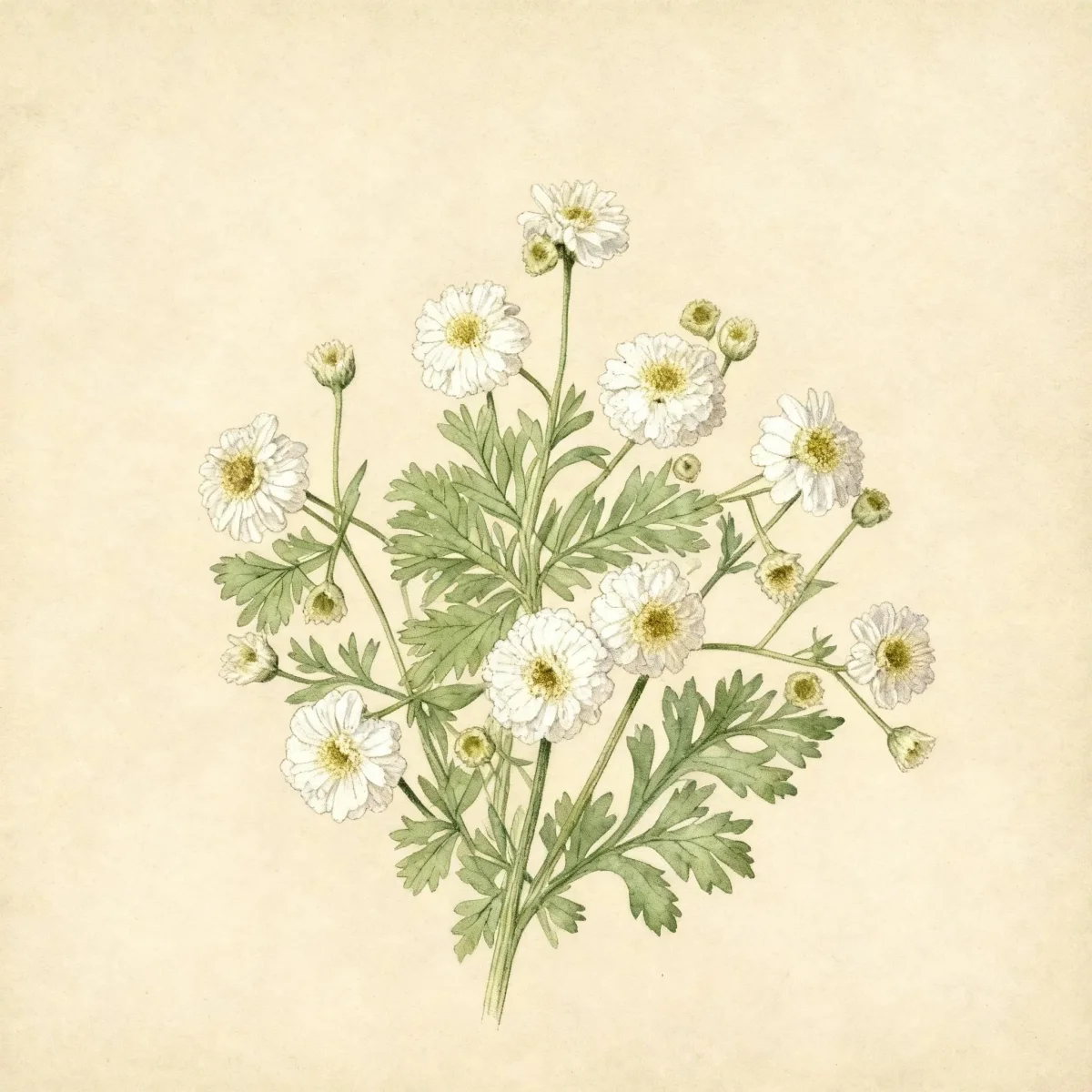
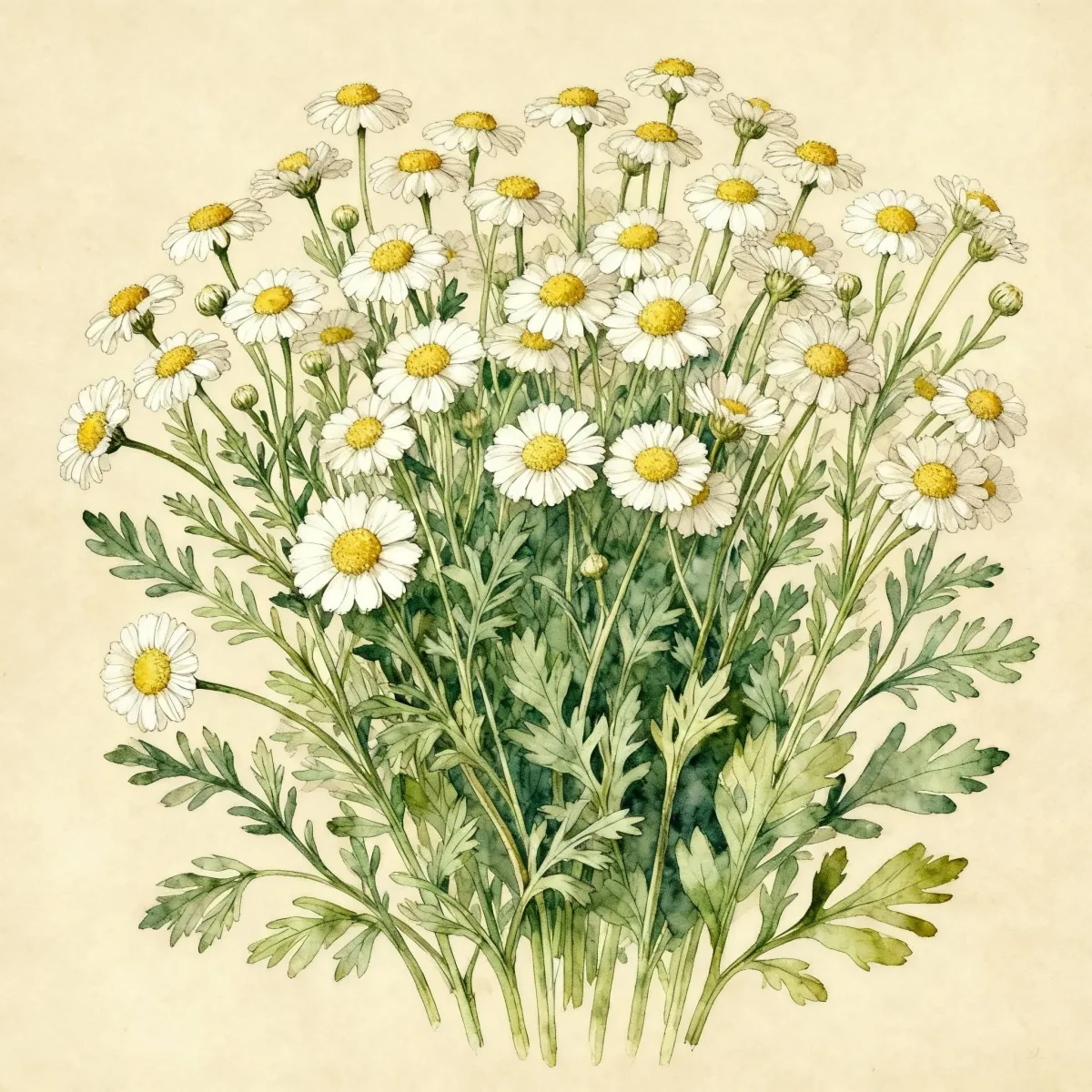
Aromatic herbaceous perennial, Feverfew (Tanacetum parthenium) offers masses of small white daisy-like flowers from June through September.
Scroll down to discover growing tips, care requirements, companion plants, and more
Complete Plant Information
Overview
Tanacetum parthenium, widely recognized as Feverfew, is a charming and vigorous addition to any cottage or informal garden setting. This bushy, aromatic, herbaceous perennial is prized not only for its continuous summer bloom of small, white, daisy-like flowers but also for its long history of herbal use, often associated with headache relief. Originating in Southwestern Asia, it has naturalized widely across Europe and North America.
This plant forms a dense, mounded clump, typically reaching 1 to 3 feet in height, making it excellent for mid-border plantings or informal drifts. The foliage of Tanacetum parthenium is distinctly scented when crushed, adding another sensory layer to the garden experience. While rewarding, Feverfew requires active management due to its tendency to self-seed aggressively in favorable conditions.
Gardeners looking for reliable summer color coupled with its traditional reputation will find Tanacetum parthenium invaluable. Cultivating this species successfully hinges on providing adequate moisture and diligent deadheading to manage its propagation efforts while maximizing the bloom period from early summer well into autumn.
Fast Facts
- Plant Family: Asteraceae
- Plant Type: Herbaceous perennial
- Native Range: Southwestern Asia, southeastern Europe
- Hardiness Zones: USDA Zones 5-8
- Size at Maturity:
- Height: 1-3 ft
- Spread: 1-2 ft
- Bloom Time: June to September
- Bloom Description: White
- Sun Exposure: Full sun
- Water Needs: Medium
- Maintenance Level: Medium
How to Grow
For best results, plant Feverfew in the spring after the danger of hard frost has passed. Tanacetum parthenium thrives in full sun, though it appreciates some afternoon relief from intense heat in hotter climates. It performs best in average, medium-moisture, well-drained soils. Crucially, do not allow the soil to dry out completely; while drought tolerant once established, it prefers moist, humusy conditions for vigorous growth.
Watering should be consistent, aiming for even moisture, especially during dry spells, as fully dry conditions stress the plant. Fertilization is seldom required if the soil is moderately rich; over-fertilizing can lead to excessive lush, floppy foliage at the expense of flowers. Monitor for spider mites, particularly if summer heat and humidity become intense.
Maintenance for this aromatic herb is simple but necessary. Because plants are often short-lived, encouraging reblooming and controlling spread is key. Shear off spent flowers immediately after the first flush of bloom fades. This practice is vital to control the quite aggressive self-seeding, ensuring Tanacetum parthenium remains where you want it next season.
Landscape Uses
Feverfew excels in naturalized areas or traditional cottage gardens where its slightly wild, sprawling habit is welcomed and allowed to mingle freely. For a more controlled display, use it in border fronts or rock gardens, remembering that prompt deadheading is essential to keep the look tidy. This plant serves excellently as an edging material or bedding plant where its bright flowers create a cheerful contrast against deeper foliage.
Pair the white blooms of Feverfew with plants that have similar moisture and sun needs. Consider using deep purple or dark red companions to really make the bright daisy flowers pop, integrating it seamlessly into a colorful perennial scheme. Its versatility allows it to bridge the gap between formal hedges and informal meadow planting.
Standout Features
Flower Qualities
- Showy
Noteworthy Characteristics
Tanacetum parthenium, commonly known as feverfew, is a weedy, bushy, aromatic, herbaceous perennial that is originally native to the Balkans and Caucasus, but has been introduced, escaped gardens and naturalized over time throughout the remaining parts of Europe and much of North America including both southern Canada and the U.S. Except for the Great Plains states and Arizona to Florida. This is a mounded, clump-forming species that typically grows to 1-3’ tall and features a lengthy summer bloom (June-September) of small, 3/4”, daisy-like flowers with white petals and button-like yellow center disks. Flowers are arranged in dense corymbs. Pinnately lobed leaves (to 2-3” long) are deeply cut or parted nearly to the midrib. Leaves are strongly scented, toothed and slightly hairy below. Chrysanthemum parthenium and Matricaria parthenium are synonyms. Species plants have been used in the past in the treatment of a variety of medical problems including toothache, arthritis, headaches and, of course, fever.
Tolerances
- Drought
Potential Problems
Tanacetum parthenium is generally robust and does not suffer from serious insect or disease problems, which contributes to its low-maintenance reputation. Gardeners in certain regions may occasionally observe spider mites, especially when conditions are dry or hot. The primary management concern is phytotoxicity; this plant tends to struggle or burn out entirely during excessively hot and humid summers, particularly in the deep South, regardless of watering schedule. Ensure excellent air circulation and promptly deadhead old blooms to encourage renewed growth rather than seed set.
Frequently Asked Questions
What hardiness zones is Feverfew suitable for?
Feverfew (Tanacetum parthenium) is reliably hardy across USDA Zones 5 through 8.
How large does Tanacetum parthenium grow?
This perennial typically reaches a mature height between 1 and 3 feet tall, spreading to occupy an area between 1 and 2 feet wide.
What sun exposure does Feverfew need?
It requires full sun exposure to maintain dense flowering and robust structure throughout its blooming season.
When does Tanacetum parthenium bloom?
You can expect blooms from this plant consistently from June all the way through September, usually presenting as small white flowers.
Conclusion
Feverfew remains a garden staple due to its extended bloom time and aromatic foliage, making Tanacetum parthenium a worthwhile inclusion in informal plantings. While valued for its historic uses, its primary modern appeal lies in the cheerful mass of small white daisies it provides all summer long. Check your hardiness zone compatibility before planting and commit to regular deadheading to keep this lovely self-seeder politely performing year after year.
Propagation Tips
Propagating Tanacetum parthenium is straightforward, primarily achieved through its prolific self-seeding habit. If you wish to relocate seedlings that appear mid-season, wait until they are a few inches tall, allowing them to develop a small root system before carefully digging and transplanting them to a desired location.
If you prefer more control over where your new plants establish, you can take cuttings from young growth in the late spring or early summer. Place these cuttings in a moist, sandy potting mix or simply in water until roots have formed, then plant them out. They root easily and quickly establish themselves, especially if kept consistently hydrated during this initial phase.
For gardeners seeking to maintain the exact characteristics of a parent plant, division is an option, although less common as the crown tends to be relatively fibrous. Perform divisions in early spring just as new growth begins, ensuring each section retains ample roots and some viable shoots.
Companion Planting
The cultural requirements for Tanacetum parthenium—full sun and medium, consistent moisture—make it an excellent partner for many classic cottage garden varieties. Consider planting it alongside plants that benefit from consistent moisture but do not require rich soil, such as certain varieties of Geraniums or Coreopsis.
Because Feverfew tends to self-seed so readily and can sometimes look a bit weedy if neglected, pair it intentionally with plants that fill in visual gaps or contrast nicely in height. Taller Salvias or Russian Sage work well behind it, while low-growing creeping thyme or sedums can help suppress weeds around its base.
When growing Feverfew for its aromatic qualities, ensure it is placed where it will be accidentally brushed throughout the day, maximizing exposure to its scent. It generally avoids the attention of deer and rabbits, making it a reliable choice for those battling browse pressure elsewhere in the perennial borders.