Common tansy (Tanacetum vulgare)
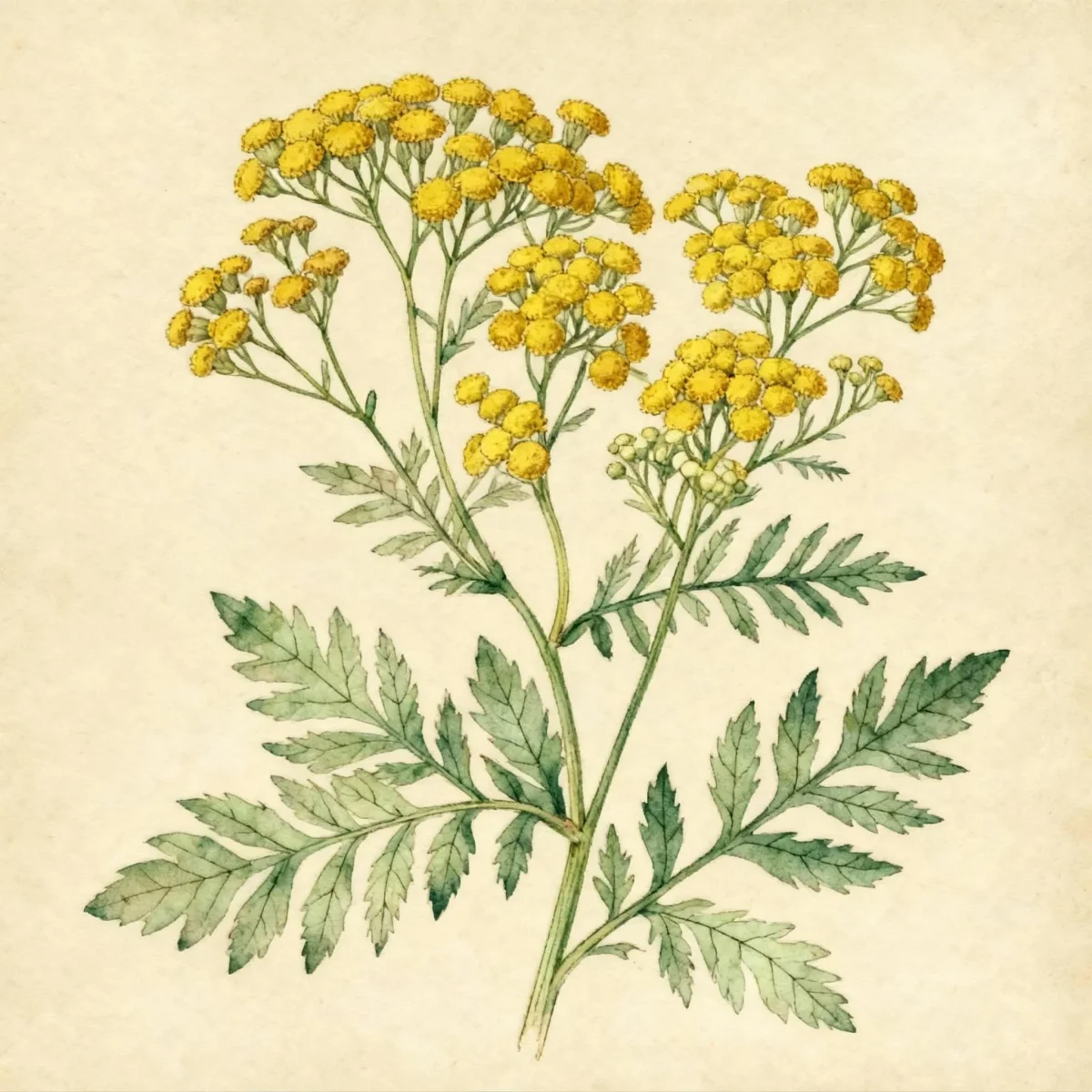
Tanacetum vulgare, or Common tansy, is a low-maintenance, rhizomatous perennial known for its aromatic fern-like foliage and button-like yellow flowers.
Scroll down to discover growing tips, care requirements, companion plants, and more
Complete Plant Information
Overview
Common tansy (Tanacetum vulgare) is a distinctive, aromatic herbaceous perennial native to Europe, recognizable by its finely divided, fern-like foliage and clusters of small, button-like yellow flowers. Historically valued for folk remedies and as an insect repellent, this plant offers high aesthetic impact with minimal gardener effort, making it a low-maintenance addition to informal plantings. Due to its aggressive spreading habit via rhizomes and prolific self-seeding, Tanacetum vulgare thrives best when allowed to naturalize freely in large areas. Gardeners should appreciate its resilience across various soil types, though control is essential in managed beds.
Fast Facts
- Plant Family: Asteraceae
- Plant Type: Herbaceous perennial
- Native Range: Europe
- Hardiness Zones: USDA Zones 3-8
- Size at Maturity:
- Height: 1-3 ft
- Spread: 0.75-1.5 ft
- Bloom Time: July to August
- Bloom Description: Yellow
- Sun Exposure: Full sun to part shade
- Water Needs: Dry to medium
- Maintenance Level: Low
How to Grow
Tanacetum vulgare adapts well to average, dry to medium, well-drained soils. While it prefers full sun, providing some afternoon shade during hot summers helps maintain vigor. Although it tolerates poor, dry soils, its spreading nature is somewhat restrained in leaner conditions.
For established clumps, watering should be minimal; this plant handles drought well once established. Fertilizing is generally unnecessary, as rich soil encourages more aggressive rhizomatous spread. The key care requirement for Common tansy is pruning immediately after flowering.
Shearing off the spent flower clusters promptly controls unwanted self-seeding, which is a primary method of unwanted naturalization. If rhizomatous spread within a defined area becomes problematic, physical removal or regular solarization may be required to contain Tanacetum vulgare.
Landscape Uses
The suggested use for Common tansy is naturalization, where its vigorous growth contributes to informal settings like meadows or along stream banks, provided local regulations permit its presence. It performs excellently in cottage gardens or large, unrestricted borders where its pungent foliage and bright yellow blooms can create a striking contrast against softer textures. However, due to the vigorous rhizomatous spread, it is strongly discouraged in formal beds or containers unless aggressive root containment is employed.
Standout Features
Flower Qualities
- Showy
- Fragrant
Noteworthy Characteristics
Tanacetum vulgare, commonly called golden buttons or tansy, is an erect, rhizomatous, weedy perennial with aromatic, fern-like foliage. It typically grows 1-3’ tall. It is native to Europe and Asia, but was brought originally for medicinal and horticultural purposes, later escaping gardens to naturalize along roadsides, railroads, and waste areas throughout much of the northern U.S. Button-like yellow flowers appear in summer in compact, flat-topped clusters. The strongly-scented, pinnately-divided, fern-like leaves are highly reminiscent of yarrow. Though historically used medicinally, current uses have largely ceased due to the presence of the toxic compound thujone in its oils.
Tolerances
- Deer
- Drought
- Erosion
Potential Problems
The primary concern with Common tansy is its aggressive growth habit. In conditions it favors, the rhizomes spread rapidly, making removal difficult in desired areas like borders or foundation plantings. Spider mites can occasionally become a problem, especially in very hot, dry periods or stressed conditions. Management involves maintaining dryness to slow rhizome spread and regular inspection for pest issues.
Frequently Asked Questions
What hardiness zones is Common tansy suitable for?
Hardiness zones range from USDA Zones 3 through 8, indicating excellent cold tolerance for northern gardens.
How large does Tanacetum vulgare grow?
This perennial typically reaches a mature height between 1 and 3 feet, with a spread ranging from 0.75 to 1.5 feet.
When does Common tansy bloom?
The signature yellow, button-like flowers of this species generally appear during the mid-summer months, specifically from July to August.
What sun exposure does Tanacetum vulgare need?
This plant performs best in full sun but can tolerate partial shade, especially appreciating breaks from intense afternoon light in hotter climates.
Conclusion
The vibrant yellow blooms and aromatic, fern-like texture make Common tansy (Tanacetum vulgare) a powerfully resilient, low-maintenance choice for informal plantings where spreading is encouraged. While its historical uses have faded due to toxicity concerns, its landscape value remains in naturalized settings. Before planting, confirm that your site matches the USDA Zones 3-8 range and be prepared to manage its vigorous rhizomatous nature.
Propagation Tips
Since Tanacetum vulgare spreads aggressively by both rhizome division and self-seeding, propagation is exceptionally easy. For immediate landscape filling, division of the root clumps can be performed in early spring or fall. Lift the desired clump and separate sections, ensuring each division has healthy roots and crown tissue.
To control the exact location, utilize seed collection, but be aware that seedlings will quickly establish. If you wish to intentionally sow seeds, harvest the compact, flat-topped clusters of flowers as they mature in late summer. Sow seeds directly outdoors in the fall or stratify them indoors for spring planting; natural cold stratification often works perfectly for this hardy perennial.
Design Ideas
When incorporating Common tansy into a landscape, think large-scale and informal. It pairs beautifully with other drought-tolerant perennials that can withstand competition, such as ornamental grasses or sturdy coneflowers (Echinacea). Its texture contrasts nicely with broad-leaved plants, softening the edge of a woodland border or stabilizing slopes prone to erosion, which it handles very well per its tolerances.