Cupid's dart (Catananche caerulea)
Cupid's dart (Catananche caerulea) is a low-maintenance perennial offering blue summer blooms. Perfect for cottage gardens.
Scroll down to discover growing tips, care requirements, companion plants, and more
Complete Plant Information
Overview
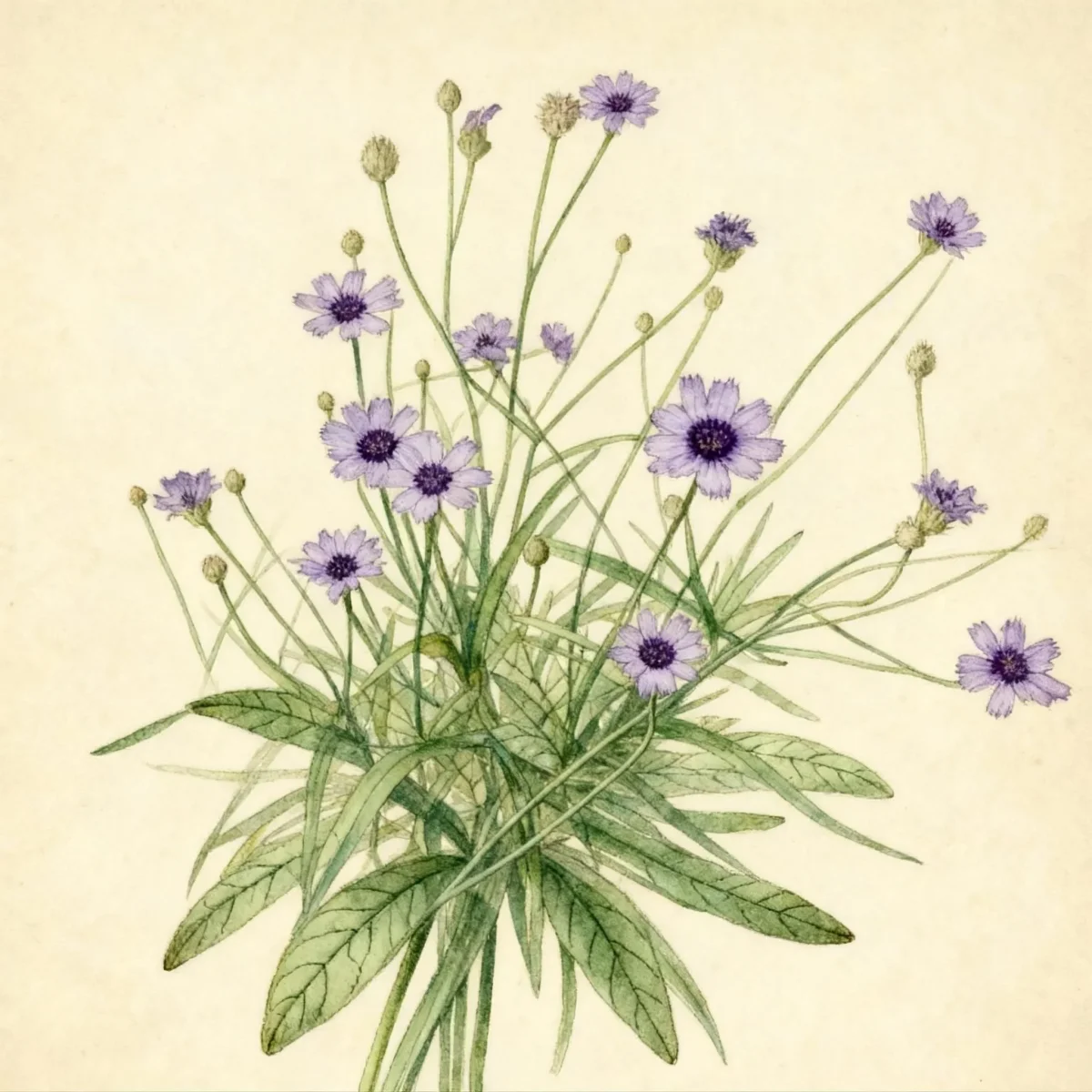
Catananche caerulea, commonly known as Cupid’s dart, is a delightful, short-lived perennial valued for its bright, airy blue daisy-like flowers that persist from mid-summer well into autumn. Its delicate structure adds vertical interest to borders, rising on wiry stems above a basal clump of narrow, grass-like leaves. This Mediterranean native, Catananche caerulea, thrives in sunny spots where many other perennials might struggle slightly, provided the soil drainage is excellent.
This plant’s historical association with love potions, giving rise to the name Cupid’s dart, adds a layer of romantic mythology to its garden presence. It is exceptionally low maintenance once established, making it ideal for gardeners seeking reliable color without intensive care schedules. Whether used in fresh cutting gardens or dried arrangements, this perennial offers consistent ornamental value throughout the warmest months.
Fast Facts
- Plant Family: Asteraceae
- Plant Type: Herbaceous perennial
- Native Range: Northern Africa, southwestern Europe
- Hardiness Zones: USDA Zones 4-7
- Size at Maturity:
- Height: 1-2 ft
- Spread: 0.75-1 ft
- Bloom Time: July to September
- Bloom Description: Blue to lavender-blue
- Sun Exposure: Full sun
- Water Needs: Medium
- Maintenance Level: Low
How to Grow
For best success with Catananche caerulea, plant it where it receives unobstructed full sun throughout the day. The most crucial cultural requirement involves soil; the plant demands loose, sandy-humusy, well-drained media. Gardeners must diligently avoid unamended heavy clay soils, as water retention leads quickly to root issues.
Water established Cupid’s dart moderately, allowing the soil to dry slightly between waterings, as they exhibit some drought tolerance. Critically, avoid wet soils, especially during the winter dormancy period, which can be fatal in cooler zones. Fertilization is rarely necessary; rich soil can encourage excessive foliage at the expense of bloom quality.
These plants perform beautifully in the garden and may sometimes self-seed when conditions are optimal. However, gardeners in the Deep South (south of USDA Zone 7) should proceed with caution, as the combination of high summer heat and humidity often causes these plants to fail. They can be grown readily from seed if desired.
Landscape Uses
The airy habit and consistent summer color of Cupid’s dart make it an excellent choice for adding texture and height variation to the middle or front of perennial borders. It blends seamlessly into cottage garden schemes, where its blue hue contrasts beautifully with hot yellows or soft pinks. Mass planting is highly recommended to create a striking river of blue color when the flowers are in full display from July through September.
Beyond the garden bed, Catananche caerulea excels as a cutting flower. Its rigid, wiry stems make harvesting easy, and the blooms retain their structure and color exceptionally well when dried. Integrating them into a dedicated cutting garden ensures a steady supply of material for bouquets long after the garden season ends.
Standout Features
Flower Qualities
- Showy
Noteworthy Characteristics
Catananche caerulea, commonly called Cupid’s dart, is a short-lived, clump-forming perennial of the aster family. Blue to lavender-blue flowers (to 2” diameter) with dark centers bloom singly on naked wiry stems rising to 2’ tall from a mostly basal clump of narrow, lanceolate, grass-like, gray-green leaves (each 8-12” long). Each flower is subtended by overlapping papery bracts. Flowers bloom freely from mid-summer to autumn. Genus name comes from the Greek name meaning a strong incentive. Specific epithet means dark blue in reference to flower color. Early Greeks and Romans used this Mediterranean native to make love potions, hence the genus name and common name of Cupid’s dart.
Tolerances
Potential Problems
Cupid’s dart generally enjoys a very clean bill of health regarding pests and diseases. Serious insect infestations or major disease outbreaks are not common issues for this resilient plant. The primary potential stressor to monitor is powdery mildew, which can sometimes develop in areas with poor air circulation or high humidity late in the season.
To manage the minor threat of powdery mildew, ensure ample spacing between plants to promote good airflow around the foliage. Choosing a site with excellent soil drainage is the best preventative measure against overall stress that leads to susceptibility. Generally, gardeners can plant Catananche caerulea with confidence, knowing significant chemical intervention is often unnecessary.
Frequently Asked Questions
What hardiness zones is Cupid’s dart suitable for?
Cupid’s dart is best suited for USDA Hardiness Zones 4 through 7, thriving in cooler summer climates.
How large does Catananche caerulea grow?
This perennial typically reaches a height between 1 and 2 feet, with a spread of approximately 0.75 to 1 foot.
When does Catananche caerulea bloom?
The blue to lavender-blue blooms of this plant provide color from July to September.
What sun exposure does Catananche caerulea need?
This plant requires full sun exposure to produce its best display of flowers.
Conclusion
The reliable, airy blue blooms and remarkably low maintenance profile make Catananche caerulea a stellar addition to the sunny garden space. Offering excellent value for cut flowers and dried arrangements, Cupid’s dart is a resilient choice for achieving a classic cottage garden aesthetic. Before planting, confirm your garden falls within USDA Zones 4-7 and verify that your soil drains exceptionally well.
Propagation Tips
While Catananche caerulea is short-lived, it can be easily renewed through seed sowing, as it readily reseeds in ideal conditions. Starting seeds indoors several weeks before the last frost can provide earlier blooms, though direct sowing after danger of frost has passed is often successful. This propagation method ensures you can keep the beautiful blue flowers of Cupid’s dart recurring in your landscape faithfully.
Companion Planting
Consider planting Cupid’s dart alongside species that share similar preferences for full sun and excellent drainage. Airy companions like ornamental grasses, Gaura, or pale yellow Coreopsis will harmonize with the blue blooms without competing heavily for resources. Avoid heavy, moisture-loving plants near your clumps of Catananche caerulea to maintain the dry side of the soil moisture spectrum this perennial prefers.