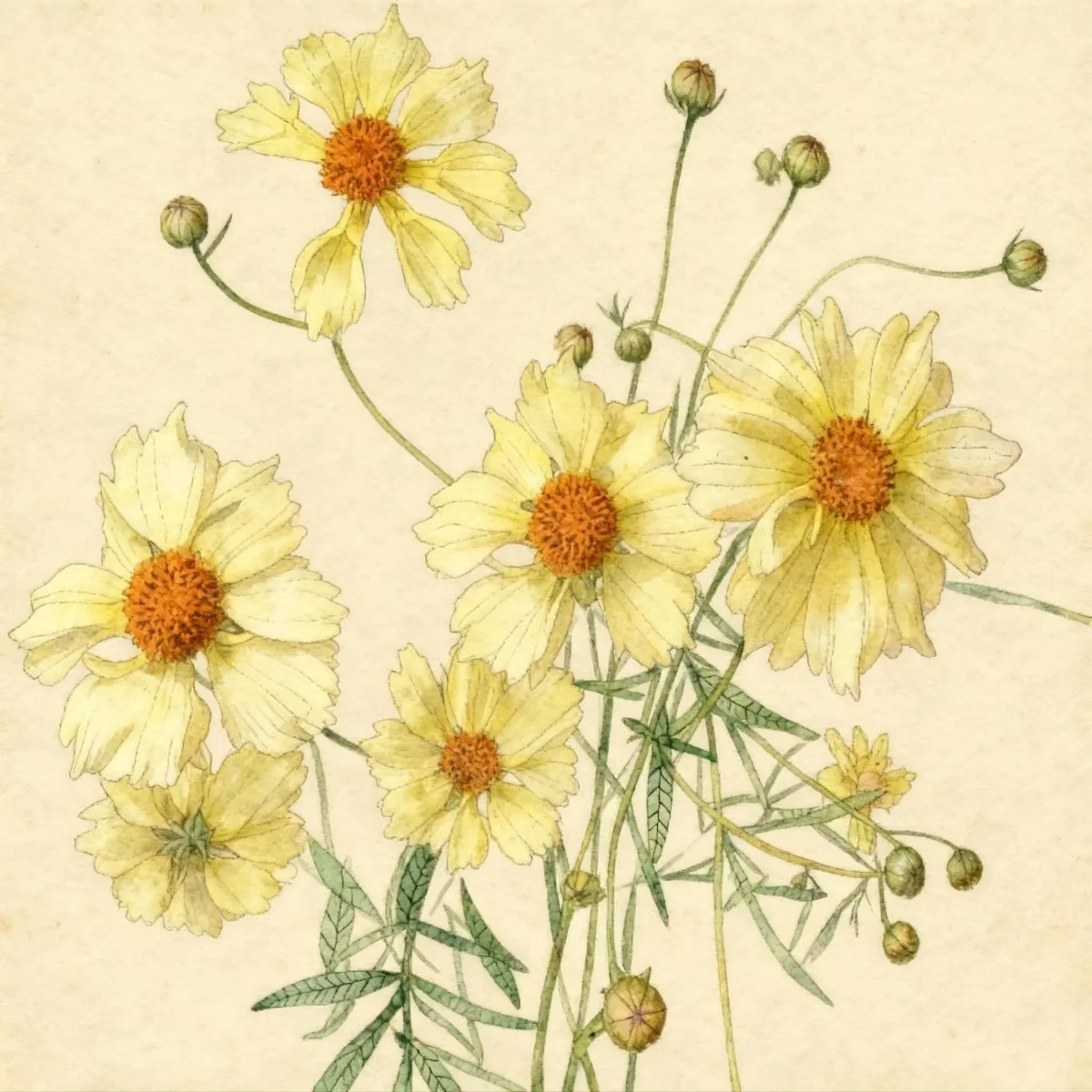
Tickseed (Coreopsis pubescens)
Coreopsis pubescens (Tickseed) is a low-maintenance perennial native offering continuous yellow blooms from June to September in full sun.
Scroll down to discover growing tips, care requirements, companion plants, and more
Complete Plant Information
Overview
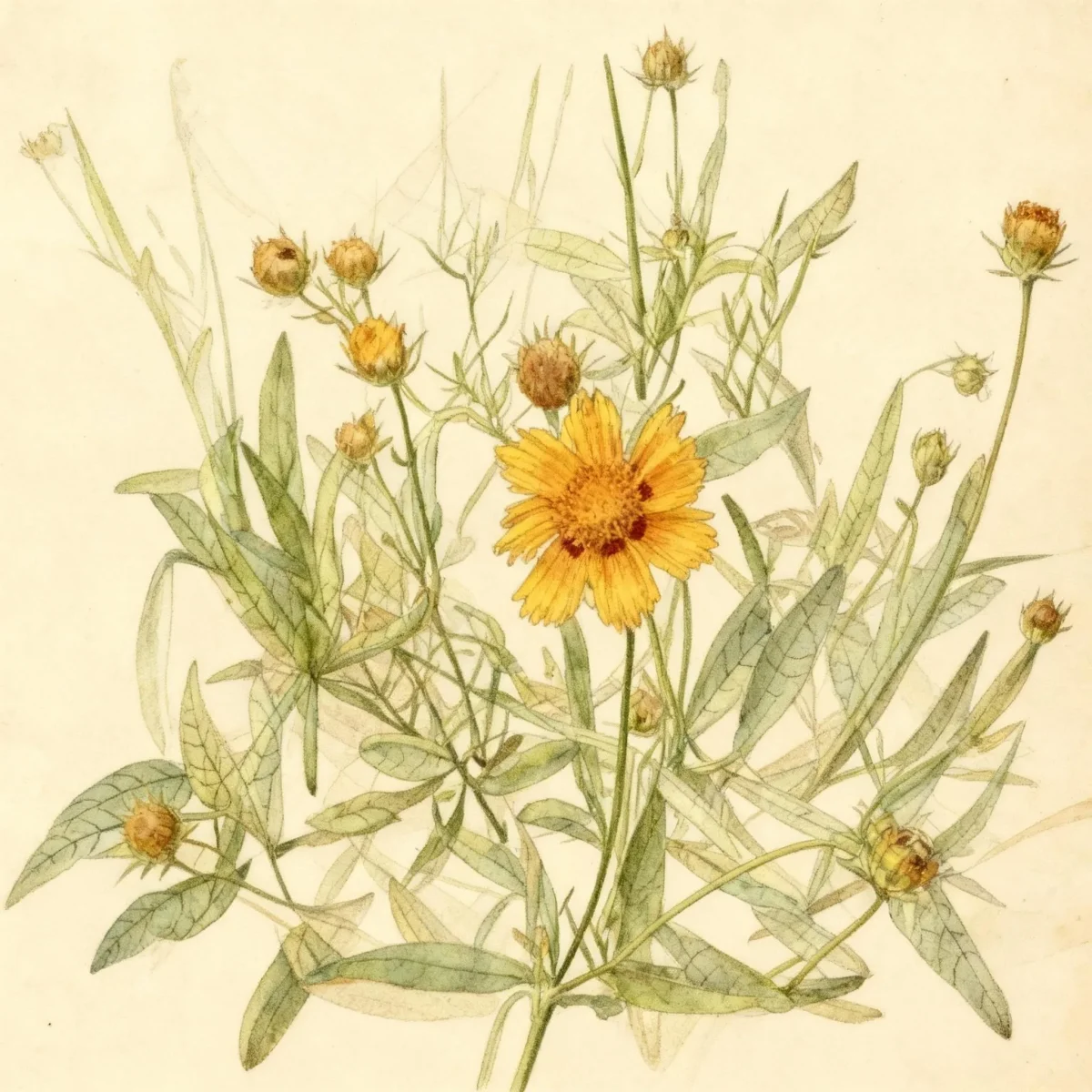
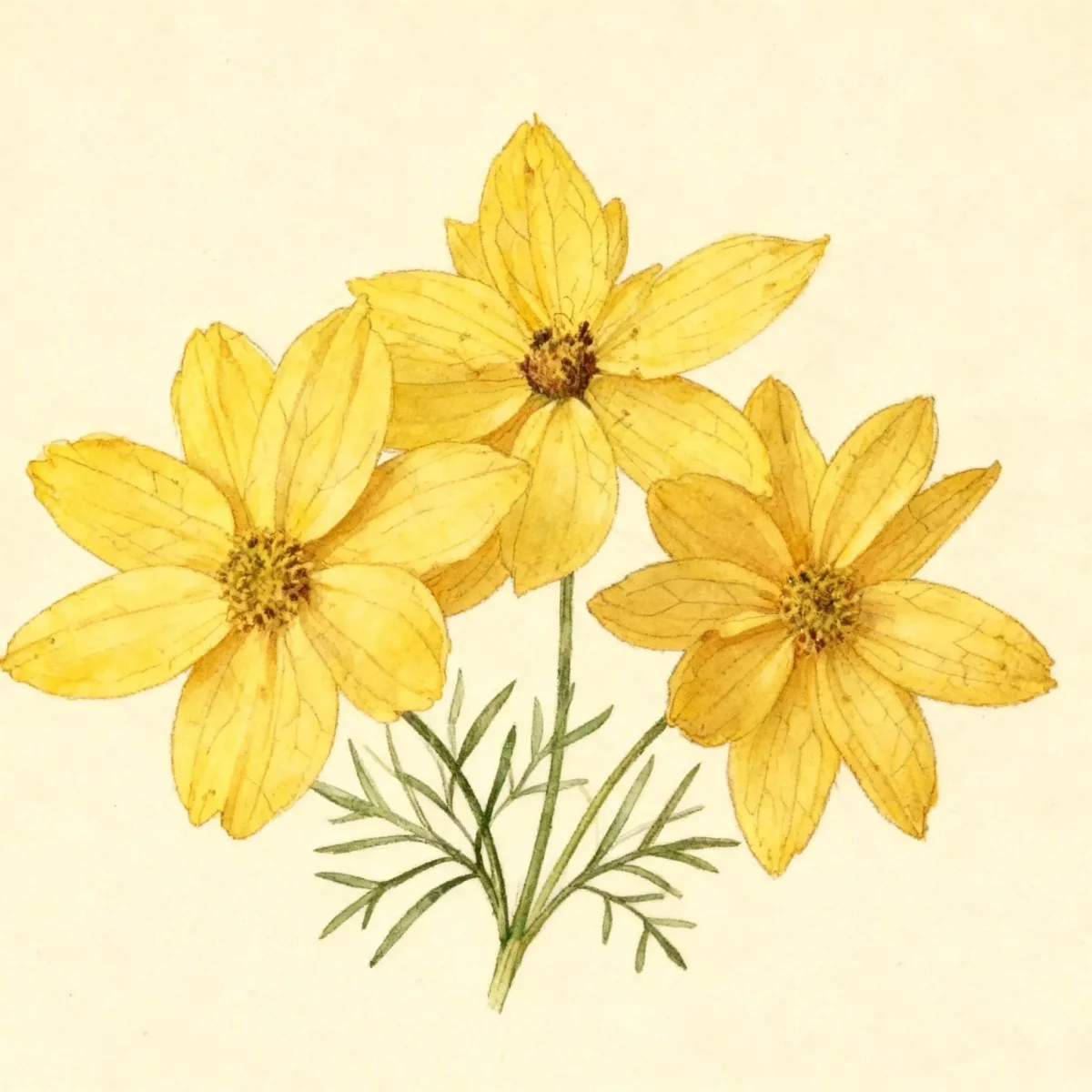
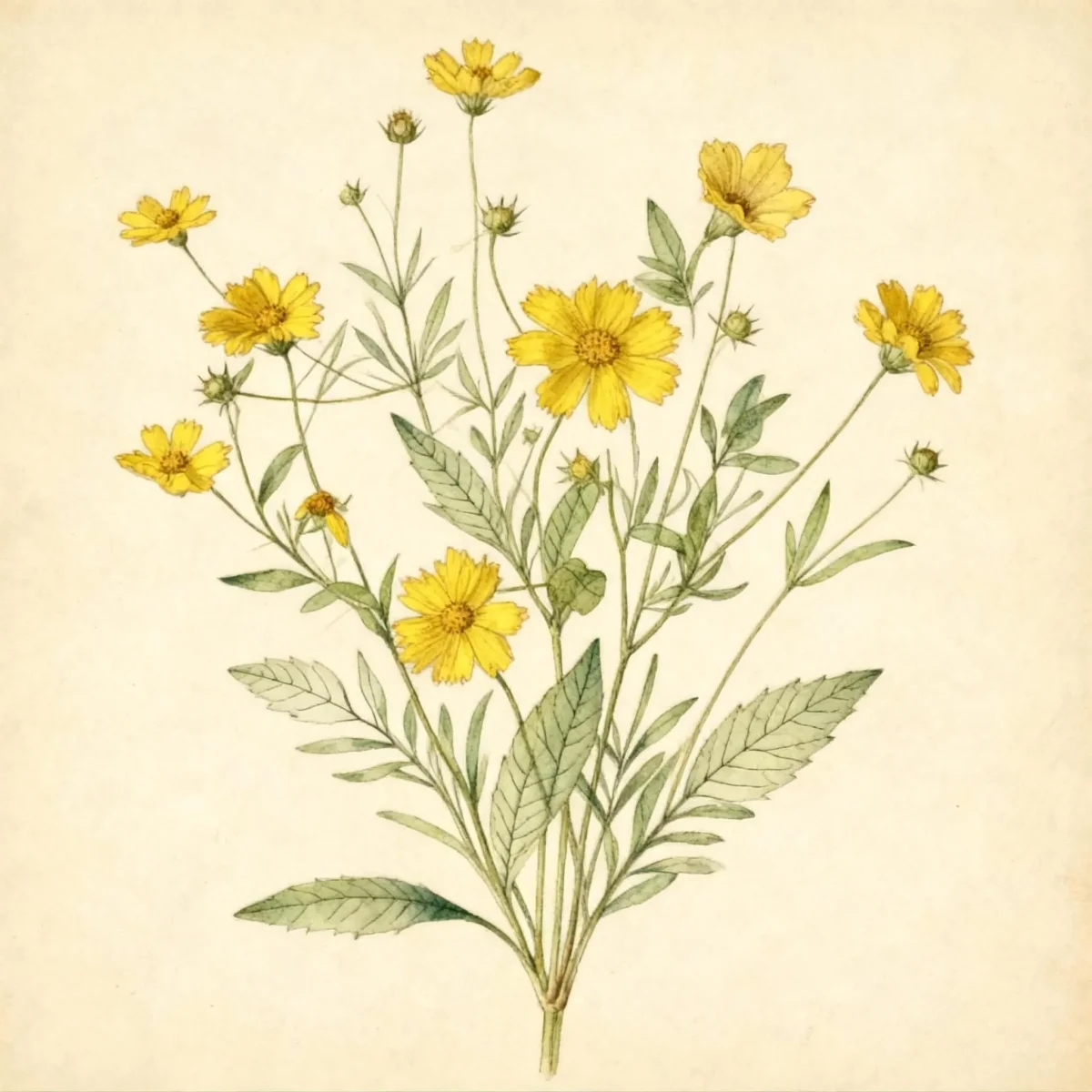
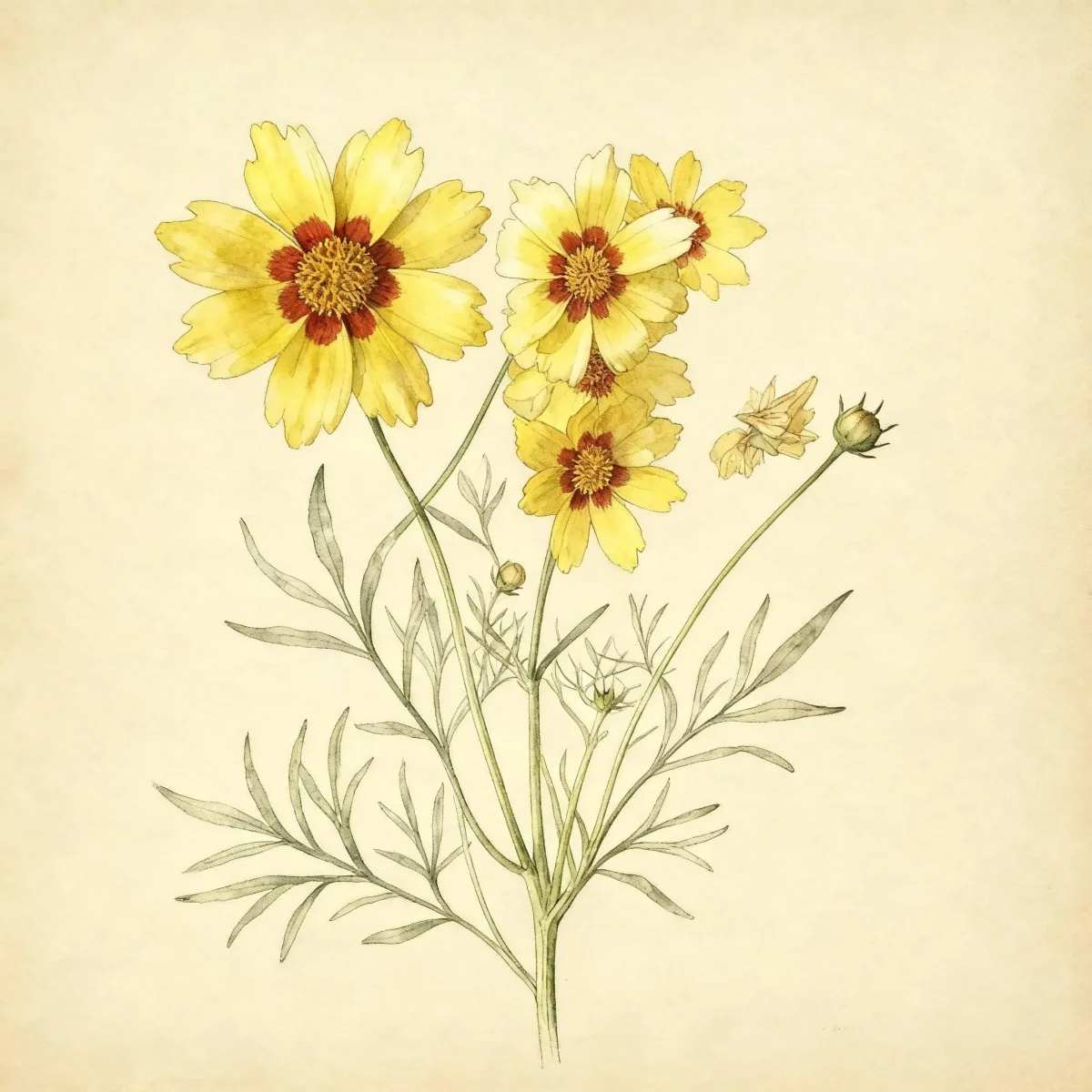
Coreopsis pubescens, commonly known as Tickseed, brings reliable summer color to gardens that often struggle with heat and poor soil. This herbaceous perennial features daisy-like flowers with bright yellow rays radiating from a darker golden center, providing excellent contrast from early summer through early fall. Gardeners value this species for its relative toughness and adaptability, especially in drier conditions where other perennials might falter.
Native to varied habitats across the United States, including rocky woods and stream banks, Coreopsis pubescens has adapted to thrive in well-drained, even poor soils. It requires minimal intervention once established. Its sprawling foliage might become messy later in the season, but a simple hard prune resolves any aesthetic issues, keeping the patch vibrant.
For an effortless, sun-loving display, few plants rival the consistent performance of Star tickseed. Its ability to tolerate drought and less-than-ideal soil structure makes it an essential component for naturalized areas, meadows, or low-input borders. Remember that while the plant is somewhat short-lived, prolific self-seeding ensures its return year after year.
Fast Facts
- Plant Family: Asteraceae
- Plant Type: Herbaceous perennial
- Native Range: United States
- Hardiness Zones: USDA Zones 6-9
- Size at Maturity:
- Height: 2-4 ft
- Spread: 1.5-2.5 ft
- Bloom Time: June to September
- Bloom Description: Yellow rays and darker yellow center
- Sun Exposure: Full sun
- Water Needs: Dry to medium
- Maintenance Level: Low
How to Grow
The best time to establish Coreopsis pubescens is typically in spring or early fall, allowing the roots to settle before facing harsh summer heat or winter cold. Locate your Tickseed in a spot receiving full sun exposure. While it tolerates various soil types, it absolutely requires well-drained conditions; the culture notes confirm it thrives in poor, sandy, or rocky substrates. Avoid heavy clay soils that remain persistently wet, as this invites crown rot issues.
Maintenance for this perennial is commendably low. Water sparingly once established, as it is tolerant of drought, although consistent dry to medium moisture levels will support better bloom production. Fertilizing is rarely necessary; rich soil can actually encourage looser growth that may sprawl. The most important maintenance task is prompt deadheading of spent flower stalks.
Deadheading encourages repeat blooming throughout the summer and helps manage the plant’s tendency to self-seed. If the plant’s foliage begins to look unkempt or sprawls significantly during the summer heat, a hard cutback will refresh its appearance. Since plants can be short-lived, allowing some natural reseeding is recommended to perpetuate the planting. For defined borders, division every 2-3 years may be needed to maintain vigor.
Landscape Uses
Coreopsis pubescens excels in naturalized settings, perfectly blending into meadows, prairies, or cottage gardens where a more relaxed structure is desired. Its drought tolerance also makes it an excellent choice for difficult areas or slopes where establishing water retention is challenging. This Tickseed thrives in conditions where other specialized plants might fail, offering reliable, cheerful color across the landscape.
For more formal designs, incorporate the vibrant yellow blooms of Coreopsis pubescens along borders where it can cascade slightly over edges. Pair it with plants that share similar cultural needs—namely, full sun and excellent drainage. Look for companions that complement its texture or bloom time, such as coneflowers (Echinacea), native salvias, or other low-growing drought-tolerant sedges. Its use in areas designated for poor, dry soils is highly recommended.
Standout Features
Flower Qualities
- Showy
Noteworthy Characteristics
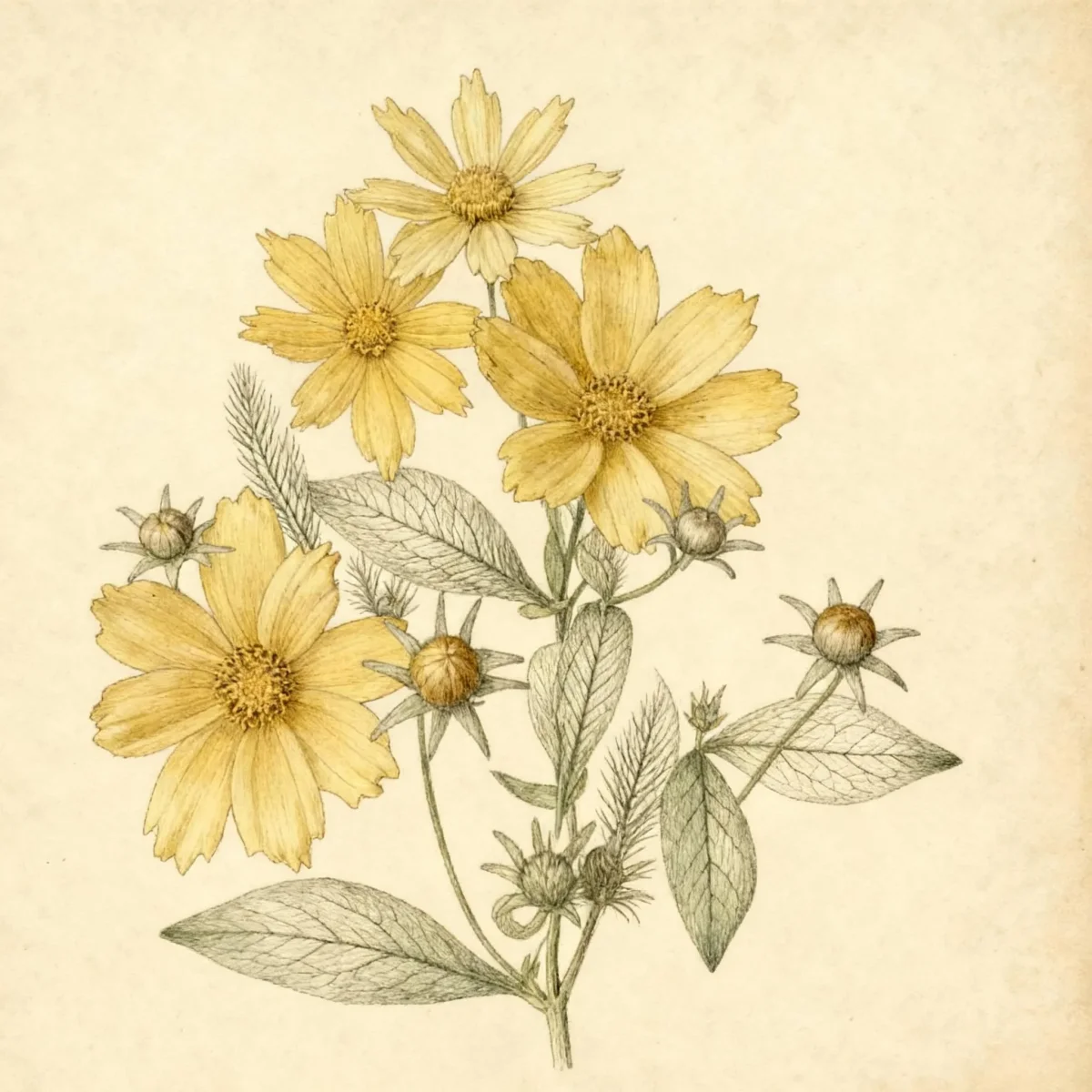
Coreopsis pubescens, commonly called star tickseed or downy tickseed, is native to rocky open woods, bluff bases, valleys, gravelly stream beds, rocky ledges along streams, alluvial thickets and railroad right-of-ways from Florida to Texas north to Virginia, Illinois, Missouri and Kansas. It typically grows in a clump to 3-4’ tall on slender downy stems clad with ovate-lanceolate leaves which are sometimes lobed at the base. Daisy-like single flowers (2” diameter) with star-like involucre bracts feature yellow rays (lobed or notched at the tips) surrounding a darker golden yellow center disk. The genus name comes from the Greek words koris meaning “bug” and opsis meaning “like” in reference to the shape of the seed which resembles a bug or tick.
Tolerances
- Deer
- Drought
- Dry Soil
- Shallow-Rocky Soil
Potential Problems
Generally, Coreopsis pubescens has no serious insect or disease problems, making it a surprisingly robust feature in the garden. The primary cultural concern involves soil moisture management. Crown rot is a distinct risk if the plant is situated in heavy, poorly drained soils or receives overly frequent irrigation. To mitigate this, ensure soil amendments focus on improving drainage rather than adding excessive organic matter that retains water. Compact plants tend to resist sprawling better than taller varieties of coreopsis, but if summer growth becomes unwieldy, aggressive summer pruning is an effective management tool.
Frequently Asked Questions
What hardiness zones is Tickseed suitable for?
Coreopsis pubescens is suitable for USDA Hardiness Zones 6 through 9.
How large does Star tickseed grow?
This perennial typically reaches a height between 2 and 4 feet, with a spread ranging from 1.5 to 2.5 feet at maturity.
When does Coreopsis pubescens bloom?
This Tickseed generally blooms from June through September, displaying signature yellow rays and a darker yellow center disk.
What sun exposure does Coreopsis pubescens need?
This plant requires full sun exposure to achieve its best vigor and flowering potential.
Conclusion
The low-maintenance nature and vibrant summer performance make Coreopsis pubescens, or Tickseed, an outstanding choice for sunny borders and naturalized plantings. Its tolerance for dry, poor soils confirms its status as a reliable stalwart for water-wise and xeriscape gardening designs. Before planting, confirm that your site offers full sun and excellent drainage to ensure years of effortless, cheerful perennial display.
Companion Planting
When selecting neighbors for your Coreopsis pubescens, it is best to prioritize other drought-tolerant, sun-loving perennials that also appreciate lean soil. Plants that thrive in similar conditions will prevent competition caused by differing water needs. Good pairings include various Sedums, which offer contrasting succulent textures, or hardy native species like Baptisia early in the season before the Tickseed really hits its stride. Avoid planting it near moisture-loving hostas or ferns, as the difference in water requirements will stress one or the other.
Propagation Tips
While Coreopsis pubescens will self-seed readily if spent flowers are not meticulously deadheaded, gardeners can also propagate this species via division to maintain distinct clumps or rejuvenate older plants. Division is best performed every two to three years, usually in the early spring just as new growth begins to emerge, or in the early fall. Carefully dig up the entire clump and gently tease apart the root ball, ensuring each section retains a healthy mass of roots and top growth. Plant these divisions immediately at the same depth they were previously growing and water well for the first week to help settle the soil around the new divisions.