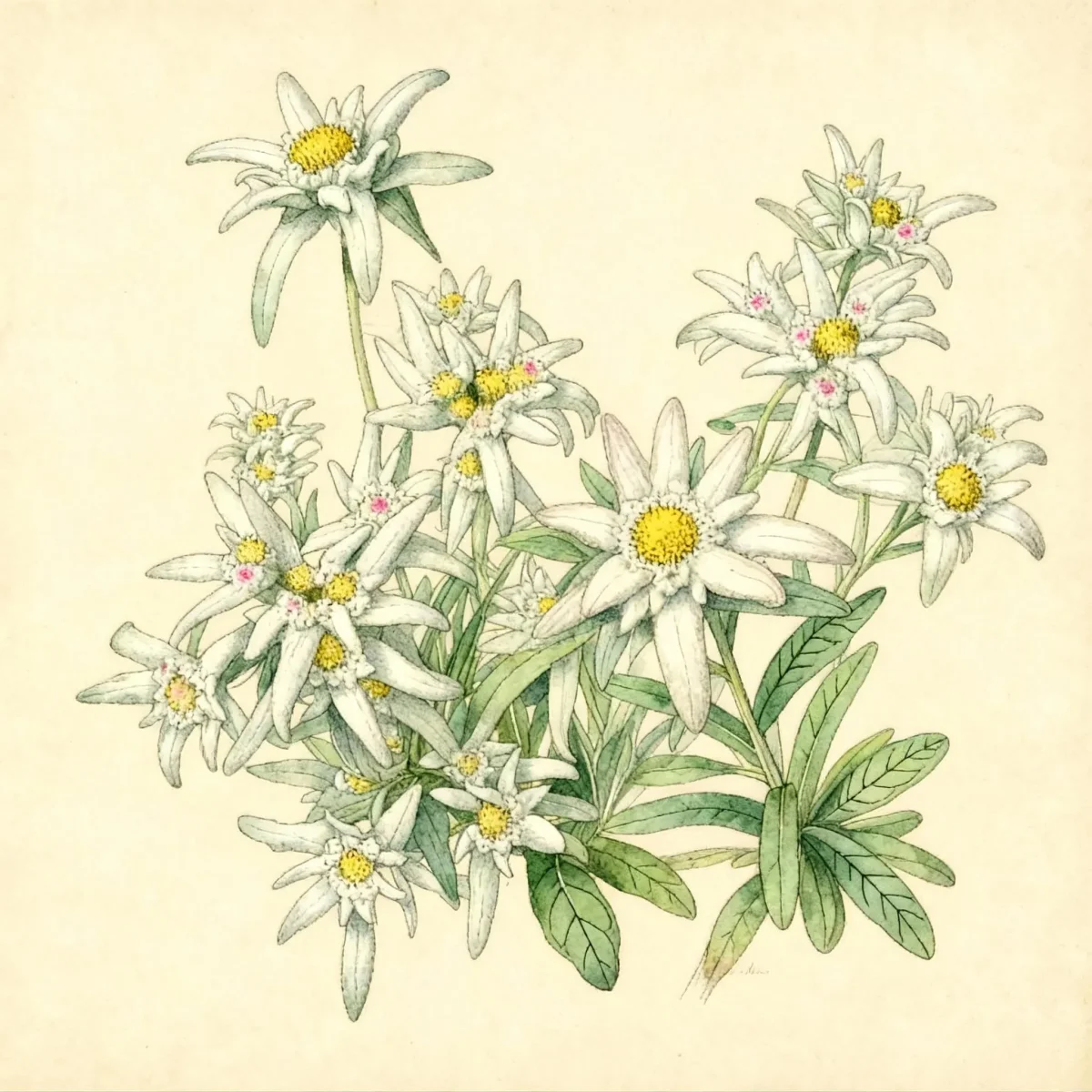
Edelweiss (Leontopodium alpinum)
Discover the iconic, woolly Edelweiss (Leontopodium alpinum), a unique perennial for alpine gardens needing full sun and sharp drainage.
Scroll down to discover growing tips, care requirements, companion plants, and more
Complete Plant Information
Overview
The Edelweiss, scientifically known as Leontopodium alpinum, is cherished worldwide for its distinctive, white-woolly flower heads, making it an unmistakable feature in rock gardens and alpine displays. This clumping, loosely-tufted perennial brings the spirit of European mountainsides to the home garden. Despite its tough alpine origins, Leontopodium alpinum requires specialized care, particularly regarding drainage and temperature tolerance.
A key characteristic of this species is its low-growing habit and the textural contrast provided by the narrow, felted gray-green basal leaves. The true flowers are yellow disks, but the showy effect comes from the bract-like leaves underneath, which are covered in a thick, fuzzy, white indumentum. Gardeners seek out Leontopodium alpinum for its unique appearance and strong cultural significance.
While relatively hardy in the right conditions, it is crucial to understand that the Edelweiss dislikes high heat and humidity, often leading to short lifespans outside of cool summer climates. Proper siting in sharply-drained soil is essential for successfully establishing this noble mountain flower.
Fast Facts
- Plant Family: Asteraceae
- Plant Type: Herbaceous perennial
- Native Range: Southern Europe
- Hardiness Zones: USDA Zones 4-7
- Size at Maturity:
- Height: 0.5-1 ft
- Spread: 0.5-0.75 ft
- Bloom Time: July to September
- Bloom Description: Yellow with woolly white bracts
- Sun Exposure: Full sun
- Water Needs: Medium
- Maintenance Level: Medium
How to Grow
Planting Leontopodium alpinum should occur in early spring or early fall when conditions are cooler. Location is paramount; choose a site receiving full sun where competing plants will not overwhelm the low-growing Edelweiss. The soil must be sandy to gritty, neutral to alkaline, and critically, extremely well-drained. Avoid heavy clay or compacted earth at all costs.
Care during the growing season centers on maintaining appropriate moisture without becoming soggy. Water needs are classified as medium, but this means ensuring the soil dries out between thorough soakings, especially as the plant dislikes summer humidity. Fertilizing is generally unnecessary; rich soils can encourage lush, soft growth that compromises the plant’s characteristic woolly texture and hardiness.
For successful long-term culture, gardeners in warmer climates must mimic alpine conditions as closely as possible. If crown rot develops, it signals overly moist, poorly-drained conditions. Pruning involves simply removing spent flower stems after blooming if you wish to neaten the appearance, though this is not strictly required for the health of the Leontopodium alpinum.
Landscape Uses
The compact growth habit and spectacular texture of Edelweiss make it an ideal candidate for specific architectural placements in the landscape. It excels in rock gardens, where the gritty, sharply-drained conditions mimic its native habitat perfectly. Consider planting clumps along raised beds or border fronts where they can be easily observed up close.
Companion planting should focus on species that also demand excellent drainage and enjoy sun exposure, such as creeping sedums, low-growing thymes, or hardy sempervivums. Avoid planting near moisture-loving perennials, as these companions will compete for water in a detrimental way for the Edelweiss. Using gravel mulch around the base of Leontopodium alpinum helps keep the crowns dry and reflects light, benefiting its growth.
Standout Features
Flower Qualities
- Showy
Noteworthy Characteristics
Leontopodium alpinum, commonly called edelweiss, is a clumping, loosely-tufted, woolly perennial wildflower that is native to rocky, limestone, alpine areas in Europe. It typically grows to 6-10” tall, and slowly spreads over time by rhizomes to form colonies. Yellow disk flowers subtended by showy, fuzzy, white-woolly, bract-like leaves bloom from July to September on short stems rising up from a mat of narrow, felted, gray-green basal leaves. The genus name comes from Greek leon meaning lion and podion meaning foot, as the flowers purportedly resemble a lion’s paw.
Tolerances
No specific tolerances were listed in the data provided.
Potential Problems
The most significant challenge when growing Edelweiss is overcoming site incompatibility, as plants are often short-lived if cultural needs are not met. No serious insect or disease problems are typically reported when the plant is sited correctly. However, crown rot is a distinct threat, developing rapidly in overly-moist, poorly-drained saturated soils, especially during warm summers. Prevention involves ensuring impeccable soil structure and avoiding overhead watering that keeps the crowns damp.
Companion Planting
Since Leontopodium alpinum requires sharp drainage and appreciates lean soil, companion plants should share these exacting mineral soil preferences. Look to other rock garden or alpine favorites that thrive in gritty media, such as various species of Draba, cushion saxifrages, or drought-tolerant ornamental grasses with upright habits. Grouping plants with similar water needs ensures you don’t inadvertently overwater the sensitive Edelweiss while trying to sustain a different neighbor.
Propagation Tips
While the plant slowly spreads by rhizomes, division is a viable method for maintaining healthy clumps of Leontopodium alpinum when cultural conditions are ideal. It is best performed in early spring before active growth begins. If attempting seed propagation, remember that germination can be slow, and the resulting seedlings require the same stringent drainage conditions as mature plants to survive their first few seasons.
Frequently Asked Questions
What hardiness zones is Edelweiss suitable for?
Edelweiss (Leontopodium alpinum) is generally suitable for USDA Hardiness Zones 4 through 7.
How large does Edelweiss grow?
This perennial typically reaches a height between 0.5 to 1 foot, spreading to a spread of 0.5 to 0.75 feet at maturity.
What sun exposure does Leontopodium alpinum need?
Leontopodium alpinum requires full sun exposure to develop its characteristic woolly texture and maintain a compact habit.
When does Edelweiss bloom?
The flowering period for Edelweiss is from July through September, featuring yellow blooms subtended by its signature woolly white bracts.
Conclusion
The iconic appeal of the Edelweiss, or Leontopodium alpinum, stems from its unique textural quality and romantic association with alpine environments. While requiring medium water, the absolute necessity for sharply-drained, gritty soil cannot be overstated for long-term success. Before planting, carefully evaluate your soil composition and climate; if you can provide the cool summers and excellent drainage this plant demands, this noble flower will reward you with its distinctive beauty.