Slender blazing star (Liatris cylindracea)
Liatris cylindracea, or Slender blazing star, is a low-maintenance perennial native to prairies, blooming July-Sept.
Scroll down to discover growing tips, care requirements, companion plants, and more
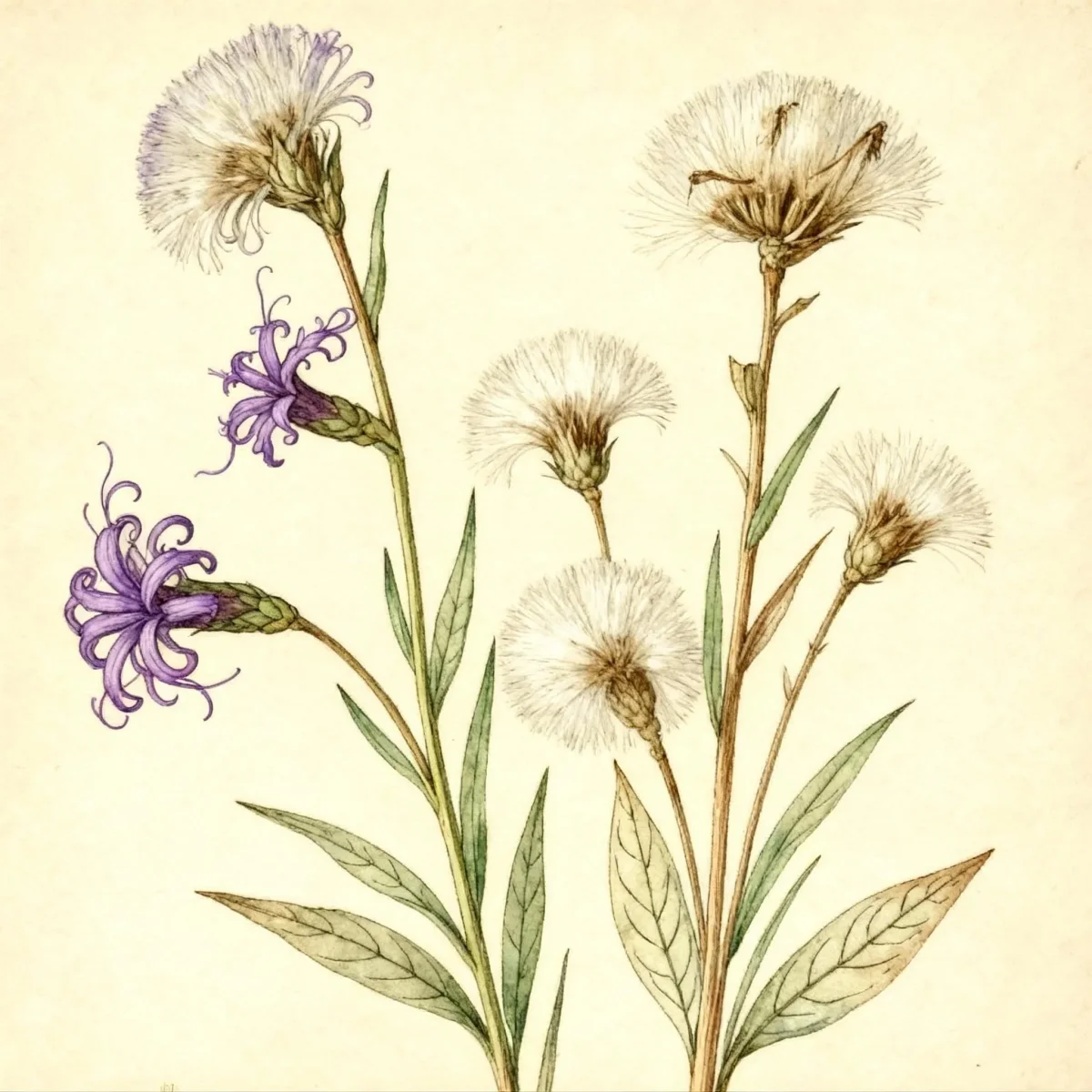
Complete Plant Information
Overview
The Slender blazing star, Liatris cylindracea, is a striking vertical accent plant highly valued in native and xeriscape gardens for its resilience and unique structure. This herbaceous perennial features fluffy, rose-purple flower heads that bloom over several months during the summer heat. Its upright, clump-forming habit makes it an excellent choice for gardens needing year-round structure without requiring extensive care.
Liatris cylindracea is native to rocky areas, prairies, and glades across the Midwest, indicating its preference for well-drained, even lean, soils. Gardeners appreciate its low maintenance requirements once established, thriving best when provided with full sun exposure throughout the growing season. While it establishes slowly from seed, its drought tolerance rewards patient gardeners with reliable summer color.
This species offers significant ecological benefits, attracting hummingbirds, butterflies, and songbirds that feed on its seeds. Integrating Liatris cylindracea into landscape designs provides crucial vertical interest and supports local pollinator populations, making it a versatile and functional native addition.
Fast Facts
- Plant Family: Asteraceae
- Plant Type: Herbaceous perennial
- Native Range: Ontario to Missouri
- Hardiness Zones: USDA Zones 4-7
- Size at Maturity:
- Height: 1.5-2 ft
- Spread: 0.5-1 ft
- Bloom Time: July to September
- Bloom Description: Rose purple
- Sun Exposure: Full sun
- Water Needs: Dry to medium
- Maintenance Level: Low
How to Grow
Liatris cylindracea is easiest to establish when planted in the spring or fall, allowing it time to settle its roots before facing summer heat or winter cold. Ensure the planting location receives full sun daily. The key to success with Slender blazing star is excellent drainage; it thrives in average, dry to medium soils and exhibits a particular fondness for sandy, rocky, or alkaline substrates. Avoid locations where water pools, as this plant is intolerant of wet winter soils.
Maintenance for this species is very low. Fertilization is generally unnecessary, especially if planted in its preferred lean soils, as rich soil can compromise its upright growth structure. Water sparingly after initial establishment; this plant tolerates significant drought once mature. Minimal pruning is required other than potentially cutting back dead foliage in early spring before new growth begins.
Because Liatris cylindracea is slow to establish from seed, gardeners should resist the urge to disturb the crown unnecessarily. If you do need to divide established clumps, do so in the spring, taking care to handle the roots gently. Its tolerance to summer heat and humidity means that little intervention is needed during peak growing months, making it superb for naturalized settings.
Landscape Uses
The architectural form of Slender blazing star lends itself perfectly to specific design roles where vertical texture is desired. It functions beautifully as a good small native liatris for rock gardens, where its slender form contrasts nicely with mounding succulents or shorter perennials. Its height (up to 2 feet) generally keeps it from overshadowing neighboring plants.
For larger native plant or prairie gardens, massing Liatris cylindracea creates a stunning visual effect when the rose-purple spikes appear almost simultaneously in mid-summer. They are also excellent used intermittently within perennial borders, adding surprising bursts of color and texture without becoming overly aggressive. Consider pairing them with plants that prefer similar dry, sunny conditions, such as coneflowers or various native ornamental grasses.
Standout Features
Flower Qualities
- Showy
Noteworthy Characteristics
Liatris cylindracea is an upright, clump-forming perennial that grows to 2’ tall, native across a range including Minnesota, Ontario, and Missouri, often found in rocky glades and prairies. Its unique, fluffy, rose-purple flower heads feature sharp-pointed involucral bracts that form a tight, elongated cylinder on the erect stalks. The narrow, grass-like foliage decreases in size higher up the plant, providing an airy texture that contrasts nicely with the dense blooms enjoyed by hummingbirds and butterflies.
Tolerances
- Drought
- Dry Soil
- Shallow-Rocky Soil
Potential Problems
Liatris cylindracea generally exhibits outstanding resistance to pests and diseases throughout its life cycle. Gardeners rarely encounter serious insect infestations or fungal issues when cultural requirements, especially excellent drainage, are met. The most common issue stems from overwatering or planting in heavy, wet clay, which can lead to root rot, particularly during winter dormancy.
Frequently Asked Questions
What hardiness zones is Slender blazing star suitable for?
The Slender blazing star (Liatris cylindracea) is reliably hardy in USDA Zones 4 through 7.
How large does Liatris cylindracea grow?
This plant typically reaches a height between 1.5 and 2 feet tall, with a relatively narrow spread of only 0.5 to 1 foot wide.
When does Slender blazing star bloom?
This species produces its attractive, rose-purple flowers spanning from July right through September.
What sun exposure does Liatris cylindracea need?
For optimal flowering and health, Liatris cylindracea requires full sun exposure throughout the day.
Conclusion
The resilient nature and vertical accent provided by Liatris cylindracea make it an indispensable addition to sunny, dry landscapes. Its low-maintenance profile ensures beautiful, pollinator-friendly blooms from mid to late summer with minimal effort. Before planting, confirm your garden site offers full sun and the well-drained soil essential for the long-term success of Slender blazing star.
Wildlife Benefits
The unique flower structure of Liatris cylindracea is highly effective at attracting beneficial insects throughout the summer months. The fluffy, densely packed disk flowers are an excellent nectar source for various butterfly species migrating through or residing locally. Planting these provides reliable forage during summer when other blooms might be waning.
Furthermore, the dried flower heads left standing through autumn and winter offer crucial sustenance for many small songbirds. Allowing the seed heads to remain intact provides necessary winter grit and cover in the garden environment, contributing to the overall biodiversity of your ecosystem long after the primary blooming period ends.
Companion Planting
Successful companion planning for Liatris cylindracea centers on pairing it with other sun-loving, drought-tolerant natives. Excellent partners include plants that offer contrasting textures, such as fine-leaved ornamental grasses like Little Bluestem (Schizachyrium scoparium). These companions share the love for dry, sandy conditions necessary for the Slender blazing star.
Consider grouping Liatris cylindracea with Coneflowers (Echinacea) or Black-Eyed Susans (Rudbeckia). While these companions may bloom slightly earlier, they share similar requirements for full sun and low supplemental water. This combination creates a dynamic prairie tapestry that thrives without constant human intervention.