Prairie dock (Silphium terebinthinaceum)
Discover Prairie dock (Silphium terebinthinaceum): a towering, low-maintenance perennial with large basal leaves and striking yellow summer blooms.
Scroll down to discover growing tips, care requirements, companion plants, and more
Complete Plant Information
Overview
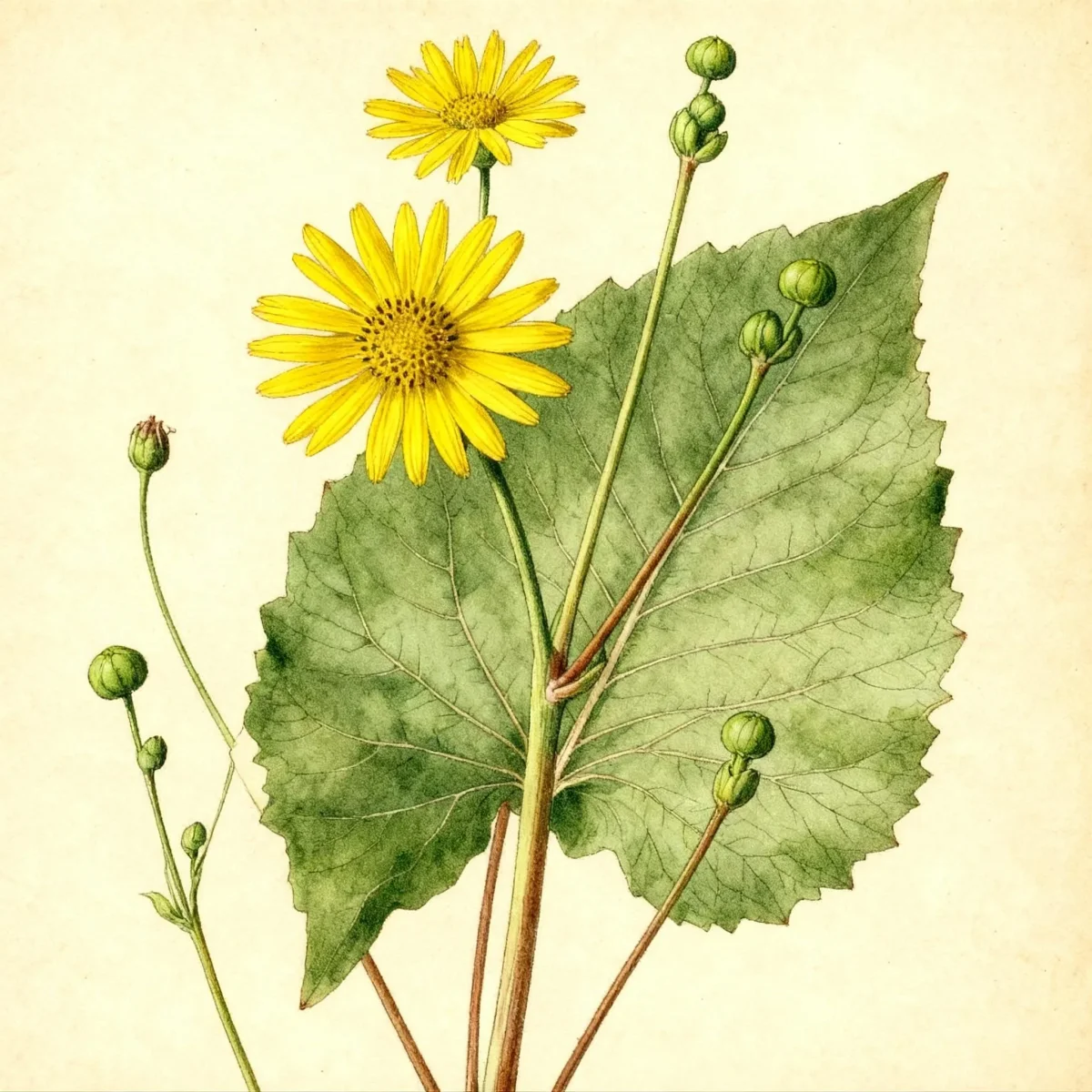
Prairie dock, scientifically known as Silphium terebinthinaceum, is a dramatic and highly rewarding native perennial for the sunny garden. Its structure is immediately arresting, featuring a basal rosette of huge, dark green, oval to heart-shaped leaves that can reach two feet long, providing robust texture long before flowers appear. This plant commands attention, eventually sending up tall, upright, nearly leafless stems topped with bright yellow, sunflower-like blooms.
As a tough prairie native, Silphium terebinthinaceum thrives in challenging conditions where many other garden specimens struggle. It demands little attention once established, classifying as a low-maintenance choice perfect for long-lived, naturalistic plantings. Gardeners value the stunning vertical accent provided by the mature prairie dock.
The vibrant yellow flowers of Silphium terebinthinaceum bloom reliably from July through September, offering crucial late-season color. Furthermore, the seeds produced after flowering are a valuable food source for local birds, adding functional wildlife value to this impressive herbaceous perennial.
Fast Facts
- Plant Family: Asteraceae
- Plant Type: Herbaceous perennial
- Native Range: Central-eastern Canada to southeastern United States
- Hardiness Zones: USDA Zones 4-8
- Size at Maturity:
- Height: 3-10 ft
- Spread: 1-3 ft
- Bloom Time: July to September
- Bloom Description: Yellow
- Sun Exposure: Full sun
- Water Needs: Medium
- Maintenance Level: Low
How to Grow
To successfully establish Silphium terebinthinaceum, plant crowns in the spring or fall in a location receiving full sun. This plant requires a location where it will not be disturbed, as its deep taproot makes transplanting difficult once mature. Silphium terebinthinaceum establishes best in average, medium, well-drained soils, though it readily tolerates poorer soil conditions.
Watering needs are medium; provide consistent moisture when young to help the deep taproot develop. Once established, prairie dock is quite drought-tolerant, reflective of its native prairie environment. Fertilization is generally unnecessary, especially if the plant is situated in native landscapes with nutrient-poor soils.
Maintenance for this plant is exceptionally low. Avoid excessive pruning; its almost leafless flowering stems are part of its signature look and usually do not require staking. In late winter or early spring, cut the old, dried stems back to the ground just before new growth emerges from the basal clump.
Landscape Uses
The impressive vertical stature of Silphium terebinthinaceum makes it an ideal structural element in the garden, best suited for the rear of the border where its height (up to 10 feet) will not overwhelm shorter companions. Its robust presence also anchors naturalized settings like prairies, wildflower meadows, and native plant gardens. The large basal leaves provide excellent year-round structure.
Consider using prairie dock to break up flowing drifts of softer perennials. It pairs beautifully with other tall natives that share similar cultural needs, such as coneflowers, blazing stars, or various ornamental grasses. In cottage gardens, its architectural form provides a wonderful contrast to looser, romantic plantings.
For large properties, mass plantings of Silphium terebinthinaceum create significant visual impact during the summer bloom season. While it is taprooted and best avoided in small rock gardens where disturbance is likely, it excels in large drifts where its low maintenance requirements truly shine.
Standout Features
Flower Qualities
- Showy
Noteworthy Characteristics
Silphium terebinthinaceum, commonly called prairie dock, is a herbaceous perennial native to prairies, glades, fens, railroad right-of-ways, and other exposed habitats in the Midwest and portions of the southern United States. From a basal clump of huge oval to heart-shaped, dark green leaves (to 2’ long) rise smooth, almost leafless stems branching at the top to a height of 10’ tall. Sunflower-like flowers (to 3” wide) with yellow rays and yellow center disks bloom in loose clusters on the upper parts of the plant in mid to late summer. The specific epithet terebinthinaceum means “like turpentine” in reference to the aromatic resin produced in the stem.
Tolerances
- Clay Soil
Potential Problems
Fortunately, serious insect or disease problems are rare for Silphium terebinthinaceum. Gardeners must be aware that this is a distinctly slow-to-establish perennial due to its strong taproot system. Be patient; it may not produce significant blooms until its second or third year in the garden. While generally sturdy, the tall stems sometimes exhibit a tendency to lean, particularly if sheltered from the wind or if experiencing excessive moisture, so ensure it is sited in a reasonably open, full-sun location.
Frequently Asked Questions
What hardiness zones is Prairie dock suitable for?
Prairie dock (Silphium terebinthinaceum) is reliably hardy in USDA Zones 4 through 8.
How large does Silphium terebinthinaceum grow?
This stately perennial typically reaches a height between 3 and 10 feet tall, with a relatively narrow spread of 1 to 3 feet, giving it a strong vertical presence.
What sun exposure does Prairie dock need?
Silphium terebinthinaceum requires full sun for optimal growth and bloom production.
When does Prairie dock bloom?
Prairie dock puts on its display of yellow, sunflower-like flowers spanning from July into September.
Conclusion
The striking height, large basal foliage, and vibrant yellow flowers make Silphium terebinthinaceum (Prairie dock) an invaluable anchor plant for sunny locations. Its low-maintenance demands and tolerance for less-than-ideal soils underscore its status as a superior native perennial. Verify your site falls within USDA Hardiness Zones 4-8 and plan to incorporate this architectural star into your landscape this coming season.
Wildlife Benefits
The late summer bloom period of Prairie dock is highly beneficial to local ecosystems. The bright yellow flowers attract numerous pollinators, including bees and butterflies, which are active late into the season when some earlier bloomers have faded. Furthermore, the seed heads that develop after flowering are highly attractive to various seed-eating birds throughout the fall and winter months.
Allowing the flower stems to remain standing through winter provides important late-season forage and shelter for beneficial insects. Clearing spent stalks should generally be saved until early spring, after the threat of hard frost has passed, to maximize this ecological benefit provided by Silphium terebinthinaceum.
Companion Planting
Given that Prairie dock requires full sun, medium moisture, and tolerates poor or clay soils, good companions share similar resilience. Pair it with other robust prairie natives that can handle the height and exposure. Excellent choices include towering coneflowers (Echinacea), various sages (Salvia species), and strong structural grasses like Switchgrass (Panicum virgatum). Avoid placing it near plants that require rich, constantly moist soil, as this stress could cause the Silphium to lean or fail to thrive.