Broad leaf goldenrod (Solidago flexicaulis)
Discover Solidago flexicaulis, the low-maintenance Broad leaf goldenrod, thriving in shade with attractive yellow blooms.
Scroll down to discover growing tips, care requirements, companion plants, and more
Complete Plant Information
Overview
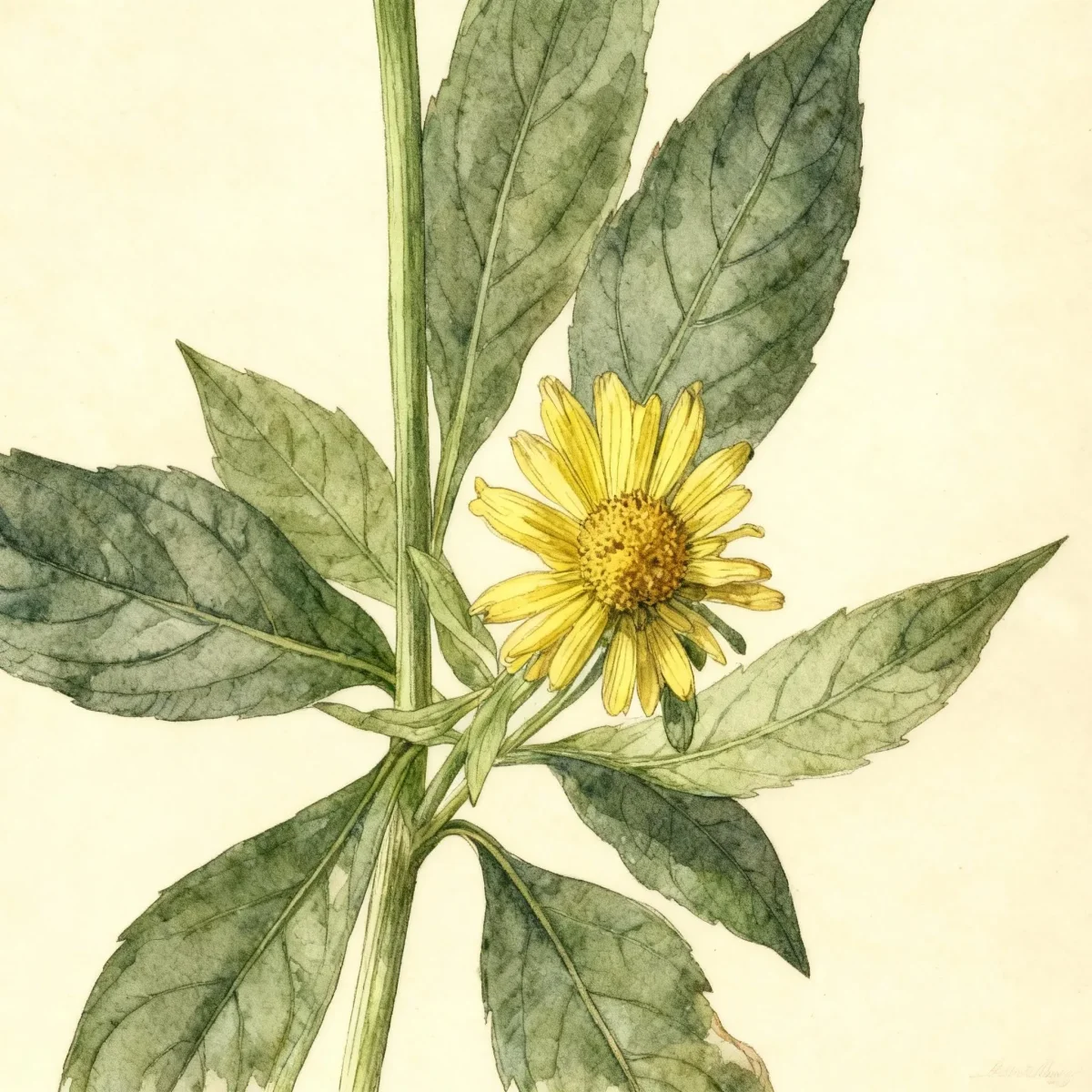
Broad leaf goldenrod, scientifically known as Solidago flexicaulis, offers reliable late-season color perfect for underutilized shady spots. This rhizomatous perennial is valued for its ability to flourish where many other sun-loving species struggle, making it an invaluable addition to woodland gardens. Its distinctive foliage and clusters of bright yellow flowers attract native pollinators throughout late summer and early autumn.
As a woodland native, Solidago flexicaulis naturally adapts to dappled light conditions, though it can tolerate full shade. It requires medium moisture but exhibits surprising drought tolerance once its root system is established, contributing to its low maintenance profile. Gardeners appreciate this species for its moderate stature, typically reaching 1 to 3 feet tall with a similar spread.
Beyond aesthetics, Broad leaf goldenrod provides critical late-season nectar sources for beneficial insects. Plant Solidago flexicaulis where you need structural, native interest in shaded borders or naturalized areas, offering beauty without demanding constant attention.
Fast Facts
- Plant Family: Asteraceae
- Plant Type: Herbaceous perennial
- Native Range: Eastern North American
- Hardiness Zones: USDA Zones 3-8
- Size at Maturity:
- Height: 1-3 ft
- Spread: 1-3 ft
- Bloom Time: July to September
- Bloom Description: Yellow
- Sun Exposure: Full sun to part shade
- Water Needs: Medium
- Maintenance Level: Low
How to Grow
The best time to establish Broad leaf goldenrod is during the spring or fall when temperatures are moderate, allowing the plant to focus energy on root development. This woodland native thrives in average, medium-moisture soils that are reasonably well-drained. While it tolerates full sun, Solidago flexicaulis performs optimally when situated in sun-dappled areas or part shade, mimicking its native habitat under a tree canopy.
Care for this plant is simple once established. Water moderately during dry spells, remembering that established plants can handle periods of dryness. Fertilization is rarely necessary; enriching the soil with compost annually is usually sufficient. Because this species spreads by rhizomes, monitor its spread if you have limited space, although its growth rate is manageable.
Pruning is generally not required, though you may cut back tattered foliage in late fall or early spring. Plants grown from seed may self-seed gently, contributing to a more naturalized look over time. Ensure the planting location prevents it from getting too dry, especially in its first year, to achieve the best growth before winter dormancy.
Landscape Uses
The naturalizing habit and shade tolerance make Broad leaf goldenrod an excellent choice for creating sustainable, low-input landscapes. Its recommendation as an “Interesting goldenrod for shady woodland areas” highlights its strength in softening dark corners of the garden. Use it en masse beneath deciduous trees where it can mimic a natural woodland understory bloom.
For design purposes, group Solidago flexicaulis with other shade-tolerant natives such as Foamflower (Tiarella) or various ferns to build layered texture throughout the season. It works perfectly as a mid-border element, providing necessary lift and late-season color contrast against deep green foliage. Given its rhizomatous nature, it naturally lends itself to mass plantings where it can effectively knit the soil together without requiring edging control.
Standout Features
Flower Qualities
- Showy
Noteworthy Characteristics
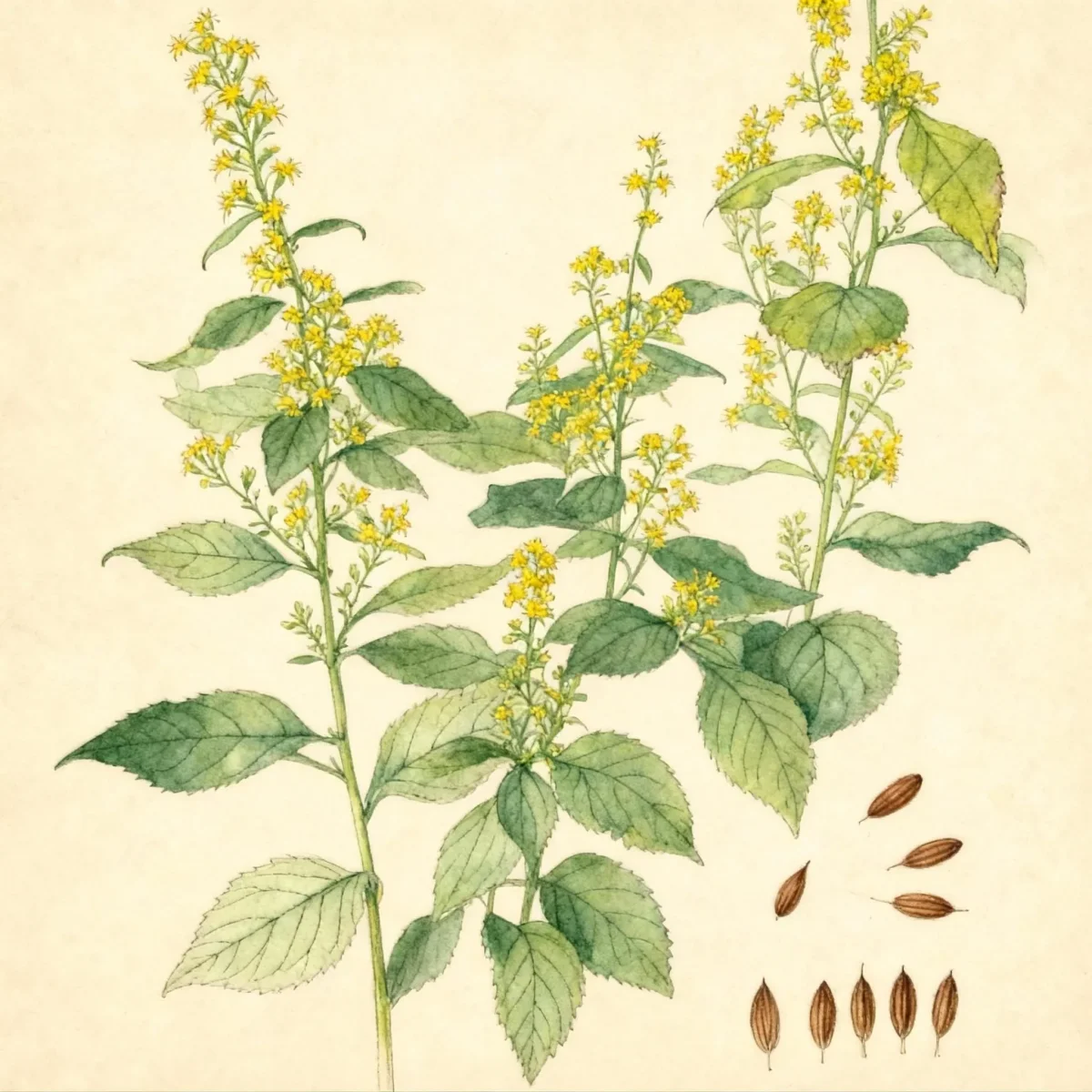
Solidago flexicaulis, commonly called zigzag or broadleaf goldenrod, is a rhizomatous perennial that is native to rich woods and thickets from Nova Scotia to North Dakota south to Georgia and Arkansas. It is distinguished by its zigzag stems and its toothed, broad-ovate leaves, which are sharply pointed at the tips. Flowers appear in small, axillary clusters on the upper parts of the stems and stem ends, blooming attractively for bees and butterflies from mid-summer into fall.
Tolerances
- Deer
- Heavy Shade
- Clay Soil
Potential Problems
While generally robust, gardeners should monitor Broad leaf goldenrod for common fungal issues common to the Asteraceae family. Rust is a possibility, presenting as rusty spots on the leaves. You should also watch for powdery mildew, particularly if air circulation is poor, and occasional leaf spot.
To manage these issues, ensure optimal planting conditions: avoid overly dense plantings that restrict airflow around the foliage of Solidago flexicaulis. If rust appears, prompt removal of infected leaves can prevent widespread damage. Fortunately, this plant is not known to suffer from serious insect infestations.
Frequently Asked Questions
What hardiness zones is Broad leaf goldenrod suitable for?
Solidago flexicaulis is highly adaptable, thriving across USDA Zones 3 through 8, offering reliable perennial performance across a wide temperature range.
How large does Broad leaf goldenrod grow?
This perennial typically achieves a height between 1 and 3 feet, with a spread of 1 to 3 feet, establishing a pleasing, upright profile.
What sun exposure does Solidago flexicaulis need?
Solidago flexicaulis prefers full sun to part shade, though it excels in partial shade, especially in warmer climates where it can escape the afternoon heat.
When does Broad leaf goldenrod bloom?
This goldenrod displays its bright yellow blooms reliably from July through September, providing essential late-season interest.
Conclusion
The Broad leaf goldenrod is an outstanding choice for adding reliable, low-maintenance yellow color to shaded or wooded garden areas. Offering deer resistance and tolerance for clay soils, Solidago flexicaulis proves that shade gardening doesn’t have to mean sacrificing visual impact or supporting wildlife. Check your USDA zone compatibility now and plan to incorporate this versatile native into your landscape this coming planting season.
Companion Planting
When designing a woodland garden featuring Solidago flexicaulis, selective companion planting enhances both aesthetics and ecological function. Look for plants that share its preference for medium moisture and part-to-full shade conditions. Excellent partners include woodland phlox (Phlox divaricata), which blooms earlier in the spring, or various native sedges (Carex species) that provide fine-textured groundcover at the base of the taller goldenrod stems.
For contrast in texture and height, consider pairing Broad leaf goldenrod with shade-loving ferns, such as the Autumn Fern (Dryopteris erythrosora), whose bronze new growth contrasts nicely with the yellow flowers. These companions help create a layered, naturalistic effect that requires minimal intervention once established, fully embracing the woodland aesthetic this plant prefers.
Wildlife Benefits
The late-season bloom of Solidago flexicaulis makes it crucially important for supporting regional pollinators as they prepare for migration or winter dormancy. The yellow flowers of this goldenrod are highly attractive to a wide array of native bees—it is not a primary culprit for hay fever but rather a vital food source.
Planting Broad leaf goldenrod supports the local ecosystem by providing significant nectar resources when many spring and early summer flowers have already faded. By including this native species, gardeners ensure continuous value for butterflies, beneficial wasps, and native bee populations across the late summer months.