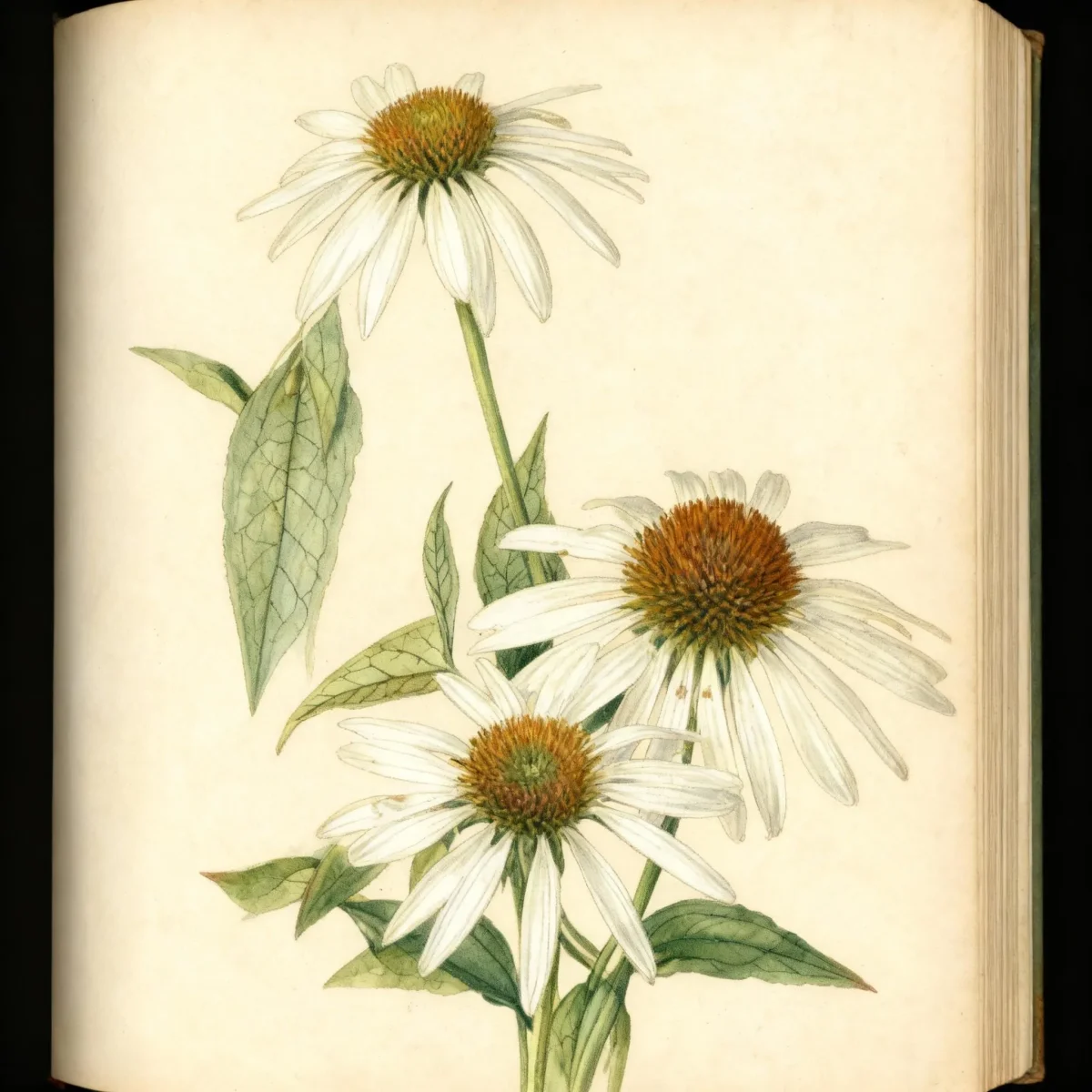
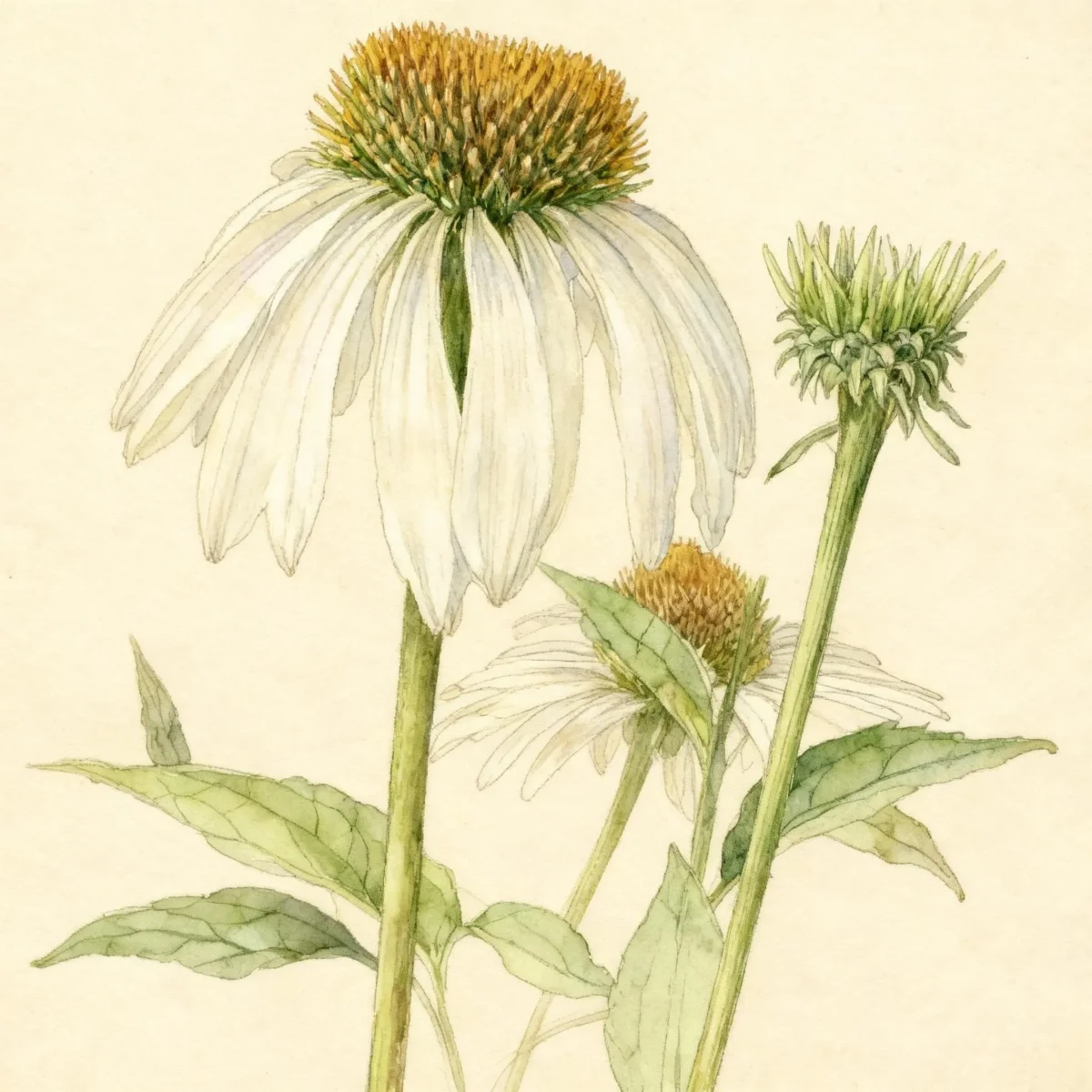
Purple coneflower (Echinacea purpurea)
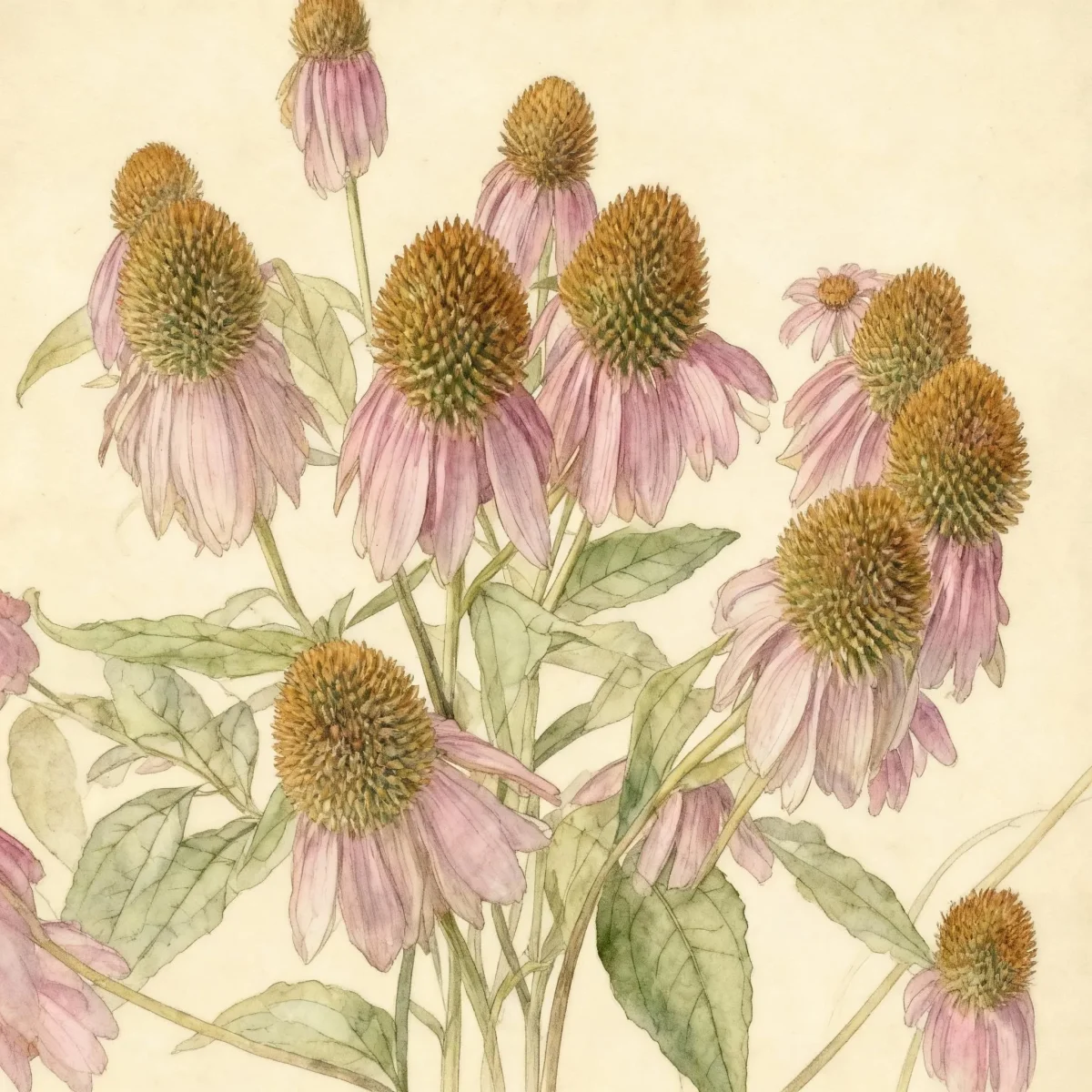
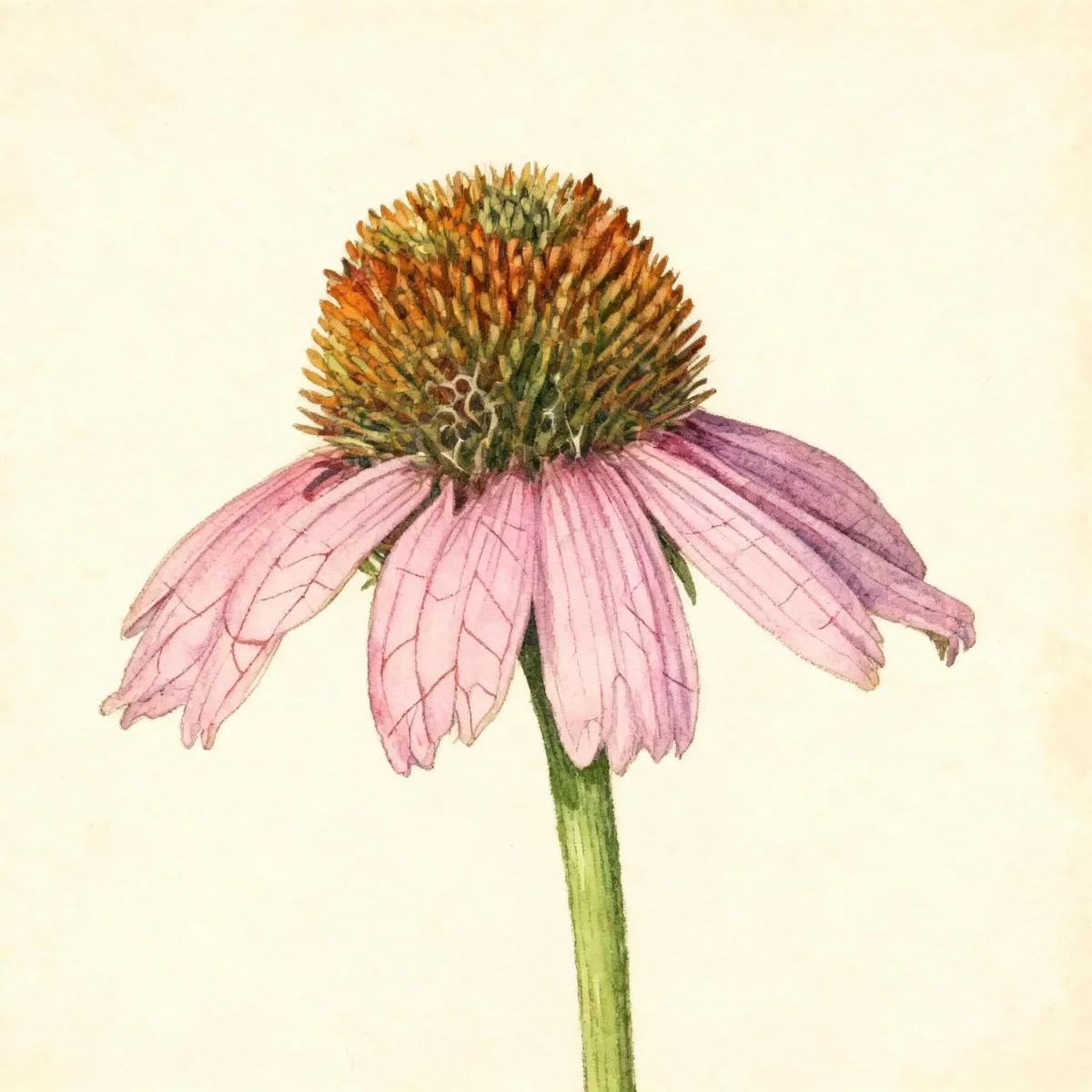
Echinacea purpurea, the Purple coneflower, offers showy purplish-pink blooms from June to August, thriving in full sun.
Scroll down to discover growing tips, care requirements, companion plants, and more
Complete Plant Information
Overview
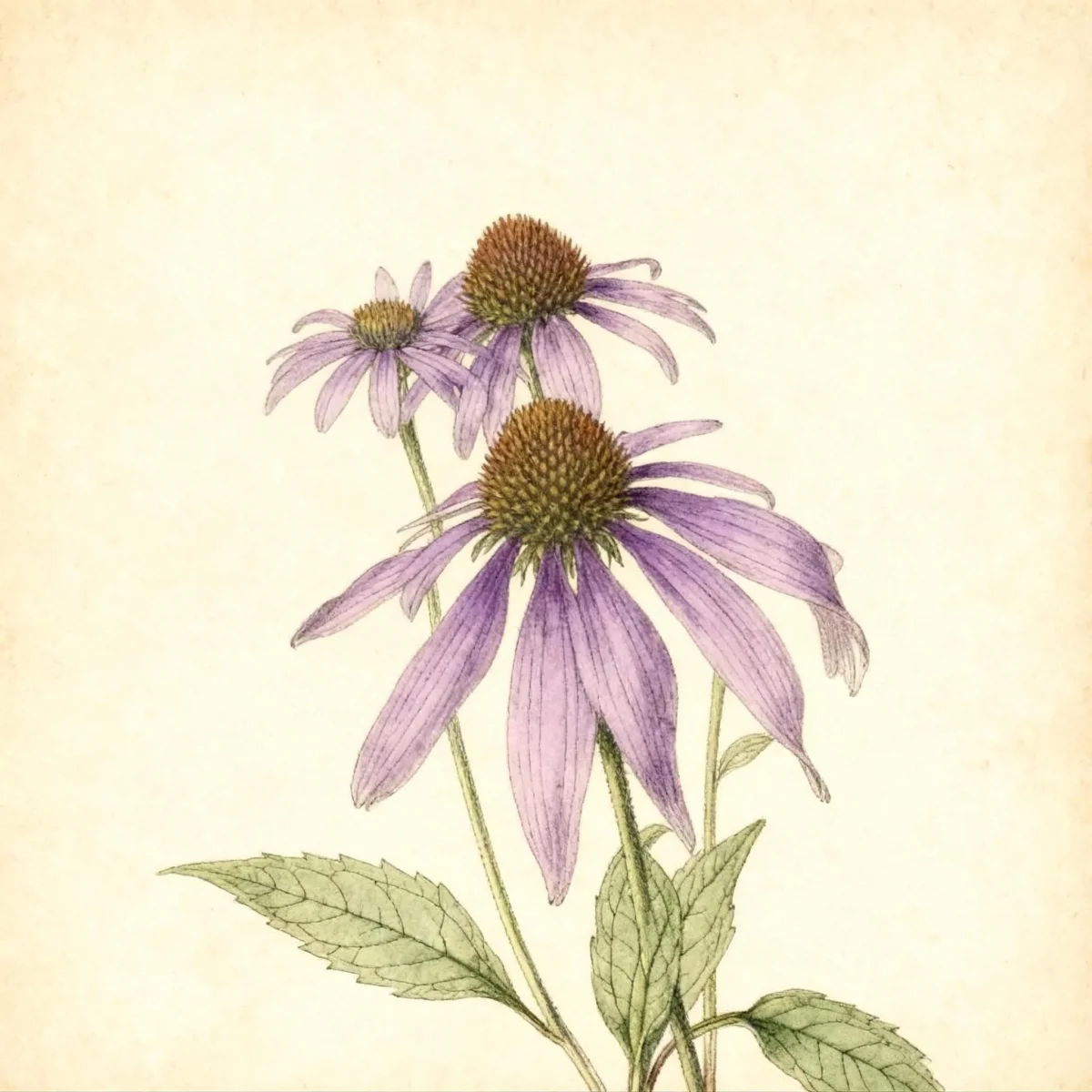
The Purple coneflower (Echinacea purpurea) is a cornerstone of the North American native garden, prized for its robust structure and long-lasting, daisy-like flowers. These recognizable blooms, featuring prominent central cones surrounded by reflexed purplish-pink ray petals, provide outstanding color from early to mid-summer. As a coarse, rough-hairy herbaceous perennial, Echinacea purpurea establishes deep roots, making it highly adaptable once established.
This species offers significant functional value by attracting pollinators and providing winter interest as seed heads feed songbirds like goldfinches. Its inherent toughness—tolerating heat, humidity, and suboptimal soils—secures its place as a low-maintenance superstar in mixed borders and naturalized settings. Gardeners especially appreciate how readily Echinacea purpurea integrates into meadow-style plantings.
As an eastern and central North American native, selecting Purple coneflower supports local ecosystems while adding reliable, vertical accents to the landscape. Its stiff stems and coarse foliage allow it to handle its height without flopping, ensuring consistently attractive mass plantings.
Fast Facts
- Plant Family: Asteraceae
- Plant Type: Herbaceous perennial
- Native Range: Eastern and central North America
- Hardiness Zones: USDA Zones 3-8
- Size at Maturity:
- Height: 2-5 ft
- Spread: 1.5-2 ft
- Bloom Time: June to August
- Bloom Description: Purplish pink
- Sun Exposure: Full sun to part shade
- Water Needs: Dry to medium
- Maintenance Level: Low
How to Grow
Plant Echinacea purpurea in the spring or fall once danger of hard frost has passed, ensuring it receives full sun for the best flowering performance, though it tolerates light afternoon shade. This adaptable plant thrives in average, dry to medium, well-drained soil and shows remarkable tolerance for drought, heat, and clay conditions. Proper drainage is key to preventing root issues over successive seasons.
Once established, watering needs are minimal; allow the soil to dry out between waterings, consistent with its dry-to-medium preference. Fertilization is usually unnecessary, as heavy feeding can lead to floppy stems. If clumps become overly crowded, plan to divide them approximately every four years during the spring to maintain vigor.
Deadheading spent flowers is optional; while prompt removal improves the general appearance and helps focus energy, the plants usually rebloom without it. However, leaving some seed heads standing late into the winter is highly recommended as they provide valuable winter structure and serve as food sources for birds.
Landscape Uses
The primary recommendation for Purple coneflower is to naturalize it within large swaths, allowing its natural tendency to self-seed to create charming, informal drifts. It excels in meadow gardens, wildflower plantings, and native plant areas where its strong vertical habit can contrast with lower-growing companions.
For formal borders, use Echinacea purpurea as a mid-to-back-of-border anchor, massing individuals together for maximum impact. It pairs classically well with other sun-loving prairie natives such as black-eyed Susans (Rudbeckia) or Shasta daisies, complementing their textures and bloom times. It also adapts well to the edge of a woodland garden where it receives filtered afternoon light.
Standout Features
Flower Qualities
- Showy
- Good Cut
Noteworthy Characteristics
Echinacea purpurea, commonly called purple coneflower, is a coarse, rough-hairy, herbaceous perennial that is native to moist prairies, meadows and open woods of the central to southeastern United States. Showy daisy-like purple coneflowers (to 5” diameter) bloom throughout summer atop stiff stems clad with coarse, ovate to broad-lanceolate, dark green leaves. The genus name Echinacea references the Greek word for hedgehog due to the spiny central cone found on the flower.
Tolerances
- Deer
- Drought
- Clay Soil
- Dry Soil
- Shallow-Rocky Soil
Potential Problems
Occasional aesthetic challenges include damage from Japanese beetles and the fungal issue known as leaf spot. More significantly, watch for signs of aster yellows disease, which can distort growth and flowering. To manage beetles, handpicking or using insecticidal soap early in the season can help control populations. Ensure good air circulation when planting to reduce the risk of common leaf spot fungi.
Frequently Asked Questions
What hardiness zones is Purple coneflower suitable for?
The Purple coneflower (Echinacea purpurea) is reliably hardy across USDA Zones 3 through 8.
How large does Echinacea purpurea grow?
This perennial typically reaches a mature height between 2 and 5 feet tall, with a spread generally falling between 1.5 and 2 feet wide, creating a substantial presence.
When does Purple coneflower bloom?
You can expect vibrant, long-lasting blooms on Echinacea purpurea from June well into August, displaying classic purplish-pink hues.
What sun exposure does Echinacea purpurea need?
For the absolute best performance and strongest stems, provide full sun exposure, though it will tolerate light to partial shade conditions.
Conclusion
The Purple coneflower stands out as an exceptionally valuable garden plant due to its resilience, low-maintenance profile, and extended summer bloom period. Integrating Echinacea purpurea brings vital nectar sources to your yard while providing structure that persists even after the flowers fade. Before planting, confirm that your intended site aligns with the USDA hardiness zone requirements for this celebrated native perennial.
Companion Planting
Choosing appropriate companions enhances the visual drama and structural integrity of your sunny border, utilizing the dry-to-medium soil requirements shared by many prairie natives. Plant the Purple coneflower alongside plants that enjoy similar conditions, such as Rudbeckia (Black-Eyed Susan), Baptisia (False Indigo), or ornamental grasses like Little Bluestem. These companions share the need for full sun and excellent drainage, ensuring all plants thrive together without requiring specialized care regimens.
Wildlife Benefits
Beyond being highly ornamental, Echinacea purpurea serves as an indispensable resource for local wildlife throughout its lifecycle. The broad, open flower heads are magnets for a variety of native bees, butterflies, and beneficial insects seeking nectar during the summer months. Furthermore, allowing the seed cones to mature in the fall and persist through winter offers a crucial late-season and winter food source for goldfinches and other seed-eating birds.