Elephant's foot (Elephantopus carolinianus)
Discover Elephantopus carolinianus, the low-maintenance Elephant's foot, featuring late summer lavender blooms and large basal leaves.
Scroll down to discover growing tips, care requirements, companion plants, and more
Complete Plant Information
Overview
Elephantopus carolinianus, commonly known as Elephant’s foot, is a highly beneficial herbaceous perennial celebrated for providing reliable color late in the growing season. This plant is particularly valued for its large, attractive basal leaves, which give the species its common name, and its transition into bloom as summer wanes. Native across the southeastern United States and West Indies, it adapts well to a variety of established garden settings.
This species thrives with minimal intervention, making it an excellent choice for low-maintenance landscaping or restoring native habitats. While it prefers part shade, Elephantopus carolinianus exhibits a surprising tolerance for drier soils and can handle some direct sun exposure. Its structure—growing modestly between two and three feet tall—allows it to fill space effectively without overwhelming neighboring plants, provided its spreading habit is managed.
Gardeners utilizing Elephant’s foot often appreciate its unique floral structure and its role in late-season interest within meadows or woodland edges. When sited correctly, Elephantopus carolinianus provides good ground cover potential, ensuring that even as other perennials fade, this native remains a contributing element in the landscape composition.
Fast Facts
- Plant Family: Asteraceae
- Plant Type: Herbaceous perennial
- Native Range: United States, West Indies
- Hardiness Zones: USDA Zones 4-9
- Size at Maturity:
- Height: 2-3 ft
- Spread: 2-3 ft
- Bloom Time: August to September
- Bloom Description: White/lavender
- Sun Exposure: Part shade
- Water Needs: Dry to medium
- Maintenance Level: Low
How to Grow
Planting Elephantopus carolinianus is best achieved in the spring or early fall when conditions are moderate. Ensure the location provides average, well-drained soil; this plant performs excellently in dryish, sandy compositions common in its native habitat. While part shade is ideal, remember that Elephant’s foot tolerates moderate amounts of full sun, especially where soils remain lean.
Care requirements are very low once established. Watering should be infrequent, aligning with its preference for dry to medium moisture levels; avoid overly wet or perpetually soggy conditions which can compromise root health. Fertilizing is rarely necessary; rich garden soil may actually encourage excessive vegetative growth at the expense of flowering.
Maintenance focuses primarily on awareness of its growth habit. Although it serves well as a ground cover when massed, be mindful that the plant has the potential to become aggressive and spread readily in garden settings. In late winter or very early spring, clear away any old dead foliage from the previous season to promote fresh growth of the basal leaves.
Landscape Uses
The primary strength of Elephant’s foot in design is its suitability for naturalistic settings. It is highly recommended for native plant gardens, providing excellent structure within meadows, and seamlessly integrating into woodland garden peripheries where filtered light dominates. While its ornamental appeal might be considered marginal for formal perennial borders, mass plantings create a robust, low-growing ground cover effect using its large basal leaves.
For ecological landscapes, this perennial fills niches where drought tolerance is essential. Avoid planting Elephantopus carolinianus near highly delicate, slow-spreading neighbors, as its tendency to spread requires containing or thoughtful placement within a larger, more vigorous planting scheme. It establishes well alongside native grasses or other late-season bloomers like asters or goldenrods.
When using Elephant’s foot as a formal ground cover, ensure planting density is adequate to suppress weeds while giving the plant room to establish its two-to-three-foot spread. This plant contributes significantly to the late summer season when many spring and summer bloomers are past their peak.
Standout Features
Flower Qualities
- Showy
Noteworthy Characteristics
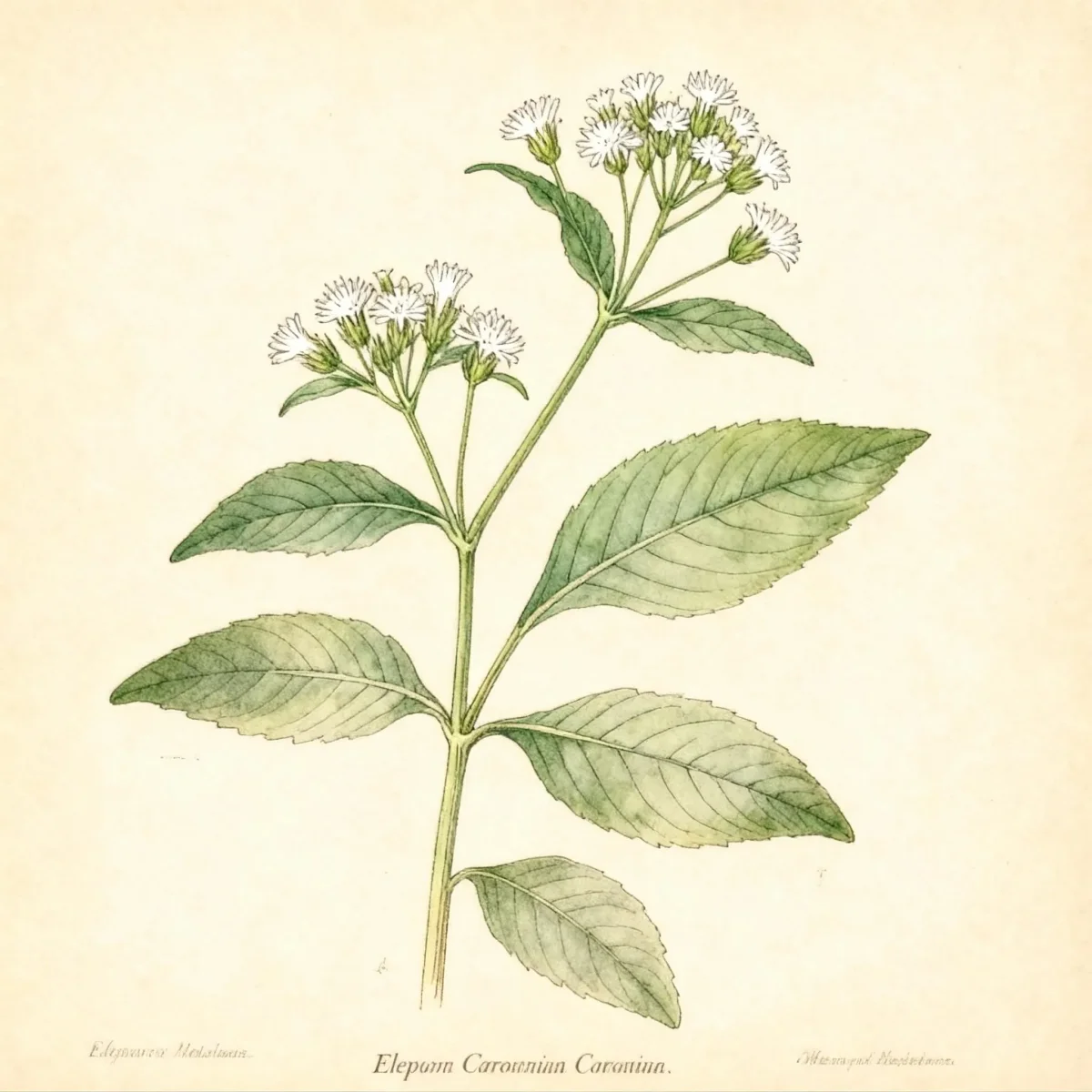
Elephantopus carolinianus, commonly called Elephant’s foot, is a herbaceous perennial native to the southern United States where it is found growing in low woods, along streambanks, roadsides, and in pastures. The common name elephant’s foot refers to the large basal leaves of this species. Bloom consists of many small flower heads arranged in compound inflorescences, which, when in full bloom, can be mistaken for a single, large pale lavender bloom.
Tolerances
- Drought
- Dry Soil
Potential Problems
This species generally suffers from no serious insect or disease problems, contributing significantly to its low-maintenance rating. Gardeners should primarily monitor for aggressive spreading rather than pest infestations or pathogens. If the plant becomes too vigorous in a manicured area, physical removal or division during the dormant season will control its encroachment.
Frequently Asked Questions
What hardiness zones is Elephant’s foot suitable for?
Elephantopus carolinianus is reliably hardy across USDA Zones 4 through 9, offering adaptability across a wide geographic range.
How large does Elephantopus carolinianus grow?
This herbaceous perennial typically reaches a mature height between 2 and 3 feet, with a corresponding spread of 2 to 3 feet.
When does Elephantopus carolinianus bloom?
You can expect the blooms of Elephant’s foot from August through September, featuring subtle white or pale lavender coloration.
What sun exposure does Elephantopus carolinianus need?
This plant thrives best in part shade conditions but exhibits tolerance for drier soils and some periods of full sun exposure.
Conclusion
The resilience and late-season flowering of Elephantopus carolinianus make it a valuable asset for gardeners seeking native, low-effort planting solutions. With its attractive foliage and drought tolerance, this plant proves its worth across diverse garden settings, from naturalized areas to borders providing late interest. Assess your site conditions to ensure the part shade location has well-drained soil before planting your Elephant’s foot this season.
Companion Planting
When designing a space for Elephantopus carolinianus, focus on companions that share similar cultural requirements for dry to medium soils and require similar maintenance levels. Consider pairing it with other late-season bloomers like various native Asters (Symphyotrichum spp.) or woodland-edge grasses that can handle dappled light. This combination creates texture and ensures continuous color as summer transitions into autumn, all while respecting the preference of Elephant’s foot for less interventionist gardening styles.
Seasonal Care Calendar
Spring is the ideal time to check on established plants of Elephantopus carolinianus. Clean up any remaining dead leaf litter from winter to allow new basal rosettes to emerge cleanly. As summer progresses and bloom approaches in August, light supplemental watering during extreme dry spells may benefit the plant, though established specimens should manage quite well on natural rainfall. Ensure no mulch is piled heavily against the crown, to maintain the necessary drainage this species prefers.