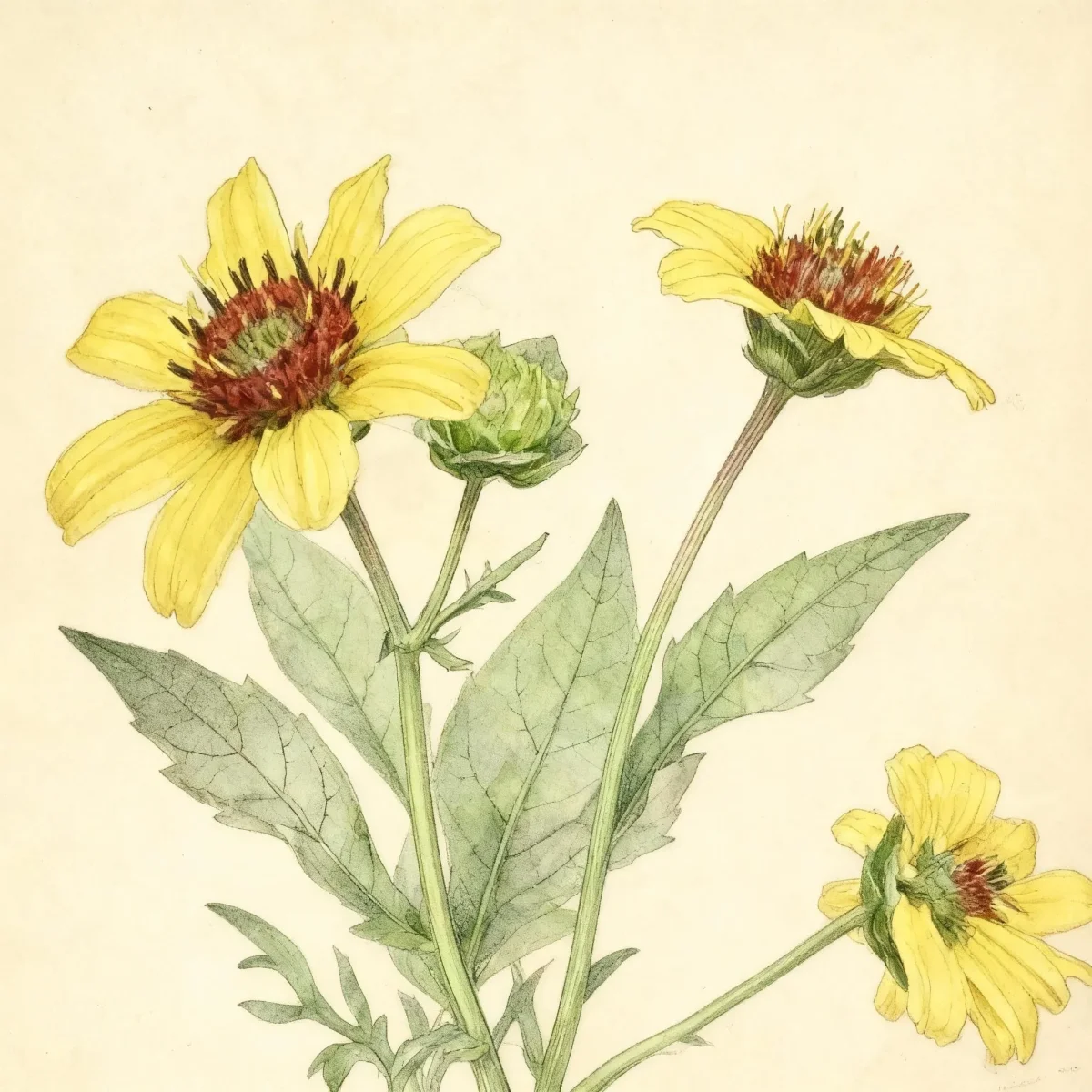
Gum plant (Grindelia lanceolata)
Discover Grindelia lanceolata, the tough, sunny yellow Gum plant thriving in USDA Zones 4-8 with low maintenance.
Scroll down to discover growing tips, care requirements, companion plants, and more
Complete Plant Information
Overview
Grindelia lanceolata, commonly known by its accessible name Gum plant, is a robust wildflower valued for its drought tolerance and late-season burst of vivid yellow blooms. This reliable herbaceous perennial brings structure and brightness to naturalized settings across the Southcentral United States. Its daisy-like flowers create significant visual interest throughout the summer and early fall.
Primarily suited for full sun locations, this species thrives where many ornamental plants struggle, preferring dry to medium moisture conditions once established. As a tough native, planting Grindelia lanceolata supports local ecology while minimizing upkeep requirements for the gardener. It is an excellent choice for prairie restorations, rugged borders, or wildflower gardens needing dedication to low intervention.
Functionally, the plant earns its common name, Gum plant, from the resinous coating on its flower bracts, making it a distinctive addition to any natural landscape palette. Ensure you select a sunny, well-drained spot to maximize the performance of this adaptable perennial.
Fast Facts
- Plant Family: Asteraceae
- Plant Type: Herbaceous perennial
- Native Range: Southcentral United States
- Hardiness Zones: USDA Zones 4-8
- Size at Maturity:
- Height: 2-3 ft
- Spread: 1.5-2 ft
- Bloom Time: June to September
- Bloom Description: Yellow
- Sun Exposure: Full sun
- Water Needs: Dry to medium
- Maintenance Level: Low
How to Grow
The Gum plant establishes easily when planted in the correct environment. Aim to plant in the spring or fall, ensuring the location receives consistent full sun exposure throughout the day. This species is highly adaptable regarding soil quality, readily accepting average conditions but succeeding best in well-drained soils. Remember that Grindelia lanceolata tolerates poor soils well, which reduces the need for pre-planting amendments.
Once established, watering needs are minimal. Supply water deeply but infrequently, allowing the soil to dry out between irrigation sessions, aligning with its ‘dry to medium’ preference. Excessive moisture, especially in poorly draining soil, is the primary hazard this plant faces. Avoid heavy fertilization; this plant is adapted to leaner native soils and rich amendments are usually unnecessary and can promote less robust growth.
Maintenance for Grindelia lanceolata is delightfully low. Deadheading spent flowers is generally not required, though it can improve the appearance slightly toward the end of the season. Plants have a tendency to self-seed in ideal growing conditions, which is beneficial for naturalizing large areas. In late winter or early spring, cut back the spent stems to refresh the plant for new seasonal growth.
Landscape Uses
Grindelia lanceolata is perfectly suited for landscape designs that aim to mimic native environments. Its naturalizing nature makes it a cornerstone for creating large swathes of color in wildflower gardens, prairies, or rockier glades where soil is thin. The structure and height (2-3 ft) also make it an excellent choice for the middle or back of informal cottage garden borders, providing vertical accents.
When selecting companions, focus on other sun-loving, drought-tolerant natives that bloom concurrently or sequentially. Consider pairing the bright yellow of the Gum plant with blue verbenas, purple coneflowers, or various prairie grasses to enhance the textural and color contrast throughout the long bloom period from June through September. Its rugged demeanor ensures it plays well with low-input, ecologically focused plantings.
Using Grindelia lanceolata along roadsides or in meadow plantings achieves high visual impact with very little long-term care input. Its presence helps establish a self-sustaining, colorful habitat once its root system is fully developed.
Flower Qualities
- Showy
Noteworthy Characteristics
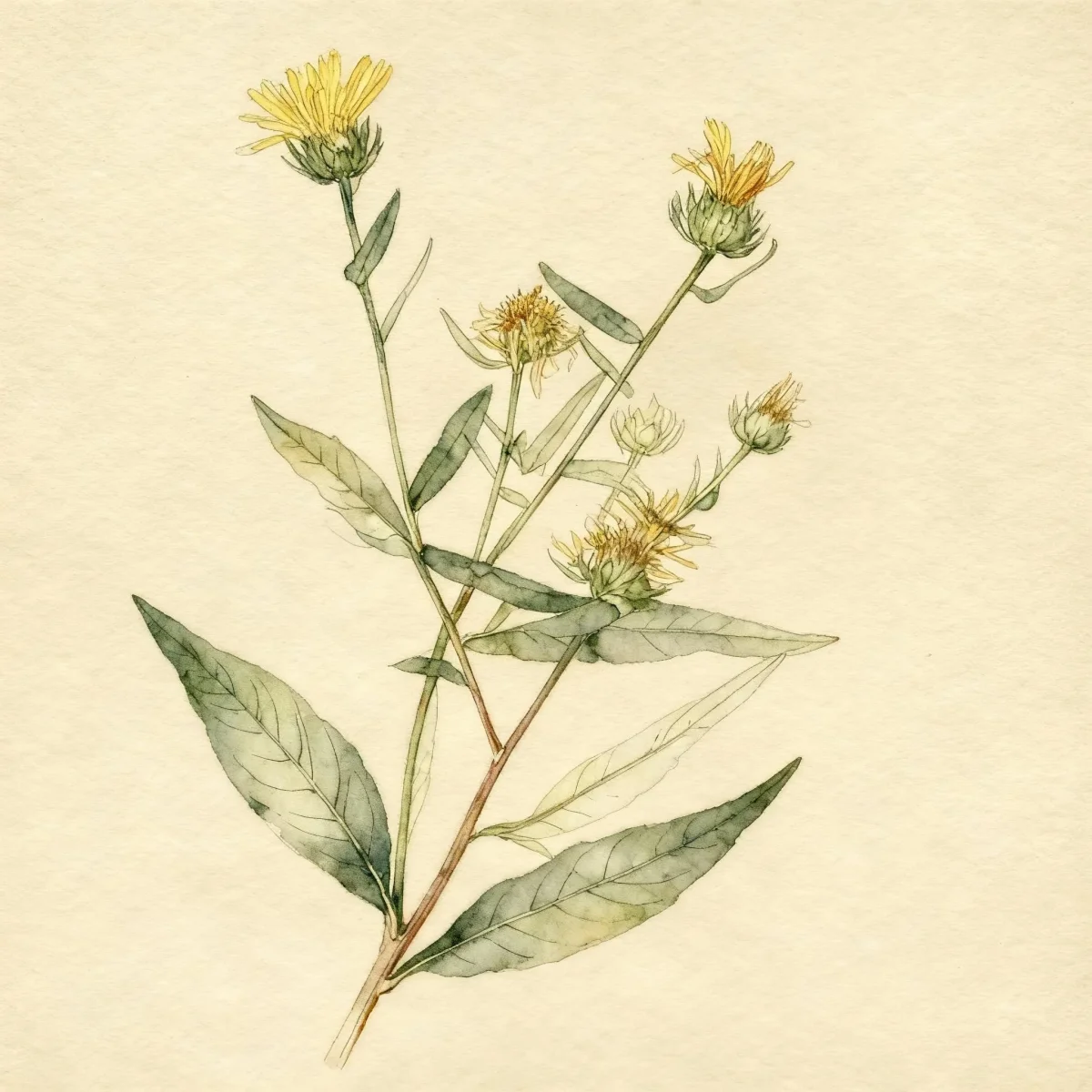
Grindelia lanceolata, commonly called gum plant, narrow-leaved gumweed, or spiny-toothed gumweed, is a biennial to short-lived perennial wildflower native to limestone glades and rocky prairies across the Southcentral U.S. It typically grows 2-3 feet tall on stems featuring narrow, lanceolate leaves armed with distinctive bristle-tipped teeth. Daisy-like flowers, exhibiting bright yellow rays surrounding yellow center disks, bloom profusely from June through September, subtended by sticky, resinous bracts that give the plant its common name, gum plant.
Tolerances
No tolerances were explicitly listed beyond the cultural requirements.
Potential Problems
The Gum plant is recognized for being remarkably pest-free regarding serious insect or disease issues. Gardeners should remain vigilant regarding drainage, as root rot is a distinct possibility if the soil retains too much moisture, especially in heavy clay or low-lying areas. While generally resistant, watch for minor infestations of scale insects or mealybugs, which can sometimes appear on the stems or leaves, especially if the plant is stressed by overly wet conditions. Providing the required well-drained soil is the best preventative measure against almost all common complications.
Frequently Asked Questions
What hardiness zones is Gum plant suitable for?
Grindelia lanceolata is highly adaptable, thriving in USDA hardiness zones 4 through 8.
How large does Grindelia lanceolata grow?
This herbaceous perennial typically reaches a mature height between 2 and 3 feet, with a spread of 1.5 to 2 feet wide.
When does Gum plant bloom?
The characteristic yellow, daisy-like flowers appear late in the season, blooming reliably from June well into September.
What sun exposure does Grindelia lanceolata need?
The Gum plant requires full sun exposure to achieve its best form and heaviest blooming performance throughout the summer.
Conclusion
The tough constitution and vibrant summer-to-fall blooms make Grindelia lanceolata an invaluable resource for water-wise and low-maintenance gardening schemes. This dependable Gum plant offers beauty for native landscapes and requires minimal intervention once established in adequate sunlight. Before planting, confirm that your location matches the USDA zones 4-8 range and that you can provide the necessary full sun and dry to medium soil conditions.
Companion Planting
When integrating Grindelia lanceolata into a mixed border, prioritize companions that share its preference for full sun and moderate moisture or dry conditions. Plants native to similar prairie or glade environments are excellent partners, promoting a cohesive, low-input tapestry of color. Consider pairing it with shorter, complementary textures that benefit from the Gum plant’s height, such as shorter Rudbeckia varieties or Coreopsis, which bloom simultaneously.
For maximum ecological benefit, combine the Gum plant with other mid-summer blooming natives known to attract diverse pollinators. Its structural integrity works well against the finer textures of many ornamental grasses, creating depth and helping to define the spaces within a naturalized area. Successful companion planting relies on mirroring cultural needs, ensuring all components thrive under the same sun load and water regimen.
Wildlife Benefits
The bright yellow composite flowers of Grindelia lanceolata are a significant late-season nectar source, crucial for supporting late-flying bees and butterflies preparing for migration or overwintering. As a native wildflower, it directly supports local insect populations that rely on indigenous flora for development and feeding. The resinous nature of the plant may also provide chemical defenses that deter excessive herbivory.
Establishing a patch of Gum plant goes beyond simple aesthetics; it actively contributes to local biodiversity conservation. By choosing this drought-tolerant species, you provide reliable food resources throughout the mid to late growing season when earlier summer blooms might be fading. This extended availability of nectar is particularly beneficial for supporting monarchs and various solitary bee species.