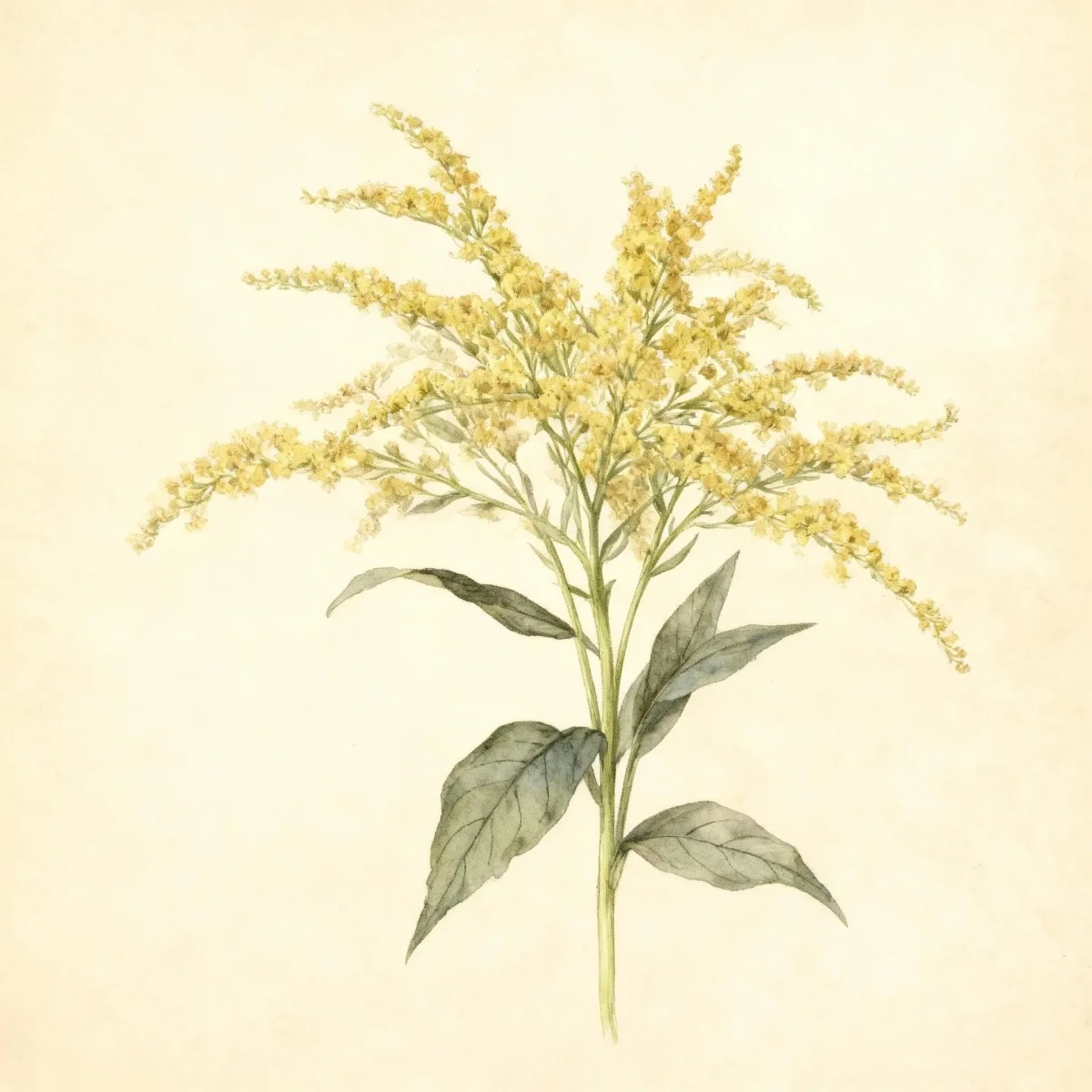
Canadian goldenrod (Solidago canadensis)
Solidago canadensis, Canadian goldenrod, is a tough, rhizomatous perennial native to North America, blooming August-October with masses of yellow flowers.
Scroll down to discover growing tips, care requirements, companion plants, and more
Complete Plant Information
Overview
The Canadian goldenrod, Solidago canadensis, is a robust, upright herbaceous perennial highly valued for its late-season color display, providing crucial nectar resources well into autumn. This species brings masses of tiny, vibrant yellow flowers atop stems that can reach five feet tall, often brightening meadows and fields when many other blossoms have faded. While prized by pollinators, gardeners should note that Solidago canadensis spreads aggressively via creeping rhizomes and produces abundant seeds, making it best suited for large naturalized areas rather than formal borders.
Native across much of North America, Canadian goldenrod thrives in generally average conditions, offering gardeners a very low-maintenance solution for challenging sunny spots. Its dense foliage and late bloom structure offer excellent backdrop interest before the final burst of color arrives. Despite historical misconceptions linking goldenrods to hay fever, Canadian goldenrod is a vital member of the eastern ecosystem, supporting numerous bee and butterfly species.
Fast Facts
- Plant Family: Asteraceae
- Plant Type: Herbaceous perennial
- Native Range: North America
- Hardiness Zones: USDA Zones 3-9
- Size at Maturity:
- Height: 4-5 ft
- Spread: 4-5 ft
- Bloom Time: August to October
- Bloom Description: Yellow
- Sun Exposure: Full sun
- Water Needs: Medium
- Maintenance Level: Low
How to Grow
Solidago canadensis is inherently adaptable, preferring full sun exposure, though it will tolerate light shade. Plant in average, slightly acidic, moderately rich, well-drained soils. Because it is a rhizomatous spreader, proper site selection is critical; avoid planting near cultivated beds where its spread cannot be easily contained.
Maintenance for Canadian goldenrod is typically low. Water moderately, ensuring soil does not remain waterlogged, as the plant is sensitive to root rot in poorly drained, overly wet conditions. Fertilization is rarely required, as heavy feeding can encourage excessive vegetative growth at the expense of flowering.
To manage its vigorous nature, removal of flower heads before the seeds fully ripen is highly recommended if you wish to limit self-seeding dispersal. In areas where aggressive spread is a concern, cut back the faded stalks in late fall or early spring, though leaving some standing debris can offer winter protection.
Landscape Uses
The primary recommended use for Canadian goldenrod is to naturalize large areas, such as open meadows, prairies, or along banks where erosion control is beneficial. Its stature and brilliant yellow plumes make it an excellent vertical accent within a large, informal perennial matrix designed to mimic native habitats. It blends well with other sturdy late-season bloomers like asters or tall native grasses.
Do not utilize Solidago canadensis in small, formal gardens or containers due to its propensity to spread rapidly through its underground rhizomes. If integrated into a naturalized landscape, it provides wonderful structure and pollinator support long after the summer perennials have finished.
Standout Features
Flower Qualities
- Showy
Noteworthy Characteristics
Genus name comes from the Latin words solidus meaning whole and ago meaning to make in reference to the medicinal healing properties of some species plants. Specific epithet is in reference to the Canadian native habitat of this species. This upright perennial features masses of tiny yellow flowers appearing in large terminal pyramidal panicles from late summer into fall.
Tolerances
No specific tolerances were listed in the provided structured data fields for this plant.
Potential Problems
Solidago canadensis is generally free from serious insect or disease issues under good cultural conditions. The most common issues involve fungal diseases such as rust, powdery mildew, and leaf spot, especially in humid conditions or when air circulation is poor. Ensuring the plant receives proper sun exposure and avoiding poorly drained soils will mitigate these risks; standing water can lead to root rot. Potential mild insect issues include damage from various beetles, aphids, or gall-forming insects, which usually do not threaten the overall health of the established plant. Remember that its aggressive spreading habit is often the biggest management challenge, rather than pests or disease.
Frequently Asked Questions
What hardiness zones is Canadian goldenrod suitable for?
The Canadian goldenrod is reliably hardy in USDA Zones 3 through 9.
How large does Solidago canadensis grow?
This perennial typically reaches a mature height between 4 and 5 feet, with a similar spread of 4 to 5 feet due to its rhizomatous nature.
When does Solidago canadensis bloom?
It provides vibrant color across the late summer and early fall, specifically blooming from August through October.
What sun exposure does Canadian goldenrod need?
Solidago canadensis requires full sun to develop robustly, although it can tolerate a small amount of afternoon shade.
Conclusion
The low-maintenance, high-impact display of Canadian goldenrod makes it an unstoppable choice for naturalizing large sunny spaces demanding late-season structure and wildlife support. While gardeners must manage its spreading rhizomes, the ecological value and reliable yellow blooms of Solidago canadensis are undeniable. Check your local hardiness rating and prepare a spacious area for this vigorous native perennial.
Wildlife Benefits
As a late-season bloomer, Solidago canadensis is invaluable for supporting migrating and overwintering pollinators. The dense clusters of small yellow flowers provide a critical, accessible nectar source for bees, butterflies, and various beneficial insects stocking up before winter sets in. Goldenrods, including this Canadian native, are extremely attractive to these wildlife populations.
Propagation Tips
Since Solidago canadensis spreads vigorously by creeping rhizomes, vegetative division is the easiest and most common propagation method. Dig up clumps in spring or fall, ensuring each division has ample roots and stems attached. Smaller divisions may take a season longer to reach mature height. Seed propagation is also possible, but given its prolific self-seeding nature, direct sowing may lead to unwanted colonization across the garden.