Mexican sunflower (Tithonia rotundifolia)
Grow the stunning Tithonia rotundifolia, the Mexican sunflower, for brilliant orange blooms attracting hummingbirds. Low maintenance annual.
Scroll down to discover growing tips, care requirements, companion plants, and more
Complete Plant Information
Overview
The Mexican sunflower, or Tithonia rotundifolia, is a fast-growing, vigorous annual celebrated for its season-long display of vibrant color. This plant quickly reaches impressive heights, making it an essential vertical element in summer gardens. Its daisy-like flowers, primarily brilliant orange-red, provide a crucial late-season nectar source for pollinators.
Native to Mexico and Central America, this species thrives in the high heat of summer, establishing quickly once warm weather settles in. Gardeners appreciate Tithonia rotundifolia for its low maintenance needs and its ability to tolerate poorer soils, provided drainage is adequate. It is a truly showy addition to any landscape seeking dramatic color from July through September.
Beyond its visual appeal, the Mexican sunflower offers functional benefits, attracting hummingbirds and butterflies while providing excellent material for cutting arrangements. Planning for the right support is often necessary due to its rapid growth, ensuring these beautiful blooms remain upright through the season.
Fast Facts
- Plant Family: Asteraceae
- Plant Type: Annual
- Native Range: Mexico and Central America
- Hardiness Zones: USDA Zones 2-11
- Size at Maturity:
- Height: 4-6 ft
- Spread: 2-3 ft
- Bloom Time: July to September
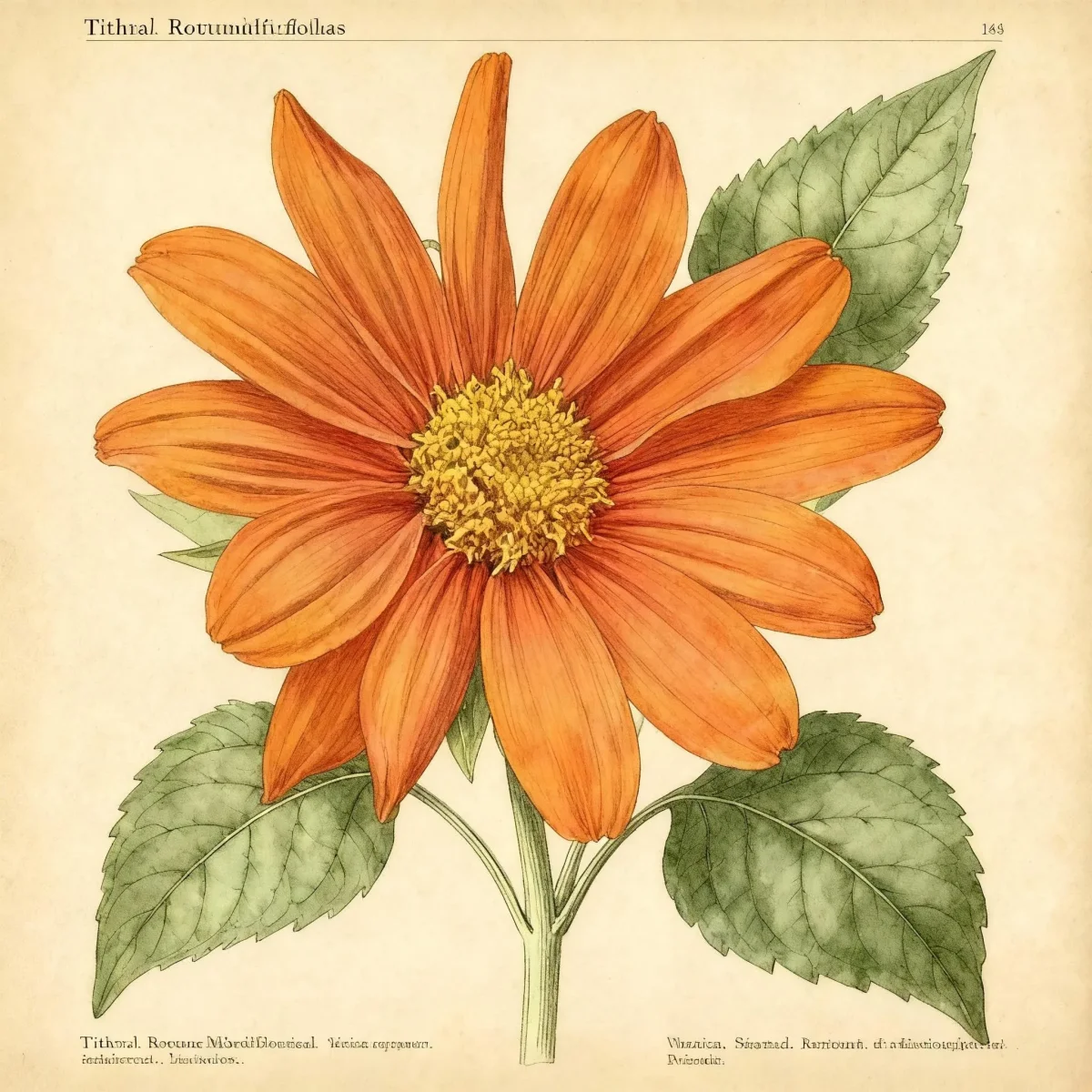
- Bloom Description: Orange-red with yellow center disk
- Sun Exposure: Full sun
- Water Needs: Dry to medium
- Maintenance Level: Low
How to Grow
Tithonia rotundifolia is a straightforward plant to establish, thriving best started from seed sown directly outdoors after all danger of spring frost has passed. For earlier bloom, start seeds indoors 6 to 8 weeks before the last expected frost date. This warm weather annual prefers average, dry to medium, well-drained soils and requires full sun exposure to produce the best growth and heaviest flowering display.
When planting, ensure ample space; thin seedlings to stand at least 2 feet apart to allow for proper air circulation and mature size. While the Mexican sunflower tolerates poor soils, avoid overly rich soil amendments, as these can lead to weak, floppy stems dominated by excess foliage rather than flowers.
Watering needs are relatively simple; plants prefer dry to medium soil moisture. Once established, they are quite drought-tolerant, which is ideal for low-input gardening styles. Deadheading spent flowers is recommended to encourage continuous blooms throughout the summer and into early fall. Staking or providing other structural support should be done early, as the mature height of 4 to 6 feet can be top-heavy when flowering heavily.
Landscape Uses
The imposing height and brilliant coloration of Tithonia rotundifolia make it perfectly suited for use as a background element in perennial borders. Its stature allows it to screen less attractive utility areas or create a dramatic visual backdrop against fences or walls. These plants create excellent temporary screens due to their rapid 4-6 foot growth in a single season.
For a dynamic cottage or informal garden design, plant the Mexican sunflower alongside shorter, bushy companions that complement its fiery orange hues, such as blue salvias or purple zinnias. Their strong vertical habit works well when mixed with groupings of lower-growing annuals to create multi-layered interest.
Standout Features
Flower Qualities
- Showy
Noteworthy Characteristics
Tithonia rotundifolia, commonly called Mexican sunflower, is native to Mexico and Central America. It is a vigorous annual that typically grows in a single season to 4-6’ tall. Showy sunflowers (to 3” across) with orange to orange-red rays and orange-yellow disks bloom from mid-summer to fall. The blooms are attractive to hummingbirds, butterflies, and other pollinators; seeds in spent flower heads are attractive to birds.
Tolerances
- Deer
- Drought
- Dry Soil
Potential Problems
The Mexican sunflower is generally robust, offering gardeners an advantage as it experiences no serious insect or disease problems when grown in appropriate conditions. The primary pest concern involves early-season vulnerability to slugs and snails, especially when seedlings are young and tender. Monitor new growth for signs of feeding damage and address these mollusks with standard organic controls if infestation occurs.
Frequently Asked Questions
What hardiness zones is Mexican sunflower suitable for?
The Mexican sunflower (Tithonia rotundifolia) is adaptable across a wide range, suitable for USDA Zones 2 through 11.
How large does Mexican sunflower grow?
At maturity, this annual typically reaches a height between 4 and 6 feet and spreads 2 to 3 feet wide.
What sun exposure does Tithonia rotundifolia need?
This plant demands full sun exposure to flourish, delivering the best color and growth habit in bright, direct light throughout the day.
When does Tithonia rotundifolia bloom?
Expect the vibrant orange-red flowers, featuring a yellow center disk, to appear reliably from July through September.
Conclusion
The Tithonia rotundifolia, or Mexican sunflower, is an indispensable, low-maintenance annual powerhouse ideal for injecting saturated, hot color at the back of the border. Its reliable performance, significant height, and excellent wildlife attraction make it a gardener favorite. Before planting, ensure your location receives full sun and check your local frost dates to maximize its spectacular summer bloom period.
Wildlife Benefits
The nectar-rich, daisy-like flowers of the Mexican sunflower are a major draw for beneficial insects, making Tithonia rotundifolia a spectacular addition to any wildlife garden. Hummingbirds are frequently observed visiting the blooms throughout the warmest months, taking advantage of this reliable summer food source when other nectar may be scarce.
Furthermore, the spent flower heads offer significant value long after the color fades. The large, accessible seeds produced by the Tithonia rotundifolia are highly sought after by many seed-eating backyard birds. Leaving seed heads standing into late fall or early winter provides valuable natural forage.
Companion Planting
When siting your Tithonia rotundifolia, select companions that share its preference for full sun and dry to medium soil moisture, mirroring its low-input cultural needs. Good partners are drought-tolerant perennials that bloom later, providing color as the summer wanes.
Consider pairing the tall, bold shapes of the Mexican sunflower with medium-height, finer-textured plants like ornamental grasses or silvery foliage like Artemisia. This contrast in texture beautifully highlights the mass of the Tithonia rotundifolia blooms, preventing the garden from looking too monolithic.