Stiff Aster: The No-Fuss Native That Loves Dry Soil and Full Sun
Stiff aster (Ionactis linariifolia) is a low-maintenance perennial offering blue-violet late-season blooms for dry, sunny gardens.
Scroll down to discover growing tips, care requirements, companion plants, and more
Complete Plant Information
Overview
If you’ve got a sunny spot with dry, sandy soil that seems to kill everything else, meet your new best friend: Stiff aster (Ionactis linariifolia). This tough native perennial laughs at drought, scoffs at poor soil, and still produces a cloud of dainty blue‑violet flowers in late summer when most gardens start to fade.
Its narrow, rigid leaves give it a tidy, upright habit, making it perfect for the front of borders, rock gardens, or as a low‑maintenance groundcover. And the best part? It’s a pollinator powerhouse, providing nectar for bees and butterflies right when they need it most.
Did You Know? The name linariifolia means “with leaves like linaria” – a nod to its narrow, flax-like foliage. Those stiff, linear leaves are where this aster gets its common name.
Stiff aster is a gardener’s dream: once established, it asks for almost nothing yet gives you years of reliable color. Plant it in spring or fall, then sit back and enjoy the show.
Fast Facts
- Plant Family: Asteraceae
- Plant Type: Herbaceous perennial
- Native Range: Eastern North America
- Hardiness Zones: USDA Zones 4-9
- Size at Maturity:
- Height: 1-2 ft
- Spread: 0.5-1 ft
- Bloom Time: July
- Bloom Description: Blue-violet to purple with yellow centers
- Sun Exposure: Full sun
- Water Needs: Dry to medium
- Maintenance Level: Low
How to Grow
Growing Stiff aster is so easy, even the most forgetful gardener can succeed. Here’s everything you need to know at a glance.
⚡ Stiff Aster Cheat Sheet
- Best for: Gardeners who want a plant that thrives on neglect.
- Plant it: In spring or fall, before extreme heat or deep freezes.
- Soil: Well‑drained, sandy, acidic. It loves poor soil – no pampering needed.
- Sun: Full sun (6+ hours a day).
- Water: Once established, it’s drought tolerant. Water deeply at planting and during prolonged dry spells only.
- Maintenance: Almost none! Just cut back old foliage in early spring before new growth emerges.
- Pro tip: Avoid heavy clay or rich, moist soils – that’s a one‑way ticket to root rot.
Planting: Choose a spot that gets full sun. If your soil is heavy, mix in some sand or compost to improve drainage, or plant in a raised bed. Dig a hole as deep as the root ball and twice as wide, set the plant in, backfill, and water well. Space plants about 12–18 inches apart to allow for their mature spread.
Care during the season: After planting, keep the soil lightly moist until you see new growth. Once established, Stiff aster can handle dry spells like a champ. If you get a long drought, a deep watering every few weeks will keep it happy, but it’s not necessary.
Pruning and division: No need to deadhead – the spent flowers add winter interest and provide seeds for birds. In early spring, cut back the old stems to ground level to make room for fresh growth. The plant forms dense clumps and rarely needs dividing; if it outgrows its space, you can divide it in early spring every 4–5 years.
Landscape Uses
Stiff aster shines in all the places where other plants struggle. Here’s how to make the most of it in your garden:
- Edging and borders: Its compact, upright form is perfect for lining walkways or defining the front of a perennial border. Plant it in groups of three or five for a natural look.
- Rock gardens: Tuck it between boulders or among gravel; its narrow leaves echo the texture of succulents, and the blue‑violet flowers pop against stone.
- Mass plantings: Create a sea of late‑summer color by planting large drifts in sunny meadows or naturalized areas.
- Containers: Yes, it works in pots too! Combine it with other drought‑tolerant plants like sedum or ornamental grasses for a low‑water container display.
- Pollinator gardens: As a native aster, it’s a magnet for bees, butterflies, and other beneficial insects.
Imagine this: A row of Stiff aster along your gravel path, its stiff stems standing tall even in the August heat, the blue‑violet blooms dancing with bees. That’s the effortless charm of this native perennial.
Standout Features
🌸 Flower Qualities
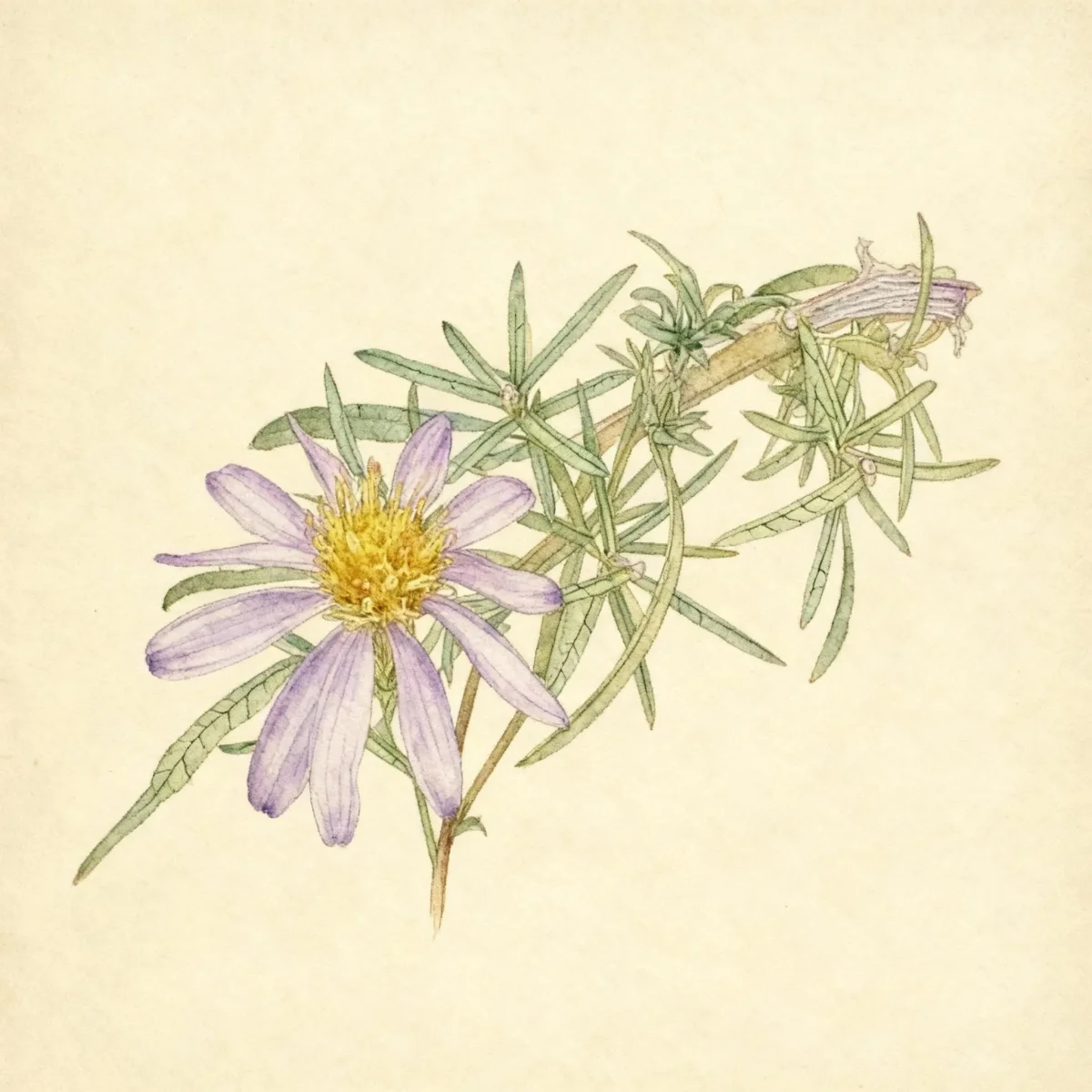
- Showy – Clusters of small, daisy‑like flowers with blue‑violet rays and bright yellow centers.
- Good Cut – Stems are sturdy and flowers last well in arrangements, bringing a touch of the meadow indoors.
🍃 Noteworthy Characteristics
Ionactis linariifolia is a Missouri native that forms dense clumps 15–20 inches tall. It’s often found in acidic soils in pine‑oak woods, ridgetops, and upland glades. The narrow, stiff leaves give it a distinctive appearance and make it exceptionally drought tolerant.
Fun Fact: The genus name Ionactis comes from the Greek words for “violet rays,” referring to the flower color, while linariifolia means “with leaves like linaria” (toadflax). So basically, it’s the “violet‑rayed, flax‑leaved” plant – a perfect description!
Tolerances
- Drought
- Dry Soil
- Shallow-Rocky Soil
Potential Problems
Stiff aster is as close to trouble‑free as a plant can get. The only real enemy is wet soil. Avoid planting in heavy clay or poorly drained areas, which can lead to root rot. Otherwise, no serious insect or disease issues plague this tough perennial. Deer and rabbits usually leave it alone thanks to its stiff, somewhat prickly foliage.
Frequently Asked Questions
What hardiness zones is Stiff aster suitable for?
Ionactis linariifolia thrives in USDA Hardiness Zones 4–9.
How large does Stiff aster grow?
It typically reaches 1–2 feet tall and spreads 0.5–1 foot wide, forming neat clumps.
What sun exposure does Stiff aster need?
Full sun – at least 6 hours of direct sunlight daily – for best flowering and compact growth.
When does Stiff aster bloom?
Blooms appear in July and can last into early fall, providing late‑season color when many other perennials are done.
Is Stiff aster deer resistant?
Yes! Deer generally avoid it because of its stiff, somewhat rough foliage.
Conclusion
If you need a plant that thrives in dry, sunny spots with zero fuss, Stiff aster is your answer. It’s a native powerhouse that supports pollinators, adds late‑summer beauty, and asks for almost nothing in return. Plant a few this season and watch them become a cherished part of your garden.
I’d love to hear from you! Have you grown Stiff aster? Does it really live up to its tough reputation? Share your stories in the comments below.
Companion Planting
Stiff aster plays well with other sun‑loving, drought‑tolerant plants. Here are some winning combinations:
- With Little Bluestem (Schizachyrium scoparium): The aster’s violet blooms float above the grass’s blue‑green foliage, which turns a stunning copper in fall.
- With Goldenrod (Solidago): Purple and gold are classic companions, and both are pollinator magnets.
- With Sedums: The fleshy leaves of sedums contrast beautifully with the aster’s fine foliage, and both thrive in dry conditions.
- With Creeping Phlox (Phlox subulata): For a rock garden, pair the aster with spring‑blooming phlox for a succession of color.
- With Prairie Dropseed (Sporobolus heterolepis): The airy seed heads of the grass complement the aster’s daisies and create movement in the breeze.
These pairings not only look great but also share similar cultural needs, making your garden easier to care for.
Wildlife Benefits
Stiff aster is a boon to local ecosystems. Its nectar‑rich flowers attract a wide variety of bees, butterflies, and other beneficial insects, providing a critical food source in late summer. As a native plant, it supports specialized pollinators that rely on local flora. After blooming, the seed heads offer food for birds like finches and sparrows during the colder months. And because it’s deer resistant, you won’t have to worry about losing your blooms to hungry browsers.
Planting Ionactis linariifolia is a simple yet powerful way to create a wildlife‑friendly garden that’s both beautiful and resilient.