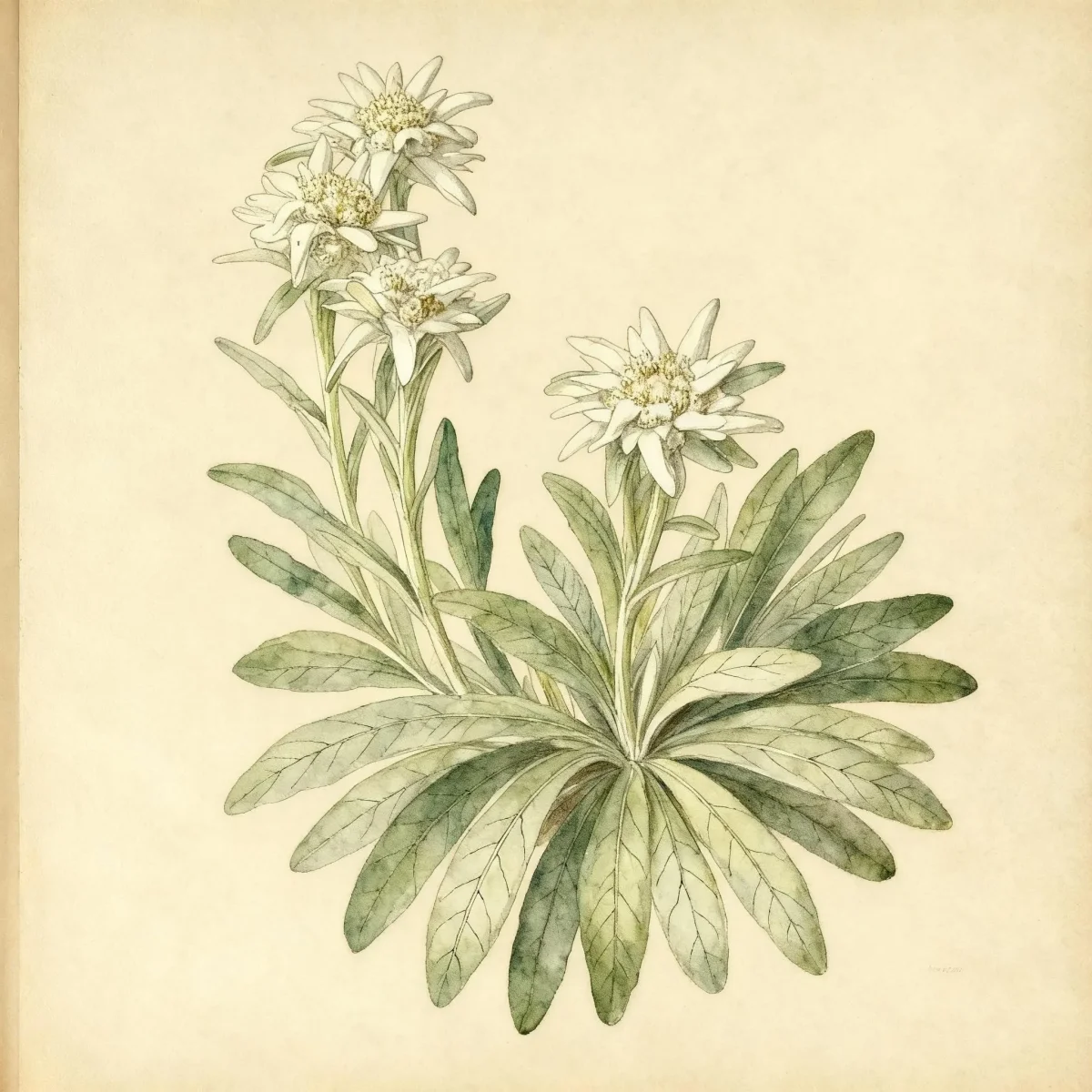
Siberian edelweiss (Leontopodium palibinianum)
Leontopodium palibinianum, or Siberian edelweiss, offers unique woolly texture and star-shaped bracts suitable for rock gardens in USDA Zones 4-8.
Scroll down to discover growing tips, care requirements, companion plants, and more
Complete Plant Information
Overview
The Siberian edelweiss (Leontopodium palibinianum) is a distinctive herbaceous perennial valued for its woolly, silver-white foliage and charming summer blooms. This clumping plant brings an alpine aesthetic to the garden, instantly drawing the eye with its star-shaped flower heads composed of densely hairy, leaf-like bracts. Leontopodium palibinianum is a wonderfully durable choice for specialized garden areas where drainage is excellent.
Native to rocky limestone regions of Siberia and northeastern Asia, this species naturally thrives in sharp, alkaline conditions. Gardeners will find that Siberian edelweiss offers moderate stature, typically reaching 1.5 feet in height, making it perfect for forward borders or rockeries. Its resistance to many common pests ensures that its unique texture remains a focal point throughout the growing season.
While it possesses an unmistakable charm, successful cultivation of Leontopodium palibinianum relies heavily on providing its preferred environment. Ensure full sun and immaculate drainage, especially if growing this beauty outside its ideal cool-summer range. This easy-to-grow perennial earns its space with minimal fuss once established in the right conditions.
Fast Facts
- Plant Family: Asteraceae
- Plant Type: Herbaceous perennial
- Native Range: Temperate Asia, Siberia, Mongolia
- Hardiness Zones: USDA Zones 4-8
- Size at Maturity:
- Height: 0.75-1.5 ft
- Spread: 0.5-0.75 ft
- Bloom Time: July to September
- Bloom Description: White
- Sun Exposure: Full sun
- Water Needs: Medium
- Maintenance Level: Medium
How to Grow
Planting Leontopodium palibinianum is best achieved in spring after the danger of hard frost has passed, ensuring the soil warms slightly. This plant demands sharp drainage, thriving in sandy or gritty substrates that are neutral to alkaline; in fact, it benefits greatly from soils containing abundant lime. Full sun exposure is non-negotiable for robust growth and the signature woolly appearance of the Siberian edelweiss.
Watering requirements are medium, meaning the soil should approach dryness between irrigation periods. It is crucial not to allow these perennials to sit in wet conditions, as this is a primary cause of crown rot. Fertilizing is rarely necessary; over-enrichment can lead to weak, floppy growth that diminishes the compact clumping nature of Leontopodium palibinianum.
Be mindful of regional climate challenges. This species strongly dislikes the heat and high humidity common in many humid continental climates, such as the St. Louis summer. In regions prone to harsh winters, apply a light mulch after the ground freezes to stabilize soil temperature, avoiding overly dense mulch that retains moisture around the crown.
Landscape Uses
Siberian edelweiss excels where drainage is maximized and harsh sunlight is plentiful. Its low-growing, tight clumps make it an outstanding choice for rock gardens, where it naturally mimics its harsh alpine habitat. It integrates beautifully between stones, offering a bright, fuzzy contrast to rough textures.
Consider using Leontopodium palibinianum at the very front of raised beds or perennial borders. This placement allows gardeners to easily observe its unique foliage and flower heads without needing to crane the neck. It looks particularly striking when paired with plants that appreciate similar gritty, lean soil conditions, such as creeping thyme or certain sempervivums.
For a cohesive alpine display, use it sparingly as an accent plant rather than planting in masses. The woolly texture of the bracts ensures that even when not in bloom, the Siberian edelweiss provides year-round visual interest, contrasting nicely against fine-textured conifers or jagged grey gravel mulch.
Standout Features
Flower Qualities
- Showy
Noteworthy Characteristics
Leontopodium palibinianum, commonly known as edelweiss or palibin’s edelweiss, is a clumping, loosely-tufted, herbaceous perennial wildflower of the aster family that is native to rocky, limestone, alpine areas of northeastern Asia (Siberia and northern China). Each plant features narrow, entire, lanceolate to linear-lanceolate, gray-tomentose basal leaves from which rises a woolly white stem to 9-15” tall topped in summer with small, discoid flower heads consisting only of white (sometimes tinged with pale yellow) disk florets which are crowded into dense terminal cymes subtended by a conspicuous, star-shaped arrangement of showy, woolly, leaf-like bracts which are densely white-hairy on the upper surface but greenish beneath. The genus name comes from the Greek words leon (lion) and podion (foot), referencing the paw-like appearance of the flower clusters.
Tolerances
Potential Problems
Leontopodium palibinianum generally enjoys a clean bill of health regarding pests and serious diseases. However, the primary cultural challenge is environmental tolerance, as it is notoriously difficult to grow well in hot, humid environments like the St. Louis climate.
The most significant risk to the Siberian edelweiss is fungal issue, specifically crown rot. This condition invariably develops if the plant is situated in overly-moist, poorly-drained soils where water pools around the base of the crown. Prevention is strictly through superior site selection—only plant where drainage is immediate and sharp.
If plants begin to decline mid-summer, investigate the soil moisture immediately. Poor air circulation combined with root saturation will quickly spell doom for this alpine specialist. Remedial action on established plants is difficult; prioritize achieving perfect drainage from the outset.
Frequently Asked Questions
What hardiness zones is Siberian edelweiss suitable for?
The Siberian edelweiss (Leontopodium palibinianum) is generally hardy in USDA Zones 4 through 8.
How large does Siberian edelweiss grow?
This perennial usually reaches a height between 0.75 and 1.5 feet tall, spreading slightly between 0.5 and 0.75 feet wide.
What sun exposure does Leontopodium palibinianum need?
Leontopodium palibinianum requires full sun to develop its best texture and flower structure.
When does Leontopodium palibinianum bloom?
Siberian edelweiss typically exhibits its white blooms from July through September.
Conclusion
The unique silvered foliage and delicate white, star-shaped bracts make Leontopodium palibinianum a valuable addition to rockeries and specialized dry, sunny beds. Successfully growing Siberian edelweiss hinges entirely on providing full sun and the sharp, alkaline drainage it needs to thrive. Before planting, assess your site conditions and consult your zone compatibility before ordering this alpine gem.
Companion Planting in Alpine Settings
When selecting companions for Leontopodium palibinianum, prioritize plants that share its preference for lean, gritty, and alkaline soil, along with high sun exposure. Excellent partners include low-creeping Sedums and Sempervivums, which offer year-round ground cover contrast to the tufted Leontopodium palibinianum. Many small Dianthus varieties also thrive in these sharp conditions and offer complementary spring color.
Avoid using moisture-loving perennials near your Siberian edelweiss, as group watering will inevitably lead to crown rot. Focus on drought-tolerant companions that prefer gravel mulch and full exposure. This helps maintain the low-humidity microclimate that the edelweiss requires to flourish outside of native alpine conditions.
Seasonal Care Calendar for Siberian Edelweiss
In early spring, after the last hard frost but before active growth surges, clear away any old mulch or debris from around the crowns. This is the ideal time to visually inspect the soil drainage and amend it sparingly with grit or crushed limestone if necessary to enhance alkalinity. Light division of older clumps can also be performed at this time if overcrowding occurs.
Summer care is largely about monitoring moisture; provide water deeply but infrequently, only when the top few inches of gritty soil have dried out. If you observe any signs of limpness or browning, check immediately for overwatering, as this is a greater threat than temporary dry spells. In autumn, allow the foliage to mature naturally; no significant pruning is required for Leontopodium palibinianum until the following spring cleanup.