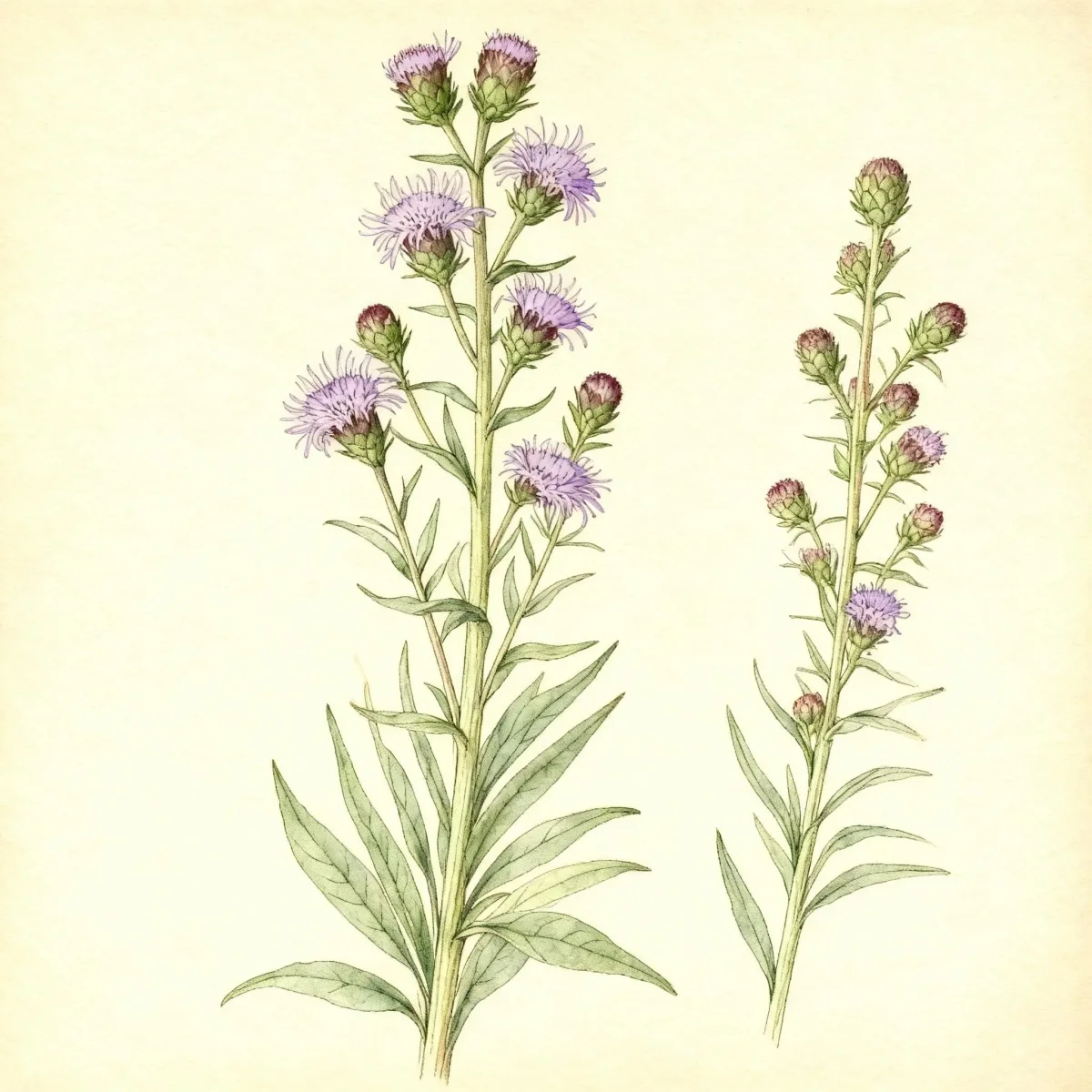
Eastern blazingstar (Liatris scariosa var. nieuwlandii)
Eastern blazingstar (Liatris scariosa var. nieuwlandii) is a low-maintenance perennial offering showy pink blooms from late summer into fall.
Scroll down to discover growing tips, care requirements, companion plants, and more
Complete Plant Information
Overview
The Eastern blazingstar, recognized botanically as Liatris scariosa var. nieuwlandii, offers striking vertical interest with its late-season floral display. This upright, clump-forming perennial is highly valued in native gardens for its vibrant pink flowers and excellent late-summer to fall bloom period. It provides crucial nectar resources when many other garden staples have finished flowering.
Mature plants of Liatris scariosa var. Nieuwlandii typically reach 2 to 5 feet tall, standing rigidly erect even in robust gardens. This plant thrives best when sited in full sun and prefers well-drained soils that lean toward the dry side. Its natural adaptability makes it a robust choice for gardeners seeking low maintenance and high impact.
A key benefit of choosing Liatris scariosa var. nieuwlandii is its appeal to wildlife; the fluffy, thistle-like flower heads—composed entirely of disk florets—are magnets for butterflies and hummingbirds. Unlike some related species, this variety adapts well to slightly disturbed sites and partial shade conditions, expanding its usefulness in the landscape.
Fast Facts
- Plant Family: Asteraceae
- Plant Type: Herbaceous perennial
- Native Range: Northeastern North America
- Hardiness Zones: USDA Zones 3-8
- Size at Maturity:
- Height: 2-5 ft
- Spread: 1-2 ft
- Bloom Time: August to October
- Bloom Description: Pink flowers
- Sun Exposure: Full sun
- Water Needs: Dry to medium
- Maintenance Level: Low
How to Grow
Planting should ideally occur in spring or early fall to allow establishment before the extremes of summer heat or winter cold. The Eastern blazingstar roots easily in average, well-drained soils, even if they are poor or rocky. While it tolerates various conditions, ensure excellent drainage, as this species is intolerant of wet soils, particularly during winter dormancy.
Care for Liatris scariosa var. nieuwlandii is minimal once established. Water sparingly, allowing the soil to approach dryness between waterings, consistent with its dry to medium water needs. Fertilization is generally unnecessary; rich, fertile loams might cause the stems to stretch, potentially requiring staking late in the season.
This species benefits from full sun exposure, though Var. Nieuwlandii shows slightly better tolerance for part shade than the straight species. Plants may establish slowly when started from seed but can readily self-seed in open garden areas, leading to naturalized colonies. Minimal pruning is required other than deadheading seed heads if you wish to control self-seeding vigor.
Landscape Uses
The strong vertical lines provided by Liatris scariosa var. nieuwlandii make it indispensable in designs needing height without overwhelming width. It is perfectly suited for native plant gardens, cottage borders, and expansive prairie or meadow plantings where its late-season color extends the visual interest. The upright habit contrasts beautifully with mounding perennials.
Use the Eastern blazingstar as a structural accent by planting drifts of three or five throughout a border toward the middle or back third of a sunny bed. They serve as excellent companions to plants that fade earlier in the summer, such as coneflowers or shorter perennial salvias. The airy texture of the Liatris scariosa var. nieuwlandii blooms prevents borders from looking too heavy.
For naturalized settings, incorporate them into meadow mixes where they mingle easily with grasses and shorter composites. Their drought tolerance ensures they remain attractive even in drier, less intensively maintained sections of the garden.
Standout Features
Flower Qualities
- Showy
- Good Cut
Noteworthy Characteristics
The fluffy, thistle-like, reddish-purple flower heads of Liatris scariosa bloom profusely from late summer into early fall on terminal columnar inflorescences. Var. Nieuwlandii, often called savanna blazing star, is notable for growing slightly taller (up to 5’) and having larger flowers than the typical species, often blooming from late July through October. The visual effect of these blooms, which open from the top down along the raceme, attracts numerous pollinators, rewarding the gardener with steady wildlife activity.
Tolerances
- Drought
- Erosion
- Dry Soil
- Shallow-Rocky Soil
Potential Problems
This plant generally exhibits no serious insect or disease problems, making the Eastern blazingstar a highly reliable performer. Healthy specimens cultivated in appropriately well-drained soil rarely encounter issues with rot or pests. The primary consideration is cultural: avoiding overly wet winter soil is crucial for long-term success. Proper siting is the best preventative measure against any potential decline.
Frequently Asked Questions
What hardiness zones is Eastern blazingstar suitable for?
Liatris scariosa var. nieuwlandii is reliably hardy across USDA Zones 3 through 8.
How large does Eastern blazingstar grow?
This perennial typically achieves a height between 2 and 5 feet, with a relatively narrow spread of 1 to 2 feet, offering excellent vertical structure.
What sun exposure does Eastern blazingstar need?
The ideal requirement for robust flowering and growth of Liatris scariosa var. nieuwlandii is full sun, though the Nieuwlandii variety can sometimes tolerate partial shade.
When does Eastern blazingstar bloom?
You can expect the showy pink flowers of this blazing star variety to appear throughout the late summer and early fall, specifically from August into October.
Conclusion
The Eastern blazingstar (Liatris scariosa var. nieuwlandii) offers gardeners a resilient, low-maintenance solution for adding vital late-season vertical structure and color. Its strong drought tolerance and powerful appeal to pollinators make it a foundational element of any sustainable native garden design. Before planting, verify that your chosen site provides the necessary full sun and, critically, sharp drainage to ensure your Liatris scariosa var. Nieuwlandii flourishes for years to come.
Wildlife Benefits
The genus Liatris is celebrated for its substantial ecological contribution, and Eastern blazingstar is no exception. The dense clusters of pink, fluffy disk florets provide an essential late-season nectar buffet for migrating butterflies, including Monarchs and Swallowtails. Because the blooms open sequentially from the top of the stalk downward, they offer a prolonged feeding opportunity throughout fall.
Furthermore, the resulting seeds produced after flowering are highly attractive to various songbirds throughout the winter months. Planting Liatris scariosa var. nieuwlandii in open, sunny locations maximizes both its aesthetic impact and its utility as a supporting element for local fauna.
Propagation Tips
While Liatris scariosa var. nieuwlandii can be grown successfully from seed, gardeners should exercise patience, as initial establishment can take several years before plants reach their full potential height and bloom power. Seedlings are best sown in well-drained mixes and kept consistently moist until germination. Mature plants rarely need division, but if required, lift and divide the root clumps in early spring before new growth begins, ensuring each division has sufficient root structure to support the next season’s upright growth.