Jewelweed (Impatiens capensis)
Discover Jewelweed (Impatiens capensis), a moisture-loving North American annual known for its showy orange flowers and tolerance for deep shade.
Scroll down to discover growing tips, care requirements, companion plants, and more
Complete Plant Information
Overview
Jewelweed, scientifically known as Impatiens capensis, is a fascinating and valuable addition to moist, shady garden spaces across North America. This annual is highly distinctive due to the way water beads up on its leaves, creating a sparkling, jewel-like effect praised since colonial times. Its bright, spurred flowers attract hummingbirds and provide welcome color where few other plants thrive.
Impatiens capensis excels in difficult, dark locations, thriving where other moisture-loving plants might scorch or fail due to lack of light. While it is an annual, it readily self-seeds, often forming lush colonies along streams or in rain gardens, adding a spontaneous, naturalized look to the landscape. Gardeners appreciate this species for its utility in damp environments and its unique visual appeal throughout the summer season.
Fast Facts
- Plant Family: Balsaminaceae
- Plant Type: Annual
- Native Range: North America
- Hardiness Zones: USDA Zones 2-11
- Size at Maturity:
- Height: 2-5 ft
- Spread: 1.5-2.5 ft
- Bloom Time: June to September
- Bloom Description: Orange to orange-yellow with red spotting
- Sun Exposure: Part shade to full shade
- Water Needs: Medium to wet
- Maintenance Level: Medium
How to Grow
When planting Jewelweed, choose locations that mimic its native habitat: low woodlands, stream banks, or consistently moist areas. This plant performs best when established in wet, humus-rich soils, although it is surprisingly adaptable to heavy clay once adequate moisture is present. Since this is an annual, sow seeds directly outdoors after the danger of frost has passed in spring for summer blooms.
Ongoing care for Impatiens capensis focuses primarily on maintaining consistent moisture levels. Water deeply if conditions become dry, especially during hot spells, as these plants hate drying out. Fertilization is rarely necessary if the native soil is rich and humusy; excessive feeding can lead to weak, leggy growth rather than robust flowering.
One key characteristic to note is that the plant is prone to aggressive self-seeding if conditions are ideal. If you prefer a contained display, deadheading before seeds fully mature can minimize its spread next season. Conversely, gardeners seeking naturalized masses should allow the seed pods to mature and burst open, dispersing the next generation of Jewelweed throughout the area.
Landscape Uses
The primary strength of Jewelweed lies in filling moist, shaded niches where green lawn or standard perennials struggle. It is unparalleled as a foundational plant for bog gardens, pond margins, or low-lying areas where water naturally gathers—living up to its common use in rain garden design. The height of Impatiens capensis (up to 5 feet) allows it to act as a vibrant backdrop in woodland borders.
Consider pairing the vibrant orange blooms of Jewelweed with shade-tolerant companions that contrast texturally or color-wise, such as ferns, hostas, or deep purple Chelone (Turtlehead). Because it forms dense colonies quickly, it can be used effectively to control erosion on unstable, damp banks while providing necessary structure to a seasonal water feature planting scheme.
Standout Features
Flower Qualities
- Showy
Noteworthy Characteristics
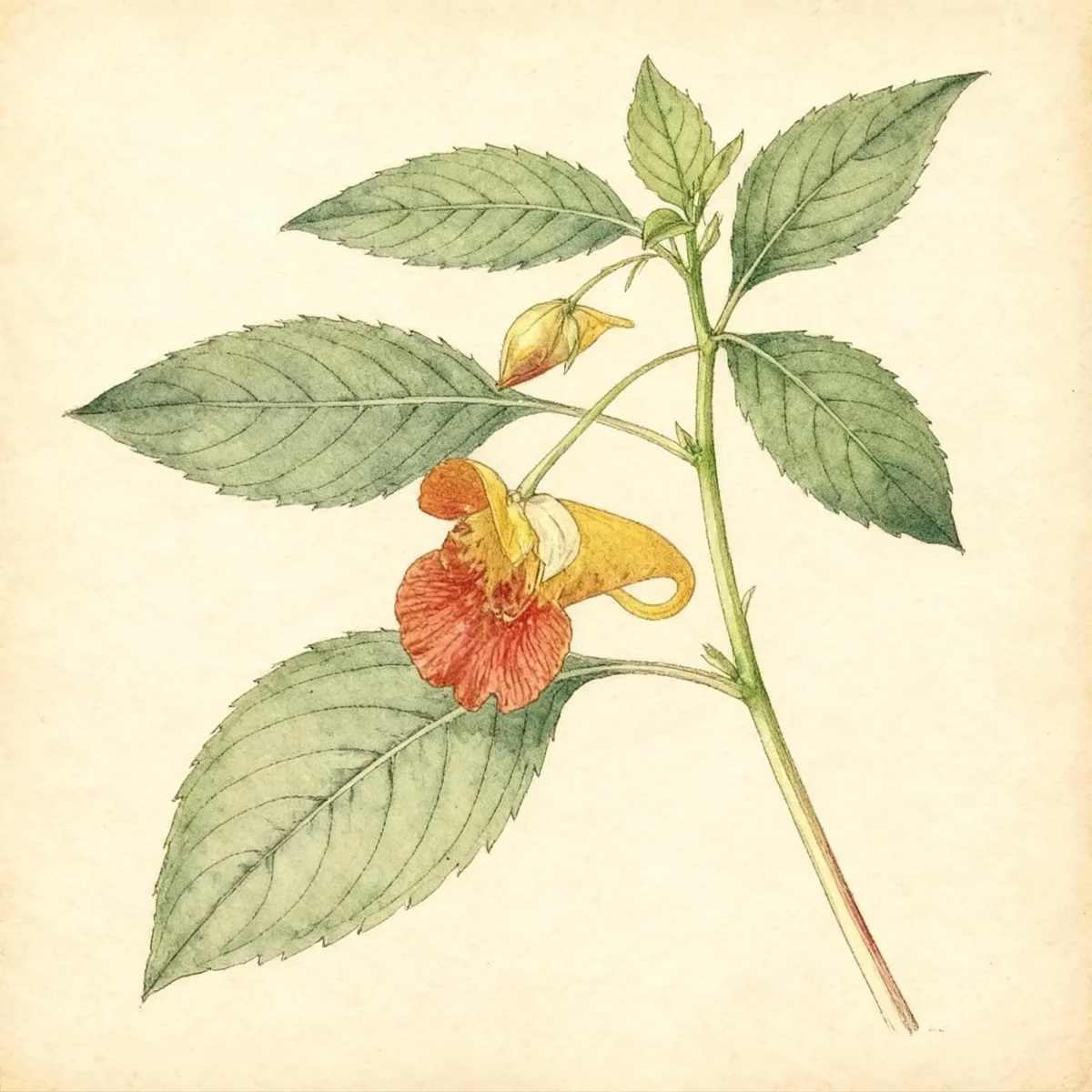
Dew or rain beads up on the leaves forming sparkling droplets which give rise to the common name of jewelweed. Impatiens capensis, commonly called spotted touch-me-not or jewelweed, is a Missouri native annual plant of boggy, shady areas. It typically occurs in low woodlands and thickets, along stream banks and in swampy areas throughout the State. It grows 2-5’ tall on weak, watery stems. Features 1” long, rear-spurred, cornucopia-shaped, orange to orange-yellow flowers with reddish-brown spotting. Flowers bloom throughout the summer. Each flower dangles from a leaf axil on its own slender stalk. Flowers give way to slender seed capsules which when ripe explosively split open at a touch dispersing the tiny seeds within in all directions, hence the common name of touch-me-not. Oval, coarsely-toothed, bluish-green leaves (to 3.5” long). Native Americans used the watery plant juices to relieve itching associated with poison ivy, stinging nettle and insect bites.Genus name comes from the Latin word impatiens meaning impatient in reference to the violent seed discharge from the ripe pods.Specific epithet means of the Cape of Good Hope, South Africa, but this is a misnomer here as this plant is native to North America.
Tolerances
- Heavy Shade
- Clay Soil
- Wet Soil
Potential Problems
Impatiens capensis is remarkably robust and generally resists serious pest or disease pressures, a significant advantage for low-maintenance gardening. The only significant management consideration involves its vigor; it can prolifically self-seed, potentially overwprempting less aggressive neighbors if planted in perfectly ideal, wet, shaded conditions. Control spread by being diligent about removing spent flower heads before the seed capsules fully mature and explosively disperse their contents.
Frequently Asked Questions
What hardiness zones is Jewelweed suitable for?
Impatiens capensis is highly adaptable, thriving across a vast range from USDA Zones 2 through 11.
How large does Jewelweed grow?
This annual typically reaches a height between 2 and 5 feet tall, spreading to a width of 1.5 to 2.5 feet at maturity.
When does Impatiens capensis bloom?
This species provides reliable color throughout the peak summer months, blooming consistently from June to September with orange to orange-yellow flowers marked by red spotting.
What sun exposure does Jewelweed need?
Jewelweed prefers protection from direct intense light, thriving best in conditions ranging from part shade to deep, full shade.
Conclusion
For gardeners battling deep shade and consistently wet soil, Impatiens capensis offers a vibrant, resilient solution featuring unique, moisture-beaded foliage and attractive summer blooms. Integrating Jewelweed into your garden design ensures year-round interest in the dampest corners of your landscape. Check your local climate to confirm this annual will thrive through the growing season, and plan to plant after the last spring frost.
Companion Planting
Selecting appropriate companions for Impatiens capensis ensures that the entire shaded area remains attractive and ecologically sound, even as the Jewelweed works to colonize its preferred wet areas. Focus on other moisture-loving, shade-tolerant natives which require similar soil profiles. Good partners include various native ferns, which offer contrasting linear texture against the broad leaves of Jewelweed.
For more color contrast throughout the summer, consider planting taller cardinal flower (Lobelia cardinalis) nearby. Its bright red spikes offer a vertical element that complements the nodding, spur-shaped flowers of Impatiens capensis. Since Jewelweed self-seeds easily, ensure companion plants are also vigorous enough to compete in a slightly crowded, damp understory environment.
Pollinator Benefits
Though known for its seed-dispersal antics, Jewelweed is a crucial late-season resource for pollinators, particularly hummingbirds. The spurred, tubular flowers are perfectly shaped for hummingbird beaks, making Impatiens capensis an excellent choice for wildlife gardens specializing in avian interest. It is less attractive to typical bees compared to many other summer bloomers, reinforcing its specialized role in the ecosystem.
In addition to hummingbirds, the availability of water-rich stems and leaves provides necessary habitat cover in dense, moist thickets. Planting large swaths of this species ensures a sustained nectar source well into early autumn, supporting migratory birds and late-season foraging insects before the onset of cooler weather.